
Tag: Hertfordshire History
-

Books about Hertfordshire
The Origins of Hertfordshire by Tom Williamson is a large 270 page book which covers the history of the county from late prehistoric times to the thirteenth century. There’s lots of topographical history of the county, a subject not always well covered by books looking at this period of the county’s history. Primarily text based, as the period covered inevitably means that there is limited documentary evidence, there are though a number of maps. The book’s ISBN is 9781905313952.The Buildings of England – Hertfordshire book is the Bible of building archaeology in England, initially edited by the astute Nikolaus Pevsner, with research support from Bridget Cherry. The book has been recently updated by James Bettley and is 720 pages full of tightly written text about the buildings of Hertfordshire, in tremendous detail. There are many perambulations around the county’s towns, covering the main buildings of note. Pevsner’s quite cutting remarks about some buildings have remained in the book and there are some initial chapters about the general history of the county. The book’s ISBN is 9780300223903.The Watford to St. Albans Branch by SC Jenkins is part of the Locomotion Papers from the Oakwood Press. It’s a 90 page book which has an in-depth history of the line, with plenty of photos of stations, engines and also numerous older timetables and maps. There’s a great deal of clarity to the writing and plenty of history, despite this being a relatively short branch line. The book’s ISBN is 0853613990.Branch Lines Around Hertford and Hatfield to Broxbourne, St. Albans and Buntingford by Vic Mitchell and Keith Smith was published by Middleton Press in 2009. There are around 100 pages in the book, with Middleton being one of the prolific publishers of titles about the railway network. This title covers the evolution of the electrified branch line to Hertford East, along with the country branch to Buntingford. There’s not a substantial amount of supporting text, but the photos are interesting to look at, especially given how much has changed over the decades. There are also two pages of timetables, from the 1860s to the 1950s. The book’s ISBN is 9781906008581.The Origins of Hatfield Street Names compiled by Frank J Cox is a 16 page book which details how all of the streets in the town of Hatfield acquired their names. The book was published by Hatfield This Century, now the Hatfield Local History Society. The reasons for the name of Fiddle Bridge Lane are intriguing, it’s likely linked to the story of a merry fiddler from the medieval period.Hertfordshire Churches and Other Places of Worship by Jeffery W Whitelaw is 140 pages long and is something of a basic introduction to the historic religious buildings in the county. The book starts with a history of the local parish, with a chapter on the Cathedral and Abbey Church of St. Alban, with the book having an introduction by the Bishop. There’s then a section of post-conquest churches and monasteries up to the Reformation, then a chapter which covers the post-Reformation period. The next two chapters cover what to look for inside a church, then what to look for outside a church, along with a glossary of terms and then a gazetteer of the county’s churches. The book’s ISBN is 0948353856.Hertfordshire Buses by John Law is a 96 page book published by Amberley which has tens of photos of older coaches from the 1930s to today. Between the 1930s and the 1960s the buses were operated by London Transport, before being handed to the National Bus Company in 1969. Bus deregulation in the 1980s led by Margaret Thatcher saw it split into numerous smaller companies. There’s plenty of supporting text under each photo and it’s a well-written title. The book’s ISBN is 9781445669717.Hatfield and Its People – Part 5 : Roads and Railways was published in 1960 and was written by members of the Hatfield Branch of the Workers’ Educational Association. It’s a comprehensive 32 page book about primarily the evolution of the road system and the railways.Hatfield and Its People – Part 8 : Schools was published in 1962 and was written by members of the Hatfield Branch of the Workers’ Educational Association. It’s a short 32 page book which is nearly entirely about the Countess Anne foundation. The initial text of the book apologises about the omission about most other schools in the area, although they are very briefly listed. Unfortunately, the title of the book is perhaps a little misleading given how it is so focused on one institution, but it does cover this subject with some clarity.Hatfield and Its People – Part 11A : Families and Trades was published in 1964 and was written by members of the Hatfield Branch of the Workers’ Educational Association. It’s a 46 page book is inevitably a little niche given the broad subject being covered, which is the story of Hatfield’s trade and business families.NO IMAGEA Walk Around Old Hatfield by Gladys Brown is a short pamphlet which acts as an introduction to the town’s history. The author notes that there’s little new to long-term residents of Hatfield, but it is a useful history for those wanting to walk around and discover the important heritage elements. Brown was a former teacher and also a founder member of Hatfield This Century (later known as Hatfield Local History Society).Portrait of Hertfordshire by Brian J Bailey is 210 pages long and was originally published in 1978 by Robert Hale. It’s a conversational book in tone which makes it very readable, with the introduction noting that it has more village greens than any other county, and it was noted in the epilogue how important agriculture remained to the people of Hertfordshire. The author noted that he hoped that didn’t change, otherwise “the next chapter in the county’s story may well be the way to oblivion”.NO IMAGEGlebe Cottages Hatfield by Joy Emerton is a short pamphlet published by Frank J Cox for Hatfield Local History Society. It tells the story of the first 100 years of Glebe Cottages, from 1892 until 1992, including the names of the block residents and several photos.A Caring County? Social Welfare in Hertfordshire from 1600 edited by Steven King and Gillian Gear. This 350 page book was published the University of Hertfordshire Press and as an academic rigour to it, but it’s still a readable book and an intriguing question asked throughout is how has Hertfordshire dealt with the social needs of its residents over the centuries? The authors conclude that in many ways that the county has proved to be caring and nimble in its dealings with those needing assistance. The book’s ISBN is 9781909291126.Archaeology in Hertfordshire Recent Research – A Festschrift for Tony Rook edited by Kris Lockyear is a large 350 page book which covers the recent research that has taken place regarding the archaeological history of the county. The author Kris Lockyear is a senior lecturer at the Institute of Archaeology at UCL and the director of the Welwyn Archaeological Society. The reference to Tony Rook is because he was the founder of the Welwyn Archaeological Society and is very much a niche book, but essential reading though for those wanting a broad understanding of the different investigations which have taken place. The book’s ISBN is 9781909291423.Hertfordshire Soldiers of the Great War by Paul Johnson and Dan Hill is 280 pages long and is written by two military historians. Always well researched and with immense detail, there’s a chapter covering each year of the war, along with an extra section on the 1920s and another on the Home Front. There are numerous illustrations throughout, with this being a comprehensive introduction to what soldiers from the county faced during the First World War. The book’s ISBN is 1473893933.A Pilgrimage in Hertfordshire by HM Alderman was originally published in 1931 as a perambulation around the county, covering many of the landmarks in Hertfordshire. There are plenty of pen drawings of various historic locations and the book was republished in the 1990s to make it more accessible. The republished book’s ISBN is 1871199336.Biplanes to Rockets – 48 Years in Aviation by Ben French is a book about the recollections of a De Havilland Ground Engineer. French worked for the company between January 1935 and October 1983 and the book was originally written for his family, but then was published so that a wider audience can understand more about not just his own career, but also the heritage and history of the company. The book’s ISBN is 9781526205384. -

Towns in Hertfordshire
Some of the larger settlements in Hertfordshire and a brief history of each.
Borehamwood
Borehamwood is a town in Hertfordshire, England. It has a history that dates back to the medieval period, and its name is thought to derive from the “boreham wood” that was once located there.
In the 19th and early 20th centuries, Borehamwood was a small rural village. However, with the growth of London, the town underwent significant development in the 20th century, particularly during the interwar period, and became a suburban town. The film and television industries also established themselves in the town, with Elstree Studios located in Borehamwood.
Today, Borehamwood is a vibrant and bustling town with a diverse community, good transport links, and a variety of shops, restaurants, and other amenities. Despite its suburban character, it still retains some green spaces, including a number of parks and nature reserves, which provide a peaceful escape from the hustle and bustle of the town.
Bushey
Bushey is a town located in the county of Hertfordshire, England. The town has a history that dates back to the medieval period, with records of its existence going back to the 11th century. During the medieval period, Bushey was a small agricultural village, with its primary industry being farming.
In the 19th and 20th centuries, Bushey underwent significant growth and development, becoming a suburban town with a thriving community and several industries. The town was particularly known for its hat-making industry, which was one of the largest in the country at the time.
Today, Bushey is a vibrant and dynamic town with a diverse community, good transport links, and a variety of shops, restaurants, and other amenities. Despite its suburban character, it still retains some green spaces, including parks and nature reserves, which provide a peaceful escape from the hustle and bustle of the town.
Cheshunt
Cheshunt is a town in the Broxbourne borough of Hertfordshire, England, located on the River Lea. Its history dates back to the Roman period, when it was known as Cestrehunt, and was a major settlement along the Roman road that linked London to Colchester. During the Norman conquest, Cheshunt was mentioned in the Domesday Book of 1086 and was granted to the Bishop of London.
In the Middle Ages, Cheshunt was a market town and became an important centre for agriculture and brickmaking in the 19th century. The town was connected to London by the railway in 1840, leading to further growth and development. During World War II, Cheshunt suffered significant damage from German bombing, but was rebuilt after the war.
In the mid-20th century, Cheshunt saw significant growth with the arrival of major companies, such as Tesco and Sony, setting up their headquarters in the town. This led to an influx of residents and a expansion of the town’s residential and commercial areas. Today, Cheshunt is a suburban town with a mix of residential, commercial, and industrial areas and is known for its parks, lakes, and sports facilities.
Harpenden
Harpenden is a town in the St Albans district of Hertfordshire, England. It has a long history, with evidence of human habitation dating back to the Neolithic period. In the Middle Ages, Harpenden was a small agricultural village and remained so until the late 19th century, when it began to grow as a commuter town for London. The arrival of the railway in 1868 and the development of the town’s infrastructure led to a significant increase in population.
In the early 20th century, Harpenden continued to grow as a popular residential area and became a hub for the surrounding rural communities. The town saw a significant expansion in the interwar period, with the development of many new homes and the construction of several new schools and community facilities.
Today, Harpenden is a thriving town with a population of over 30,000. It is known for its historic architecture, parks and open spaces, and its high-quality shopping and dining options. The town is also home to several sporting clubs, a golf club, and a theatre, and is a popular destination for tourists and visitors.
Hatfield
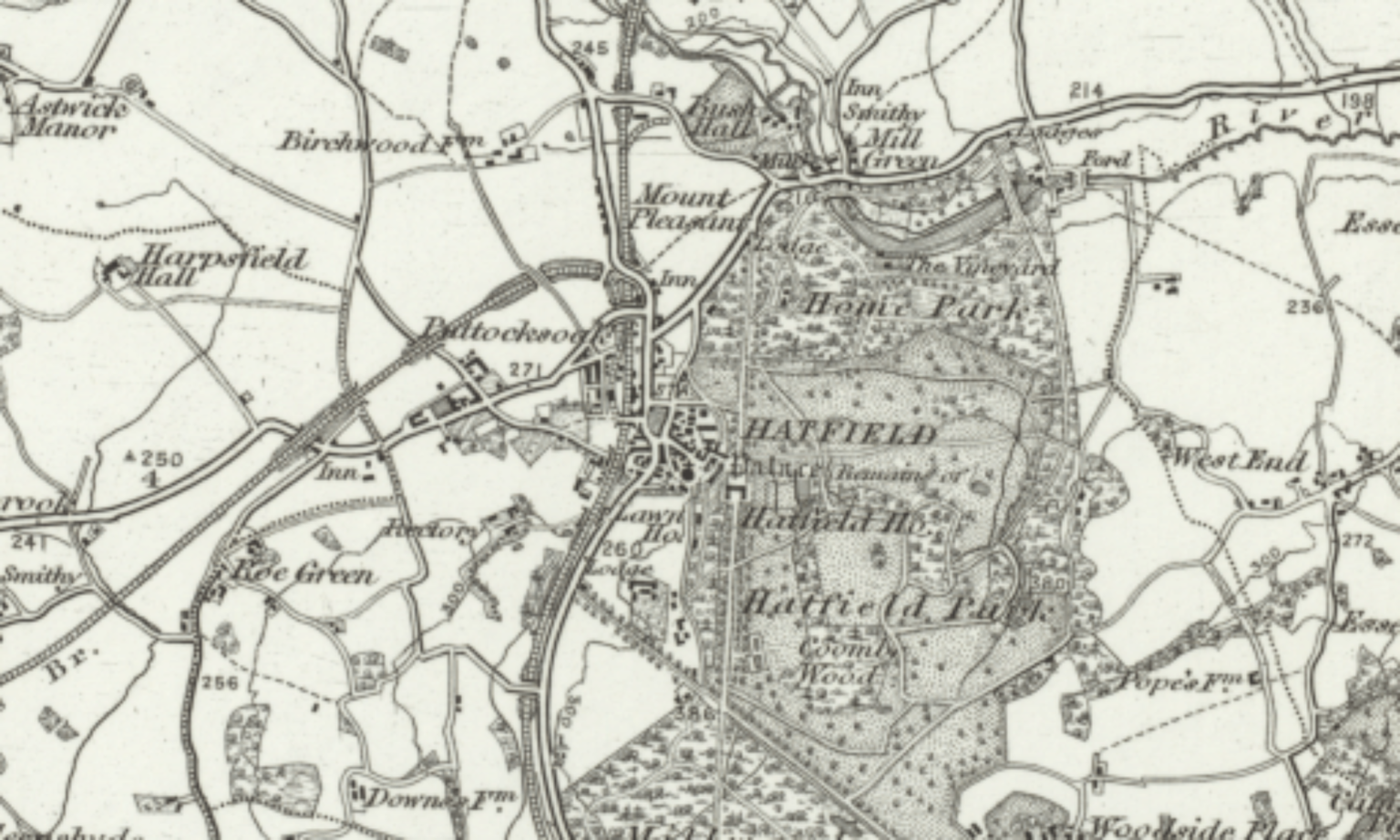
Hatfield is a town in Hertfordshire, England, with a history dating back to the Roman period. The town was mentioned in the Domesday Book of 1086 and was the site of a royal palace in the Middle Ages, which was used by several monarchs, including King Henry VIII. In the 16th century, the palace was demolished and replaced by Hatfield House, which remains an important landmark in the town today.
During the Industrial Revolution, Hatfield grew as a centre for industry and transportation, with the arrival of the railway in the 19th century. The town was also home to several major aircraft and defence companies, including De Havilland and British Aerospace, which played a major role in the development of the aviation industry.
In the 20th century, Hatfield saw significant growth and development, with the construction of many new homes and the expansion of the town’s commercial and industrial areas. Today, Hatfield is a thriving suburban town with a mix of residential, commercial, and industrial areas, and is known for its parks, lakes, and sports facilities. The town is also home to the University of Hertfordshire, which was established in the mid-20th century and has grown to become one of the largest universities in the UK.
Hemel Hempstead
Hemel Hempstead is a town in Hertfordshire, England. It has a long history, with evidence of human habitation dating back to the Roman period. The town was mentioned in the Domesday Book of 1086 and was a small agricultural village for much of its history.
During the Industrial Revolution, Hemel Hempstead began to grow as a centre for industry and transportation, with the arrival of the railway in the 19th century. The town was also home to several major paper mills and printing works, which helped to drive its economic growth.
In the mid-20th century, Hemel Hempstead underwent significant expansion as a result of the government’s New Towns program, which aimed to alleviate overcrowding in London and other major cities. The town was designated as a New Town in 1947 and saw rapid growth, with the construction of many new homes, schools, and community facilities.
Today, Hemel Hempstead is a thriving suburban town with a population of over 90,000. It is known for its parks, lakes, and sports facilities, and is a popular destination for tourists and visitors. The town is also home to several large employers, including Marlowes Shopping Centre, which is one of the largest shopping centres in the UK.
Hertford
Hertford is the county town of Hertfordshire, England and has a long history, with evidence of human habitation dating back to the Roman period. The town was mentioned in the Domesday Book of 1086 and was a market town and an important centre for agriculture in the Middle Ages.
In the 16th and 17th centuries, Hertford was a centre for the wool trade and became known for its production of cloth and hats. The town was also a centre for the brewing industry, with several breweries established in the 17th and 18th centuries.
In the 19th century, Hertford saw significant growth as a result of the arrival of the railway and the expansion of the town’s infrastructure. This led to the development of new homes, schools, and community facilities, as well as a growth in industry and commerce.
Today, Hertford is a thriving town with a population of over 26,000. It is known for its historic architecture, parks and open spaces, and its high-quality shopping and dining options. The town is also a popular destination for tourists and visitors, and is home to several sporting clubs, a theatre, and several museums and galleries.
Hoddesdon
Hoddesdon is a town in the Broxbourne borough of Hertfordshire, England. It has a long history, with evidence of human habitation dating back to the Roman period. In the Middle Ages, Hoddesdon was a small agricultural village and remained so until the late 19th century, when it began to grow as a result of the expansion of the railway network.
In the early 20th century, Hoddesdon continued to grow as a popular residential area for workers in London, and saw the development of several new homes and community facilities. During World War II, the town was badly affected by bombing, with many homes and businesses damaged or destroyed.
After the war, Hoddesdon underwent significant redevelopment, with the construction of many new homes and the expansion of the town’s commercial and industrial areas. Today, Hoddesdon is a thriving town with a population of over 20,000. It is known for its parks, lakes, and sports facilities, and is a popular destination for tourists and visitors. The town is also home to several large employers, including pharmaceutical and medical technology companies.
Letchworth
Letchworth is a town in Hertfordshire, England. It is one of the first garden cities in the world and was founded in 1903 as a response to the growing problems of overcrowding and poor living conditions in urban areas. The garden city movement aimed to create a new type of urban settlement, one that was based on the principles of town planning and incorporated large areas of green space and parks.
Letchworth was designed as a planned town, with a grid-like street layout and a mix of residential, commercial, and industrial areas. The town was also designed to be self-sufficient, with its own water and sewage systems, electricity generation facilities, and parks and open spaces. In the years following its founding, Letchworth grew rapidly, attracting residents from London and other urban areas. The town was also an important centre for industry, with several major companies setting up operations there.
Today, Letchworth is a thriving town with a population of over 35,000. It is known for its parks and open spaces, and its distinctive architecture, which combines elements of Arts and Crafts style with Art Deco.
Rickmansworth
Rickmansworth is a town in the Three Rivers district of Hertfordshire, England. It has a long history, with evidence of human habitation dating back to the Roman period. In the Middle Ages, Rickmansworth was a small agricultural village and remained so until the late 19th century, when it began to grow as a result of the expansion of the railway network.
In the early 20th century, Rickmansworth continued to grow as a popular residential area for workers in London, and saw the development of several new homes and community facilities. During World War II, the town was badly affected by bombing, with many homes and businesses damaged or destroyed.
After the war, Rickmansworth underwent significant redevelopment, with the construction of many new homes and the expansion of the town’s commercial and industrial areas. Today, Rickmansworth is a thriving town with a population of over 15,000. It is known for its parks, lakes, and sports facilities, and is a popular destination for tourists and visitors. The town is also home to several large employers, including pharmaceutical and medical technology companies.
St Albans
St Albans is a city in Hertfordshire, England with a rich and diverse history. The city was originally called Verulamium and was a major Roman settlement and a centre of commerce and industry in the Roman province of Britannia. After the fall of the Roman Empire, Verulamium declined, but the town remained an important centre for agriculture and trade in the Middle Ages.
In the 16th and 17th centuries, St Albans became a centre for the cloth trade and was known for its production of fine cloth. The city was also an important centre for religion and was the site of several significant events in English church history, including the trial of St Alban, England’s first Christian martyr, and the birth of the English Reformation.
In the 19th and 20th centuries, St Albans grew rapidly as a result of the expansion of the railway network and the growth of London, and became a popular residential area for workers in the capital. Today, St Albans is a thriving city with a population of over 140,000. It is known for its rich history and cultural heritage, its parks and open spaces, and its high-quality shopping and dining options. The city is also home to several museums, theatres, and other cultural attractions, and is a popular destination for tourists and visitors.
Stevenage
Stevenage is a town in Hertfordshire, England. It is one of the country’s first new towns and was established in the mid-20th century as part of the UK government’s response to the growing problems of overcrowding and poor living conditions in urban areas.
The concept of the new town was to create a planned community with a mix of residential, commercial, and industrial areas, and to provide high-quality housing and public facilities for residents. Stevenage was designed as a self-contained town, with its own schools, shops, and public transport, and with plenty of green spaces and parks. In the years following its establishment, Stevenage grew rapidly, attracting residents from London and other urban areas. The town was also an important centre for industry, with several major companies setting up operations there.
Today, Stevenage is a thriving town with a population of over 85,000. It is known for its parks and open spaces, and its distinctive architecture, which combines elements of modernist and brutalist design.
Tring
Tring is a small market town in Hertfordshire, England, with a long and fascinating history. Archaeological evidence suggests that the area has been inhabited for thousands of years, and there are several historic sites in and around the town, including an Iron Age hill fort and a Roman settlement.
In the Middle Ages, Tring was a small agricultural village and was known for its wool trade. During the Tudor period, the town grew and prospered, and several fine buildings were constructed, including Tring Manor, which still stands today.
In the 19th and 20th centuries, Tring continued to grow and expand, and became a popular residential area for workers in London. The town was also a centre for industry, with several major companies setting up operations there.
Today, Tring is a thriving market town with a population of over 11,000. It is known for its historic buildings, its parks and open spaces, and its high-quality shopping and dining options.
Watford
Watford is a large town in Hertfordshire, England with a rich and diverse history. Archaeological evidence suggests that the area has been inhabited for thousands of years, and there are several historic sites in and around the town, including an Iron Age hill fort and a Roman settlement.
In the Middle Ages, Watford was a small agricultural village and remained so until the 19th century, when it began to grow as a result of the expansion of the railway network. In the late 19th and early 20th centuries, Watford became a popular residential area for workers in London, and saw the development of several new homes and community facilities.
During the 20th century, Watford continued to grow and expand, and became a major centre for industry and commerce. The town was home to several large companies, including printing and publishing firms, and was an important centre for the manufacture of paper, textiles, and other products.
Ware
Ware is a market town in Hertfordshire, England with a history that dates back to the Roman period. The town grew around a Roman settlement, which was established in the 1st century AD and became an important centre for trade and commerce.
In the Middle Ages, Ware became a prosperous market town and was known for its wool trade. During the Tudor period, the town grew and prospered, and several fine buildings were constructed, including several historic inns and taverns.
In the 19th and 20th centuries, Ware continued to grow and expand, and became a popular residential area for workers in London. The town was also a centre for industry, with several major companies setting up operations there.
