
Tag: Haymarket

  • Streets of Norwich – Haymarket (East Side)

    Streets of Norwich – Haymarket (East Side)

    Part of my Streets of Norwich project….

    I’ve already posted about Haymarket, but there are some buildings on the east side which are of particular interest.

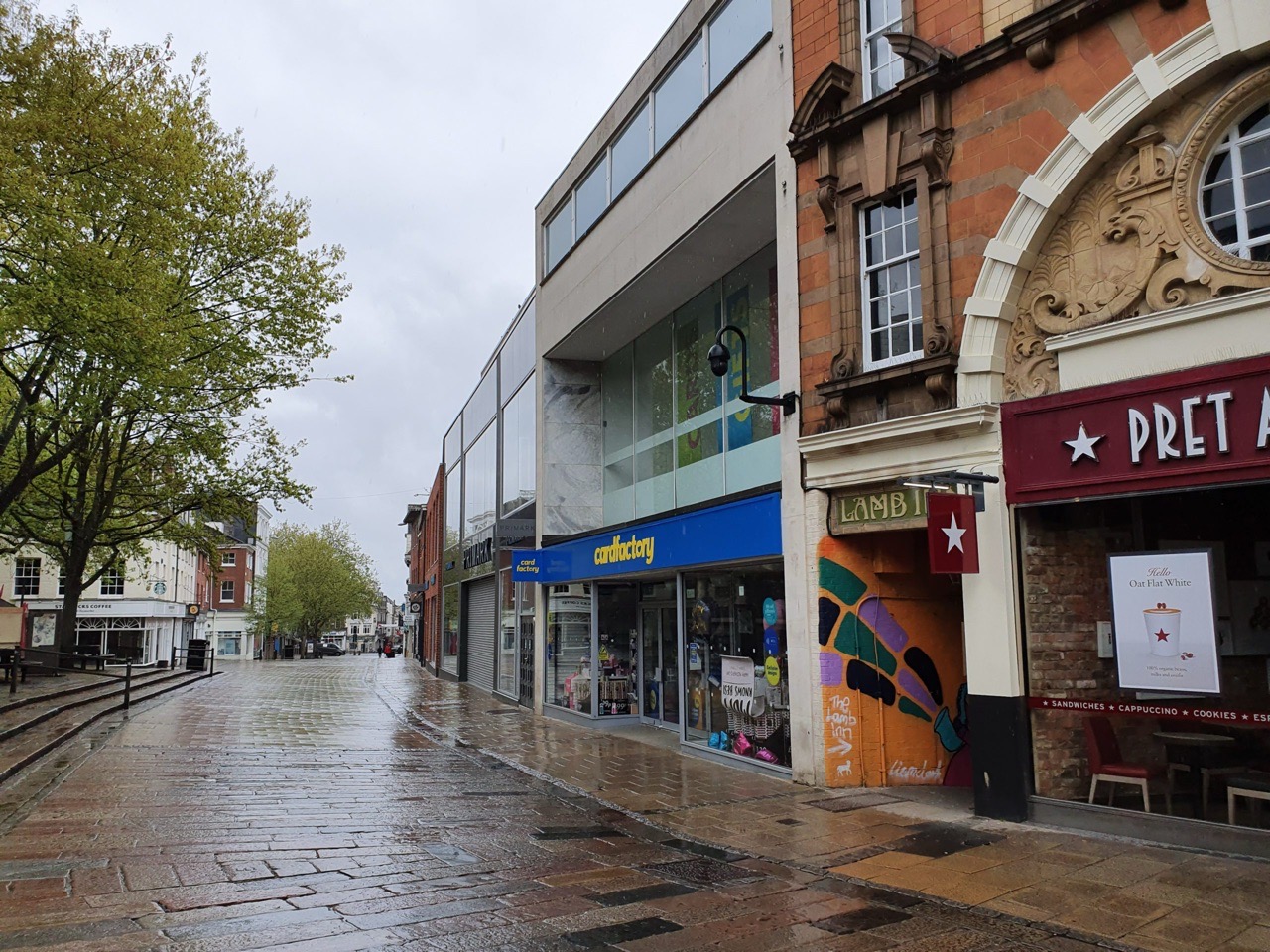
    The Haymarket Chambers building, designed by the local architect George Skipper. Now one of the two Pret outlets in the city, it was previously used by Snob, a clothing retailer.

    Looking down towards the Market Place, the rest of Haymarket is on the left-hand side of this photo.

    The entrance to the Lamb Inn, which is one of the oldest pubs in the city and some argue that it might be the second oldest in Norwich (the Adam and Eve on Bishopgate dates back to the mid-thirteenth century).

    The original part of the Primark building, once used by BHS when they were in the city.

    The new Primark extension on the left, which has been open for a few months. Well, it’s shut now with the virus, but, other than that….. The archaeological report from that process is an interesting read as well. There was no real loss with the building they pulled down, a bland modern affair, which was used by Wallis and Dorothy Perkins.

    This is number 3/4 Haymarket, now used by Fatface, but it has a substantial heritage and it retains its fifteenth century undercroft. I haven’t yet got to go on one, but there are tours of the building as part of the Heritage Open Days Weekends (and there’s a series of photos on-line at http://www.oldcity.org.uk/norwich/tours/curathouse/index.php). There are still oak panelled rooms inside from when this was a residential property, lived in at one stage by John Curat in the sixteenth century, with the building now often referred to as Curat’s House.
  • Streets of Norwich – Haymarket

    Streets of Norwich – Haymarket

    Part of my Streets of Norwich project….

    The Haymarket is a slightly quirkily defined area, cutting in between Brigg Street and the Market Place (Gentleman’s Walk), as well as joining in what is now called Millennium Plain and William Booth Street. For a while this was the city’s Jewish quarter and there was a synagogue here, before the Jews were expelled in 1286. Haymarket was also the annex of the main market place where hay and straw was brought for sale, a role it had for many centuries.

    The temporarily boarded up McDonald’s, which was formerly the George & Dragon pub. it was a pub from the 1730s until 1988, when it was converted first into a bank and then into McDonald’s in 2002. This really should be a pub again given its long heritage….

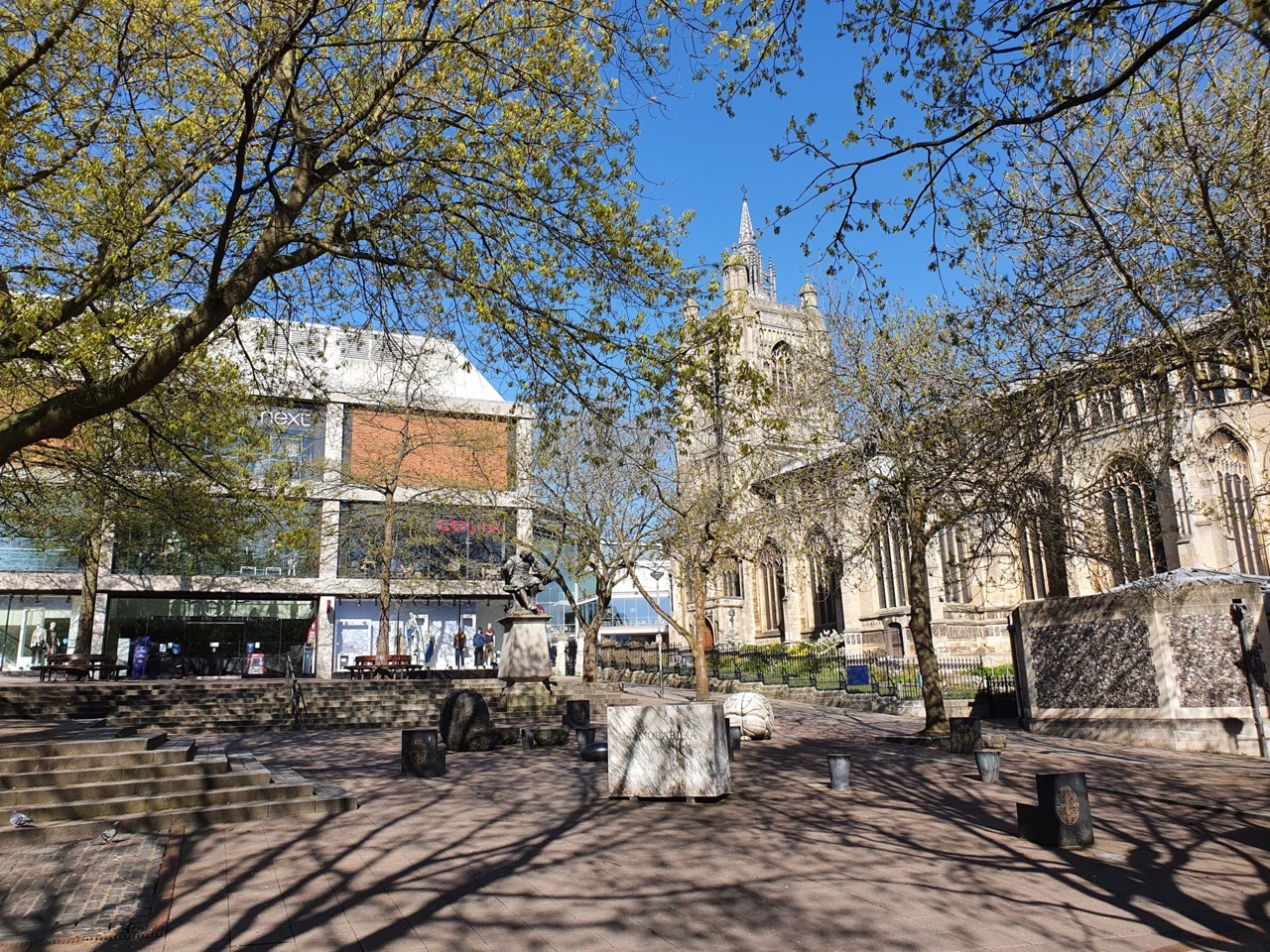
    The building at the rear was the once impressive Lambert’s warehouse, demolished in around 1970 and replaced with an awful bland building. On the right-hand side is St. Peter Mancroft, Norwich’s largest medieval parish church.

    Some sculptures. In another brilliantly inspired move, Norwich City Council ripped out the fountains and seating which were here, replacing them with nearly no seating and more paving slabs. This used to be a little park area in the mid-twentieth century, something that could perhaps be brought back in.

    The Thomas Browne statue, which was placed here in October 1905, to mark the three hundredth anniversary of his birth.

    Interestingly, where the statue sits today, there used to be a pub, the White Horse, which was demolished at the end of the nineteenth century (the map above is from 1885), in around 1898. For much of the nineteenth century it had also been called the Seed Mart, which is perhaps a unique pub name.

    Another dreadful modern building on the left-hand side, another in a substantial series of incompetent decisions from local planners. It was built as Peter Robinson’s store in the 1962, but it required the demolition of the Gaumont theatre, formerly the Haymarket Picture House, in 1959.

    The council have mauled this square so much that it’s lost nearly all of its character. Not that long ago it had a pub that was 250 years old, a huge theatre and an historic warehouse, now it’s got some generic retail buildings that give no nod to the heritage here and nearly no seating areas. There is though some heritage to the buildings which are on one side of the Haymarket, at the rear of this photo, more on which in another post.