Tag: Gainsborough

  • Gainsborough – Gainsborough Hotel (White Hart)

    Gainsborough – Gainsborough Hotel (White Hart)

    20240716_104427

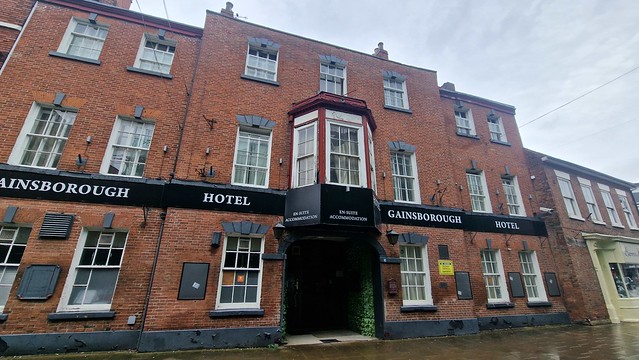
    This rather charming hotel seems to have had an interesting few years. It has a long history since it opened in the eighteenth century, but the police and licensing authorities shut it down in 2018 following a series of drug incidents and violent disorder. The owner was a former councillor, so the local media seems to have had a field day reporting that. It was known as the White Hart, but was rebranded after the closure as the Gainsborough Hotel to try and give it a new lease of life. It now appears to be closed and locked up, a sub-optimal situation for the owners. I can’t see anything in the local media as to why it’s closed, or whether it’s reopening again soon, although the reviews suggest that it has had a troubled couple of years. It’s a shame that it’s closed though, the building is beautiful and in its prime it must have been an important part of the local community. The cost of renovating a hotel such as this would be substantial though, especially as it’s a Grade II listed building.

  • Gainsborough – 40 Day Capital of England

    Gainsborough – 40 Day Capital of England

    20240716_105702

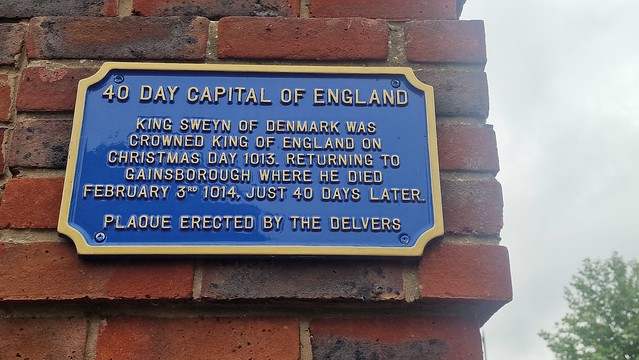
    Back on Christmas Day 1013, Sweyn Forkbeard (the son of Harald Bluetooth) swept into England and pronounced himself as King. He arrived in Gainsborough by sailing up the River Trent, then legend states that his forces spread across the country and everyone became supporters. That might perhaps be aspirational, but it’s clear that he took control of some significant parts of England and he established himself in Gainsborough to plan his new empire. He then, rather inconveniently for his new nation, died on 3 February 1014, but it’s not known for sure how his death occurred. It did mean that 50-day Liz Truss did manage to outlast at least one leader, although I think it’s fair to say that when her forces spread across the country not many people became supporters. Anyway, I’ve digressed into politics.

    Æthelred the Unready, which actually is perhaps a name that Liz Truss could have used (the Unready bit, I’m not sure Æthelred would have suited her, but I’ve very quietly digressed again), took over the country after Sweyn’s death and Gainsborough’s brief period as the national capital came to an end. History might have been somewhat different if Sweyn had managed to live just a little bit longer, perhaps Gainsborough might have become a regional powerhouse. But, instead, it’s a useful fact that local tourist officials have tried to make something of.

    This blue plaque was erected by the Delvers, a local history group in Gainsborough, who seem to do much good work in the area promoting the town’s heritage.

  • Gainsborough – Thoughts of Pevsner

    Gainsborough – Thoughts of Pevsner

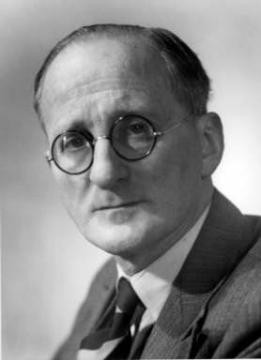
    Sir Nikolaus Pevsner is my favourite architectural historian. Actually, he’s the only one that I can name, but he is such an authority and his judgement always seems sound to me. I was interested to read what he thought about the Lincolnshire town of Gainsborough, but he really wasn’t that keen. He describes it as:

    “One of the dreariest of the Midland red brick towns. The factories are all red brick, and those in the centre cannot for a long time have been proud of the appearance of their buildings. Neither the manufacturers nor the council seem capable of thinking of their town in post-Victorian towns.”

    Pevsner writes interesting walks, or perambulations as he called them, of towns, but he says about Gainsborough:

    “A perambulation around Gainsborough is not necessary nor advocated.”

    Ouch. I actually suspect he would have been less impressed at how it is today, as the council of the 1960s demolished some of the interesting heritage buildings in their road expansion obsession.

  • Gainsborough – All Saints Church

    Gainsborough – All Saints Church

    20240716_103535

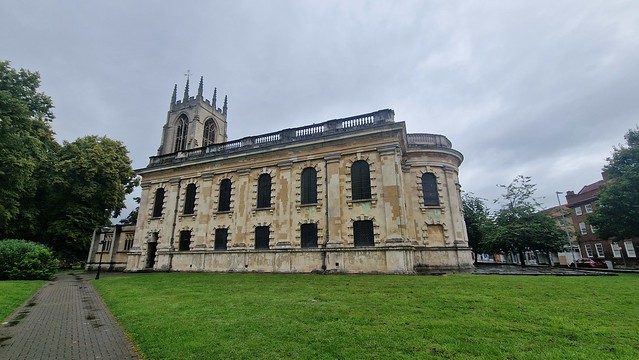
    This church looks a little out of proportion as the nave and chancel were entirely rebuilt between 1734 and 1744 when the previous structure was thought to be too dark and dingy, but the tower, which dated from the fifteenth century, was kept. After three years of construction, the new church opened on 16 September 1744 and it reminds me of how some of the slightly later churches in the United States, such as Old North Church in Boston, look.

    20240716_102824

    The church is kept locked, but you can request the key from the cafe on-site, which I did. It’s well proportioned internally and I can imagine the excitement when it opened, with its two levels of seating and plenty of space. It’s certainly bright, which would have been in contrast to the previous building.

    20240716_102844

    Looking back to the organ. The chandelier is a survivor from the previous church.

    20240716_102906

    The pulpit, which was installed in 1869.

    20240716_102940

    It’s spacious and would have been able to cater for several hundred worshippers. The National Churches Trust notes that:

    “The architect of the present building was Francis Smith of Warwick (1673-1738) who was greatly influenced by James Gibbs, the designer of St Martin in the Fields, Trafalgar Square.”

    20240716_103343

    The height of the box pews were reduced by 12 inches in the 1860s.

    20240716_103013

    Alan Stephenson, who served as the organist here for twenty years between 1913 and 1933. He was also the last organist to play at Coventry Cathedral before its organ was destroyed during the 14 November 1940 air raid.

    20240716_103303

    The eighteenth century benefactors.

    20240716_103332

    The memorial to Francis Elliott, who had served as the District Commissioner of Jubaland. He was the son of the Rev. Canon J. R. Elliott, M.A., of 1, Greenstone Place, Minster Yard, Lincoln and Francis died at the age of 35 on 2 February 1916. He’s buried at the Mogadishu African War Cemetery where there are 182 burials, but the Commonwealth War Graves Commission is currently unable to access the site. Unfortunately, the site has been desecrated and the graves destroyed and vandalised, there’s more at https://adeclewlow.com/2018/11/07/discovering-the-commonwealth-war-graves-cemetery-in-mogadishu/.

    20240716_103411

    The entrance to the church.

    20240716_103415

    What I assume is the entrance to the bell tower.

    20240716_103446

    The tower, which I think is the most magnificent part of the structure. The authorities had to raise money in 1871 for the church’s protection as they were worried about bits of it falling down, which was considered sub-optimal. Also, a local cabinet maker, Mr. Knighting, had been walking across the church yard on a dark Sunday evening and a slab gave way and he nearly plummeted three feet down into a vault, located near to the base wall of the tower.

    20240716_103450

    The graveyard, stripped of all its gravestones. There has been some controversy about this and the idiotic decision was enacted in 1961, stripping the area of its historic relevance and interest. They said at the time that it tidied the area up as it had become overgrown and gravestones were damaged. I mean, perhaps repair the gravestones and cut the grass? Anyway, it’s a memorial garden now.

    20240716_103430

    Richard Rollett’s gravestone was saved as it was thought to be of interest as he was the master sail maker on HMS Resolution, which Captain James Cook captained.  The Captain Cook Society has more information on the life of Rollett at https://www.captaincooksociety.com/cooks-life/people/cooks-officers-and-crew-and-contemporaries/richard-rollett-1750-1824. Although that’s it, the rest of the stones and their memories have gone.

    It’s a wonderful example of eighteenth century church architecture, although there’s surprisingly little history here to see beyond that. They’ve knocked the old church down, the tower is inaccessible and the gravestones have been removed. Pevsner was very rude about Gainsborough, but he didn’t make any personal comment on his thoughts of the church’s architecture.