Tag: Forncett St Mary

  • Forncett St Mary – St. Mary’s Church (Thomas Edward Green)

    Forncett St Mary – St. Mary’s Church (Thomas Edward Green)

    There’s one Commonwealth War Graves Commission grave at St. Mary’s Church and it commemorates the life of Thomas Edward Green.

    Thomas was born in 1908, the son of John Green (1867-1952) and Emily Green (1870-1944), both of whom are also buried in the churchyard.

    At the 1911 census, the family were living in Forncett St. Mary, with John working as a railway labourer and this was a large family, Maurice aged 17, Emily aged 15, Irene aged 14, Jack aged 9, Bernard aged 7, Thomas Edward aged 3 and Joyce aged 1. Maurice was working as a farm labourer, which was likely the limit of employment options for many younger people at that time. John and Emily hadn’t lost any children at a young age, but one had left home by the 1911 census. Maurice fought in the First World War, but he returned home safely.

    Thomas married Alexandra Nell Turner, who had been born in 1906, of Wreningham in 1932. During the Second World War, he joined the Royal Navy with service number P/JX 518572 and was sent to HMS Collingwood, a land based training centre used by the navy.

    Thomas died on 18 June 1943, at the age of 35. There’s no mention in the local newspapers of any accident at HMS Collingwood, so this was perhaps a natural death. His body was brought back to Forncett St. Mary and buried a few days later. Alexandra died on 21 October 1979, having lived at Wymondham Road in Wreningham and I assume that she didn’t remarry since she had the same surname of Green.

    As an aside, there is perhaps a limited amount of relevance in my posts such as this, as I haven’t been unable to discover any new story to excite and delight the Internet. Thomas was just one of at least eight children that John and Emily had, with no doubt many stories to be told there as well. But, I still find the stories of those who fought and died in the First and Second World Wars to be captivating, and their retelling in whatever form keeps the memory of the lost and damaged generations alive in at least some way.

  • Forncett St Mary – St. Mary’s Church (John William Colenso)

    Forncett St Mary – St. Mary’s Church (John William Colenso)

    A recent wooden carving of Colenso which is on display at St. Mary’s

    It’s clear from items around St. Mary’s Church in Forncett St. Mary that they’re rather proud of John William Colenso, their former rector who went on to become the first Bishop of Natal.

    One of the displays at St. Mary’s.

    Colenso was born in Cornwall in 1814 and was educated at St. John’s College, although this whole process required some considerable financial initiative to self-fund. He was the Second Wrangler at Cambridge University, meaning that he received the second highest marks for maths, so there’s little doubt he had lots of academic ability. Anyway, after some time spent teaching, he decided to take on the role of rector at St. Mary’s Church in 1846.

    It was reported in the local press that Colenso had taken over the Rectory at Forncett St. Mary and become rector, with a value of £979. The position of rector back then wasn’t one which required any religious qualifications, it was more a way of living and the role had to be purchased. It wasn’t essential then for rectors to be ordained, although Colenso was, he had been ordained by the Lord Bishop of Ely in May 1840.

    Colenso spent seven years at St. Mary’s, before being invited to become the first Bishop of Natal, a post he took up in June 1853. His interest in the well-being of the Zulu ethnic group was notable, and caused some local opposition. Another issue was that Colenso had a mathematical background and was interested in fact and logic, so he had some issues with some of the text in the Bible. He wrote in his book “Pentateuch and Book of Joshua Critically Examined” that he had concerns and he also stated that he opposed the idea that sinners should be eternally punished.

    There were attempts to remove him from his post and Robert Gray, the Bishop of Cape Town, the man who had encouraged Colenso to go to Natal, now decided that he should be charged with heresy. The situation wasn’t, to be honest, entirely ideal for the church. Colenso was found guilty of heresy, then the Church of England decided that they had no jurisdiction and so reversed their decision. Colenso was sort of sacked in 1869, but also sort of retained his role, all caused by creating a dual system and a divided church. The Cathedral of Natal today recognises both sides in the whole debate, so healing has finally taken place.

    Colenso in the 1860s. Used under licence (© National Portrait Gallery, London)

    Colenso was interested in the matter of polygenism, a belief that different races were created separately by God at the same time. Often used to promote racial inequality, Colenso came from the angle that everyone should be equal because they were created equal. Although this field has been rejected now by science, Colenso did much work on ensuring that the rights of everyone in South Africa were looked after, and that wasn’t universally accepted at the time (nor indeed for a long time after).

    Colenso in the 1870s. Used under licence (© National Portrait Gallery, London)

    Colenso died on 20 June 1883 in Durban at the age of 69, still in his role as the Bishop of Natal. This takes me back to the church in Forncett St Mary, which feels a very long way from South Africa. Colenso had married Sarah Frances Bunyon in 1846, the same year he took over the rectorship at St. Mary’s, and they had five children. One of those children, Harriette Colenso, became a Christian missionary in South Africa, and another, Frances Colenso, became an historian of the Zulu Wars.

    On 22 June 1883, the Eastern Daily Press published an article on Colenso’s life, noting how the Church in South Africa had been split into two following the debates that he had raised. The newspaper noted that he was “an ardent defender of the African against the white man” and how “his sympathies often lay with the Africans”. The parish register for the church of St. Mary is in the possession of the Norfolk Record Office and Colenso’s name is present at nearly every baptism that took place during the years he was there, a seemingly very meticulous rector. And he could have had a good living in Forncett St. Mary for very many years, but he decided to spread the Christian message in South Africa, so I can imagine that he was quite a character.

  • Forncett St Mary – St. Mary’s Church

    Forncett St Mary – St. Mary’s Church

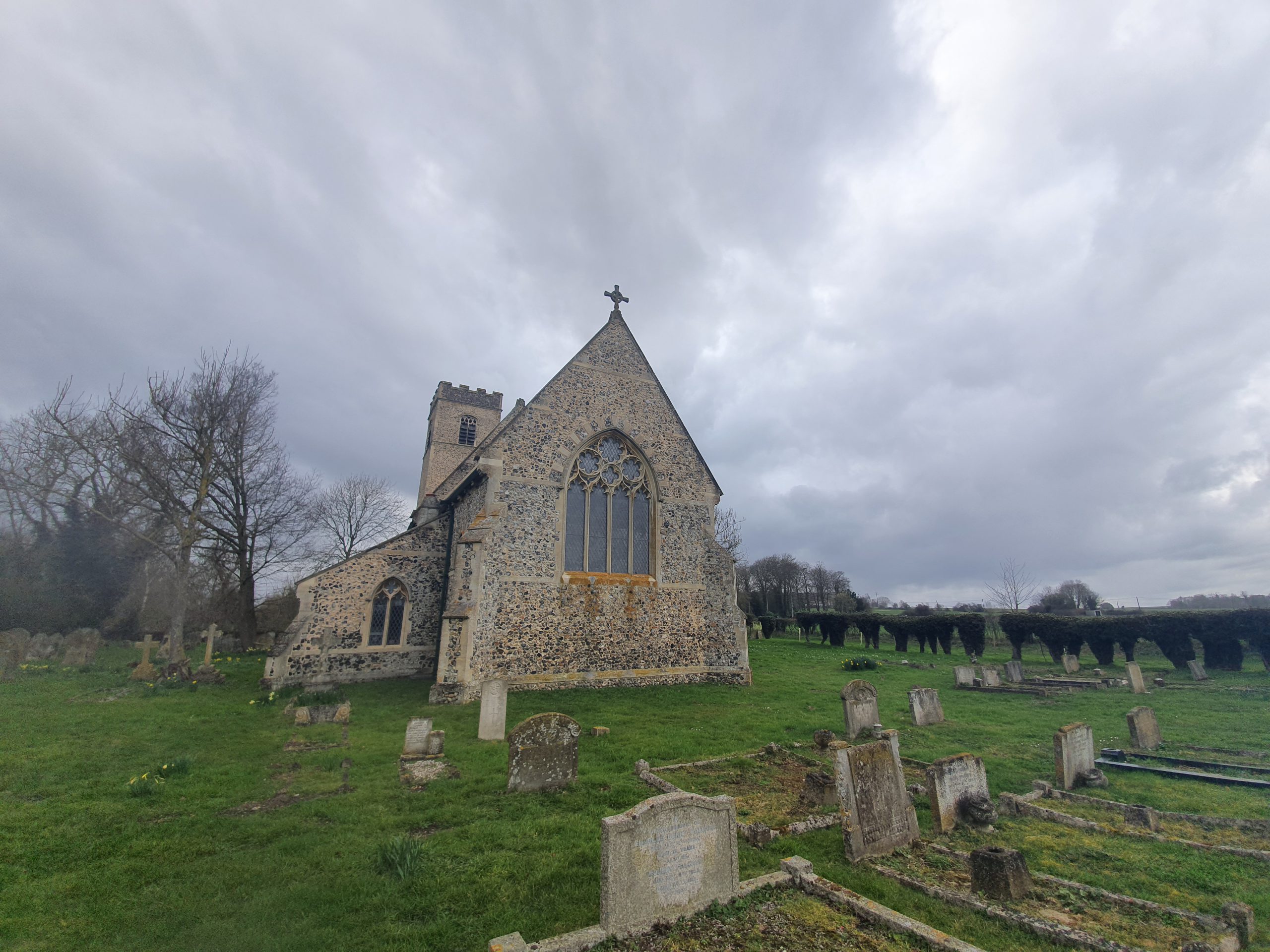
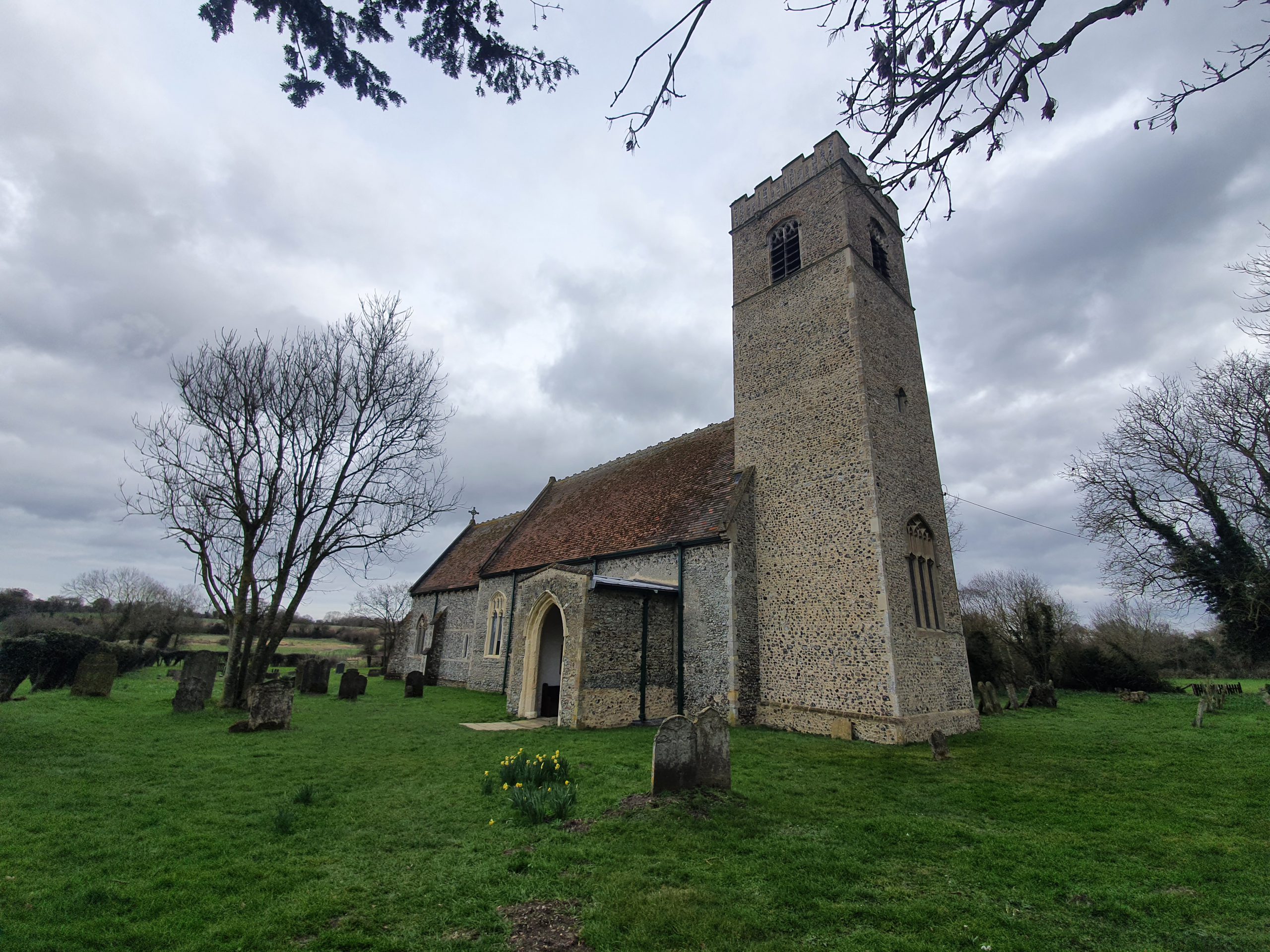
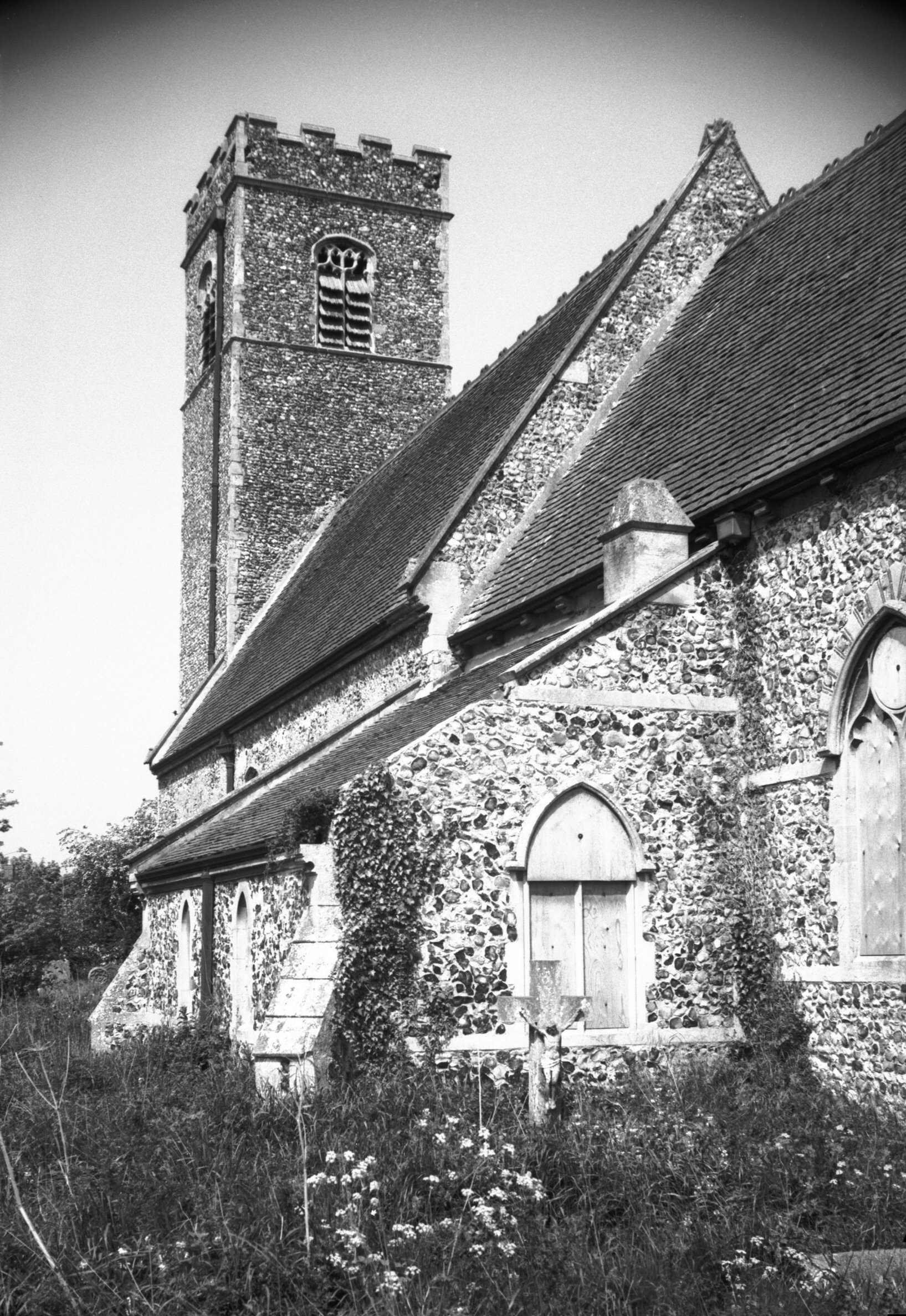
    I didn’t really understand this church when looking around it, there was a feel of some rather stark and blunt repairs to the building and an interior which seemed a little whitewashed. But, equally, it was in a good state of repair, a big effort had been made to put up some boards with some history and it all seemed in order. The true story of this church is though remarkable, it has been saved by the community after having fallen derelict. I’m deeply impressed at what has been done here over the last few years, and it explained why so many repairs had been needed. All really quite wonderful. Simon Knott has some photos of the state that this church was in just a few years ago and George Plunkett has a photo from 1992.

    The church on an old tithe map and it’s set back a fair way from the road.

    The church had fallen into a state of disrepair even though it is Grade I listed, with the bulk of the building dating to the thirteenth century, but the tower is a fifteenth century replacement from what stood before. The listed building record notes though that some elements of the nave are from the eleventh century, survivors of the earlier church.

    The chancel, which was repaired during an extensive 1869 restoration, led by the Reverend J Cooper. There were no end of events that took place in 1868 to raise funds for the repairs, showing some of the community effort that has again been notable in recent years.

    The Norwich Mercury reported in April 1870 about the reopening of the church and I like their general comment that “advantage has been taken of the necessary alterations and re-buildings which churches require to graft upon them the whims and fancies of architects, so that we have had a series of abominations perpetrated, at which none are now more ashamed than the clergymen themselves”.

    Fortunately, the newspaper liked the work that had been done at St. Mary’s, commenting that the architect JP Pearce had “followed and adhered to the plan of the original building”. The work had cost £1,000 and the chancel in particular had been heavily restored and a new chancel arch added, with new carvings and stoneworks throughout the church. The newspaper remarked that the thatched roof which “gave the church a poverty stricken look” had been replaced and new Staffordshire tiles had been laid in the chancel and nave.

    A blocked-up window, perhaps a victim long ago of wanting a window with a more modern design.

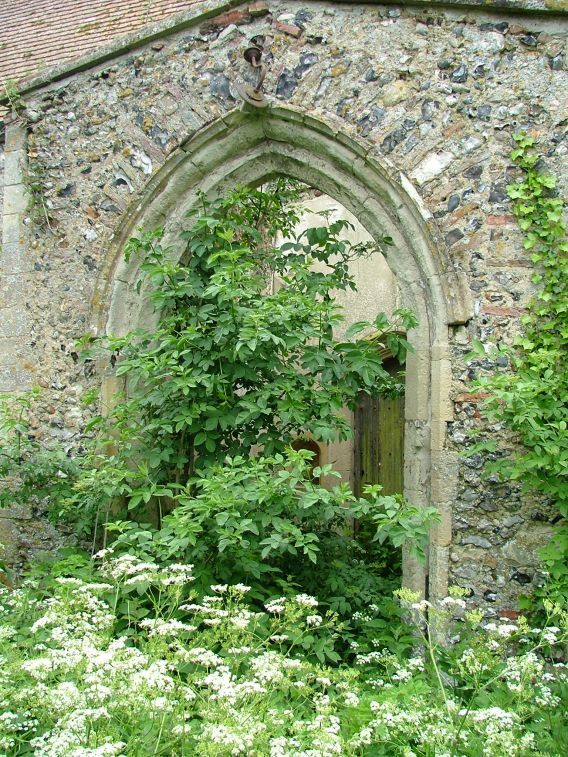
    The porchway has now been repaired and is in a good state of repair given how it looked just a few years ago in Simon Knott’s photo.

    The church was open and it one of those atmospheres which just felt welcoming, and I liked how there were some history boards up giving further information about John William Colenso. He was the rector of this church between 1846 and 1853 and he went on to become the first Bishop of Natal, in South Africa, a role he remained in until 1883.

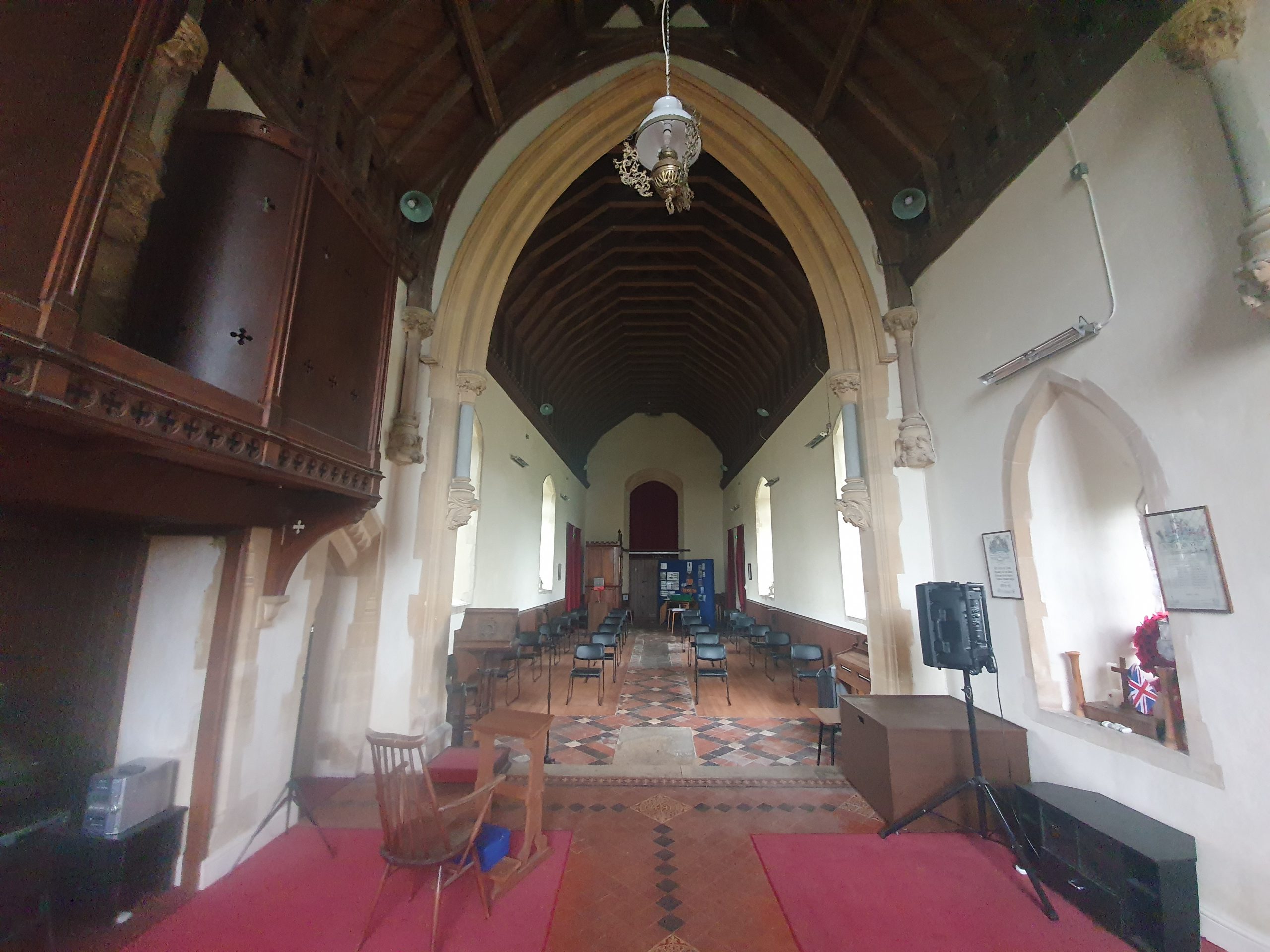
    The inside of the church, looking towards the tower. The floorboards have had to be replaced as they had become damaged during the period that the church was derelict, but some of the tiles from the 1869 restoration are still visible.

    And looking along the nave into the chancel.

    There’s something really quite environmental (if that’s the right word there, perhaps not) about how someone’s remains can help the growth of a fine tree. I didn’t notice any early burials, so everything was from the nineteenth century onwards, but there’s an interesting note at the Heritage Norfolk web-site which mentions:

    “Burials did take place prior to this period but headstones were rarely used and multiple burials often occupied the same plot.”

    This helps answer my ongoing question about why are there are often so few headstones in churchyards in Norfolk, and perhaps it’s for the same reason here, that headstones were rarely used and the graves not always carefully marked.

    The new lych gate, with a chunky bench, all of which offers a positive first impression for visitors to the church.

    All in all, this is a glorious restoration and saving of a church which had become redundant in 1985 and then sadly vandalised in the years that followed. It’s disappointing that the Church of England abandoned this church, and they were talking about turning the building into a holiday cottage at one stage. Fortunately, things are much better again today, and what a marvellous community effort to bring this church back from the brink.