Tag: Felthorpe

  • Felthorpe – St. Margaret’s Church (Major James Johnes Bourchier)

    Felthorpe – St. Margaret’s Church (Major James Johnes Bourchier)

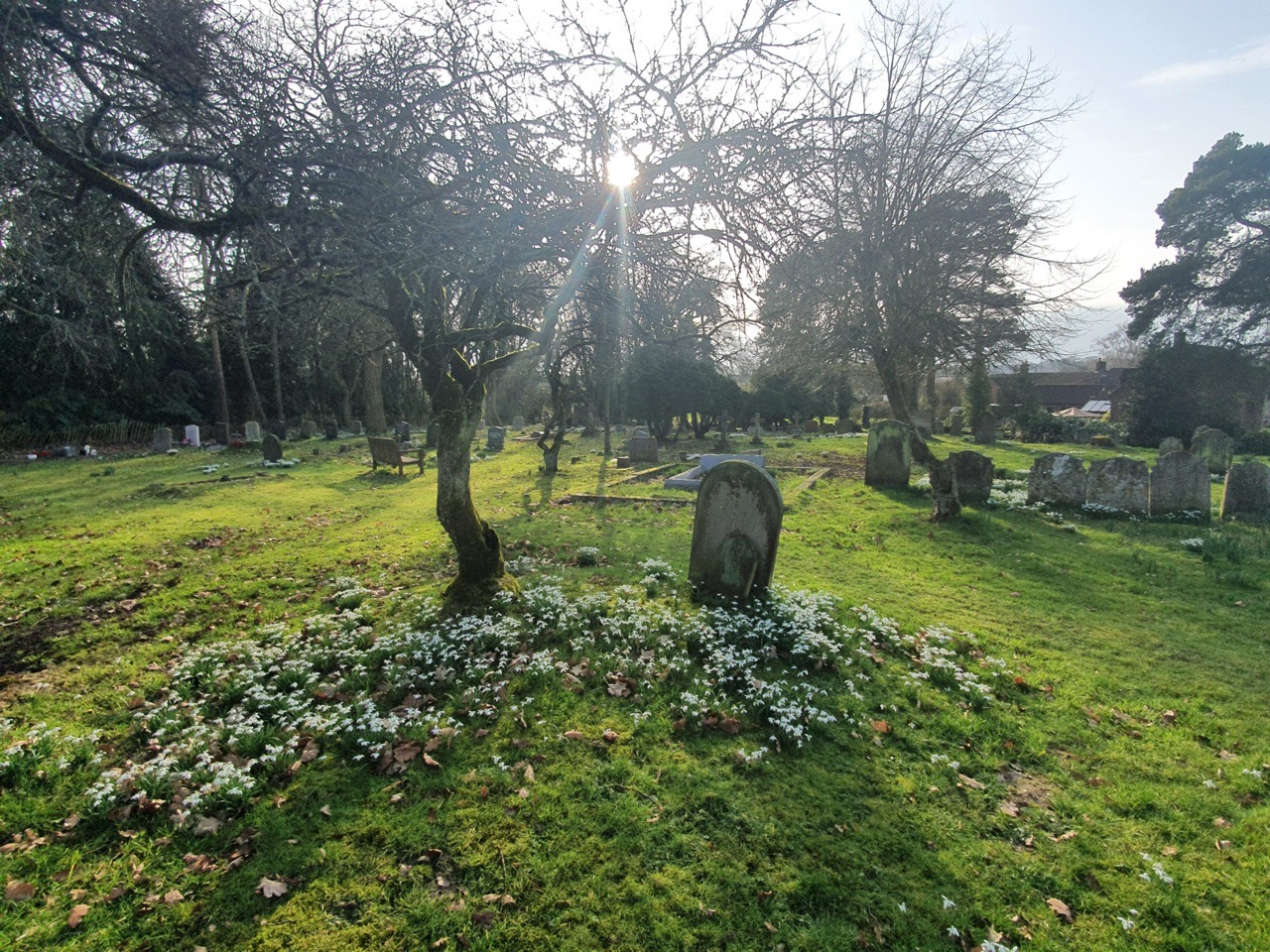
    Major James Johnes Bourchier has this Celtic cross memorial in the churchyard of St. Margaret’s Church in Felthorpe. James was baptised on 24 December 1826 at St. Mary’s Church in Cold Brayfield, Buckinghamshire. He was the son of James Claude Bourchier and Maria Bourchier.

    The British had very much a gentleman soldiers approach to the military in the early nineteenth century, where the wealthy could purchase commissions to become officers. This ridiculous state of affairs, along with the quite disgraceful way that the rank and file were treated, wasn’t properly addressed until the long overdue Cardwell Reforms of the late 1860s. Anyway, James was able to purchase his way into the 52nd (Oxfordshire) Regiment of Foot on 28 June 1844. In 1847, James purchased himself the rank of Lieutenant, which doesn’t seem an entirely ideal way to run an army.

    I can’t find out much about James’s military record, although he was located in Limerick, Ireland between January and March 1851. There were much more dangerous periods to be in the British army, although there was the Crimean War of 1853 to 1856 as well as the Indian Mutiny in 1857. It’s quite likely James went to India during that period, as his regiment spent much of their time there and they were involved with the Siege of Delhi in 1857.

    James had some good news in 1852 when he was elevated to the rank of a Captain. And, of course, he purchased that, as he did when he became a Major in 1860. After this series of promotions, James decided to sell off his commission of Major in 1864, to Captain Honourable Ernest George Curzon. This was when he got married to Harrietta Anne Curzon (born on 25 April 1840) in Kensington in London and came to Norfolk to live in Felthorpe Hall.

    At the 1871 census, James was living at Felthorpe Hall with his wife Harrietta and their four year old son Cecil. Oh, and Elizabeth Baldwin, Maria Burton, Susannah Alderton, Mary Ann Adcock and George Hall, who were all servants which must have made things somewhat easier. Cecil, who was James’s only son, has a memorial inside the church as he died in Folkestone on 13 February 1919 and was buried in Felthorpe on 22 February 1919.

    James died in Brighton on 8 September 1886, at the age of 59. The press at the time reported that he left the sum of £47,000 to his wife which is, according to the National Archives Currency Calculator, around £3 million in today’s money. Harrietta has a memorial inside the chancel of the church, she died on 13 September 1924 at the age of 84.
     

  • Felthorpe – St. Margaret’s Church

    Felthorpe – St. Margaret’s Church

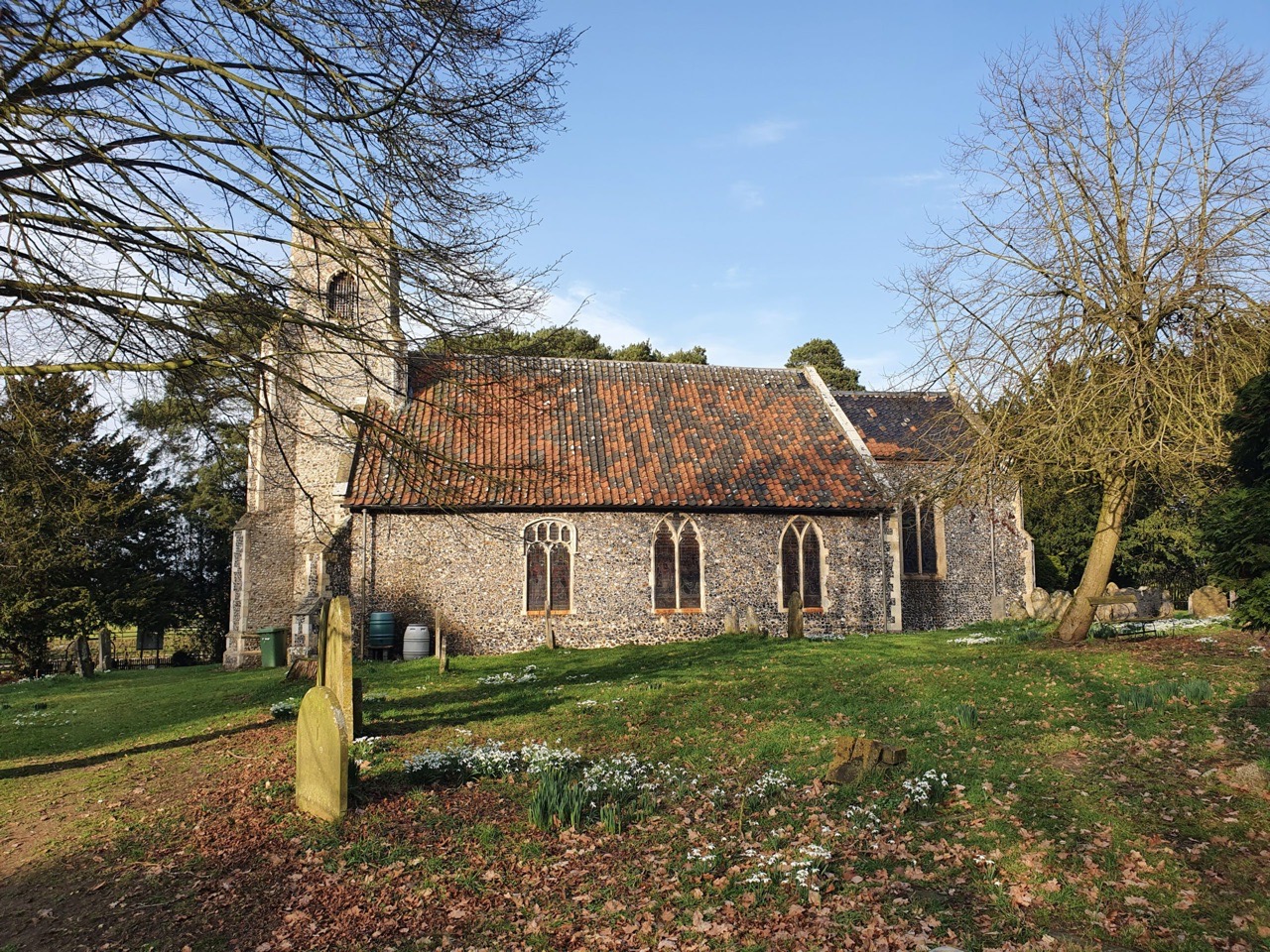
    The church’s own web-site mentions that Felthorpe is one of 58 Norfolk churches which were dedicated to St Margaret of Antioch, the patron saint of women and nurses. Although there has likely been a church here since the early Norman period, the current structure mostly dates to the fourteenth century, with a heavy restoration during the Victorian period.

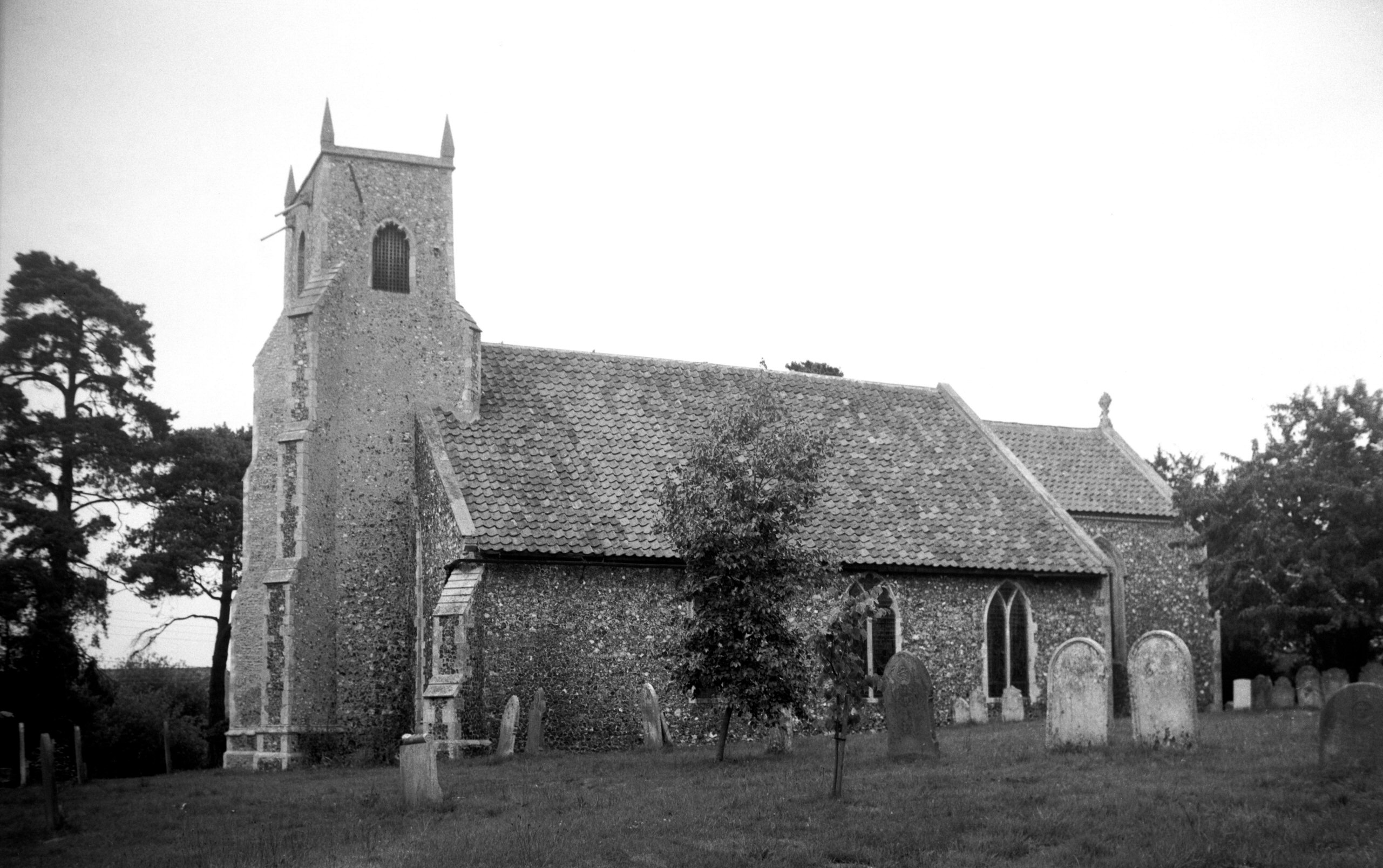
    This is the south side of the church and the south aisle was added in the nineteenth century, but the assortment of windows that were in the south wall were moved so that they could be included in the new addition.

    I like that the Victorians have retained the windows that don’t match at all with their work on the south aisle, it feels less sterile. My usual source for older images, George Plunkett, doesn’t have any photos of the church from before the 1980s, but he has this one from 1986.

    The tower is mostly fourteenth century.

    It’s not easy to show in photographs, but the tower is rectangular and not square and it does look more mis-proportioned when anything that might be definable as cute. The buttresses that go into the church itself are also strange, they seem to be forcing the weight of the tower down on parts of the structure that I wouldn’t normally expect, although the tower isn’t as tall as some and so that burden isn’t as great. There is a bell in the tower, although only one due to lack of space, but it’s the one that they put there in 1634 and still use today.

    Located just inside the church door is this memorial stone from 1693.

    Some artwork around the door, and it looks like something that the Victorians would have done.

    The entrance to the church tower, although the base of the tower has now been converted into a toilet which is no doubt quite useful for the congregation.

    Looking back from the chancel to the tower.

    And looking from the rear of the nave along to the chancel. The arcading on the left hand side (the north of the church) is from the fourteenth century, whilst that on the right hand side is from the nineteenth century (the south of the church) from when the aisle was added. The fourteenth century side is made from stone, whilst the Victorian addition is made from brick and covered in plaster.

    The chancel was heavily restored in the nineteenth century, but that window on the right was maintained and is from the medieval period. The stained glass in the church is all much more modern, nearly all from the nineteenth century. It was paid for by the Bourchier family, who are from Felthorpe Hall, and there are numerous monuments in their name around the church.

    The font is Victorian, which always makes me wonder where the original medieval font has disappeared to. So many of them ended up as garden features which isn’t perhaps ideal.

    The glass was quite reflective here, hence the angle so I didn’t photograph myself. This is an interesting idea and I don’t see it very much and it’s photos of everyone from the parish who fought during the First World War, not necessarily those who died.

    The cart where coffins would be placed.

    There was a quite informal and welcoming feel to this church, although I’m not sure how I can define that since there was no-one there. The fact that the church was open was though perhaps testament with their desire to engage with the community. All rather lovely.