Tag: Earlham Cemetery

  • Norwich – Earlham Cemetery (Marsham Elvin Wrench)

    Norwich – Earlham Cemetery (Marsham Elvin Wrench)

    This is the war grave of Private Marsham Elwin Wrench, located in the older military cemetery within Earlham Cemetery. Unfortunately, the age of this soldier are wrong, he died at the age of 48 and not 42. Marsham was born in Kensington on 13 November 1872, the son of Marsham and Margaret Wrench.

    At the 1881 census, the family lived at 43 Monteith Road in Bow where the older Marsham was working as a general dealer. Marsham the younger was the only boy in the family, living with his older sister Susan and his younger sisters Mary, Alice and Maud. As an aside, Martha Elizabeth Land lived in this house during the Second World War and she was one of 173 people killed at Bethnal Green underground station when people fell down the stairs and died in the crush that ensued.

    At the 1891 census, Marsham was 18 years old and he had decided to join the army, where he was listed as being a gunner living at the Woolwich Barracks. He doesn’t appear in the 1901 census, so was likely serving somewhere else in the army. He had by this time got married, hence his move to Norwich, although he had been widowed by the time of the First World War. Fortunately, the war records have survived, which means there’s a story of his expeditions around the world.

    Marsham joined the army in Woolwich on 11 December 1886 at the age of just 14, with his trade being listed as a musician. He signed up for the Royal Artillery, agreed to serve for 12 years and was happy to be vaccinated. He was just 4’6″ tall, weighed 5.8 stone, had brown hair and declared himself as a member of the Church of England.

    Marsham was disabled with haemoptysis in June 1911 in Karachi in what was then India, but is now in Pakistan. He was moved to a hospital in Bombay before returning to England. He rejoined the army reserve on 20 August 1914 as part of the Norfolk Regiment, briefly going to serve in France. On 11 November 1914, a medical report though declared that he was unfit for service, his usual weight of 12 stone 5 lbs had fallen to 9 stone 10 lbs and he had a frequent cough.

    Marsham died on 20 April 1920, and by nature of him having a war grave, he would have died of injuries incurred in the war, although I’m not sure what they were or where he went.

  • Norwich – Earlham Cemetery (Military Graves)

    Norwich – Earlham Cemetery (Military Graves)


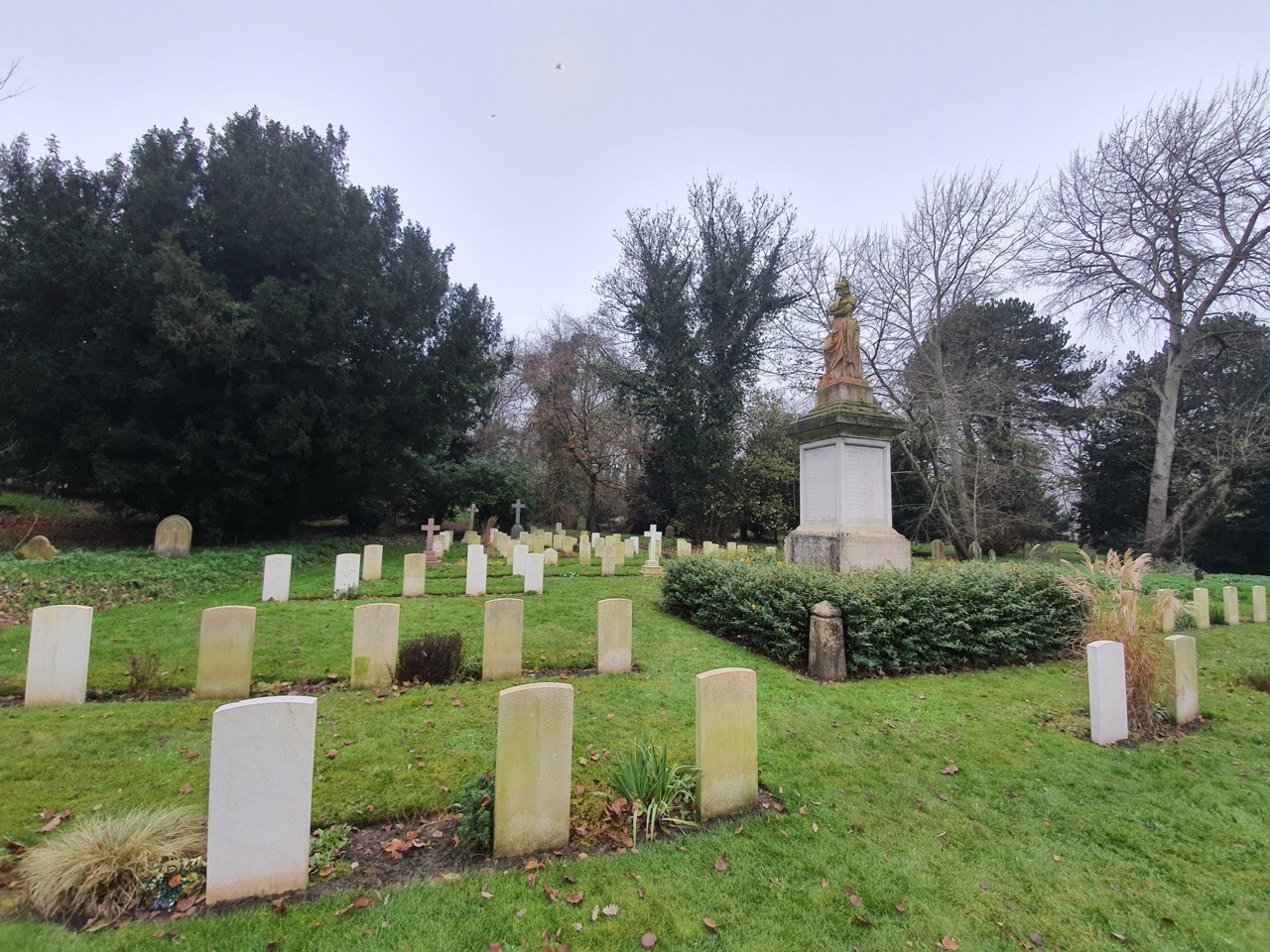
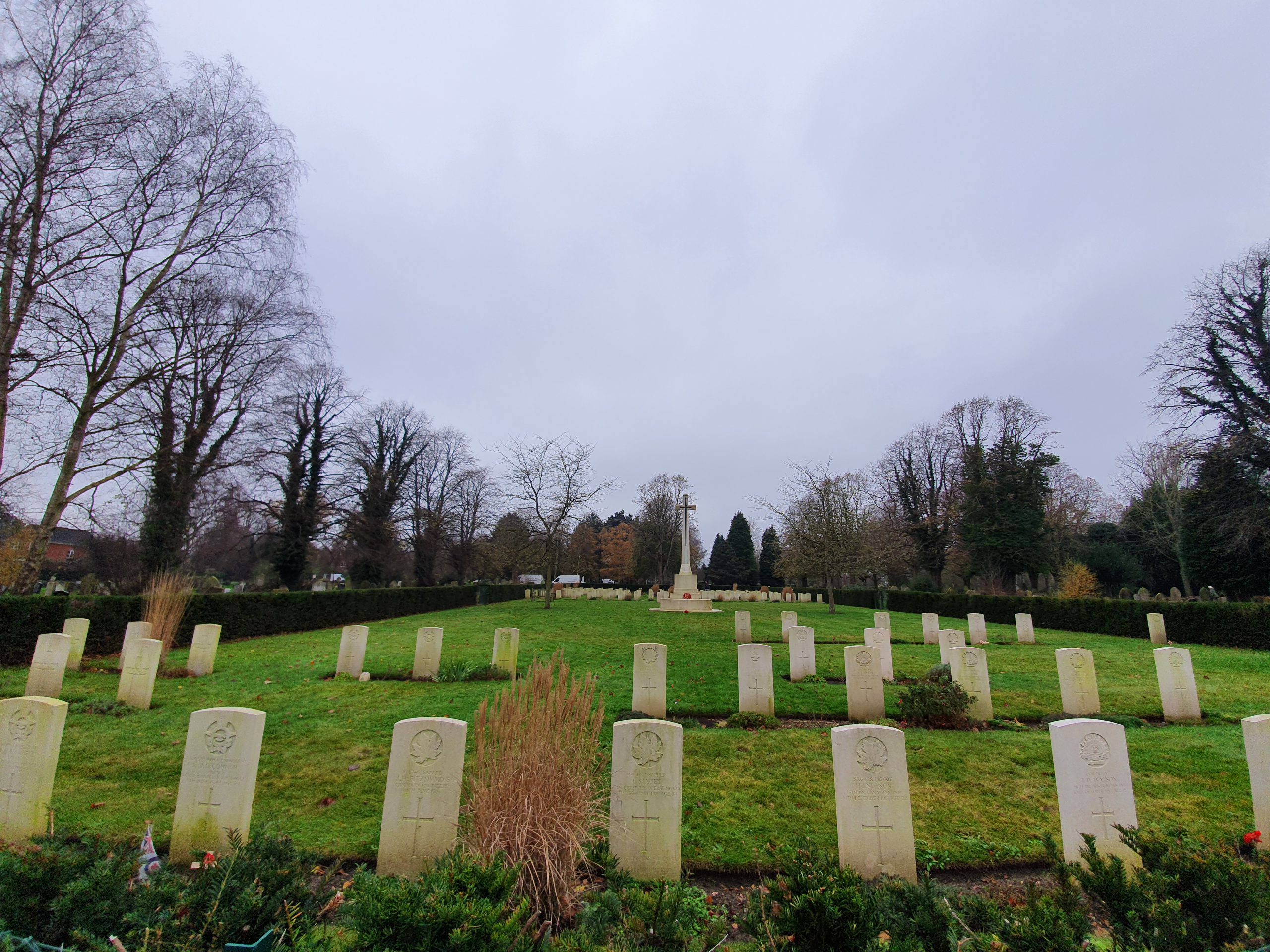
    I hadn’t realised when I visited Earlham Cemetery the other day that there are two separate areas for military graves. One is the most obvious in the centre of the cemetery and this has been in operation over the last century. There is though another which backs onto Helena Road and it’s this one which filled up during the middle of the First World War, hence why another area was created.

    A war memorial commemorating those who died in the 1870s.

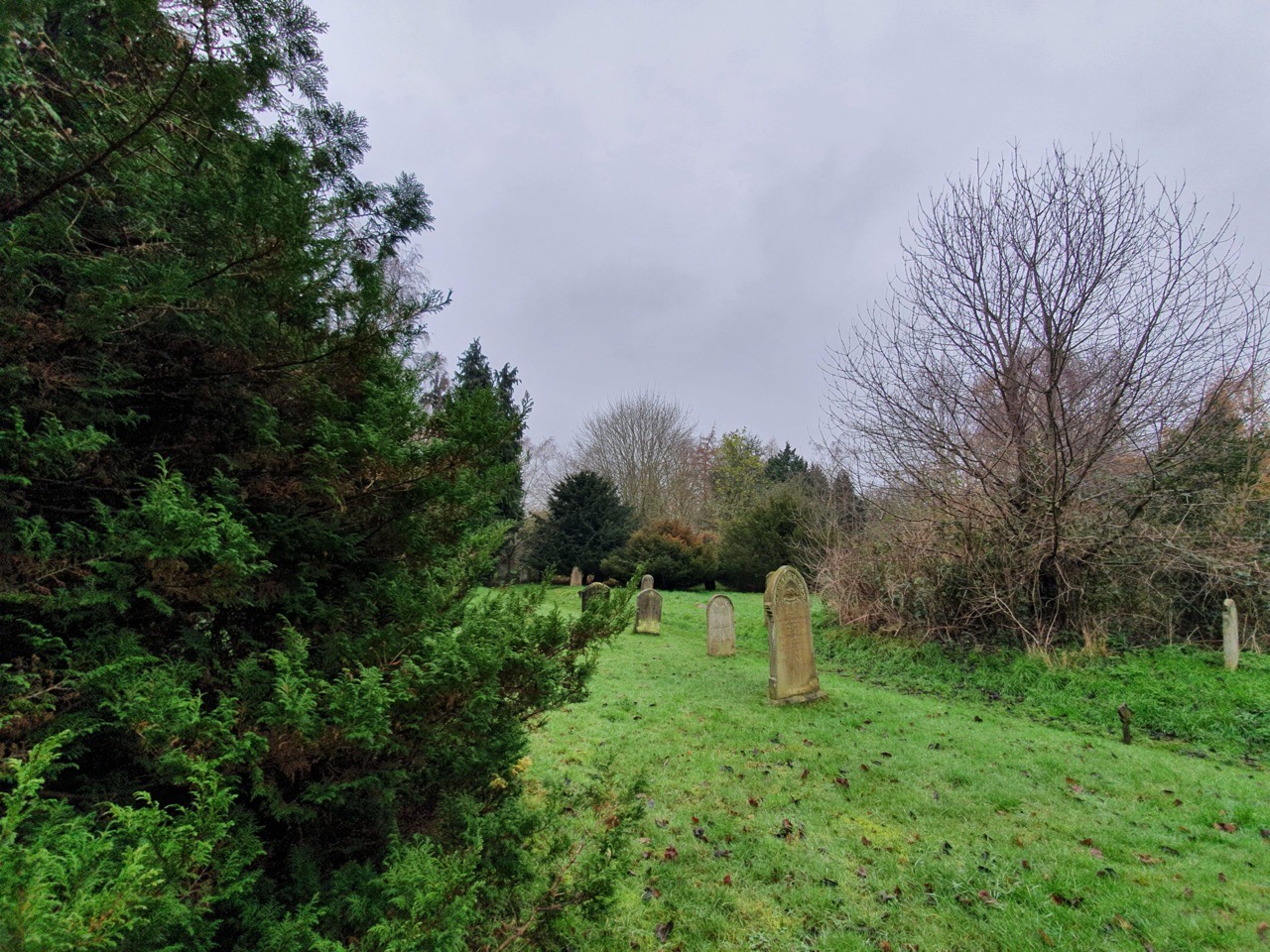
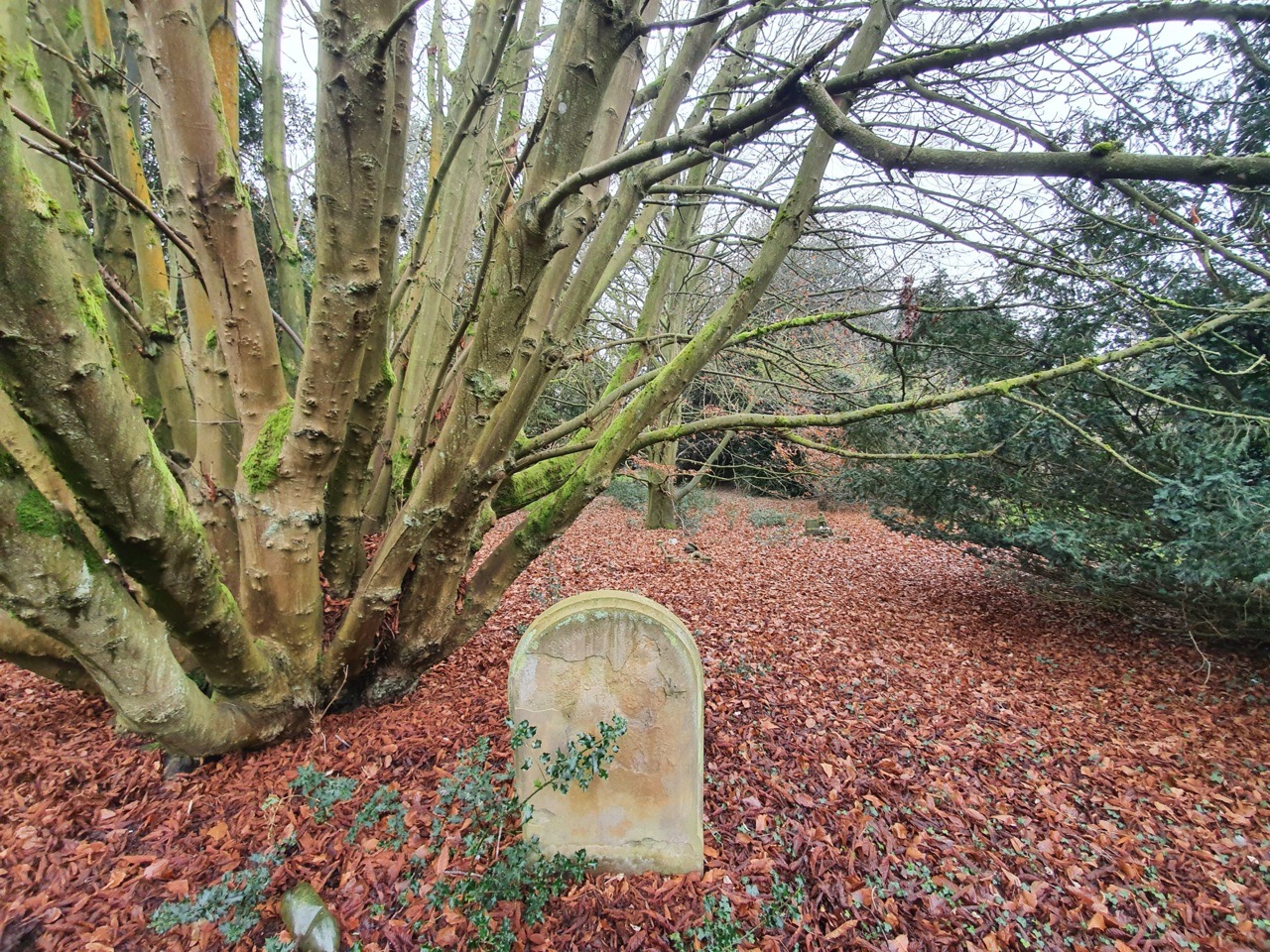
    And below are two of the different grave styles in this area of the cemetery, before the standardisation that came following the number of deaths during the First World War.

  • Norwich – Earlham Cemetery (Arthur Edward Buttle)

    Norwich – Earlham Cemetery (Arthur Edward Buttle)

    This is the grave of Private Arthur Edward Buttle which is located in the war graves area of Earlham Cemetery. Unlike some other individuals buried here, there is plenty of information available about Arthur, not least as his war records have survived. Arthur exact birthdate is a slight mystery though (more on this later), it’s not listed on either of his school admission forms (I suspect that his father had forgotten it), even though it was for other children. He was born in 1896, the son of George Buttle and Amber Buttle (nee Bridges).

    At the 1901 census, Arthur lived at 108 Oak Street (unless there has been some renumbering, that house is still there) with his parents, his father working as a shoemaker and his mother working as a shopkeeper. He also lived with his older sister and four brothers, with the girl being the oldest in the family and so I’m not sure what she thought about having five younger brothers. Arthur attended St. Augustine’s School between 22 April 1901 and 30 August 1901, and then again from 28 April 1902 and 18 July 1902, and at this time his family had moved to 8 Gildencroft (this house has since been demolished).

    At the 1911 census, Arthur lived with his father and three of his brothers at 58 Westwick Street (this house has since been demolished as well). Like his older brother, Arthur worked as a heel builder, whereas his father now worked as a fish hawker (someone who sold fish from a cart or similar).

    Then, suddenly, Arthur moved to Oldham and I can only think that this was because of a love interest. He married Sarah Jane on 2 October 1915 in Oldham, living there with her at 156 West Street in the town (another house since demolished). Arthur got a job at Leighs Spinning Company in Oldham, a company which is still trading today, as a cotton spinner and he joined the Textile Trades Union. Unfortunately, it is probably lost to history what Arthur thought of his new home in Oldham compared to Norwich.

    Arthur’s life changed when he was called up to fight in the First World War, going for his medical at Ashton Barracks on 28 June 1916. It was reported that he was 5’3″ in height, he had a chest of 33 inches and he weighed just 6.5 stone. It’s not a great surprise that the medical officer noted “he has a poor physique”, but fortunately, this was no obstacle for the military, the officer had added “will develop”. I don’t want to make assumptions, but I’m doubting whether Arthur had a particularly wealthy lifestyle, so food may not have been easy to find. As an aside, it was noted that Arthur was 19 years and 207 days old on the day of his medical, a somewhat exact figure that someone no doubt had to sit and work out. This does though help with his birthdate, which is something around December 1896.

    After undergoing training Arthur was put on a boat going from Folkestone to Boulogne on 20 January 1917. His was not a pleasant war, his records show that he was sent to the front line, but he suffered from what he himself called frost-bite. The medics had decided nationally that this wasn’t an appropriate term and earlier on in the war it had been renamed trench frost-bite, which then became better known as trench foot, which is what the doctors said Arthur had in April 1917.

    Worse was to come for Arthur, he was wounded on the front line in France on 23 March 1918 and he received some form of operation the day after. He spent time at the 1st General Hospital in Rouen, then the Oakhurst Red Cross Hospital in Erith and then the Royal Herbert Hospital in Woolwich before being moved to Dundee War Hospital on 9 April 1918. He remained in Dundee until 14 June 1918 when he was moved to the 1st Scottish General Hospital in Aberdeen, where he remained until 4 September 1918. His whereabouts between then and 29 September 1918 aren’t known (although more on that later), but he managed to get what I will politely refer to as an STD and won’t dwell on the details. This clearly wasn’t a rare problem, it’s the only illness that he had which the army had a stamp for, to save the disease having to be written out by the doctor. He entered Central Hospital in Lichfield on 29 September 1918 and left there on 7 January 1919.

    On 17 May 1919, Arthur went for a medical and it was said there that his disability was rated at around 50% on the rough scale that they used. It was noted that he was suffering from a scar above his left eye where he had received the gunshot wound on 23 March 1918, which was leaving him with dizziness and eyesight problems. He was also struggling to walk longer distances as the problems with his trench foot hadn’t cleared up. The doctors discharged Arthur from the army at the medical and this was confirmed in his formal papers issued on 19 May 1919.

    I’m not sure what Arthur thought about the army, but probably not much, as he was punished for two unofficial absences, the first on 13 September 1918 when he was fined 4 days pay, then again on 11 January 1919 when he was fined 11 days pay. During the war he had fought with the Manchester Regiment as he was living in Oldham, ending up in the 3rd Battalion, but also fighting with the 2nd and 22nd Battalions.

    Arthur died on 12 December 1920, at the age of 24.

  • Norwich – Earlham Cemetery (Alfred William Slaughter)

    Norwich – Earlham Cemetery (Alfred William Slaughter)

    This is the grave of Alfred William Slaughter located in the war graves area of Earlham Cemetery, although as an aside I’ve now discovered there’s another military burial area (where members of the Britannia Barracks were buried, but this became full by the middle of the First World War) and so I’ll have to pop back at some point.

    One question I have about this grave, if anyone happens to know, is what it’s doing here. The Commonwealth War Graves Commission (CWGC) consider anything after 31 August 1921 to be outside their scope until the Second World War. So, the CWGC list that there are 534 war dead at Earlham Cemetery, of which Alfred is excluded. So, quite why he was buried here I don’t know, although it explains why the format of the text on the gravestone is different to nearly all of the others.

    Alfred William Slaughter was baptised on 29 September 1875 at St. Lawrence’s Church in Norwich, the son of Alfred William Slaughter and Margaret Caroline Slaughter (nee Springall). By the time of the 1911 census, he was living at 28 Rose Lane in Norwich, where he worked as a shopkeeper. He was living with his wife Lilian Maud, and his sons Alfred William and Clifford Henry. For reasons unknown, all of the family had been born in Norwich, but the younger Alfred William was born in Nottingham.

    Alfred died on 8 February 1924 at the age of 48, although I can’t find under what circumstances that happened. His probate was completed on 18 June 1924 and he left £1,251 to his wife, Lilian Maud. His wife had moved to 23 Hastings Avenue in Hellesdon by the time of the 1939 register, where she was listed as living on her own. Her probate was completed later that year, when it was noted that she died at the Post Office at Griston. The details of her death were added to Alfred’s grave, although the written record says that she died on 29 March 1951, nor the 26 March listed on the gravestone.

    So, why Alfred has a grave where he does, I’m not sure. Unfortunately, his military records don’t seem to have survived, making it harder to resolve that little mystery. This is yet another situation where I’m sure that there’s a story here, I just can’t work out what it is.

  • Norwich – Earlham Cemetery (Charles Notley)

    Norwich – Earlham Cemetery (Charles Notley)

    This is the grave of Corporal Charles H Notley, located at Earlham Cemetery in Norwich. I haven’t been able to do much with this one, there are two Charles Notleys and I can’t find enough out to work out which one this is to work back. So, all that I know is that his service number is 5499057 and he was in the Army Catering Corps (I think that’s the one I’d have joined if I was forced into the army), initially with the Northamptonshire Regiment and then attached to the Royal Pioneer Corps (or just the Pioneer Corps at the time, the Royal bit came in 1946). Charles died on 24 June 1944.

    So, another one that I’ll come back to in the future….

  • Norwich – Earlham Cemetery (Charles Weavers)

    Norwich – Earlham Cemetery (Charles Weavers)

    This is the war grave of Sapper Charles Weavers, located at Earlham Cemetery, in the main Commonwealth War Graves section. I can’t get very far with this one. I know that he was born in around 1882, the son of Charles and Thereza Weavers and in 1891 they lived at Leonard Street in Norwich, with the older Charles working as a fishmonger. But I can’t find the younger Charles on either the 1901 or 1911 census, he’s not mentioned in the media and his military records have been lost.

    I do know that he enlisted on 3 May 1915 with service number 85263 and he was discharged on 29 January 1919, having fought with the 34th Norfolk Division and the Royal Engineers G Depot. He was discharged following a medical, when he was aged 38, for the reason of being “no longer physically fit for service”. Charles was awarded with a Silver War Badge, often worn by men to show that they had fought in the war amidst people abusing them during the conflict for being in the UK.

    Charles died on 10 February 1922 at the age of 40, and I’d like to know more of the story here….

  • Norwich – Earlham Cemetery (Frederick Thomas William Jillings)

    Norwich – Earlham Cemetery (Frederick Thomas William Jillings)

    This is the war grave of Frederick Thomas William Jillings, located at Earlham Cemetery, but not in the main Commonwealth War Graves section. Frederick was born in Lowestoft in 1901, his parents being Frederick and Ellen Jillings, who lived at 11 Bevan Street in the town. Frederick (the elder) had a boot repairing shop and Frederick had two older sisters, Elsie and Florence.

    By the 1911 census, the family had moved to 4 Gertrude Road in Norwich, with Frederick the older being a boot machinist, as were Frederick’s two older sisters. When the First World War broke out, Frederick was only 13 and since only 18 year olds were ever conscripted, it probably felt a long way away for him. There was sadness in the family though in 1917, when Ellen died, leaving her husband and three children.

    The First World War loomed large though and Frederick joined up in mid-1918, just when the conflict looked like it might be coming to an end. He was sent to join Number 2 Southern Company in Hampshire, but was then moved to the Royal Army Medical Corps (RAMC) in Blackpool. Above is a painting (© IWM Art.IWM ART 3681) of the inspection tent for the RAMC in the town, which is the unit that Frederick was sent to. At this time Frederick was told he needed glasses during his medical inspection and it’s a nice thought that he was perhaps one of the soldiers in the image….

    Unfortunately, Frederick’s war came to an end after just 149 days of service, he became ill and was transferred to Colchester General Hospital. He died there of bronco-pneumonia on 12 February 1919, at the age of just 18.

    As an aside, Frederick (the older) continued living at his property at 4 Gertrude Road in Norwich until his death in 1944, with his two remaining children both staying single and living with him. They must have been fiercely difficult years for him during the First World War, losing his wife and son within just a couple of years each other.

  • Norwich – Earlham Cemetery (Harry Land)

    Norwich – Earlham Cemetery (Harry Land)

    This is the war grave of Harry Land, located at Earlham Cemetery, but not in the main Commonwealth War Graves section. Someone might contact me here, as I’ve had to make a big assumption to work this one out. The military records of Harry aren’t available, nor is there any information on the Commonwealth War Graves web-site giving further details of an address of next of kin.

    So, working back, he served in the 10th battalion of the Suffolk Regiment, a reserves unit which never left the UK. On the date of Harry’s death, this battalion were stationed in Dovercourt in Essex, having just moved from Colchester. And on the day that Harry died, 23 April 1916, a death was registered in that area of someone with the same name who was born in 1884, so we now have a birthdate.

    There is only one Harry Land in East Anglia that I can find with that birth-year, he was born on 24 May 1884 and was the son of Harry and Charlotte Land. At the 1891 census, Harry (younger), his parents and siblings were living at King’s Road in Norwich, with Harry attending the Prospect Row Council School and then the Carrow Boys School. The family lived at Cypress Street at this point, moving to 9 Geoffrey Road in Norwich by 1901, when Harry was working as a gas-fitter and bell-hanger. At the 1911 census, Harry still lived with his parents and siblings, this time at 45 Carlyle Road in Norwich and he was now working at a corn and seed store.

    This is the best I can do, and I don’t understand why he would be in the Suffolk Regiment, something which concerns me slightly about whether this is right. Anyway, hopefully this little mystery might get solved one day.

  • Norwich – Earlham Cemetery (Walter Harry Loades)

    Norwich – Earlham Cemetery (Walter Harry Loades)

    This is the war grave of Walter Harry Loades, located at Earlham Cemetery, but not in the main Commonwealth War Graves section.

    Walter was born in 1894, the son of Joseph and Caroline Loades (nee Chatton). He had an older brother, Sidney, and a younger brother, Reginald, and they lived at 24, Brunswick Road in Norwich (in a property which looks on Google Maps to have been pulled down). Walter worked as a clerk and I’d like to think that his life was peaceful (well, he was single anyway).

    Unfortunately, the First World War meant that Walter had to enlist, and as his service records have survived, there’s plenty of information about what happened next. He saw a medical officer in Grantham on 26 May 1916, with Walter bring described as healthy. The records are detailed enough for us to know that he was 5’6″ tall, with a 33 inch chest and a weight of 9.7 stone.

    He joined the machine gun corps and was sent as part of the British Expeditionary Force to serve in France. The records note that he was on a boat from Folkestone to Boulogne on 17 July 1916, then he was transferred to nearby Camiers the day after. On 23 July 1916, Walter joined his company, but was sent to a field hospital on 2 November 1916 with scabies, a common problem in the trenches.

    After returning to his company, Walter was badly wounded on 16 February 1917, with gunshot wounds to his legs, face, elbow and mouth. He was sent for medical treatment to the hospital shop Gloucester Castle on 9 March 1917, then transferred two days later to the Mill Road Infirmary in Liverpool. He remained there until 23 May 1917 when he moved back to his home county and the Norfolk War Hospital (later better known as St. Andrew’s Hospital) where he remained until 5 September 1917.

    Unfortunately, his medical situation remained dire and he was transferred to Tooting Hospital for treatment. He died there on 11 September 1918 at 15:00 with the doctor noting that his ‘spastic paraplegia’ was the cause of death. Walter was buried at Earlham Cemetery on Tuesday 17 September 1918 at 12:00 with his family present at his burial. The War Office seemed unaware of the burial and when enquiring was told that Walter’s father, Joseph, had arranged the burial for his son. This likely explains why this grave is in a different part of the graveyard to the war burials, with the headstone I assume being added at a later date.

    The declaration signed by Joseph on behalf of his deceased son, confirming the death and having that witnessed by Alfred Gates, the Vicar of Lakenham, who lived at 7 Newmarket Road in Norwich. Joseph died in the first part of 1939, so at least never saw the outbreak of another war which he thought his son had died in order to prevent. I can’t help but feel that this must have been endlessly traumatic for the family, not just a death but watching their son seriously injured for such a long period.

  • Norwich – Earlham Cemetery (Henry Rowles)

    Norwich – Earlham Cemetery (Henry Rowles)

    This is the war grave of Henry Rowles, located at Earlham Cemetery, but not in the main Commonwealth War Graves section. There’s not much information on this gravestone, nor indeed on the Commonwealth War Graves web-site, and I had expected another story of a young life cut short. Instead, I’ve been on an unexpected journey with Henry….. (and I hope I’ve got this story right).

    Henry Rowles was born in Witney on 17 February 1857, the son of Henry and Elizabeth Rowles. In 1861, he’s listed as living with his parents and siblings on the High Street in Witney, with his father working as a fuller. Things went a bit awry and at the 1871 census, Henry was listed as residing at Her Majesty’s Pleasure at Oxford County Gaol (which only finally closed in 1996). He had robbed a counting house with a friend called Henry Davis and was sentenced to four months imprisonment with hard labour. A Henry Rowles was executed at the same prison a few years later for murder, but they don’t appear to be linked.

    Anyway, by the 1881 census, Henry’s teenage waywardness had been rewarded (or punished, depending on how you look at it) when he was serving Her Majesty in the Dragoon Guards, training in Aldershot. For reasons unknown, he met Emma Jackson in Norfolk and they were married in 1883, being listed as living in Queen’s Road in 1891 along with their only child, Frederick.

    By the 1901 census, Henry had moved to 9 St Mary’s Alley in Norwich with his now much larger family, although he had lost two children. Bringing this story forwards to the First World War, it appears that he enlisted in the Royal Defence Corps. This was a unit that had former soldiers in, or soldiers who were too old, who weren’t sent overseas but instead performed guard duty roles in the UK, such as guarding bridges, structures or prisoners of war. It’s likely that Henry was doing the latter, as that’s what most members of the Corps were doing.

    When in service for the 155th company of the Royal Defence Corps, Henry died on 8 November 1918 with the flu, with his body being returned to Norwich for burial. Unfortunately, his military records have been lost and so there’s a chunk of the story here that can’t be told. But, I imagine Henry was an interesting character……