Tag: Dereham Church

  • Dereham – Church of St. Nicholas (Robert Larner)

    Dereham – Church of St. Nicholas (Robert Larner)

    Located in the churchyard of Dereham Church is this gravestone commemorating the life of Robert Larner. He was born in 1819 and was married to Sarah Yull in 1847.

    At the 1851 census, Robert lived at Toftwood Common, along with his wife Sarah, who was five years younger than him. They had two children at this time, Richard who was aged 2, and Matilda, who had only just been born, with Robert working as a farm labourer. Matilda was married in 1879, sadly after the death of her father.

    Robert died on 17 May 1868, at the age of 48, and was buried on 21 May 1868. Unfortunately, the words at the bottom of his grave are no longer readable and his age in the church’s burial book states that he was 49.

    So, there’s not much that I could find out, but I can almost imagine a 19-year old Richard and a 17-year old Matilda standing there on a Thursday afternoon (and I checked, it was a Thursday….) burying their father. And on 6 August 1879, Matilda would have no doubt have walked over to the gravestone when she was married in the same church, to a William George Hall from Hove in Brighton. I think my imagination is getting a bit vivid with the stories I’m creating in my mind here…..

  • Dereham – Church of St. Nicholas (Where are the Older Gravestones?)

    Dereham – Church of St. Nicholas (Where are the Older Gravestones?)

    One mystery that Richard and I have been discussing on our church walks is where are the gravestones from before 1800? The Hancock Cemetery in Quincy, Massachusetts has many gravestones from the eighteenth century surviving, but in most (but not all of course) churchyards in the UK, there is relatively little before 1800. There are usually some tombs inside churches that are older, but it’s rare to see gravestones from that period outside.

    And so I’ve been reading up on this…. The answer seems to be complex, as history usually is.

    The first element is practical, gravestones aren’t necessarily that resilient and weren’t really designed to last for hundreds of years. Stone erodes, gravestones fall and sometimes they have to be removed because they’re badly damaged.

    The second element is that grave markers before 1800 were often made from wood, which is unlikely to last for much more than fifty years. They were ornately carved in many cases, but not designed to be in their place for centuries. There are some of these at the churchyard in Matlock, but they’re relatively rare now.

    The third element is that most people couldn’t afford a stone gravestone, they’d be expensive and the stone would often have to be imported into the area. Transporting lumps of rock isn’t cheap, it all adds to the cost and a poor family couldn’t have necessarily afforded this. In some areas, rock is more prevalent and this was evident in churchyards such as those as Eyam in Derbyshire, where there are more stones from before 1800.

    The fourth element is that in some churchyards, there wasn’t that much space. Anything older might have been removed in an effort to create space for new burials.

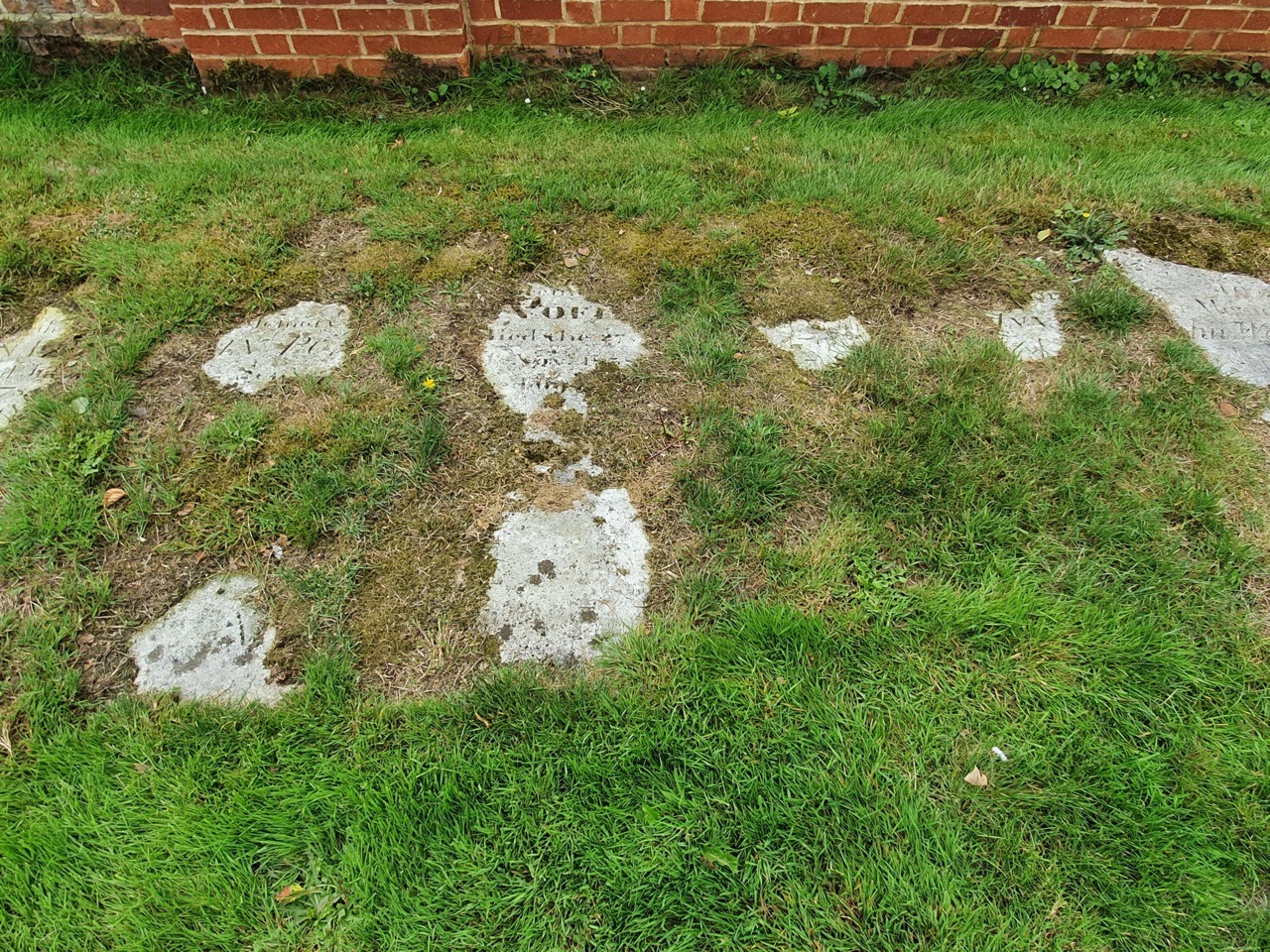
    So, with all those elements combined, it’s more surprising that there are any stones left at all. But, they are there, I found a handful of eighteenth-century gravestones standing in Dereham’s churchyard whilst meandering around today. I also found something I haven’t seen before, eighteenth-century gravestones (and some later ones) which have been laid down and have since been mostly covered over by grass.

    These stones are hard to read, but I could make out a few eighteenth-century dates. They appear to have been moved here at a later date, for reasons that are unknown to me. But, this was an interesting example of where in a churchyard the stones have gone, a handful are still present, a handful have likely been lost and a few have been left to be covered over.

    I suspect I shall return to these thoughts again as I debate with myself exactly where gravestones in Britain have gone….

  • Dereham – Church of St. Nicholas (Overgrown Grave)

    Dereham – Church of St. Nicholas (Overgrown Grave)

    In a similar vein to the grave at Attleborough church that was overgrown, there’s something quite corporeal and spiritual (if something can be both these things) when graves get covered like this.

  • Dereham – Church of St. Nicholas (Bell Tower)

    Dereham – Church of St. Nicholas (Bell Tower)

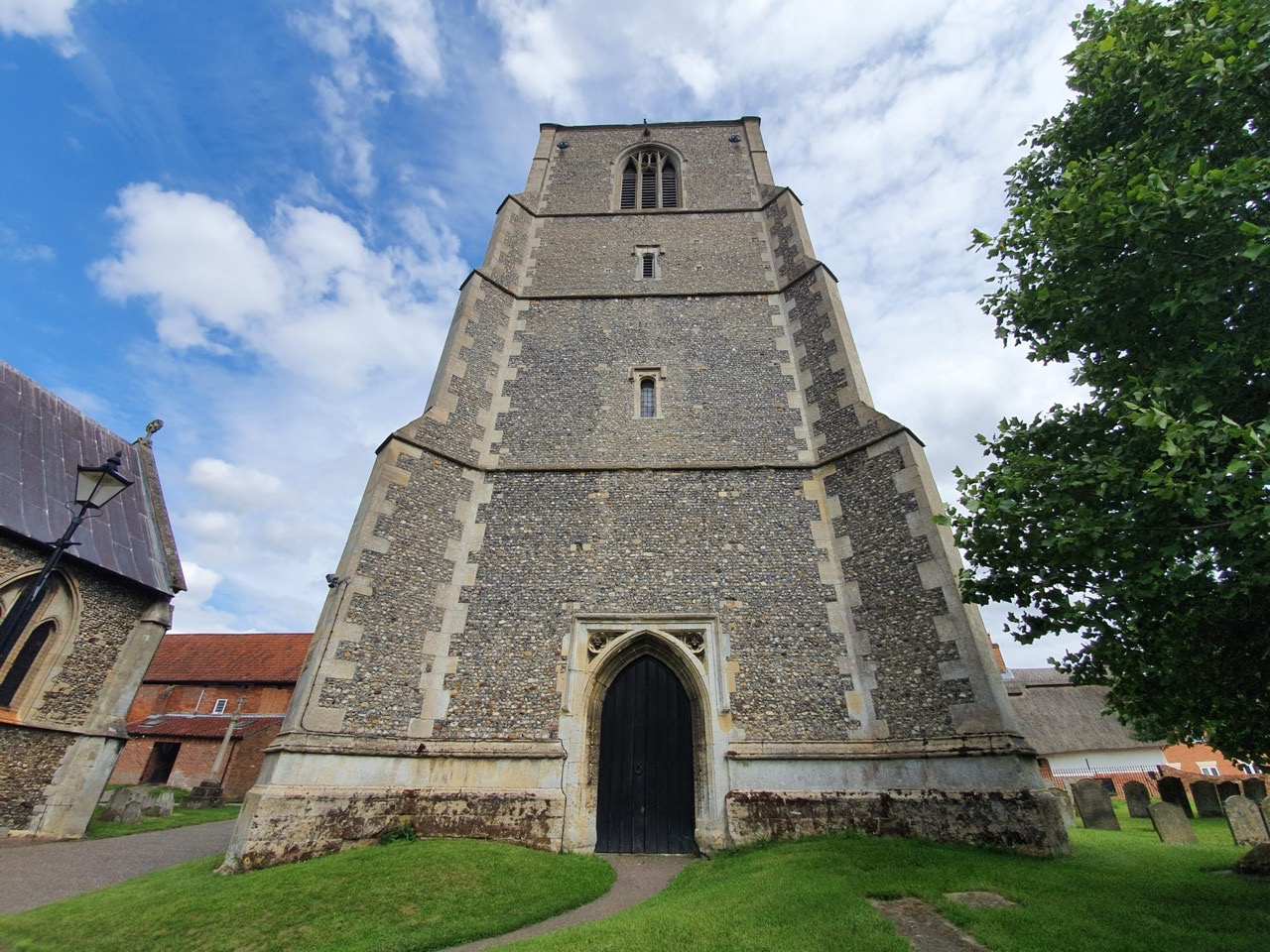
    When they wanted some new bells for Dereham Church they realised that their existing church tower wouldn’t be strong enough. So, they came up with a new plan in 1520, which involved building a separate tower within the churchyard. From the side, the tower looks as though it’s a church of its own, it’s a substantial affair.

    The tower was built in the early sixteenth century, comprising of four layers and its height has made it useful as the location for the town’s public clock. The clock was added in 1902 and was designed by JB Joyce Clockmakers of Whitchurch, with their successor company restoring it in 2008 when they also added gold to the clockface. This separate bell tower set-up isn’t unique, but is rare in the UK, the most notable form is probably that at Chichester Cathedral, although Norwich Cathedral once had one.

    During the Napoleonic Wars, the tower was used to house French prisoners of war. One such prisoner, Jean de Narde, tried to escape on 6 October 1799, managing to climb a tree and he refused to come down when requested. So they shot him out of the tree, which wasn’t ideal and it received some criticism from locals. He’s buried in the church’s graveyard, although he didn’t get a gravestone until 1858 when Anglo-French diplomatic relations had improved a bit.

  • Dereham – Church of St. Nicholas

    Dereham – Church of St. Nicholas

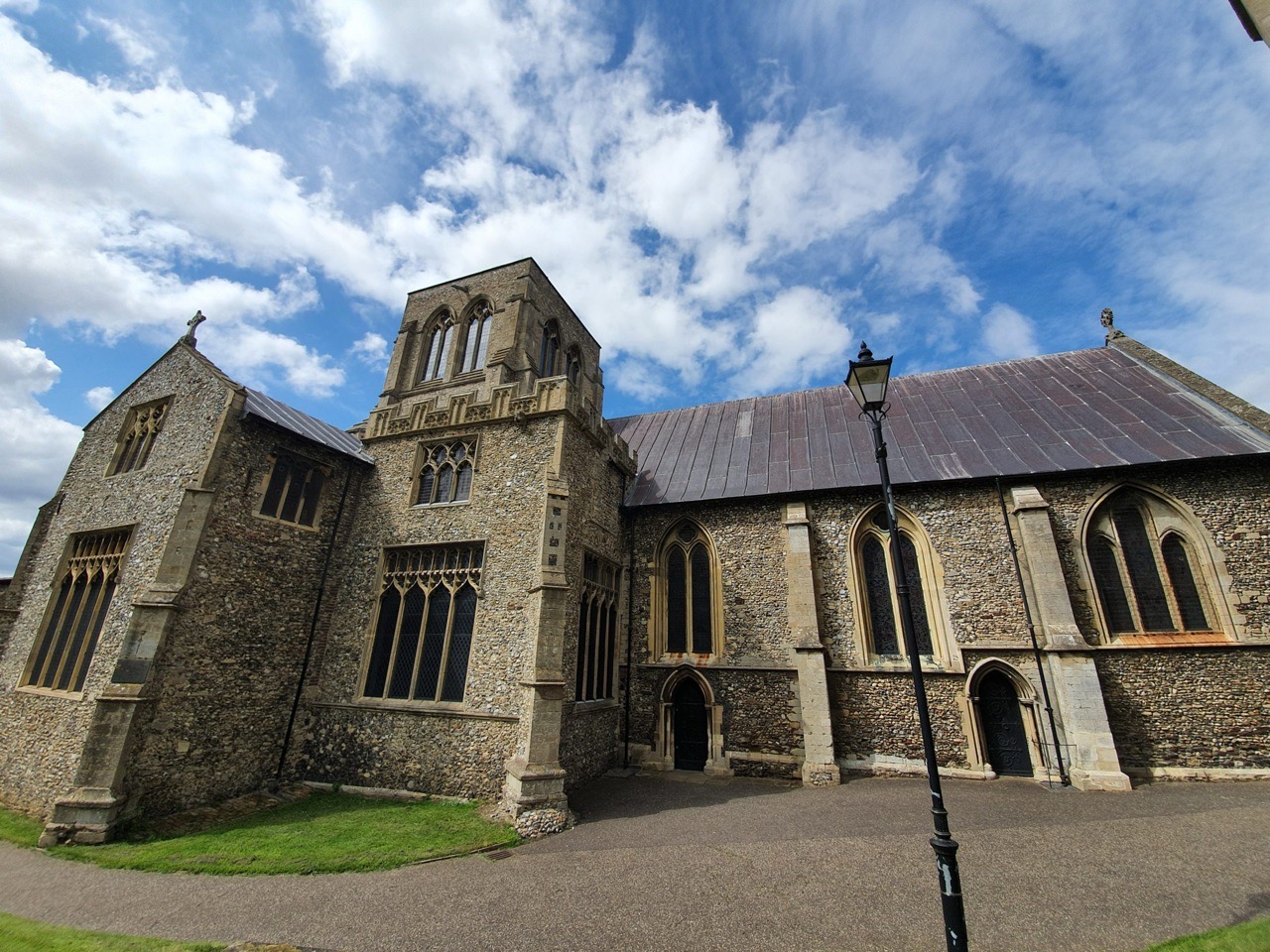
    The Church of St. Nicholas in Dereham is quite a lumpy affair (this isn’t a proper architectural term and I imagine that Pevsner would be appalled at my language here) and there’s a separate bell tower arrangement (more on which in another post) because the previous one wasn’t strong enough to support the lovely new bells the church had acquired. There was a church here as early as the mid-seventh century (although the Danes destroyed that when they came to visit), although the current structure primarily dates from between the twelfth and fifteenth centuries.

    What is left of the lantern tower is visible in the above photo, it was reduced in height in 1539 following the completion of the bell tower. It has been done neatly, but it means that to me the church doesn’t feel like it has enough height.

    The southern side of the church.

    The south-west porch, the inner door here to the church is the earliest part of the building, dating to the twelfth century.

    The west end of the church.

    The east end of the church, which is also the chancel end.

    The north side of the church.

    I decided against going into much detail here, as the church is so complex I’ll need to break it up (the blog post I mean, not the church itself). Partly to ensure that I can understand what’s going on, but fortunately, there are some pretty complete histories available for this church.

    I have visited the interior before, I’ll locate the photos, although hopefully I’ll get to see the interior again soon enough when things return to some sort of normality. I have though written about St. Withburga’s Well before, which is located in the churchyard.

  • Dereham – St Withburga’s Well

    This well was originally the burial place of St. Withburga, but it is said that in 974 monks from Ely took her body to be buried at Ely Cathedral. When the locals discovered that someone had pinched the saint they had happily buried in their graveyard they were rather displeased and decided to go and have a fight with the Ely monks. The fight didn’t go very well as the Dereham men got into boggy ground in Ely, so they came home. When they arrived home they found that the burial site was now full of water, and they liked this water and so it became a pilgrimage site, although it’s behind iron railings to stop people from falling into it. The water still flows today, and it remains a site that pilgrims come to visit.

    St. Withburga, or Wihtburh, died in 743 and she founded a religious house in Dereham. She was also part of the family who ran the local area and her body still remains in Ely Cathedral, although relics relating to her were mostly destroyed during the Reformation.

    The inscription on the stone reads “the ruins of a tomb which contained the remains of Wethburga, youngest daughter of Annas, King of the East Angles who died AD 654”.

    The EDP from 1896 mentions that the site of the well was once a baptistery where locals were baptised, but this was changed in 1752 when it was converted into a bath. Then in 1793, a brick bath house was built over the top and apparently one local decided to have a bath in the water every single week. He apparently lived “to a good old age”, so it didn’t do him any harm.

    The well is located just in front of St. Nicholas Church in Dereham.