Tag: Dachau

  • Dachau – Dachau Concentration Camp (Claus Schilling)

    Dachau – Dachau Concentration Camp (Claus Schilling)

    20250821_111043

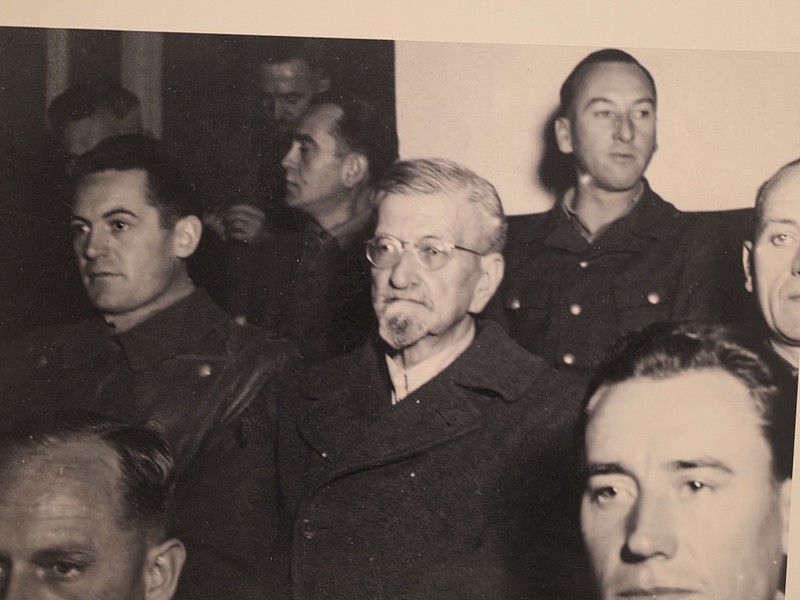
    Claus Schilling (1871-1946) is not a name that I had heard of and he sits very uncomfortably in medical history, though it is one that deserves remembering for the darkest of reasons. A German tropical medicine specialist born in 1871, Schilling built his reputation on malaria research in Italy before the war. That early work was legitimate enough, but his career took a grotesque turn under the Nazi regime when his skills were redirected towards human experimentation at Dachau concentration camp.

    In 1942, by then in his seventies and retired from normal academic life, Schilling was encouraged by Heinrich Himmler to continue his malaria studies, but now using prisoners as unwilling test subjects. The barracks at Dachau were adapted for this purpose, and over the next three years thousands of inmates were deliberately infected with malaria parasites so Schilling could observe the progress of disease and trial treatments. The authorities were told me Schilling that his experiments would be legitimate and avoid suffering, but I can’t imagine the Nazis would have stopped him if he had told them the truth.

    The conditions were absolutely brutal for those chosen to be his patients. Prisoners were exposed either through bites from infected mosquitoes or by being directly injected with parasites. Once ill, they were given a variety of drugs, some experimental, others known to be ineffective, in order to measure responses. Many suffered agonising fevers, complications or long-term debilitation. It is estimated that around 400 prisoners died as a direct result of these experiments, though the suffering of survivors is harder still to quantify.

    Schilling himself seemed to justify the work as a contribution to military medicine, I assume actually convincing himself of that. Malaria remained a problem for troops in southern Europe and North Africa, and his argument was that the research might save German soldiers’ lives. But the cost was borne entirely by the prisoners, who were stripped of choice, consent or dignity. It was medical science twisted beyond recognition, an exploitation of knowledge for cruelty rather than healing. When the war ended, Schilling was arrested by American forces. At the Nuremberg Doctors’ Trial held between 1946 and 47, his actions were laid bare alongside those of other physicians who had abused their positions under the Nazi system. Found guilty of war crimes and crimes against humanity, he was sentenced to death. Schilling was hanged in Landsberg Prison in May 1946, aged 74, one of the relatively few who lost their lives for what happened at Dachau.

    There really wasn’t much compassion or understanding to him, he spoke in English when he told the war crimes trial:

    “I have worked out this great labour. It would be really a terrible loss if I could not finish this work. I don’t ask you as a court, I ask you personally to do what you can; to do what you can to help me that I may finish this report. I need only a table and a chair and a typewriter. It would be an enormous help for science, for my colleagues, and a good part to rehabilitate myself.”

    It seems to me that this type of behaviour is the most challenging of all the atrocities that took place during the Second World War. A medical doctor, who I assume had been trained to alleviate pain, had instead gone down another route and dehumanised people for his experiments. He doesn’t appear to have been a Nazi in terms of joining early or showing political interest, he just got swept along with the hate of the Nazi regime and became a war criminal. I’m not sure I understand how what appeared to be a mild-mannered doctor managed to end up being one of the worst war criminals of his generation.
  • Dachau – Dachau Concentration Camp (Former Dormitories)

    Dachau – Dachau Concentration Camp (Former Dormitories)

    20250821_095907

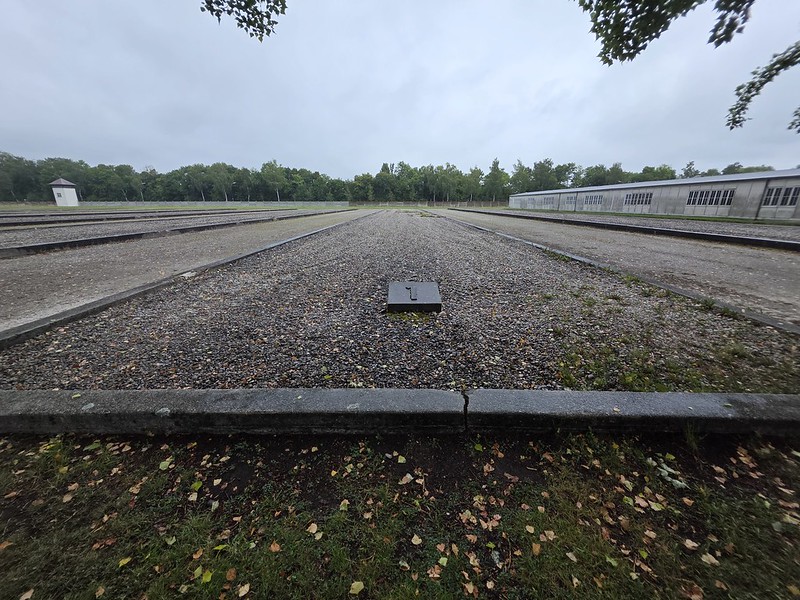
    Although there is one recreated dormitory building at Dachau, all of the former dormitory buildings on the left and right of this rather stately looking poplar lined main avenue (known as Camp Road) have gone with only their footprints remaining. The long rows of prisoner accommodation that once stretched across the roll-call square are now reduced to just these outlines on the ground, faint concrete or gravel borders marking where walls once stood. Walking down here in the rain, it was hard to really imagine just how noisy and unpleasant this area would once have been.

    20250821_095549

    These footprints are the remains of the camp’s other dormitories, the majority of which were demolished after liberation. Their traces are preserved not as reconstructed facsimiles but as bare, skeletal floor plans so visitors have to use their imagination to contemplate the scenes that once unfolded here. The choice not to rebuild them all was deliberate as to reconstruct twenty-odd barracks would have risked creating something that looked too complete, too much like a functioning place rather than a memorial.

    20250821_095626

    From 1942, medical experiments used to take place here at Barracks 1, although by 1943 they were using prisoners to supply the medical care. Initially, the medical barracks was well-equipped and had the facilities that it needed, but that situation didn’t last long and they were soon struggling to get hold of medical supplies. There’s a hollowness to all of this now, but there’s enough left to be able to understand the scale of what went on here, architectural order and human chaos.

    Here’s what the scene looked like in 1945, shortly after the American liberation.
  • Dachau – Dachau Concentration Camp (Recreated Dormitories)

    Dachau – Dachau Concentration Camp (Recreated Dormitories)

    20250821_094643

    There’s one accommodation block at Dachau, although it’s not original but it still tells a harrowing story. The first set of barracks built in the 1930s have long since been demolished, erased as part of the camp’s post-war dismantling. What stands in their place was put up in the 1960s as part of the memorial site’s efforts to give a sense of the living conditions without pretending that the wood and nails themselves date back to the darkest years. It is, in other words, an interpretation based on plenty of evidence rather than an untouched relic.

    20250821_094751

    The decision to rebuild was controversial at the time, not least because it risked accusations of falsifying history. But the curators argued, and still argue, that leaving the ground bare would rob visitors of any real sense of what life looked and felt like inside. The result is a set of reconstructed barracks, faithful to the original dimensions, where one can move from one dormitory style to another and see how the regime altered living space over the course of the war.

    20250821_095058

    20250821_095102

    Inside, there are three types of dormitory arrangement, staged in sequence. The first represents the early years of the camp, when conditions were already harsh but still allowed something resembling order with neatly aligned beds, lockers, and a sense of regimented, almost military discipline. It wasn’t comfortable by any modern measure, but it was structured, a vision of a barracks meant to break individuality but still keep the veneer of control. At the time the intention was still to operate as a form of prison and although the Nazis strongly disliked their political opponents and weren’t afraid of killing some, the arrangement wasn’t designed to be a mass killing machine.

    20250821_095255

    20250821_095241

    The washroom facilities.

    20250821_095003

    20250821_094847

    The second reconstruction shows how the accommodation degraded as prisoner numbers grew. Here the beds are closer together, storage space has vanished, and the atmosphere is more obviously oppressive. It is a space designed not for discipline but for crowding, with privacy and dignity stripped back even further. The physical closeness illustrates what documents and testimonies often describe, namely overcrowding that was deliberately allowed to spiral.

    20250821_095331

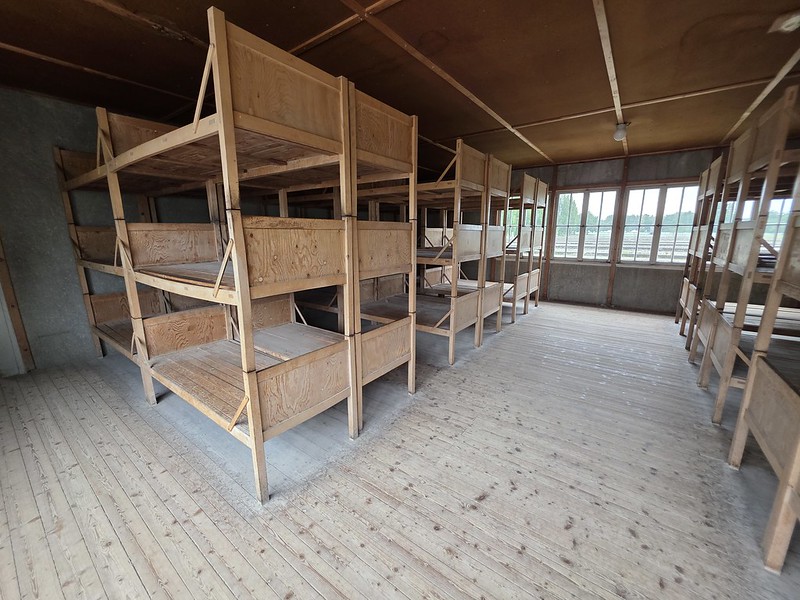
    The third dormitory shows the final stage, when conditions collapsed entirely into rows of bunks crammed together with little more than straw and blankets. It is the starkest of the three, stripped of any pretence of order and with no living space supplied as had previously been the case. This space is meant to demonstrate the extreme overpopulation of the camp in its later years, when disease and exhaustion became as much a part of the environment as the walls and ceilings. The contrast between this room and the first is brutal, and that is very much the point.

    The reconstructed barracks are not there to trick anyone into thinking they are standing in untouched history. Instead, they function as a visual and spatial narrative, walking visitors through a steady decline in living conditions, from rigid control to chaos. By building them in the 1960s, the memorial’s designers created a tool to teach rather than a relic to worship. They remain one of the most immediate, unsettling parts of the site, not because of their authenticity, but because they distil the story of degradation into something that can be seen and felt in the space of a short walk.

  • Dachau – Dachau Concentration Camp (Crematorium)

    Dachau – Dachau Concentration Camp (Crematorium)

    20250821_101736

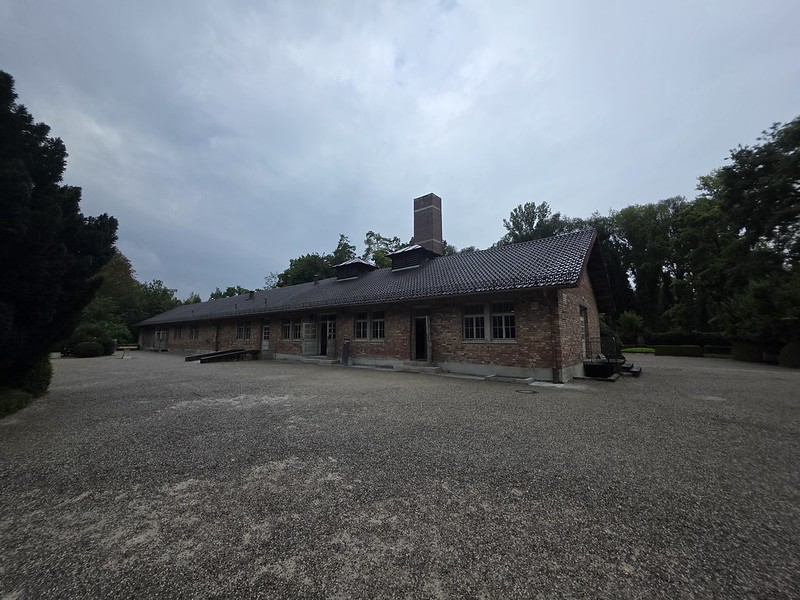
    The crematorium at Dachau was first constructed in 1940, but a larger facility was built next door between 1942 and 1943 as the first building proved to be inadequate in size in just months. Before 1940, when prisoners died, the SS sent ashes to families, buried bodies near the camp or transported them to Munich’s Ostfriedhof for cremation. It would be wrong to suggest that there was respect for the living or the dead at Dachau, but there were greater efforts made during the early years of the camp’s operation.

    Screenshot_20250827_082848_Photos

    A plan of the new crematorium.

    20250821_102334

    This is the 1940 building, which isn’t included on the above plan of the site. It remained in use until 1943 and it’s thought that around 11,000 prisoners were cremated here.

    20250821_102259

    The old gallows stand outside, these were placed here in 1942, but killings would have taken place in numerous areas around the camp. Often prisoners were hanged as a warning to others, so they would have taken place on the main parade ground of the camp.

    20250821_101803

    The ovens in the new crematorium where the dead were cremated. There was no fuel in the last few months of the camp’s operation, so they had to use nearby burial facilities or rather more ad hoc solutions instead. The Americans kept this section of the site when they liberated the camp in 1945, ensuring that it was documented and left intact.

    20250821_102017

    The shower room with fake shower heads. This is just a little confusing, the museum makes clear that there’s no evidence these were used for the mass killing in the way that took place at other concentration camps, so it’s a little unclear to me exactly what happened here. It is though probable that this room was genuinely used for the disinfecting of clothes rather than mass murder for which there’s no real evidence.

    It’s hard to imagine the horrors of what happened here when walking through, with what were likely mostly prisoners being forced to cremate those who they might have known from the camp. Initially the site might have been manageable in terms of numbers, but as the deaths increased then it all became more challenging and industrial. There weren’t the mass killings here that took place at camps such as Auschwitz Birkenau, but still many died and the whole arrangement would have been hideous. The site is hidden away a little from the main camp, but everyone would have been aware of its presence. When the war concluded, the Americans forced local Germans to walk around the site and that included visiting this section.
  • Dachau – Dachau Concentration Camp (Walk of Horror)

    Dachau – Dachau Concentration Camp (Walk of Horror)

    20250821_102746

    This walk at Dachau might at first seem quite pleasant and peaceful. Formerly in a walled off part of the compound, this is now known as the ‘path of death’, it was laid out in the 1960s when the site was turned into a memorial and museum.

    20250821_102748

    However, it isn’t, it’s located near the site’s crematorium and this is the former pistol range where inmates were executed. There were numerous places around the camp where people were executed and it’s not known how many prisoners died here.

    20250821_102821

    The execution range with the blood ditch.

    20250821_102959

    Where ashes were stored.

    20250821_102836

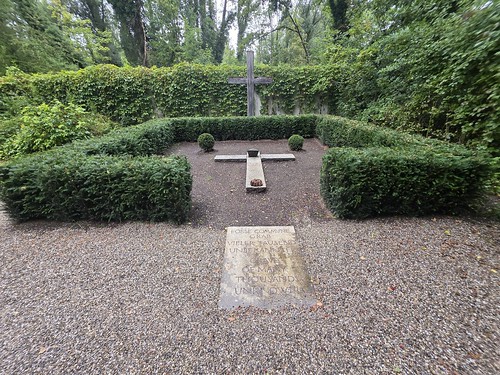
    The little memorial garden where the ashes of thousands of people were placed.

  • Dachau – Dachau Concentration Camp (Gatehouse at Dachau)

    Dachau – Dachau Concentration Camp (Gatehouse at Dachau)

    20250821_093707

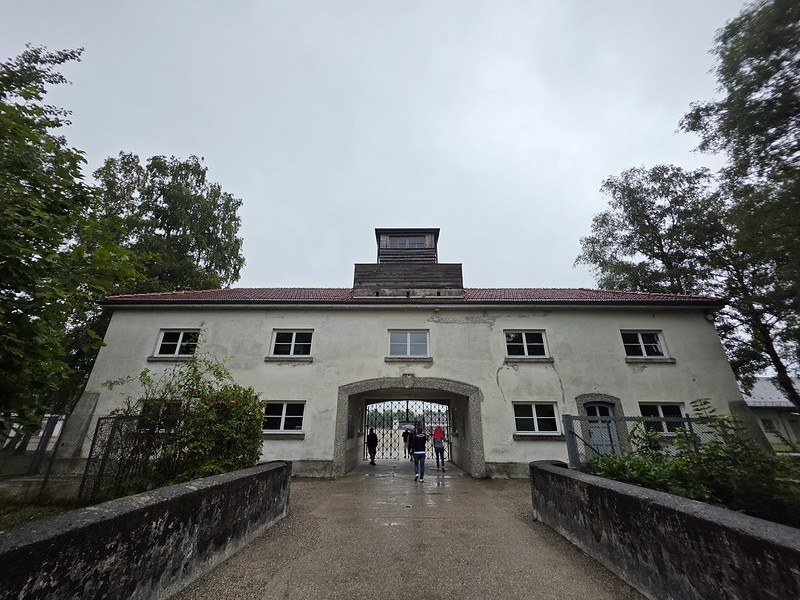
    The gatehouse at Dachau is the building which every prisoner had to pass through to enter the main compound of the concentration camp. The SS called it the ‘Jourhaus’, literally the guardhouse, and it sat on the boundary between the SS administration area and the camp proper. The current structure dates from 1936 when the site was rebuilt in stone and concrete using prisoner labour. That rebuild turned Dachau into the model for many later camps, and the Jourhaus became the set-piece entrance through which every new arrival marched onto the roll-call square.

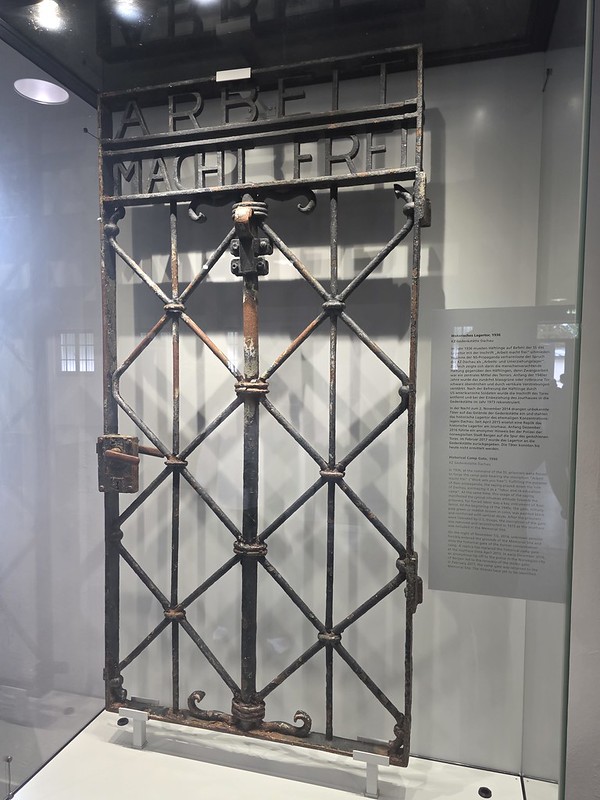
    Architecturally it’s a two-storey, hipped-roof block with a central vaulted passage for the gate and small rooms to either side that once housed guards and clerks. In front of it ran the camp ditch and a narrow bridge and beyond it the space opened immediately into the Appellplatz, the vast parade ground where prisoners were counted for hours in all weather. The gate grid itself carries the infamous and deceitful phrase “Arbeit macht frei” and was made in the 1930s by a prisoner under Nazi orders, although the original is now stored internally after someone pinched it.

    20250821_093905

    This is the side of the building that the prisoners could have seen from their barracks and the gatehouse controlled every movement and because the Jourhaus stood exactly at the choke point between the SS zone and the prisoner compound, nothing and no one crossed without it being noticed. When the site became a museum in the 1960s, the Jourhaus remained the main entrance so that visitors would trace the same line of movement as prisoners once did.

    20250821_093951

    A plan of the building.

  • Dachau – Dachau Concentration Camp (Sculpture by Nandor Glid)

    Dachau – Dachau Concentration Camp (Sculpture by Nandor Glid)

    20250821_094456

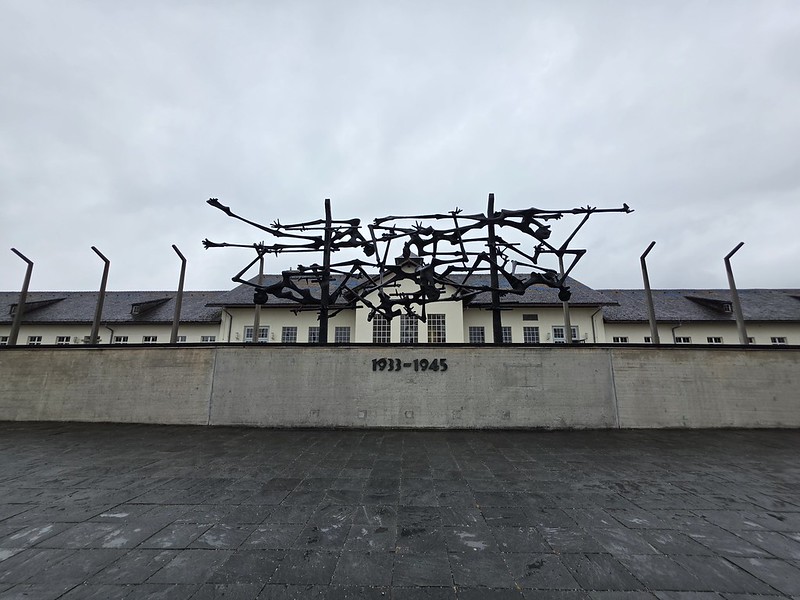
    This sculpture sits on the wall marked “1933–1945” in front of the former maintenance building, which now houses the main museum at Dachau. The monument was created by the Yugoslav sculptor Nandor Glid (1924-1997), a Jewish partisan whose father was murdered at Auschwitz, and it was chosen through an international competition organised by the committee of former Dachau prisoners. It was unveiled in September 1968 and from a distance the work reads like fencing, uprights and strands that echo the camp’s perimeter but it’s then evident that it resolves into emaciated human forms entangled in barbed wire. The design is to allow the visitor to see the fence as more than infrastructure and the bodies as more than symbols. It is deliberately spare, without heroics or narrative scenes, so the viewer is left with the simple geometry of a system and the people it consumed.

    20250821_094507

    The main monument is large, roughly sixteen metres wide and over six metres high, and it anchors the roll-call square where prisoners once stood for hours in all weather. Nearby is this low relief showing interlinked prisoner triangles, the coloured badges used by the SS to classify inmates by category.

    The whole arrangement is powerful, especially the way in which it faces the parade ground where the ridiculous roll-calls would take place, designed to humiliate and exhaust the prisoners. I quite like these hefty sculptures, but there doesn’t seem much point trying for subtlety here when the focus needs to be on confronting what happened at Dachau.

  • Dachau – Dachau Concentration Camp (Arland Musser Photo of Attacked Guard)

    Dachau – Dachau Concentration Camp (Arland Musser Photo of Attacked Guard)

    20250821_110141

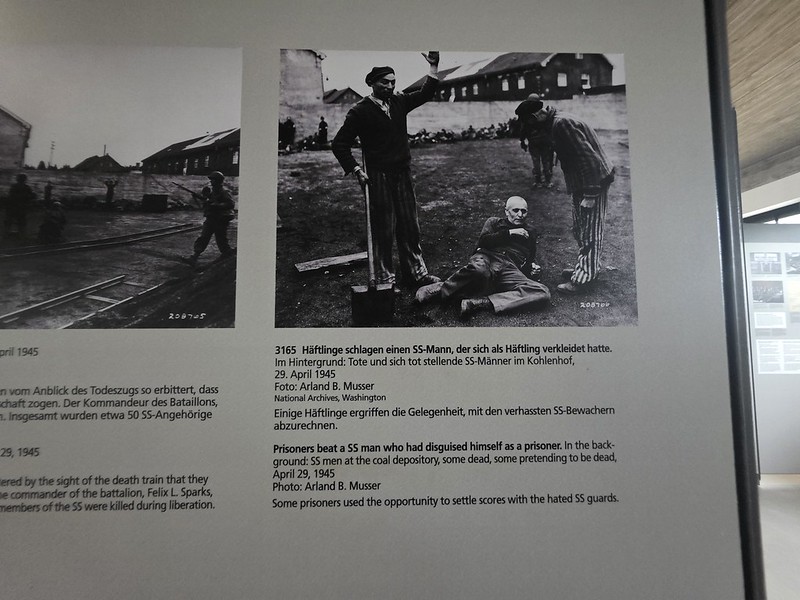
    This is one of the photos that Arland Musser took when the Americans liberated Dachau on 29 April 1945, showing prisoners beating an SS man who had disguised himself as a camp inmate. It must have been traumatic for the Americans to know quite what to do, their forces had been shocked at what they’d found and would normally want to protect everyone, but here they found a site where inmates wanted revenge for the horrors which they’d gone through. There was chaos as the American military lost control and started joining in on the attacks on the German guards, it took the strength of Felix L. Sparks, the American military leader, to regain control. He later wrote:

    “As I watched about fifty German troops were brought in from various directions. A machine gun squad from company I was guarding the prisoners. After watching for a few minutes, I started for the confinement area. After I had walked away for a short distance, I hear the machine gun guarding the prisoners open fire. I immediately ran back to the gun and kicked the gunner off the gun with my boot.

    I then grabbed him by the collar and said: “what the hell are you doing?” He was a young private about 19 years old and was crying hysterically. His reply to me was: “Colonel, they were trying to get away.”

    I doubt that they were, but in any event he killed about twelve of the prisoners and wounded several more. I placed a non-com on the gun, and headed toward the confinement area.”

  • Dachau – Dachau Concentration Camp (Stolen Sign – Arbeit Macht Frei)

    Dachau – Dachau Concentration Camp (Stolen Sign – Arbeit Macht Frei)

    20250821_093754

    In 1936, the Nazis made camp prisoners forge the gate to the site which said “Arbeit Macht Frei” or ‘work makes free’. This signage was replicated at other Nazi controlled concentration camps, giving an impression that the sites were somehow educational and beneficial when the reverse was true. Unfortunately the original gate was stolen in November 2014, just a few years after the Auschwitz one was stolen. The one that is in place today is a replica made to replace the stolen one, a completely sub-optimal state of affairs and a sinister theft which was likely done to order.
    20250821_111259

    Fortunately, in December 2016 the original gate was recovered under tarpaulin in Bergen, Norway after an anonymous tip-off. No arrests were made, but the museum was no doubt pleased and delighted to be able to have the original back. In the same way that the recovered Auschwitz sign was placed in a secure museum area after it was returned, the same was done at Dachau to prevent a recurrence of the incident. The museum carefully notes that the original lettering was removed by the Americans following the liberation of the camp, so this element dates from the 1970s.

  • Dachau – Dachau Concentration Camp (Overview)

    Dachau – Dachau Concentration Camp (Overview)

    20250821_113007

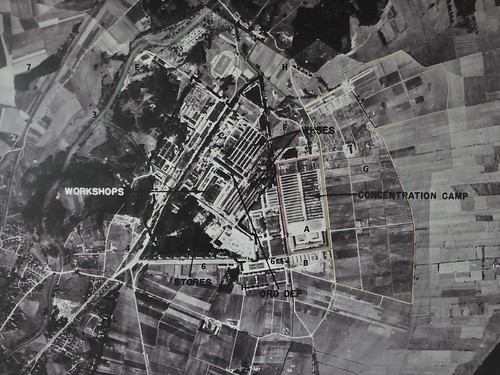
    I’ve been meaning to visit Dachau for some time to see the concentration camp, one of the earliest that opened during the Nazi regime and its purpose evolved over the years. This aerial photo was taken a few days before the Americans liberated it and it shows the scale of the site. The area marked in red is the section is the camp area that was used by the prisoners, which is also roughly the area of the site that remains open to visitors today. The former area used by the camp guards, the commandant and some of the workshop areas have since all been demolished.

    20250821_112933

    A model of the site.

    20250821_105629

    The site in 1944.

    20250821_111211

    A US army map of the site from 1946.