Tag: Christchurch Priory

  • Christchurch Priory – The Miraculous Beam

    Christchurch Priory – The Miraculous Beam

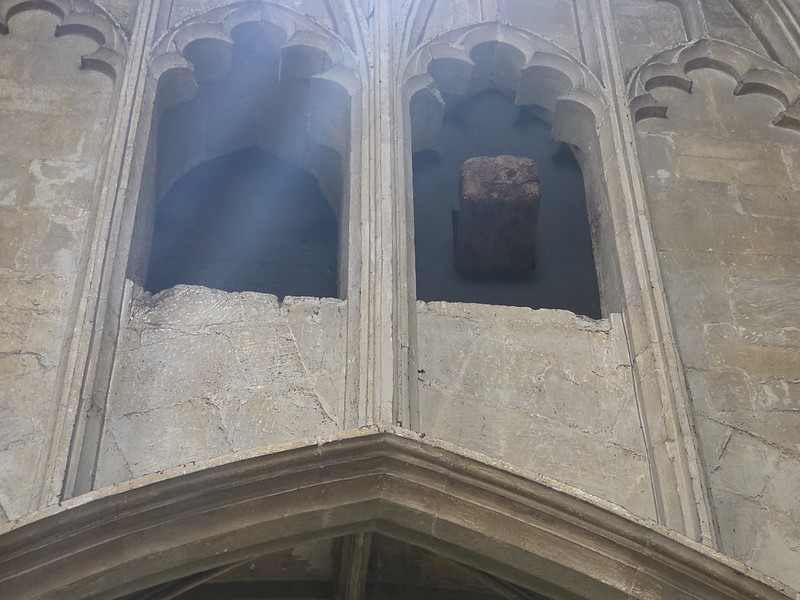
    One of the more curious, and frankly slightly odd, tales connected with Christchurch Priory is that of the so-called miraculous beam. When the Priory was being built in the early twelfth century, the craftsmen encountered a bit of a structural hiccup that was considered to be rather sub-optimal. A large timber beam, essential for the roof not to fall down, turned out to be too short for its intended place. This is a civil engineering blunder and I’m sure my friend Liam would have been appalled at such incompetence.

    But then, so the story goes, a mysterious carpenter appeared and he was a man that no-one had seen before, who quietly went about his work without complaint. Overnight, the too-short beam was miraculously found to be the perfect length, fitting flawlessly where before it had failed. The stranger, naturally, had vanished. So the rest of the builders decided that it must have been Jesus himself who fixed the beam. Hence the name Christ’s Church, the Priory’s supposed moment of celestial rebranding. I imagine that this whole thing was the talk of the pubs for that evening and indeed several nights to come.

    The beam itself is still there today, high up in the Priory’s roof and my photo isn’t really very clear. It’s a reminder though of the construction process, although I rather suspect that they just did some medieval joining of a beam rather than Jesus himself popping across, but who knows? I mean, it’s good for publicity if nothing else?
  • Christchurch Priory – King James Bible

    Christchurch Priory – King James Bible

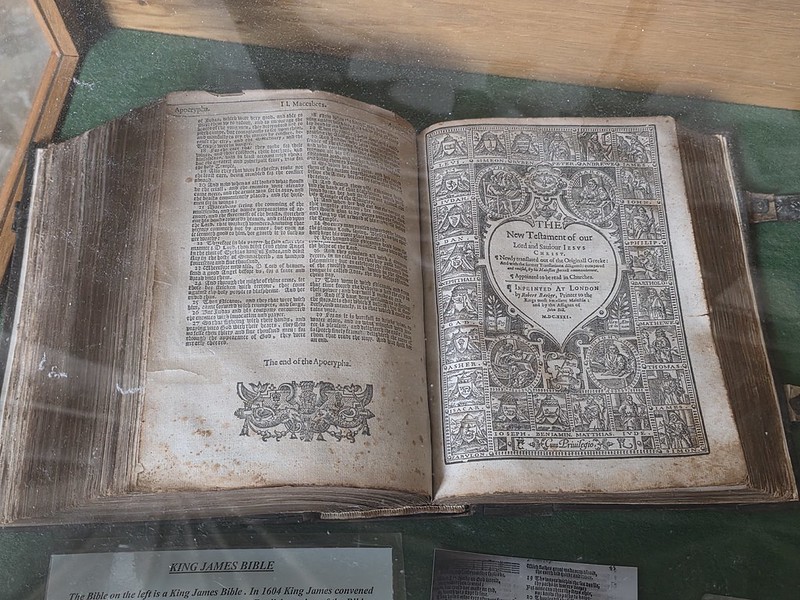
    It’s not a secret that I love old books and this is a King James Bible that dates from around 1633, which the priory has been able to date due to the inclusion of metrical psalms that weren’t in earlier editions. The Bible was important, it was the third translation into English that had been approved by the Church of England, with the first being the Great Bible in 1535 and the second being the Bishops’ Bible in 1568.

    Unfortunately, the priory doesn’t know much about the heritage of this Bible, other than knowing it has been rebound. But, it’s likely that the Bible was used extensively in the church and it’s not in bad condition today. As a side issue, I’m not sure why the building is still known as Christchurch Priory (as its days as a priory have long since come to an end), I suspect it’s the reality that Christchurch Church doesn’t exactly roll off the tongue (although its formal name is the Priory Church of the Holy Trinity).

  • Christchurch Priory – Salisbury Chantry

    Christchurch Priory – Salisbury Chantry

    20251011_103411

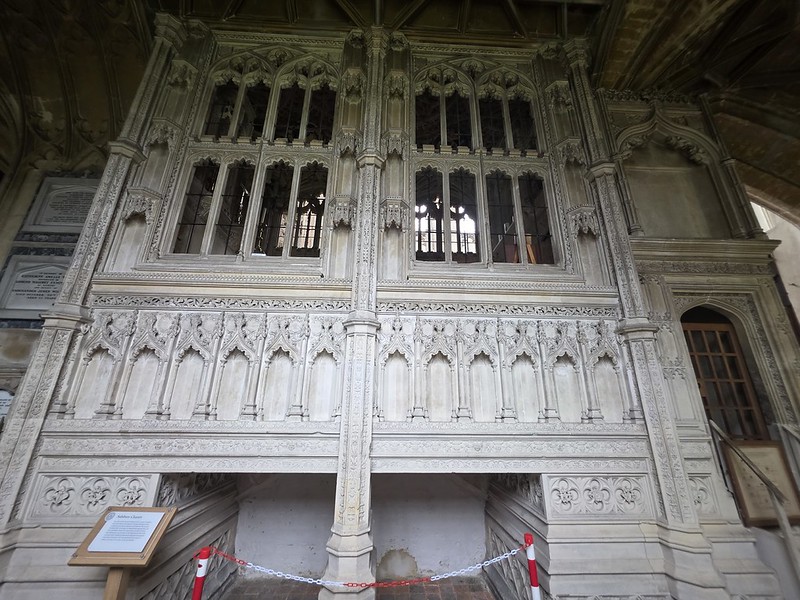
    The Salisbury Chantry at Christchurch Priory is grand, decadent and rather ornate. It was founded by Margaret Pole, Countess of Salisbury, a woman whose life seemed quite dramatic. She was the niece of both Edward IV and Richard III, but unfortunately for her, she was a Plantagenet and this didn’t entirely fit with the Tudor way of thinking. So, Henry VIII eventually had her executed on 27 May 1541 (and at 07:00 so she had to get up early) and her chantry at Christchurch has survived, but remains unused. There’s a lot more about Margaret Pole at the Historic Royal Palaces website, she was a powerful figure until she was killed…..

    20251011_103417

    Architecturally, the chantry is beautiful in a rich and late Gothic way with its delicate stone tracery and niches that likely held figures long since lost. There are some traces of medieval paint remaining and I imagine in its day it would have rather more glowed with candles and felt a little warmer.

    20251011_103930

    This is the other side of it, by the altar. The fact it survived the Reformation at all is rather miraculous, since most chantries were dissolved and removed with their endowments seized by the Crown. And this is the sort of thing that actually brought down the Catholic Church, it was ridiculous that this wealth brought such privilege in the priory that someone could be buried in a construction such as this right by the altar.

    The corruption, nepotism and greed of the Catholic Church at this point is what ultimately led to the Reformation across Europe. The church willingly took wealth from those who didn’t really have any, so fearful were they that they or their loved ones wouldn’t go to heaven. Any money brought privilege and access, a fast track to heaven.

    Margaret Pole is now buried at the Chapel Royal of St Peter ad Vincula located in the Tower of London, so that’s not a bad final resting place. It wasn’t the one she wanted and her death meant that she became something of a martyr, which is perhaps why this chantry survived and remains today.

  • Christchurch Priory – John Lloyd (1710-1768)

    Christchurch Priory – John Lloyd (1710-1768)

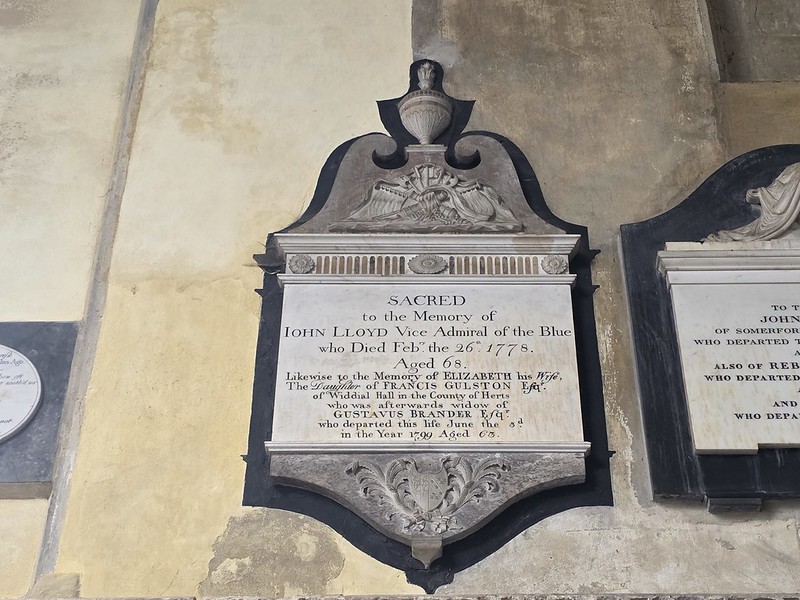
    I noticed this memorial at Christchurch Priory and anyone that has a stone plaque like this is likely to be quite important and often written about before and so I won’t linger too much on him. It’s dedicated to John Lloyd, Vice Admiral of the Blue, who died on 26 February 1778, aged 68. That title alone says a fair bit about him as he wasn’t just any seafarer, but a senior officer in the Royal Navy during the middle of the eighteenth century, a time when Britain’s power was very much measured by the size of its fleet and how effectively it could blow other nations out of the water. It certainly wasn’t a subtle little arrangement.

    The design is typically Georgian, full of restrained elegance with a carved urn at the top and decorative flourishes that stop just short of being showy. Beneath John’s details, the inscription also remembers Elizabeth, his wife, who outlived him and went on to marry Gustavus Brander, Esq (which is quite a name and he has his own Wikipedia page) and who died in 1809 aged 78. It also notes that she was the daughter of Francis Gulston of Wyddial Hall, which sounds suitably grand and decadent.

    Lloyd himself, as “Vice Admiral of the Blue”, would have been part of the Royal Navy’s colour-coded hierarchy, Blue being one of the three squadrons into which admirals were divided (Red, White and Blue). He’d have served through a period of near-constant conflict at sea and this leads me to a wonderful website that I’ve found called Three Decks which gives a comprehensive history of his appointments.

    This website states that he joined around 31 August 1722 as an ordinary seaman on HMS Advice, moving up to become a Lieutenant on HMS Roebuck in 1733, then Captain of the Deal Castle in 1746, then Rear Admiral of the Blue in 1775, Rear Admiral of the Red in 1775 and Vice Admiral of the Blue in 1778.

    I’m rather pleased to have discovered that website, a really detailed resource from the period.

  • Christchurch Priory – Norman Font

    Christchurch Priory – Norman Font

    20251011_103332

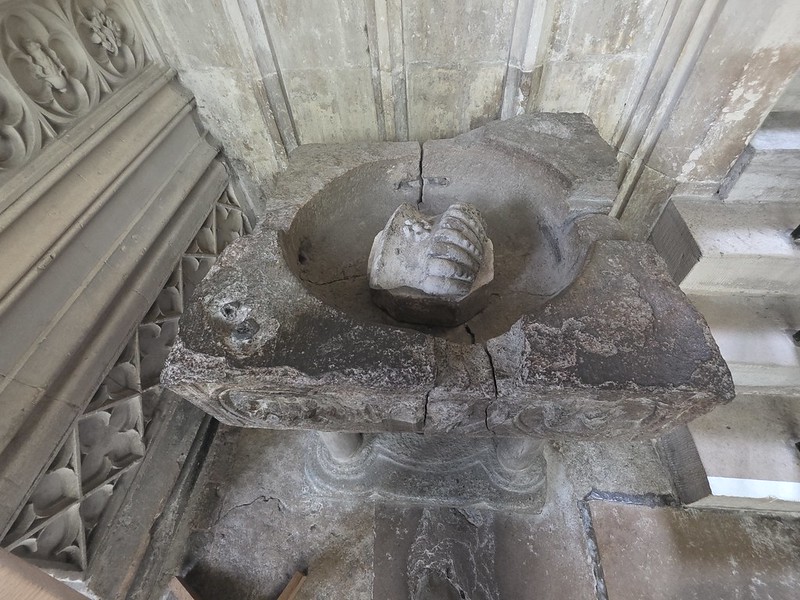
    I like an old font as it represents so much family history and heritage. This robust Norman one dates to around 1200 and is made of Purbeck marble. It was used at the priory until it was replaced at the end of the fifteenth century.

    20251011_103328

    It is a little worse for wear, but it’s done well to survive at all. The current font used at the priory is Victorian, but I like that this one remains standing nearby. There is some decoration to it, although the base appears to date from a later period.

    This is now one of the oldest things still standing within the church, I find it intriguing that this was likely put here when King John was on the throne and it has probably never left the church.

  • Christchurch Priory – Former Location of the Cloisters

    Christchurch Priory – Former Location of the Cloisters

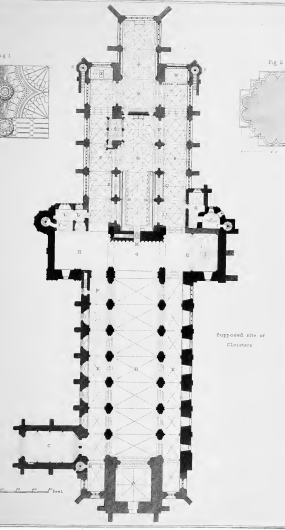
    Above is a plan of Christchurch Priory which was drawn in the early nineteenth century and it notes the “supposed site of the cloisters” and this is terminology which has been used more recently. I don’t claim to be a cathedral expert, but I’m struggling to see that there’s much “supposed” about it and it seems quite definite. But, I guess that they’re using the correct historical term for when there isn’t direct evidence…. They were likely pulled down just after the Reformation, when the church was saved from destruction by the townspeople who petitioned King Henry VIII to keep it as their parish church.

    20251011_104932

    The building on the right is obviously post-Reformation and it’s connected now as part of a relatively new development when a closed up Norman door has been reopened.

    20251011_105007

    This seems to me to inevitably be the site of the former cloisters which once housed an early school.

    20251011_105019

    The range would have gone along here, with the doorway on the left being the access point. Those arches are Norman (well, not the restored one on the left) and I imagine were ornamental to the cloisters.

    It does feel that it would be nice, without wanting to remove the Priory’s parking spaces, to lay the site of the former cloisters out and make a little lawned area in the centre (I think called a garth). I mean, I’m sure the Priory is more concerned with the current building not falling down (it’s been on the heritage at risk register), but maybe if they one day get the money…..

  • Christchurch Priory – Former Prior’s Entrance

    Christchurch Priory – Former Prior’s Entrance

    20251011_104553

    There was a lot to delight and excite me about Christchurch Priory (I don’t get out much) and so my two loyal blog readers can look forward to a heap more posts.

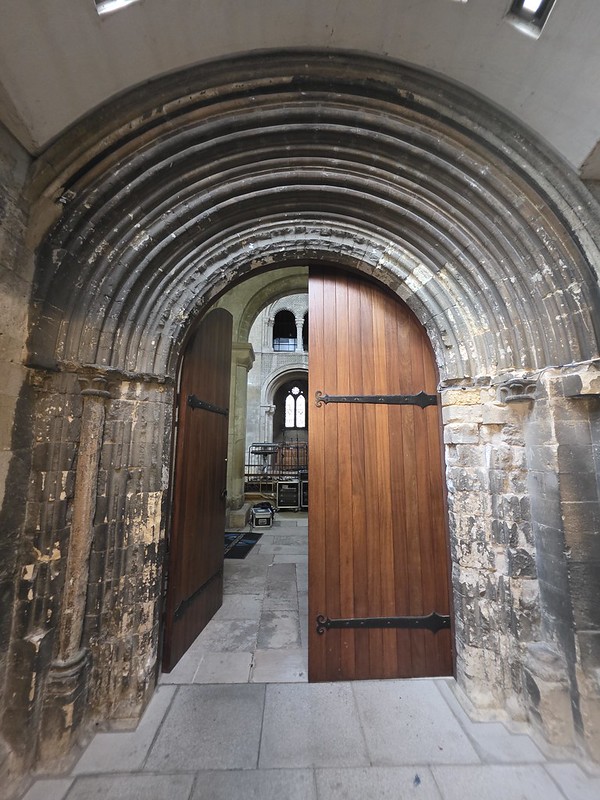
    Anyway, this is a beautiful Norman arch which was built in around 1140 and served as the Prior’s entrance to the church.

    20251011_104557

    It’s really not in bad shape, but it was sealed in 1539 following the Dissolution of the Monasteries. The cloisters came down and this door into the Priory wasn’t needed and it remained sealed until 1981. The general wear and pollution to the stonework shows that this door was subject to the elements for some centuries, but it is now protected.

    20251011_104604

    The lighting was more challenging to get a photo in this direction, but this is standing inside the church looking out to the new extension. I can’t find anything online about the project to reopen this door in the 1980s, but it seems like a marvellous undertaking.