Tag: Charlecote

  • Charlecote House – Billiards Room (Painting of George Lucy)

    Charlecote House – Billiards Room (Painting of George Lucy)

    20250426_124032

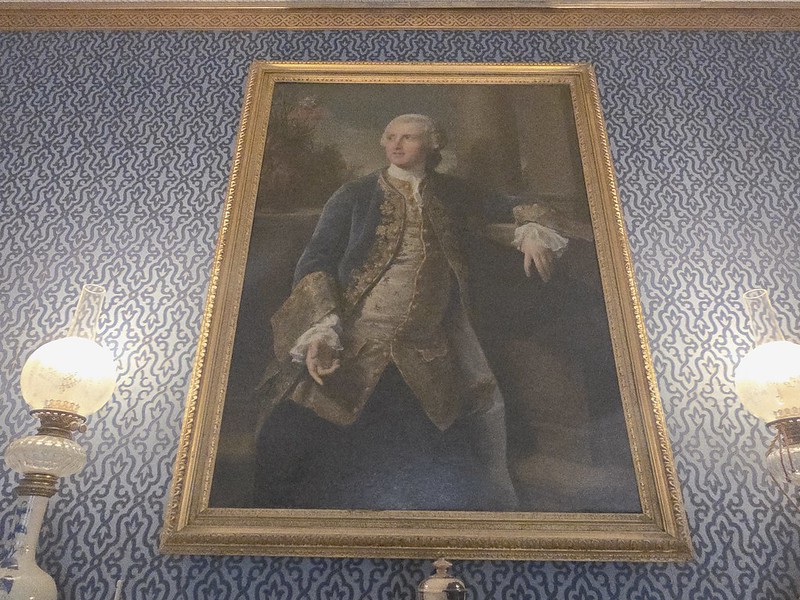
    This painting is located in the billiards room of Charlecote House and it’s of George Lucy (1714-1786) who was also known as the Bachelor Squire. The painting is by Pompeo Girolamo Batoni (1708 – 1787) and it’s that which I’m most interested in here as George had a long and complex life that is far beyond any short blog post. Batoni became famous for painting members of the British aristocracy, and indeed many others, who were visiting Italy as part of the Grand Tour. George Lucy himself noted:

    “I have shown my face and person to the celebrated Pompeo Battoni, to take the likeness thereof. These painters are great men, and must be flattered for ‘tis the custom here, not to think themselves obliged to you for employing them, but that they oblige you by being employed.”

    George Lucy arrived in Naples in 1756 and soon realised that he didn’t quite look the part and he promptly asked for his clothes to be shipped from Charlecote to Italy. I’m not sure how you would go about doing that, as UPS weren’t quite fully formed at that point, but it didn’t do much good as the vessel they were on was promptly intercepted by Moorish pirates and his fineries ended up in Algiers. It was in 1758 that he moved onto Rome, with what I assume was a new wardrobe he had acquired out there, as he was clearly in no rush on this Grand Tour, and it was then that he commissioned Batoni to paint him. This was a considerable honour, the artist didn’t speed paint and he was careful what work he took on.

    Lucy paid 40 guineas for this artwork which was completed after he had left Rome and so it was shipped back, fortunately not being intercepted by pirates on this occasion. He looks very on-trend in the painting, he’s wearing fancy and fine clothes, he looks elegant and he looks very travelled. Batoni was often said to have inspired Thomas Gainsborough and on Lucy’s return he also had a painting commissioned by the British artist. The phrase Bachelor Squire was polite, he was known by others as the “wild bachelor”, obsessed with travel, society and food. I make no comment. Lucy found the process a bit of a faff, he had to sit on three occasions for Batoni and he wrote to his housekeeper at Charlecote that “he would not undertake to do me in less time”.

    Batoni’s paintings are scattered everywhere today, but this one of George Lucy hasn’t gone anywhere far since it was installed in Charlecote in the late 1750s. Along with the entire house, it was given to the National Trust in 1946.
  • Charlecote House – Billiards Room (Colonel Sir Henry Fairfax-Lucy)

    Charlecote House – Billiards Room (Colonel Sir Henry Fairfax-Lucy)

    20250426_123946

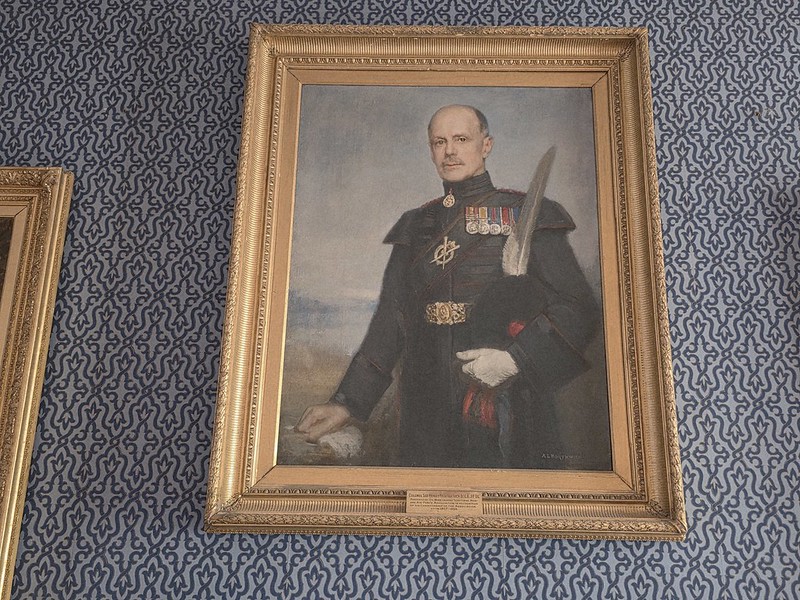
    This artwork is located in the billiards room at Charlecote House and is a painting of Colonel Sir Henry Fairfax-Lucy (1870-1944). The date of the artwork is unknown, but the artist was Alfred Edward Borthwick (1871-1955) and he has painted Fairfax-Lucy wearing the uniform of the Royal Company of Archers.

    As some background, he was born Henry William Fairfax on 25 September 1870 in Leamington Spa, Warwickshire and he was the eldest son of Sir William George Herbert Taylor Ramsay-Fairfax, 2nd Baronet, whose family seat was Maxton in Roxburghshire, Scotland. His education followed the conventional path for his class, attending Eton College and it was evident that he would go on to do great things. Upon the death of his father on 19 January 1902, he succeeded to the baronetcy, becoming the 3rd Baronet Ramsay-Fairfax-Lucy (the ‘Lucy’ having been added previously into what was becoming a ridiculously long name if I’m being honest, although I’d likely take a double barrelled name if I got a country house from the arrangement). Alongside the title, he inherited the family estate of Maxton and at this time has embarked on quite a successful military career. He also managed to become a chartered accountant, which doesn’t feel like an obvious fit alongside a military career and numerous political responsibilities, but I suppose that someone has to do it.

    As for the link with this property. On 26 July 1892, Sir Henry (then Henry William Ramsay-Fairfax) married Ada Christina Lucy (1866-1943). Ada was the eldest daughter and, crucially, the heiress of Henry Spencer Lucy of Charlecote Park. Her father had died in 1890, and Ada inherited the historic Charlecote estate. This marriage thus brought Charlecote Park, with its centuries of Lucy family history, into the sphere of the Ramsay-Fairfax family. Despite the historical significance and grandeur of Charlecote Park, Sir Henry reportedly preferred to live in Scotland, presumably at his ancestral estate of Maxton. Nevertheless, he remained involved in the parish life of Charlecote. During the Second World War, he offered his services in an advisory capacity to Winston Churchill, though this offer was apparently not taken up which I imagine Sir Henry felt was sub-optimal.

    I was interested in Henry (if I might call him that) as this was the last real period when the property was run as a country house. Following his death in August 1944, the baronetcy and the associated estates, including the financially strained Charlecote, passed to his eldest son, Sir Henry Montgomerie Cameron-Ramsay-Fairfax-Lucy (1896-1965), who became the 4th Baronet. It seems that there are numerous factors here including the more obvious death duties which would have been substantial. However, his interest in his Scottish estate did mean that there had been a lack of investment at Charlecote and it wasn’t in the best state of repair, another factor as to why it was all given to the National Trust in 1946. The decision was also clearly being made much earlier, as the Stratford-upon-Avon Herald reported on 1 June 1945 that the property was likely being given to the Trust, so discussions about this seem to have begun shortly after the Colonel’s death.
    So, as a painting, this feels important as Henry was a pivotal figure. I can’t imagine that he could have saved Charlecote in terms of keeping it as a family house, and the National Trust deal did mean that the family could continue to live in one wing of the property permanently anyway. His life was certainly an interesting one, even if he didn’t get to work for Winston Churchill…..

  • Charlecote House – Billiards Room

    Charlecote House – Billiards Room

    20250426_124443

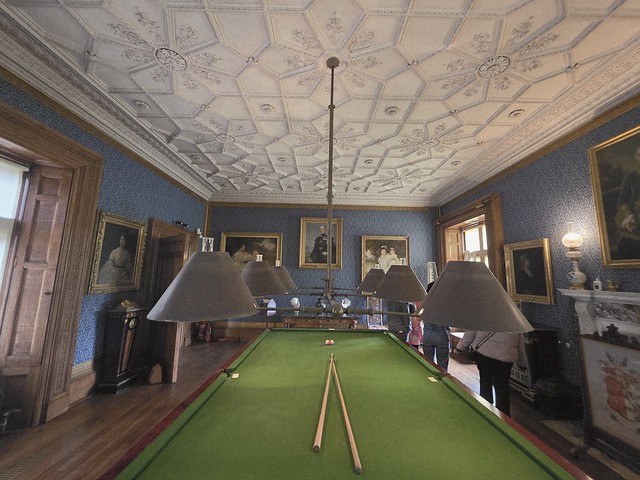
    I can’t imagine that I’ll ever need to live in a large house, not least as it would be expensive to heat, complex to maintain and I would fill it with books. But, if I did, I’d have a snooker table in it. Putting that thought to one side, this room is located on the ground floor of Charlecote House and is part of the original Tudor house and was part of a suite of three rooms and it might have been a bedroom. It was later changed into a dining room but was remodelled under the guidance of Mary Elizabeth Lucy to become a billiards room in the 1850s and the Elizabethan style ceiling was installed here at the same time.

    These billiards rooms were the on-trend thing to have in country houses in the late nineteenth century, a place for gentlemen to retire after dinner to smoke, drink port and play billiards (this was before the time of snooker being commonplace).

    20250426_123823

    The room guide told me that when the National Trust acquired the house they got rid of the original snooker table, which had some considerable heritage, as they didn’t intend to put it on display when they laid the room out as a dining room. When they decided later on that they did want to put one on display they then couldn’t get back the one they’d flogged off which all feels a bit sub-optimal. The replacement table has the annoying attribute that there are two baulk lines slightly out of alignment. The room guide also said that the National Trust believe that the lighting set-up above the table is original, that apparently went into storage but they were able to recover it (there’s a pun there about re-covering a billiards table, but I won’t labour that point).

    20250426_123907

    The rules of billiards are on the wall and they certainly go into some detail here. Anyway, this was one of my favourite rooms in the property and I’ll just have to console myself that I won’t ever own a snooker table, but maybe a bar billiards table one day….

  • Charlecote House – St. Leonard’s Church (Christina Cameron-Lucy)

    Charlecote House – St. Leonard’s Church (Christina Cameron-Lucy)

    20250426_144453

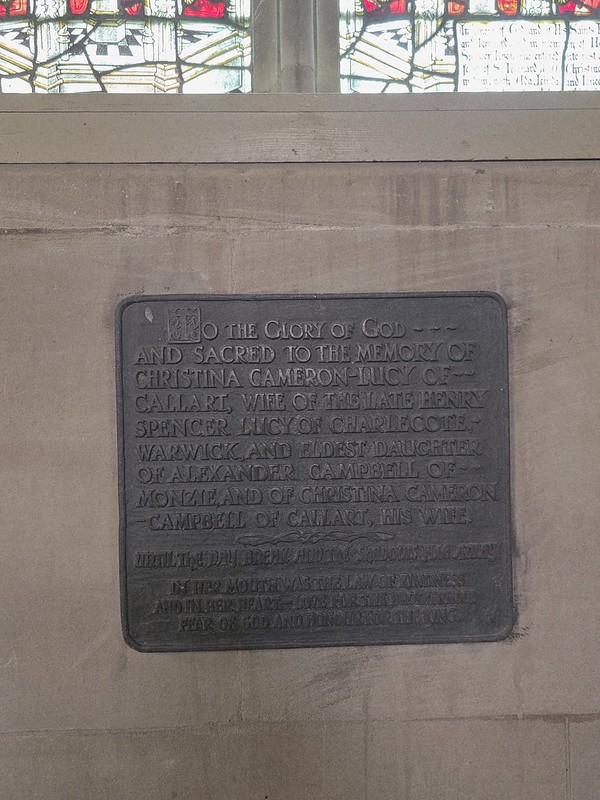
    I’m rather more interested in the graves and memorials of the less wealthy, such as William Malins, but it’s hard to entirely ignore the wealthy and this is the memorial located in St. Leonard’s Church at Charlecote commemorating Christina Cameron-Lucy (1845-1919). Born Christina Campbell, she married Henry Spencer Lucy (1830-1890) at St. George’s Church in Hanover Square in London in 1865, so there’s some considerable decadence there. In 1898, she decided to take the surname of Cameron-Lucy to bring the two families together in her name. There’s a disconnect here as Henry is buried at Charlecote, but circumstances meant that at this stage Christina decided to let the entire property out.

    Christina is buried in the Cameron of Callart Mausoleum, which has fallen into a state of slight disrepair, although bits of it have been repaired relatively recently. Indeed, her memorial at Charlecote refers to her as Christina Cameron Campbell of Callart, this link was important to her. Christina and Henry had four children, Ada Christina Lucy (1866-1943), who married Sir Henry Ramsay-Fairfax (later Fairfax-Lucy), Constance Linda Lucy (1867-1955) who married John Secker, Sybil Mary Lucy (1868-1886) and Joyce Alianore Lucy (1871 – 1948), unmarried.

    There’s a story somewhere here about why Christina decided not to be buried with her husband, I assume it’s because she felt a greater affinity to her Scottish roots although I wonder what Henry would have made of that.

  • Charlecote House – St. Leonard’s Church (William Malins)

    Charlecote House – St. Leonard’s Church (William Malins)

    20250426_145414

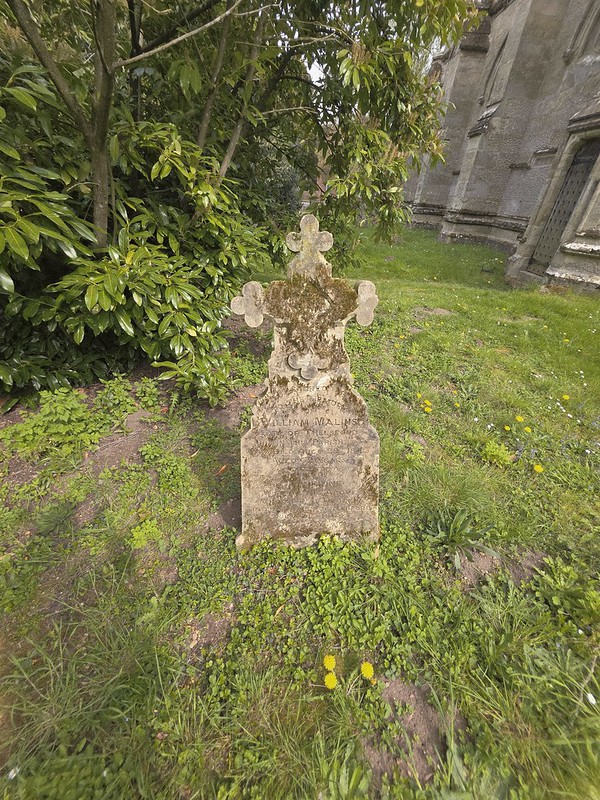
    This grave is located outside St. Leonard’s Church at Charlecote as I’m rather engaged, or as much as anyone can be, with burials at what are effectively country house churches.

    William Malins was born in 1781, the son of William Malins and Elizabeth Malins, and he married Catherine Smith in the church on 18 July 1820, although this would have been in the medieval building that was demolished and rebuilt after his death. He lived long enough to appear on the first census in 1841, which noted that he was 60, his wife was 55 and he had a son George Malins, aged 20, and a daughter Emma Malins, aged 17. The census also noted that he was a farmer and this would fit, as his family had owned a farm at Ettington, which is in the neighbouring village to Charlecote. William died on 29 August 1843 and was buried on 2 September 1843.

    There’s an interesting question which underlies this which is whether William Malins would have had any social interactions with the owners of Charlecote Park, namely George Lucy and Mary Elizabeth Lucy at the time. It was likely that Malins was a tenant farmer, as that was the most common set-up in this period, paying rent to the Lucy family and perhaps (but not necessarily) having something of a long tenure. Although I like to imagine that William would have popped down to Charlecote House to have his lunch, it doesn’t seem entirely likely, although perhaps he was in the same fox hunting brigade. William is buried outside of the church, whereas the Lucy family had their own chapel inside, so I’m imagining that in life, as in death, they were kept close but still separate.

  • Charlecote House – St. Leonard’s Church

    Charlecote House – St. Leonard’s Church

    20250426_144143

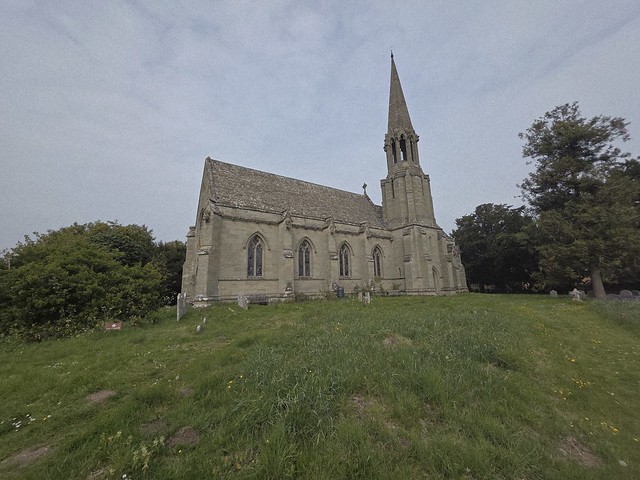
    St Leonard’s Church occupies a significant position within the historic landscape of Charlecote and it is situated immediately adjacent to the main entrance gates, forming an integral part of the approach to the great house. It’s thought that there has been a church in this location since at least the twelfth century, although little remains of the medieval church as it was pulled down in 1849. The old building just wasn’t good enough for the country house, the Lucy family wanted something rather more decadent.

    The new church was constructed between 1850 and 1853, with the impetus for this ambitious project coming from Mary Elizabeth Lucy (née Williams, 1803-1890) who was the wife of George Hammond Lucy (1789-1845). Following her husband’s death, Mary Elizabeth conceived the rebuilding as some sort of grand memorial to him, personally funding the work and laying the foundation stone in 1850.

    20250426_144240

    The lighting was a little odd in the church and my photos have come out looking like postcards from the 1980s. The interior of the church is in the Gothic Revival style and it was designed by John Gibson.

    20250426_144250

    The font was also designed by John Gibson and it’s an impressively decorated piece.

    20250426_144255

    Some of the detail on the font.

    20250426_144329

    The chancel of the church and we didn’t investigate too much further down here as the organist was playing away and occasionally stopping and angrily commenting on his own performance, so Richard and I didn’t want to disturb the arrangement. I must admit, I like a bit of musical frustration when visiting an historic monument, it adds some atmosphere to the proceedings.

    20250426_144337

    Looking back along the nave with a rather svelte Richard strolling down purposefully.

    20250426_144512

    A rose window in the Gothic style and some intricate stained glass work.

    20250426_144547

    It’s rather a shame that the church has faced attack.

    20250426_145408

    From the outside, the size of the private chapel leading off from the chancel is particularly noticeable. Apparently, some of the wood used in this chapel dates from the earlier church which the Victorians demolished.

    Personally and this might be evident by the slightly short post, I’m not that engaged with the church as although it’s beautiful, there’s little of heritage and it’s the medieval aspect that particularly intrigues me. Everything obviously cost a lot of money, it was done well and it was in keeping with the rather decadent nature of the main house. But, I like a slightly rough and ready church, one where there are traces of medieval changes all over the place, something that has been erased here.

  • Charlecote House – Worn Out Sundial

    Charlecote House – Worn Out Sundial

    20250426_130930

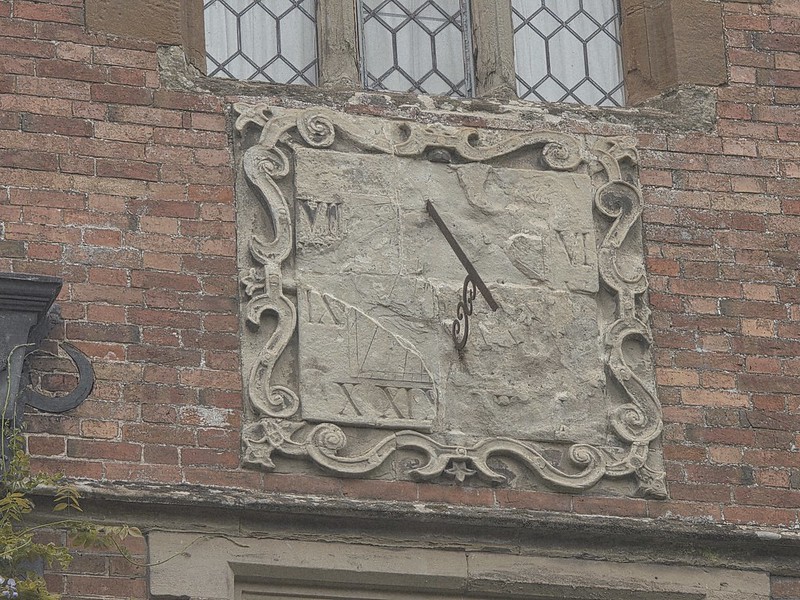
    Adding to my long series of irrelevant posts, I was intrigued about this sundial. I think it’s because Charlecote House is relatively pristine maintenance wise and looked after, but this has fallen into disrepair at some stage. And, no-one seems to know much about it, but the best guess is that it was installed in the 1820s when the property was being modernised. But, it might be older, so that’s another riveting factual post from me. I did ask AI to date it, but it knew that it was at Charlecote and then based its guesswork on that. It seemed to like the idea that it’s an older sundial that was restored in the 1820s, so that seems a decent compromise. Anyway, I just like some things to fade away without being restored and that’s reason enough for a whole blog post about a bit of old stone.

  • Charlecote House – Painting of Davenport Lucy

    Charlecote House – Painting of Davenport Lucy

    20250426_123234

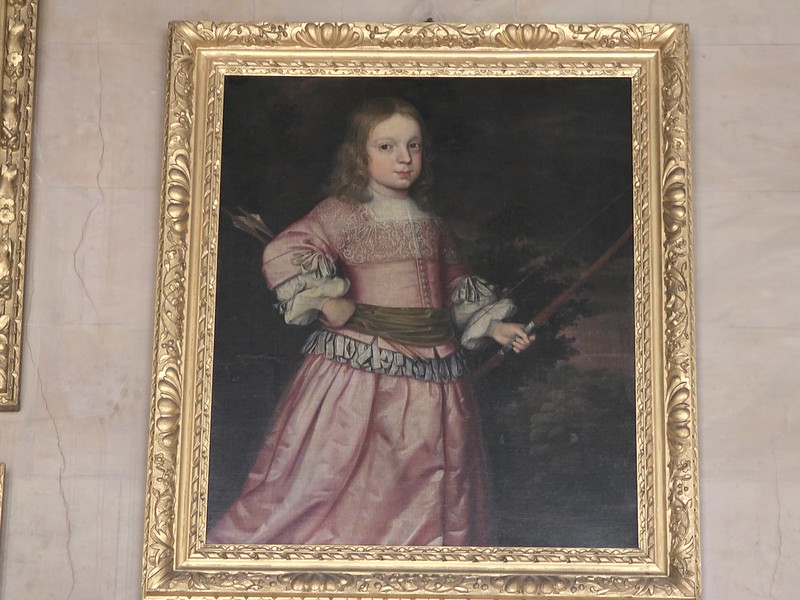
    This painting is displayed in the Great Hall of Charlecote House and was given to the National Trust by Sir Montgomerie Fairfax-Lucy (1896 – 1965) in 1946 when the property and most of its contents were transferred to them. This is probably Davenport Lucy (1659/1660-1690) although it was previously thought to have been Elizabeth Lucy. This habit from the time of dressing children up as girls has certainly caused some issues in identifying centuries later on who is who. It’s not known who painted it and the National Trust’s estimated painting date of 1660 is a little aspirational given when Davenport was born and so it likely dates to around 1665.

    Anyway, it’s time for a table.

    Date Event
    c. 1659/60 Birth
    1677 Death of father, Sir Fulke Lucy
    24 May 1680 Commissioned Cornet, Royal Horse Guards
    1681 Jointly sells land at Bank Top (Henbury estate) with mother Isabella
    1 May 1681 Promoted Lieutenant, Royal Horse Guards
    1684 Inherits Charlecote Park upon death of cousin, Capt. Thomas Lucy
    By Oct 1684 Promoted Captain, Royal Horse Guards
    Post 1684 Sells the Henbury estate
    1689 Death of mother, Isabella Lucy
    20 Aug 1690 Killed by cannonball at the first Siege of Limerick, Ireland

    Davenport Lucy was the eldest son of Sir Fulke Lucy (c. 1623–1677) and Isabella Davenport (d. 1689) and Sir Fulke was the sixth son of Sir Thomas Lucy and Alice Spencer (with Richard Lucy being the third of six sons). As a younger son in a large gentry family, he did not inherit the primary family estate of Charlecote. Instead, he was the designated heir to his parents’ property, primarily the Henbury estate which he inherited from his mother.His path to establishing his own standing instead involved political service and a strategic marriage, although he did inherit Charlecote in 1684. He served as Member of Parliament for Warwick in 1659 and later for Cheshire from 1664 until his death in 1677. He was knighted sometime after the Restoration of the monarchy in 1660, evidently sharing the political skill of Richard Lucy.

    But, moving straight on to Davenport’s death. The Siege of Limerick (1690) was a key event in the Williamite War in Ireland (1689–1691), a conflict between the Catholic supporters of the deposed King James II (known as Jacobites) and the Protestant forces of King William III (Williamites). It took place in August and September 1690, following William’s victory at the Battle of the Boyne in July of that year. Serving as a Captain in the Royal Horse Guards within William III’s besieging army, Davenport Lucy was directly involved in the military operations. On 20 August 1690, during the intense fighting and bombardment characteristic of seventeenth-century siege warfare, he was struck and killed by a cannonball which I imagine he considered to be somewhat sub-optimal. It’s not known if he was buried in Ireland or whether his body was returned to Charlecote. Adding to the complexity, his lack of successors meant that they were left faffing around with the family tree to see who would take it on next.

  • Charlecote House – Painting of Richard Lucy

    Charlecote House – Painting of Richard Lucy

    20250426_123241

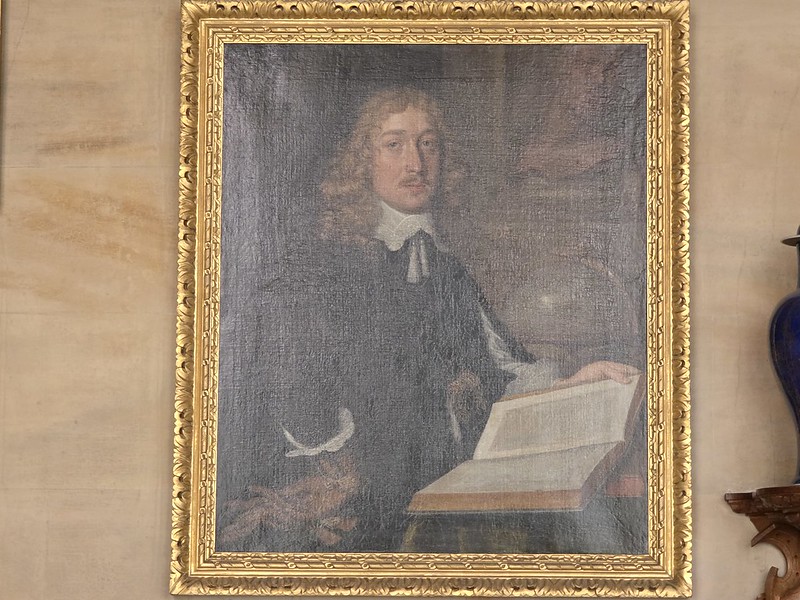
    This painting displayed in the Great Hall of Charlecote House is of Richard Lucy (1619-1677) who was the third son of Sir Thomas Lucy III and Alice Spencer. It’s not known who painted it, but it dates from between 1650 and 1658, showing Richard thinking he’s something of an intellectual with his book and globe. The artwork (and indeed the entire house) was presented to the National Trust in 1946 by Sir Montgomerie Fairfax-Lucy (1896 – 1965), two years after the death of his father, Sir Henry Ramsay-Fairfax, 3rd Bt (1870 – 1944).

    Richard Lucy interests me because of the period in which he lived, which was right in the middle of the English Civil War. Richard was the third of six sons of Sir Thomas Lucy (c. 1585–1640) who was himself a Member of Parliament, and his wife Alice Spencer (c. 1590–1648) of Claverden, Warwickshire. The Lucys of Charlecote were significant landowners, known not only for their administrative roles but also as patrons of the arts and scholars, fostering a notable library at Charlecote Richard’s grandfather, another Sir Thomas Lucy (d. 1600), was also an MP and magistrate, famously (though perhaps apocryphally) linked with prosecuting a young William Shakespeare for pinching some deer.

    Richard was well educated and he matriculated at Queen’s College at Oxford University on 17 September 1634, recorded as being aged 14. A young learner and all that, he must have been impressively studious for a teenager. Well, and wealthy, that helps. Following university, he undertook a period of foreign travel between 1637 and 1640, a common practice for broadening horizons and completing a gentleman’s education. Later, in 1652, he was admitted as a student to Gray’s Inn, one of the prestigious Inns of Court in London, suggesting an interest in law, even if he didn’t fancy the full wig and gown commitment. Richard wasn’t the most important though as he was third in line, behind his elder brothers Spencer and Robert. Consequently, he did not initially stand to inherit the principal family estate and it was only upon the deaths of both Spencer and Robert that Richard succeeded to Charlecote in 1658.

    Richard had done politics, he had been the Sheriff of Warwickshire from 1646 to 1647 and he was appointed to the Barebones Parliament of 1653. This was a small Parliament, tasted primarily with trying to sort out the complete mess that they’d killed the King and they now had a country that was falling apart. His appointment is intriguing as there were no elections in that year to this institution, the members were appointed by Oliver Cromwell’s Army Council. They wouldn’t have selected someone opposed to their aims, so Richard must have been tolerating their work or seen as someone competent enough to have on board to help resolve the mess that had been created.

    However, matters soon changed and Richard hit a little snag. He was mentioned as being one of approximately 40 members who were refused admittance to the House of Commons (likely during the Second Protectorate Parliament, around 1656) because they declined to take an oath recognising Cromwell’s government or pledging loyalty to the Protector. This act of refusal places Lucy within a significant group of MPs who resisted the increasing consolidation of power under Cromwell or objected to the specific terms of engagement demanded by the regime.

    Despite this little debacle, Lucy’s political standing remained sufficient for him to be elected again and in 1659, for the Third Protectorate Parliament (convened by Richard Cromwell), he achieved the notable distinction of being elected for two constituencies simultaneously: his established seat of Warwickshire and the borough of Yarmouth on the Isle of Wight. The rules then are the same as today, he had to pick one and he went with Warwickshire which made sense as he lived there and faffing about getting to the Isle of Wight would have been inconvenient. Although, perhaps he hankered over the island life, as he was elected to Yarmouth the following year and he remained the representative until his death in 1677. Although he remained relatively quiet in this Parliament, he did well to navigate the period when the Monarchy was restored, although as a major landowner it wouldn’t likely have been difficult.

    So, all told, he was something of a political survivor and he must have shown some skill in being able to navigate the Commonwealth and the Monarchy, a period of general chaos in England. So, perhaps it was only right that he did appear like an intellectual in this painting…..

  • Charlecote House – Painting of Margaret Spencer

    Charlecote House – Painting of Margaret Spencer

    20250426_123040

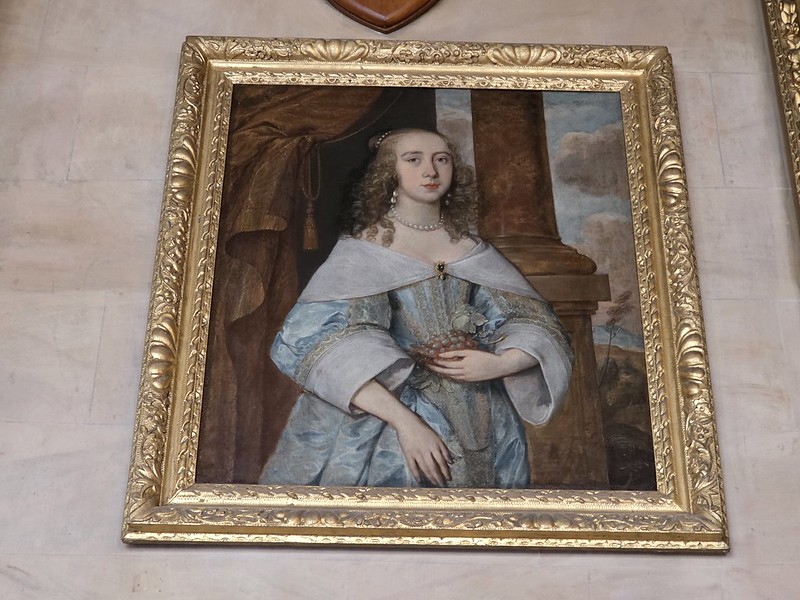
    The artist isn’t known, but this painting is located in the Great Hall of Charlecote House and depicts Margaret Spencer (1627-1704). She has a direct connection to the property as she first married Robert Lucy of Charlecote (1622–1658 and son of Sir Thomas Lucy III and Alice Spencer) in 1654. After Robert’s death, she married Thomas, 4th Lord Arundell of Wardour, hence her later title. I did read Charlecote and the Lucys by Alice Fairfax-Lucy to see why Robert died, but it doesn’t give a reason and I imagine that no-one knows. Margaret and Robert had one child, Bridget Lucy who married William Molyneux, but the Lucy line seems to have died there and the title went back up the line (for anyone interested, the full tree is here).

    The artwork was presented by to the National Trust in the 1940s by Sir Montgomerie Fairfax-Lucy two years after the death of his father, Sir Henry Ramsay-Fairfax, 3rd Baronet.