Tag: Bunwell

  • Bunwell – St. Michael and All Angels Church (Grave of Jacob Hinchley)

    Bunwell – St. Michael and All Angels Church (Grave of Jacob Hinchley)

    When my friend Richard and I went to visit some churches last week, we visited St Michael and All Angels in Bunwell. We spent some time looking for the war graves that are located here, and found two of the three that are located at the church.

    Anyway, for absolutely no reason at all that I can explain, I was interested in this grave and it’s the only non war related one that I took a photo of. Given that, I thought I should investigate a little why the grave of Jacob Hinchley who died at the age of 59 on 10 March 1897 seemed so intriguing to me.

    Jacob was born in Bunwell in 1837, the son of John and Rebecca Hinchley. At the 1841 census, he had three older brothers, Charles, Henry and Robert, as well as a younger sister, Rebecca, and they all lived at Burnt House in the village. This quite substantial house still stands, today worth half a million pounds and having six bedrooms. Despite residing at a large property, I can’t imagine that the family were particularly wealthy as John worked as a road labourer and the male children worked as farm labourers and the daughter as a worsted weaver.

    Jacob is listed on the 1871 census as living with his wife Sophia and his father John, who was now aged 73, with their address listed as “by the turnpike in Bunwell”. Jacob had married Sophia Parish at Bunwell church in 1866, but something clearly goes wrong after this and there is a burial record for Sophia Hinchley at the church in 1875. There wasn’t a great delay before Jacob married Ellen Blake in 1876, when he was 39 years old, although his wife was aged just 21 years old. Jacob appears in the local press a few times as a bell ringer at the church and he travelled the county performing his hobby.

    The last census that took place during Jacob’s lifetime was in 1891, when he lived in North Bunwell and was still working as a farm labourer. He lived with his wife Ellen, their daughter Alice and their sons Oliver and Percy, which is the same arrangement as the 1881 census, other than he had a new child. Percy was just two years old, which meant that Jacob became a father at the age of 52, which is relatively old for the period, but a reality given that he married twice and I’m not sure whether he had any children with his first wife.

    Jacob died in 1897, with Ellen living until 1916. I’m not sure that I uncovered much about Jacob, other than he married twice, he liked bell ringing and he lived in Bunwell all of his life. It is though a case of just how important the church likely was to Jacob, as he was baptised there, married there twice, buried there and was a bell ringer. And maybe one day I’ll find out something else about Jacob to add to this little story….
  • Bunwell – St. Michael and All Angels Church (Grave of Jack Montague Smith)

    Bunwell – St. Michael and All Angels Church (Grave of Jack Montague Smith)

    This is the churchyard of St. Michael and All Angels Church in Bunwell.

    Just before my friend Richard and I meandered out to look at some historic churches, I was watching a documentary on tunnelling under the German lines during the First World War. This was a successful tactic deployed primarily by the British military and the Royal Engineers, although they were helped by numerous other companies which included those from Canada, Australia and New Zealand amongst others.

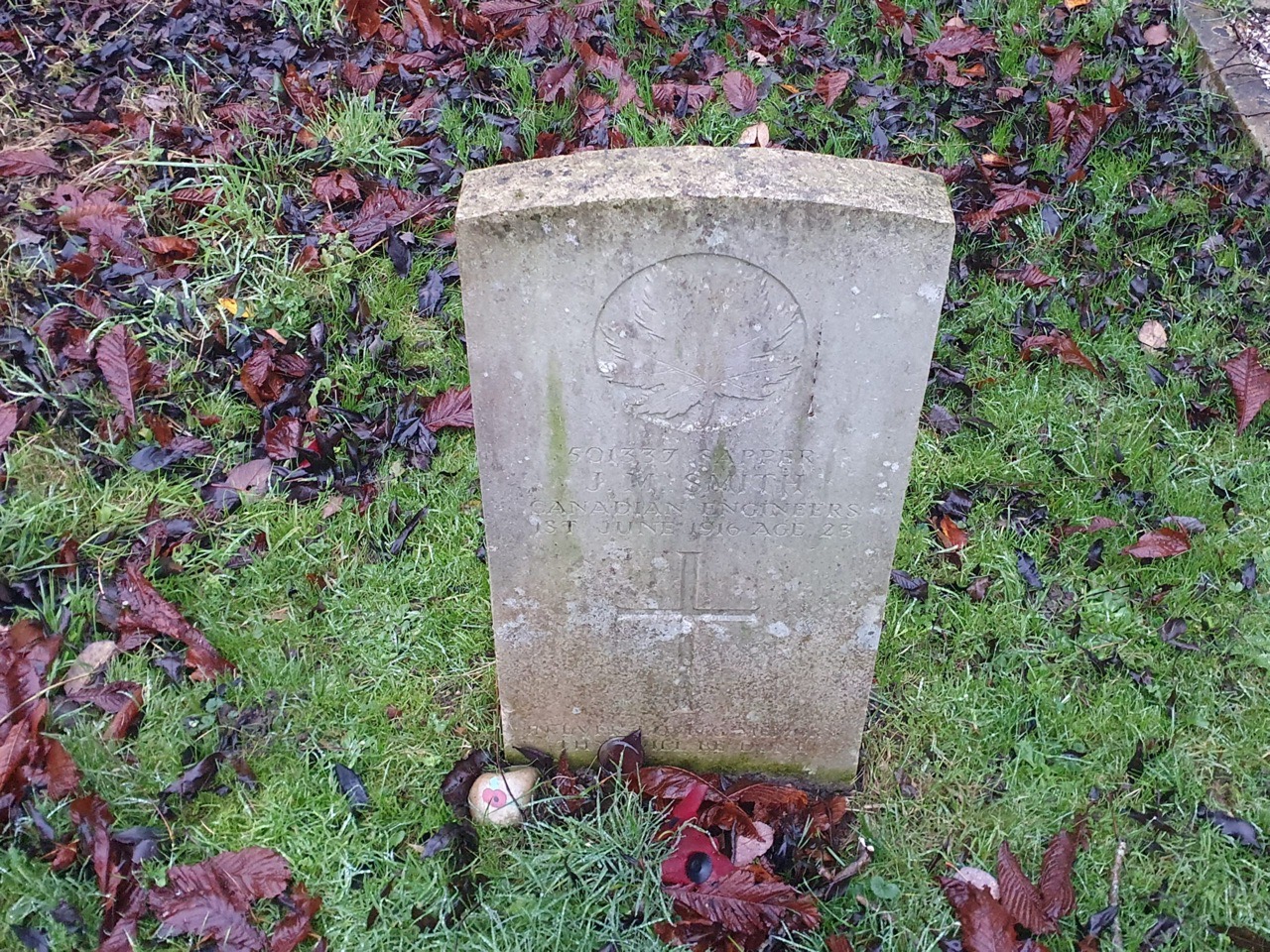
    Which is why I thought that the grave of Jack Montague Smith looked interesting, he’s one of the three war dead who is buried in the churchyard. He was born in Bunwell on 2 November 1892 and was the son of George William Gates Smith and Mary Alice Smith, of The Laburnums, Bunwell. His father was a watchmaker and Jack had three brothers and two sisters at the time of the 1901 census.

    Jack was a member of the 1st Canadian Tunnelling Company, part of the Canadian Engineers. They were sent to France in early 1916 and worked on the Bluff area, in Flanders, until early 1917 when the Australians took over. Their role was primarily in tunnelling under enemy lines, a dangerous and difficult occupation.

    Jack was a sapper with service number 501337 and he signed up in Ontario in December 1915. There’s an obvious question of what Jack was doing in Canada, but it wasn’t uncommon for younger men to go and find employment there, so that’s my best guess. Unfortunately, as Jack’s surname is Smith, I can’t identify which of the many Jack Smiths it might have been on the passenger lists.

    After being sent to fight on the front line he was injured on 26 April 1916. He was admitted to the 51st Field Ambulance, which was a front line medical unit which treated those with injuries. He was evacuated back to the United Kingdom, being sent to the Yarrow Hospital in Broadstairs where Canadian troops were cared for. Sadly, Jack died of his injuries at the hospital on 1 June 1916 at the age of 23 years old. His body was then returned to Norfolk for burial at Bunwell on 2 June 1916.

  • Bunwell – St. Michael and All Angels Church

    Bunwell – St. Michael and All Angels Church

    Richard and I were on one of our meanders around churches in Norfolk, rather more challenging with it getting dark quite so early on in the day. This Grade I listed grand church is located a little outside of the rather spread out village of Bunwell and it was primarily built in the mid to late fifteenth century on the site of an earlier structure. It’s thought that the location of the church was chosen as it was the highest land in the area which was once home to an early stone cross.

    The tower dates from the early sixteenth century and there are six bells inside. The helpful history guide in the church notes that these are from 1699, 1699, 1732, 1732, 1832 and 1884 (the most recent, but a recast of a bell from 1612).

    The porch.

    Quite a small priest’s door.

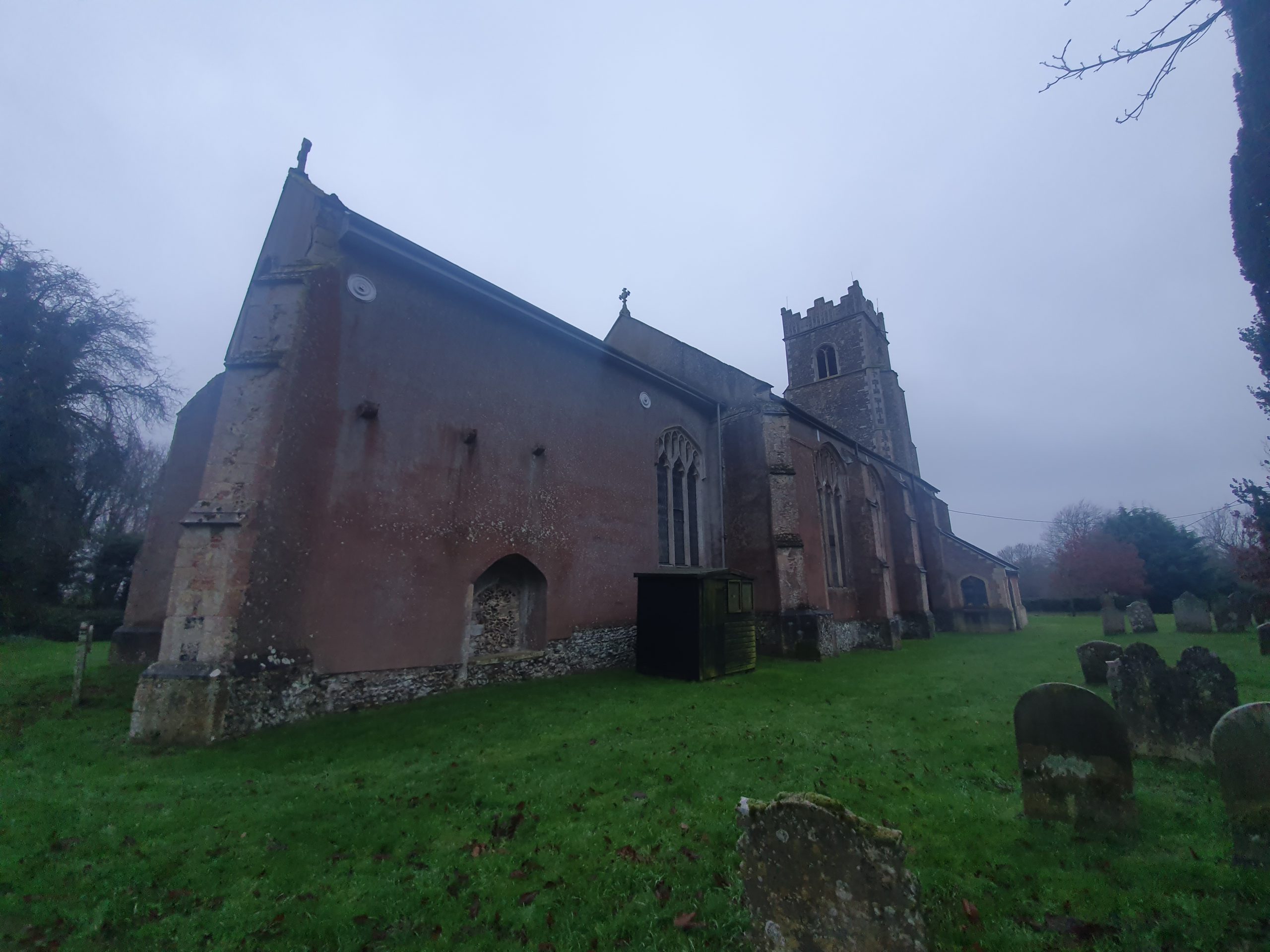
    The end of the chancel, looking a little plain because of the rendering.

    I’ll stop my little tour of the exterior here to add in a news report from Easter Sunday in 1894, which doesn’t appear in the church’s history inside the building. What happened caused quite a sensation in the area, as there was an attempt to blow the church up (or at least badly damage it) with explosives. Fuses had been placed in the ground with gunpowder, but they had failed to ignite and so no damage was done. The police were bemused and said they weren’t sure that they would find the culprit.

    The story continues though, as the police arrested someone on some rather loose evidence, a Lambert Johnson who was aged 41 and who had done work on the church that he claimed that the previous rector hadn’t paid for. The trial ended in chaos, with the local newspaper reporting:

    “His Lordship said to the jury: You will find a verdict of not guilty. There is not a particle of evidence against the prisoner. I don’t hesitate to say that this is a most improper prosecution – one brought without the slightest conceivable grounds. It is too bad that this man should be five or six weeks in gaol awaiting trial”.

    Although if I’m being honest, Johnson does seem like a prime candidate here.

    Only one side of the chancel has the large perpendicular windows, this side is rather more barren. My knowledge of churches isn’t sufficient to say what has gone on here, nor what those three bits of stone on the left are supporting. The rendering has also made it difficult to see what is underneath.

    This former window or door has been uncovered, perhaps leading to another structure at some stage in the building’s history. If anyone knows, please do contact me….

    The porch way and I wasn’t expecting that we’d be able to get into the church. It was though open, which was something of a surprise. It was dark inside and we decided against finding the lights, but fortunately my phone in night mode actually made it look quite bright internally.

    This is a spacious church, but it was constructed without any aisles, which seems a little unusual for such a grand project.

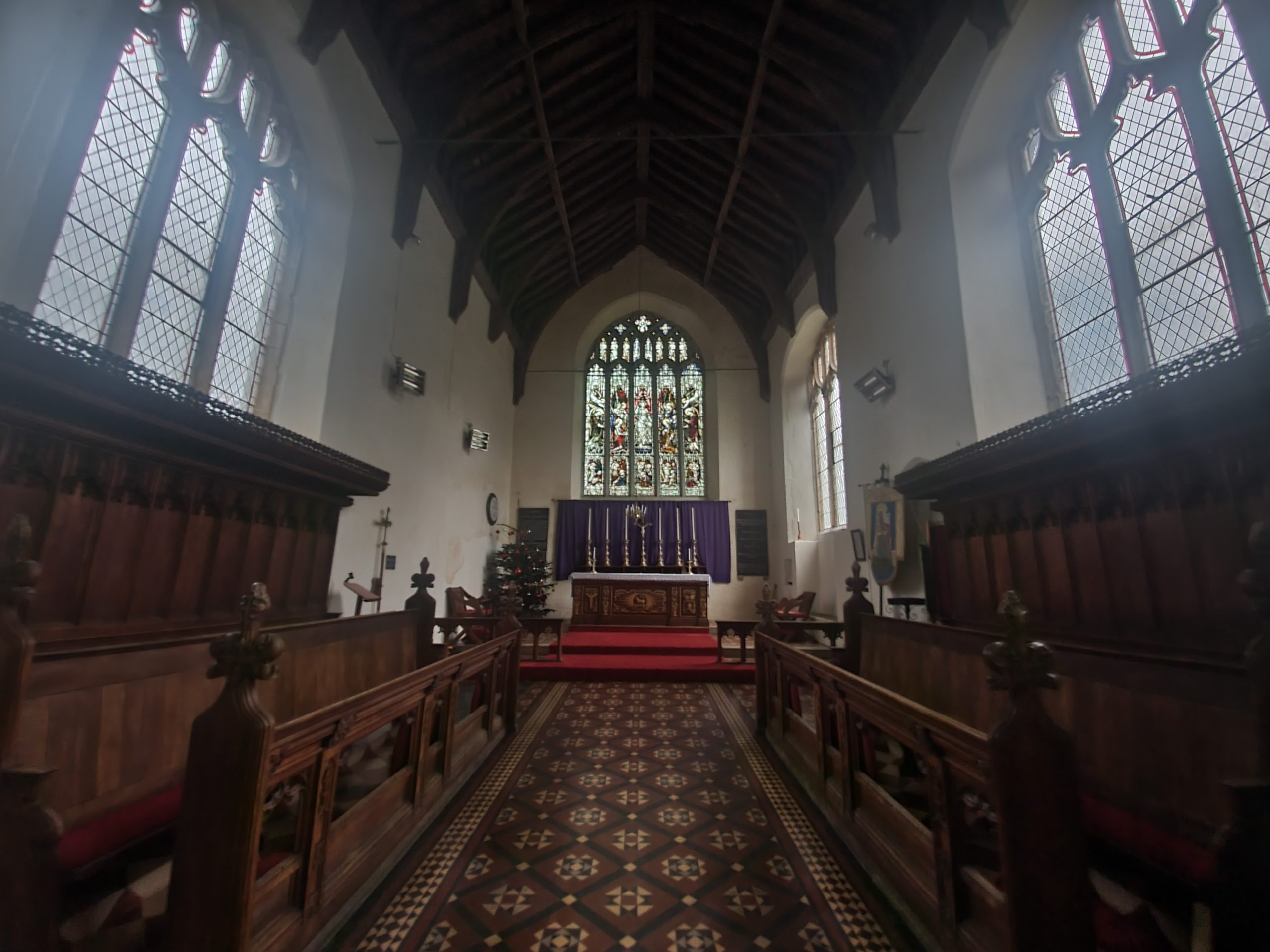
    The choir seating, with these stalls first used at the memorial service for King Edward VII which was held on 29 May 1910.

    The pulpit, which is just over 100 years old, dating from a similar period to the choir stalls following a period of a very leaky roof damaging some of the interior.

    The chancel end.

    Looking back towards the church tower.

    That’s quite an impressive roof, stripped back and partly replaced in 1908 as it was leaking badly. The church then had to turn its attention to the tower, which was in “a very dangerous condition”.

    Above the North Door are the Royal Arms of Queen Anne.

    The font is from the fifteenth century.

    One of the old oak panelled chests which would have once stored important church documents.

    A really rather lovely church and it does the parish great credit that they’ve made an effort to open the building up. I also liked that they had produced a history of the church for visitors, it all felt really quite welcoming even though we didn’t see anyone during the visit. The churchyard, of which more in another post, is relatively large and has had at least two separate extensions added to it.