
Tag: Birmingham Museum and Art Gallery

  • GeoGuessr 2 – Birmingham Museum and Art Gallery (Crossing the Sands by David Cox)

    GeoGuessr 2 – Birmingham Museum and Art Gallery (Crossing the Sands by David Cox)

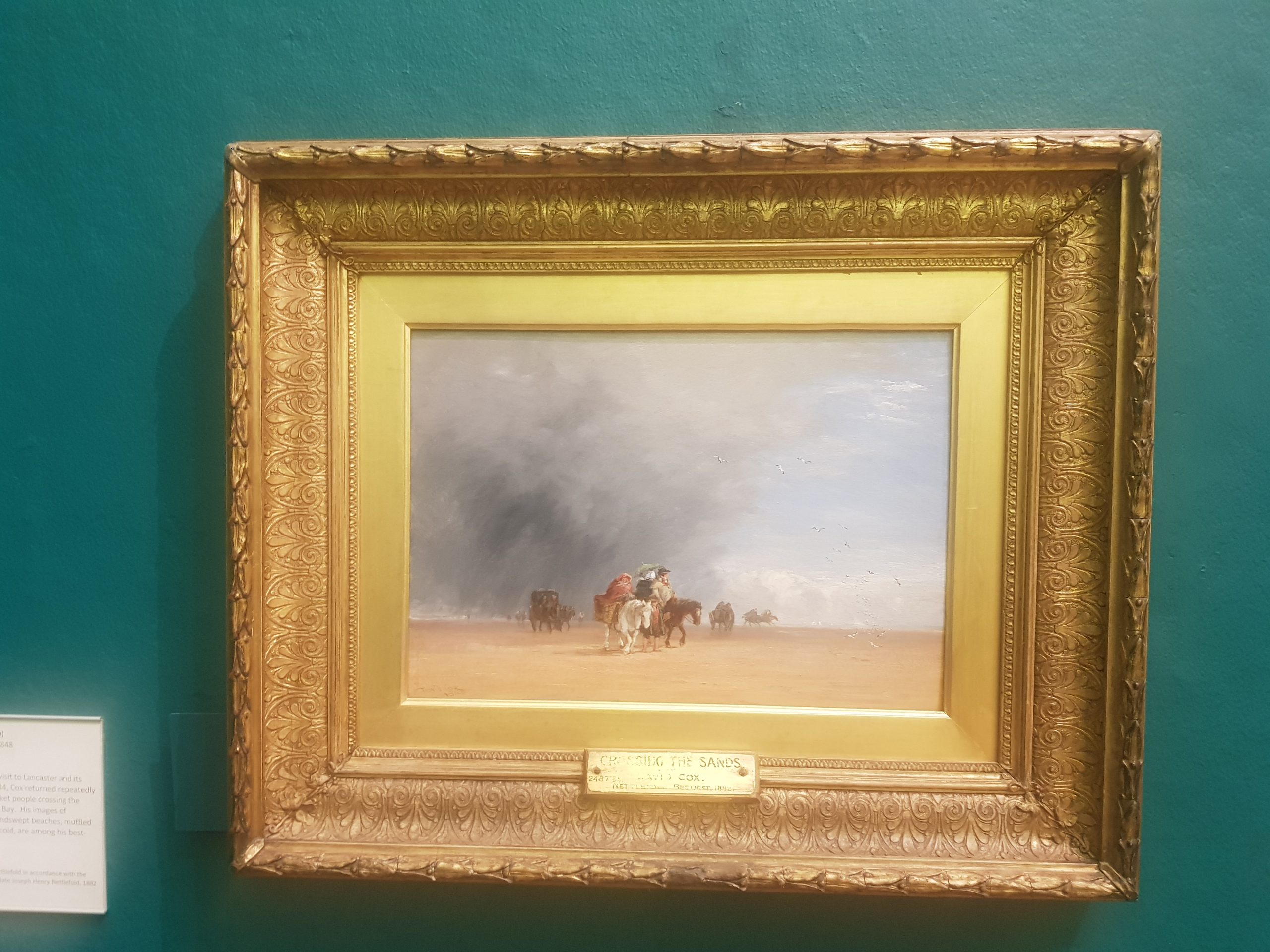
    This is pretty much the only painting that we looked at within the museum and art gallery, primarily as we headed to look at the exhibit on Birmingham’s history in the museum section. But, for sake of completeness and since I took a photo of it, here it is….

    It’s Crossing the Sands by David Cox, painted in 1848 and donated to the gallery in 1882. One interesting element is that the donor was Joseph Henry Nettlefold, who gave the artwork on the condition that the gallery opened to the public on Sundays. It’s perhaps fortunate that he did, since we were visiting the gallery on a Sunday….. The gallery holds a relatively large collection of works by Cox, who was a local man who was born and died in Birmingham, working here between 1841 and 1859.

    This particular artwork shows market people crossing the sands of Morecambe Bay on horses, making efforts to try and stay warm in the cold winds.
  • GeoGuessr 2 – Birmingham Museum and Art Gallery (Debtors’ Prison Door)

    GeoGuessr 2 – Birmingham Museum and Art Gallery (Debtors’ Prison Door)

    To add a little history to our GeoGuessr trip, we went for a short while to the Birmingham Museum and Art Gallery, a location that I visited a few months ago.

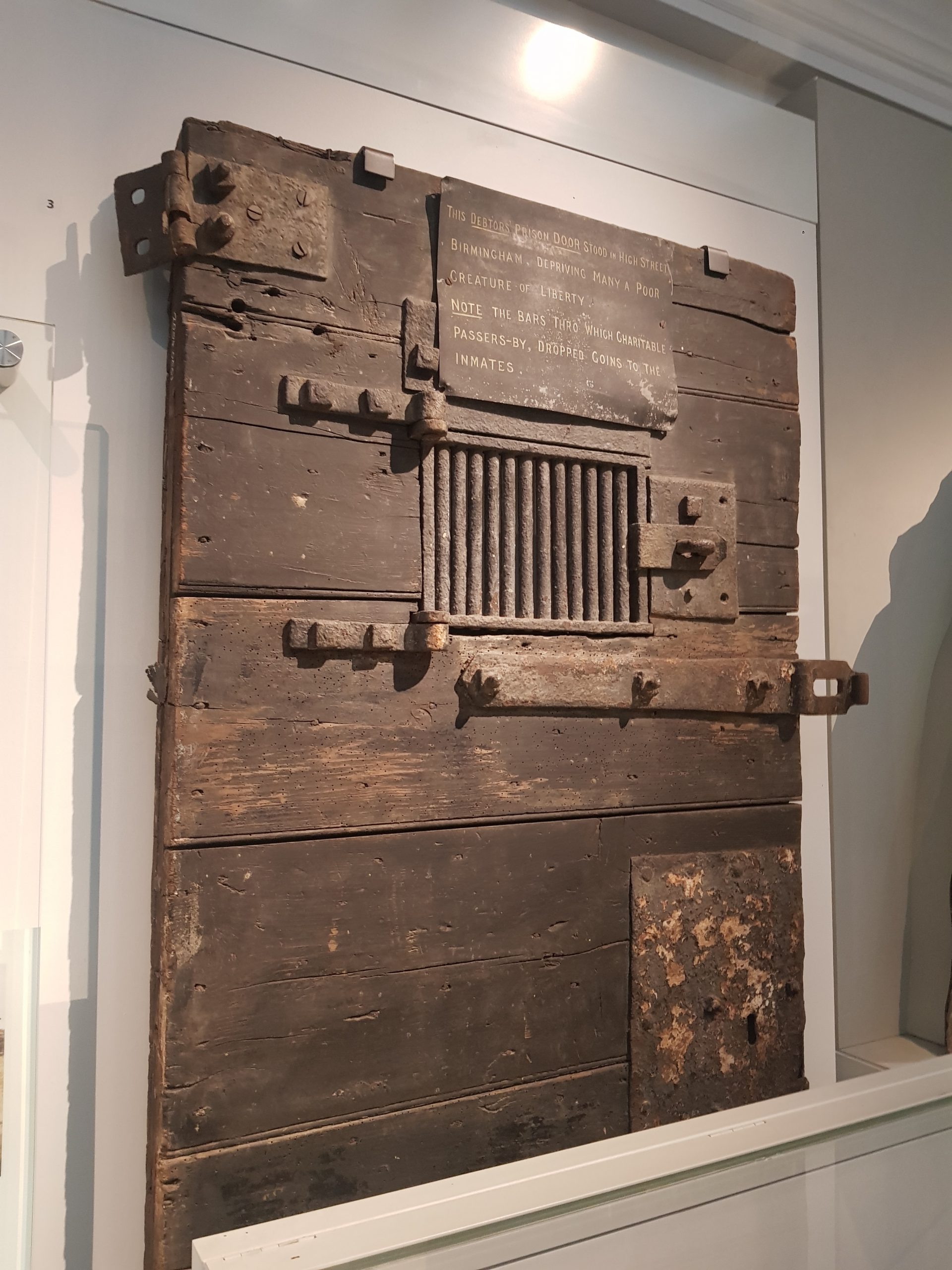
    This prison door is from the long since demolished debtors’ prison which was located on the High Street in the city. A panel, which itself looks old, on the door reads:

    “This debtors’ prison door stood in High Street, Birmingham, depriving many a poor creature of liberty. Note the bars thro’ which charitable passers-by dropped coins to the inmates”.

    The door dates from the eighteenth or nineteenth century, but there’s a disappointing lack of information about the exhibit and how it came to be in the museum. A book from the mid-nineteenth century described what it would have been like in the prison:

    “The debtors’ prison consists of two parts; one occupied by poor debtors who have lodging free, and the county allowance of bread. The other by master debtors who pay two shillings and sixpence per week each, for their beds, and supply themselves with coals, candles, furniture for their rooms, and every other requisite. Eatables of all sorts are admitted. Ale is limited to one quart per day, or a pint of wine to each man, spirits of all kinds are prohibited. The debtors are locked up at nine o’clock in winter, and half-past nine in summer, but have access to each other’s rooms.”

  • Birmingham – Birmingham Museum and Art Gallery (HP Sign)

    One of the HP signs which used to be on the company’s Aston Cross factory in Birmingham. The factory originally opened in 1875 and the iconic HP sauce first went on sale in 1903. This all went marvellously until 2007 when HP was bought out and production was moved to the Netherlands to save money, with the last production line closing on 16 March 2007. The factory was demolished and this sign is one of the few reminders of the site.

  • Birmingham – Birmingham Museum and Art Gallery (Abolition Teapot)

    An abolition teapot produced in around the 1770s by Josiah Wedgwood & Sons in Stoke-on-Trent, with the text reading:

    “Health to the sick, honour to the brave, success to the lover and freedom to the slave”.

    Wedgwood was an abolitionist and spent a fair sum of his own money on supporting the campaign to end slavery. He later produced medallions of a slave in chains, with the message “Am I not a Man and a Brother?” which became an icon of the abolitionist movement.

  • Birmingham – Birmingham Museum and Art Gallery (Amiga)

    I’m not entirely sure that I like seeing items I used just a few years ago (well, twenty years ago) in a museum. This Amiga is in the collection of Birmingham Museum and once belonged to John Court, who has worked in the software industry and learned his skills on this computer.