
Tag: Berwick-upon-Tweed

  • Berwick-upon-Tweed – Keeping Cool

    Berwick-upon-Tweed – Keeping Cool

    I’m currently in Birmingham, where it is very much too hot. This therefore seems an appropriate time to post this “keeping cool” plaque (clicking on it makes it easier to read) I took a photo of a couple of weeks ago on Bank Hill in Berwick-upon-Tweed.

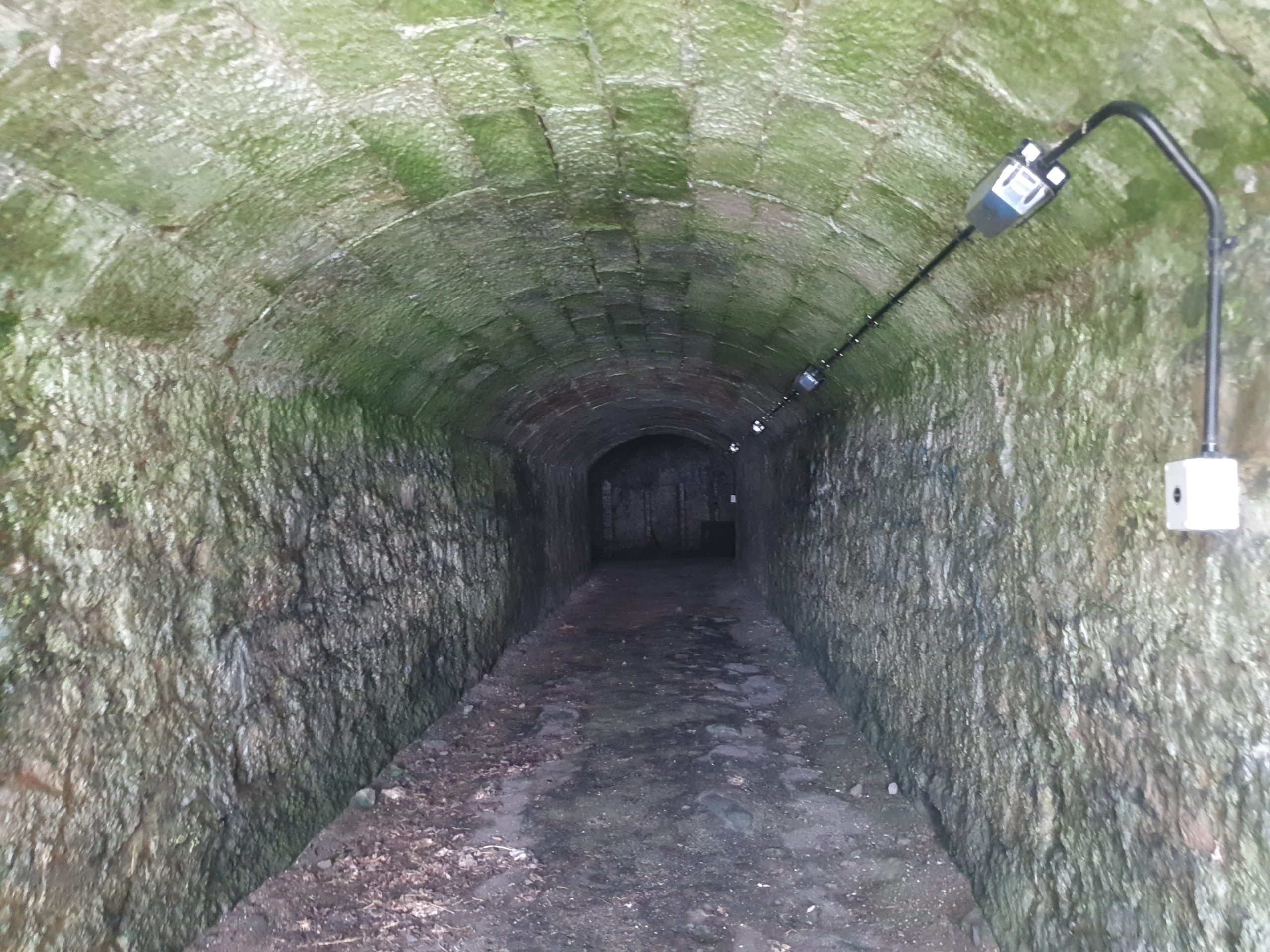
    In short, this is an ice house and it’s one of the largest that was constructed in Berwick-upon-Tweed to keep fish cool by ensure it remained in ice. Around 1,600 tonnes of ice was needed to fill the ice houses in the town, some of which was collected from the River Tweed during the winter, the rest was from the ‘stanks’, which were specially flooded containers. In really bad years, the town purchased ice from as far away as America and Scandinavia to ensure that the fish, mostly salmon, were kept cool.

    The ice house is Grade II listed and this heritage record notes:

    “This ice house is built into the hillside with a covering of earth acting as an insulating layer. Tapered retaining walls of coursed sandstone with ashlar copings flank the wide approach to the entrance arch with large voissoirs; a modern iron gate has been inserted here.

    The entrance tunnel with barrel vaulted sandstone roof and sandstone rubble walls leads directly to the main chamber; this is 11m long and 7.4m wide with a barrel vaulted roof 7.6m high. Although the tunnel indicates there were at least two doorways, there is currently no surviving evidence of the placement of further doors, which would have acted as an insulating airlock. There are, however, five simple metal hooks on the far end of the tunnel to the right, where bags of straw would have been hung.

    The floor is understood to be cobbled throughout, although the majority was covered with silt at the time of inspection. There is a doorway on either end of the main chamber near the ceiling, however, shadowing is all that remains of the staircases that once led to them. There are small brick partitions projecting from the end wall, presumably relating to its later use as a cellar.”

    I like that this has survived and no-one has converted into a cellar or something, it’s a little bit of the town’s fishing heritage that remains as a reminder of the fishing heritage of Berwick-upon-Tweed. And, given how hot is now, I wouldn’t mind standing next to some ice at the moment…
  • Berwick-upon-Tweed – Pilot Inn

    Berwick-upon-Tweed – Pilot Inn

    This is from the last day of the trip to walk St. Cuthbert’s Way, it’s just taking me a little time to catch up with everything. There was just Steve, Susanna, Gordon and I left at this stage, with the situation of course being that we couldn’t go to a pub unless it was in the Good Beer Guide. I walked us to the Pilot Inn, even though it wasn’t the nearest pub to get to, but fortunately the others didn’t complain.

    CAMRA note that the interior is traditional and they’re not lying. This visit was from a couple of weeks ago when the football was on, I don’t think that the flags are normally there.

    The interior hasn’t been knocked about and it’s quirky, old-fashioned and I really like it. When customers come in they see a corridor area ahead of them, a saloon bar to the left and the former public bar to the right. It took us a while to be noticed, but I think that the staff member was in the beer garden serving customers there.

    There’s some old nautical stuff on display, all adding to the pub’s theme.

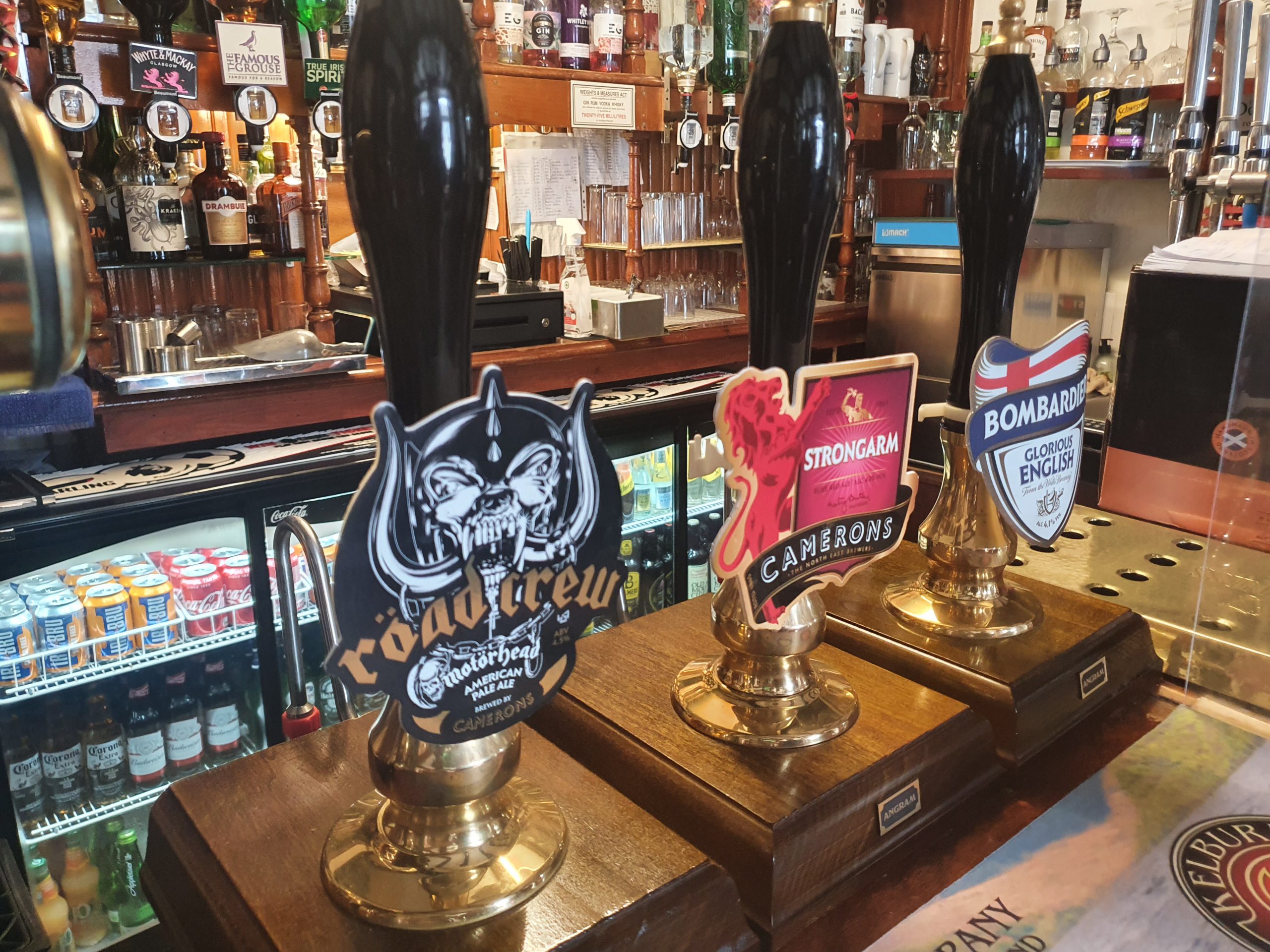
    There were three real ales available, none of which were particularly innovative, but at least there was a choice.

    I went for the Strongarm from Camerons Brewery which is apparently their “flagship beer”. I dread to think what their weaker beers are like. Anyway, it was OK and it was well-kept, but it was a little lacking in depth. Although if it’s a session beer, I suppose it’s all fine and it was well kept and at the appropriate temperature.

    There’s a no swearing policy at the pub. There’s a large beer garden that we spent some time in waiting for our collective trains and we were never rushed by the staff. As an environment, this is really very inviting and there’s a community feel to the whole arrangement. For someone new to the area, I suspect they’d get a friendly welcome here from the staff and other customers. Getting to the beer garden is slightly complex and seems to involve walking through the pub’s kitchen, but that’s the way others were going, so it wasn’t just me.

    The exterior of the pub is interesting as well, as the side wall looks like there was a property here that’s been demolished. I accept that the beers here weren’t riveting, but the building interior is interesting, the welcome is authentic, there’s a choice of real ale and I’m glad that it’s in the Good Beer Guide. Some pubs shouldn’t modernise their buildings and this is one of them, I liked the heritage feel of the interior and I’m glad it has survived in the way that it has.