Tag: Berlin

  • Berlin Trip : Berlin Tempelhof Airport Tour (Part 5)

    Berlin Trip : Berlin Tempelhof Airport Tour (Part 5)

    20241121_144934

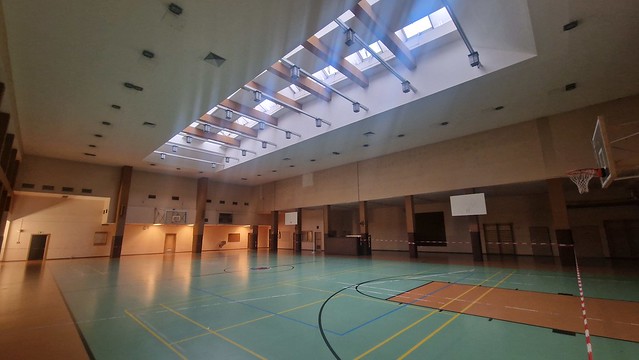
    Templehof Airport was used by the US military between 1945 and 1994 and it’s fair to say that they’ve left quite a legacy in the little things that they added, not least a baseball court.

    20241121_145018

    I wonder what the Nazi building designers would have thought about this little arrangement.

    20241121_145100

    There are plenty of empty spaces, they use areas such as this part of the tour now.

    20241121_145213

    Now mostly removed, but this is where the bowling lanes were located. There were numerous other games played in these rooms, along with a gym, showers, squash courts and all manner of other bits and pieces.

    20241121_145222

    A building plan, but I’m not sure from which year.

    20241121_150640

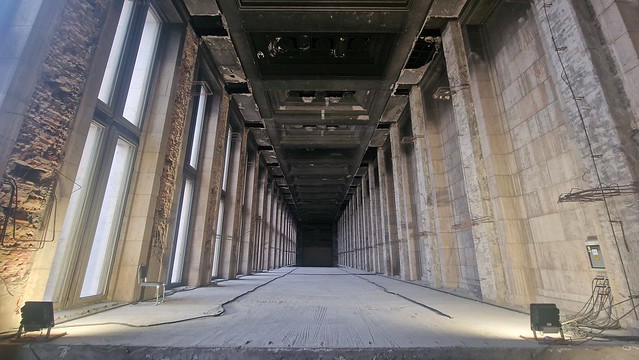
    We were shown some of the former offices used by the army. This one had a copper roof, although it’s not visible in my photo as the ceiling tiles are in the way. It’s a sprawling complex, it was hard during the tour to really understand how it all fit together as the building was just so large. The US military left the airport in August 1994 after having been in the city for 49 years and as with much of the rest of the building, it’s pretty much the same 30 years on.

  • Berlin Trip : Berlin Tempelhof Airport Tour (Part 4)

    Berlin Trip : Berlin Tempelhof Airport Tour (Part 4)

    20241121_143848

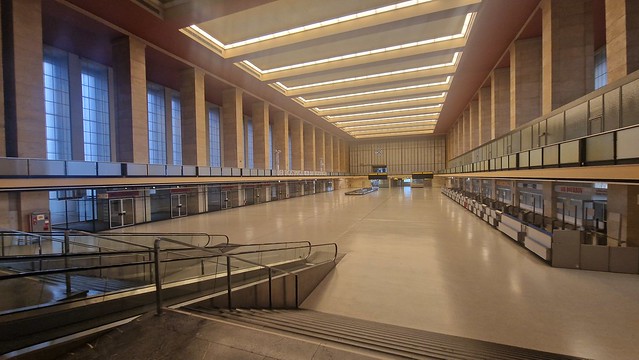
    I ended my last post with this photo, which is the former entrance area of the airport for passengers. The building wasn’t designed like this by the Nazis, it was meant to be a more impressive and imposing entrance for passengers with higher ceilings and an attempt to make it fill people with awe as they entered.

    20241121_144043

    The entrance area was once much higher and this is the Nazi design which was once visible to passengers entering the airport. The floor was that added during the process of ‘denazification’ after the Second World War.

    20241121_144236

    It’s badly damaged, but it’s still there.

    20241121_144605

    The hole punched in the wall to allow modern day access.

    20241121_144139

    Even to my untrained architect’s eye, I can see there’s some damage here.

    I hadn’t realised that the Nazi designed building was constructed with what is known as monumentalism architecture, something more common in the early twentieth century. This was the plan for the exterior of the building, although the interior was designed with a more modernist design style plan.

  • Berlin Trip : Berlin Tempelhof Airport Tour (Part 3)

    Berlin Trip : Berlin Tempelhof Airport Tour (Part 3)

    20241121_141839

    The next part of the tour around Tempelhof took us to what I considered to be the heart of the building, the old check-in area. It’s preserved pretty much as it was when it closed to passengers on 30 October 2008.

    20241121_141929

    Absolutely no imagination is needed to picture this as as working airport as it still looks ready for action.

    20241121_142500

    The signage to the restaurant which was located on the first floor.

    20241121_142134

    Inside the restaurant.

    20241121_142357

    The airport’s bar.

    20241121_142522

    The arrivals board.

    20241121_143713

    The baggage belt.

    20241121_143723

    Empty retail units.

    20241121_143740

    Check-in desks.

    20241121_143748

    The display showing how much bags weighed.

    20241121_143806

    I’m not sure I understand this as Air Bourbon did’t last long, it had one plane and it didn’t routinely fly from Berlin.

    20241121_143831

    The empty terminal. I very much enjoyed this part of the tour as it’s rare for an airport to be mothballed like this, stuff is usually just ripped out and buildings demolished.

    20241121_143848

    The guide mentioned that the floor was designed with a stone floor, but for cleaning purposes a lino type flooring was put in after the building was ‘denazified’, although more on that in a later post. The stone floor has remained in the entrance area.

  • Berlin Trip : Berlin Tempelhof Airport Tour (Part 2)

    Berlin Trip : Berlin Tempelhof Airport Tour (Part 2)

    20241121_140313

    The next part of the tour (previous part here) went to the more hidden areas of the airport past this pump thing. I have no idea what it is. I asked AI and I was pleased to see that it didn’t much differ, noting that it was a “grey metal device: This could be a pump, ventilation system, or some other kind of machinery.” That’ll do.

    20241121_140358

    The airport was built at a time when the Germans secretly knew that buildings needed to have safe areas in case of attack, with this room being one fitted out with calming imagery for children. The Dutch guide did explain the wording, which went across the room, and he said that it was typical German humour which no-one else found funny. AI tells me that this reads:

    “Hey! – he thinks – that’s great!
    and loosens the lid a bit.”

    20241121_140524

    Never used during the war, but this was an emergency exit. The floor levels are confusing, I felt low down in the building at this point as we had entered a bunker area, but because the airport was built on numerous levels, it was still higher than the runway.

    20241121_141002

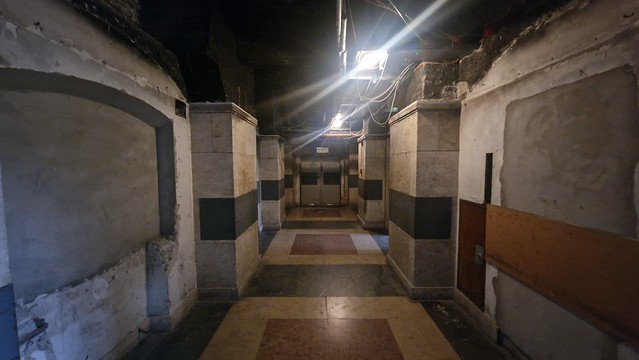
    Some old corridors.

    20241121_141009

    It wasn’t quite clear what rooms like this were built for, but this area of the airport was attacked and damaged by the RAF during the Second World War.

    20241121_141502

    The guide mentioned that the red marks on the stone were fires caused by bombings. It’s some grand architecture, but more on that in a later post.

    20241121_141618

    Soviet graffiti from when their soldiers took over the building. Back to AI (yes, I ask it a lot of questions), which says it means “sore throat”, although I’m not entirely sure what relevance that has here. The Soviets wanted to capture Tempelhof Airport to stop senior Nazis trying to flee the country, seizing it on 26 April 1945 after some fierce fighting. They didn’t have it long, it was put under the United States Army sector on 2 July 1945.

    20241121_141750

    Then we headed back towards what was the public area of the terminal.

  • Berlin Trip : Berlin Tempelhof Airport Tour (Part 1)

    Berlin Trip : Berlin Tempelhof Airport Tour (Part 1)

    20241121_123110

    This transpired to be one of the most interesting tours that I’ve been on, a two-hour guided tour around the former Templehof Airport. It’s a complex site and the tour consisted of seeing the old airport terminal, the airside area, some of the remaining Nazi architectural elements, the US military base and the location of the Nazi secret storage. Hence why it might take me a while to plough through all the photos that I took, so there might be a few posts for my two loyal blog readers.

    20241121_123144

    But we’ll start at the entrance as that seems sensible. The site is used for numerous purposes now, although the airport terminal building itself is still as it was left when it closed in 2008. I arrived a little early for the tour, although friends won’t be surprised at that, but there’s a little museum to look at whilst waiting.

    20241121_124051

    This photo shows the scale of the site.

    20241121_130512

    A photo of the terminal on 1 September 1975 and the tour took in this hall.

    20241121_134828

    The Dutch guide was excellent and full of enthusiasm. Whilst walking to the next stage on the tour, he mentioned that Hitler had a private entrance to the airport and that’s in the centre of this photo.

    20241121_135005

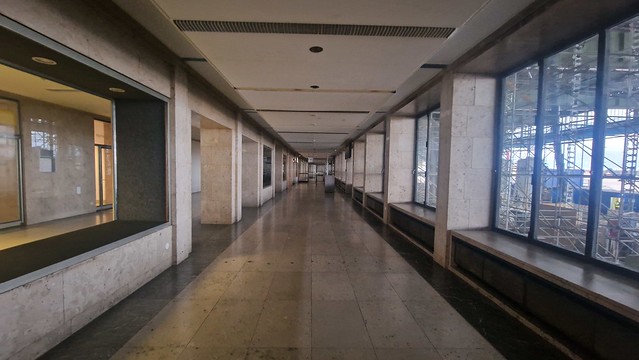
    One of the airside corridors. It doesn’t take much imagination to picture how this would have looked full of travellers.

    20241121_135114

    Out on the tarmac and my friend Liam would like this, he used to specialise in concrete pours of runways (or whatever the technical term is).

    20241121_135128

    The structure is ridiculously large and was at the time of its construction one of the world’s top twenty largest buildings. It’s one of the few airports that was designed to support massive growth in airline travel, although the Nazis had many grand plans. It was built to be symmetrical, but that didn’t quite come to pass. It was designed by the architect Ernst Sagebiel (1892-1970) and construction took place between 1936 and 1941, but some elements weren’t finished and some of the plans were changed. Norman Foster, who led the design for the reopened Reichstag, referred to it as “the mother of all airports”.

    20241121_140006

    The airport wasn’t built with long runways, as they weren’t much needed at the time, and this limitation is one of the reasons that its growth was limited later on.

    It wasn’t the only airport used during the Berlin Airlift after the Second World War, but it was perhaps the most important.

    20241121_140031

    The old passport control signage.

    20241121_140152

    20241121_140202

    20241121_140214

    The baggage system is all still there as part of the attempts to preserve the past. It wasn’t entirely clear to me what the long-term plan is for all of this, but I hope that they keep it.

  • Berlin Trip : Foodfactory Berlin Cube – Sia Thai

    Berlin Trip : Foodfactory Berlin Cube – Sia Thai

    20241120_185945

    I like an on-trend food court, with this one being located opposite Berlin Hauptbahnhof.

    20241120_181530

    There are around six different food outlets here covering a range of cuisines, but the Thai option seemed the most exciting. The service was efficient and polite, with the prices being reasonable. There’s a buzzer set-up where you go up and collect the food when it’s ready and it only took them around eight minutes to have it cooked.

    20241120_181532

    There were lots of seats available and it all felt modern and comfortable. The temperature and lighting were appropriate, with some light background music playing which wasn’t annoyingly loud.

    20241120_182048

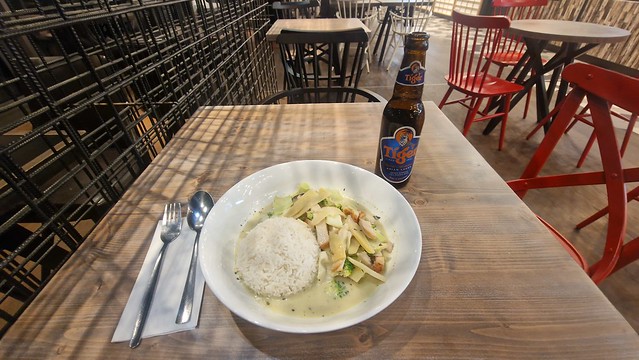
    I went for the Thai green curry which was served as a larger portion than might be evident from the photo. The chicken is tender, the rice was suitably sticky, the vegetables retained some bite and the sauce had a depth of flavour. The Tiger beer was the only option they had, but at least it was appropriate to the cuisine. I thought it was all rather pleasant and reasonably priced.

  • Berlin Trip : Topography of Terror Museum (Jewish Prisoners in Buchenwald Concentration Camp in 1938)

    Berlin Trip : Topography of Terror Museum (Jewish Prisoners in Buchenwald Concentration Camp in 1938)

    20241119_121833

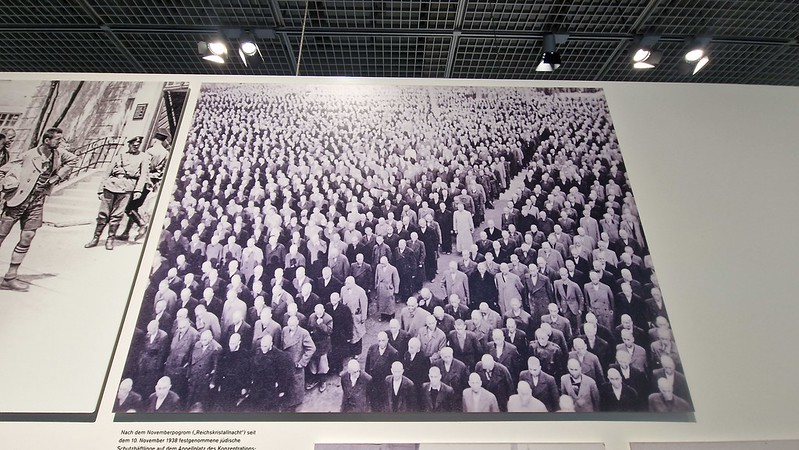
    This is another photo that I hadn’t seen before and it’s an image of the Jewish prisoners at the Buchenwald Concentration Camp in late November 1938. They were arrested after Kristallnacht on 9/10 November 1938 and in this photo they were still waiting for their ‘uniforms’, but they had already had their heads forcibly shaved.

    Buchenwald had been open for a year at this point, but this was its first major influx of people. There were tens of thousands of Jews who were imprisoned across the Reich, but 9,845 Jews were sent here and many had their financial assets and possessions taken away. Most of the Jews were male and wealthy, this was really a financial priority at the time for the Nazis, but it certainly wasn’t a safe place as the prison population grew to 11,028 by the end of the year and 771 people had already died. Then in February 1939 typhus broke out, with more deaths following that and the camp was put into quarantine. Some Jews were released in late 1938 and during 1939, particularly if they were teachers, they had sold their assets or they had confirmed plans to leave Germany.

    It’s an interesting look at how the Nazi policies developed, as what they were hoping for at this stage were for plenty of Jews to emigrate whilst selling their houses, cars and belongings off cheap. The arrests were deliberately not of elderly or poorer Jews and they weren’t meant to be badly treated during the arrests, although many inevitably were given the anti-semitism which had been building up in Germany. It’s one of the locations that I’ve yet to visit and another that I would like to see at some point.

  • Berlin Trip : Topography of Terror Museum (Abandoned Piers from Gestapo Driveway)

    Berlin Trip : Topography of Terror Museum (Abandoned Piers from Gestapo Driveway)

    20241119_133120

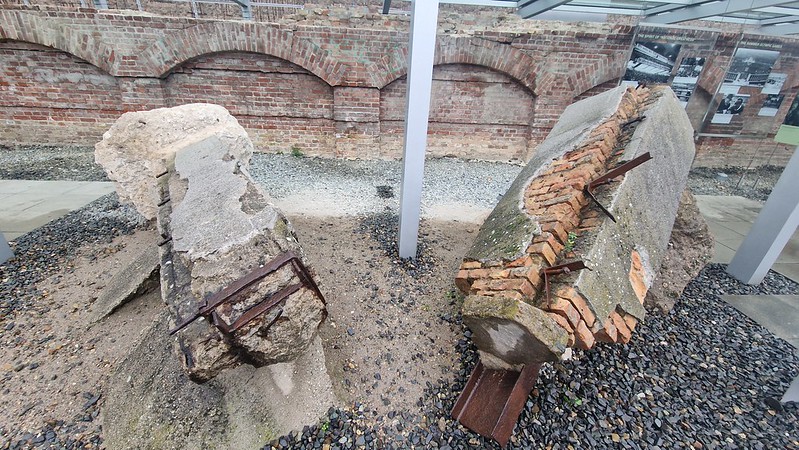
    I can’t find any old photos of this angle of the building, but these are the remains of the piers that once lined the main driveway to the Gestapo headquarters. They’re now located at the Topography of Terror Museum and they were left here following the clearing of the site between 1957 and 1963. This was known as the ‘east gate’ and all the political prisoners would have passed through here. It’s an odd bit of archaeology as this area was all excavated in the 1980s and 1990s, so it wasn’t long demolished. I’m oddly interested in random bits of old buildings, especially when they had such a massive importance in a country’s history.
    This is the building that they were guarding (photo copyright of the Bundesarchiv).

  • Berlin Trip : Topography of Terror Museum (Former Basement of the School of Industrial Arts and Crafts)

    Berlin Trip : Topography of Terror Museum (Former Basement of the School of Industrial Arts and Crafts)

    20241119_132247

    The Topography of Terror Museum is built on the site of what was the heart of Nazi power in Germany, the former HQ of the Gestapo and the SS. The buildings were badly damaged as Berlin fell, with the new East German Government demolishing just about everything that was left (or at surface level anyway). There were excavations in the 1980s of the buildings and the foundations and cellars of numerous buildings were rediscovered.

    20241119_132154

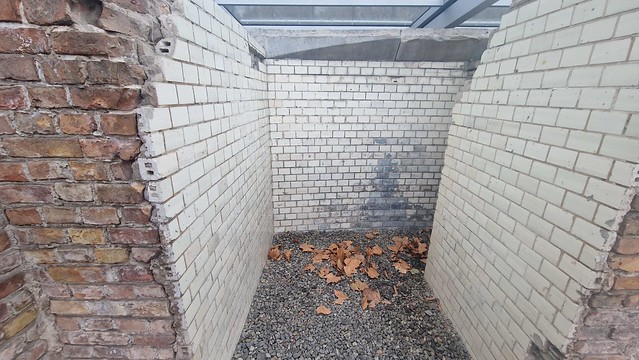
    There is plenty left of these cellars which were constructed as the basement of the School of Industrial Arts and Crafts which was constructed between 1901 and 1905.

    20241119_132315

    These were light shafts with the white glazed slotted bricks designed to improve the amount of light in the basement. They’re in such good condition that it felt almost possible to imagine them being constructed in a building that was being designed to promote art and culture before it fell into the hands of those who wanted rather more nefarious activities to take place.

    20241119_132044

    The building was taken over by the Secret State Police Office, also known as the Gestapo, in May 1933. It’s not quite clear exactly how these rooms would have been used by the Gestapo, but it’s known that political prisoners were tortured and murdered in this building and that could well have included these cellars. The art school for who the building was constructed survived and is now part of the Berlin University of the Arts.

  • Berlin Trip : Topography of Terror Museum (Josef “Sepp” Dietrich and other War Criminals)

    Berlin Trip : Topography of Terror Museum (Josef “Sepp” Dietrich and other War Criminals)

    20241119_131355

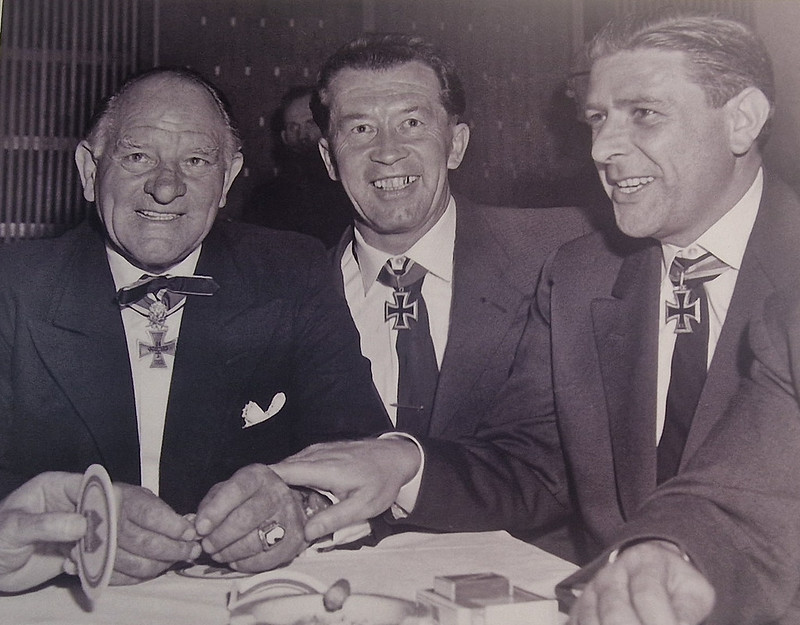
    This museum was large in size and I didn’t get a chance to read everything, although I did my best to try in a way that my friend Susanna would have been proud of. This is a photo of the war criminal Josef “Sepp” Dietrich (1892-1966), who was an early member of the Nazi Party and he served as Hitler’s bodyguard before going on to command numerous SS units. He’s the one on the left and he was a war criminal who was sentenced to life imprisonment in 1946 for his crimes against humanity, but which was reduced to 25 years in 1951 and they then decided to just let him out in 1955. He never repented for his crimes and bands of people who meet up to reminiscence happily about ‘the good old days’ of the Nazis. He was arrested for more crimes in 1956 and then faced a further three years in prison, but he still had many supporters as 6,000 former SS men turned up to his funeral. There are rumours in places on-line that this man received a state funeral, but he absolutely didn’t as he was one of the worst war criminals the country had seen.

    An organisation called HIAG (Mutual Aid Association of Former Waffen-SS Members) was established to try and advocate for former SS officers, suggesting that they had made military achievements and were soldiers and not war criminals. Meetings of former officers were common and the museum tackles this as one of the challenging realities in Germany. There’s an interesting page on Wikipedia about how the German authorities dealt with this situation in the post-war period.