Tag: Bawdeswell

  • Bawdeswell – All Saints’ Church (Robert Gardinear / Robert Gardener 1764-1796)

    Bawdeswell – All Saints’ Church (Robert Gardinear / Robert Gardener 1764-1796)

    20250511_143937

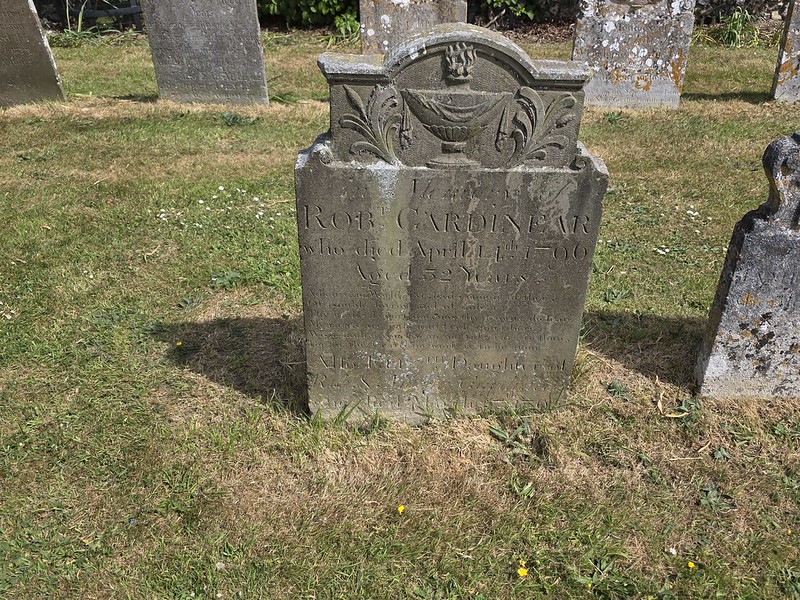
    This gravestone is located at All Saints’ Church in Bawdeswell and it commemorates the life of Robert Gardinear. Although I’m sure that there are a few examples of that surname still around, it seems a more unusual way of spelling the word. Talking about transcription issues, prizes to anyone who can read the age on this gravestone. I initially thought that it said “aged 52 years” but all the transcriptions read “aged 32 years”. Although, this would fit, as the nearest birth that I can find is Robert Gardener who was baptised at this church in Bawdeswell in 1765 and then buried here on 21 April 1796 (having died one week earlier). If the birth is the right Robert, then he was the son of Henry and Elizabeth Gardener (or however they were spelling that).

    Back to the spelling of Gardinear, I’m going to say that’s a mistake dating back to the eighteenth century. There is no record of anyone else of that surname in Norfolk and the spelling of names was quite fluid in the eighteenth century.

  • Bawdeswell – All Saints’ Church (Robert Leeds 1711-1763) and Alice Leeds (1700-1770)

    Bawdeswell – All Saints’ Church (Robert Leeds 1711-1763) and Alice Leeds (1700-1770)

    20250511_143735

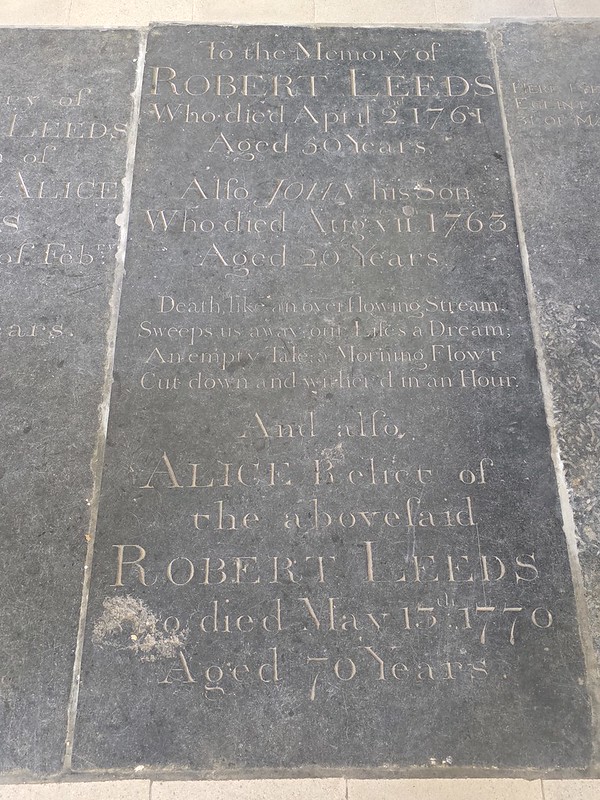
    This is the ledger stone of Robert Leeds (1711-1761) and his wife Alice Leeds (1700-1770), who were buried in All Saints’ Church in Bawdeswell. I can’t be certain, but I suspect the baptism at Foxley (near to Dereham) on 1 October 1711 (and birth on 18 July 1711) is the same Robert Leeds. He himself was the son of Robert Leeds (not another one…..?) and Mary Leeds.

    He married Alice at St. Mary Church in Sparham on 26 January 1730 and that’s a little bit of an age gap for the time, with Robert being 19 and Alice being 30. They were the parents of Robert Leeds (1736-1807), William Leeds (1740-1798) and John Leeds (1743-1763).


  • Bawdeswell – All Saints’ Church (John Leeds 1743-1763)

    Bawdeswell – All Saints’ Church (John Leeds 1743-1763)

    20250511_143735

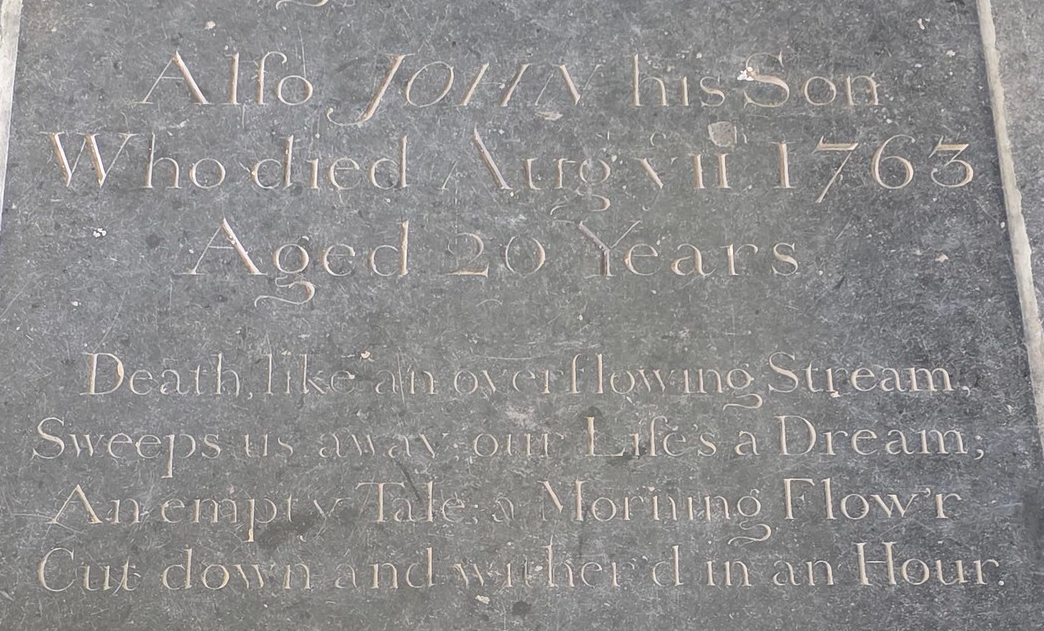
    John Leeds (1743-1763) was the son of Robert Leeds and Alice Leeds, as well as being the brother of William Leeds and Robert Leeds. I can’t though establish why John died so young.

    As I don’t get out much and need a distraction, I’ve been trying to establish how wealthy this family might have been. And I’ve discovered that the presence of these ledger stones isn’t necessarily a sign of high wealth, it was often because they were cheaper than monuments and so it was something that would have been accessible to the middle classes. The individuals would have been buried under these ledger stones, but as the church has been rebuilt twice due to a couple of unfortunate incidents, that may or may not be true here. If it wasn’t for church burials needing to move outside, primarily for health reasons, more churches might well have been completely paved with these ledger stones.

  • Bawdeswell – All Saints’ Church (William Leeds 1740-1798)

    Bawdeswell – All Saints’ Church (William Leeds 1740-1798)

    20250511_143729

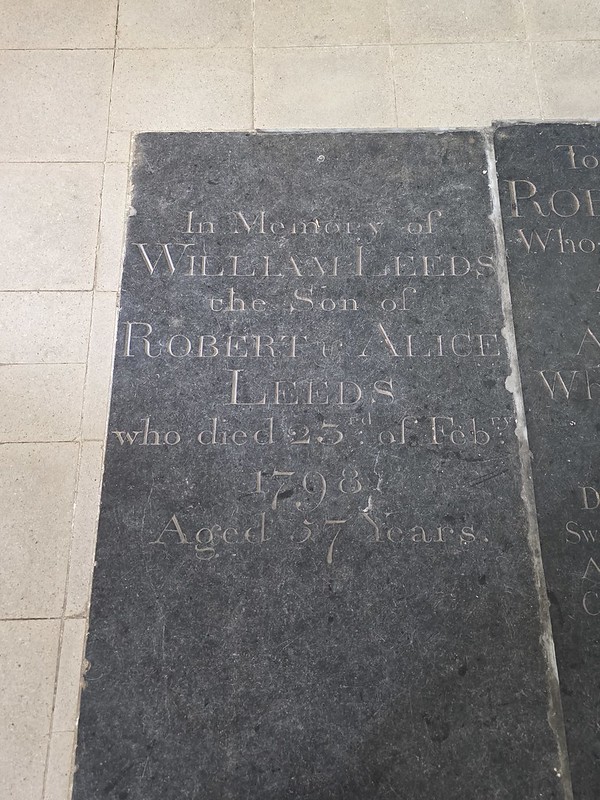
    Once again, I can’t offer very much here due to the paucity of the records that are available. William Leeds (1740-1798) is buried at All Saints’ Church in Bawdeswell and he was the younger brother of Robert Leeds (1736-1807) and the older brother of John Leeds (1743-1763). William was baptised at the church in Billingford in Sparham (the neighbouring village to Bawdeswell, so he didn’t get very far) on 7 June 1740, the son of Robert Leeds and Alice Leeds and he was buried on 26 February 1798.

  • Bawdeswell – All Saints’ Church (Robert Leeds 1736-1807)

    Bawdeswell – All Saints’ Church (Robert Leeds 1736-1807)

    20250511_143720

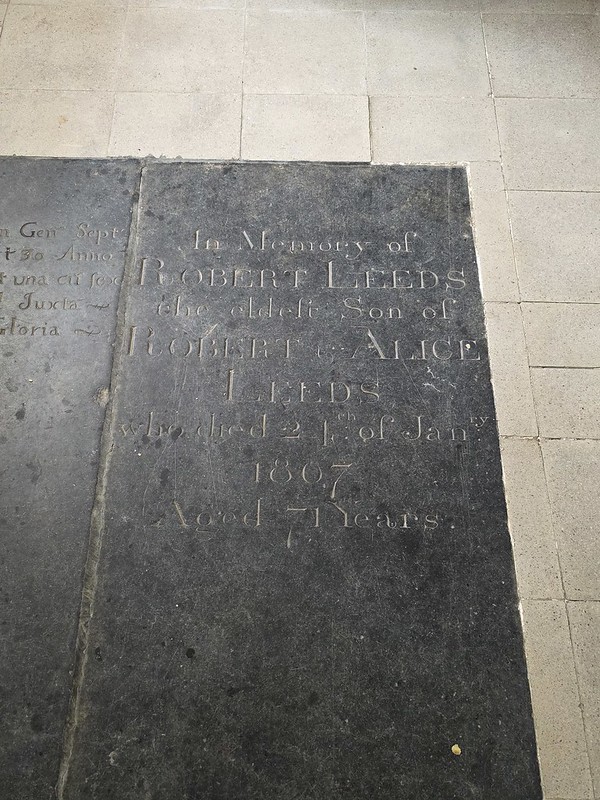
    I don’t have much to add to this one, I just liked that at least a few things survived inside the church. This tombstone inside All Saints’ Church in Bawdeswell has survived the church being rebuilt twice and commemorates the life of Robert Leeds. Robert was born in 1736, the elder son of Robert Leeds and Alice Leeds. The older brother of William Leeds (1740-1798) and John Leeds (1743-1763), Robert was buried on 29 January 1807 and the burial record lists him as a yeoman, which is likely a small-scale farmer who owned and cultivated their own land. He must have been doing well enough to be allowed to be buried inside the church, although there are other family members buried near him and perhaps they were the wealthy ones. Referring to a different Robert Leeds, White’s Directory noted in 1845 that “a great part of the soil in the village belongs to Robert Leeds”, so there was some prosperity floating about somewhere in the family. Unfortunately, as I can’t find any mention of him in the newspapers of the time, Robert has rather fallen through the cracks that are historical records.

  • Bawdeswell – All Saints’ Church (Quintin Edward Gurney)

    Bawdeswell – All Saints’ Church (Quintin Edward Gurney)

    20250511_143602

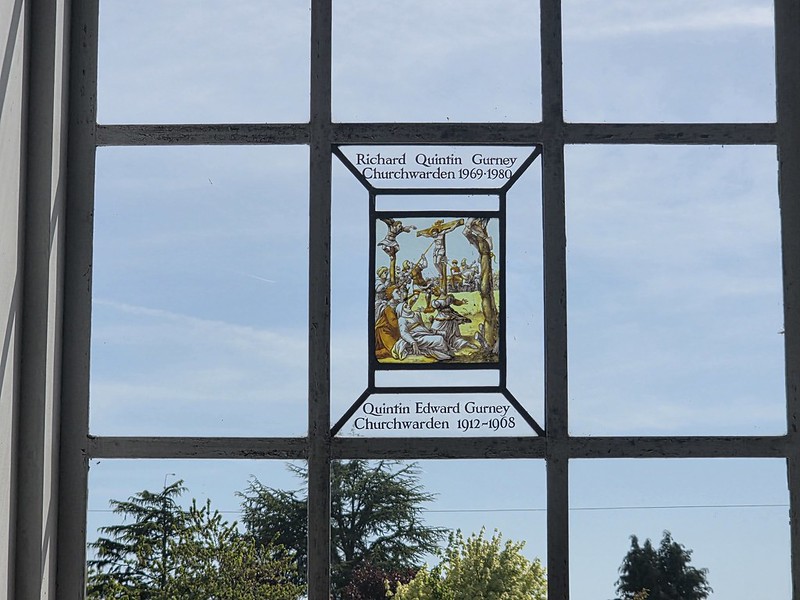
    I was interested in this stained glass window at All Saints’ Church as that’s a rather impressive period to be the churchwarden, from 1912 to 1968. Major Quintin Edward Gurney was born on 20 February 1883 and he was the son of Richard Hanbury Joseph Gurney, aged 28 at the time of Quintin’s birth, and Sarah Evelyn (Buxton) Gurney, then aged 29. His siblings included Christopher Richard Gurney, Rachel (Gurney) Bruce, Richenda Evelyn Gurney, and Gladys Catherine (Gurney) Wynn.

    In 1911, Quintin Edward Gurney married Emily Ada Pleasance Ruggles-Brise in Braintree, Essex. His wife, born in 1880, lived until 1972 and the Ruggles-Brise family was also well-established, particularly in Essex, further solidifying Gurney’s social standing through this union. Together, Quintin and Emily had a substantial family, documented as having at least four sons and two daughters. Their known children were Pleasance Evelyn (1913–1996), Richard Quintin (1914–1980), Ruth Cecilia (1917–2017), Edward Ralph (1919–1937), John Romer (1920–1932) and Archibald James (1932–2004). He held the rank of Major in the British Army, specifically serving with the Norfolk Yeomanry. The Norfolk Yeomanry was a unit often associated with the county’s gentry and farming communities, so this wasn’t really a working class lad done good and indeed he was from the wealthy Gurney family whose bank was taken over by Barclays, with Quintin himself being a director of the TSB.

    Here he is when he was at Harrow School in the late nineteenth century. As can be noted from the stained glass window, following his death in 1968, his son Richard Quintin took over the role of churchwarden until his own death in 1980.

  • Bawdeswell – All Saints’ Church

    Bawdeswell – All Saints’ Church

    20250511_142806

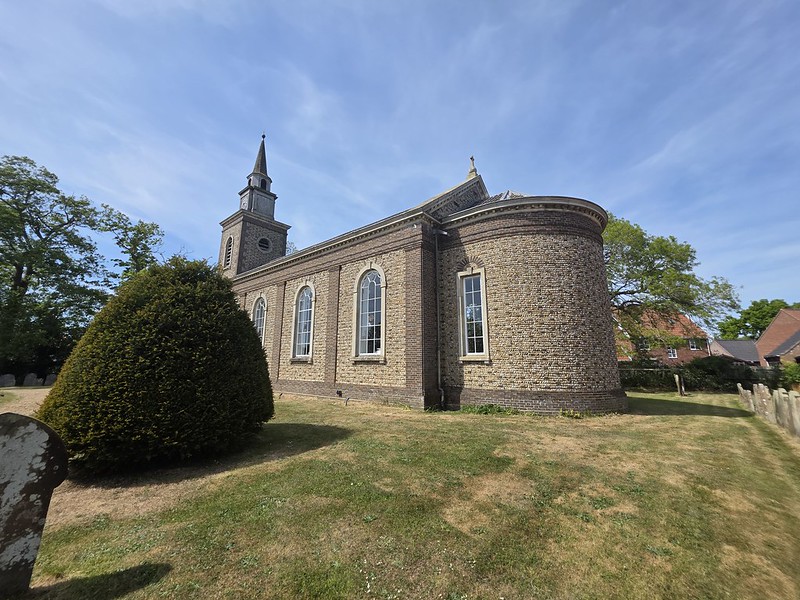
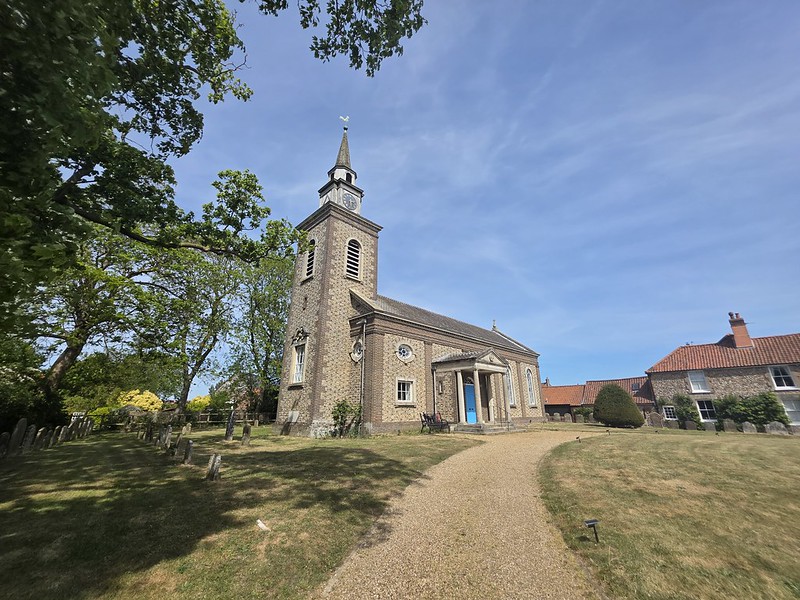
    It’s fair to note that All Saints’ Church at Bawdeswell has had something of a troubled history in terms of its physical building over the centuries. The first building on this site was either late Saxon or early Norman, but the main medieval church here was constructed in the fourteenth century. There was a sub-optimal situation in 1739 when the tower fell down and took half the church with it, so they rebuilt it. Then, in 1828, the tower fell down again and so it was thought something should be done.

    In 1843, the Norwich Mercury published this article:

    “Bawdeswell Church.

    Bear ye one another’s burdens, and so fulfil the law of Christ.—GAL. vi. 2.

    IN 1740, the Tower and the body of the Parish Church of Bawdeswell became a heap of ruins, since that event the Chancel has been fitted up with Pews and Sittings, and thus some cramped and insufficient accommodation has been obtained for about 200 persons. The present population exceeds 600. In consequence of its dilapidated state, it has become necessary to take off the roof of that remaining part of the original building, and the walls have been found to be in a very unsound condition. Under these circumstances, it could not be recommended to the Parishioners to make any considerable outlay upon the reparation of this remnant of their Church, the narrow dimensions of which will not admit of its being made a suitable place for the decent celebration of the services of the Church for so numerous a population. It has therefore been determined to attempt to raise a fund for the rebuilding of the Church, and as it is unfortunately too well known that this parish is peculiarly overburdened, its average being very disproportionate to its population, and is therefore not in a condition to meet the necessary expenses of such a building without assistance, it is hoped that the appeal to the members of the Church in the neighbourhood for their help and co-operation in this work will be considered one which the circumstances of the case will fully justify.

    Subscriptions may be received at Messrs. Harvey and Hudson’s, Messrs. Gurney’s, and the East of England Bank. (3143

    LIST OF PRESENT SUBSCRIPTIONS.

    By Rate and Old Materials £150 0 0
    The Bishop of Norwich . . 25 0 0
    The Earl of Leicester . . 20 0 0
    Lady James Townshend . . 20 0 0
    The Rev. Henry Tracy, Swanton Morley 20 0 0
    Mrs. Lloyd, Bawdeswell . . 50 0 0
    Miss E. Lloyd, ditto . . . 50 0 0
    Clarke Stoughton, Esq. ditto . 25 0 0
    Mrs. Stoughton . . . . 5 0 0
    Revd. P. Du Val Aufrere, Rector of } 15 0 0
    Bawdeswell }
    Revd. Aufrere (additional) . . . 5 0 0
    Mrs. Aufrere . . . . . 10 0 0
    Mr. Ront, Leeds, Bawdeswell . . 10 0 0
    Mrs. Leeds, ditto . . . . 5 0 0
    Mr. Robert Leeds (additional) . . 5 0 0
    J. P. Leeds, Esq. Hack Hall . . . 5 0 0
    Revd. H. Blake, Thirning . . . 2 2 0
    Miss Blake, ditto . . . . . 1 1 0
    Rev. W. Howard, Witchingham . . 2 0 0
    Friends by Rev. W. Howard . . . 3 8 0
    Rev. T. S. Norgate, Sparham . . . 5 0 0
    Mr. Middleton, Sparham . . . 2 0 0
    Mr. Nelson, Sparham . . . . 2 0 0
    A Friend, by Mr. Stoughton . . . 2 0 0
    Rev. J. A. Norfolk, Foxley . . . 3 0 0
    Rev. J. Spurgeon, Twyford . . . 2 0 0
    Rev. W. Blyth, Hackford . . . 1 1 0
    Rev. Henry Evans, Lyng . . . 2 2 0
    Mr. John Bidewell, Thirning . . . 1 1 0
    Mrs. J. Bidewell, Thirning . . . 1 1 0
    Rev. F. Hilward, Swanington . . . 2 0 0
    Rev. U. O. Knatchbull, Elmham . . 1 0 0
    Rev. T. Green, Fulmodeston . . . 1 0 0
    Col. Packe, Twyford . . . . 5 0 0
    Miss Emily Morse . . . . . 10 0 0″

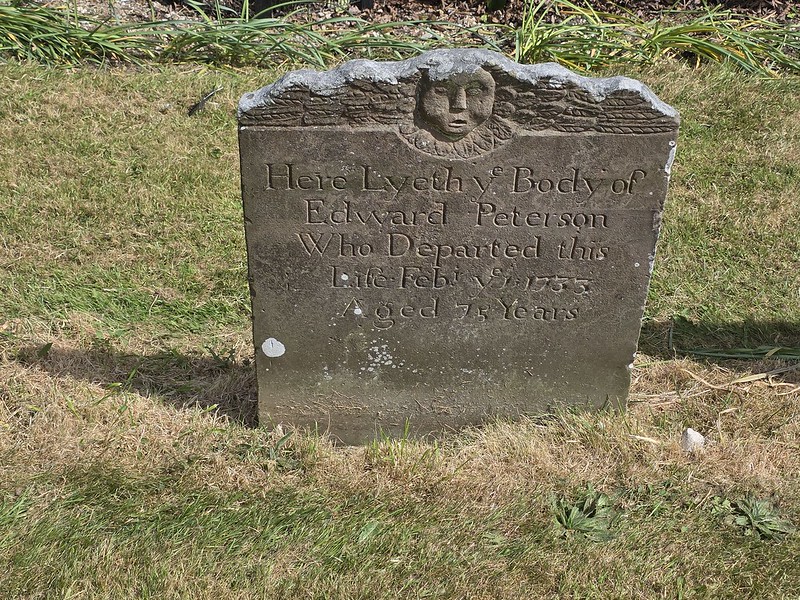
    In the early 1840s, a plan was developed to allow for the rebuilding of the church with the usual Victorian gusto and excitement and this is the plan from 1845. That should have been the end of the matter, until an aircraft crashed into the church in the Second World War. However, I’ve written separately about the destruction during the Second World War and also the rebuilding of the church. And also the rather impressive survival of the 1733 gravestone commemorating the life of Edward Peterson.

    20250511_142909

    The tower of the Neo-Georgian building.

    20250511_143416

    The font is made from Ancaster stone with lead lapping over the top of the wooden font.

    20250511_143424

    The interior looking towards the chancel and it’s a bright and open space.

    20250511_143444

    The triple-decker pulpit which is a nod towards the Georgian style architecture.

    20250511_143451

    The rather stark chancel.

    20250511_143500

    Looking back from the chancel towards the end of the nave, with the organ located on the upper tier. Much as I like a medieval church, this is a clean and functional building which feels modern with at least a nod towards the Georgian architecture to make it feel as though it has some heritage.

  • Bawdeswell – All Saints’ Church (Reconstruction After the Second World War)

    Bawdeswell – All Saints’ Church (Reconstruction After the Second World War)

    20250511_143034

    There’s a display board at the church which shows the post-war reconstruction of the building after it was mostly destroyed following an aircraft crash during the Second World War. The RAF Mosquito bomber crashed into the building on 6 November 1944, the only incident during the Second World War where a church was destroyed by an aircraft hitting it, as opposed to a bomb or other aerial attack. The task of rebuilding the church fell to the War Damages Commission and it took a few years to get going, with the work commencing in March 1953. The design for the new church was entrusted to Norwich architect J. Fletcher-Watson, who also designed the Bishop’s House in Norwich. He envisioned a Neo-Georgian style structure, a distinct contrast to many other village churches and one which I think looks rather elegant.

    20250511_142806

    There was an argument though which started before the reconstruction started, when the Parochial Church Council objected that the new spire was a potential hazard to low flying aircraft. I can see their concern given what had happened, but the architects rejected the complaint that this wasn’t a traditional Norfolk church design and the Chancellor of the Diocese made the adjudication that construction could begin.

    20250511_142903

    The foundation stone for the new All Saints’ Church was laid by Sir Edmund Bacon, Bt. on 21 July 1953. The Rector at the time, the Reverend Heywood Gerard Benson Folland (1903-1976), who had arrived in Bawdeswell only a few weeks before the plane crashed, demonstrated great fortitude in organising the building of the new church in what was obviously a sub-optimal situation. While the new church was under construction, the congregation used a Primitive Methodist Chapel in the village for worship. The construction, carried out with Messrs Philip Pank & Partners as Quantity Surveyors, was completed and the new church was dedicated by the Bishop of Norwich, the Revd P M Herbert, on 27 September 1955. The primary costs for the rebuilding were £12,500, with additional expenses for the spire (almost £700), furnishings (£1,000), and the organ (£650) among other fittings.

  • Bawdeswell – All Saints’ Church (Destruction During the Second World War)

    Bawdeswell – All Saints’ Church (Destruction During the Second World War)

    20250511_143623

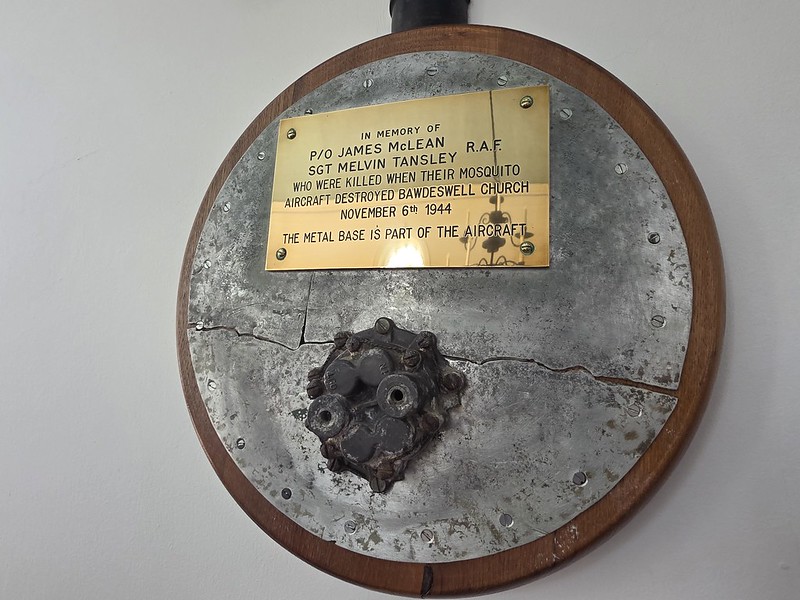
    On 6 November 1944, an aircraft accidentally crashed into All Saint’s Church in Bawdeswell and effectively destroyed it. Two British pilots, James McLean and Melvin Tansley, lost their lives in the tragedy.

    20250511_143641

    Part of the aircraft has been kept as a reminder of the tragedy.

    20250511_143355

    There’s a photo in the church of the damage done to the building that night. Two houses were also badly damaged during the incident, which caused a large fire in all three buildings. The church was rebuilt to a different design after the end of the war.

  • Bawdeswell – All Saints’ Church (Grave of Edward Peterson from 1733)

    Bawdeswell – All Saints’ Church (Grave of Edward Peterson from 1733)

    20250511_143957

    I am completely puzzled by this and although my being confused isn’t rare, I can’t really understand what has happened here. There is the oldest grave that I can recall seeing in a Norfolk churchyard and it commemorates the life of Edward Peterson who died in 1733. All Saints’ Church has an odd history as it effectively fell down in 1739 and was rebuilt, before a plane crashed into it during the Second World War and it was entirely rebuilt once again (and not to mention the Victorian rebuilding). This gravestone shouldn’t really have survived for so long, so it seems likely that there are some special circumstances that apply here. I’ve sent Google Gemini on a long mission to find a solution, but it has come back without any documented evidence, just its best guess.

    The gravestones were moved in the late Victorian period, so I can only assume that the gravestone had been in a protected area until then. Perhaps it moved position during that time to tidy the churchyard up and it has just been made from a sturdy limestone that has protected it, but it has also certainly been moved since the plane crash in 1944 which destroyed the church so it’s likely been in a few locations over the centuries. But, it’s relatively rare to find gravestones from the eighteenth century, let alone one so early on in the century. However, Google Gemini has tried to consider all possibilities, even mentioning:

    “The general environmental conditions of Bawdeswell, situated in East Anglia, involve a temperate maritime climate with moderate rainfall and seasonal temperature variations that include regular frosts in winter. This provides the overarching weathering regime. Historically, as a rural village, Bawdeswell would likely have experienced lower levels of atmospheric pollution compared to industrial urban centres during the 18th, 19th, and early 20th centuries.”

    And it suggested a very real possibility that:

    “Burial, particularly in well-drained soil, can offer significant protection from atmospheric weathering agents such as acid rain, freeze-thaw cycles, direct solar radiation and the colonisation of surface-dwelling organisms. If the Petersen stone was subsequently uncovered and re-erected during one of the churchyard clearings or the formal re-laying of memorials 11, it would likely have emerged in a considerably better state of preservation than if it had remained continuously exposed for the entirety of its existence. This period of unintentional interment could be a crucial, albeit undocumented, factor in its current condition.”

    Or, maybe, the gravestone was even inside for a period, although this feels unlikely. A little of Edward life is known, he was born in 1658, the son of William Peterson and Margaret Peterson, and he was baptised at Hackford with Whitwell Church on 9 April 1658. He died on 11 February 1732, but the year discrepancy on his gravestone is likely because the burial is so early it dates back to a period when the year end was late March and not December. Anyway, I suspect that his gravestone was made of high quality limestone, it’s been protected in some form and it has been fortunate to have been placed in well drained areas. But it intrigued me by being quite so old….