
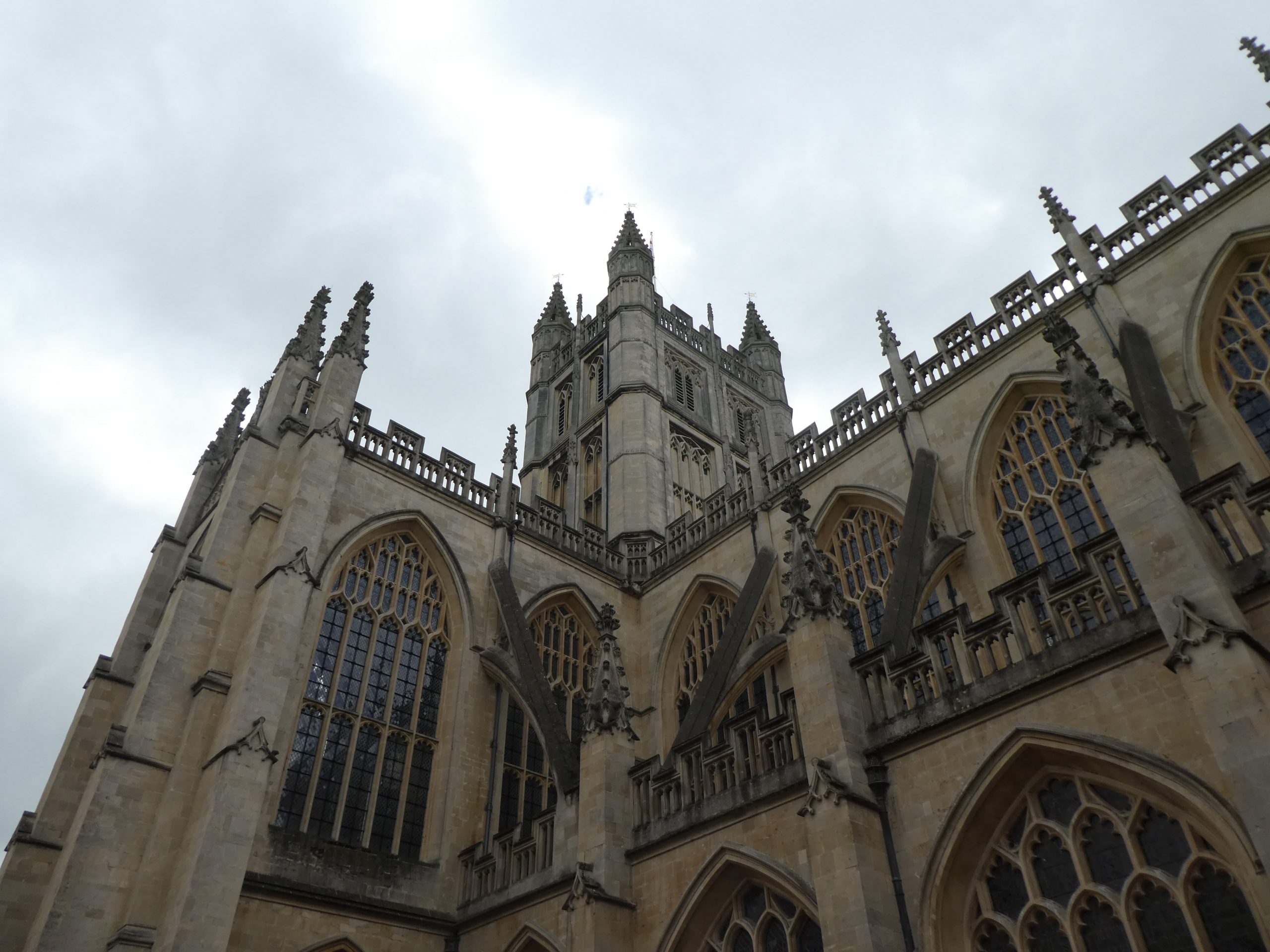
Just photos from a few years ago, from the roof of Bath Abbey which can be accessed as part of a behind the scenes tour of the building.


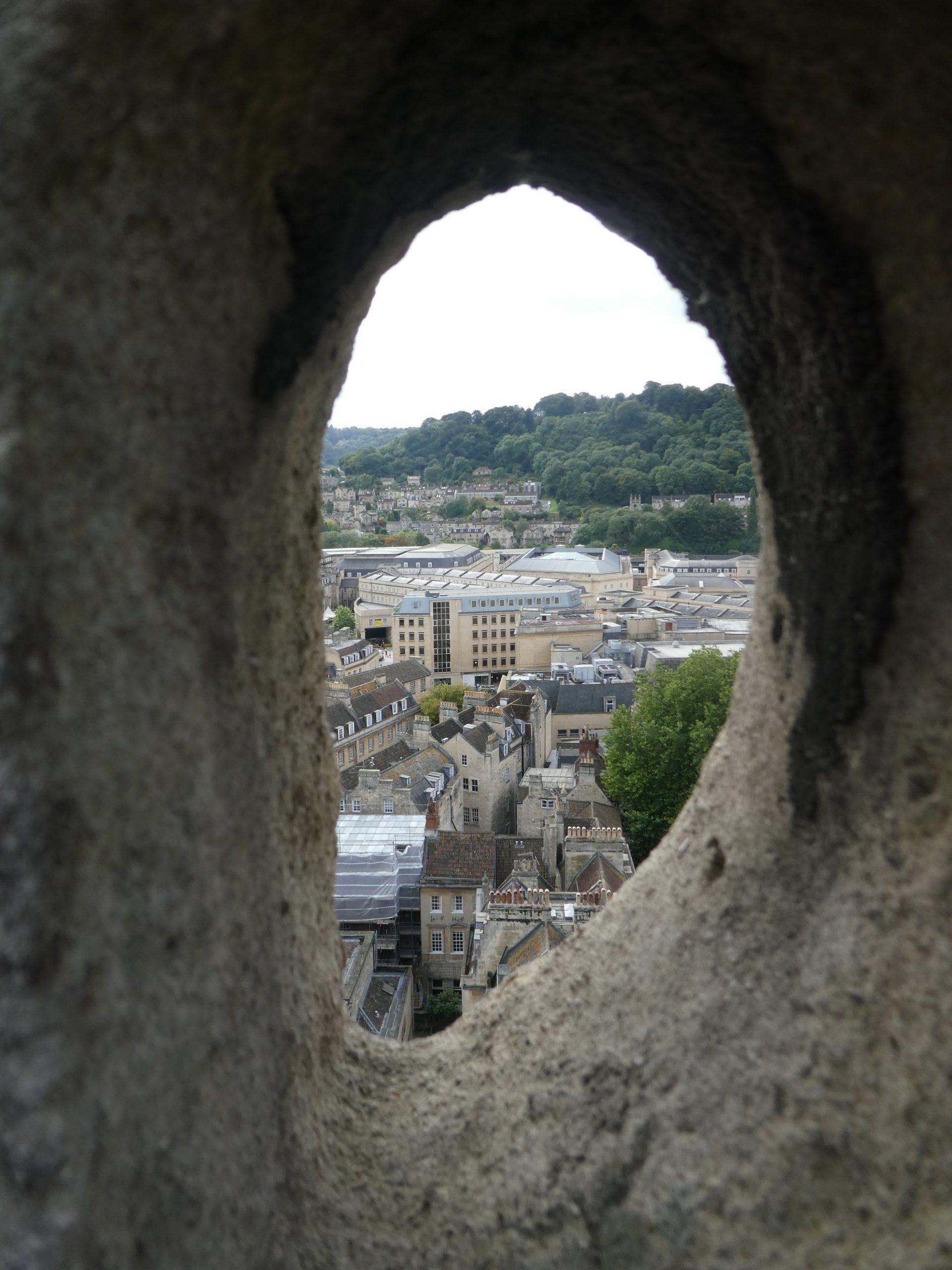
Just photos from a few years ago, from the roof of Bath Abbey which can be accessed as part of a behind the scenes tour of the building.

This lengthy memorial tablet is to the memory of William Oliver (1659-1716), a medical pioneer who was the uncle of William Oliver, also a medical pioneer from the city, who invented the Bath Bun and Bath Oliver. He was buried in Bath Abbey, which is where this tablet remains in place today.
This William Oliver spent some of his time as the surgeon responsible for Lord Monmouth’s army, something which would have rather an innovation at the time.
His tablet reads:
“In memory of William Oliver MD FRS. He was descended from the family of Trevarnoe, in the County of Cornwall. While he was prosecuting the study of physick in foreign universities. The miseries of his country called aloud for a deliverer. He was ambitious of contributing his might to so great a work. He came into England an officer in King William’s Army in 1688. He was appointed physician to the fleet in 1693 and continued in that station till the year 1702. He was appointed physician to the hospital for sick and wounded seaman at Chatham in 1709 and in the year 1714 he had pleasure to have his old fellow sailors committed to his care. He being then appointed physician to the Royal Hospital at Greenwich in which honourable employment he died a bachelor on 4 April 1716. His love to this city, where he practised physick many years appears in his writings”.
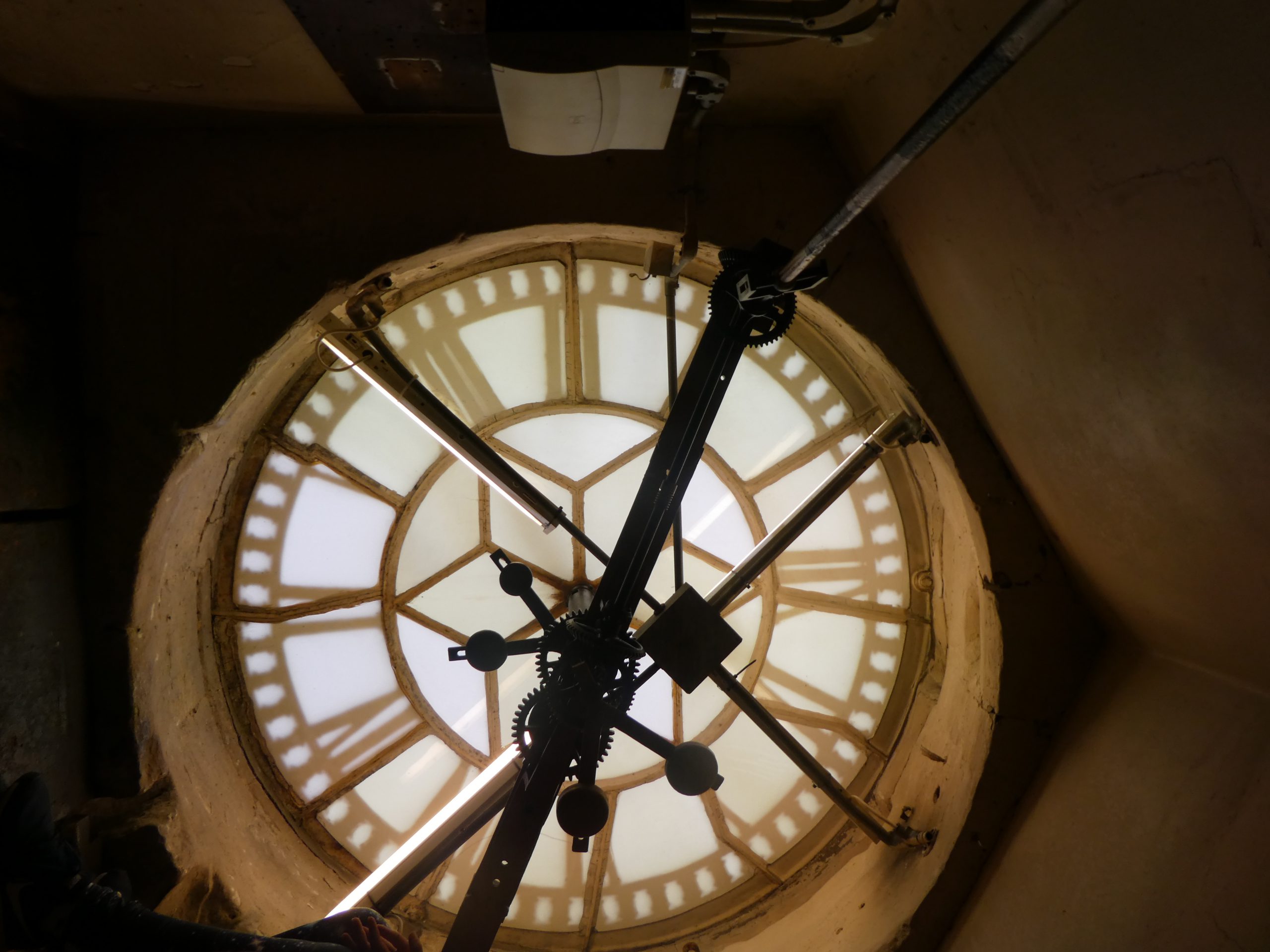
As part of a tour of Bath Abbey, there’s the chance to see the inside of the clock. There are two small benches so people can sit by the clock for a few minutes, although the guide gave several warnings to not touch anything connected to the clock, which seemed sensible advice.

Located on the north side of the building, the abbey’s clock, which belongs to the people of Bath, was moved here in 1834 after being lowered from a previous position when the structure of the tower looked a bit unstable. It was originally once backlit by gas to ensure that it was visible at night, but electricity has made that much easier.
The advent of the railways brought problems to time-keeping in UK cities, as they often had slightly different times and this was problematic when trying to run a railway. Before the railways, no-one much minded if Bristol and Bath were running at different times by five-minutes, but what became known as ‘railway time’ required some standardisation. Bath did this by in 1845 installing a band of metal on the clock which would show railway time. Scaffolding was put up to ensure this addition could be made, although I wonder why Bath didn’t just keep railway time to keep things simple.
The clock looks relatively small in the above photo, but that’s deceptive, and in 1926, the Bath Chronicle wrote about a refurbishment of the clock. They noted:
“The diamond-shaped aperture in the face of the clock is due to having been removed in order that the hands might be disconnected. From the ground it does not look more than big enough for more than a fist to emerge, but that is deceptive as George Willis [the man in charge of the project] was able to project his head and shoulders through the opening. The minute hand is 3 feet long, and the hour hand 1 foot 10 inches in length. They revolve on a face having a diameter of 6 feet”.

https://commons.wikimedia.org/wiki/File:Bath_Abbey.002_-_Bath.jpg
And here’s a photo of the clock from the outside.