Tag: All Saints Church

  • Crostwight – All Saints’ Church (Interior)

    Crostwight – All Saints’ Church (Interior)

    I wrote more about the history of this church earlier on, but we were also fortunate enough to be able to see inside as well. As an aside, it’s now a Grade I listed building, which makes the taking down of most of the church tower due to ivy growth seem almost unforgiveable today.

    The lighting inside doesn’t entirely do these wall paintings justice, but they are delightful and a fair chunk of them survive. They’re a passion sequence, so telling in pictures the story of Jesus Christ’s last few days of life. As with many churches, they were whitewashed over when they went out of favour, a reminder from when church interiors used to be more colourful and stories were told in images. There’s no electricity in this church, meaning that everything has to be lit using oil lamps, but that adds to the atmosphere and cosiness.

    The font, which appears to be quite battered and worn, but it is some centuries old and is made from Purbeck marble.

    The church’s chancel.

    This photo was taken in the chancel, looking back down the church, with the rood screen visible. There was a bit of a renovation in the Victorian period, although not as brutal as in some other churches, when the roof was also repaired.

    The church notes that this chair on the left-hand side dates to the period of Oliver Cromwell, with the red carpet being from the mid-nineteenth century. I find that quite amazing, the church notes this is because “only brushes and carpet sweepers have ever been used on it”.

    The end wall, where it meets the church’s once more substantial tower. Near to here, there is a memorial to the one man from the parish who died during the Second World War, but more on Hubert Arthur Francis in another post, as well the five men who died during the First World War. Interestingly, the church notes that they believe that their floor is made from willow bundles and bales of wool, which has the disadvantage of moles being able to burrow upwards. That’s an actual problem incidentally, not my humour.

    The room under the church tower, with the bells now located just above here, as they had to be lowered when the top of the tower was lopped off at the beginning of the twentieth century. The records for this church have been deposited at Norfolk Record Office, so I must pay a little visit there when they’ve back open and accessible to the public. As a church, this is beautiful and it’s one of my favourite ones, somehow a timeless reminder of generations gone by.
  • Crostwight – All Saints’ Church

    Crostwight – All Saints’ Church

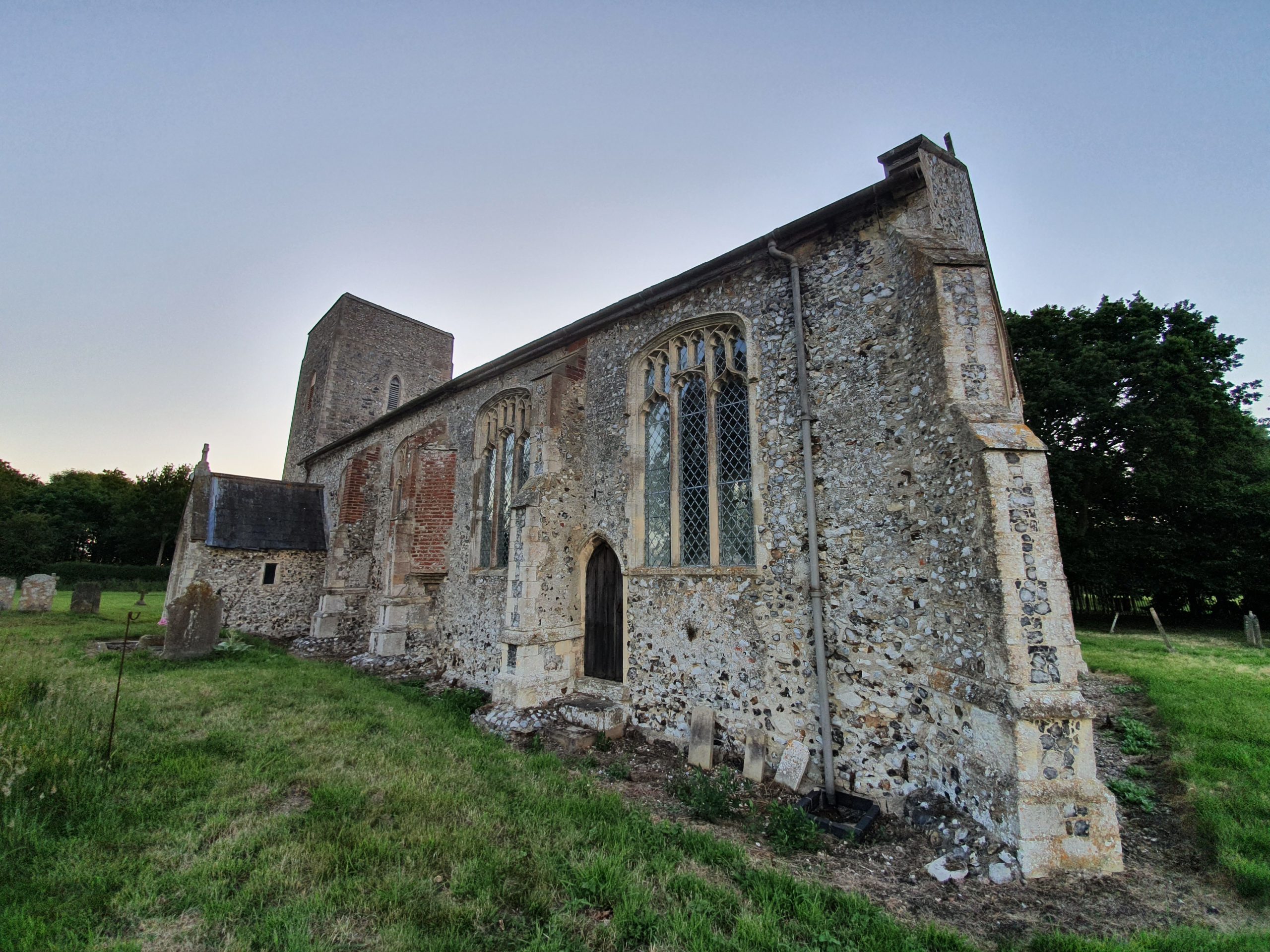
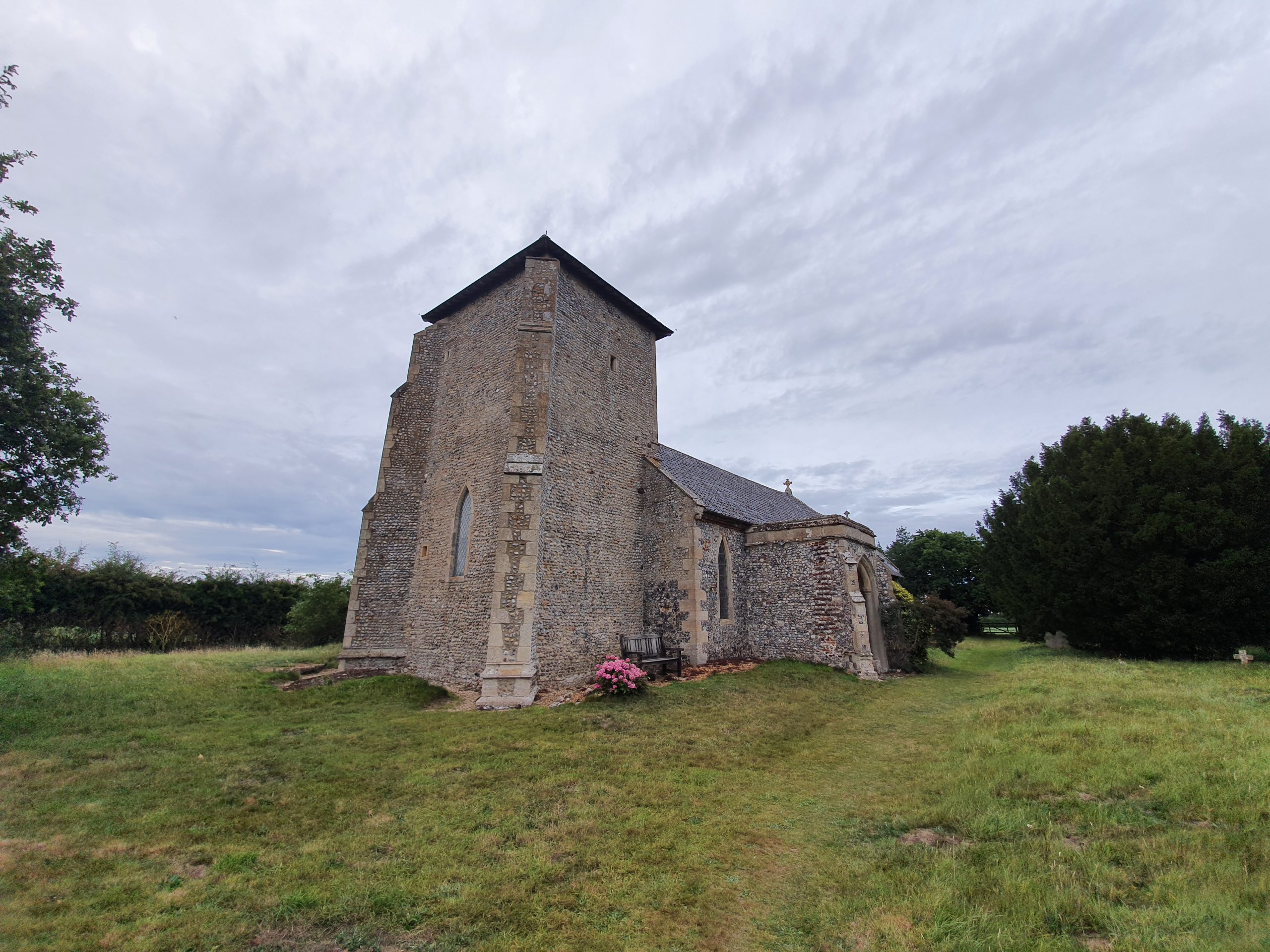
    With the exception of the neighbouring rectory, this church stands alone in the fields but it’s clear that it’s still much loved by what local community there is. And, it’s a glorious church, albeit looking a little strange with its squat tower.

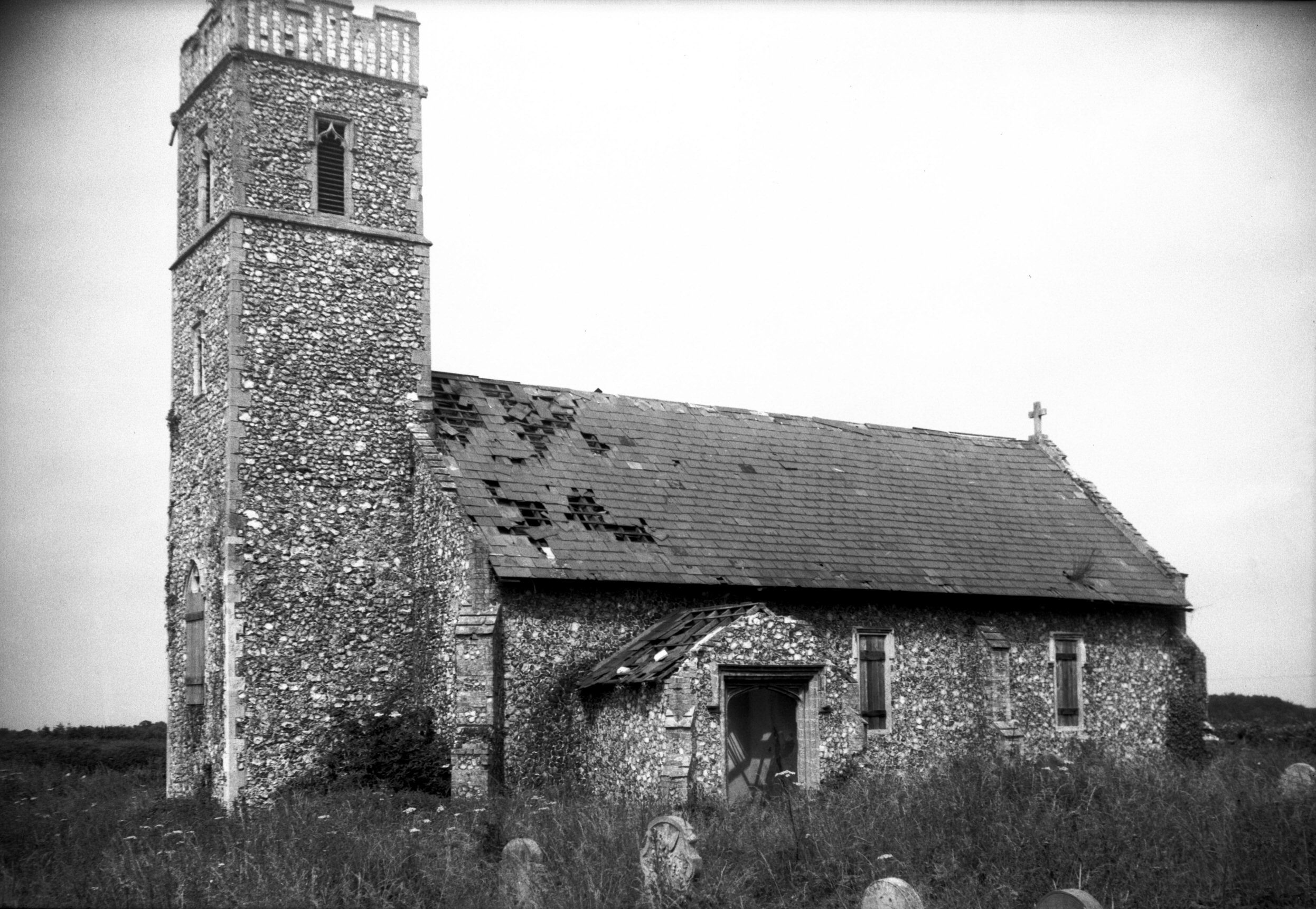
    I had many theories for what had happened here, including perhaps a church building project that was halted mid-way through. It was clear from the lower part of the structure that there should be a taller tower here, and that was indeed the case, but it was taken down in 1910 as it was in risk of falling and was covered in ivy. I remember many years ago that there were a fair few churches covered in ivy, but now there are nearly none, they have learned from history.

    There were warnings though even at the time, a Mr Haughton from Church Farm in nearby Ridlington wrote to the Eastern Daily Press in 1905 saying:

    “Sirs, I am much concerned to see the damage which is being done to some of the churches in East Norfolk from ivy being allowed to grow over them. It is difficult to understand the apathy of the archdeacon, rural deans, clergy and churchwardens in allowing such a state of things, which in time must end in the ruin of these fine buildings. Ivy easily roots in these walls, gradually loosens the face flints and slowly but surely the work of destruction goes on.

    I see ivy growing more or less strongly on the churches of Irstead, Crostwight, Walcott, East Ruston, Honing and Witton. Amongst these, the most notable example of the mischief which is being done is in Crostwight Church, strong growing ivy being now nearly to the top of the tower, which in consequence will soon be in a very bad condition.”

    How right he was…. But he wasn’t the only one, in the previous year the Norfolk News had reported that Mr JC Cox had conducted a survey of churches in the area and he was worried about the state of the ivy at Crostwight. He noted “the notion that ivy holds up a building is one of the fond superstitions of Norfolk”. And that is likely why the ivy remained in so many places, many people were thinking that it actually supported and strengthened the building.

    And here’s what the church used to look like, the church tower twice as high as it currently stands.

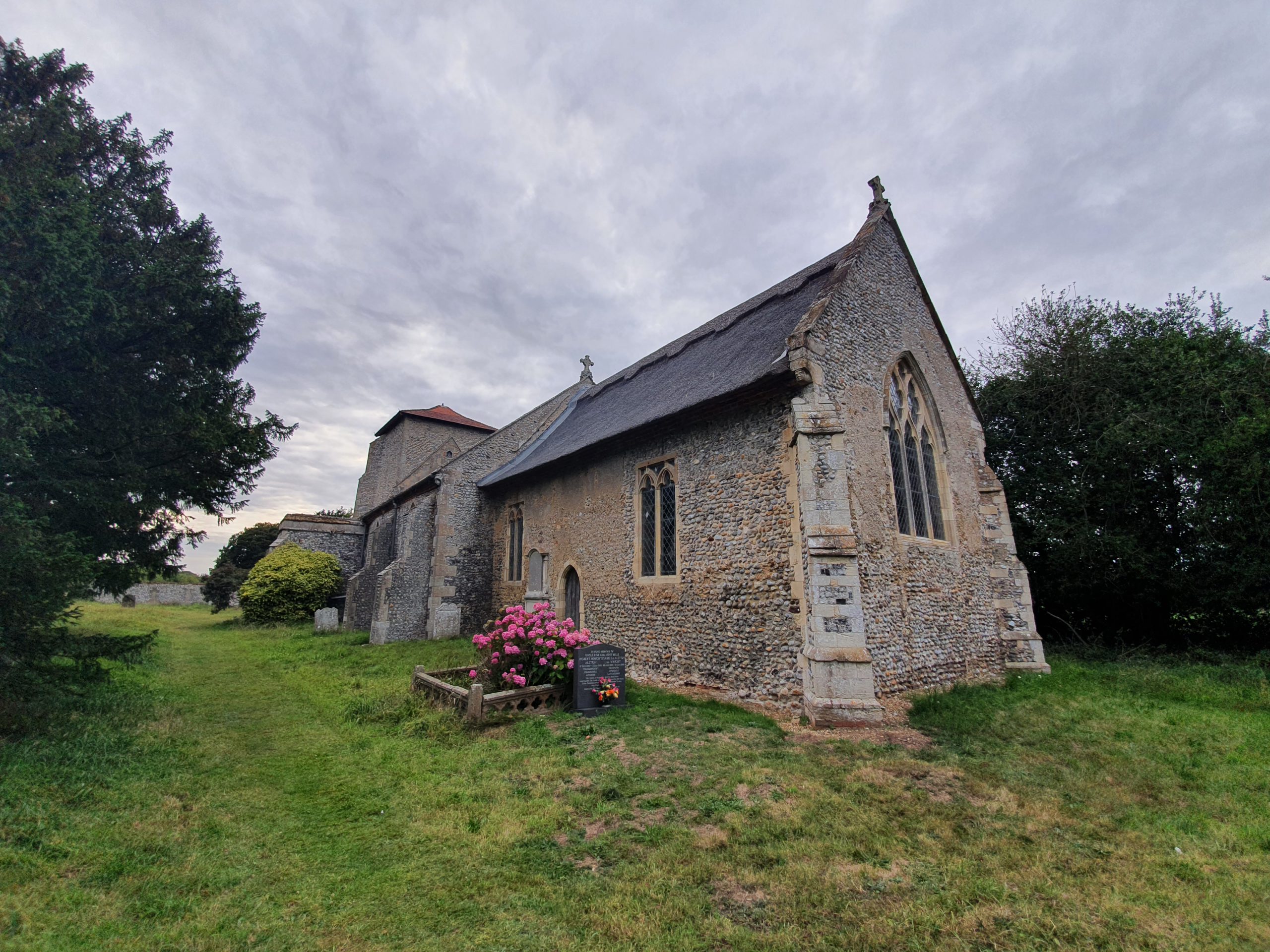
    Most churches have access to walk alongside the nave, but this one was a little tighter.

    The bulk of the current building dates from the fourteenth century and the exterior hasn’t much changed over the centuries. There’s some real charm to this building, a remote structure with no access to electricity.

    The south porch was added in the fifteenth century, a homely little addition. I had a feeling that this church would be open, so I went into the porch with some confidence that this would be the case. And, it was, but more about this in another post, as there are some treasures inside.

  • Skeyton – All Saints Church

    Skeyton – All Saints Church

    There’s something of a majestic beauty about Skeyton Church, pretty much alone in the landscape and there was likely an Anglo-Saxon church here. The current building is primarily from the late twelfth and early thirteenth centuries, although the church was reworked in the fifteenth century, including with the installation of the large nave windows.

    The tower which was rebuilt in the fifteenth century and has meant that it’s all a bit off-centre.

    One thing that I’ve seen posted relatively frequently over recent years is how people in the past respected religious buildings and wouldn’t have caused any damage to them. Unfortunately, this wasn’t the case and the newspapers are littered with cases of churches being vandalised. The Morning Post reported in January 1826 that “on Saturday night last, or on Sunday morning, some evil disposed persons broke the windows of Skeyton Church; they took the road to Aylsham, breaking windows in almost every house they passed; great hopes are entertained that such cowardly miscreants will be brought to justice”.

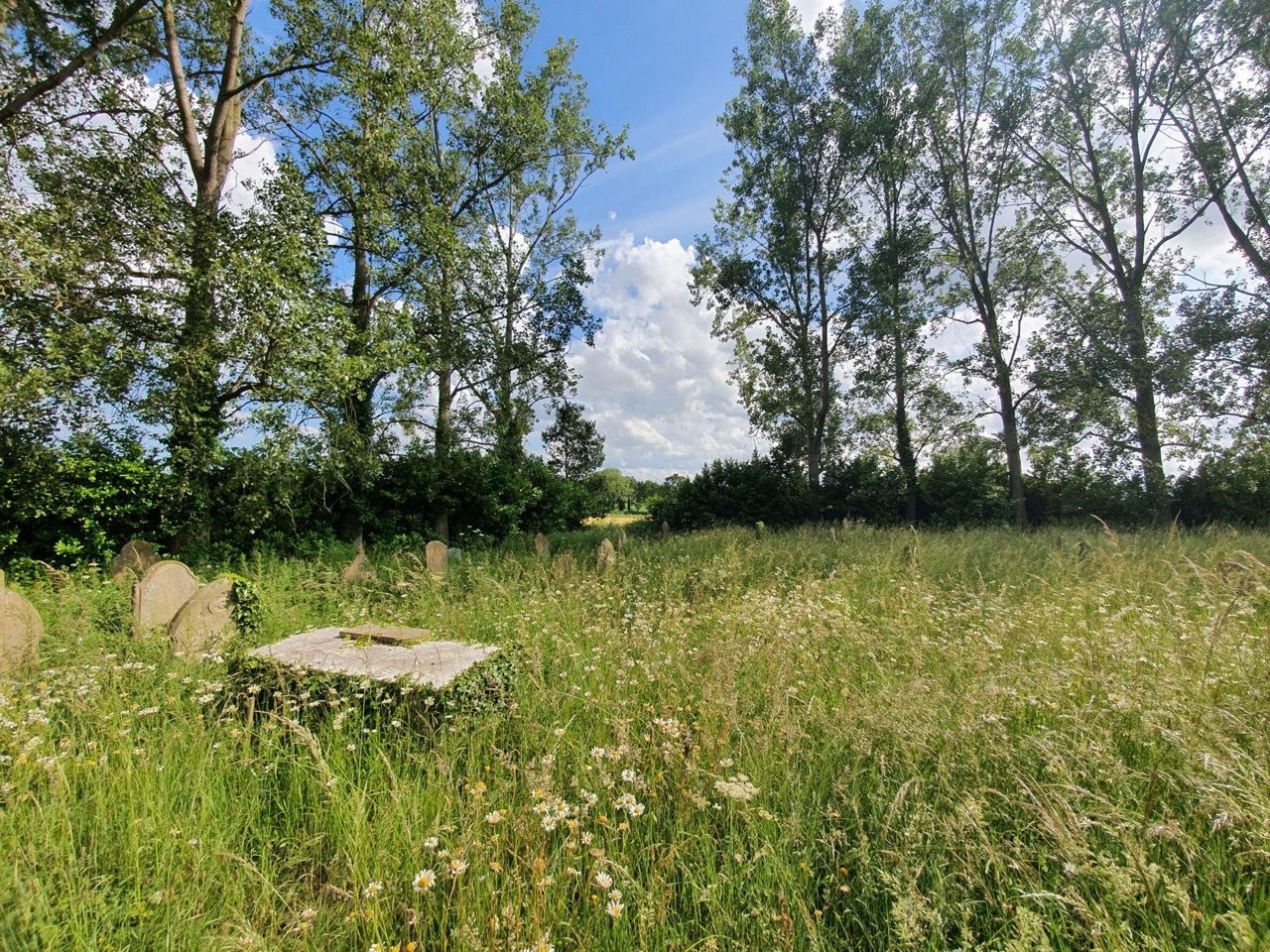
    Some of the monuments in the graveyard are looking a bit bedraggled, but I like that they’re still there and haven’t been moved away to make things easier for the church to flatten out the ground.

    Unfortunately, the current health situation means that churches are still generally closed, although the interior was apparently mostly redesigned in the early nineteenth century and not a great deal has changed since then. They were proud at the time of the carefully designed church benches installed in the nave, with their carved endings, whilst the former box pews were removed.

    There was a modernisation and renewal of the building in 1937, which had apparently become unsafe, with the Bishop noting that “they had followed the way of their ancestors in renewing the white walls, this bringing light and brightness into the church”. I suspect their ancestors would have had wall paintings which were hidden under whitewash, but it’s interesting how once churches were colourful and heavily painted, but tastes evolved to just wanting white paint.

  • Hemblington – All Saints Church (George Weston and Godfrey Weston War Graves)

    Hemblington – All Saints Church (George Weston and Godfrey Weston War Graves)

    It’s not that common to see Commonwealth War Graves at remote Norfolk churches, but All Saints at Hemblington have two war dead, both marked on one grave. They are the graves of Squadron Leader George Ernest Weston, who died at the age of 23, and Flight Sergeant Godfrey Randal Weston, who died at the age of 22.

    The men were brothers, sons of George and Frances Lesley Weston, of Nelson City, New Zealand and they were buried together, but died in separate air crashes, with George dying on 1 October 1942 and Godfrey dying on 20 April 1944. There’s a photo of Godfrey at https://www.aucklandmuseum.com/war-memorial/online-cenotaph/record/C22286.

  • Hemblington – All Saints Church

    Hemblington – All Saints Church

    The real highlights of this rural church are inside, a medieval wall painting, rood stairs and a spectacular font, so I’ll have to return when they’re able to open internally.

    The church are busy praying for lots of people, seems like a pro-active congregation.

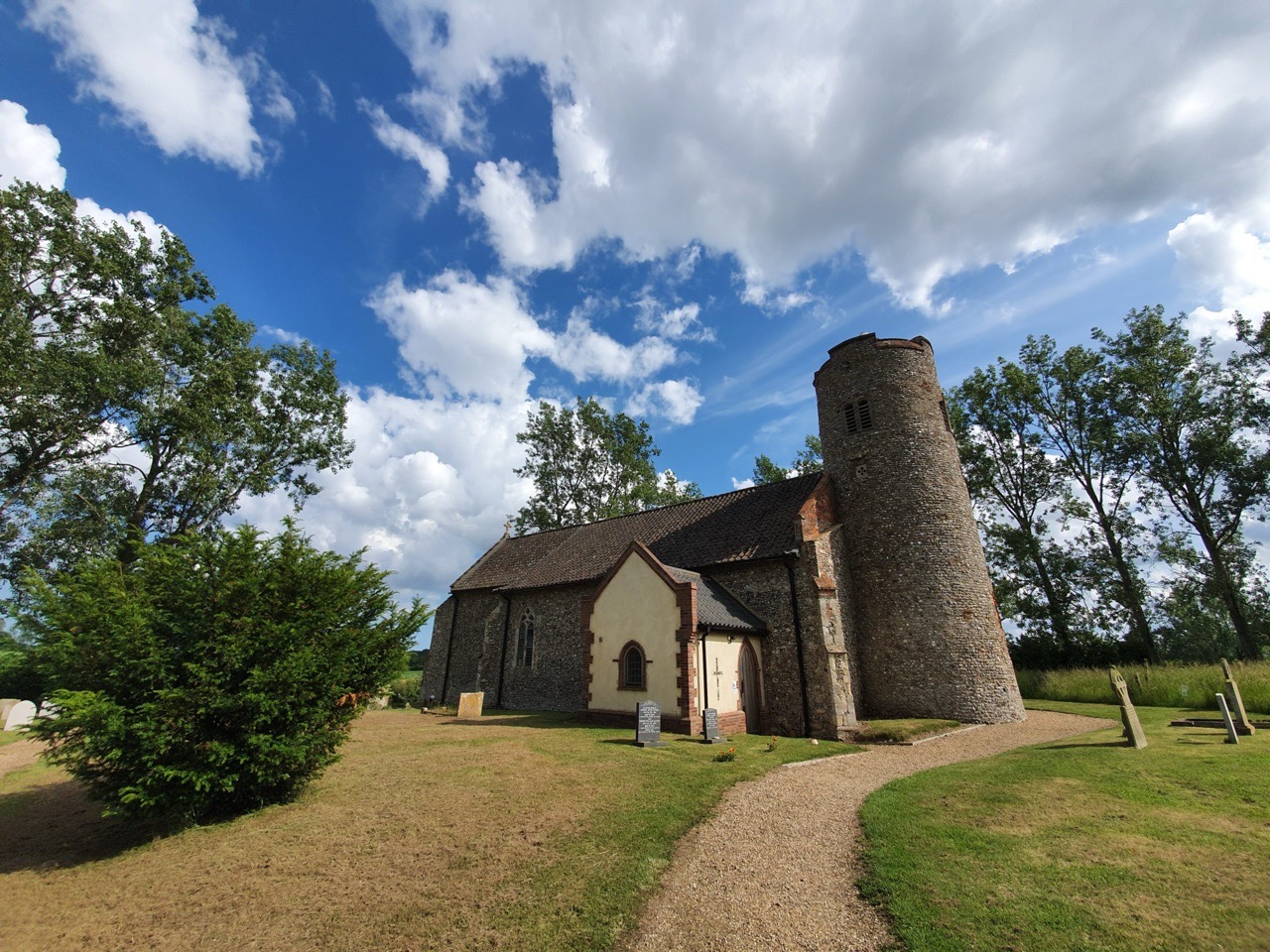
    The round tower is the oldest part of the church, constructed in the twelfth century.

    The bulk of the rest of the church was built in the early fourteenth century, although some dates from the twelfth and thirteenth centuries. There was a sensitive restoration that took place to the church in 1904 and a piscina and niche were discovered, although the wall paintings weren’t noticed until later on in the twentieth century.

    The porchway which was added to the church in the early part of the sixteenth century.

    Part of the churchyard has been turned into a wildlife garden. I’m looking forwards to going back when I can see the interior, this is a beautiful and remote church.

  • Panxworth – All Saints Church

    Panxworth – All Saints Church

    This is one of my favourite churches in Norfolk, or at least, what’s left of it.

    The church was originally built in the fourteenth century, but as can be seen from this 1826 map, at this stage the church was in ruins (it’s located on the map just after the word ruins, at the little cross). It’s notable that there’s nothing else around there in terms of residential properties, the community had literally moved on. It’s not known when the church fell into ruins, but it was probably around the sixteenth century, which would coincide with depopulation in the area.

    However, the Victorians in a surge of confidence about church-going spent a fair sum of money on bringing the building back into use. An article in the Norfolk Chronicle in September 1845 noted that £500 was needed to complete the project and the local landowners made a donation, and there were events held including a “fancy fair”. At the fair there were “drawings on the tables of the intended design, with the building in the style of the fourteenth century, with a nave and chancel”.

    The project (there’s a plan from 1846 here) was overseen by James Weston and he didn’t really do much work to the tower itself, just tidying the structure up and adding a new nave. This plan worked for a while, with the church remaining in use until 1959 and it was finally declared as redundant in 1976. As usual, the wonderful George Plunkett has a photo of the church as it looked in the 1970s.

    Rather than repair the nave, which by the 1980s was becoming in need of some attention, they knocked it down, which wasn’t a huge historical loss as it was a Victorian structure anyway. So, in 1981, the nave and the south porch were taken down. As if that wasn’t enough for the church, a lightning strike hit the tower in 2005, which required more repair work.

    A damaged window frame, but this looks original from the fourteenth century (the frame, not the damage).

    Inside the church tower.

    The churchyard, where the graves are still tended.

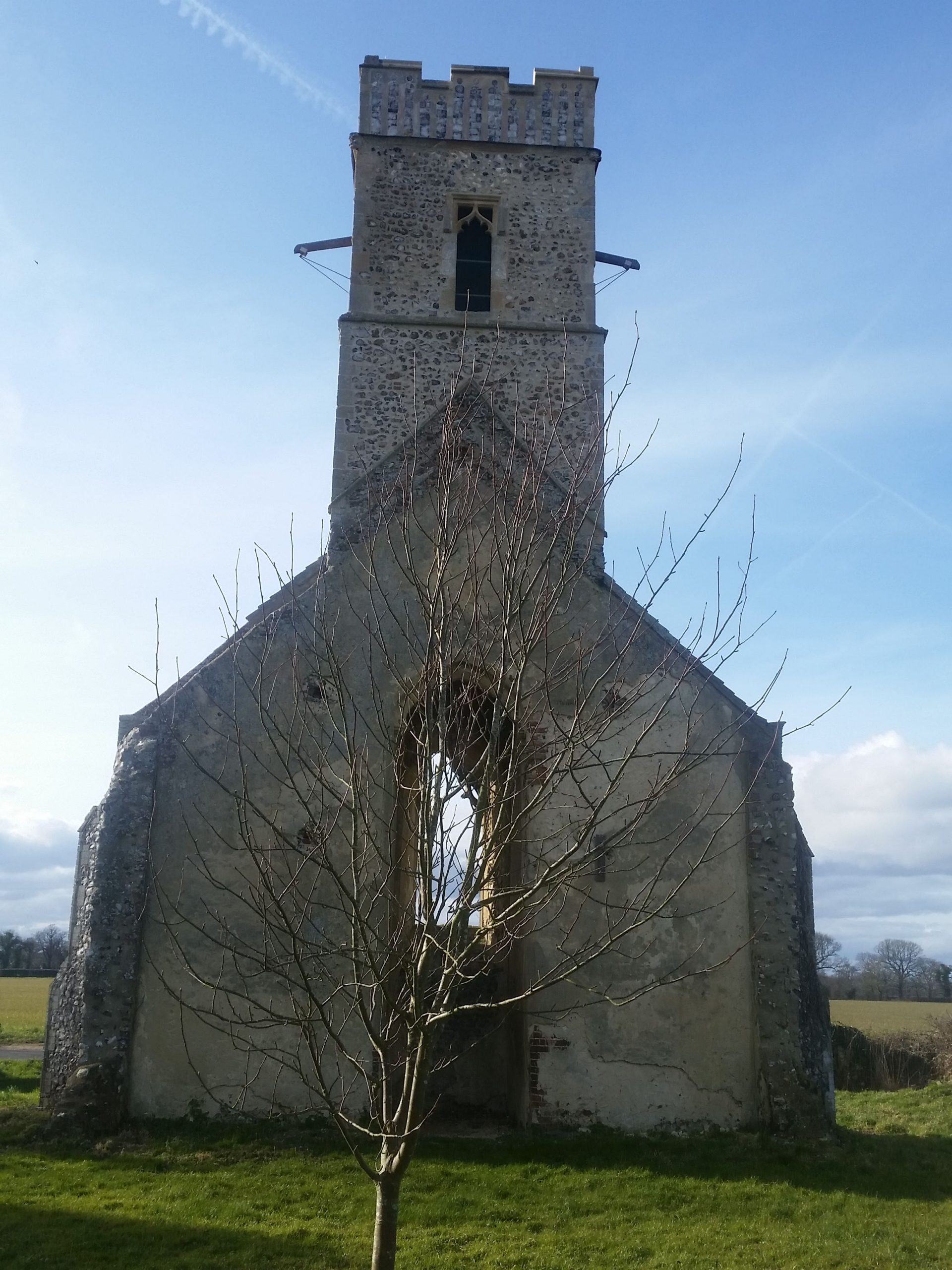
    And there’s the tower, standing somewhat adrift in the landscape. Over recent years there have been rumours that the site has been used for Satanic worship and for a while the site was closed off. Fortunately, the structure is now accessible again for visiting and I think it still looks elegant. I do though still feel sorry for those Victorian donors, who contributed money to make it an operating church once again, but instead it’s come to this.