
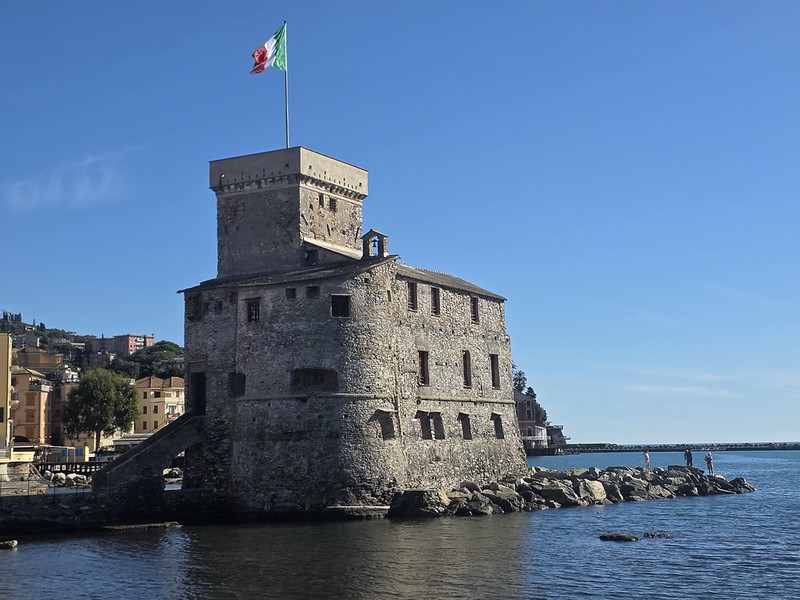

Sitting overlooking the harbour is Rapallo Castle which was first built in around 1551. Its construction was linked to a rather lively visit from the Barbary corsairs, or pirates, who managed to raid and pillage the town. The Republic of Genoa, embarrassed by its earlier lack of foresight, promptly decided a castle might help deter further unscheduled visits from Dragut, who was effectively the pirate King although I don’t suspect that Disney will be making any movies about him in the near future.

And so here is the fortress that they plonked on the shoreline in an attempt to reassure the locals. The Barbary slave trade was more than just a few adventurous lads in ships. It was a devastating business, stretching from North Africa across the Mediterranean and deep into the European coasts. For centuries, these pirates, often with official backing from the Ottoman authorities, raided towns like Rapallo, scooping up men, women and children to be sold in slave markets from Algiers to Tunis. This was a huge problem and it decimated some Italian coastal villages and even impacted countries as far away as Ireland.

The view out from the castle and it reminds me of my visits to Malta which is where Dragut was killed in 1565. Dragut is revered by some for his naval talents, but he was also one of the largest slave traders and he attacked the poorest in society and caused terror amongst the weakest. His legacy isn’t forgotten in many coastal areas around Italy and other parts of the Mediterranean. It was all a grimly efficient enterprise and it must have made many reconsider their decision to live by the sea.
After the threat of piracy diminished, the building was used as a prison as it was just as effective at keeping in as it had been keeping them out. It further lost relevance after 1797 when Napoleon took control of the wider region. The building was restored in the 1920s and it was used by freedom fighters during the Second World War who wanted to overthrow the Mussolini regime.