
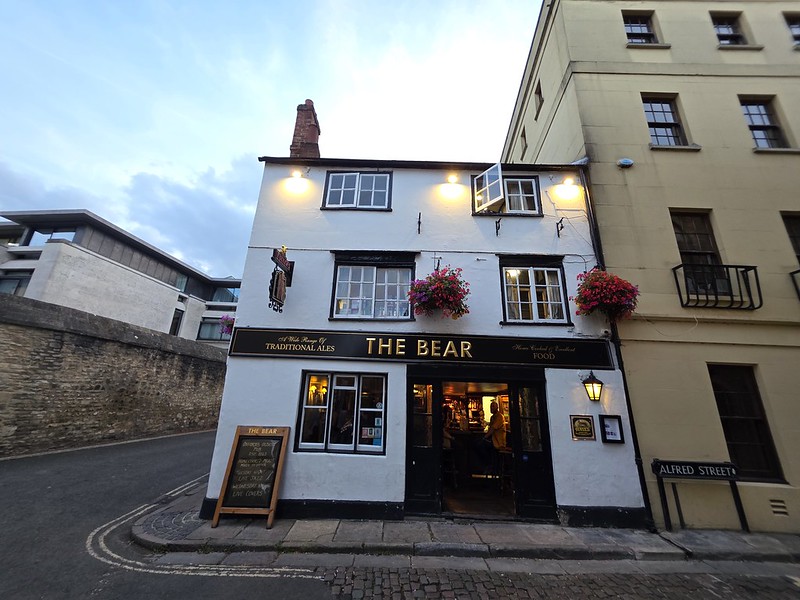

It was the Norfolk & Suffolk LDWA weekend in Oxford and although there were some walking elements, I thought I’d come to tick off some more Good Beer Guide pubs. Located down a small side street, the venue refers to themselves as being the oldest pub in Oxford, but this isn’t really the complete story. There was a Bear Inn which was in existence from 1241, but they knocked that building down in 1801. The building which was once the residential property of the Bear Inn’s ostler had been trading as the Jolly Trooper since 1774 and so, in 1801, they renamed that to the Bear.

This is a small venue, with only 24 seats inside and so it’s not the easiest to take photos in. Here’s an AI of what the interior looks like….. There is more space in the garden area, but more on that in a moment.


The truly eccentric detail of the whole arrangement is the collection of over 4,500 tie ends which are mounted behind glass. Its origins lie with a 1952 tradition started by the then landlord Alan Course which is that guests clipped the end of their ties in return for half a pint of beer. Now the walls and even ceiling are covered in bits of tie which represent clubs, schools, colleges and just about anything else which is tie related. It’s wonderfully odd.

The pub is operated by Fuller’s, so the beer selection is pretty much limited to their own beers. In many ways, it does feel a shame that this isn’t an independent venue, that would perhaps fit much better with its independent and quirky feel, an example is that the website makes no effort to engage about the venue’s history. There was a friendly welcome and the staff worked around a completely oblivious and rude group getting in the way of everyone to ensure that I was served promptly. This is quite an achievement, there’s not much space to work around anything in this small two room venue.

The venue is only really viable as there’s a large beer garden out of the back and an external facing kitchen area.

The garden area. The land on which the pub was built was once the churchyard of St. Edward’s Church (in situ between the twelfth and fourteenth centuries) and perhaps rather sub-optimally, they have found skeletons relating to that period of medieval usage. The archaeological report relating to three bodies were found recently is online and shows where the skeletons were found in the sump of the cellar and I’m not entirely sure that anyone could have predicted that when the bodies were buried.

Bike storage in the middle of the beer garden. There’s quite an extensive food menu which is priced towards the higher end of the scale, but customers are inevitably paying a little extra for being in such a well known pub. We were fortunate to get a table, thanks to Helen for getting there a little early and securing that.

I went for half a pint of the HSB which was well-kept, clean tasting, malty and fruity.
It’s an interesting and fascinating pub, quite rightly in the Good Beer Guide because of the historical interest, the range of beers and how well they’re kept. The Good Beer Guide is really just about beer quality, but, realistically, it seems to have become a little more wide reaching depending on the local group. The online reviews are generally positive, although some of the food reviews are quite scathing. Perhaps better suited for tie spotters and history lovers rather than groups and craft beer drinkers, it did feel clean and organised. As I mentioned, I would rather like that this was an independent arrangement offering something a little less corporate, but it was all functional and interesting.