

I’d never noticed that there was a memorial here near the Lady Julian Bridge, although, to be fair, it perhaps isn’t immediately obvious. It’s in the centre off the photo, just to the right of the bench.

This is the area that he was born, with the photo taken on what is marked as Staithe Lane on the map.

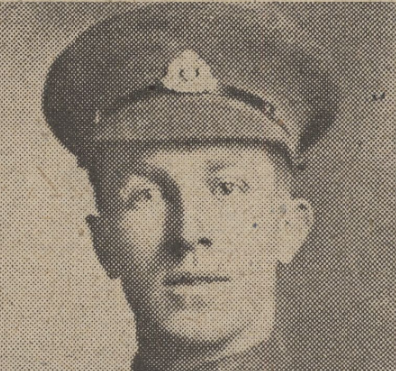
Sidney James Day was born in the city on 3 July 1891 and he served with the 11th Battalion, Suffolk Regiment during the First World War. one of the countless young men sent to the Western Front. By the summer of 1917, the war had become a grinding, muddy nightmare and the Battle of Passchendaele raging in all its futility. It was here, on 26 August 1917, near Malakoff Farm in Belgium, that Day’s actions would be considered as really quite brave.
After already being involved with capturing a German trench, during a German counterattack, a shell with grenades exploded in the trench, killing and wounding several men. In that chaos, Day stayed calm and he picked up one of the grenades and threw it clear just before it detonated, saving the lives of those around him. Then, with the trench partly destroyed and the enemy advancing, he rallied his men, reorganised the position, and led a counterattack that drove the Germans back and captured prisoners.

Sidney was severely wounded in the process, but his rather brave leadership ensured the trench held. His actions on that day meant that he was awarded the Victoria Cross and he was awarded his medal by King George V himself in January 1918.

I rather liked this image from the burnt records (British war records from the First World War which were heavily damaged by bombing in the Second World War) which is an inventory check of what items were in Sidney’s possession. I note that he proudly writes VC after his name, although I absolutely would in the rather unlikely event that I were to be awarded it. After the war he worked as a porter, moving to Fraser Road in Portsmouth and he died in 1959, with this memorial being a rather lovely tribute to him.