
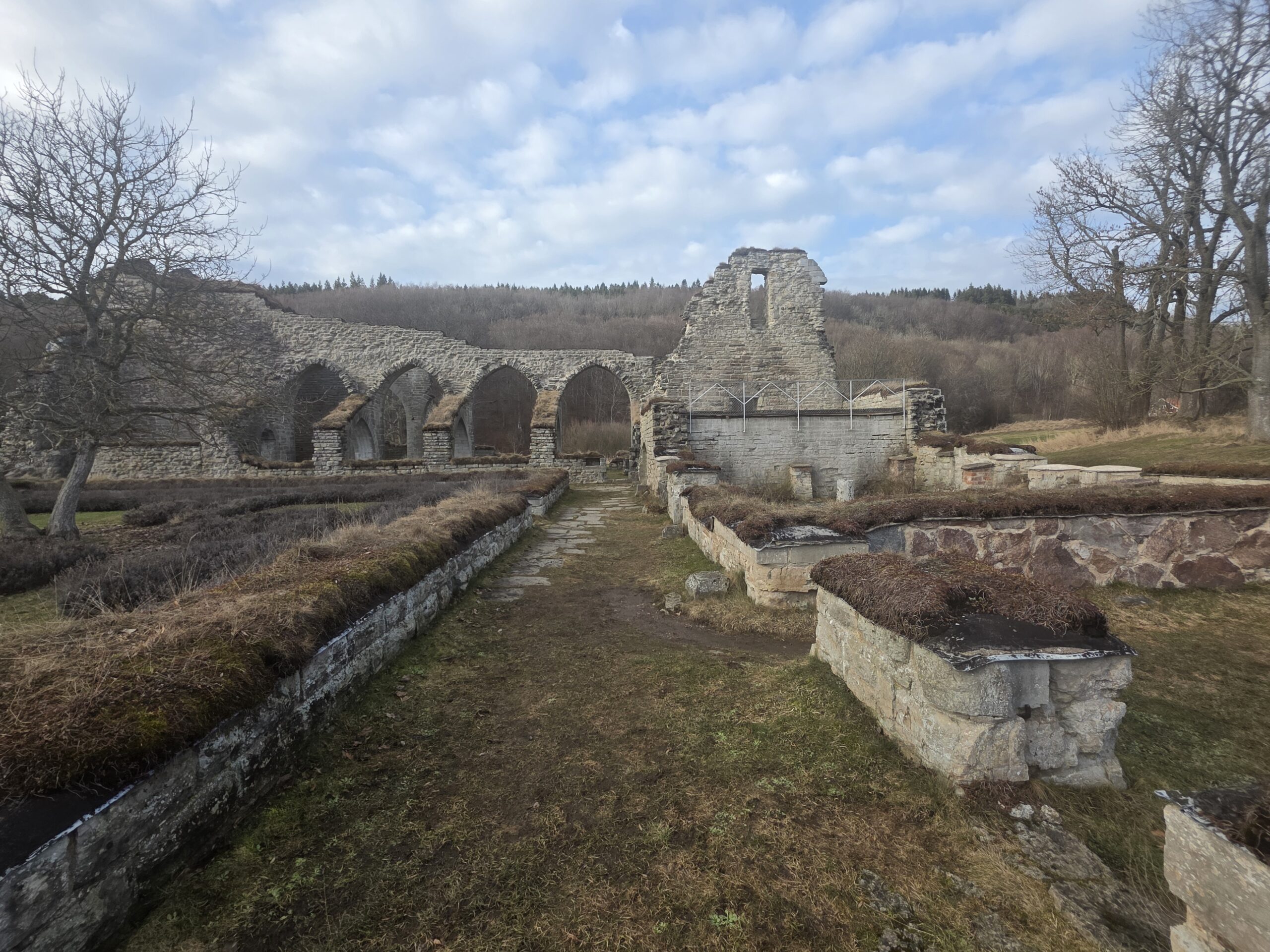

Once at the heart of Cistercian life at the monastery, there are now the ruins of its cloisters. Situated on the south side of the monastery church, the cloister once served as the central artery of the abbey, acting as a covered walkway that connected the monks’ daily activities, from prayer to study and manual labour. Though the wooden roofs and vaulted ceilings have long since vanished, some stonework has remained.

The construction of the cloisters at Alvastra reflected the austere and functional aesthetic of the Cistercian Order, prioritising light and simple lines over the ornate decorations found in other medieval traditions. I did stand here trying to imagine it when it was still in religious usage.

Beautiful, with the nave of the former monastery church visible in the background.

This is located within the cloisters and I’m not entirely sure how they know this, but the information sign reads:
“The Armariet represents a vital link to the intellectual and spiritual life of the Cistercian monks who once inhabited these ruins. In the early days of the monastery, this specific niche served as the secure heart of their literary world, housing the precious hand-copied texts required for daily prayer and study. The transition of the collection to a larger room beneath the dormitory highlights the growth of the abbey’s scholarship and the increasing importance of preserving these delicate manuscripts. It is a rare piece of historical fortune that several of these original documents survived the centuries and are preserved today, offering modern scholars a direct window into the specific religious texts and stories that shaped the thoughts of the Alvastra monks nearly a thousand years ago.”