
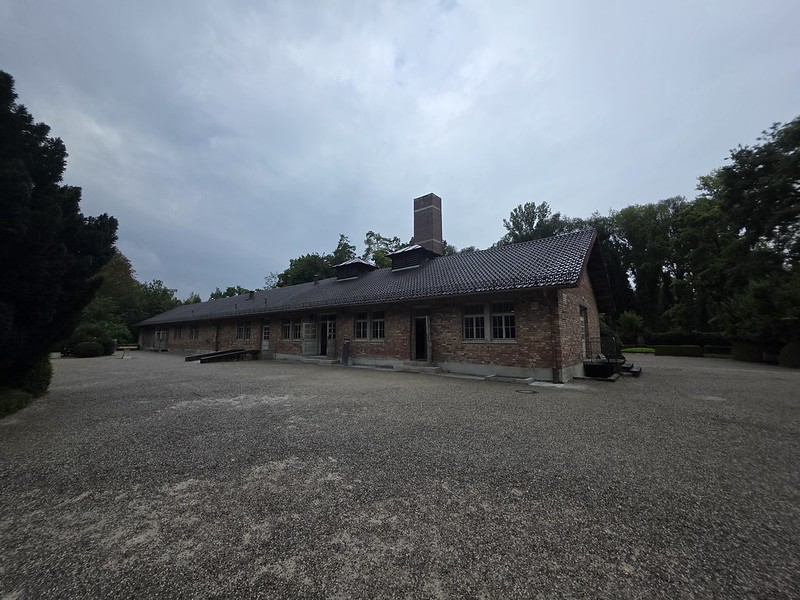

The crematorium at Dachau was first constructed in 1940, but a larger facility was built next door between 1942 and 1943 as the first building proved to be inadequate in size in just months. Before 1940, when prisoners died, the SS sent ashes to families, buried bodies near the camp or transported them to Munich’s Ostfriedhof for cremation. It would be wrong to suggest that there was respect for the living or the dead at Dachau, but there were greater efforts made during the early years of the camp’s operation.

A plan of the new crematorium.

This is the 1940 building, which isn’t included on the above plan of the site. It remained in use until 1943 and it’s thought that around 11,000 prisoners were cremated here.

The old gallows stand outside, these were placed here in 1942, but killings would have taken place in numerous areas around the camp. Often prisoners were hanged as a warning to others, so they would have taken place on the main parade ground of the camp.

The ovens in the new crematorium where the dead were cremated. There was no fuel in the last few months of the camp’s operation, so they had to use nearby burial facilities or rather more ad hoc solutions instead. The Americans kept this section of the site when they liberated the camp in 1945, ensuring that it was documented and left intact.

The shower room with fake shower heads. This is just a little confusing, the museum makes clear that there’s no evidence these were used for the mass killing in the way that took place at other concentration camps, so it’s a little unclear to me exactly what happened here. It is though probable that this room was genuinely used for the disinfecting of clothes rather than mass murder for which there’s no real evidence.
It’s hard to imagine the horrors of what happened here when walking through, with what were likely mostly prisoners being forced to cremate those who they might have known from the camp. Initially the site might have been manageable in terms of numbers, but as the deaths increased then it all became more challenging and industrial. There weren’t the mass killings here that took place at camps such as Auschwitz Birkenau, but still many died and the whole arrangement would have been hideous. The site is hidden away a little from the main camp, but everyone would have been aware of its presence. When the war concluded, the Americans forced local Germans to walk around the site and that included visiting this section.