Category: Pittsburgh

  • Pittsburgh – PPG Place

    Pittsburgh – PPG Place

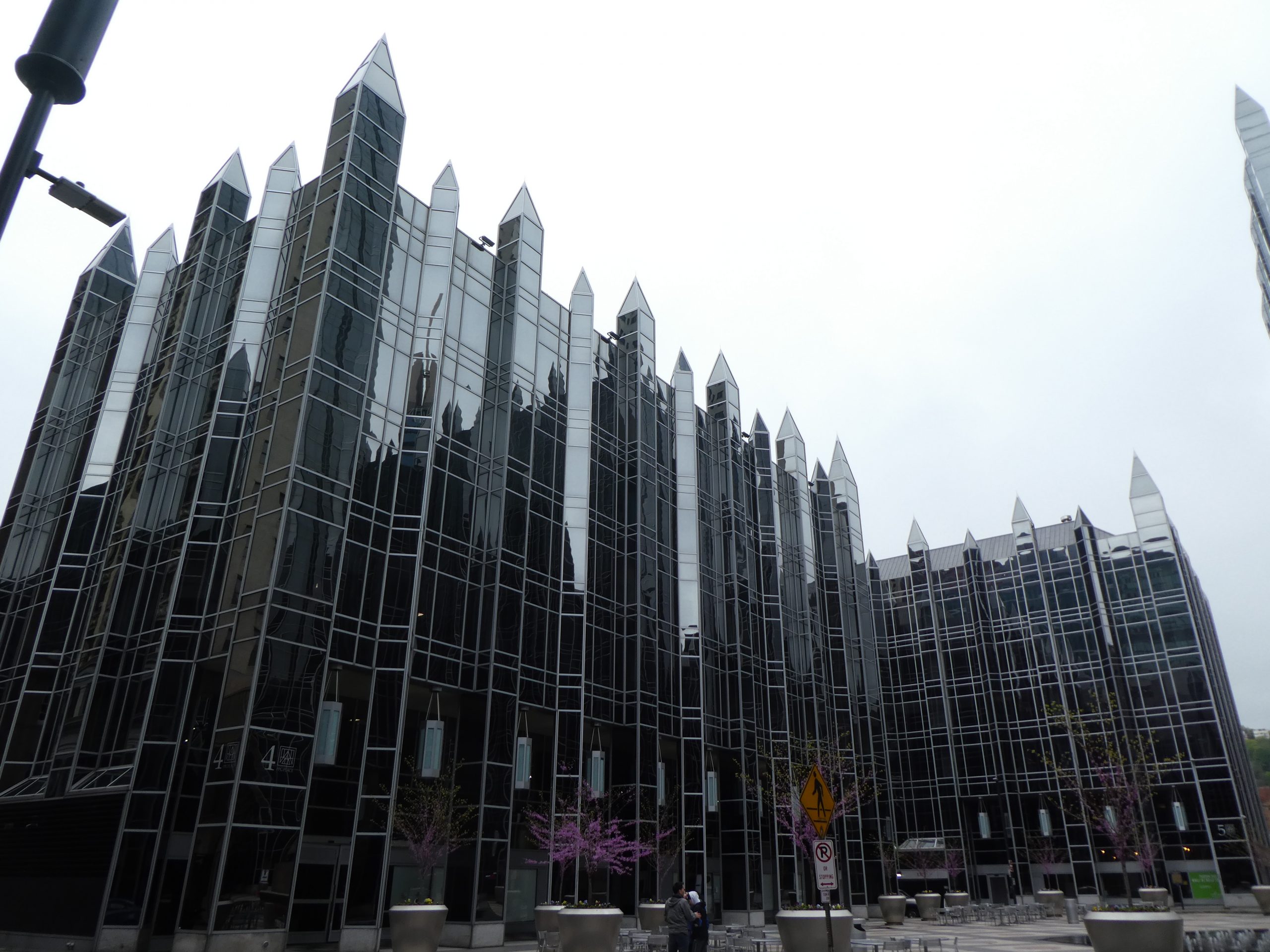
    This is PPG Place in the heart of Pittsburgh, with what I consider to be an architecturally stunning building.

    It’s the Head Office of what is now PPG Industries, although it was formerly known as the Pittsburgh Plate Glass Company.

    The building was designed by Philip Johnson and John Burgee and although it looks very modern, it was opened in 1983. Given the company’s heritage the heavy use of glass was perhaps inevitable, but the neo-Gothic style is just something quite special.

    The building used just under 20,000 panes of glass in its construction, with PPG Place seemingly having been well received by locals when it was built. That sheer amount of glass is around one million square feet in size, with the whole project costing 200 million dollars back in the 1980s. That was a brave investment given the decline that Pittsburgh was suffering from at the time, although it appears to have been a financial success for the company.

    There are 231 glass spires throughout the building complex and this is the main tower, standing 40 storeys in height. The whole set-up reminded me a glass version of the Palace of Westminster, and this was apparently asked of the designers, who said there were other buildings in the United States that were really their inspiration.

    The centrepiece of the complex. All very lovely.
  • Pittsburgh – Smithfield Street Bridge

    Pittsburgh – Smithfield Street Bridge

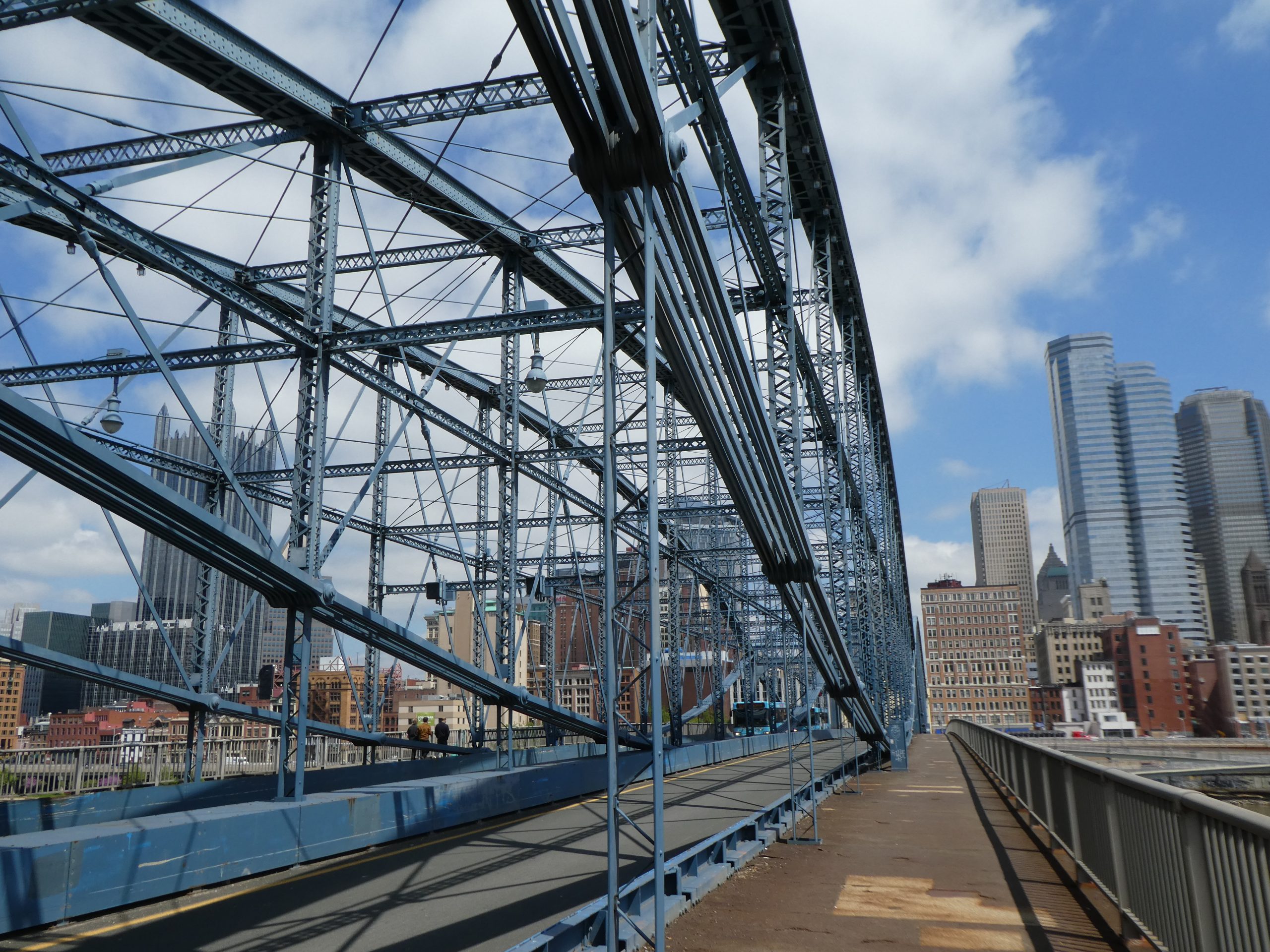
    The Smithfield Street Bridge is a sweeping statement of a river crossing, designed by Gustav Lindenthal and constructed between 1881 and 1883. It’s the third bridge at this location, the first was destroyed in a large city fire and the second wasn’t substantial enough to deal with the increase in traffic.

    Looking back towards South Side, this bridge is made from steel, not unexpected from the Steel City and it’s the second oldest bridge made from this material in the United States. What is more surprising is that some wit from the local transport authority thought in the 1990s that they should demolish this bridge to replace it with a new one. Fortunately, wiser heads prevailed and the structure was instead repaired.

    Originally the city’s trams went over the bridge, but these were replaced by Pittsburgh’s light rail system which takes a different route.

    The bridge at the end of the nineteenth century, which was widened on a couple of occasions.

  • Pittsburgh – East Carson Street

    Pittsburgh – East Carson Street

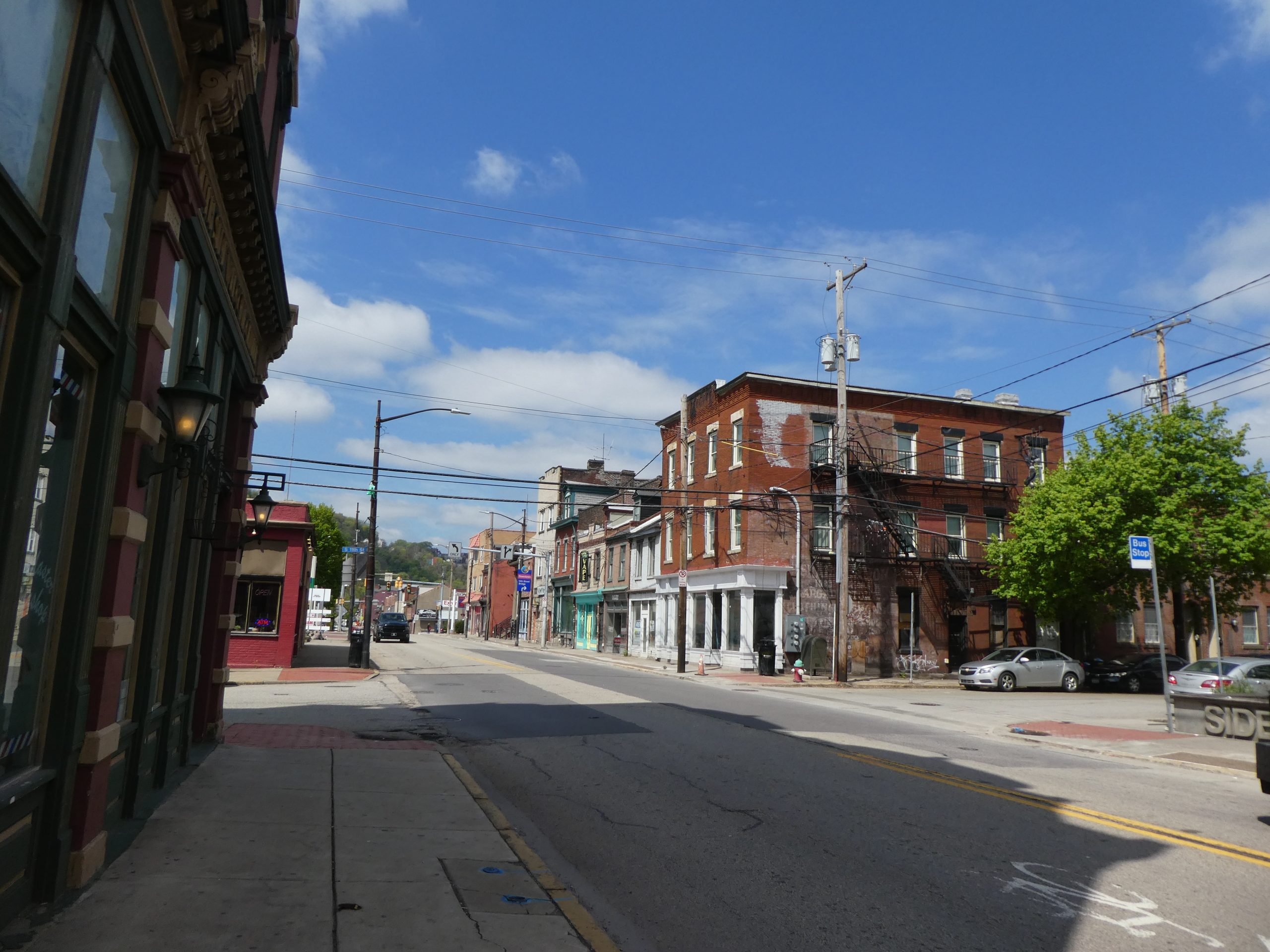
    East Carson Street runs along near to the river on the South Side of Pittsburgh, a long and grand street which was named by property developer Nathaniel Bedford after one of his friends. His friend was called Carson, not East…..

    What impressed me most about this street is that if you could take the cars away, it felt like nineteenth century America (or what I imagine nineteenth century America was like). Indeed, most of the buildings are from when this area was created in the mid-nineteenth century, when Pittsburgh was becoming a prosperous city.

    In the 1950s, the population of Pittsburgh was just shy of 700,000 people, up from 325,000 at the beginning of the twentieth century. Now, with the collapse of the steel industry, the population is under 300,000, which has meant that many buildings were just left and never modernised or developed. This area is now protected to ensure that its heritage is maintained, but it’s a charming and quirky street with many bars and restaurants along it.

    I hope that this street doesn’t change, it would be easy to modernise and gentrify it, but I like this piece of nineteenth century heritage. I also thought that I had some better photos of this street with more heritage and fewer traffic cones, but perhaps not…..

  • Pittsburgh – East Carson Street Mural

    Pittsburgh – East Carson Street Mural

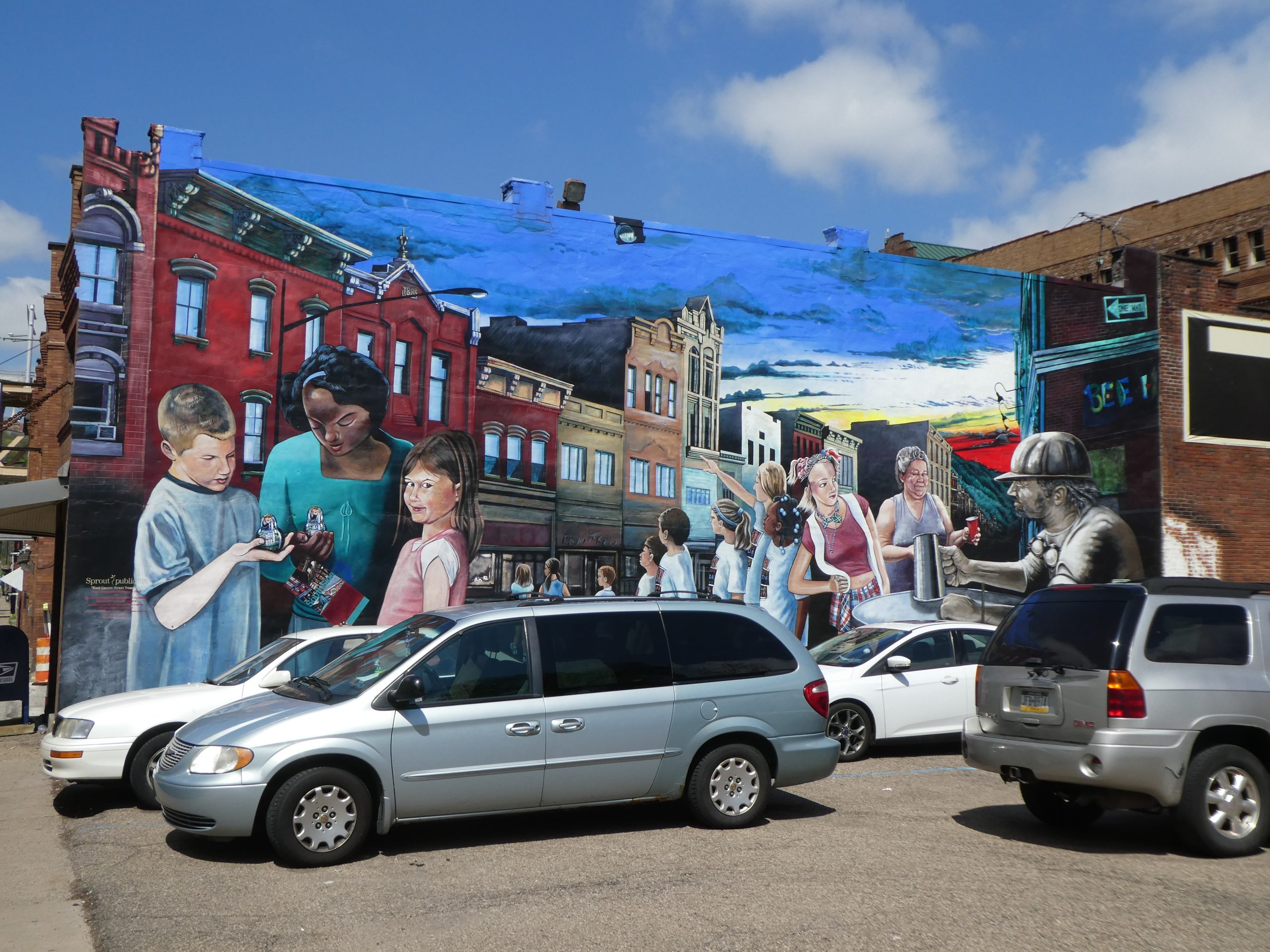
    The quality of this mural is one of the finest that I’ve seen on any piece of street art, even down to the South Side leaflet in the girl’s hand (might be necessary to click on the image to enlarge it). It was painted by David Hawbaker, a local art teacher, and shows a community gathering, being looked over by a steelworker from the past. This image is swarming with history, community and positivity. Just a slight shame its location is in front of a small car park, but it’s pretty much still visible.

  • Pittsburgh – External Power Points

    It could be said that I’m just easily pleased (and that wouldn’t be untrue), but I have never seen a public park have external power points for people to charge their phones and devices up. It seems a marvellous idea to me as although I wasn’t in need of charge, it could be useful and what better place than a well presented public park?

  • Pittsburgh – Love Locks

    I’ve never really been a fan of the love lock phenomenon which has bestowed so many padlocks onto bridges and other structures across the world. Although I’m not very romantic, so that is probably why, but chucking a key into a river and leaving a padlock on a bridge doesn’t seem to be the height of romantic sophistication to me. But, each to their own.

    There were a few love locks on the bridges in Pittsburgh. However, I’ve never seen before a cycling helmet attached to a bike lock which is then placed on the bridge, in this case Hot Metal Bridge (a wonderful name for any structure). I thought for a while someone was storing it there, although that seemed unlikely, but there are numerous other rather more traditional locks in the area.

    If nothing else, it’s different.