Category: Wales

  • Newport – Tredegar House (Evan Morgan’s Bathroom)

    Newport – Tredegar House (Evan Morgan’s Bathroom)

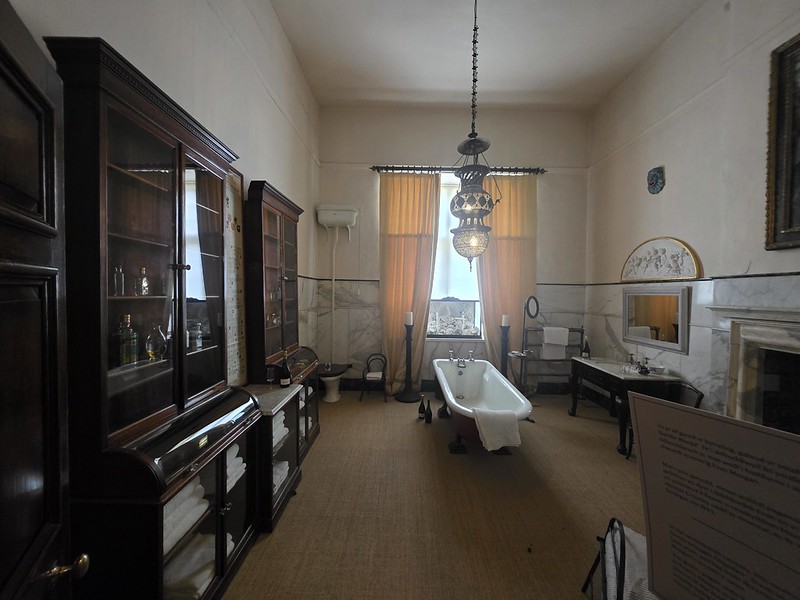
    When Tredegar House was originally built this was a room known as the Green Wrought Chamber. The Victorians turned it into a bathroom and that’s how it’s displayed today.

    Visible on the right hand side on the wall, above the mirror, is a pagan style head and that’s a nod towards what the National Trust call “the “Evan Morgan’s eccentric tastes” which I assume to mean they find him a bit odd.

    Evan Morgan (1893-1949) was very interested in the supernatural and Aleister Crowley, who was a character however you look at it, stayed at the house on numerous occasions. Evan, who didn’t have children and is thought to have been gay (despite two marriages) left Tredegar to his uncle, Frederick Morgan. Evan had his bedroom in his adjoining room and there are numerous reports that he would meet his guests whilst lying in the bath. How the upper classes live….

  • Newport – Tredegar House (Dining Room)

    Newport – Tredegar House (Dining Room)

    20251116_112558

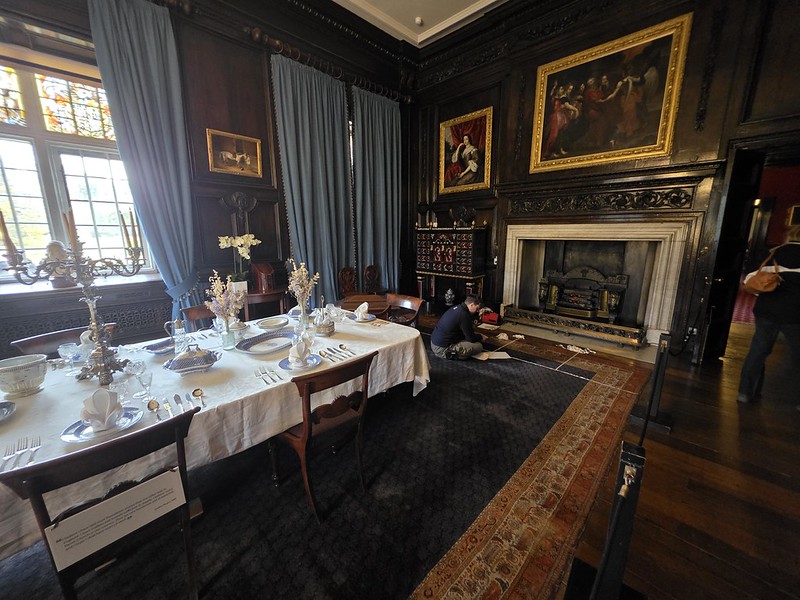
    This is the rather grand dining room, previously known as the Best Parlour, the Great Parlour and the New Parlour. It was where the Morgan family would have dined with all sort of decadent foods such as pheasants, lamb and chicken bakes.

    20251116_112609

    There was a man from the National Trust sitting on the floor and I didn’t like to ask what he was doing, but he seemed to be enjoying it. During the period that this building was in use as a Catholic girls’ school, this room was used as their chapel.

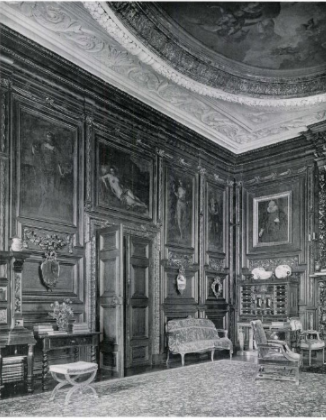
    Here’s a photo of that fireplace from 1908.

    20251116_112606

    I wonder if civil engineers could do this to ceilings, as it gives me a design idea. This was installed here in the 1860s, replacing an earlier one that was likely either not decadent enough or which was falling down.

    20251116_112652

    A serving hatch in the room which was installed here during the Victorian period and which the note mentions is now a little rickety (they used a different word, but I think that’s what they meant). Apparently this room has apparently been used in Dr Who and Torchwood, amongst other TV programmes.

  • Newport – Tredegar House (Painting of William Morgan the elder)

    Newport – Tredegar House (Painting of William Morgan the elder)

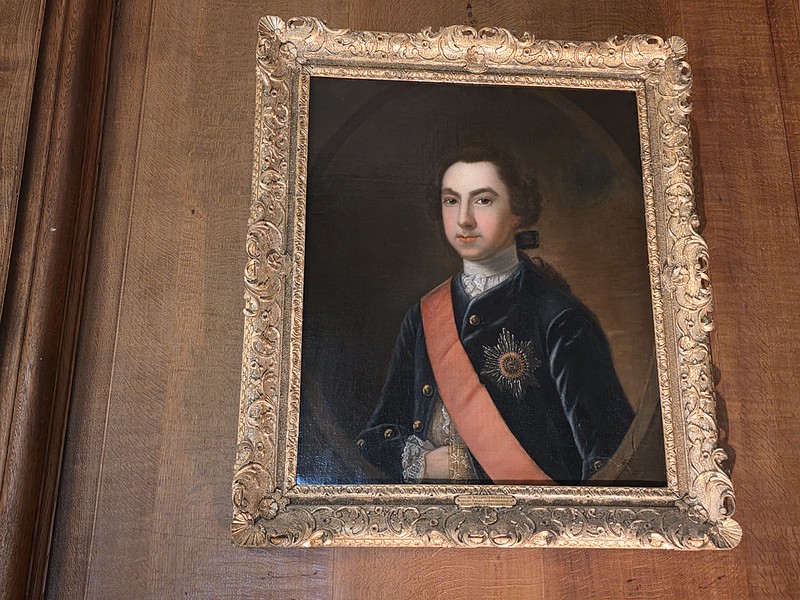
    This portrait is of William Morgan the elder (1700-1731), the eldest son of John Morgan who was a Welsh politician of some note and of considerable influence. John also owned Tredegar House and passed it down to William in 1721 when he died.

    William served as the Whig MP for Brecon and later for Monmouthshire, being returned for both in 1722, but he chose Monmouthshire. There was nearly always a Morgan as the MP for this constituency from the 1650s until the constituency was abolished in the 1880s, although one of the successor seats of South Monmouthshire was represented by a Morgan until 1906.

    William married Rachel Cavendish, a daughter of the Duke of Devonshire, so that was handy at keeping power in the family. William was also one of the wealthy and enthusiastic Government supporters who was created a Knight of the Bath when that order was revived in 1725 and he was wearing his sash in the painting. William died young, although I’m not entirely sure what the cause of his death was as it doesn’t appear to have been recorded, but the estate was left to his son William Morgan the younger (1725-1763).

    It’s not known who the painter was, but the National Trust note that on the artwork there is:

    “Painted lower frame: Sir William Morgan, K B B.1700 D.1731 married Rachel, eldest daughter of William, 2nd Duke of Devonshire, KG

    Written paper on crosspiece of stretcher frame: Sir William Morgan, Knight of the Bath, eldest son of John Morgan, esqr. of Tredegar. Belonged to Ruperra, 1783″

    It doesn’t take much walking around Tredegar House to realise the power and influence of the Morgans on local and national politics, they had some considerable wealth going on here.

  • Newport – Tredegar House (Painting of Blanche Parry)

    Newport – Tredegar House (Painting of Blanche Parry)

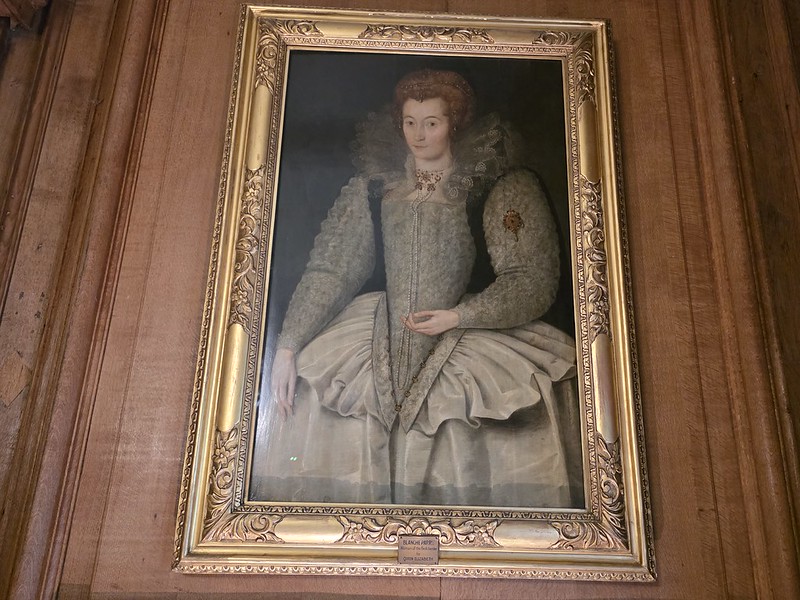
    This painting at Tredegar House is of Blanche Parry (1508-1590) and is still owned by Newport Museums and Galleries. The fashion is very similar to that of Queen Elizabeth I, but Blanche was a Woman of the Bedchamber to her, so that is perhaps not an entire surprise. I suspect that this role, which was nearly always held by aristocrats and was more about travelling with the Queen and offering social support, was likely rather an interesting one and it came with some significant power. Parry was an aide to the Queen for over fifty years, so she must have picked up some considerable gossip during that period.

    It might have been painted by Marcus Gheeraerts the Younger (1561-1632) who was perhaps best known for the Ditchley Portrait of Queen Elizabeth. The information about the painting also notes that the frame is from the eighteenth century, so it is later than the artwork itself. The realistic and grand artwork is also very much a statement of power and influence, no doubt a source of some pride to her family.

    Blanche wasn’t directly linked to Tredegar House, but she was connected to the Welsh Marches, so perhaps there was some family history interlinked there. Or it might be that Newport Museums and Galleries acquired this artwork and thought that Tredegar House was the best place to just pop it.

  • Newport – Tredegar House (Gilt Room)

    Newport – Tredegar House (Gilt Room)

    20251116_112230

    This is quite a decadent room, some suggest that it’s the finest in the house. It was designed to be one of the state rooms, primarily where guests could relax at the end of the evening. The Morgans fancied some European influences in their grand room and it’s decorated with pine panels designed to look like walnut.

    Here’s what the room looked like in 1908. During the Newport Council period, they plonked a bed in the middle of the floor so that people could lie down and look at the ceiling, but the National Trust have gone for a more tried and trusted method of using an angled mirror. They also did well to ensure that this room was kept well maintained when it was a school, although the council did refresh all the gilt decoration during their ownership.

    20251116_112237

    Those twisted columns are designed to look like marble, but they’re actually made of wood. This was all arranged by William Morgan who managed to complete pretty much all of the decoration in the house without needing later generations to complete the work.

  • Newport – Tredegar House (History)

    Newport – Tredegar House (History)

    20251116_112021

    Our visit on the way back from Cardiff was to Tredegar House, a National Trust property located near to Newport. The current property dates to the 1670s, although there are some Tudor bits still standing, paid for by the wealthy Morgan family. The Morgan family began as landowners and managed to also benefit from the industrial revolution and got themselves involved in politics as well.

    The property ceased to be used as a family mansion in the early 1950s, when it became a Catholic girls school. A new school was built in the 1970s, so Newport Council ended up buying it, hence the reference to the most expensive council house in Britain. By 2012, this house was a little bit of a faff for the council, so a decision was made to lease the property to the National Trust.

    20251116_111844

    I thought that the layout was a bit bodged (by that I mean that we went the wrong way) and so we missed some of the route, but here’s the orangery.

    20251116_111630

    These might look like rickety pipes, but they’re the remains of hothouses which once stood here.

    20251116_111708

    A tree. This isn’t a blog about trees though, so I’ll limited myself to that description.

    20251116_111714

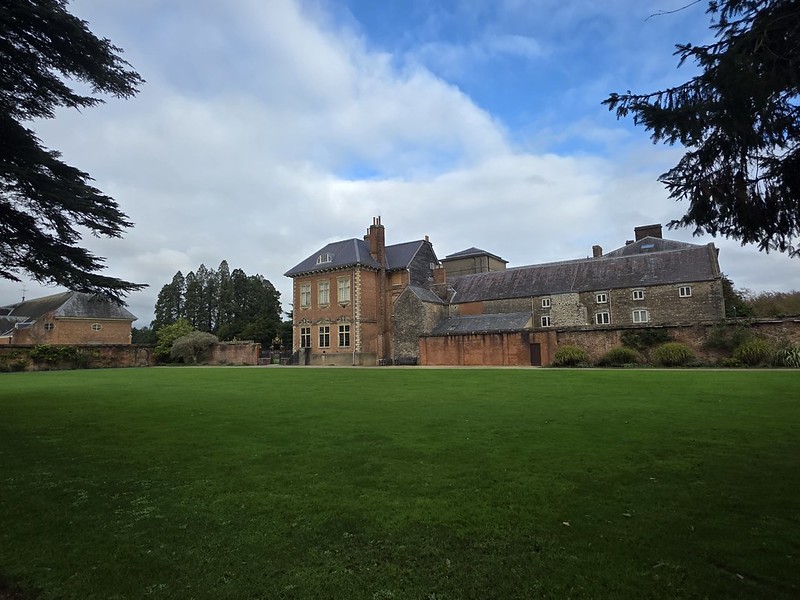
    This is the side of the house, and that large section to the right is the former Tudor house owned by John Morgan that never quite got demolished.

    20251116_111836

    The formal gardens.

  • Connecting the Two Birthday Weekends

    Connecting the Two Birthday Weekends

    For my attentive blog readers, they might have noticed that I stopped the blog following my birthday weekend in Cardiff and I jumped straight to my birthday weekend in Ljubljana as there’s something about sort of live and up-to-date content that’s useful.

    Anyway, I now continue the story of how I got from Cardiff to Ljubljana as I think that there are some useful elements. So, I finished before talking about Richard’s very low Uber score…. I will return to the day trip to Trieste when I’ve caught up the missing section.

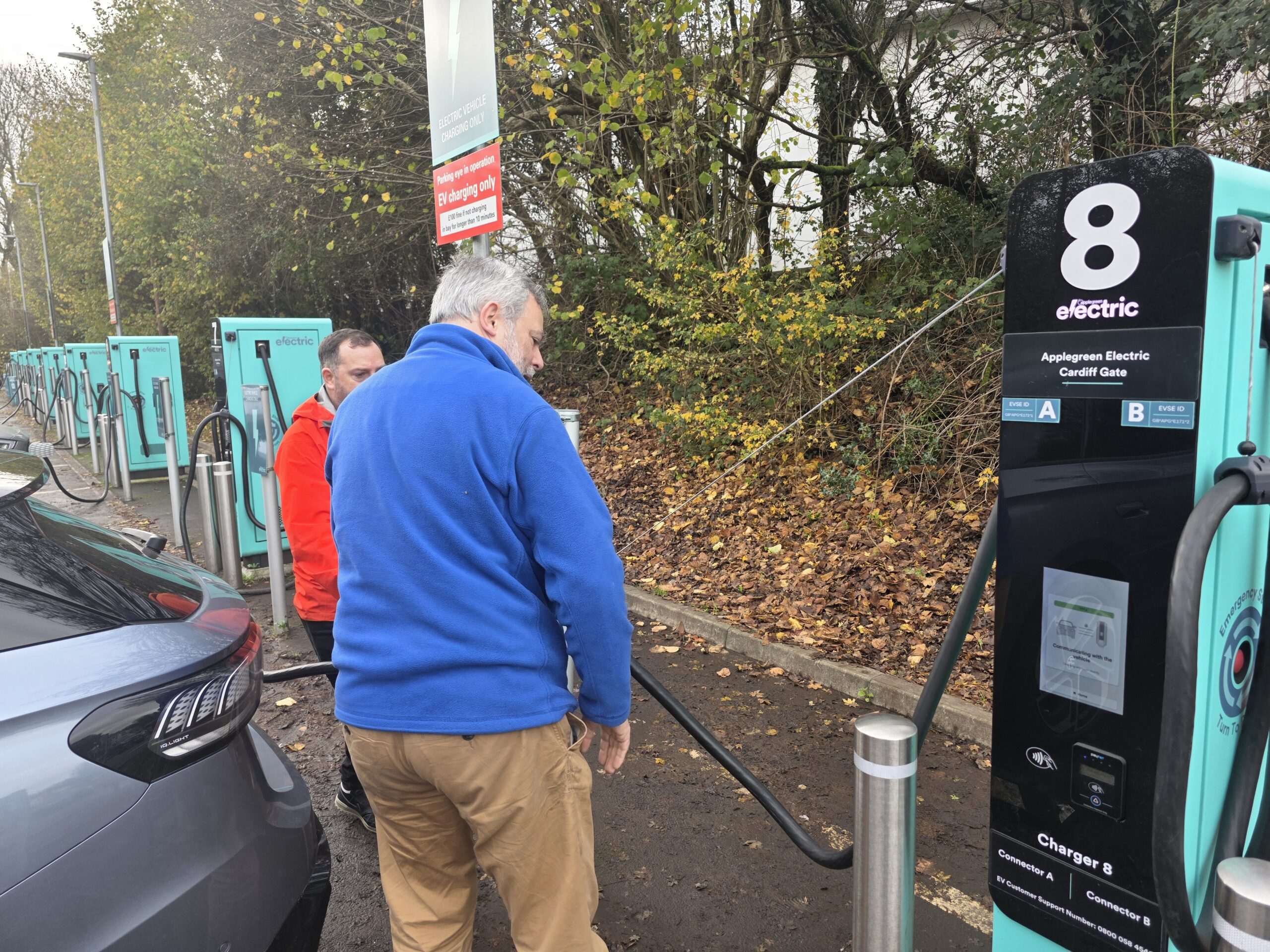
    The next stage of the adventure was to charge Liam’s car up a bit, whilst Richard looked at it enviously. We were heading for the National Trust property of Tredegar House, which has the informal name of the most expensive council house in Britain.

  • Cardiff – Uber

    Cardiff – Uber

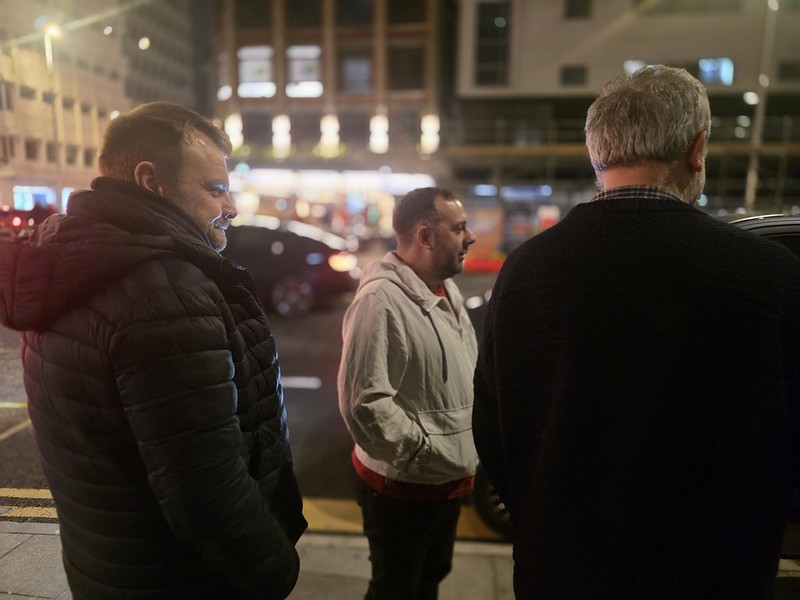
    It was the end of the evening and we decided to get an Uber home. Richard used his Uber account to book the taxi, although he’s not very competent at these younger person’s apps and so he got a bit muddled up where to stand, so we ended up standing in a pedestrianised street.

    The biggest crisis though is that Richard has a very poor Uber rating. Liam and I have 5 star ratings from drivers, whereas Ross doesn’t use such technology. I am a naturally courteous passenger, giving consideration to the needs of the driver, which is why I obtain very high ratings. Richard has a much lower rating, but it’s not for me to comment why.

    After we found a driver to accept Richard’s low score on the app, we were on the way back to the hotel. The driver was fortunate that he was setting some passengers down in the exact place he was picking us up, although I suspect it’s more likely he suggested that they got out at that spot for his convenience. Either way, everyone looked happy.

    I commented to the driver about Richard’s predicament and as Richard promised to tip him, I’m fairly confident that he secured a 5 star rating on this journey. I was glad to be of assistance, but I don’t need any praise for that.

    To cover myself legally, can I note that Richard is contacting Uber’s customer service support to contest his rating. He denies any allegations that he is anything other than the perfect customer and he notes that he always tips generously.

  • Cardiff – Cardiff Arms

    Cardiff – Cardiff Arms

    20251115_220151

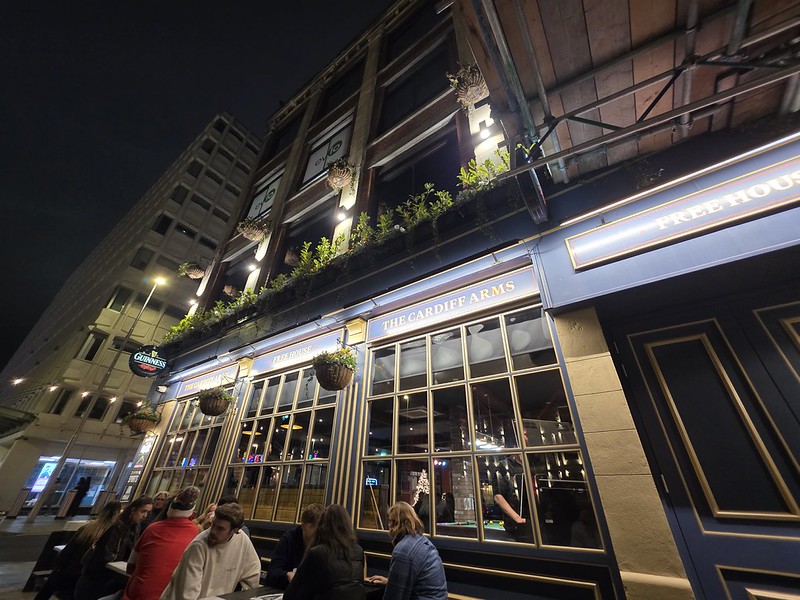
    Our final stop of the evening was the Cardiff Arms, a venue clearly designed more for younger people given the volume of the music playing. There was a friendly welcome from the doorman though and I was eyeing up the outside seating area as being more peaceful, which is where we ultimately sat.

    Although the venue has been designed to look like a late Victorian pub, it is only a couple of years old and has taken the place of a Chinese restaurant which was here before. This whole area has been really smartened up over the last couple of years, I hadn’t realised until looking at relatively recent views on Google Streetview.

    20251115_215943

    The beer selection wasn’t entirely decadent, but there were a couple of interesting keg options there. There are sometimes real ales available here, but it’s usually primarily keg.

    20251115_220154

    I went for the Cwtch from Tiny Rebel, a very decent red ale. The temperature outside was moderate (so my friend Susanna would have considered it as freezing) and it was all rather pleasant.

    20251115_220656

    I have to give the venue opposite credit for their Christmas decorations. It would be wrong of me to gossip here about Ubergate, so I’ll note that in a separate post.

    The online reviews of this venue are broadly positive for drinks, but it seems that they might be struggling a little with the food. It’s going to be a challenge for them given the number of food options in Cardiff, but maybe it’ll all settle down.

    Anyway, it was a bit loud for me now that I’ve reached the age of 30, but the team members were all friendly, it was clean and provided us with a suitable space to think back about the highlights of the weekend so far.

  • Aberfan – BBC Tip Number 7

    Aberfan – BBC Tip Number 7

    Following my posts about Aberfan, my friend David Morgan (the one who walks a lot, mostly up hills and generally quite fast) suggested this series of podcasts from BBC Sounds. I’m currently travelling Italy at the moment, so whilst on a flight to Rome and on trains internally, I’ve listened to the entire series today of nine episodes.

    The links to the series is at https://www.bbc.com/audio/brand/p09z3n7y.

    As a short comment, the way that these families were treated was genuinely shocking. I had realised already that they weren’t respected in the way that they could and should have been, but the treatment was often downright disrespectful. To lose your child and then have to fight to get the tips removed to prevent a re-occurrence, only to discover that it was paid for from the memorial fund is sub-optimal to say the least. Reading old newspapers, it seems that the trustees of the fund begrudgingly accepted the request from the Government to contribute as it was seen to benefit the village, but they shouldn’t have been asked and it was right that the money was later repaid to them.

    One of the survivors says that now she’s an adult she simply can’t work out how the families involved coped. Not only did they lose their child, or children, but they faced disinterest and push-back from the authorities in the years that followed. Survivor guilt was also a common theme, how the young children didn’t feel somehow lucky to survive, they were mentally traumatised by what happened and there wasn’t the assistance provided to help them even though some money was made available from the fund.

    The worst thing is that no-one was ever held accountable for what happened, there was no-one who lost their job, was demoted or took responsibility for the mistakes that were made. That was what I considered to be the key thing that the locals wanted, they felt that their children had been murdered by the National Coal Board and so they never received the closure that might have helped them deal with the tragedy.

    Anyway, they’re definitely worth listening to and the podcasts are well produced.