Category: Gateshead

  • Gateshead – The Tilley Stone

    Gateshead – The Tilley Stone

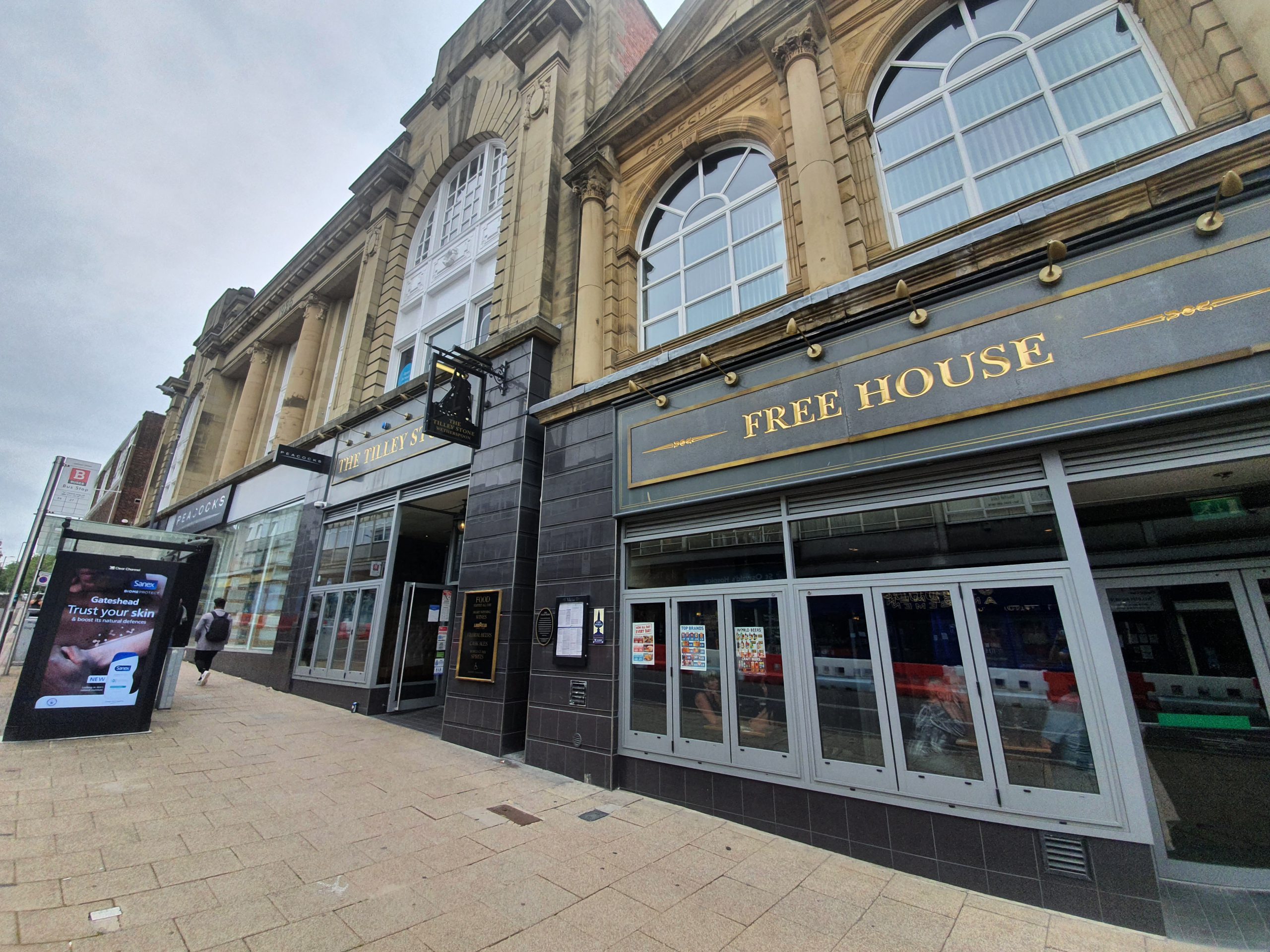
    This is from a visit I made a couple of weeks ago (my posting out of order does make it all a little confusing) when I was in Gateshead. I did look at visiting a Good Beer Guide pub there, but there is only one which was the Station East and that was shut. So, without too much disappointment, I headed instead to the JD Wetherspoon outlet that is The Tilley Stone. It’s an interesting name, with JD Wetherspoon explaining their pub is named after two coal seams:

    “Tyneside and coal went hand in hand for centuries, with many mines in and around Gateshead. The ‘Five Quarter’ seam was worked at the Derwent and Gateshead Fell pits and the ‘Three Quarter’ at Dunston Colliery. The ‘Tilley’ and ‘Stone’ seams were also worked at Dunston. The wooden staithes at Dunston were built in 1893 for loading coal onto ships and continued to be used until the 1970s. Now restored and a listed monument, they form reputedly the largest wooden structure in Europe and a reminder of the busy days of the ‘Coaly Tyne’.”

    The beer options here were really rather impressive. There’s the pint of Brewdog Punk IPA which came with the chicken wrap, that was of the usual perfectly acceptable standard. In the photo to the left of the Punk IPA is Maximus from Maxim Brewing, a well above average ale. But it was the Raspberry Porter, also from Maxim Brewing, that I thought was particularly notable (it’s the second photo, of the beer on its own). It was a drinkable and creamy stout, with a strong flavour of raspberry running through it, both as an initial hit and as an aftertaste. For a beer that cost me £1 for half a pint, I thought that this was exceptional.

    Just for completeness (and for no other reason really), a photo of the southern fried chicken wrap….. The reviews of this pub are mixed, as they usually are for JD Wetherspoon outlets. Some are judgemental such as “was a decent pub when it first opened. Now it just seems to attract the dregs of society“, but most are about slow service or average food.

    As a pub, this was a sufficiently well-run location for my requirements with several real ales available, as well as numerous craft beers. Service was efficient, the pub was relatively clean and everything seemed organised. Based on this experience, I’d say that this is an omission from the Good Beer Guide, especially as so many JD Wetherspoon outlets are listed.
  • Gateshead – Holiday Inn Express Newcastle Metro Centre

    Gateshead – Holiday Inn Express Newcastle Metro Centre

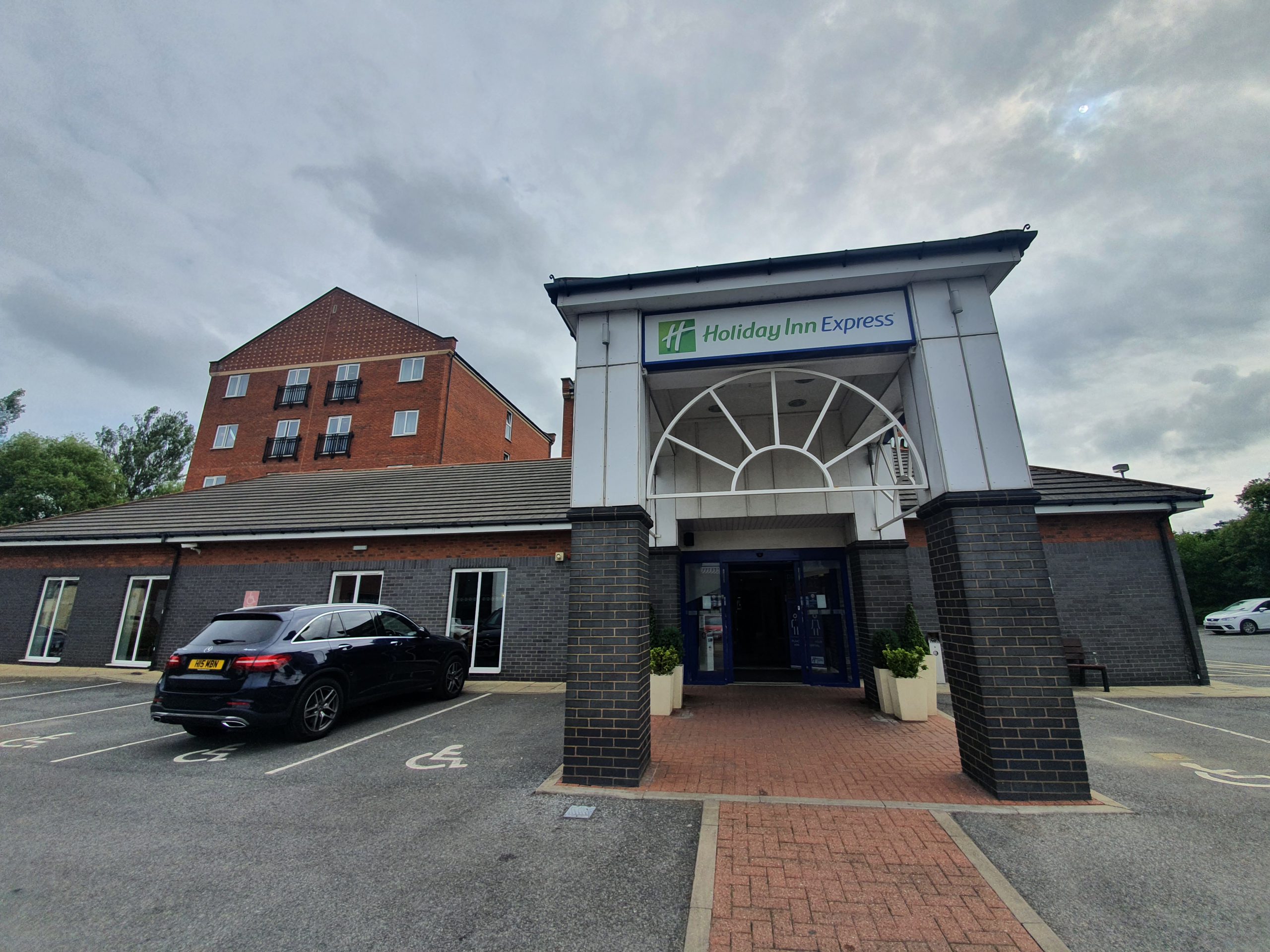
    Going back a week or so, this is the hotel that I went to after completing St. Cuthbert’s Way last week. It’s a slight faff to get to from central Newcastle for walkers, it really requires a train to the MetroCentre railway station and then a ten-minute walk from there. I got this train to get there (I felt that I had done enough walking), although I walked back via Gateshead the following morning which took about an hour (or would have done if I hadn’t stopped at the pub en route). Anyway, the hotel is usually quite keenly priced, not least as it’s not very central and it’s probably more usual to drive there.

    The welcome drink of a Goose Island IPA, which is a perfectly acceptable drink to start a hotel visit with. The bar wasn’t particularly busy, but the staff member was enthusiastic and friendly, so it all felt inviting.

    The room, all clean and comfortable, with some modern touches around the room (including a slightly fancy Bodum kettle that I forgot to take a photo of).

    The breakfast is included in the price here, although this particular IHG is perhaps making more of Covid restrictions than some others in the chain. I had to pre-order my bacon roll the evening before and had to give a time that I wanted it, which seems a little excessive (it’s not a complex cooked breakfast order). Other IHGs just stack them up in a big pile, but it was ready when I asked for it, so all was well. Much of the breakfast has been removed, although the area itself is self-service.

    My breakfast of orange juices (the glasses are little), yoghurts, the bacon roll and a croissant. Nothing overly exciting, but since the room rate was cheap and this breakfast was included in it, I was entirely satisfied.

    The hotel is generally well reviewed, complaints are mostly about the road being loud (they tend to be, or at least the cars on them tend to be) and noisy guests. The hotel says that it puts families and groups in different parts of the hotel, which sounds a good idea in principle, but they might be better trying to manage noise pro-actively rather than some random room selection like that given the issues they keep having. I’m not sure why this should be a party hotel given its location, but perhaps the price is what sends some groups there.

    All told, this wasn’t the easiest hotel to get to for a walker, so I probably wouldn’t pick this one again. However, that’s hardly the hotel’s fault (I find it bizarre when people rate down a hotel as it’s not near where they wanted to go, as if that’s the hotel’s problem to solve) and I liked everything else about this place. Quiet internally and externally, with a fan that worked sufficiently well, all really rather lovely.

  • Gateshead – Millennium Bridge

    Gateshead – Millennium Bridge

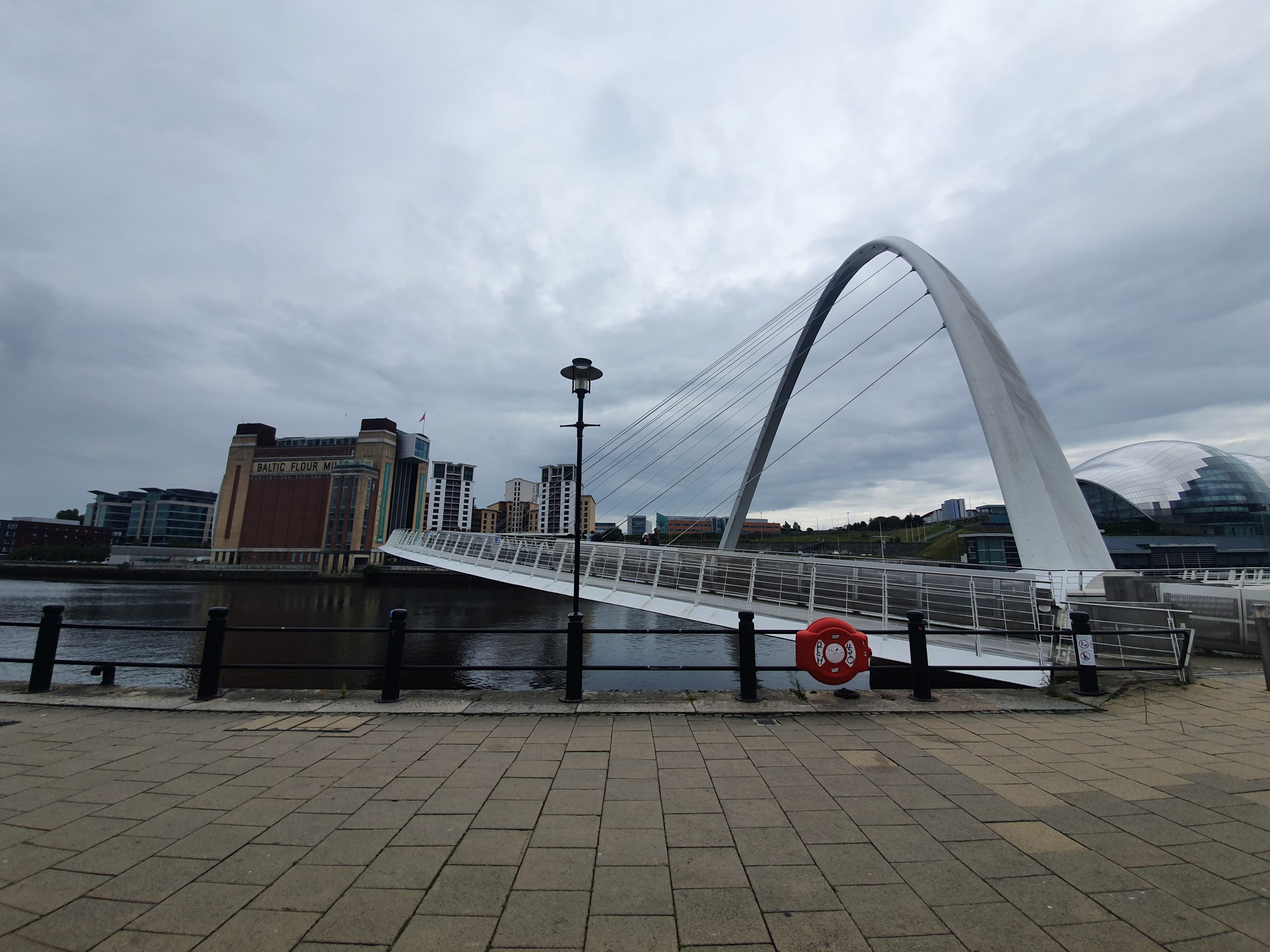
    Back in 1996, Gateshead Council decided they’d quite like a new bridge for pedestrians and cyclists and so they started a competition to design one. The successful designer was the architects Wilkinson & Eyre, with the structural engineers being Gifford and Partners. It seems that because Gateshead Council were ahead of the curve (there’s an accidental pun there I didn’t initially intend) on this, they got to call it what they wanted, which is why it’s not called the Newcastle Millennium Bridge.

    An information board by the bridge notes that this is “the world’s first and only tilting bridge” and it still opens to allow boats of up to 25 metres in height through. It takes just over four minutes for the bridge to tilt and costs very little to do so as the design was initially environmentally conscious.

    The bridge (also known as the Blinking Eye Bridge) was constructed in one piece, which must have required some considerable planning as it was floated six miles down the river to get it here in November 2000. A floating crane was involved with the whole arrangement, but this sounds like a complex civil engineering challenge that is beyond my understanding, although my friend Liam is building a bridge and I’m sure he’d be excited by a floating crane (I don’t think they have one of those to construct the Great Yarmouth bridge). The bridge cost £22 million to construct, partly funded by the Millennium Commission and the European Regional Development Fund, which seems pretty decent value given how iconic it has become over the last couple of decades.

    I’ve been to Newcastle on a few occasions before, but this is the first time that I’ve crossed over this iconic bridge. I can’t imagine that anyone else is excited by my doing that, but I was (I’m easily pleased and should probably get out more).