Category: South Elmham

  • Walk Around Bungay and South Elmham

    Walk Around Bungay and South Elmham

    This walk was from a couple of days ago with my friend Rob, starting in Earsham and then going to see the new bridge that has been installed, before walking around The Saints and then returning to the bridge. It wasn’t the dryest of days, but Bungay is in the national press today due to flooding, so it could have perhaps been worse.

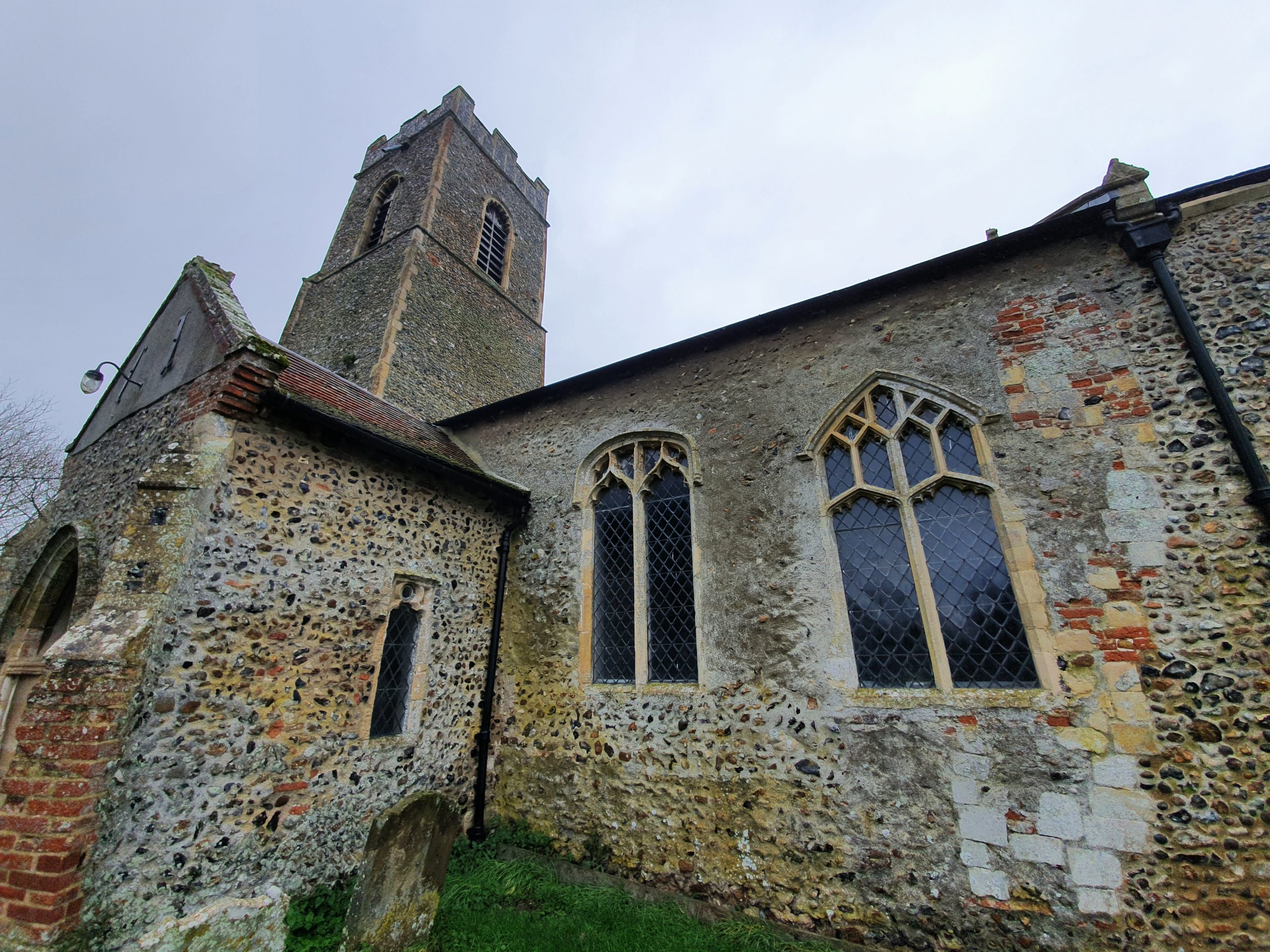
    Earsham was the start and end point of the walk, wet at the beginning and the rain started to pour down just as we arrived back. There’s been a church here since the Saxon period, although the current structure is from the twelfth century with bits added on and restored since.

    My trip to get the day’s lunch was delayed slightly as they couldn’t get the till to turn on. I don’t think the Bungay Shopper themselves would claim that they have a range of high quality artisan food and drink, but it was convenient and cheap.

    I’ve never seen Bungay Castle, I hadn’t realised it was visible from the footpath. It was financed by Roger Bigod of Norfolk and was constructed just after the Norman Conquest. It fell out of use many centuries ago, being owned by the Dukes of Norfolk from 1483, but the family gave it to the town in 1987.

    Flixton Road Mill, built in 1830 and now converted into residential accommodation.

    The temperature was quite warm, although there were occasional showers.

    A rainbow appeared between the rain showers.

    We visited three churches on the walk, all of which were open to go inside. This is St Margaret’s Church in Ilketshall St Margaret and more of this in another post. But, the highlights here are what I think is a Saxon window in the tower and the completely ridiculous decision made by English Heritage to render the tower. They accepted this was in error and it is neither historically accurate nor particularly beautiful. But, it’s there now, part of the church’s story.

    I rather liked the path in the above photos, I think from the width it’s a former drovers’ road. One of those routes which could have easily have become a road.

    Fortunately, the mud in Suffolk isn’t generally too clay-like (unless certain parts of Essex…..), otherwise this could have been an annoying walk across a field with mud welding to my boots.

    Part of my lunch from the Bungay Shopper….. Very decadent.

    Streams and ponds that are often low in water certainly aren’t at the moment.

    Some aggressive looking sheep.

    I’m not sure of the age, but this road bridge looks to have some history to it. A nice feature to have in the garden as well.

    St. Peter’s Church in South Elmham.

    St. Peter’s Brewery, which was founded in 1996, and occupies a site which includes an ancient thatched barn and St. Peter’s Hall. The brewery own one just pub in the country, which I have meant to go to, it’s located in Farringdon in London.

    Norfolk and Suffolk can be hilly. Well, relatively hilly.


    One of the reasons we went on this walk was to see the new bridge which has been installed here on the Angles Way. This map (in .pdf format) shows the temporary route which the broken bridge caused. It took six years for this bridge to be replaced and numerous local politicians were involved, and the Ramblers really engaged with the process.

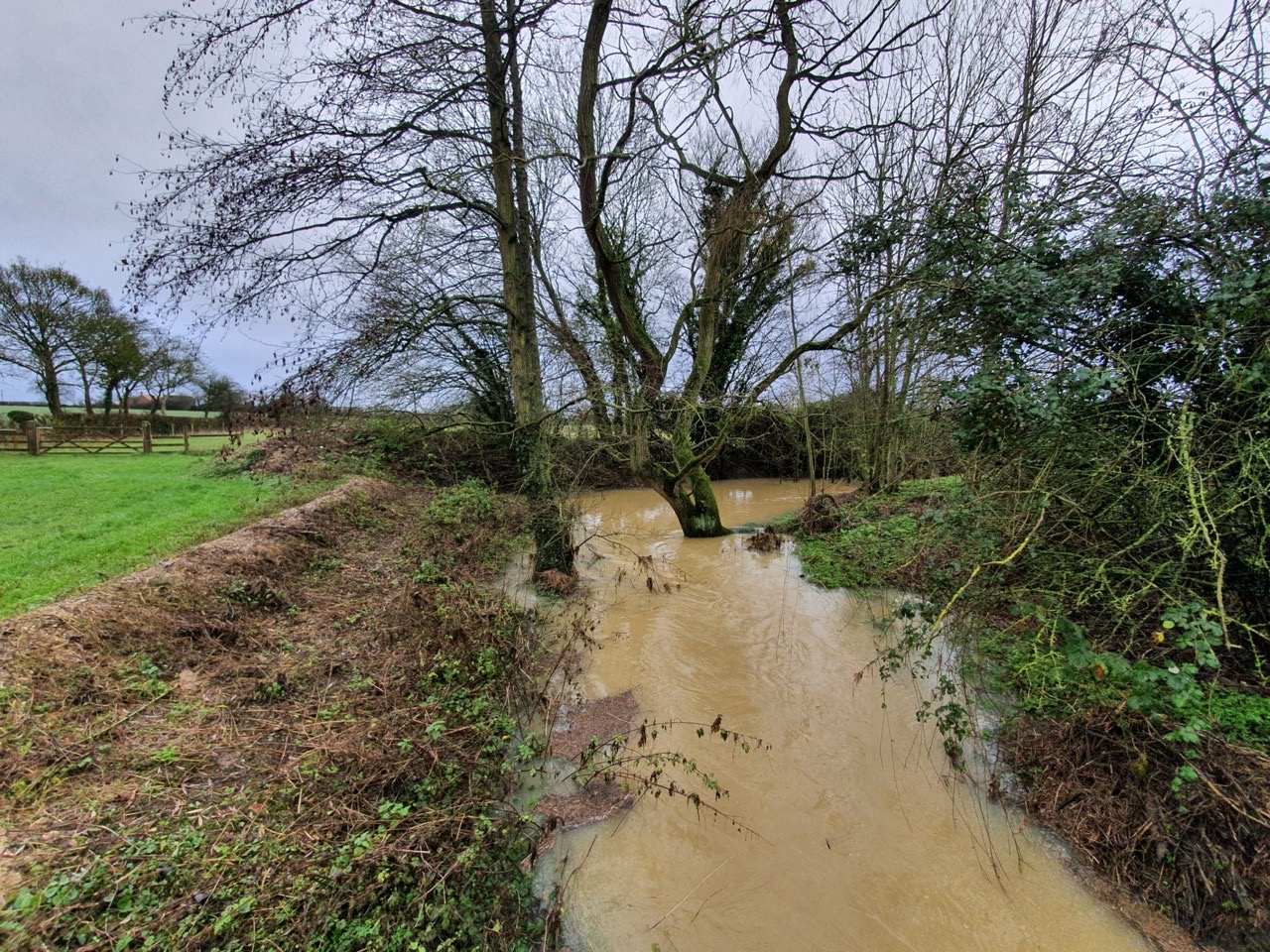
    The area was a little more moist than was ideal, perhaps the bridge set-up wasn’t ideal, but the main thing is that the Angles Way route has now been restored. Fortunately, that water wasn’t too deep.

    This is Rob’s route of the walk, I like the colours showing when we were walked a little quicker.
  • South Elmham – St. Michael’s Church

    South Elmham – St. Michael’s Church

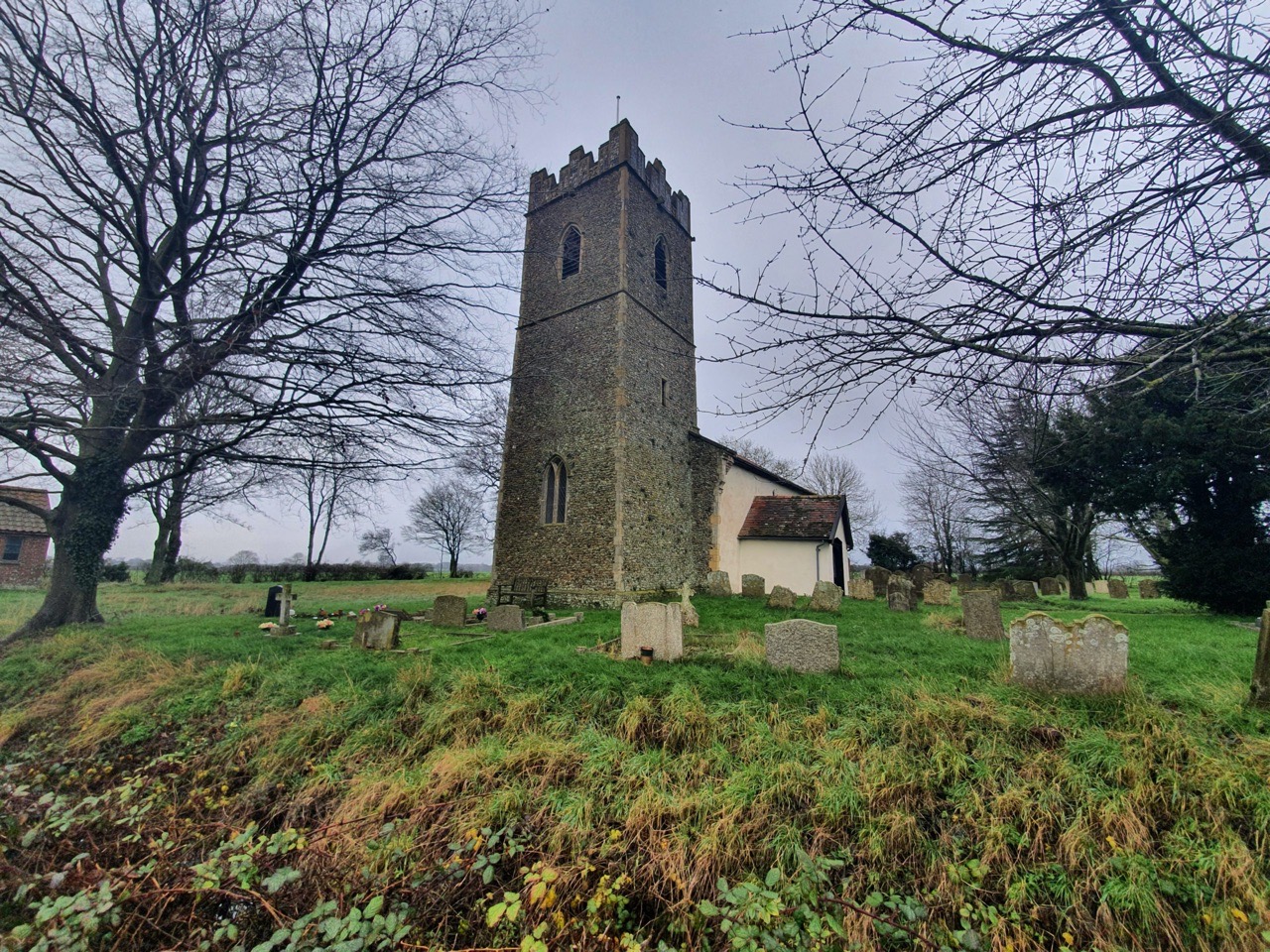
    Perhaps the best known fact about the parish of St. Michael in South Elmham is that it’s one of the Thankful Villages, as it lost none of its men during the First World War. And, on top of that, it lost none during the Second World War, one of only 14 villages in the country to be this fortunate.

    I was walking in the area with my friend Rob, who mentioned he saw that they were putting new render on the church last year. It is unusual to see a church with such a modern render, as the Victorians frequently stripped it off as part of their modernisations. I do prefer seeing the stone behind the render, but it was a protective layer against water ingress and so churches are a little vulnerable without it.

    I’m not a rendering expert, but this looks neat and clean. It’s not quite visible from this photo, although it is from the one below, that the church used to have a thatched roof.

    This is the other side of the church, where there is no render, with the wall looking faintly ridiculous and more like something constructed for a shed.

    There are no windows on this chancel wall, some of that brickwork at the top looks alarmingly modern and it’s all a bit botched. But, such is the necessity to patch up buildings that have structural issues, although some render here might make the whole edifice look much more appealing. The process of restoration must be frustrating, the church received some extensive work in the early part of the twentieth century, which was much damaged during the storms of February 1906.

    The end of the chancel and it’s evident visually that the current building is leaning somewhat in places. And, it’s possible to see the buttressing efforts from previous generations, in their attempt to protect the church.

    I found this a rather pretty chancel, despite having no windows on the side walls. Unlike some of the quite sterile designs of some Victorian chancels, the history here is evident.

    The chancel wall is leaning, but has been repaired to some extent recently. I’m unclear what that larger bricked up door is, I can only assume that it led to some sort of chantry chapel arrangement.

    I do like brick flooring, I think it adds to the atmosphere of the church. There’s one prominent tombstone in the nave, with the bodies of Henry Lone who died in 1727, and his wife Rebecca, who died in 1735. The glass in the windows is quite plain, although that’s because much was lost during the Second World War, but that has meant that the interior is brighter.

    The ladder to the top of the tower.

    The church’s font dates to the fifteenth century.

    This is one of the most beautiful church arches that I’ve seen recently, an original Norman decorated surround which is probably from the twelfth century. The door itself is modern, but the eye is drawn to the arch. Well, mine was.

    And a slightly quirky sundial on the exterior of the church.

    I thought that this was a quite beautiful church, even ignoring some of the patched walls and that part of the building was leaning. That all adds to the historical attraction of the church, it hasn’t been overly mauled about by the Victorians (although they did replace the seating and boarded up some of the roof) and it still feels medieval. The churchyard is moated, which is an historic quirk by nature of being next to a common, and the church itself is Grade I listed.

    The first child to be baptised in the church’s fifteenth century font would have been a Catholic and the religious set-up would have been different. But yet, there’s that reassuring feeling that really not much has changed in this church since then. If the parents of that child being baptised looked up and down the church as it is today, I suspect they wouldn’t have been much surprised at the changes. Well, unless someone got a phone out and took a photo, but otherwise, this is a little piece of what England was once like.

  • South Elmham – St. Peter’s Church

    South Elmham – St. Peter’s Church

    The rain cleared a bit by the time that we got to St. Peter’s Church in South Elmham, a church where it’s hard to see how its small parish was ever able to support it.

    The tower is in need of some attention, the foliage growing on it will eventually start to cause structural damage.

    The four-stage tower, likely from the late fourteenth century.

    The fourteenth century porchway, with the carved stone faces still visible.

    There have been some rather crude repairs here over the years and I wonder whether they just rendered over that to hide the patchwork of stone. There have been some recent repairs to the end chancel wall, which have now been completed

    This external chancel wall doesn’t look overly exciting perhaps, but it’s where the chantry was installed in the late fifteenth century and would have been located on this patch of greenery. There would have been a large opening in the wall here and it held the tombs of John Tasburgh and his wife, Margery Tasburgh. The chantry was damaged during the Commonwealth period and later became left open to the elements, with the tombs damaged. The structure was taken down in the 1830s, although the remains of the doorway are visible.

    The church has an interesting photo in the chancel which explains a little more about the history of this wall. To the left, out of shot, is the former chantry arch, but visible here is the coursed flint from the twelfth century forming most of the wall, with the higher thirteenth century wall visible at the top of the two windows when the building was heightened.

    Looking down the nave of the church, which has been heavily Victorianised inside.

    The chancel arch is from the fourteenth century and fortunate that the rood screen is still in place.

    It’s a well proportioned chancel.

    The open base of the tower is visible at the rear and the font is from the fifteenth century.

    Some decorative arrangement in the chancel, likely the base from the chantry tombs.

    I have no idea what this hole in the wall near to the door is doing…..

    Published in the 1840s, this text by the author of a history of Suffolk is a reminder that theft from churches is nothing new:

    “In the year 1819, while the writer was visiting this parish, collecting the materials which form the matter of the present notice, a person of gentlemanly address drove up to St. Peter’s Hall, tenanted by the late Mr. Alden, the then churchwarden, inquiring if the church contained any brass effigies, as he was travelling through the country collecting such records of ancient families, with a view to their cleaning and restoration, promising to return them shortly to their original places. St. Peter’s church afforded nothing to add to his collection, having been already stripped by some earlier iconoclast. The writer remembers that the applicant’s gig-box was half full of brass effigies, which it is vain to hope ever found again their respective matrices. The observation is simply recorded to expose a system of plunder once recklessly pursued, and to warn all churchwardens to repulse applications of a like nature.”