Category: Suffolk

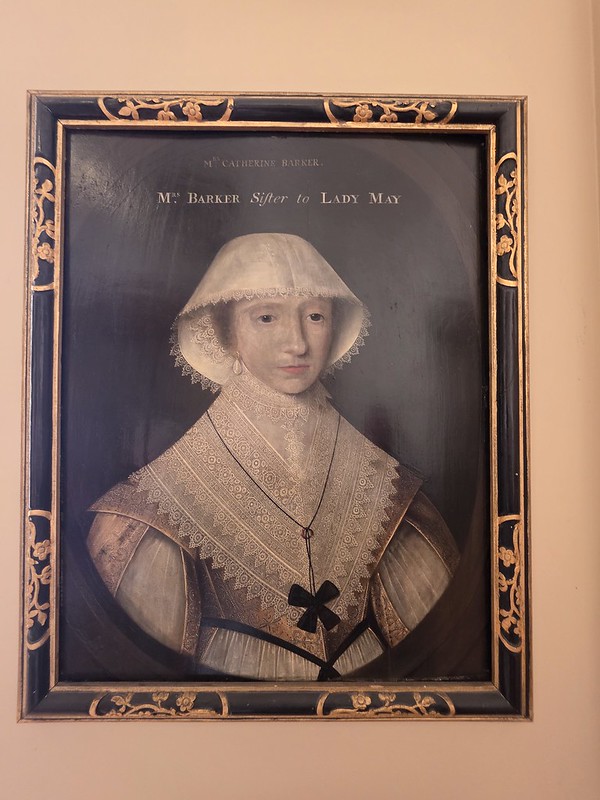
  • Ickworth House – Painting of Catherine Poley, Mrs Edward Barker

    Ickworth House – Painting of Catherine Poley, Mrs Edward Barker

    20250413_132005

    This painting is located within the collections of Ickworth House and the sitter is Catherine Poley, Mrs Edward Barker (1600-1665). It was painted at some point between 1630 and 1669 and the artwork was acquired by the National Trust in 1956 having been accepted by HM Treasury in lieu of tax. On the back of the painting it apparently states “My Ladie Harvis picter when I am dead” which I assume to mean “My Lady Harvis’s picture when I am dead”, or please keep this portrait after she died. The front states “Mrs Barker, Sister to Lady May” and I assume that’s Isabella May (1625-1686) who married Sir Thomas Hervey and it’s the Hervey family who owned Ickworth.

    I rather like the formality of it all, this wasn’t a time to show joviality and excitement, instead it’s formal, rigid and stiff. And that lace wouldn’t have come cheap, might as well show that off to anyone who might see. It’s so severe that perhaps there’s an element of the Puritans about it, although the Hervey family were pro-Monarchy during the Civil war and they even raised a regiment of men to fight against the Parliamentarians.

  • Ickworth House – Frederick Augustus Hervey and the Grand Tour Theme

    Ickworth House – Frederick Augustus Hervey and the Grand Tour Theme

    20250413_130434

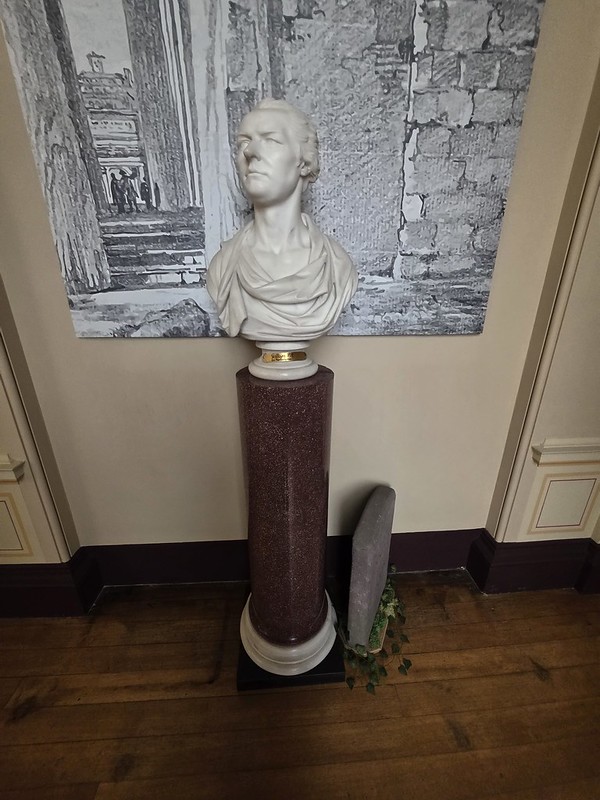
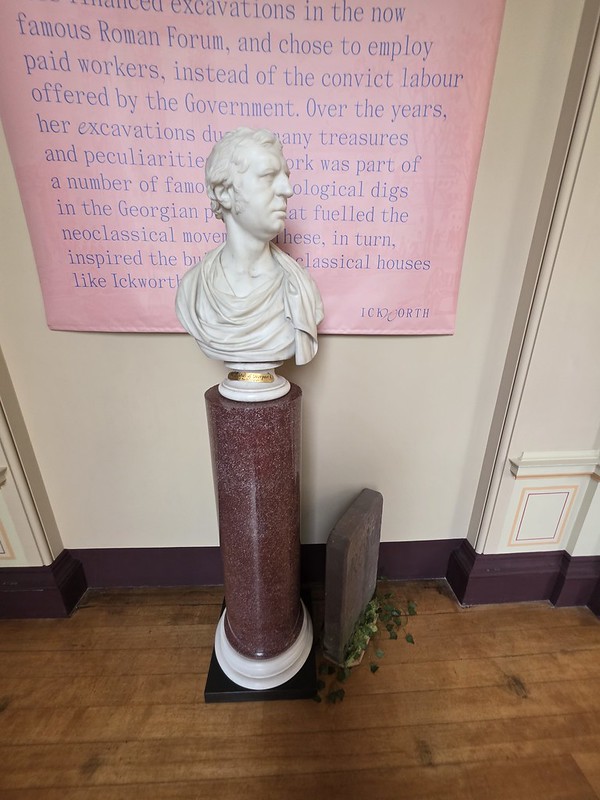
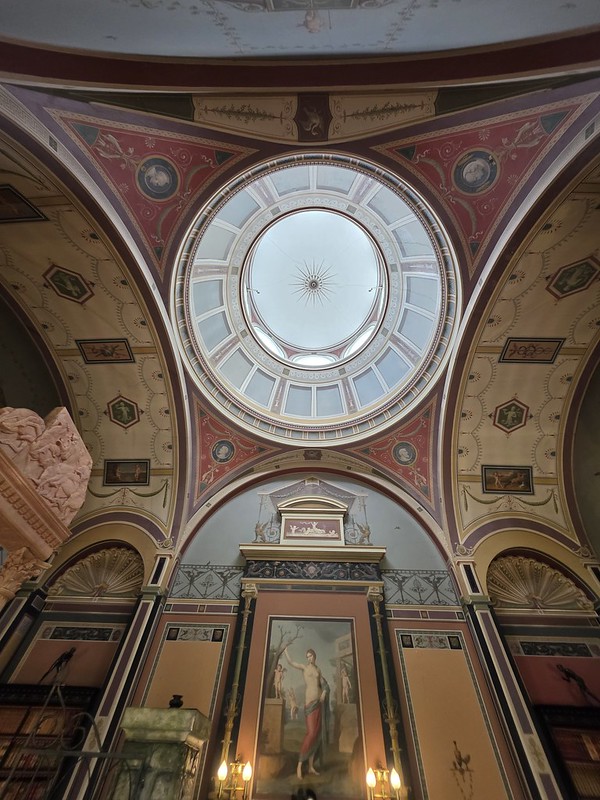
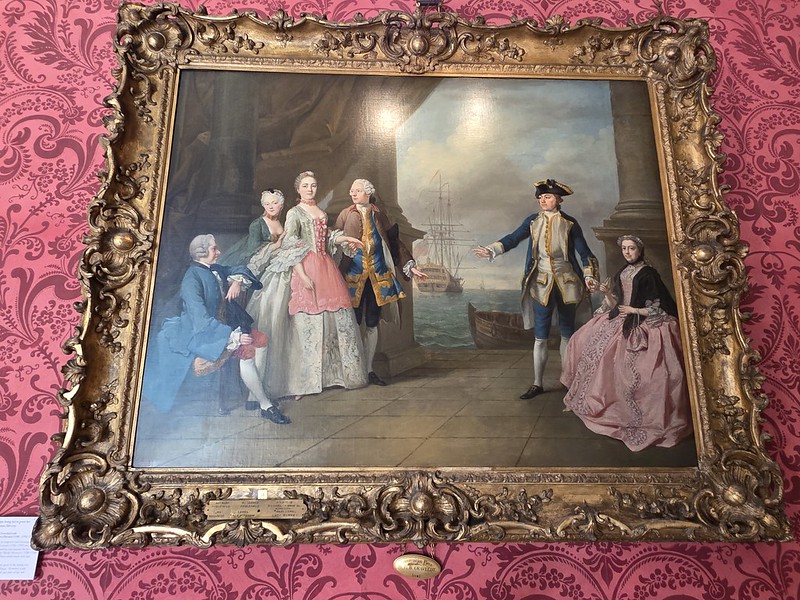
    When we entered Ickworth House the friendly volunteer explained numerous things, including that they’ve got a theme this year of the Grand Tour and hence the decorative element in the main entrance hall. A little disappointingly, there’s nothing I can find on-line from the National Trust about this focus and the curation didn’t flow very well at the house either and they had put odds and sods around the place.

    Going back, the driving force behind Ickworth House was Frederick Augustus Hervey (1730-1803), the 4th Earl of Bristol and Bishop of Derry. He was a little odd, or eccentric, whichever you prefer. On that theme, perhaps the most infamous anecdote illustrating his disregard for social and religious norms occurred in Siena. According to accounts, he deliberately threw a tureen of pasta from his hotel window directly onto a passing procession carrying the Host, the consecrated elements central to Catholic belief. The locals were not best pleased. As a more positive legacy, one of the Earl-Bishop’s most enduring legacies stems directly from his eccentric travel habits. His reputation as an epicurean and a demanding traveller, who insisted on the highest standards of comfort, cuisine and wine, became widely known across Europe. Consequently, numerous hotels seeking to advertise their quality and luxury began naming themselves “Hotel Bristol”, although there’s more on this theory at https://en.wikipedia.org/wiki/Hotel_Bristol.

    Hervey owned Ickworth Lodge, which was really just a decadent farmhouse, but he wanted to create a country house with classical elements that would surprise and delight others. He declared that he wanted to “unite magnificence with convenience and simplicity with dignity, no redundancy, no superfluity, no one unnecessary room, but the necessary ones to be noble and convenient” which seemed an admirable aim.

    The Earl Bishop travelled extensively across Europe, particularly focusing on Italy, and he wanted to move the Italian Neoclassical architecture to his Suffolk estate. Central to this was his engagement with the work of Italian architects, specifically Mario Asprucci the Younger (1764-1804). The Earl-Bishop had seen Asprucci’s work, most notably at the Villa Borghese in Rome, and commissioned him to provide designs for Ickworth. The commissioning of an Italian architect for a major English country house, based on direct experience of Italian models, highlights the cosmopolitan nature of elite architectural patronage during this period. It’s also why the house looks and feels like it does today.

    But, it’s a fascinating theme for the National Trust to pursue, I’ve wondered before just how inspirational a grand tour across Europe must have been in the 1700s and 1800s.

  • Ickworth House

    Ickworth House

    20250413_130212

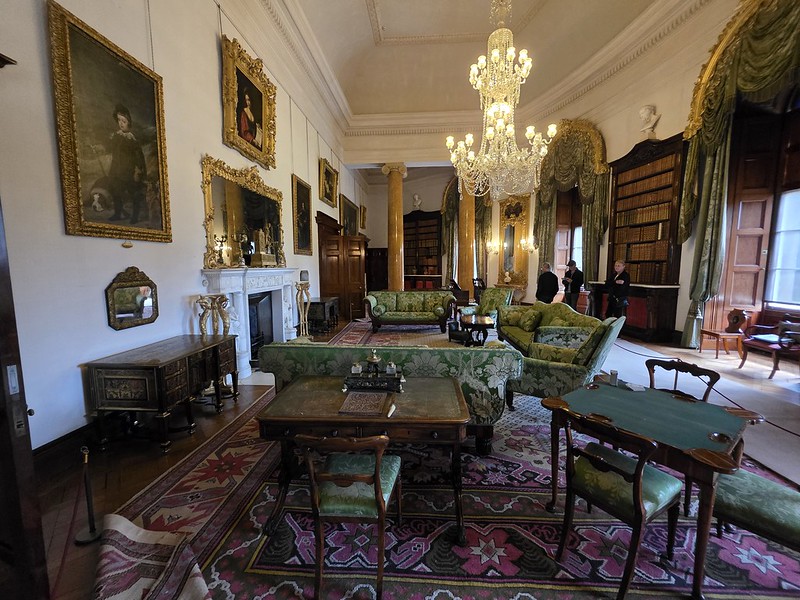
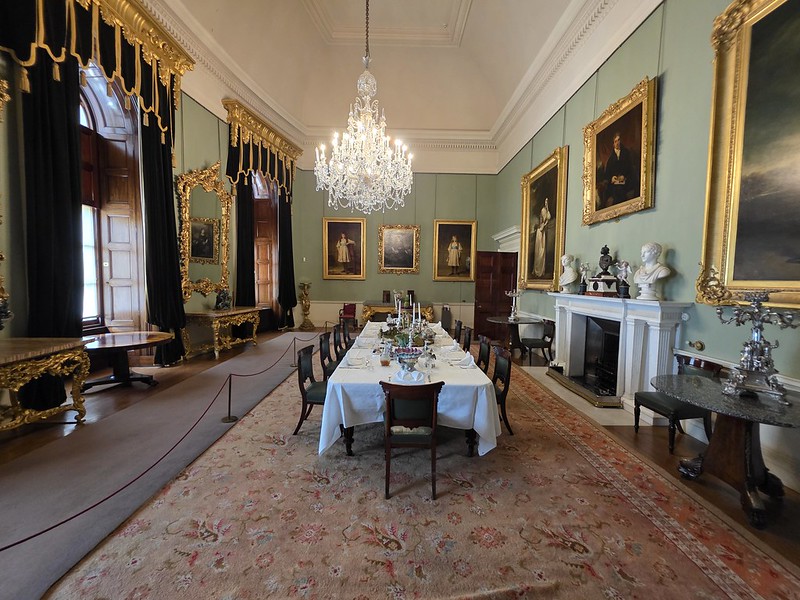
    Liam and I popped into Ickworth House on the way back to Norwich and I realised that I hadn’t visited here for 40 years. I don’t wish to linger on this thought as it doesn’t fit the obvious truism (obvious to me) that I’m a millennial.

    20250413_135433

    The parkland in front of the property.

    20250413_125722

    The rather nice second hand bookshop, but I restrained myself from buying anything.

    20250413_133805

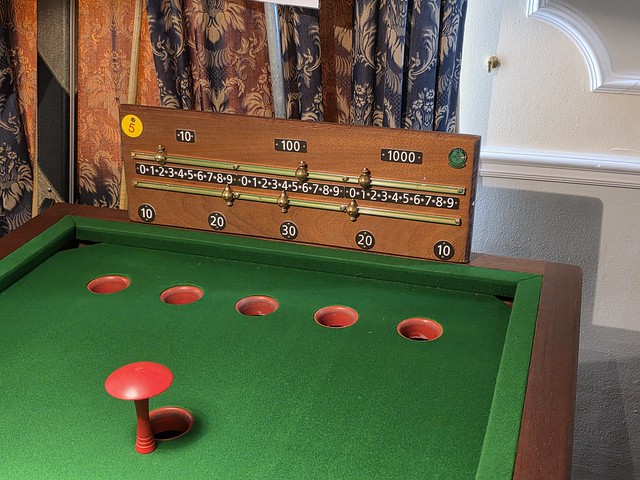
    Liam playing bagatelle, which is likely a forerunner of bar billiards. On that point, I haven’t yet mentioned in detail my day at the World Championships, I’ll get to that soon hopefully… Although there’s a lot of stuff on this blog I’m meant to be getting around to.

    20250413_132419

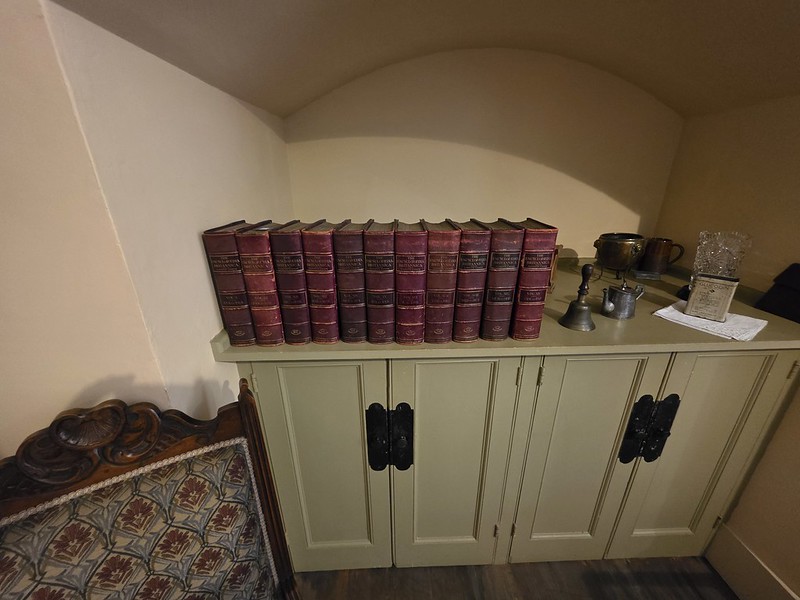
    I loved that they’ve put books into lots of niches around the house. If I had a large property, which is unlikely and a bit unnecessary, I’d likely do something similar and the situation would soon get out of control. Liam commented something similar, but I ignored him.

    Anyway, to set the timeline here:

    1779: Frederick Hervey (later the ‘Earl-Bishop’) inherits the Ickworth estate.

    c. 1795: The Earl-Bishop commissions initial Neoclassical designs for a new house from Italian architect Mario Asprucci the Younger. The concept is primarily for an art gallery.

    1795 / 1796: Construction begins. Irish architects Francis and Joseph Sandys adapt Asprucci’s designs and oversee the work.

    1798: The Earl-Bishop’s extensive art collection, intended for Ickworth, is confiscated in Rome by Napoleonic forces.

    1803: The Earl-Bishop dies in Italy. Construction halts, leaving the house, primarily the Rotunda, as an unfinished shell.

    c. 1821 – 1830: Construction resumes under the Earl-Bishop’s son, Frederick William Hervey (later 1st Marquess of Bristol). The main structure, including the wings, is completed. Architect John Field is involved in adapting and completing the interiors.

    1829: The 1st Marquess and his family move into the completed house. The East Wing becomes the family residence, and the Rotunda is used for display and entertaining. The West Wing remains largely unfinished.

    c. 1830: Interior fittings, including marble fireplaces, Scagliola columns, and coved ceilings, are largely complete.

    c. 1879: The 3rd Marquess commissions architect Francis Penrose for internal improvements. The Pompeian Room (decorated by J.D. Crace) and the Smoking Room are created in projecting bays off the linking corridors.

    c. 1907 – 1910: The 4th Marquess commissions architect Sir Reginald Blomfield (or possibly A.C. Blomfield) for further interior alterations, including remodelling the main staircase in the Rotunda and modernisations in the East Wing.

    1930s: Theodora, Marchioness of Bristol, renovates the servants’ quarters in the Rotunda basement, adding modern amenities like electricity and improved plumbing.

    1956: Following the death of the 4th Marquess, the house, contents, park, and endowment are transferred to the National Trust via HM Treasury in lieu of death duties. The Hervey family retains a lease on the East Wing.

    1998: The 7th Marquess sells the remaining term of the lease on the East Wing to the National Trust, ending the family’s residential connection.

    2002: The East Wing is converted and opens as The Ickworth Hotel, operated under lease from the National Trust. Childs Sulzmann Architects are involved.

    2006: The previously unfinished West Wing is completed and opened as a visitor centre, restaurant, shop, and events venue, in partnership with Sodexo Prestige. Hopkins Architects are associated with this phase.

    2018 – 2020: The major ‘Ickworth Uncovered’ conservation project takes place, involving the complete re-roofing of the Rotunda dome and East Link corridor.

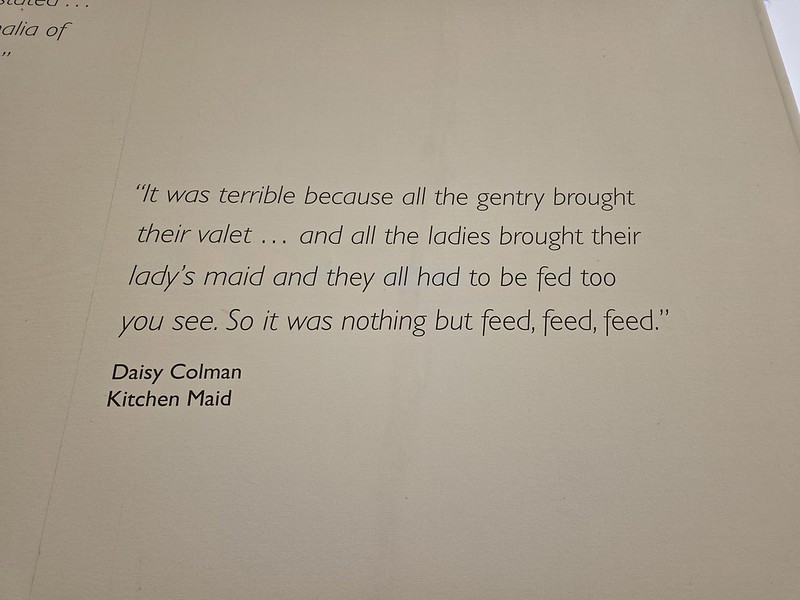
    As is my wont, I’ll post numerous other things separately about the property, but I was genuinely very impressed with the volunteers here who were pro-active, engaging and keen to tell visitors about the history of the building. As I like wittering on about history, this did extend our visit somewhat, but it’s always a delight when there’s an enthusiasm from everyone involved with the project. The navigation route around the house was also carefully laid out and it was clear where to go, there has been a lot of thought put into this entire operation.

  • Lidgate – Lidgate Star Census from 1911

    Lidgate – Lidgate Star Census from 1911

    [I’ll come back and add more to this post as I find out more….]

    Old census returns are fascinating things, this one is from the Lidgate Star in 1911. It’s the Leach family, who were a couple who had four children, all female, although two children had already died. William and Margaret had married in Newmarket in the final quarter of 1893.

    William James Leach (born in 1867)

    Margaret Leach (born in 1867)

    Margaret Leach (born in 1895)

    Winifred Leach (born in 1896)

    Dorothy Leach (born in 1898)

    Florence Leach (born in 1899)

    William Crick (born in 1874)

    William and his family had also been at the pub at the 1901 census, with William Crick being Margaret’s brother.

    William James Leach died on 6 August 1947 at the age of 81.

  • Lacons – Meet the Brewer at the Lidgate Star

    Lacons – Meet the Brewer at the Lidgate Star

    20240321_193755

    The latest in the series of ‘meet the brewer’ events at the Star was with Adam from Lacons. Although not the brewer himself, he was still knowledgeable and enthusiastic about beer and the history of Lacons. There was also a tasting of three beers from the brewery, Encore, Old Nogg and Yarmouth Strong.

    Lacons was founded in 1760 and started in the sunlit uplands of Great Yarmouth in Norfolk. It has some longer origins even than that, beginning in 1640 as a brewery which was owned by the Ward family, passing by marriage into the hands of Paul Lacon. The brewery was a large employer in the nineteenth century with a large estate of pubs particularly in Great Yarmouth, but also across East Anglia. All was well, or mostly well, until Whitbread decided that they would acquire Lacons in 1965, paying £3.2 million for it and they acquired 354 pubs into the bargain. Excited at their new purchase and keen to do more with it, they promptly shut it in 1968. Sub-optimal. However, this amalgamation of brewing had been happening for some time and Lacons themselves had purchased the Diss Brewery in 1897 and shut it down.

    But, back to the more recent past, the brewery was brought back in 2009 and the new owners were able to use yeast samples from the National Collection of Yeast Cultures (there’s some forward planning there, setting that up in the first place) to recreate some of the beers. That was useful with the introduction of the brewery’s heritage range, including Old Nogg (a beer name that has been brought back) and Yarmouth Strong. On which point, I thought for reasons of professional research that I should try both of these beers.

    Starting with the Old Nogg, this recipe is from 1926 and let’s just say that they evidently knew how to brew beer back then. There’s a bit of chocolate and liquorice to the taste, with a rich aftertaste. This is my favourite beer from the Lacons range so far, I was suitably impressed.

    This is the Yarmouth Strong and my beer writing skills were rather limited on Untappd as all I could note is that it was like a strong bitter. I’m not likely to win any beer writing awards soon I’m afraid with that sort of description, although apparently my description wasn’t inaccurate. It’s quite a weighty number at 7% ABV and it’s based on a recipe from 1916.

    It was an enjoyable evening to watch proceedings, and I was impressed at how some others remembered some trivia from the evening and won themselves some drinks.

    Finally, as part of my riveting blog content, I’ll see if Adam will do a little Q&A for the blog as well, watch this space.

  • Lidgate – Lidgate Star and Any Questions in 1957

    Lidgate – Lidgate Star and Any Questions in 1957

    I’m always intrigued as to news articles about the Star and in the Bury Free Press on 21 June 1957 it was reported:

    “History was made in Lidgate on Thursday when a panel of parsons visited the Star Inn in Lidgate to conduct an “Any Questions” session. This was quite an innovation in the village and the room in which it was held was well filled. The questions referred to the difference between the denominations, varying dates of Easter, the right age for confirmation and the untidyness of some graveyards. Major General RH Dewing was questionmaster”.

    I’m not sure which room they were in, but I like the idea of the religious debate that would have taken place in the pub. Major General RH Dewing (1891-1981) was an interesting character and his service history was:

    1931-09-05 – 1933-10-01 General Staff Officer 2 Southern Command
    1934-XX-XX – 1935-XX-XX Attending the Imperial Defence College
    1936-04-03 – 1937-09-30 General Staff Officer 1, War Office
    1937-10-01 – 1939-09-04 Instructor at Imperial Defence College
    1939-09-05 – 1940-10-26 Director of Military Operations & Plans, War Office
    1940-10-27 – 1941-06-20 Chief of Staff Far East Command
    1941-11-14 – 1941-12-19 Specially employed
    1942-02-22 – 1942-07-26 Head of the British of Army Mission Washington
    1942-07-27 – 1942-10-21 Senior Army Liaison Officer in Australia
    1942-10-22 – 1944-09-01 Head of Army-RAF Liaison Staff Australia
    1945-XX-XX Head Supreme Headquarter Allied Expeditionary Force in Denmark
    1945-XX-XX Member British Military Commission in Berlin
    1946-05-06 Retired

    There’s a much longer detail of his life at http://www.badwellashheritage.co.uk/badwell-ash-soliders/dewing-richard-henry/, I imagine that he would have been an interesting chair and questionmaster of the meeting. I doubt that the Easter question will ever be settled, the complexity of it is explained well at https://en.wikipedia.org/wiki/List_of_dates_for_Easter. Even at a location as auspicious as the Star, it would be unlikely to get any agreement on changing the current system.

  • Lidgate and Dalham – Old Suffolk Road

    Lidgate and Dalham – Old Suffolk Road

    My posting frequency, and indeed plan to restore a heap of the missing images on this blog, has been a little sub-optimal recently if I’m being honest. I hope to fix that a little now, so riveting content will come pouring out. And what more fascinating place to start than the Old Suffolk Road? It’s the straight line through the middle of the above map, whilst the road had evolved to go through the village of Dalham. It intrigued me as the initial route is a far more sensible one and it also appeared to be higher up, suggesting an ancient route. There are also Roman roads in the area and this track is certainly fairly straight, even though it’s now just grass and there’s no firm surface.

    It’s more evident from this more recent Ordnance Survey map from the 1950s (this is out of OS copyright, I’m not randomly stealing their maps).

    20240319_113757

    There’s the northern entrance to it, the width of a road but no evidence that it has even been a firm surface.

    20240319_113818

    It’s certainly a sizeable trackway.

    20240319_113944

    The view over the local countryside, including the windmill at Dalham.

    20240319_115956

    It started to become evident from this that the pathway was an ancient route.

    20240319_120126

    And then it suddenly stops dead and walkers have to cross the field to rejoin the road. It says that it’s a permissive path (well, permitted path here), although there appears to be evidence that this was a footpath and should perhaps be registered before the 2026 deadline, but there don’t appear to be any access issues here anyway.

    20240319_120441

    The tree line to the right is where I walked, straight ahead is where the path stops and to the left there’s still some evidence from the ground where the track went, although it’s hard to see in this photo. What’s also interesting (well, to me anyway) is that this stretch of track is the border between Suffolk and Cambridgeshire, so there must be some historic element for this route for that to be the case.

    This route is very near to the Icknield Way, the ancient trackway that went from Norfolk to Wiltshire, much of which is today the Ridgeway and Peddar’s Way. I can’t find out anything in detail yet about the origins of this route, but I’ve decided that for the moment I’m placing it as a pre-Roman road which was an ancient route that has just happened to survive in part in today’s landscape. Quite why much of it hasn’t been ploughed up, I’m not entirely sure, although that’s what has happened to the southern end of it nearer to Lidgate. As usual, I’m over-thinking this no doubt, but I find it all rather intriguing to think that I walked along a route that has been in use for thousands of years.

  • Humber Doucy Brewery – Meet the Brewer at the Lidgate Star

    Humber Doucy Brewery – Meet the Brewer at the Lidgate Star

    20240112_194508

    Meet the Brewer events are some of my favourite things and I’m delighted that the Lidgate Star has two a month of them. We have a lot of very lovely and supportive brewers in the area who are really keen to engage with pubs. John from Humber Doucy brewery was at the Star talking through six of his beers. One of the nicest brewers you could imagine, the brewery are a father and son team based in Bacton in Suffolk. Their brewery, which I’m going to get to soon I hope, is in a former 1950s MOT garage and it all looks very smart from the photos. The brewery name is inspired Our name is inspired by a road in Ipswich, said to have been named by French prisoners of war in the 1800s.

    20240112_202822

    My favourite beer of the evening was the oak barrel aged porter, a rich and decadent little number with plenty of richness. They also have a more usual porter, a nettle & elderflower saison, a red ale and a bitter, all intriguing and interesting. John talked through each beer, spoke about the brewery which all proved entertaining. Their web-site is at https://humberdoucybrew.co/ and their Instagram is at https://www.instagram.com/humberdoucybrew/. The pub’s next two meet the brewers are Mauldons and Three Blind Mice.

  • Beccles – 2023 Beer Festival

    Beccles – 2023 Beer Festival

    20231109_164353

    Emma, from the formidable Boudicca Brewery, kindly invited Alex, Julian, Gareth and myself to the trade session of Beccles Beer Festival where she had donated a barrel of beer. We were confronted by quite large crowds at Norwich bus station which transpired to be because the bus before hadn’t turned up, which was acceptable since it was caught up in a bomb incident outside Lowestoft Aldi. Sub-optimal for all concerned.

    20231109_164849

    The bus appeared and Emma and I managed to get seats. Unfortunately for Alex, the bus soared past him at his bus stop as it was so busy, but Emma made sure he knew we were on it by jumping up and down whilst waving out of the bus window. I didn’t say anything.

    20231109_175353

    Safely in Beccles, we thought we’d get some food. I got a battered sausage and chips from Beccles Fish Bar and I have to say, this was really rather lovely for just over £4. The sausage was a proper butcher’s one rather than some plastic arrangement which is all too common in chips shops, whilst the portion of chips was generous and I only just finished them. I was also impressed at the way they were wrapped, but I’m easily pleased. The service was friendly and I was pleased to be able to explain that they were surprisingly busy with unwrapped orders because the beer festival was taking place a couple of doors down.

    20231109_180941

    The beer glasses which took me back to being on glasses and tokens at Norwich Beer Festival a couple of weeks ago.

    20231109_180946

    The glass was £3 and I later decided to keep it, even though I’ve evidently got enough glasses. And paying £3 in total didn’t seem bad value to me. There’s a free programme that comes with it, although I accidentally left that behind which I didn’t mean to.

    20231109_181114

    Hmmm, a blurry photo of the bar area. Anyway, the set-up was that the beers were all free as they were donated by the brewers. The event is independently organised and takes place at Beccles Public Hall and Theatre. It got quite busy later on and everything felt well organised.

    20231109_181130

    The green ones were free, whilst the yellow ones were only being put on for the main part of the festival this weekend.

    20231109_200450

    Gareth turned up with sweets, he’s very reliable at that. Julian also drove due to some earlier car purchase issues, which had the advantage of meaning we could get a lift back and stay at the festival a little longer.

    20231109_211245

    Cheers! As for the beers I tried, they’re listed on my Untappd account for anyone interested. Form an orderly queue and all that. The best beer was of course Emma’s Golden Torc, but I was also quite impressed at the Beccles Best, a very sessionable beer with a pleasant toffee finish.

    20231109_213902

    Julian decided he’d treat himself to a sausage roll, freshly microwaved.

    20231109_231445

    And back in Norwich, I was frogmarched into the King’s Head by Emma and Julian, just in time to wish Oli a happy birthday and watch Oscar acquire himself a bottle of wine. Emma and I quickly played two games of bar billiards, with the final score being 1-1, so that seemed fair. As I wrote about the other day, my own bar billiards league career is over for the year. Then there was much gossip and crisps to take me into the early hours of the morning.

    All told, a lovely evening at the beer festival and many thanks to Emma for the invite! That’s three things she’s taken me to this year, Cambridge Beer Festival, Peterborough Beer Festival and Beccles Festival and I’ve loved them all.

  • Moulton – Packhorse Bridge

    Moulton – Packhorse Bridge

    20231103_134857

    Obviously my favourite bridge is the new one at Great Yarmouth that my friend Liam is building (or whatever he’s doing there), but this comes a close second. It’s the rather beautiful Grade II* listed packhorse bridge at Moulton, near Newmarket in Suffolk. I’ll quote what Wikipedia note in terms of the definition of packhorse bridges:

    “A packhorse bridge is a bridge intended to carry packhorses (horses loaded with sidebags or panniers) across a river or stream. Typically a packhorse bridge consists of one or more narrow (one horse wide) masonry arches, and has low parapets so as not to interfere with the panniers borne by the horses.”

    Being unsure exactly what classed as a packhorse bridge, I consulted the book ‘A Guide to the Packhorse Bridges of England’ by Ernest Hinchliffe and he didn’t disappoint. He wrote:

    “Of first importance is width. Before the eighteenth century, bridges were described either as horse bridges or cart bridges and the dimensions and manoeuvrability of carts must have been important in distinguishing the one from the other. Making allowance for a wobbly vehicle drawn by an erratic animal on a rough surface, it is unlikely that a cart bridge would be less than six feet wide. Age too is important. The packhorse transport system was slowly killed by the canals and by wheeled traffic on turnpike roads and since the Turnpike Act was passed in 1663 and the last Turnpike Act disappeared in 1895, it was a lingering death.”

    The author is happy with Moulton’s bridge passing muster and he notes that it is often the one used in photographs of packhorse bridges. Although I’d add to the note that English Heritage think it might not be a packhorse bridge as it could take carts, but my expertise on this matter means I’m happy to settle with Hinchliffe’s description.

    20231103_134939

    I would add that the water isn’t normally this deep, but heavy rain in the area caused some flooding along the River Kennett when Bev and I popped to have a little look at it. I’d add that Bev managed to find a fish that had managed to get caught up in a puddle, so her good deed for the day was throwing it back into the river. Anyway, I digress.

    20231103_134822

    The view from the bridge, there’s a ‘Danger – Deep Water’ sign there to stop anyone from driving down the river.

    20231103_134636

    The water was nearly two foot deep, although a couple of large vehicles did plough through across the ford whilst we were there. It felt a bit like watching something from Rufford Ford which became something of a minor TikTok sensation for a short while.

    20231103_134605

    Given how high the river was, a bridge here was most helpful for our purpose of visiting the village’s church. The stone bridge dates to around the fourteenth or fifteenth century and it was part of a packhorse route between Bury St Edmunds and Cambridge. Hinchliffe, in his packhorse book, notes though that “the notice alongside the bridge quotes an early fifteenth century date, but since Moulton was a market town at the end of the thirteenth century, it is possible that there was a bridge on the site to serve local market traffic before the current structure”. There was a similar bridge in nearby Kentford, but more of that in another post.

    Historically, the bridge was financed by the Church and Bridges Estate which had been established in the early sixteenth century. Although they must have done a decent job for some centuries given that it’s still there, the West Suffolk county planning committee met in June 1962 to authorise expenditure of between £45 and £50 to repair the bridge. At the same time, they asked the Ministry of Works to take over the cost of repairing the bridge from the church charity.

    The Newmarket Journal reported in March 1961 that the bridge had been scheduled as an ancient monument by the Ministry of Works, with the newspaper noting that “it is one of the best known ancient bridges in the county”. Today, it’s certainly something special and it’s remarkable that this has survived in its medieval form.