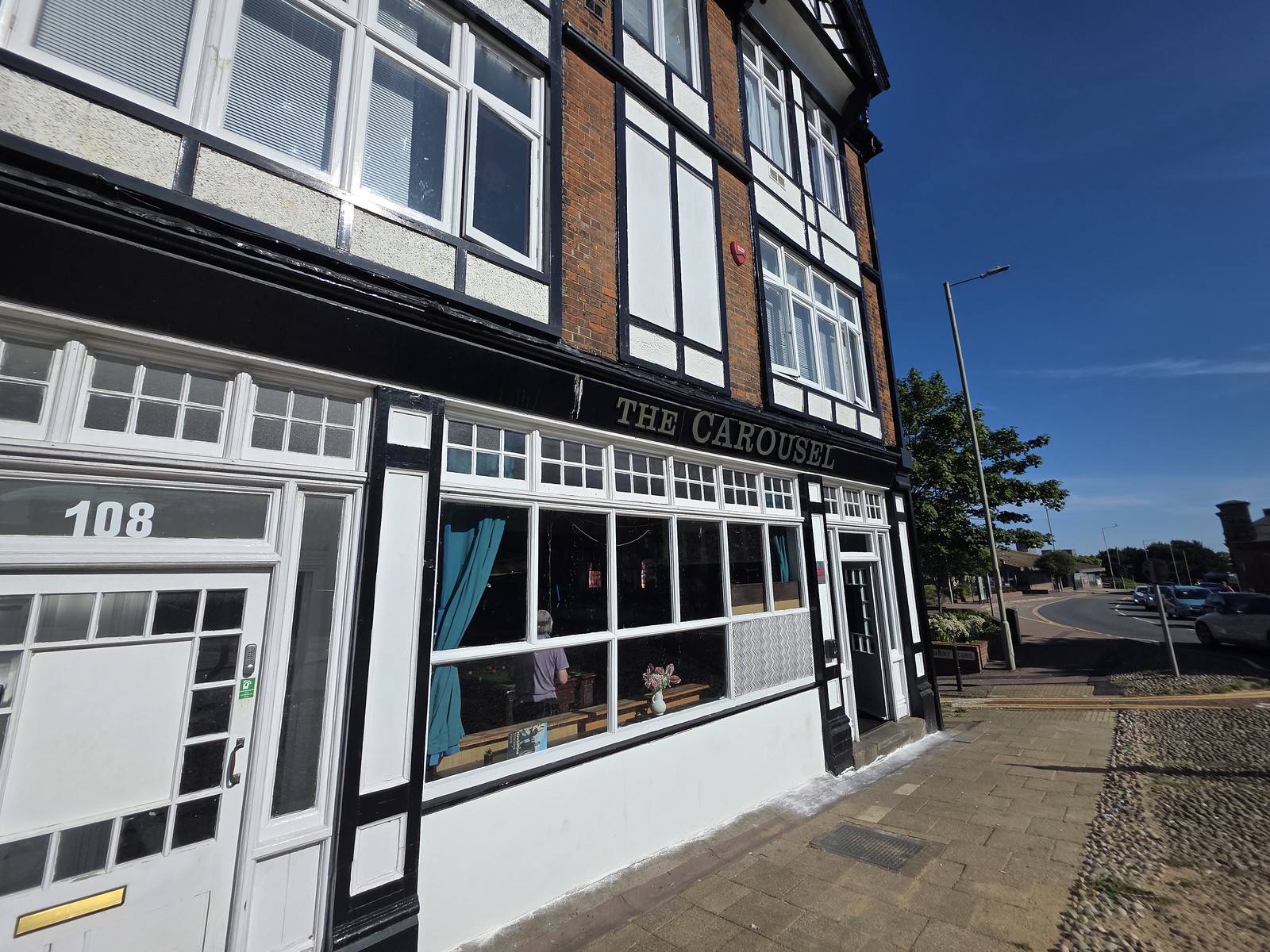
The sixth pub of our onerous Lowestoft study day was the Carousel and this is another pub where the history is rather more challenging than ideal to uncover as it has changed its name on numerous occasions. It started off at the Herring Fisheries (the pub is located by Herring Fishery Score), then became the Spread Eagle Hotel (also being known as the Spreadeagle and the Spread Eagle), then becoming the Carousel, then becoming the Wheatsheaf and then becoming the Carousel again a few years ago. The building dates to the 1880s and I suspect is built on the same site as a previous licensed premises. In the late 1880s, the pub was operated by Youngman & Preston and they kept it until they were acquired by Lacons in 1919 and the original site of Youngman & Preston’s brewery is located where the Bird’s Eye factory stands today.

Here’s the pub in the 1880s, it’s the PH located just above the word ‘Herring’ and that score is still there today, albeit rather modified. The town’s police station is also just around the corner, handy if there are any issues that need resolving……
This article was in the local newspaper in 1903:
“LOWESTOFT LICENSING CASE DISMISSED.
“TURNED QUEER” ON GETTING INTO THE AIR.
At the Lowestoft Police-court on Thursday, before Mr. W. Mobbs and other magistrates, Frederick R. Golder, landlord of the Spread Eagle Hotel, High Street, Lowestoft, was charged by Superintendent Shipp with permitting drunkenness on his licensed premises on April 14th. Mr. Cecil Taylor (Messrs. Chamberlin & Taylor) appeared in support of the information, and Mr. E. A. Bracey of Norwich, was for the defence.
William Wright, pawnbroker’s manager, of 143, High Street, said on the afternoon in question he saw a man named John Rattle, who pawned a pair of boots. Witness advanced him 7s. 6d. for them. Rattle was perfectly sober, and witness gave the question in a proper manner.
George Lambert, labourer, in the employ of the Lowestoft Corporation, deposed to seeing Rattle in the Spread Eagle twice during the afternoon. He went in and came out twice, and about the second time witness followed him and finding constable.
Mr. Eastaugh – Do you often go into public-houses?
Witness – Well, sometimes when I am on my rounds I go and have a little refreshment.
Mr. Eastaugh – But you went into the public-house twice during the afternoon.
Witness – Well, it was just after the holidays, and I had a little extra.
Mr. Eastaugh – And you work for the Corporation?
Witness – Yes.
Mr. Eastaugh – I’ll bear that in mind.
Cross-examined – Witness was present when a policeman came in and told the landlord not to draw drink for a certain man. That man was not Rattle.
John Rattle said he went to the Spread Eagle after pawning the boots, and treated several persons standing in the bar. He had two half-quarters of Holland’s gin. Previous to going to the pawnbroker’s he had half a quartern of gin at the Harbour Hotel. He had been a teetotaller for some months but was recommended to take gin. He could not say what time it was when the policeman picked him up. He felt all right in the house, but turned queer when he got into the air. He went down a back street instead of going home, and fell at the top of Police Station Road. He fell sick when in the street.
Police-constable Wright stated he saw Rattle at 3.20 and he was then sober. He next saw him at five minutes to five, when he went into the Spread Eagle to warn the landlord about another man. Rattle was then leaning on the counter with his back to witness. He could not say whether he was sober or not. He said nothing to Rattle. Witness had left the house about five minutes when Rattle went past him. He was drunk and rolling down the street. He went into Milton Road, and witness followed him. When at the top of Police Station Road he fell, and as he was helpless witness took him into custody. Witness afterwards saw the landlord, who stated that Rattle went into the house drunk, and he did not serve him. He further intimated that the man had only just walked into the house, and thought witness had followed him in.
Cross-examined – Golder told him that he had only just come in from his business. He was working at a desk at the time.
Mr. Bracey then addressed the Bench, and said he thought the magistrates would be satisfied that his client did not permit drunkenness on the premises. The constable went into the bar, but did not see anything in the condition of the man to draw the landlord’s attention to him.
The defendant was sworn, and stated that he had been in business in Lowestoft for between three and four years. On the day of the charge he went home about 4.45. The policeman warned him about serving a certain man. Witness saw Rattle near the counter, and thought at first that the policeman was referring to him. Witness took the precaution to order the man out. Witness could not say if the man had been in the bar earlier in the afternoon, as he did not go in till about 4.30.
Chas. Clarke, basket maker, of 7, Jacob’s Street, said he went to the Spread Eagle about four o’clock. The landlord was not present then. A little before five Rattle came in, and the policeman behind him. The defendant ordered Rattle out, and did not serve him.
Cross-examined – He could see Rattle was drunk, and thought the policeman would draw the landlord’s attention to him.
George Annis, labourer, of White Horse Street, spoke to going to the public-house about three o’clock. The landlord went in over an hour later. Witness then confirmed the statements of the last witness.
George Skittall went into the house at 2.25 and remained till five. Rattle went in at 4.55, and was not served with drink.
Police-constable Ward Rattle went into the bar about half-past four. Rattle ordered something, but the landlord did not draw anything for him.
Police-constable Warner, re-called, said he did not see anybody go into the house that was drunk.
The magistrates retired, and having consulted a quarter of an hour, dismissed the case.”
It all sounds rather confusing, but I’m sure that it was a handy reminder for pubs in the town not to serve drunks, or at least, not to let the police see them do it. A newspaper article published in the Eastern Evening News in 1909 read:
“ASSAULT ON LOWESTOFT POLICEMAN.
NORWICH MAN SENTENCED.
At Lowestoft Police-court to-day, before the Mayor and other magistrates,
Edward Woods alias Henry Howes, rag and bone collector, of Norwich, was charged with assaulting Police-constable W. Pearson whilst in the execution of his duty at Lowestoft on the 3rd instant.
Police-constable W. Pearson said that he was called to the Spread Eagle Hotel to eject the prisoner and three other men. Witness asked the proprietor if he had requested prisoner to leave, and he replied that he had. Witness then asked him several times, but he refused to go. Witness got hold of one of the men to eject him, whereupon prisoner said, “No, you don’t,” and struck at witness until he got further assistance. When they were outside prisoner jumped on to witness’ back and pulled him to the ground. After witness had handcuffed his prisoner, the present prisoner again obstructed him and tried to get the man away.
Martha Armes, barmaid at the Spread Eagle, also gave evidence, and said that prisoner and some other men were causing a disturbance in the bar of the hotel. They had been refused drink owing to their condition. When Police-constable Pearson tried to eject one of the other men, the prisoner tried to strike the officer. When they were outside prisoner again obstructed the policeman when he was struggling on the ground with another man. Whilst witness was assisting the constable, prisoner struck witness in the left eye, and also kicked another barmaid, who was endeavouring to get prisoner off the constable.
Prisoner—Did I strike you wilfully?—Yes.
William Hall, landlord of the Spread Eagle, corroborated, and said that prisoner kicked witness whilst he and the barmaids were assisting the constable.
Prisoner here said he was telling the man who was in the constable’s charge to go quietly. He called Mr. E. Tuttle from the Bench as a witness, and asked him if he saw him (prisoner) strike the constable. This Mr. Tuttle said he did not see him do.
Prisoner, who was characterised by Superintendent Shipp as an “undesirable,” was sent to prison for twenty-one days’ hard labour.”
There was quite a lot of drama along these lines that took place here, I imagine Lowestoft was quite a challenging place at the turn of the last century with many “undesirables” lurking about.

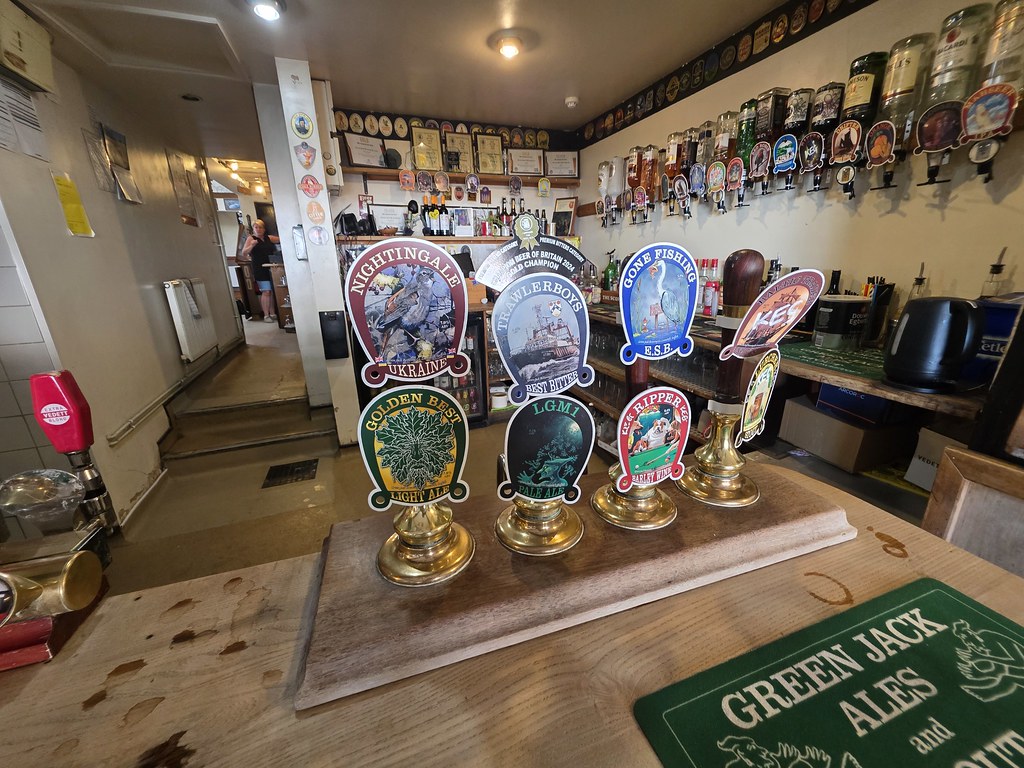
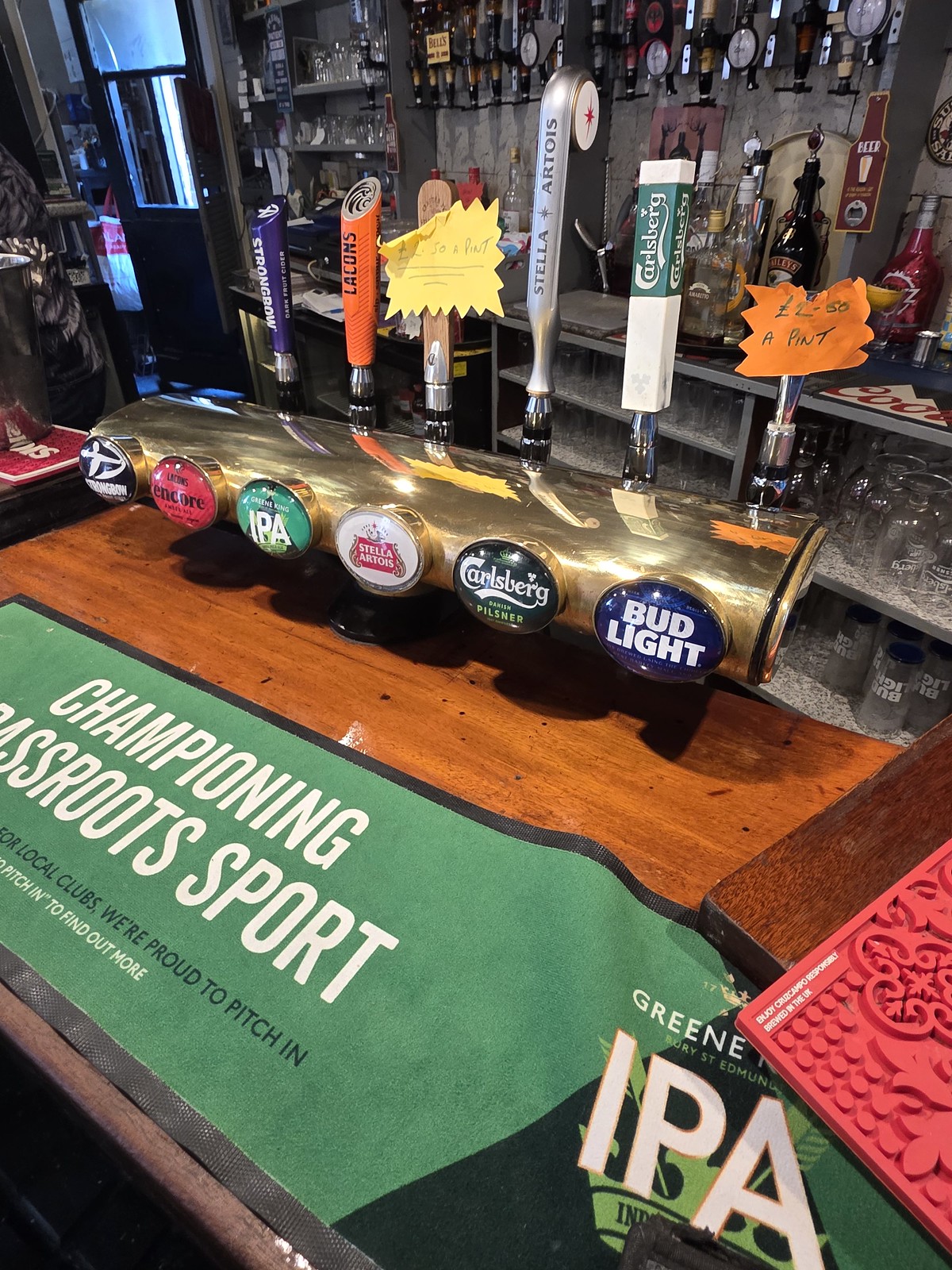
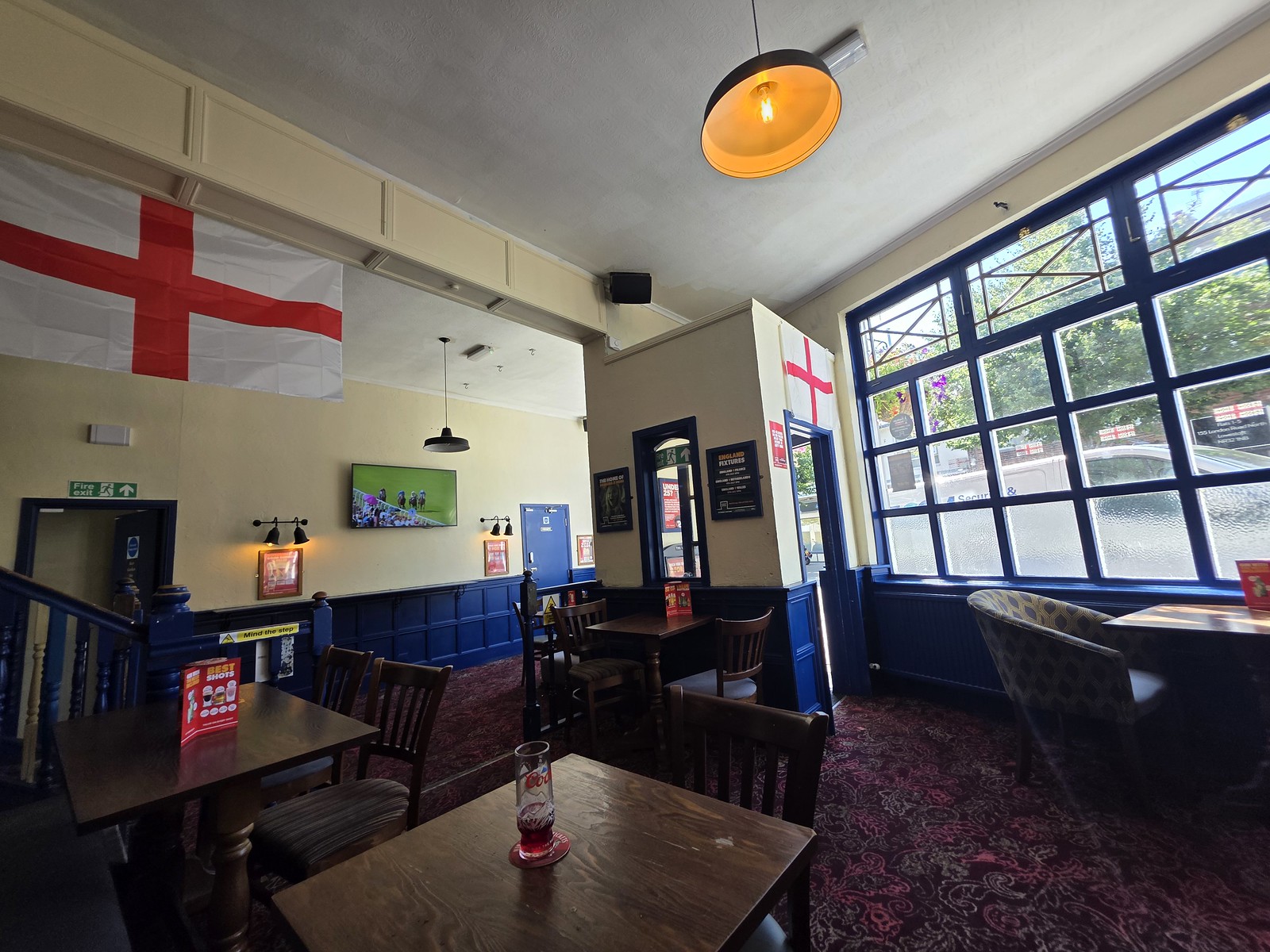
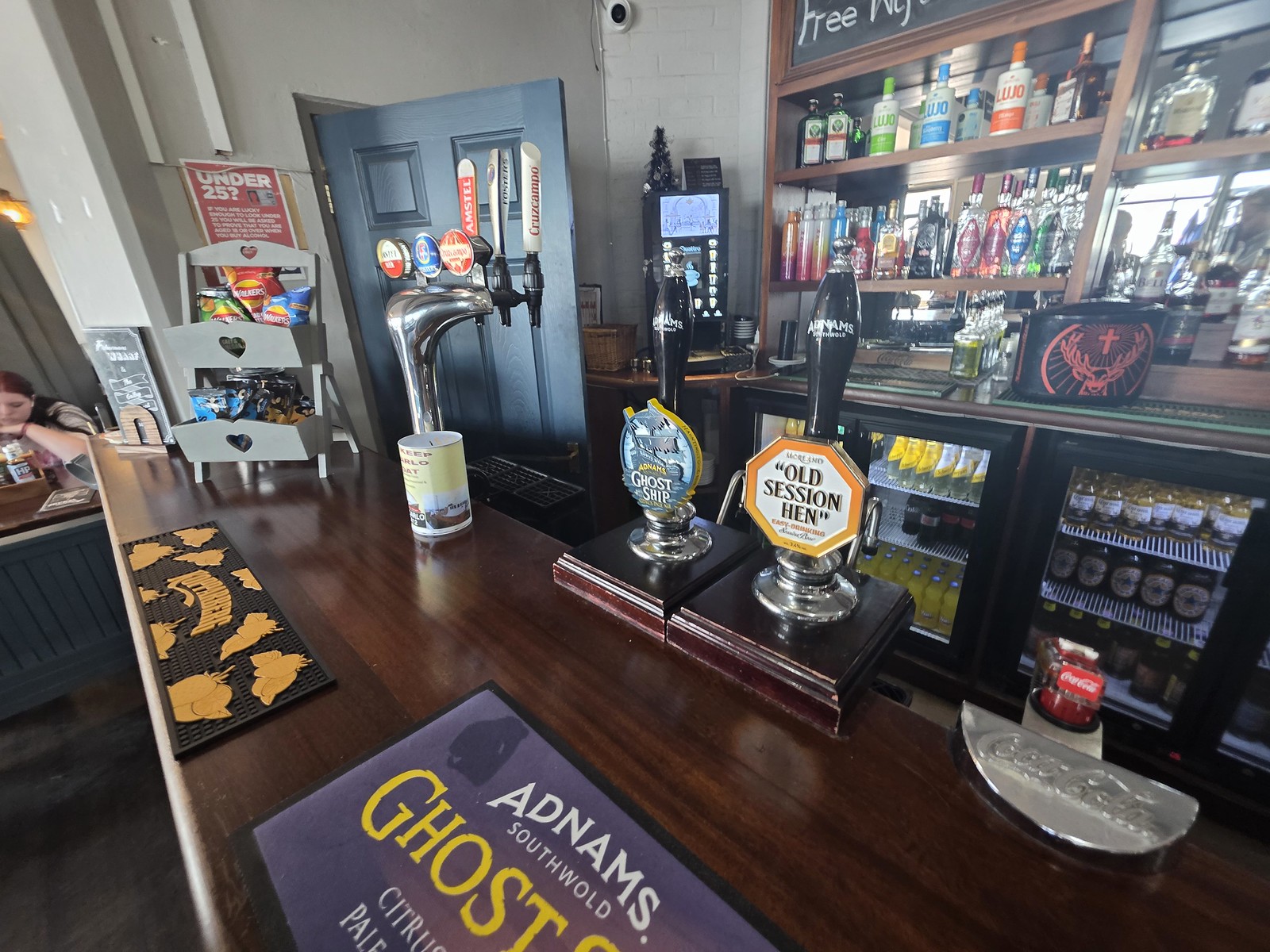
Firstly, apologies for the lack of photos in this post, the excitement of seeing Kieron rather distracted me. This photo is a zoomed in version from the one below, showing some of the beers that were available. The pub is large with views out to the North Sea and I had forgotten that there’s an exciting set of stairs to reach the downstairs toilet. Anyway, that’s about the limit of my witterings about the pub since I wasn’t paying much attention to them, but I do get easily distracted when talking to interesting people. There’s a pool table in the pub which I understand is well used, with music nights also taking place to surprise and delight the locals.

There were some bottled real ales available, but on these study tours we limit ourselves mostly to half pints, so I went for the John Smiths which was smooth, light and tasted as expected.
It’s a pleasant enough pub, the size meant it didn’t feel quite as vibrant as the Welcome and the Volunteer, with the service being friendly and the surroundings comfortable. The building, although not the pub business which has a lease for a few more years, went up for auction last year with a guide price of between £260,000 and £280,000, which doesn’t seem unreasonable at all given there are two decent flats located on the upper floors.

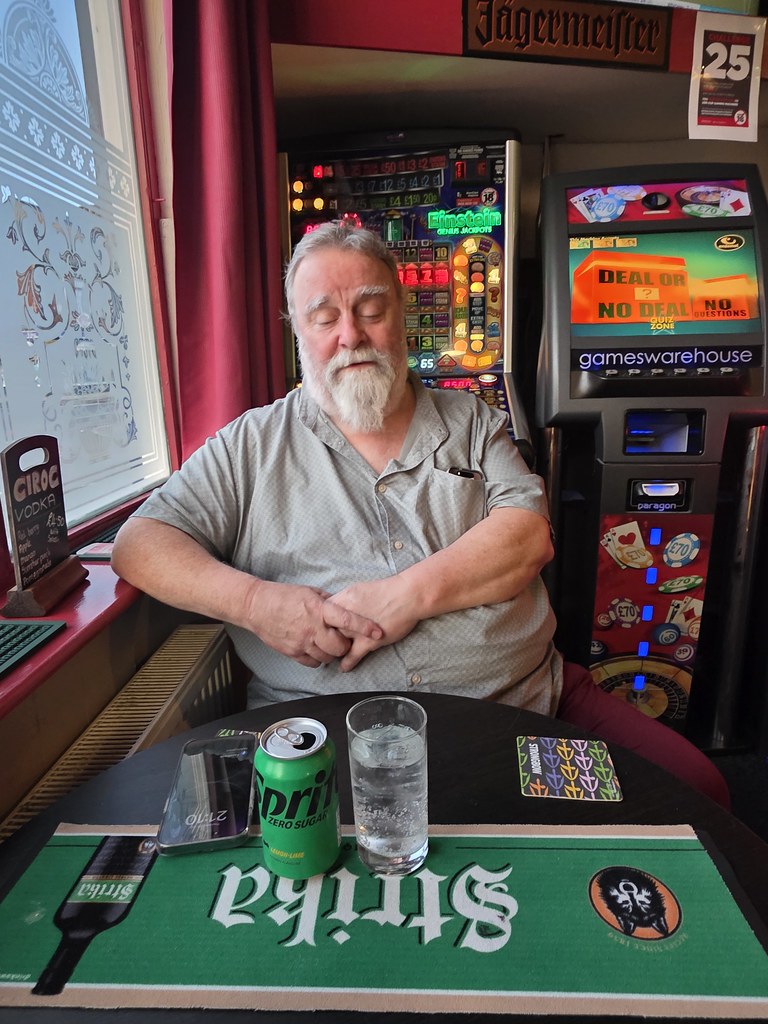
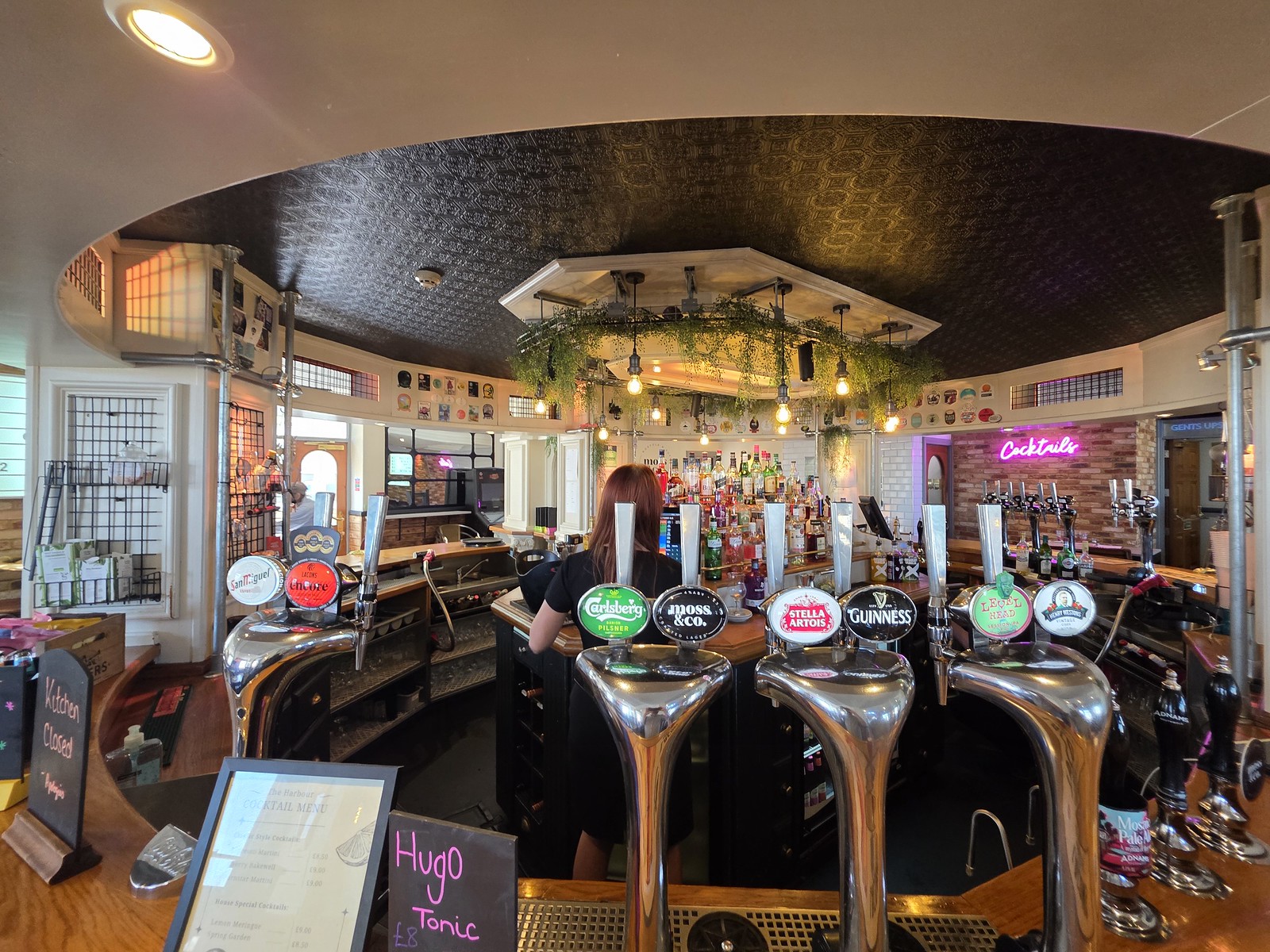
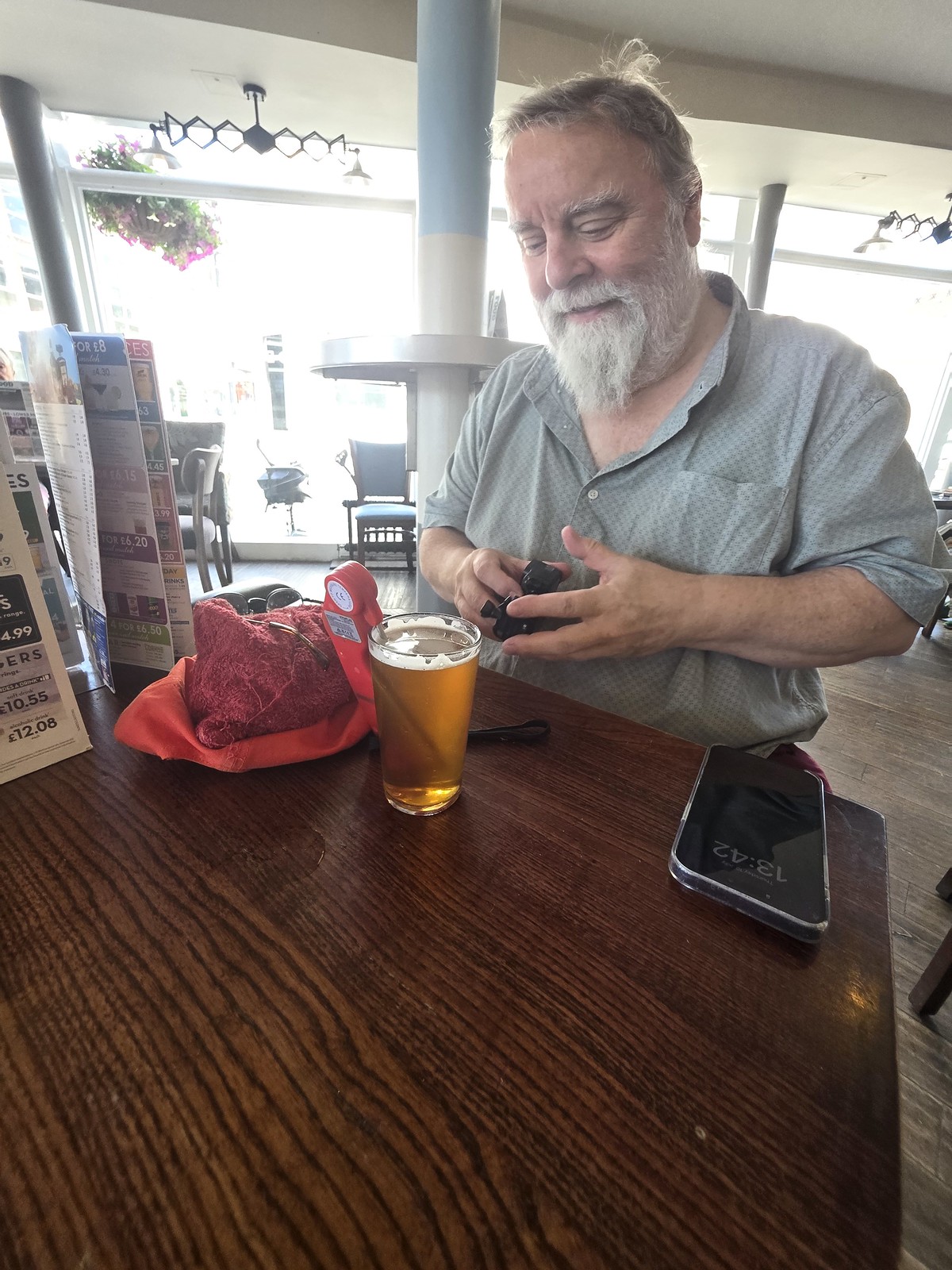
NB, as I was short of photos, Julian sent me this which he took in the pub.