Category: Wramplingham

  • Wramplingham – St. Peter and St. Paul Church

    Wramplingham – St. Peter and St. Paul Church

    Wramplingham has had a church on this site since at least the early eleventh century, but it probably has Saxon origins. The probable situation here is that the nave is the oldest part of the church, then the base of the tower and then the chancel and then the top of the tower. Views differ though to make things more complex.


    The tower with its lancet window is likely thirteenth century with a later fourteenth century octagonal top section, although some have dated the whole lot to the fourteenth century. My limited knowledge of architectural history doesn’t allow me to have a view either way…..

    The join between the tower and the nave, the latter of which dates from the eleventh or twelfth century.

    That Norman door looks out of place there on a Victorian extension, but that’s because they moved it from its previous location opposite the south door.

    And here is the plan of that, designed by Augustus Edward Browne in 1872.

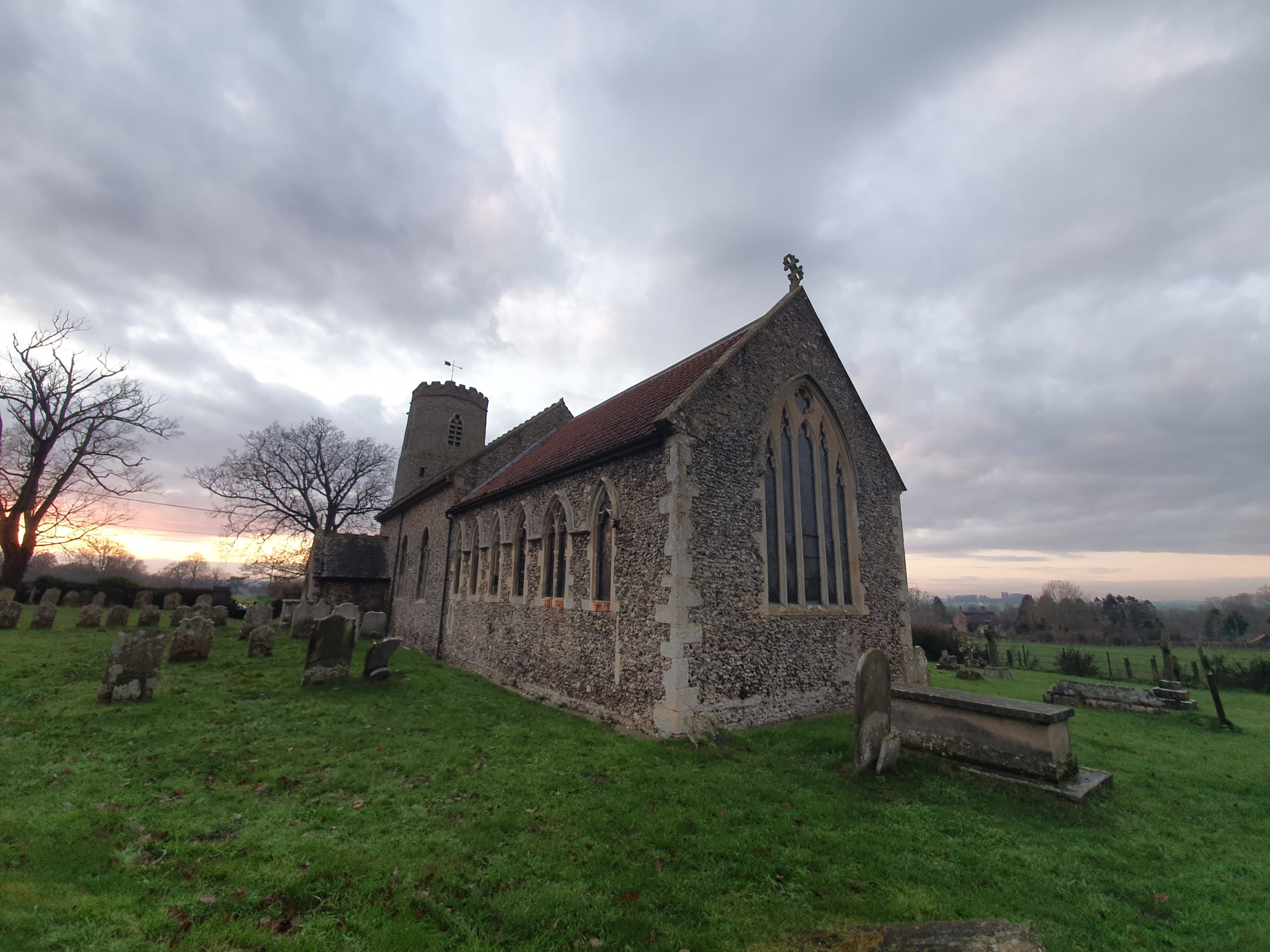
    The rather beautiful chancel (I liked it, hence the multiple photos), which must have looked quite the thing when it was installed. It’s later than the nave, dating from the mid-fifteenth century.

    Internally, looking back towards the tower, and I was pleased that the church was open when we visited.

    The quality of the chancel work is visible inside, allowing light to flood in (well, it doesn’t when you visit at near sunset to be fair).

    The former steps to the rood loft screen. There’s an article about the church by FR Barff which is located near to the entrance (in very small type) and he mentions that the rood loft survived until 1843, when it was removed by the first of two Victorian restorations. That seems to be a relatively late survival, shame it was taken down.

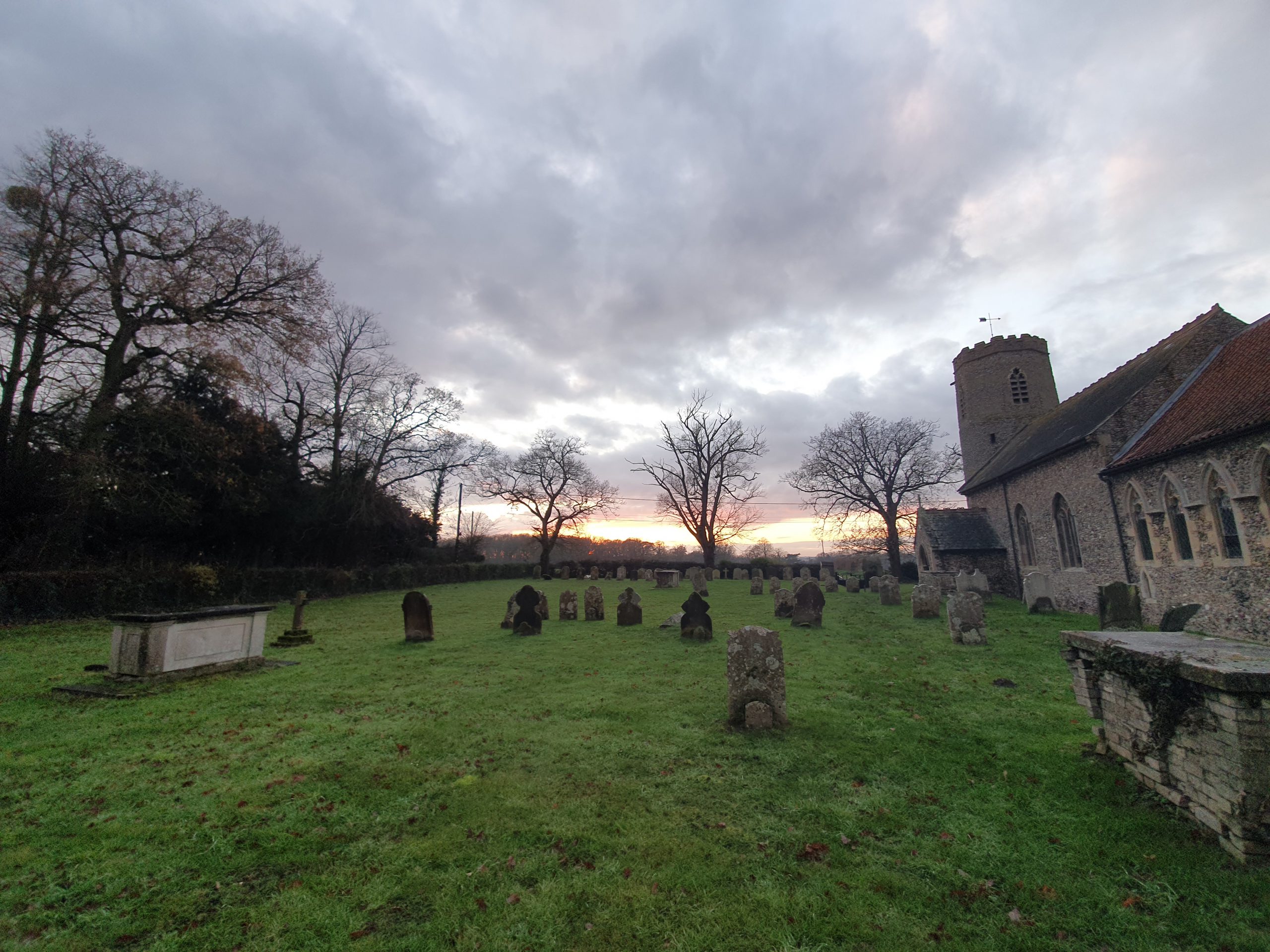
    The peaceful setting of the churchyard as the sun starts to set. There are some very neat lines of graves, particularly near to the tower, with rather large gaps nearby, so I do wonder whether some of them have been reset.

    In June 1873, the rector, Charles Philip Paul Jodrell, took the Great Eastern Railway to court on behalf of the church. The church had sold lead from its roof, which was apparently in excellent condition, and they despatched over 6 tons of it by rail. On that journey, the rail network managed to lose 8lbs of it and the church wanted that value back, so they demanded in court 8 shillings and 6 pence (about £28 today). The railway said that this was a perfectly reasonable loss given how much they carried and thought that there was no case. The judge agreed with Great Eastern Railway, but he clearly didn’t want to upset God too much and so he refused costs to be awarded to them.

    Anyway, a remote church which has retained its beauty.
  • Wramplingham – Name Origin

    Wramplingham – Name Origin

    I’m quite intrigued by the village name of Wramplingham, particularly how it hasn’t lost its ‘W’ over the years if it’s not pronounced. As an aside I’ll mention now, from 2003 until 2013, Bill Bryson lived in the village, quite a claim to fame (for the village I meant, although perhaps for him)…. Anyway, back to the village name, The Concise Oxford Dictionary of English Placenames notes:

    Wramplingham, Norfolk. Wranplincham in Domesday Book, Wramplingham in 1185. The first element is a tribal name, connected probably with words such as wramp ‘a twist’ (17th century), wrimpled (wrinkled, c.1430). It may be derived from a nickname formed from the base of these words.

    I think it’s fair to say that no-one has a clue exactly how this village got its name. It’s just that someone likely had a nickname of Wramp, and this was his homestead and that of his followers. But back to why this village name hasn’t become Ramplingham over the centuries. It seems (I had to look this up) that the ‘W’ was pronounced until sometime around the sixteenth or seventeenth centuries. As I understand, it was more of a hard ‘V’, so it might have been pronounced as Vramplingham.

  • Wramplingham – War Memorial

    Wramplingham – War Memorial

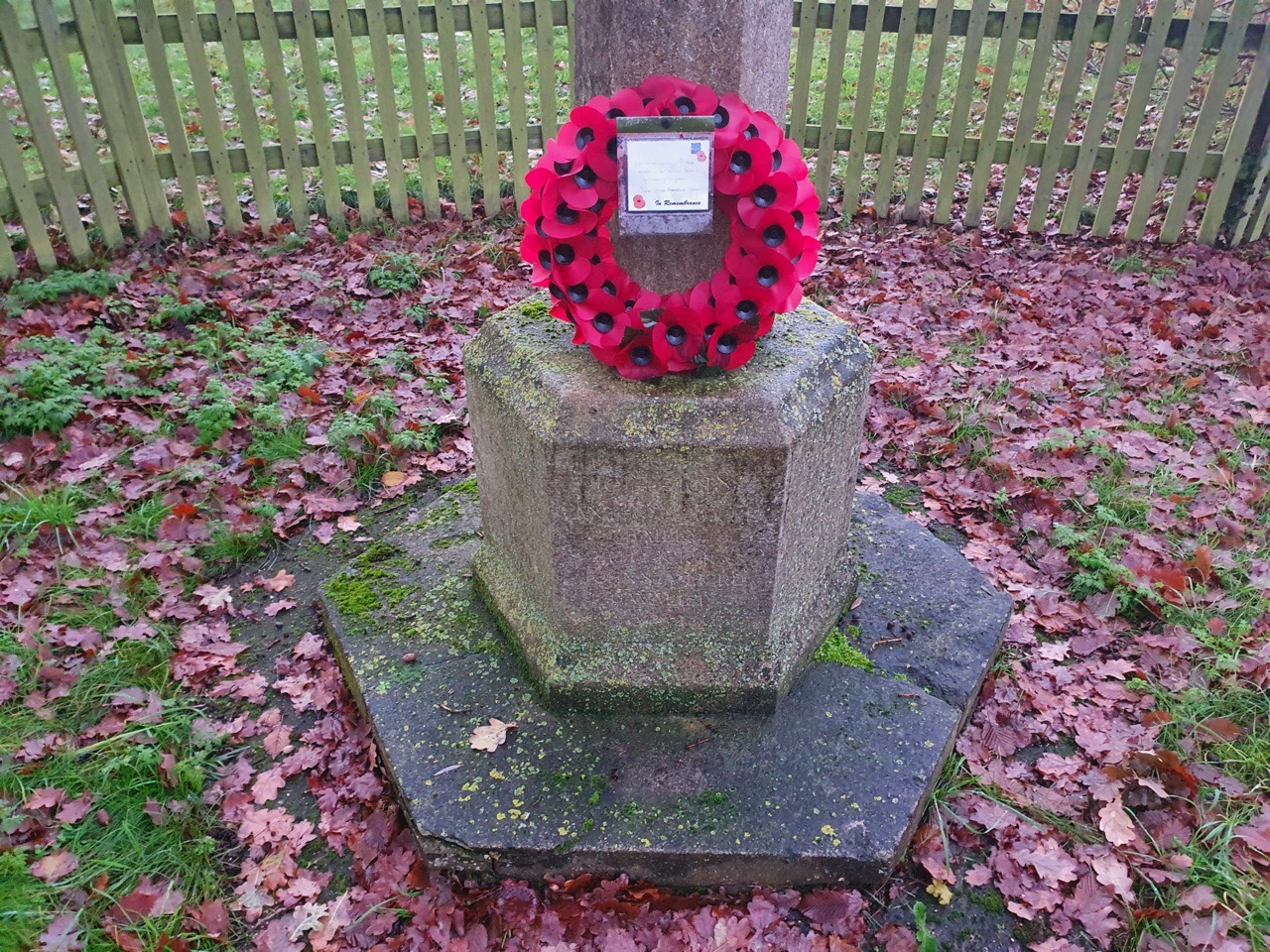
    Wramplingham War Memorial, which was unveiled in 1920 and is quite a tall and slender piece of stone. There were seven men killed from the parish during the First World War and one during the Second World War. This seems quite a high number for such a small village, especially as there were no Pals Regiments from Norfolk where friends were fight (and often die) together. Some of those who died didn’t live in the village, but had relatives here, but, it must still have been a great loss for Wramplingham.

    The names of those who died are listed on the stone, although they’re a little hard to read and some attention is needed here to restore them. Those who died in the First World War were:

    Arthur Yorke Bailey

    John Stanford Cavalier

    William Robert Collings

    John Robert Howes

    Frederick William Mitchell

    John Robert Oldfield

    Percival Ernest Thompson

    And, the following servicemen died during the Second World War:

    William Leonard Tolver

    There’s no point in me working through the histories of these individuals, as it has already been done at http://www.roll-of-honour.com/Norfolk/Wramplingham.html.

  • Wramplingham – Village Sign

    Wramplingham – Village Sign

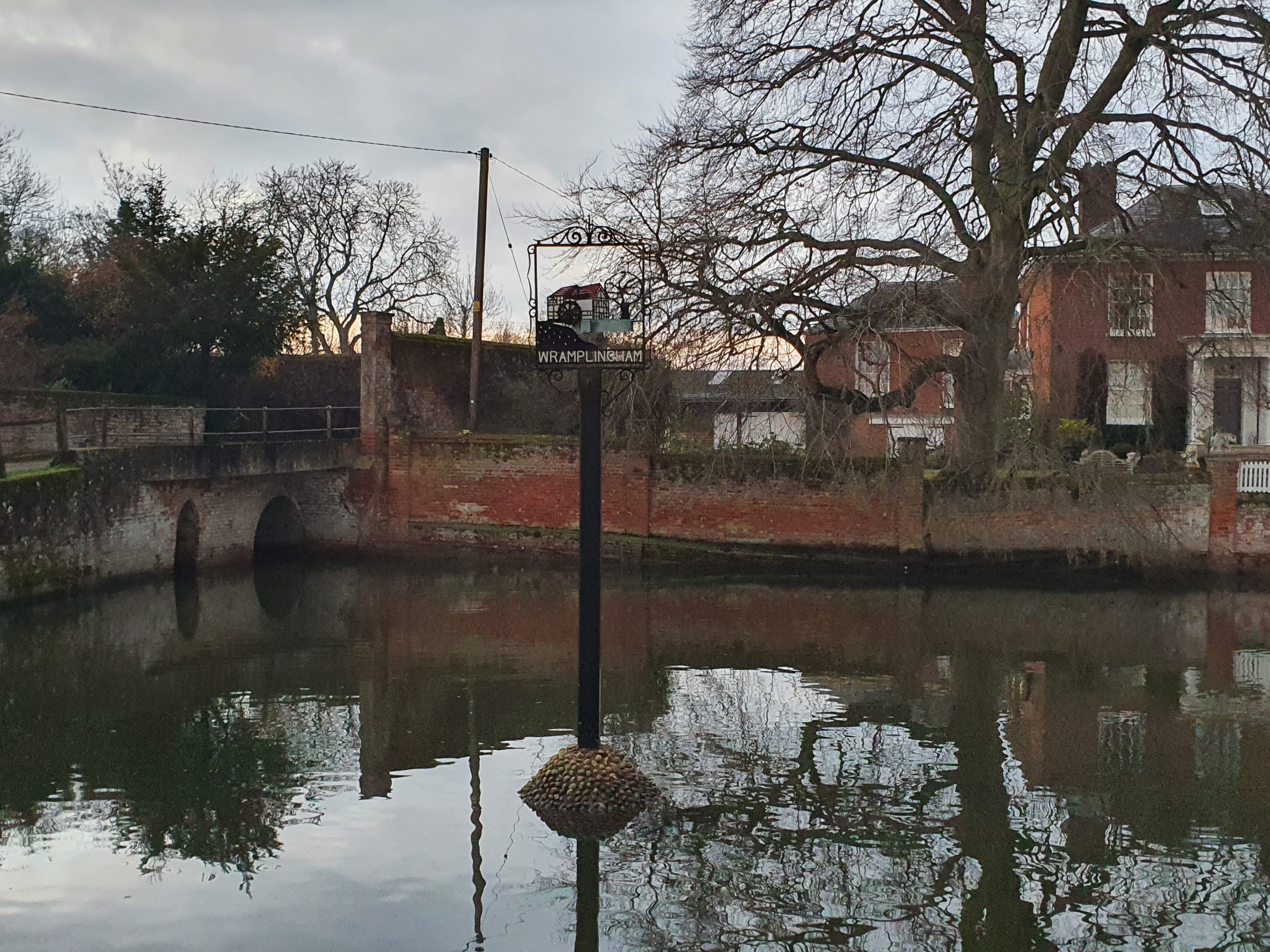
    I like this, Wramplingham village has, by design, placed its sign in the River Tiffey. I say by design as it’s in the water in all the photos that I can see.

    The sign itself features the water mill on which much of the village’s history is around, although the rather lovely mill itself was knocked down in 1945.