
Category: Matlaske

  • Matlaske – St. Peter’s Church (Interior)

    Matlaske – St. Peter’s Church (Interior)

    I wrote about the exterior of St. Peter’s Church in Matlaske a couple of weeks ago, but the interior was certainly no less interesting.

    The door in the north porch is medieval, one of many survivors in the church dating to that period. There was a porchway on the other side of the church as well, but that was bricked up and the space turned into a vestry.

    The nave of the church and the south aisle on the right. The roof of the nave was reconstructed in 1878 as part of the renovations and restorations to the church. The roof of the south aisle was reconstructed in 1710, as this is noted by a tablet on the wall, although has since been restored again.

    The inside of the tower, which dates from the Saxon period.

    The font and cover, which are both from the medieval period.

    I can’t recall seeing such an historic join between the nave and the tower, all of which dates from the Saxon period. I very much liked seeing this, I could almost imagine this being constructed over 1,000 years ago. It was also quite a chunky construction, with the tower walls being four feet wide in places.

    This was the end of the nave, but when the chancel fell down in March 1726, it was brought forwards to be used as the new chancel.

    It’s clear that there are some maintenance issues that the church need some funds to fix.

    Looking back towards the tower, the interior feels bright and spacious.

    I like that the church feels comfortable leaving these old books out and I hope that no-one breaks that trust.

    The private chapel for prayer and the church history mentions that this is the Jacobean communion table from the chancel that fell down.

    A funerary hatchment, which would have been hung on the wall of the deceased’s house for a few months, before being moved into the church.

    The Royal Arms which are for King George III and date to 1801.

    A boxed pew arrangement still in situ.

    This is the old commandments board which would have been located elsewhere in the church, but it has been repurposed to hide a cleaning cupboard.

    Anyway, this is a beautiful church and in a peaceful part of Norfolk. I liked very much that an effort had been made to open up the church and also to explain its history. The collapse of the chancel many centuries ago is unfortunate, but I do like how they’ve been able to keep some of the stones which fell to ensure that its story isn’t entirely forgotten.
  • Matlaske – St. Peter’s Church (Exterior)

    Matlaske – St. Peter’s Church (Exterior)

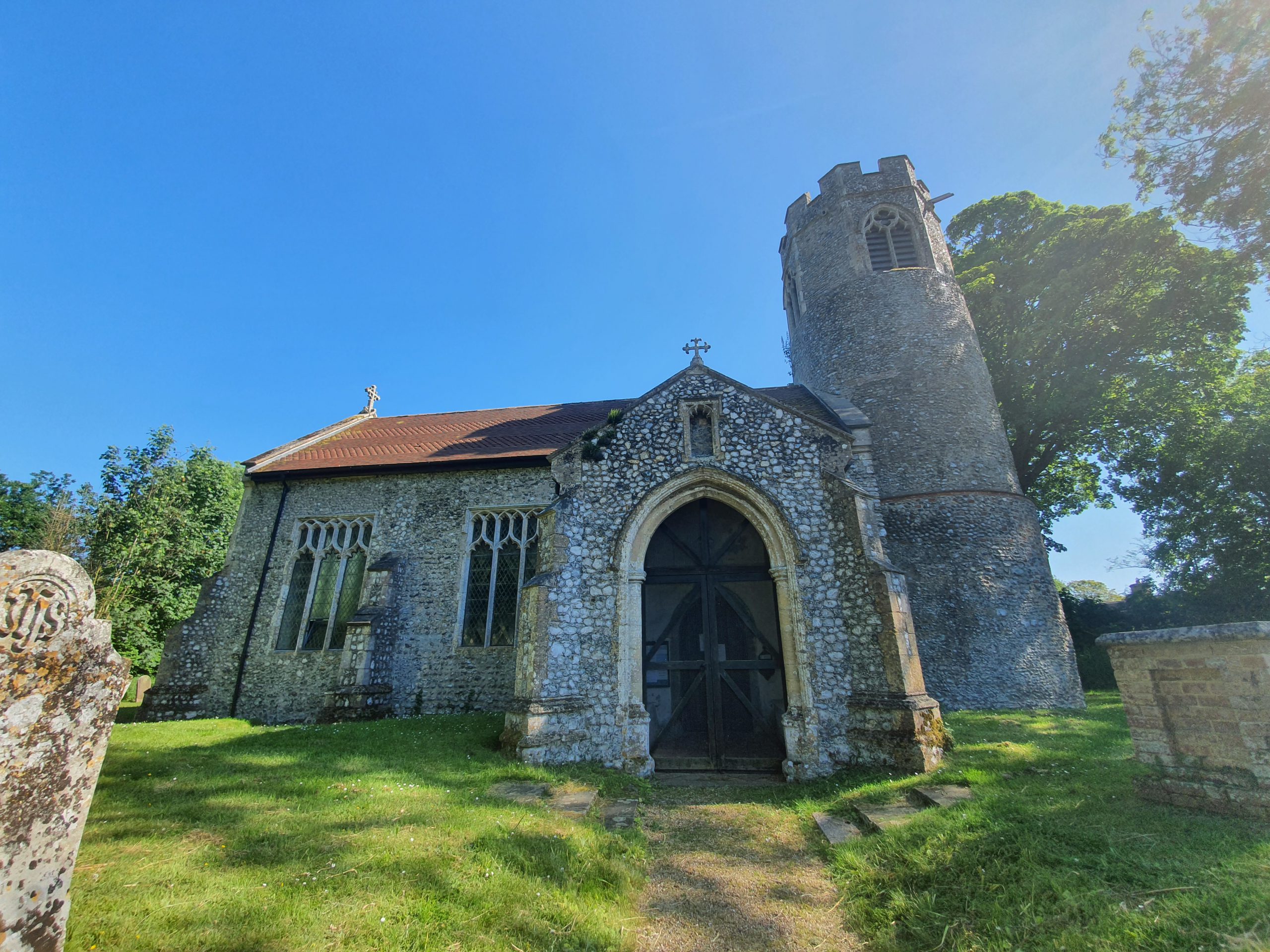
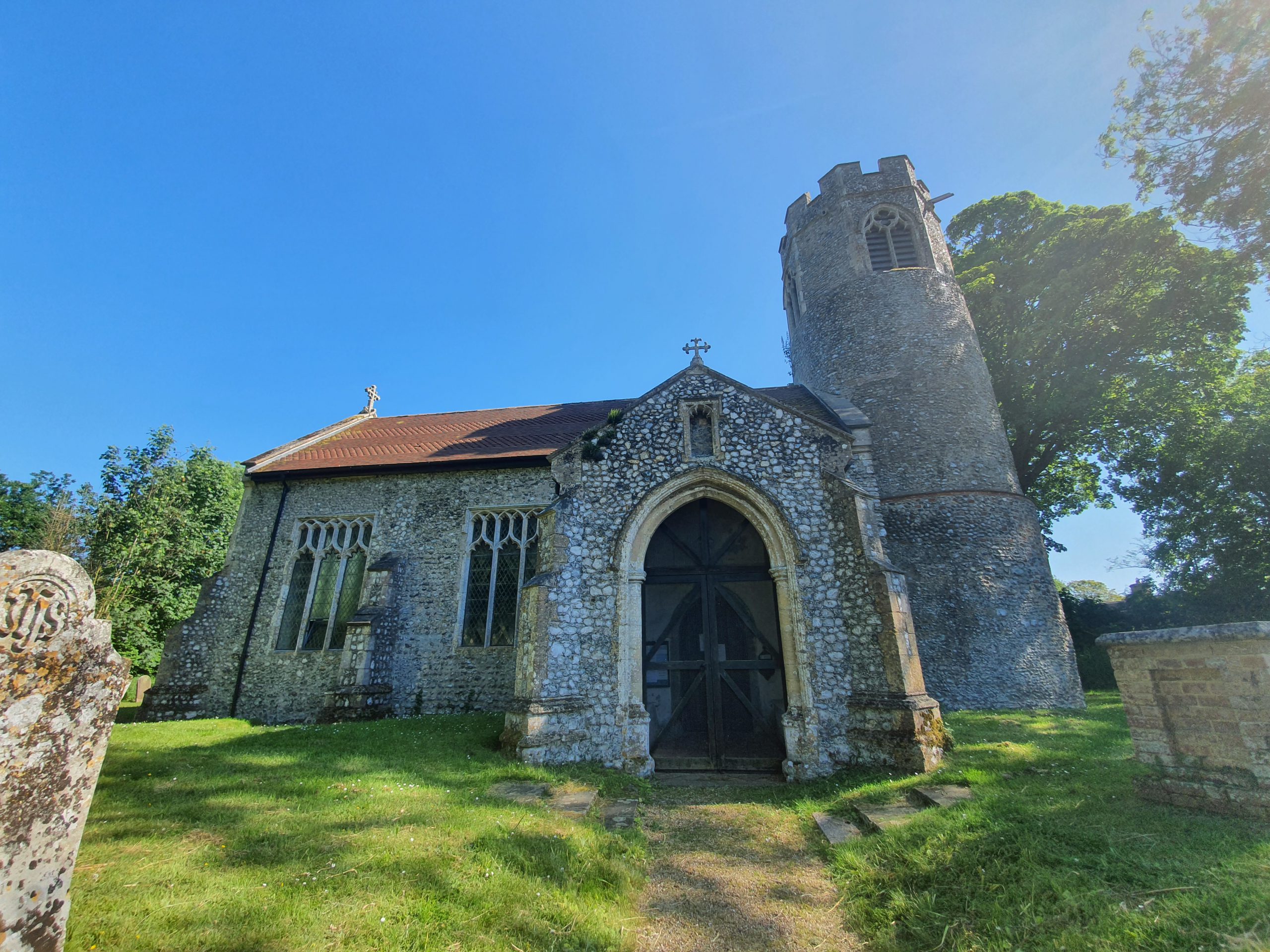
    As I was back in Norfolk for the weekend in between London visits, I took the opportunity to visit three churches with Richard all of which very much had their own character. This is St. Peter’s Church in Matlaske (also known in the past as Matlask), with its round tower which dates to the Saxon period. By any definition, that’s a remarkable survival, especially as sections of the nave are from the same period. More on the interior of this church in another post, there’s a fair amount to write about here as it is.

    I mentioned how rather lovely it is that this church’s tower and nave survive from the Saxon period. The chancel was less fortunate, as it fell down. And it didn’t just fall down, it fell down during a service on 19 March 1726. No-one was hurt, but that does feel like a message from God if you’re preaching and a chunk of the building collapses. A decision was made not to rebuild it (probably by the vicar who was likely considerably put off by the circumstances he faced), so it was just walled off.

    The join section is still visible, the section to the left and the buttress is original and the section to the right is the walled off part following the collapse.

    A really good decision was made, although I’m not sure when, to preserve some of the stone from the collapsed chancel. On top of the churchyard’s wall, which seems much more recent, are chunks of stone from the old building.

    There’s a section of lead which once held a piece of stained glass in the window. I very much like that these stones remain, a connection with the past.

    The southern side of the church, with a helpfully located bench for the tired to rest on. Or just the lazy, no-one will judge…. The south aisle was roofed in 1710, which was handily noted on the building, although the entire church was restored to some degree in 1878 and the current roof is more recent.

    This drawing is from the early nineteenth century (I think around 1825) and shows the building from the same angle as the above photo. Some things puzzle me, such as the window in the chancel end has been replaced, perhaps in the 1878 restoration. It looks quite a simple window here, perhaps as things were financially limited at the beginning of the eighteenth century when the repairs were needed following the chancel collapse. Also, at this point the south porch wasn’t blocked.

    The original Saxon tower has now been modified, but I still find it quite special to know that parts of this were here around 1,000 years ago. The top octagonal section dates from the fourteenth century. God was on the side of Arthur Boulton, a plumber from Great Yarmouth, in 1904 who was engaged in covering the church’s roof with lead. He managed to fall off the scaffolding, a distance of 41 feet, but was remarkably nearly unharmed by his little disaster.

    There were once three bells inside the tower, but financial issues (mostly relating to a fear that the tower might collapse) meant that in 1731 two of them were sold. In the little guidebook in the church, it notes that the remaining bell was cast in around 1480. I find that equally remarkable, that the bell was raised to the top of this church when it was still Catholic.

    The blocked up porch. I’m not sure why this was ever deemed necessary, as although I suppose the space was repurposed for clerical reasons, it seems a bit final to block the entrance up. Maybe a nice sturdy door would have been a little more attractive here.

    Anyway, more on the interior of this church in another post. It’s a beautiful building in such a quiet place and I’m very grateful that it was unlocked so that visitors could go inside.