Category: Marsham

  • Marsham – All Saints Church (Mary Blyth)

    Marsham – All Saints Church (Mary Blyth)

    I don’t often see gravestones disappearing into the ground, although I suspect that it’s been pushed in to stop it falling over. Either way, this gravestone in All Saints Church in Marsham commemorates the life of Mary Blyth.

    Trying to resolve family trees from the late eighteenth century is challenging (well, it is to me) given the gaps in the records. I know that Mary died at the age of 83 and that she was born in 1759. And there is a Mary who was baptised in Marsham on 21 January 1759 (fortunately, these records still exist at Norfolk Record Office) and she was the daughter of Isaac Blyth and Mary Blyth. The difficulty is that for this to the same person, Mary must never have married and that would have been unusual for the period.

    Mary was listed on the 1841 census, when she lived at Unicorn Yard in Aylsham with Thomas Hewitt and Mary Hewitt. It doesn’t appear that Mary was her daughter, as her maiden name was Eldridge and not Blyth, so I’m not sure that they were related. Unicorn Yard is still there today, located next to the Unicorn pub and Mary would have known it since it had been licensed since at least the late seventeenth century.

    Mary died at the age of 83 on 10 October 1842 and she was buried on Friday 14 October 1842. The level of documentation improves in the nineteenth century, so I know that her funeral service was led by Henry Asker, the church’s assistant curate. As for her life, I can’t find out anything, but perhaps there’s more story out there somewhere about Mary.
  • Marsham – Relief Landing Ground

    Marsham – Relief Landing Ground

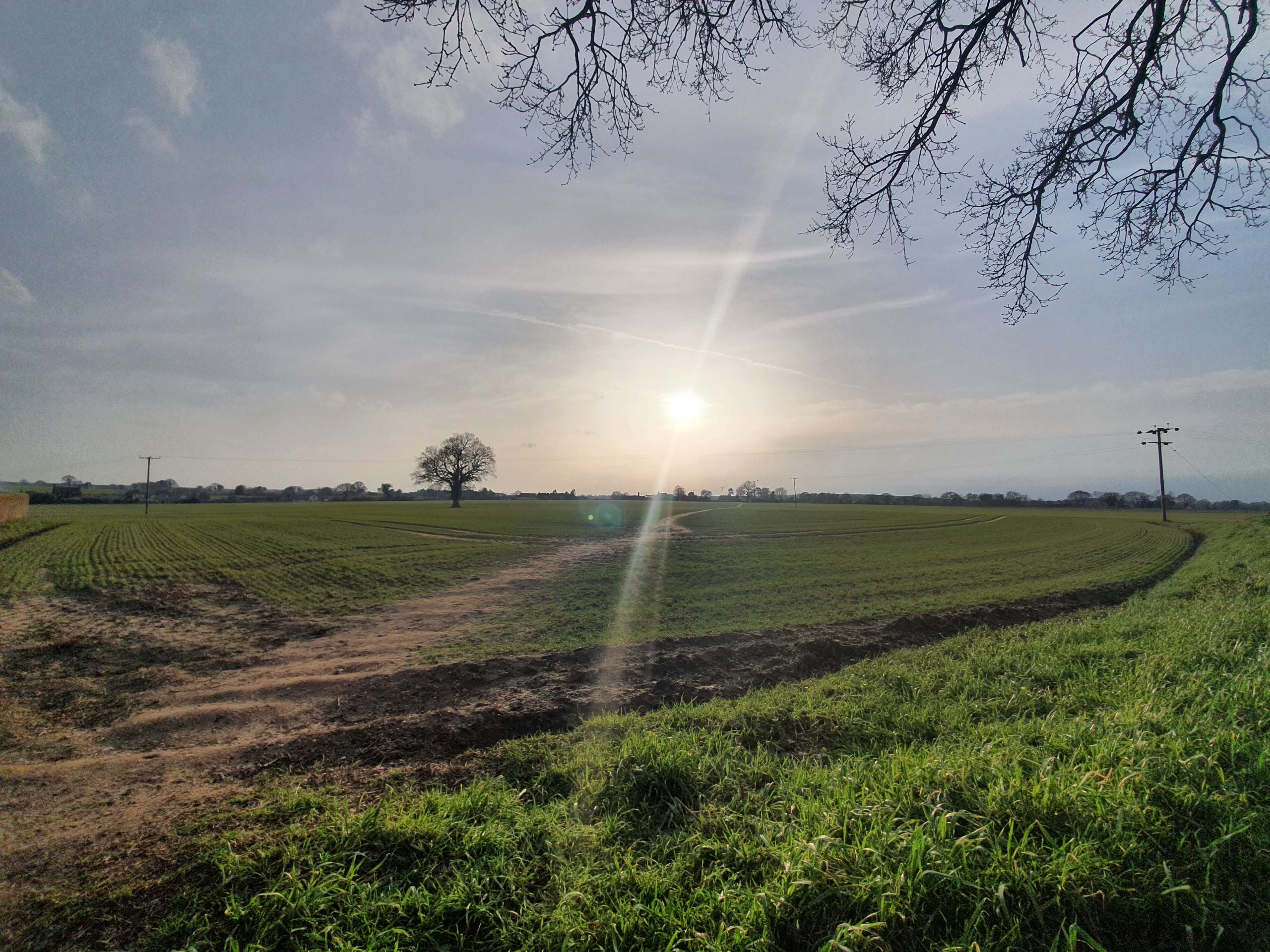
    This is rather lovely, a memorial placed here in 2017 to mark that the field behind Marsham Church was used by the Royal Flying Corps between 1915 and 1916. The memorial is placed between the church and the new burial ground and I wouldn’t have known about the field’s past use without it as there are no other obvious clues that it was there.

    Here’s the field, apparently known as Whites when it was in operation. It was closed in October 1916, when the training ground was moved to Saxthorpe. There weren’t a great deal of safe places to be if serving in the First World War, but these pilots must have been especially brave as aviation was not exactly developed then and deaths were frequent.

    This map is from just before the First World War, the field is to the left of the church. The EDP has a report from the unveiling of the monument in 2017.

    Unfortunately, the enclosures maps aren’t available for Marsham which might have indicated if the field was called Whites back in the early nineteenth century. The tithe map above shows the field, but gives no further hints as to the name origin of the field. Although, I approve of more places just being called Whites…..

  • Marsham – All Saints Church (Robert William Claxton)

    Marsham – All Saints Church (Robert William Claxton)

    This is the only war grave at Marsham Church and is located in the new burial ground, located just behind the main churchyard, commemorating the life of Robert William Claxton.

    Robert was born in 1890 and he married Edith Mary Melton in 1913 and they lived at Turnpike Bungalow in Marsham. Robert joined the Grenadier Guards being given the service number 21587, joining the 13th Company of the 4th Battalion. This battalion was formed to fight in the First World War, but the war diaries at the National Archives don’t start until August 1915 when they went to France. So, at a best guess, Robert never fought overseas.

    Robert died on 28 January 1915 at the age of 25 and his burial took place on 3 February 1915. The relatively short period between death and burial also suggests that he didn’t die that far from home, but, unfortunately, his war records were lost in the air raid during the Second World War, and there are no news articles in the local media.

    The details of Robert’s grave at Marsham, which must have been one of the first in the new burial ground.

    This is another one of these lives which seems to have mostly been lost to history, especially the war record of Robert, which seems to have been relatively short.

  • Marsham – All Saints Church

    Marsham – All Saints Church

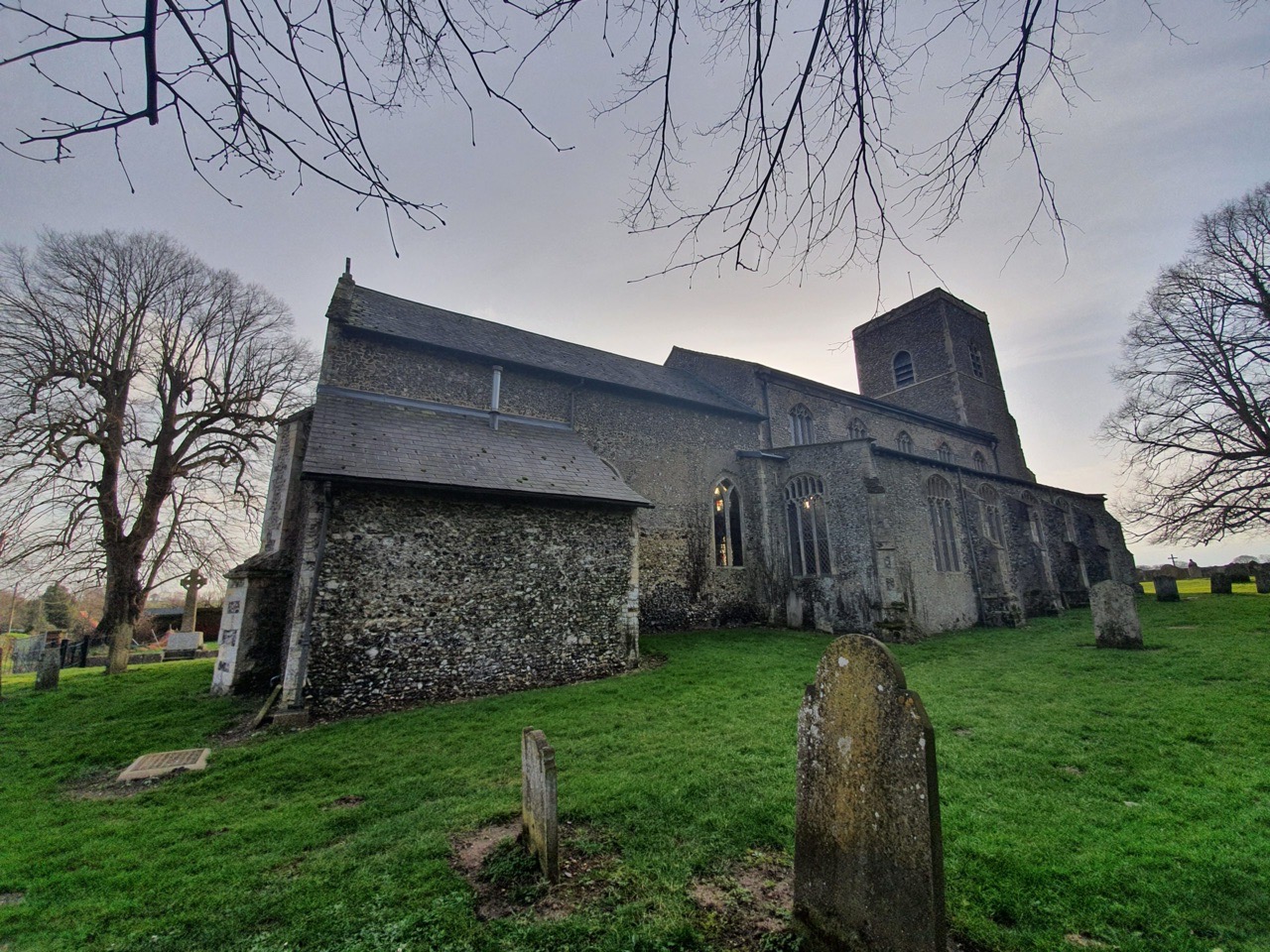
    This Grade I listed church in Marsham has a core which was built in the thirteenth century, with numerous fourteenth century additions and a Victorian overhaul.

    There’s a more modern vestry on the left-hand side attached to the church’s north wall. There are north and south aisles, perhaps indicating some level of wealth in this village during the medieval period.

    The south side of the church.

    A book of the parish’s history in the 1840s notes that “many of the ancient inhabitants remember the time when almost every window contained medieval glass and and can tell how it was removed by a so-called antiquary who was sometimes resident in the parish, and who was troubled by few scruples in satisfying his thirst for collecting antiquities. Dispersed by him at his various sales, it is impossible to say where most of these scrolls and coats may now be located”. Perhaps at the time the book couldn’t note that the individual was William Goodall, the church’s rector between 1787 and 1844.

    Theft wasn’t a one-off in this church either, the Norfolk & Norwich Archaeological Society was told in 1895 that the ornate cover above the font had recently been stolen during the restoration of the building in the 1880s. This font cover was known as the ‘laughing boy’, a figure which projected from the top of the second arch of the north aisle and which seemed to be looking at you and smiling wherever someone sat. This loss was blamed on an absent rector appointing a church warden who was willing to steal from the church and it seems likely that the record was William Goodall.

    The tower is likely also from the thirteenth century, with some damage evidence down the centre where some repairs have been made. There’s no large window, so it’s not clear what is causing the structural issue here, but it all looks quite solid so the repairs seem to have implemented some time ago.

    The chancel is mostly a Victorian rebuild, likely needed as the structure needed some repair.

    The side of the chancel and the stones set into the side of the aisle are those from the Howlett family.

    The church’s graveyard.

    The church was unfortunately locked so I couldn’t look inside, but that’s an original medieval wooden door. Inside the hammerbeam roof is of note, as is the medieval screen which it seems fortunate the church’s rector didn’t pinch.

    The bricked up priest’s door.

    This field by the church looks all rather peaceful, but it was once known as Whites’ and was used by the Royal Fighting Corps during 1915 and 1916 as a landing ground.

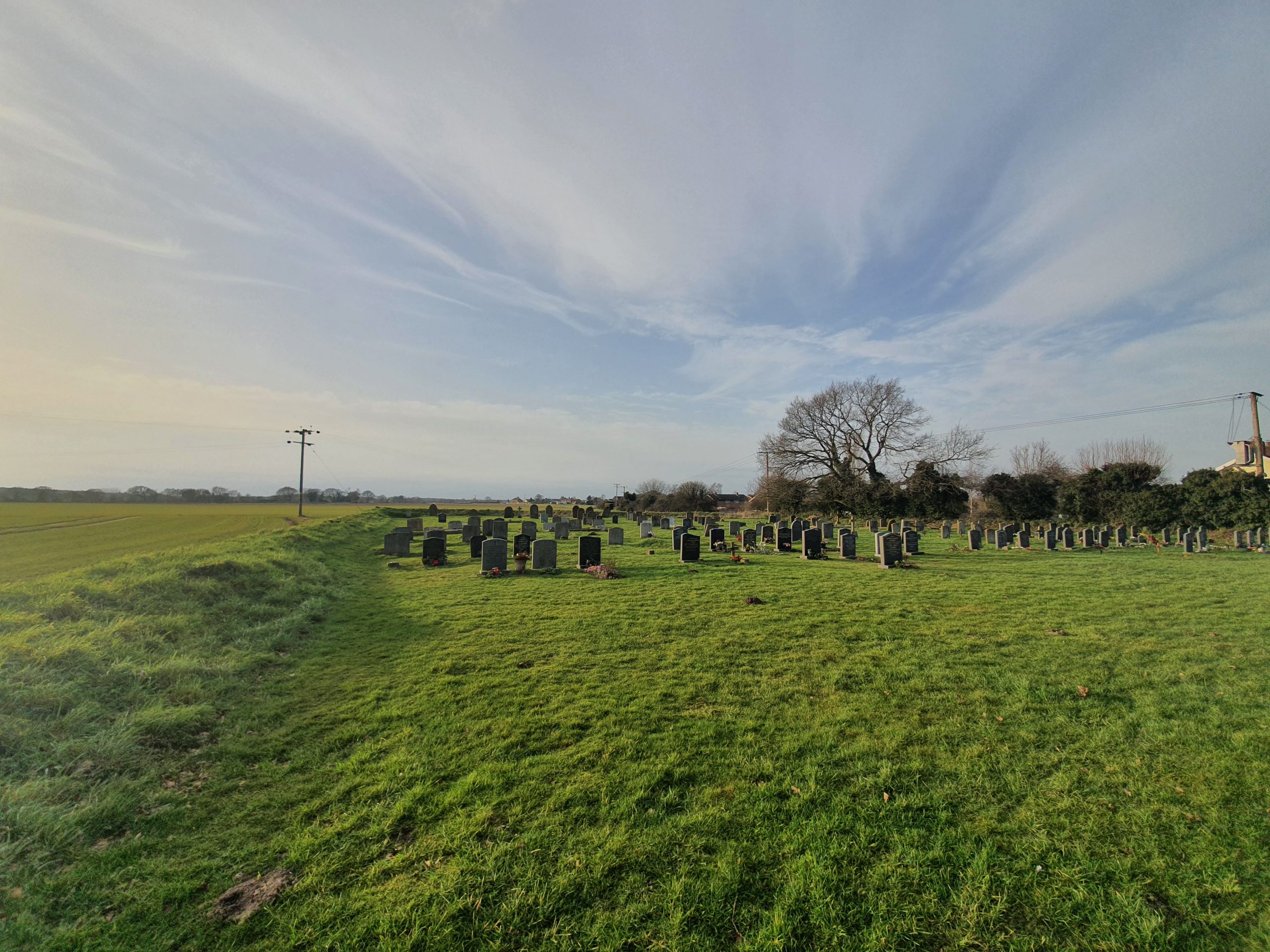
    The new burial area, located to the west of the church, which contains the one Commonwealth war grave that is located here, commemorating the life of RW Claxton of the Grenadier Guards who died on 28 January 1915.