This beautiful bench is one of a pair located at Tower Gardens in King’s Lynn, in front of the town’s war memorial. They were funded by the Rotary Club and the Borough Council, certainly the most eye-catching bench that I can recall seeing.
This beautiful bench is one of a pair located at Tower Gardens in King’s Lynn, in front of the town’s war memorial. They were funded by the Rotary Club and the Borough Council, certainly the most eye-catching bench that I can recall seeing.

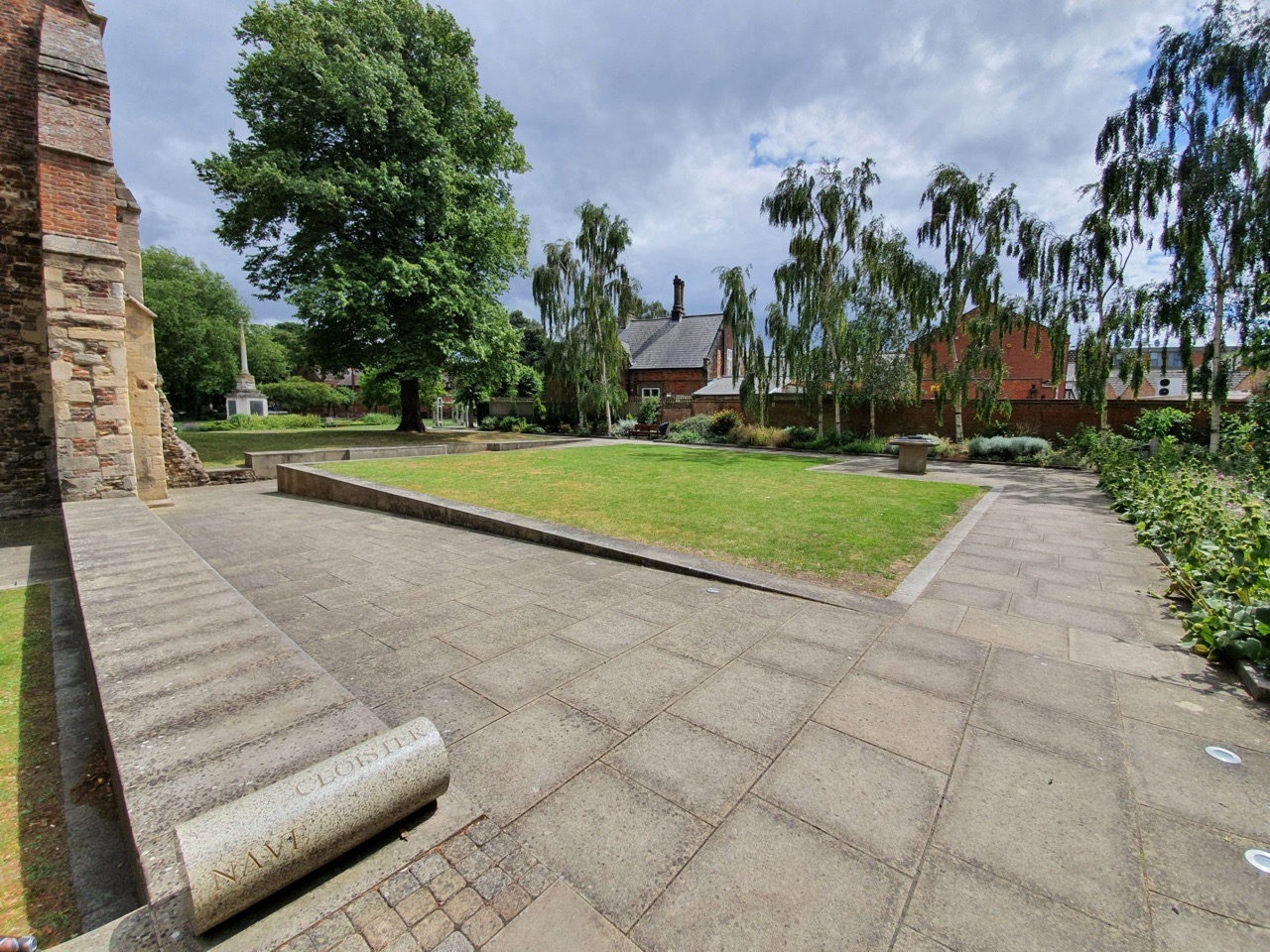
Work started on Greyfriars friary in the late 1240s and it remained open until the Dissolution of the Monasteries saw its demise in 1538. This photo is taken from the nave end of the friary, which is where members of the local population would be allowed to visit, with the sections at the rear being reserved for the friars.

The grassed area is where the cloisters once stood.

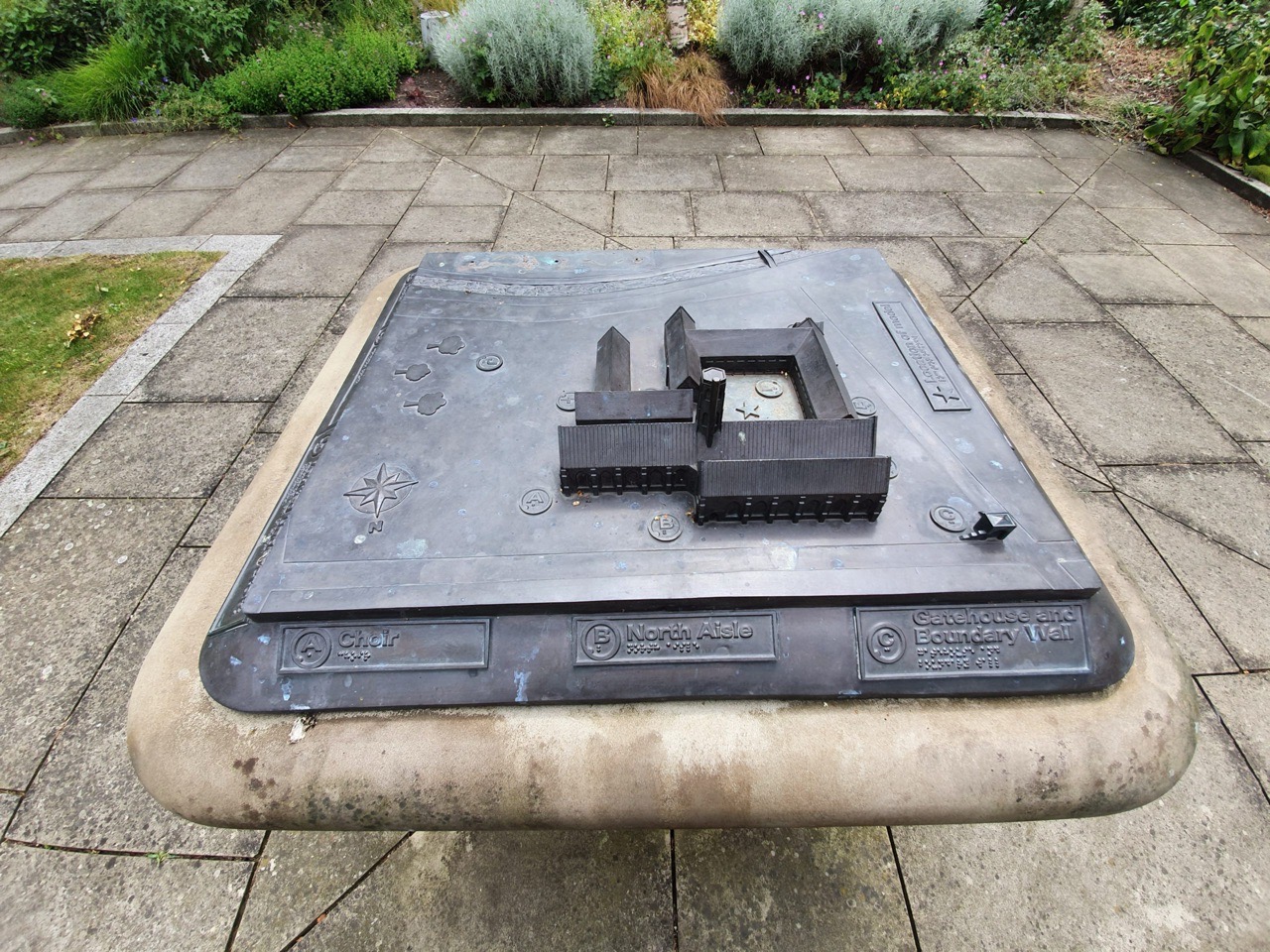
A model of how the friary once looked.

Under usual circumstances, it’s likely that the stone would have been carted away and used in other construction projects following the closure of the friary. However, the lantern tower was useful for shipping given its 28-metre height and so it survived and was maintained to perform that function. The tower was at risk for a while recently as it had started to lean, but thanks to the Heritage Lottery Fund and English Heritage, funding was secured in 2006 to restore the structure.

The inside of the tower, which is the best-preserved example of such a Franciscan structure left standing in the UK.

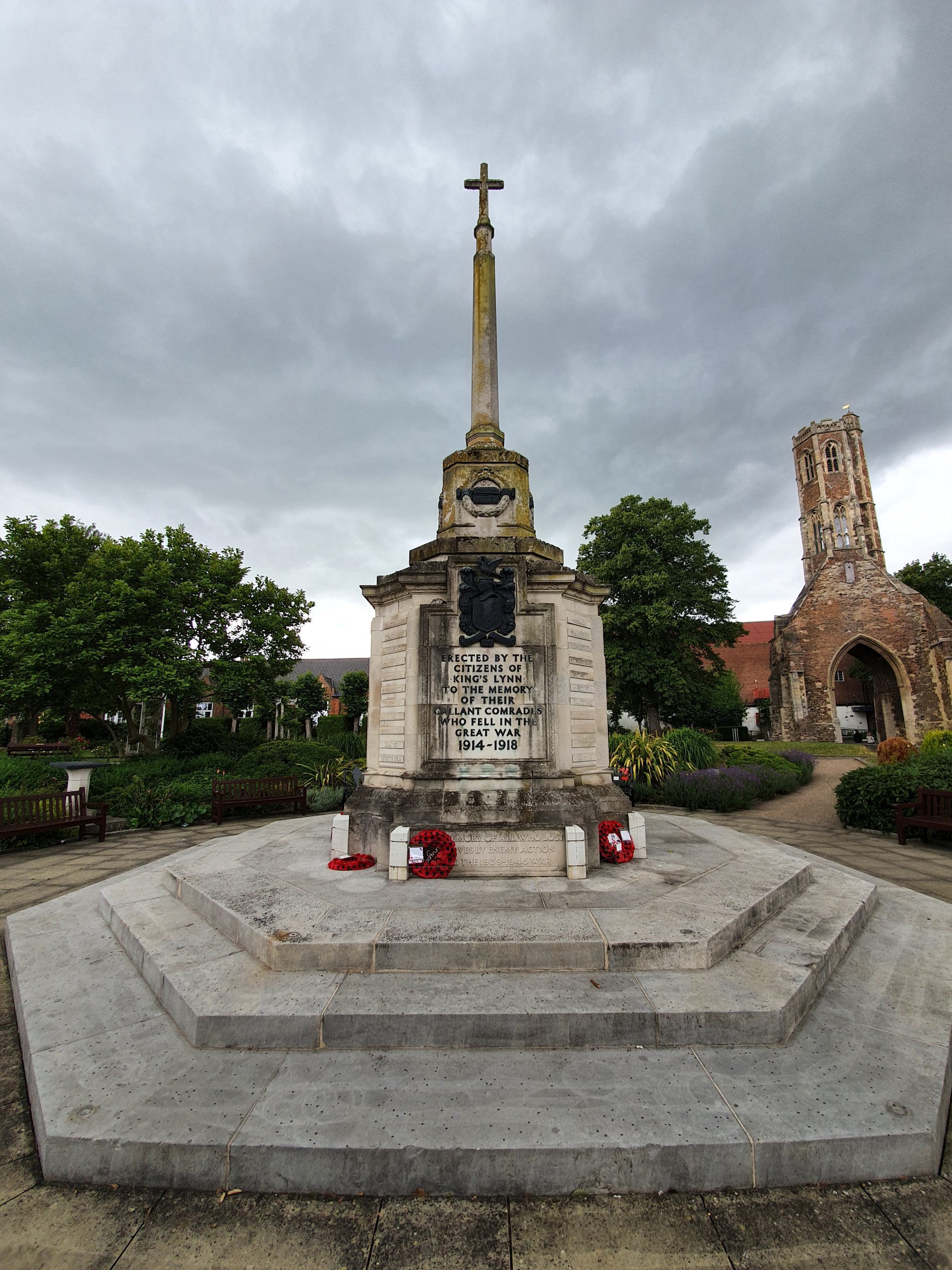
Another view of the tower, with the stone at the front of the photo marking where the altar was formerly located. When the friary was closed, the site was never really built on and so it was decided in 1911 to tidy the area up and to turn the land into a public park known as Tower Gardens.

The site of the former infirmary. This is a really well-managed site, they’ve made it clear to see the layout of the friary and there are numerous information boards to give further details about the site’s history.

This is a really nice floral display in Tower Gardens, I’m not sure how long these things take to create, but it’s a lovely gesture.
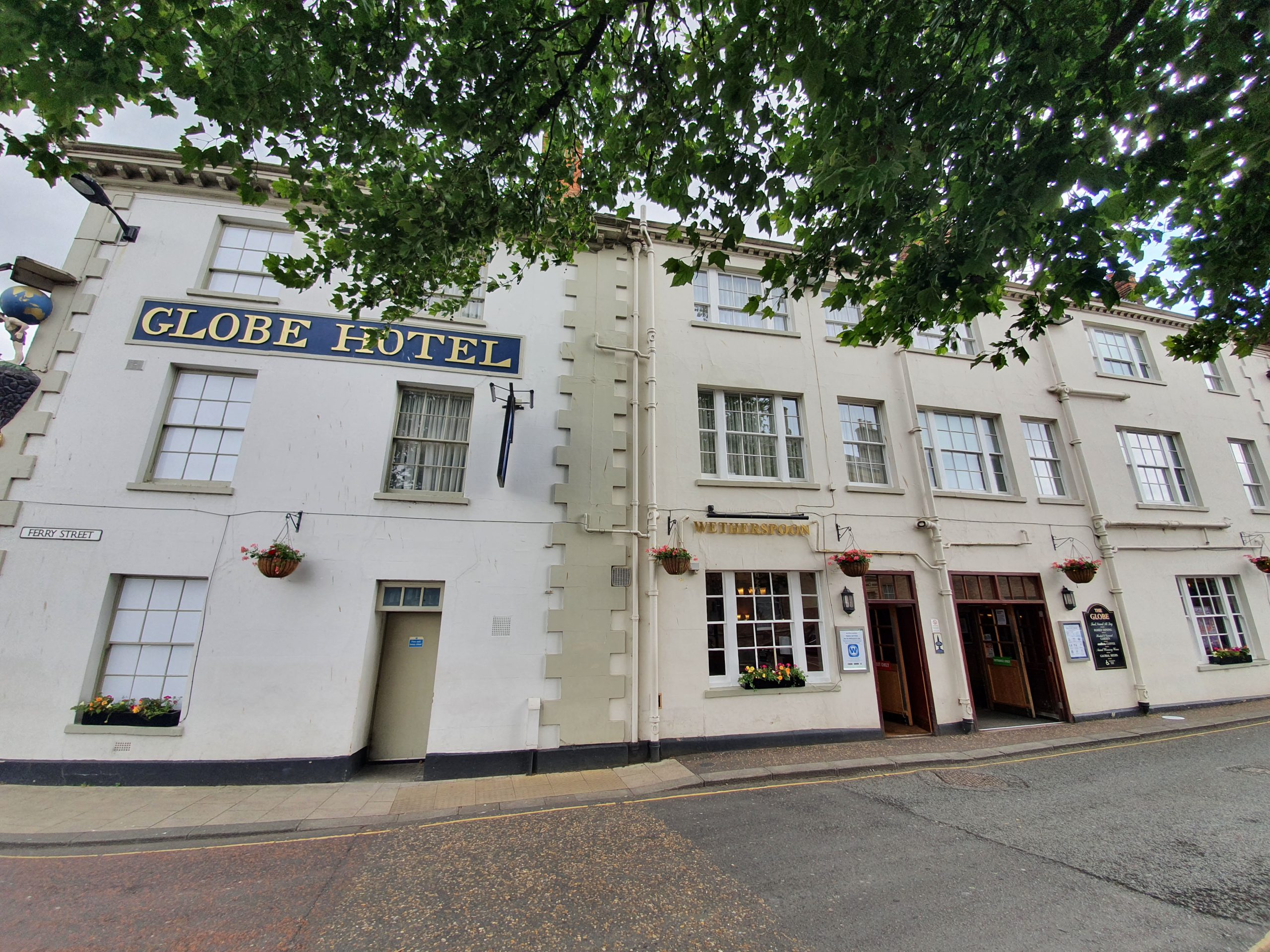
I’m conscious that there are many smaller independent pubs that are in need of support now, but my favourite ones were still closed and I wanted to pop in to see how JD Wetherspoons were managing with the re-opening of their outlets.

There’s a little welcome station with hand sanitiser and paper menus, along with a large sign telling customers what to do. I must admit I read the sign and forgot that I was meant to write down my name, which they didn’t make very clear and I’m easily confused at the best of times. It didn’t much matter as they took that information via the App when I ordered, but otherwise, it all looked organised.

There are protective barriers in the pub now and the self-service coffee machine has distance markers to keep people suitably distanced. I must admit, this is probably as much as they could have done, although some of the barriers weren’t ideally placed and people snuck between them and then brushed past other customers at tables. The best-laid plans of any pub are usually circumvented by some customers though….

I hadn’t expected the unlimited coffee to be back, but it’s all working as usual. I ordered via the app, which is the preferred method, and it was brought over soon enough. There’s a new policy where customers can’t re-use a mug and they have to get another one, and I never worked out the most efficient way of doing this and where to stand. The pub was well-staffed though, so my standing awkwardly seemed to work sufficiently well.
The pub was relatively busy in the afternoon and I suspect they’d have been better having someone at the door to explain what was going on, but it’s good that there is some vague notion of normality returning now to the pub sector.
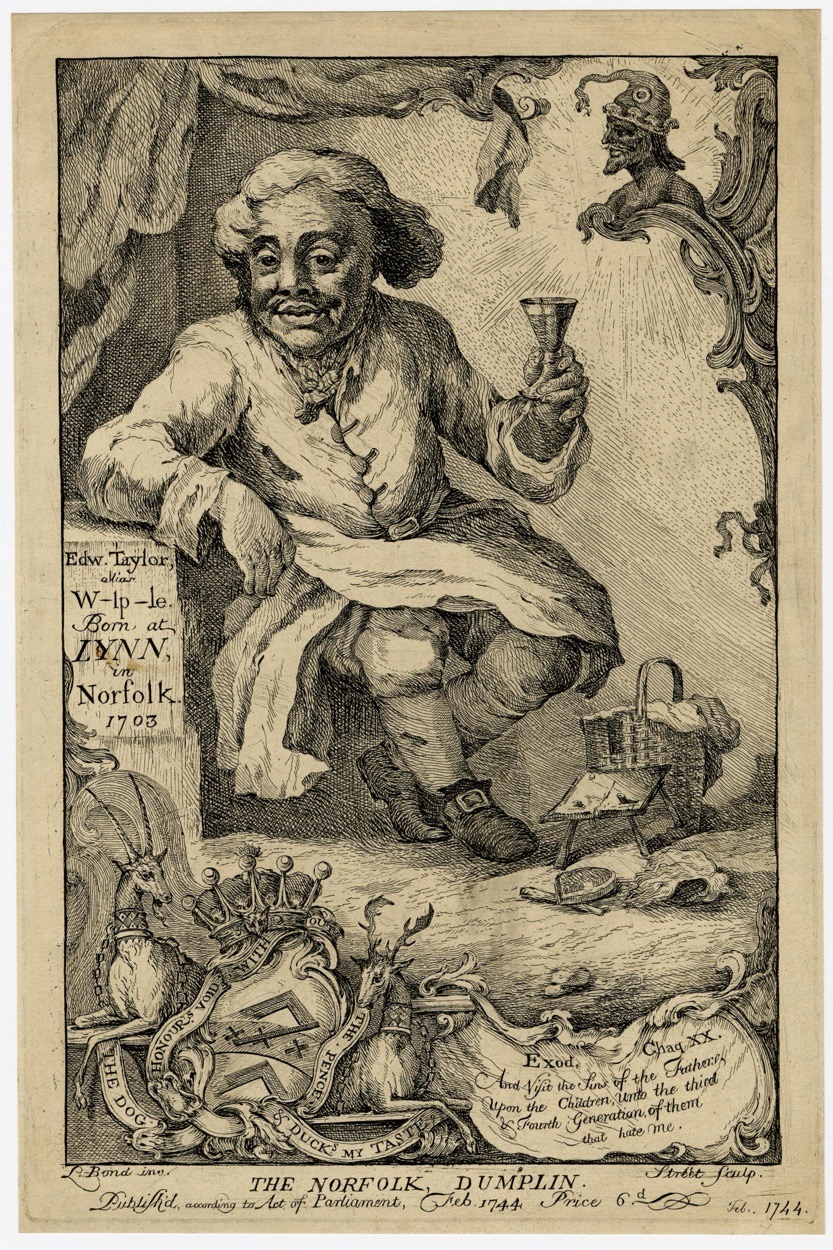
Whilst looking at something else about King’s Lynn, I noticed this print (© The Trustees of the British Museum) in the collections of the British Museum.

This moderately bizarre image (click on the image to make it bigger) is an attack on Robert Walpole (1676-1745), and suggests that Edward Taylor was an illegitimate child of Walpole. I’m still slightly surprised, as this trick was commonly used in electioneering at the time, that the law allowed “W-lp-le” to hide the fact that the creator of the image wanted to highlight that he was referring to “Walpole”. Walpole, effectively the country’s first Prime Minister, was known to have had other mistresses, so the allegations aren’t necessarily false. The connection to King’s Lynn is that Edward Taylor was born in the town in 1703.
It’s not known who created the illustration, but it is dated to 1744 and the British Museum acquired it in 1868 from the estate of Edward Hawkins, a long-time curator of the museum. The term ‘Norfolk dumpling’ usually refers to someone who is a bit dense, although it’s also a culinary treat….
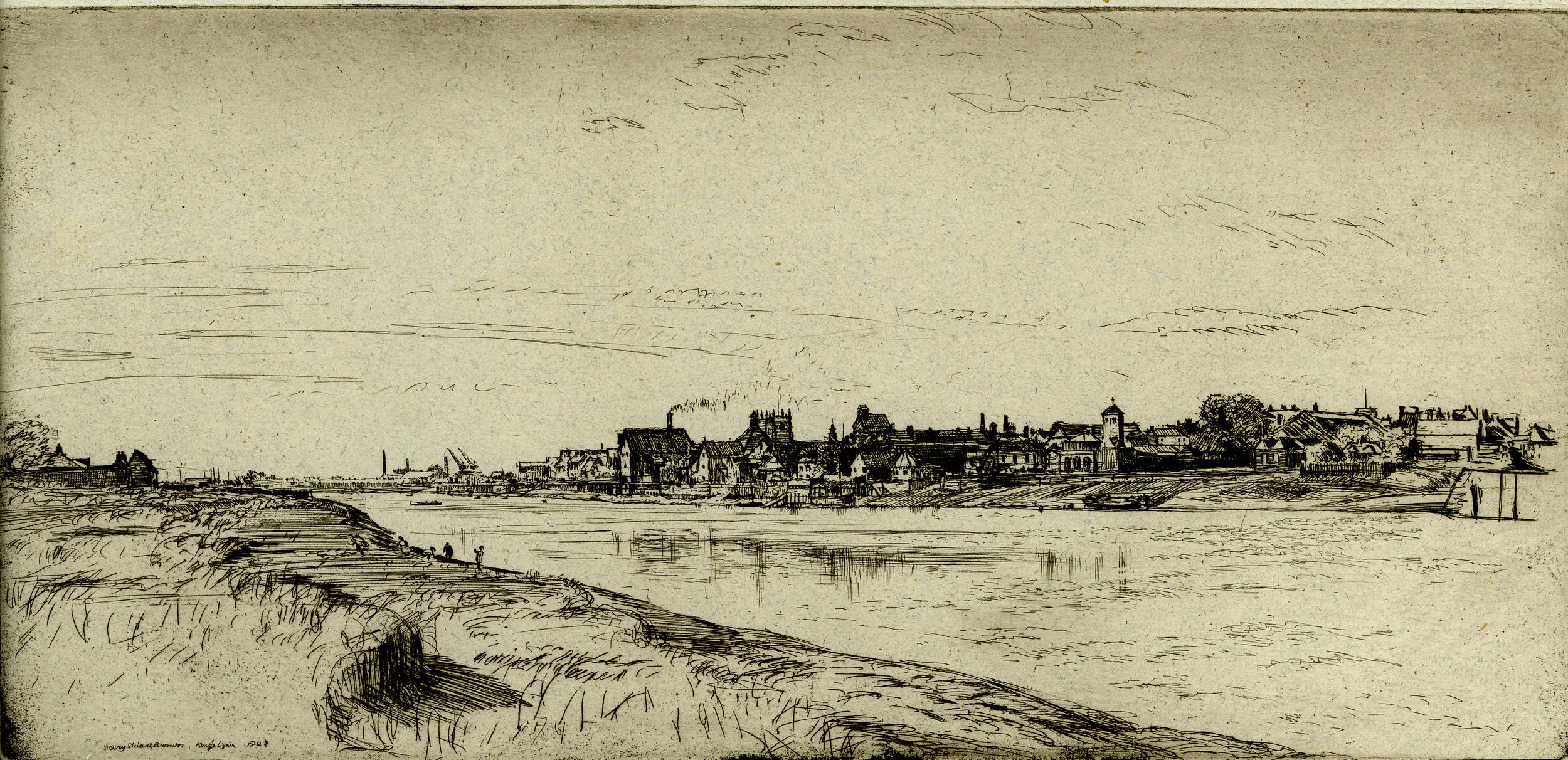

Yesterday, I posted some photos of King’s Lynn which were taken from West Lynn.

This 1928 etching (© The Trustees of the British Museum) was drawn from along the riverbank of West Lynn and shows the main buildings in King’s Lynn. It was drawn by Henry James Stuart Brown (1871-1941) who was known for this style of drawing and although he was overlooked during his own lifetime, his works have become much more collectable in recent years. He made numerous etchings in this part of the country and the British Museum have a relatively substantial collection of his prints, with Brown donating this work to the museum in 1930.
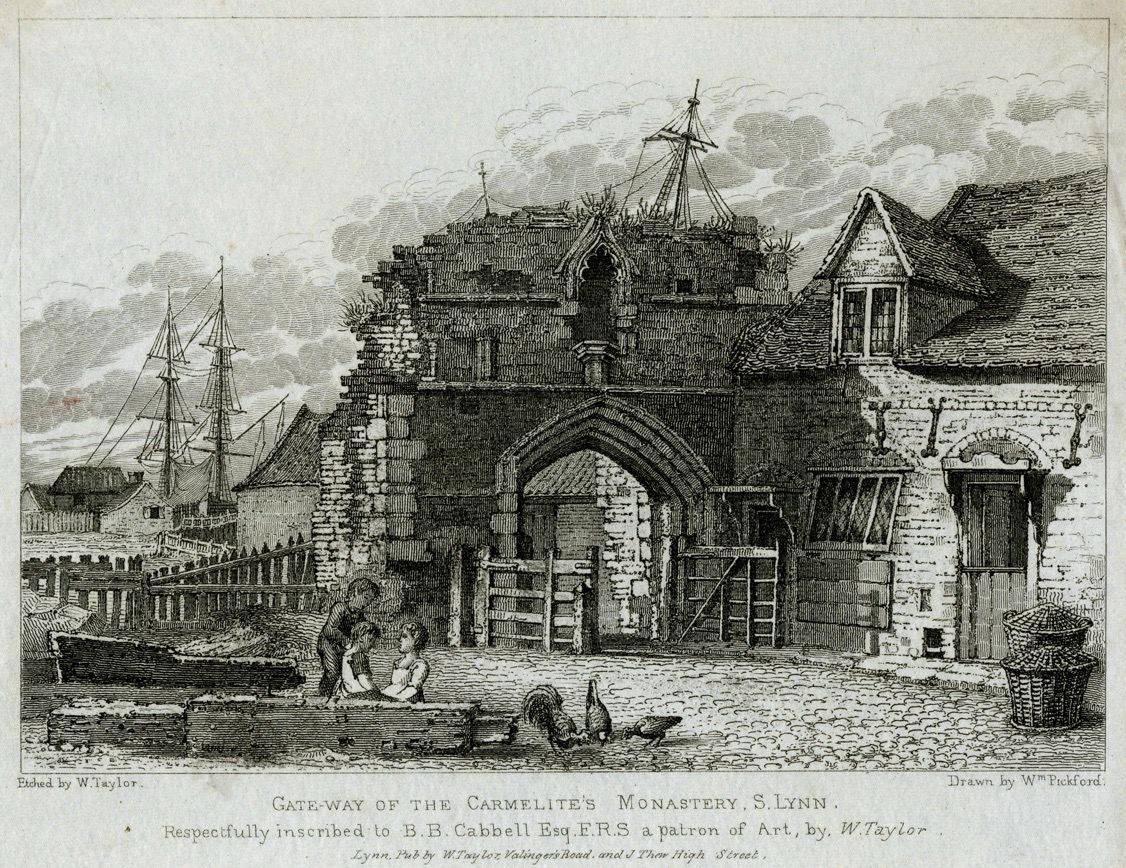

I posted about the Whitefriar’s Gate, or Carmelite Gate, yesterday, and today I found this etching in the on-line collections of the British Museum (© The Trustees of the British Museum).

Dating from 1843, it’s quite atmospheric with children playing and chickens eating, and it couldn’t be much more different than the surroundings of the gate today, which is just quite a lot of barrenness. The image was drawn by William Pickford and was etched by William Taylor, with Taylor also being the publisher of the image. The plate isn’t on display at the British Museum, but they’ve owned it since 1876 when they purchased it from the art dealer Robert Jackson.
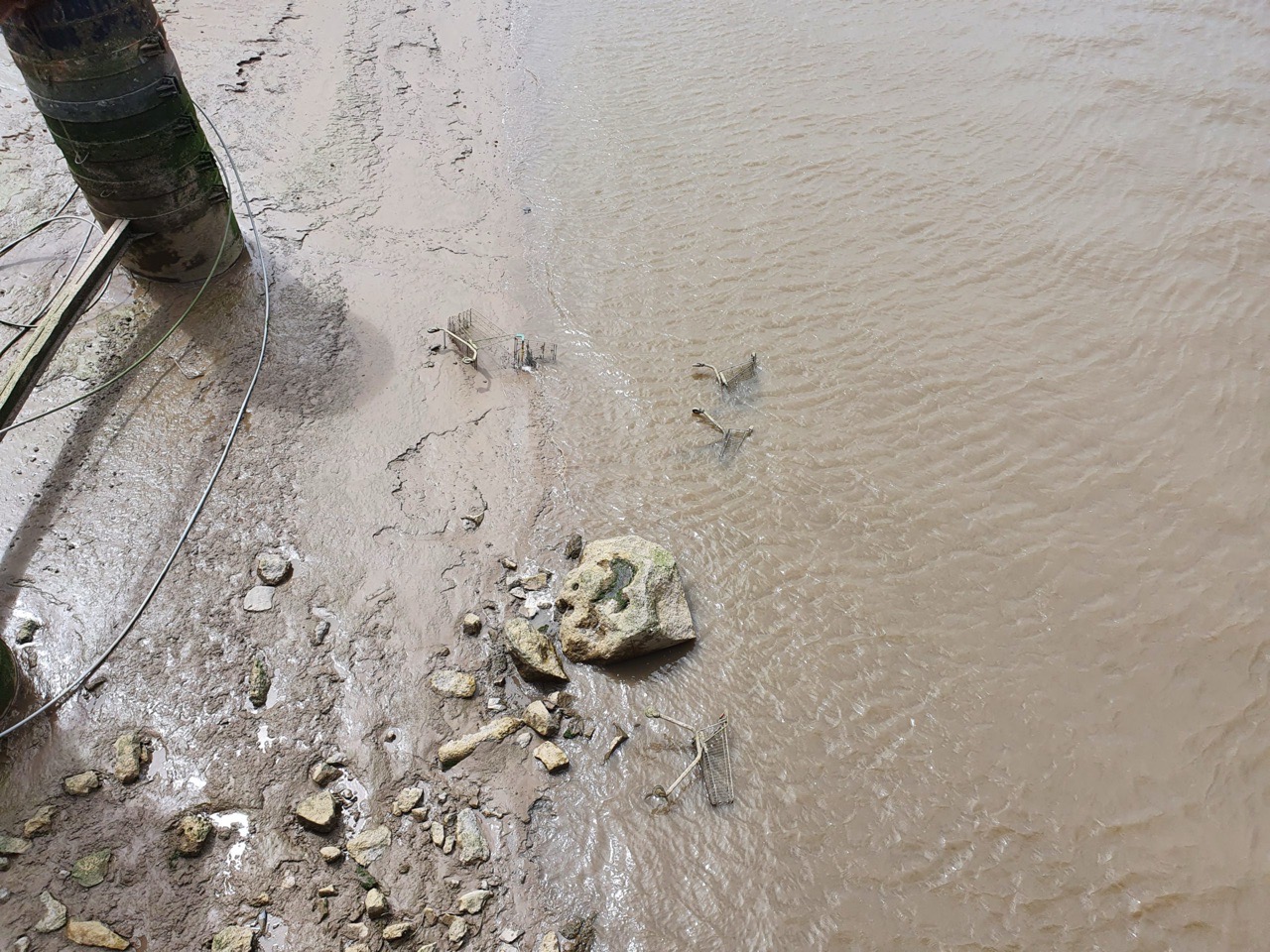
Unfortunately, King’s Lynn appears to have been hit with a wave of vandalism and crime over recent weeks judging by the newspapers. And, this week someone smashed a load of new trees in one of the town’s parks, meaning they have to be dug up and removed.

There are also countless shopping trolleys dumped in the River Great Ouse.
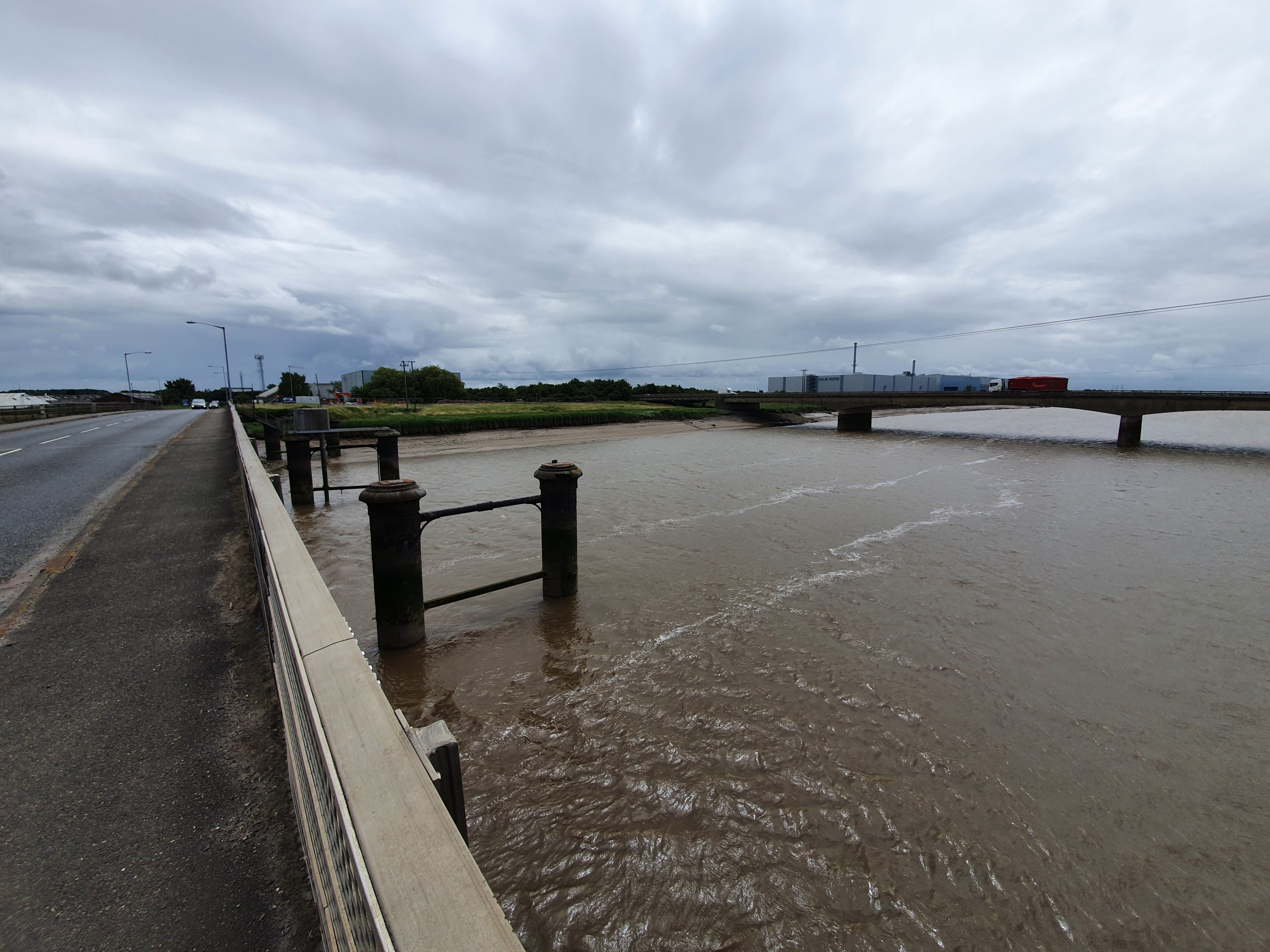


Walking along the quieter of the two road bridges across the River Great Ouse (the other is visible in the background of the above photos), I wondered what the supports next to it once held up. I assumed it must be the rail bridge that I knew went near here, although that didn’t make sense as there were no signs of a former railway line at either end.


Two of the bridge supports.

This is the support on the north side of the river.

And, the answer is here (click on the image to see a clearer one). There are two bridges in the same place on the two maps, the first map is from the 1950s and the second map is a current one. On the first map, the top bridge is the A47 road and the lower bridge is the rail bridge. On the second map, the top bridge is now Wisbech Road bridge and the lower bridge is the A47 road. Confusing…. But, that’s why the remnants of the bridge are there, it was another carriageway of the A47, which was taken down when a new road was constructed when the rail bridge was taken down following the closure of the rail line in 1959. The route of the A47 was then changed to follow much of the former rail line, leaving the bridges as they are now.
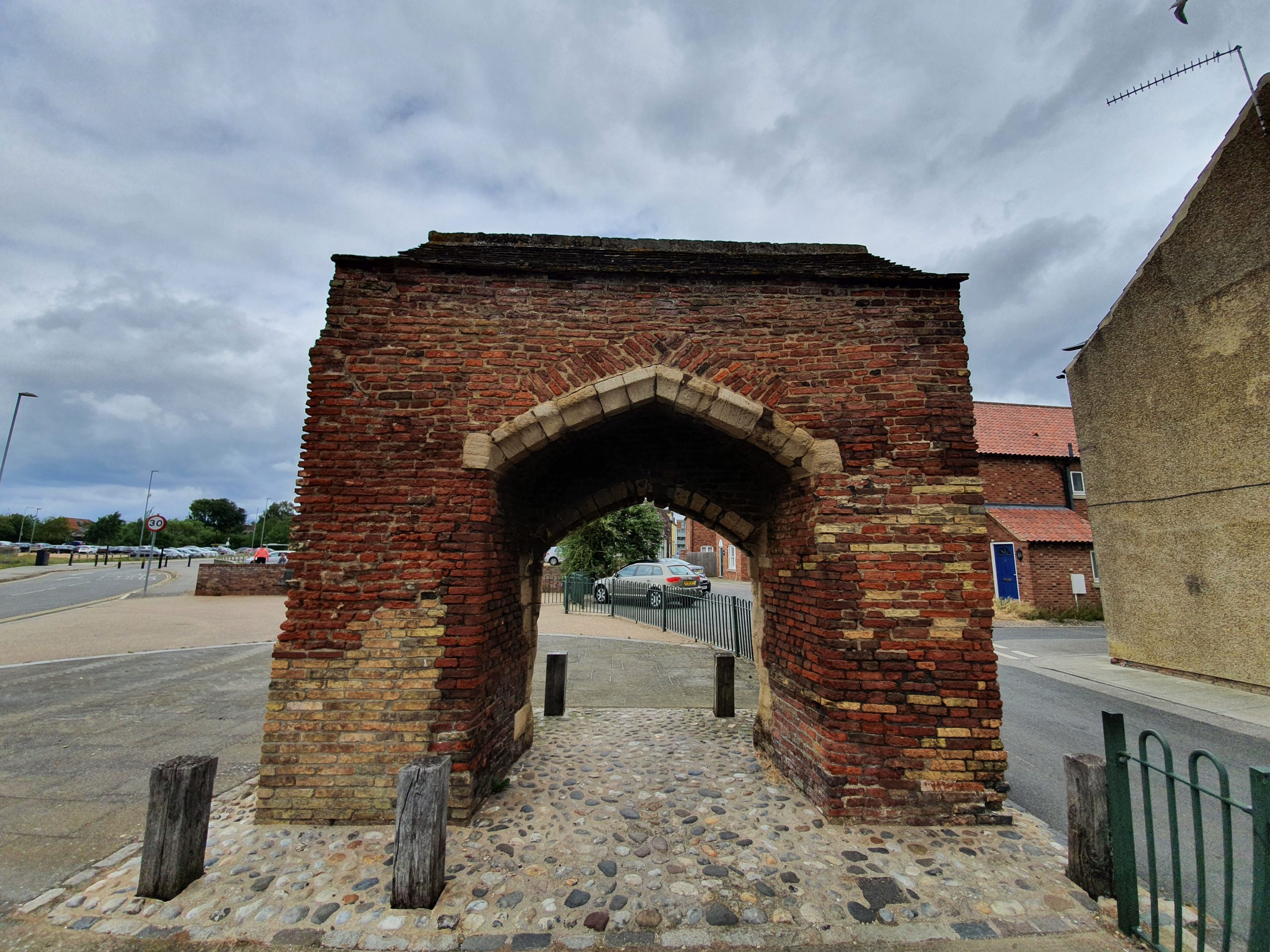
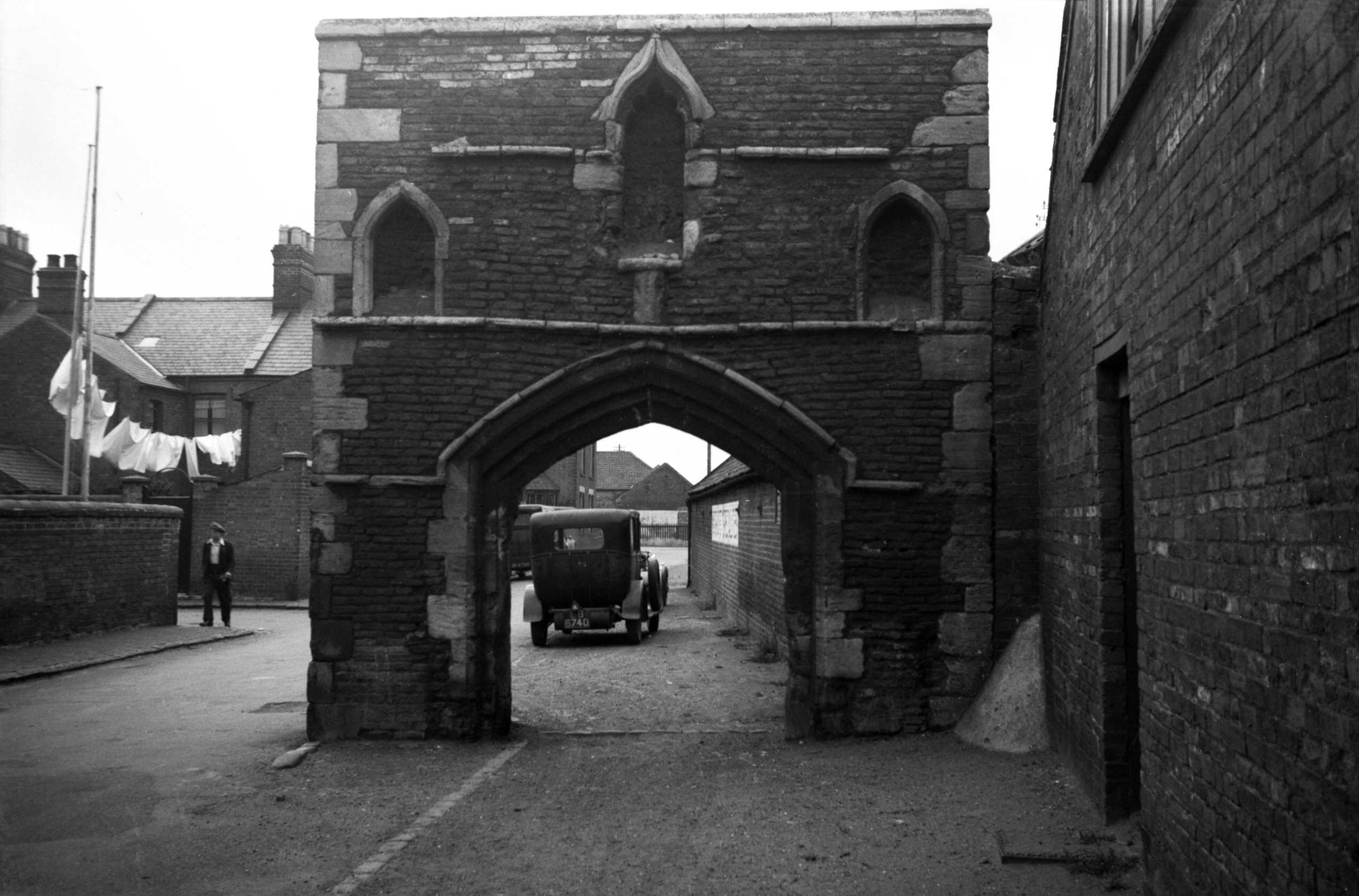
I’m not sure how I haven’t noticed this before on Hardings Way, but it’s the gateway to Whitefriars, a Carmelite Friary which stood here between around 1260 and the Dissolution of the Monasteries in the late 1530s. Although the rest of the monastery has now gone, the street names here reflect the past, there’s The Friars, Carmelite Terrace, Whitefriar’s Terrace, Whitefriar’s Road, All Saints’ Street and Friars Street.

Over the last couple of centuries, buildings have surrounded the gate, but these have mostly been cleared and the structure now looks quite exposed. This area around this gate, inside the former monastery, was also used as a graveyard and some local residents (as well as Anglian Water staff digging in the area) have uncovered bodies.
George Plunkett has a photo of how the gateway looked back in 1935 and there’s an etching of the gate by William Taylor and William Pickford.