Category: Hainford

  • Hainford – All Saints’ Church (the new one) – plan of building

    Hainford – All Saints’ Church (the new one) – plan of building

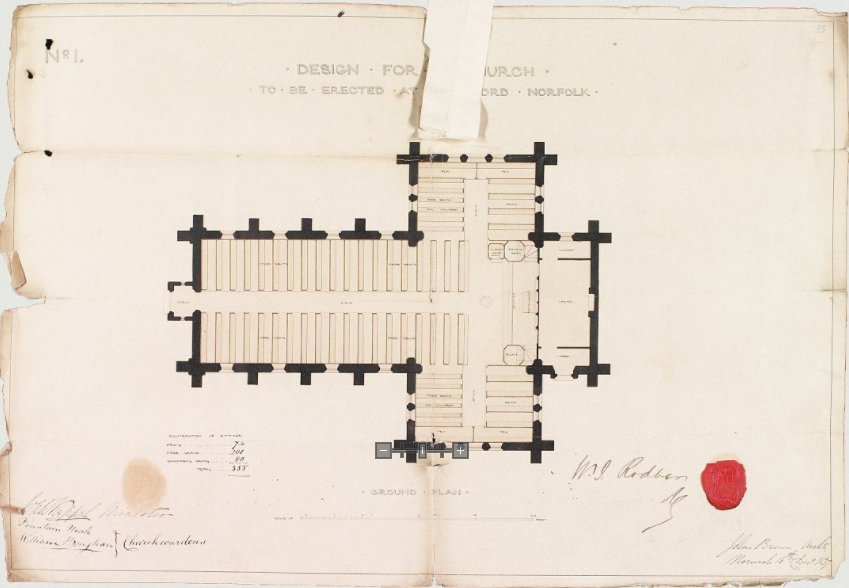
    This is the plan that John Brown (1805-1876) drew for the building of the new All Saints’ Church in Hainford, dated 1837 and so just before construction of the new church began. There were 74 seats on the pews, 201 free seats and 80 seats for children (these were located in the transept).

  • Hainford – Hainford War Memorial

    Hainford – Hainford War Memorial

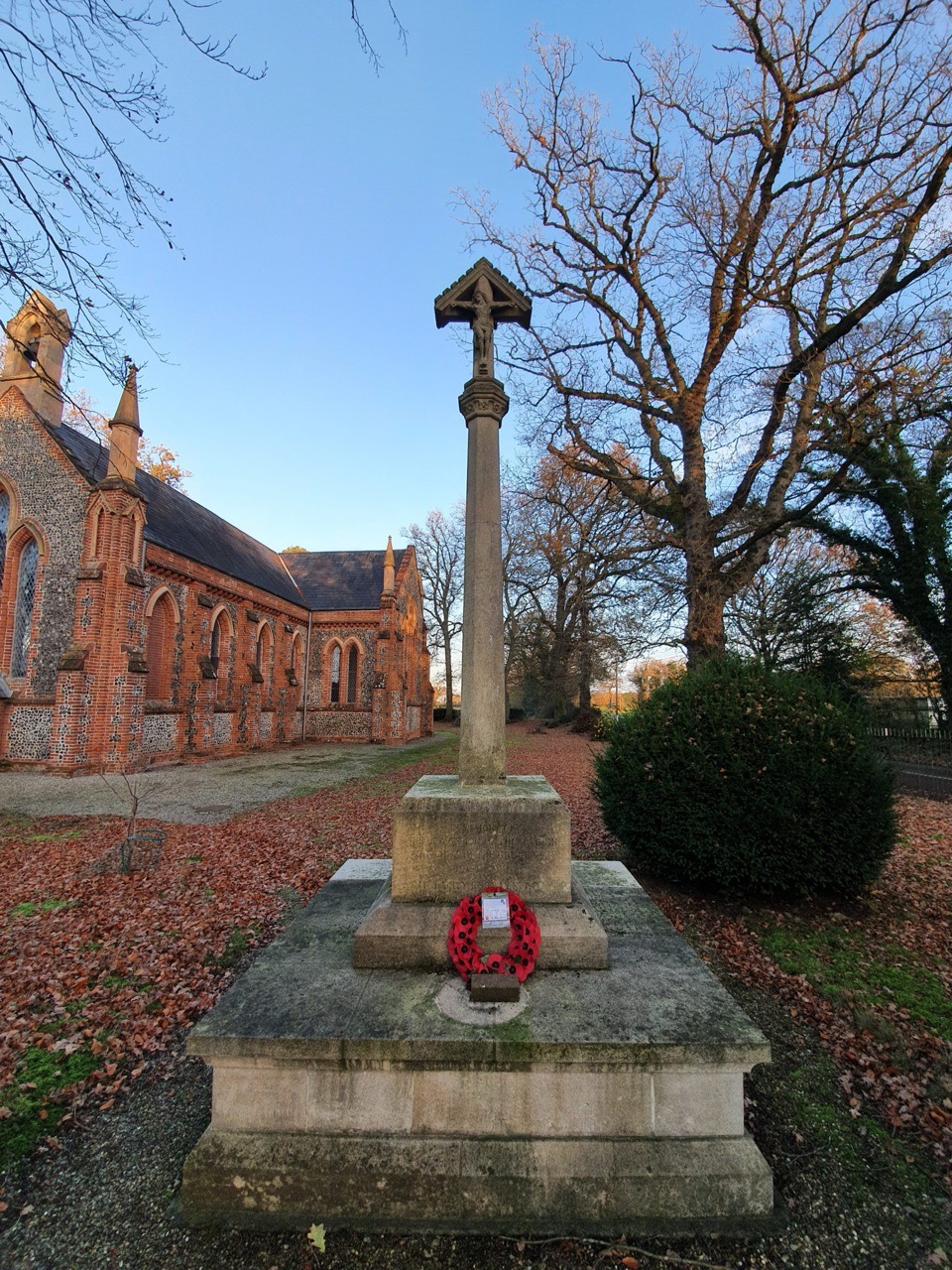
    The village of Hainford’s war memorial is located in front of All Saints Church, commemorating the 25 local men who died during the First World War. A number of local men also died during the Second World War, but their names haven’t been added to this memorial.

    The calvary cross with canopy was unveiled in the early 1920s, although this is the first memorial that I haven’t been able to find the exact date for. One of the sides had the names restored recently as they had become hard to read, although the base of the memorial does perhaps still need a little further attention.

  • Hainford – All Saints Church (the old one) – William Garrod + Amy Garrod

    Hainford – All Saints Church (the old one) – William Garrod + Amy Garrod

    This is the tomb of William Garrod and his wife Amy Garrod, once located under the nave of All Saints Church in Hainford. The church was partly demolished during the period around 1840, meaning that this tomb suddenly found itself out in the graveyard.

    I don’t much about this husband and wife, other than William died on 24 April 1681 and Amy died on 20 February 1681. Slightly amazingly, the burial records from this period have survived and are in the care of Norfolk Record Office, although there’s no information I can see on them which adds to the story. So, although I can find out nothing exciting about the Garrod family from the seventeenth century, it’s an interesting reminder of the church that was once here.

  • Hainford – All Saints Church (the old one) – John Thomas Coleman

    Hainford – All Saints Church (the old one) – John Thomas Coleman

    This grave is located to the side of the old All Saints Church in Hainford, next to the fenced off tower. It commemorates the life of John Thomas Coleman, who served in the 36th Battalion of the Australian Infantry. Normally, I’d spend ages faffing around with censuses and newspaper reports to work out what has happened for this Australian man to be buried here.

    However, a lady called Cathy Sedgwick has already gone into some considerable detail with what she has found, with her information about John located at https://ww1austburialsuk.weebly.com/hainford.html. In short, John had been born and raised in the area, with his parents Charles and Maria running the general shop in Hainford. John went to Australia when he was 18 years old and remained there until he was called up to fight in the First World War. He never fought on the front line, as he sadly contracted pneumonia en route to the UK and he died on 9 January 1917, at the age of 26.

    The National Archives of Australia have John’s service records freely available here.

  • Hainford – All Saints Church (the old one)

    Hainford – All Saints Church (the old one)

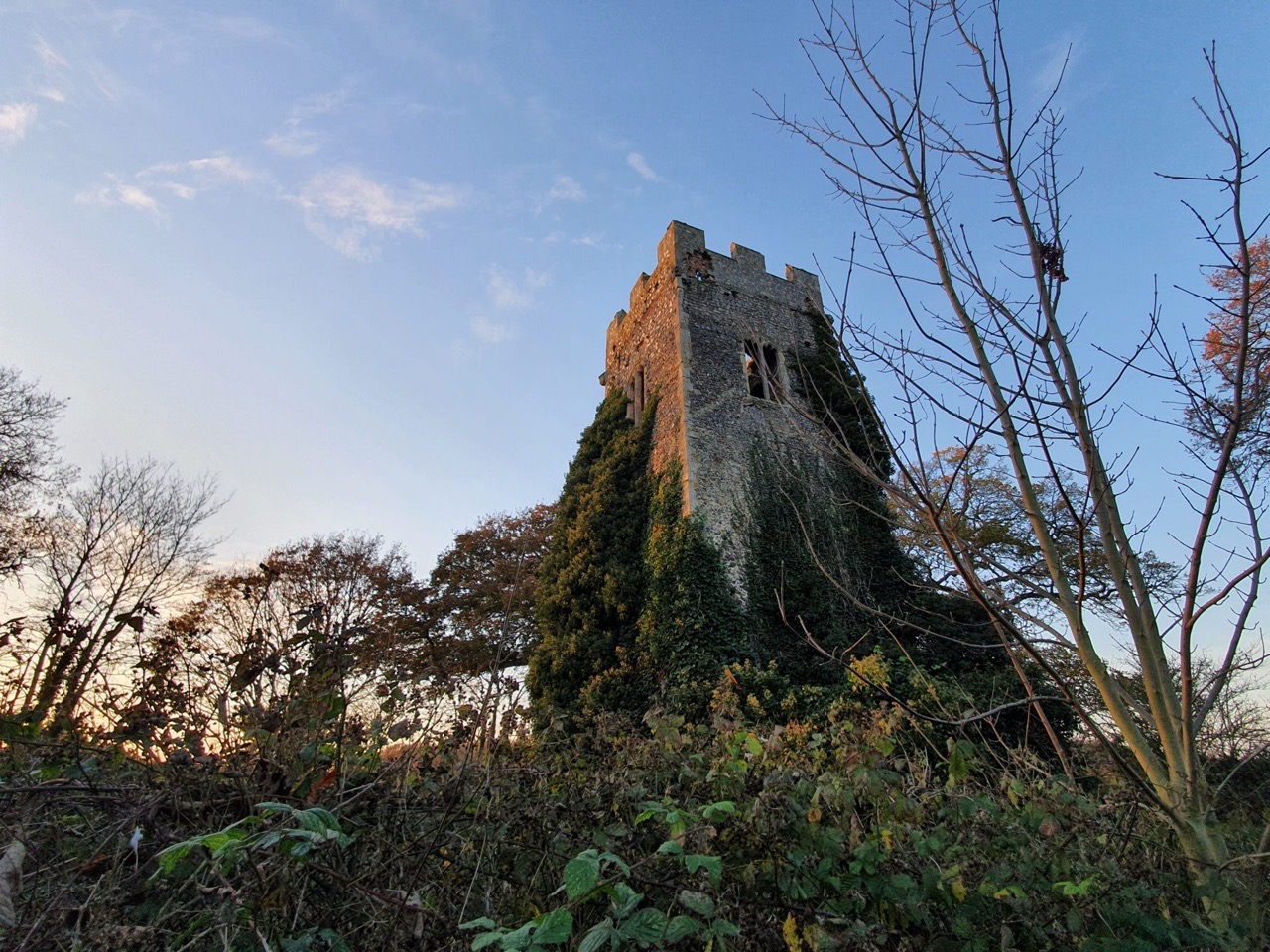
    This is the old All Saints church in Hainford, with a replacement new building having opened in 1840 about half a mile away, nearer to where the new community was located. There was a fear that congregations might flock to alternative Christian churches and indeed, near to the new church the Wesleyan Methodist Chapel was being built. So, this old church was abandoned.

    This ivy and tree foliage means that this glorious church is likely now in its death throes, it’ll last for some time yet, but the damage being done here will eventually be fatal for the structure of the tower.

    The damage being done to the building is evident, with missing stones and foliage which is firmly attached to the church.

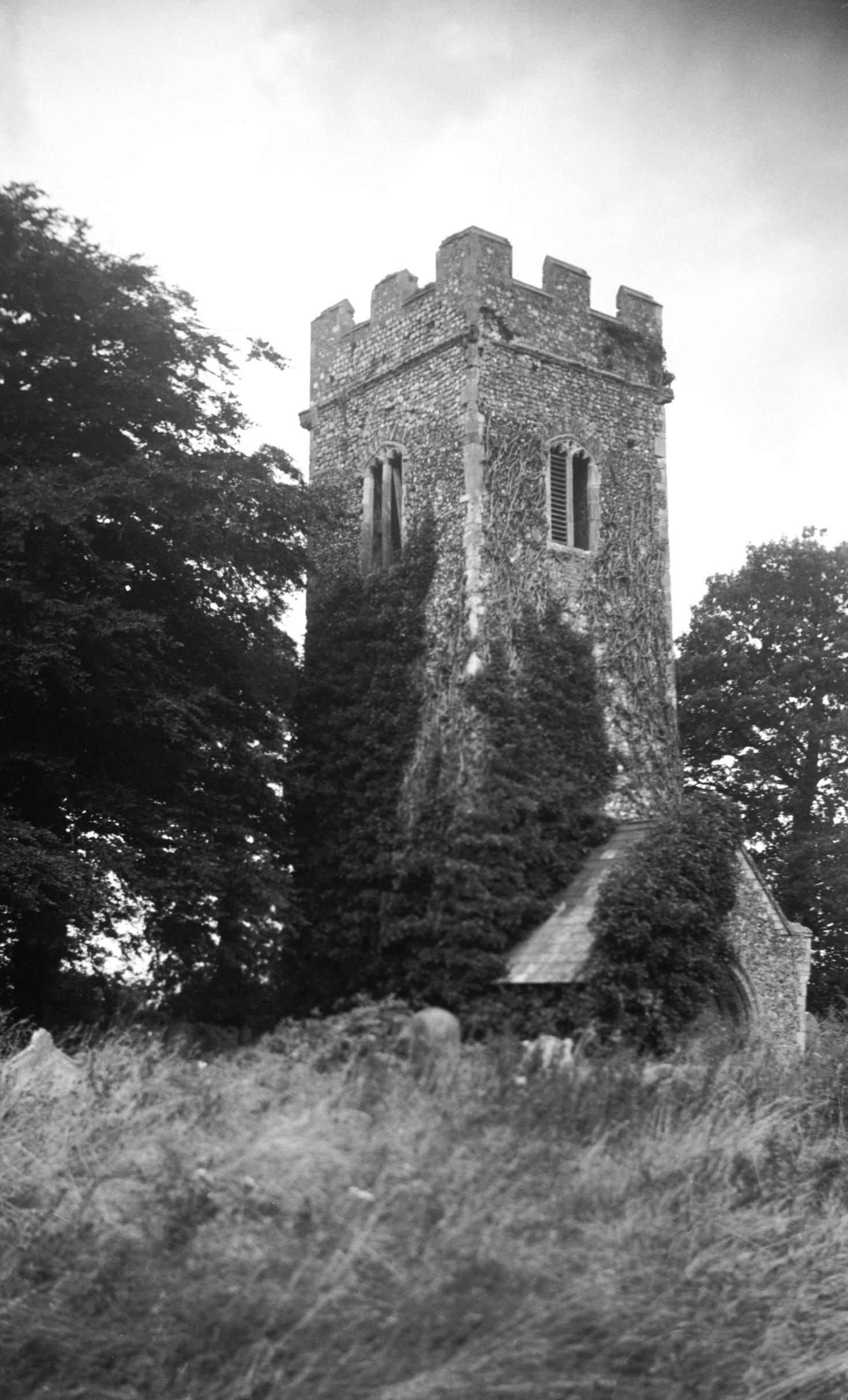
    And the tower, which dates to the late fifteenth century, is also slowly starting to fall down. The old line of the nave roof is still visible and underneath that is where the Victorian mortuary chapel was added after the former section of nave was removed.

    This tombstone is from the seventeenth century and this is an incredibly rare sight in a Norfolk graveyard, as even eighteenth century gravestones are relatively rare. But, this stone was once inside the church and is lined up with where the nave of the church once stood. I’m not sure what William would have thought of this, he was likely a rich benefactor who thought his body would remain inside the church forever, not end up like this.

    All around the tower is foliage, it hides the mortuary chapel which John Brown added here. It’s not clear exactly when the nave and chancel were removed, but I imagine that it was removed around 1840 under the supervision of Brown, if it’s correct that he was in charge of adding the mortuary chapel. It also seems that some nearby buildings use stone from the old church, so this must have been flogged off at the time (or recycled, whichever word you prefer).

    This church remained in use until the new one was opened in 1840 and the graveyard here is still in situ. There’s a better photo of the mortuary chapel, by the wonderful George Plunkett, which was taken in 1965.

    The comments from the internal report by the Church of England, noting Brown’s mortuary chapel which was added on to where the nave once stood. This internal note also mentions something else interesting, relating to the foundations of St. Mary’s Church in Hainford, which was once in the same location. At a quick glance, I can’t find out anything about this (and the old tithe maps give no clues), but it might solve a mystery about why the churchyard is so large.

    I usually like the idea of restoring churches, although the Church of England seems to have muddled views on this. It’ll spend a fortune fiddling about with using the exact stones on a window repair, but then abandon a building a few years later if it suits them to do so. I’m thinking about Bixley Church here….. The collapse of churches such as Bixley and Sco Ruston is recent though, the damage done at Hainford is getting on for two centuries ago. It would be ludicrously expensive for this church to be repaired, even restored to the basic tower that there is at Panxworth, so this will always be a ruin. But, it’s still beautiful and I very much like it, and although it’s not ideal that nature is overtaking the structure, it does give it even more character.

  • Hainford – All Saints Church (the new one)

    Hainford – All Saints Church (the new one)

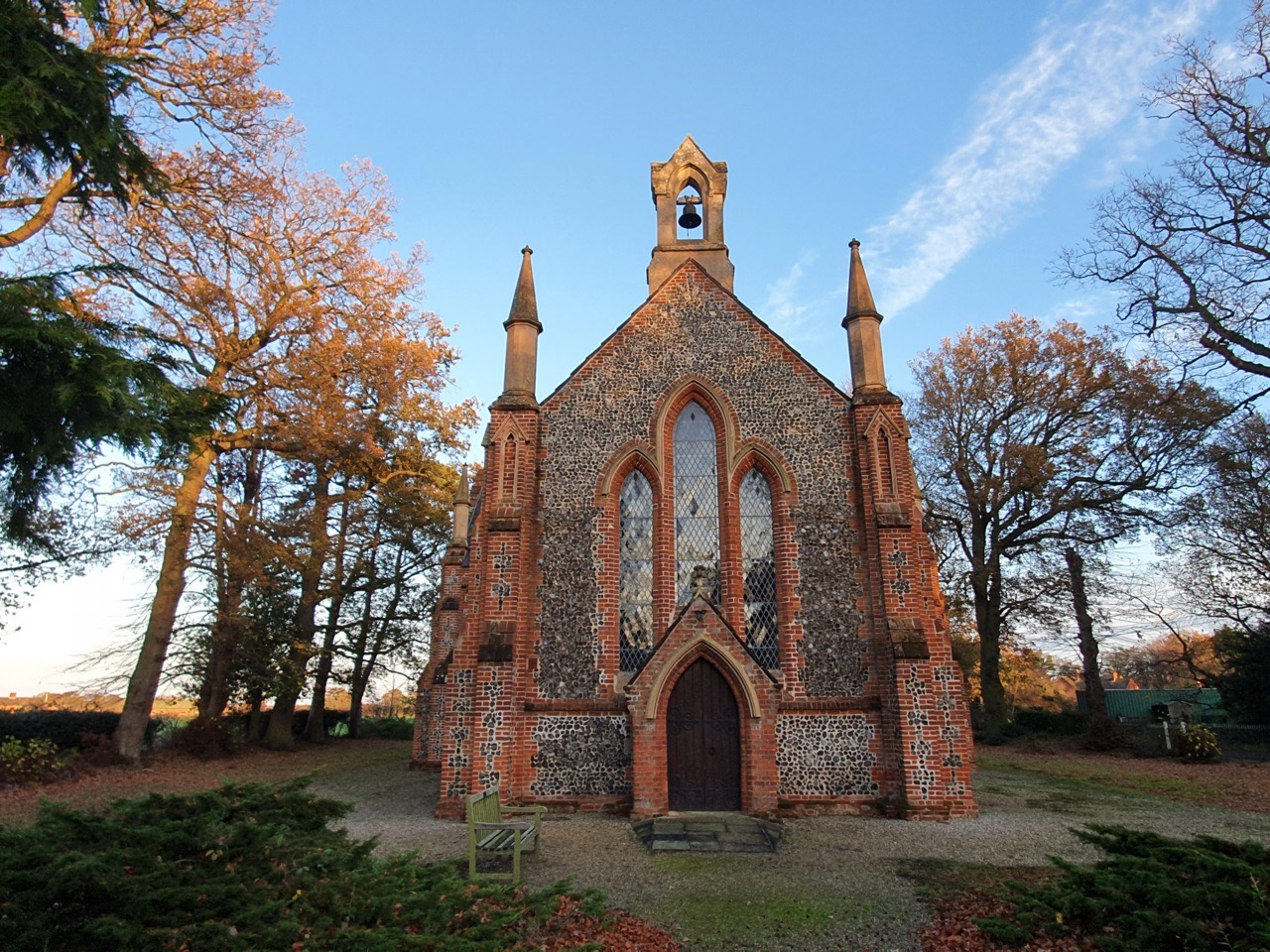
    On the church spotting mission that Richard and I are undertaking, this looked confusing to me as it was clearly Victorian and almost felt like a Catholic church. It is though one of the early Victorian churches, designed by John Brown (there’s a plan from 1837 of this church here) built between 1838 and 1840. The old church is around half a mile down the road, but more on that in another post.

    The intention of building this church was to have one nearer to where people actually lived in Hainford, as the older church had become a little detached from the community that it served. And, it was also falling down and that’s not ideal.

    One thing that I’d like to know is what the parishioners thought at the time. I can’t engage with this building, even though it’s 180 years old and is perfectly well-built, it lacks character to me. There are no burials in the churchyard, as they’re still at the old church, so it’s more of a chapel at ease in many ways. A correspondent to the Norfolk Chronicle wrote in 1908 about some churches in the area, adding about this one:

    “There is not much of interest at Hainford, the church only dating from 1840, when it was erected at a cost of £1,200 in place of an older building of which only a part now remains”.

    Most of the money for the building of the new church was funded by the Incorporated Church Building Society, but other contributors included the Norwich Diocesan Church Building Association, the Rev. WAW Keppel (the rector) and the Rev. J L’Oste. Indeed, the rector donated a large sum of money, suggesting he was very much in favour of the plan.

    This is from the files of the Church of England, from the 1960s, giving information about the two churches. I’m not sure that the author was that engaged with the new church either, it’s a very technical description of the church. More on what was written about the old church in another post though.

    One element I find slightly strange is that I can’t find much (indeed, I can’t find anything) in the newspapers of the time that is particularly excited about the new church. There’s no mention of fund-raisers, bazaars and the like, which I’d usually expect, it’s just lists of who donated money to fund it.

    Anyway, the new church is no doubt very much part of the community and much loved, but perhaps it will architecturally much more interesting to future generations…..