Category: Brundall

  • Brundall – Name Origin

    Brundall – Name Origin

    Brundall was on our third training walk for the LDWA 100, so here’s a quite meander over to The Concise Oxford Dictionary Of English Placenames.

    Brundall, Norfolk. Brundala in Domesday Book, Brundale in 1180 and Brundhal in 1257. Perhaps a compound of Old English bromede, or broomy, and Halh.

    The ‘halh’ bit is usually a secret place, a tucked away area or some land which is separate from its administrative area. The word ‘broom’ is an old English word for a bramble and by coincide (I assume) there’s also a boat company called Brooms of Brundall. All sounds a bit convoluted and unlikely to me, but I like the idea of Brundall meaning ‘the secret brambled area’.

  • Brundall – Brundall Gardens Railway Station

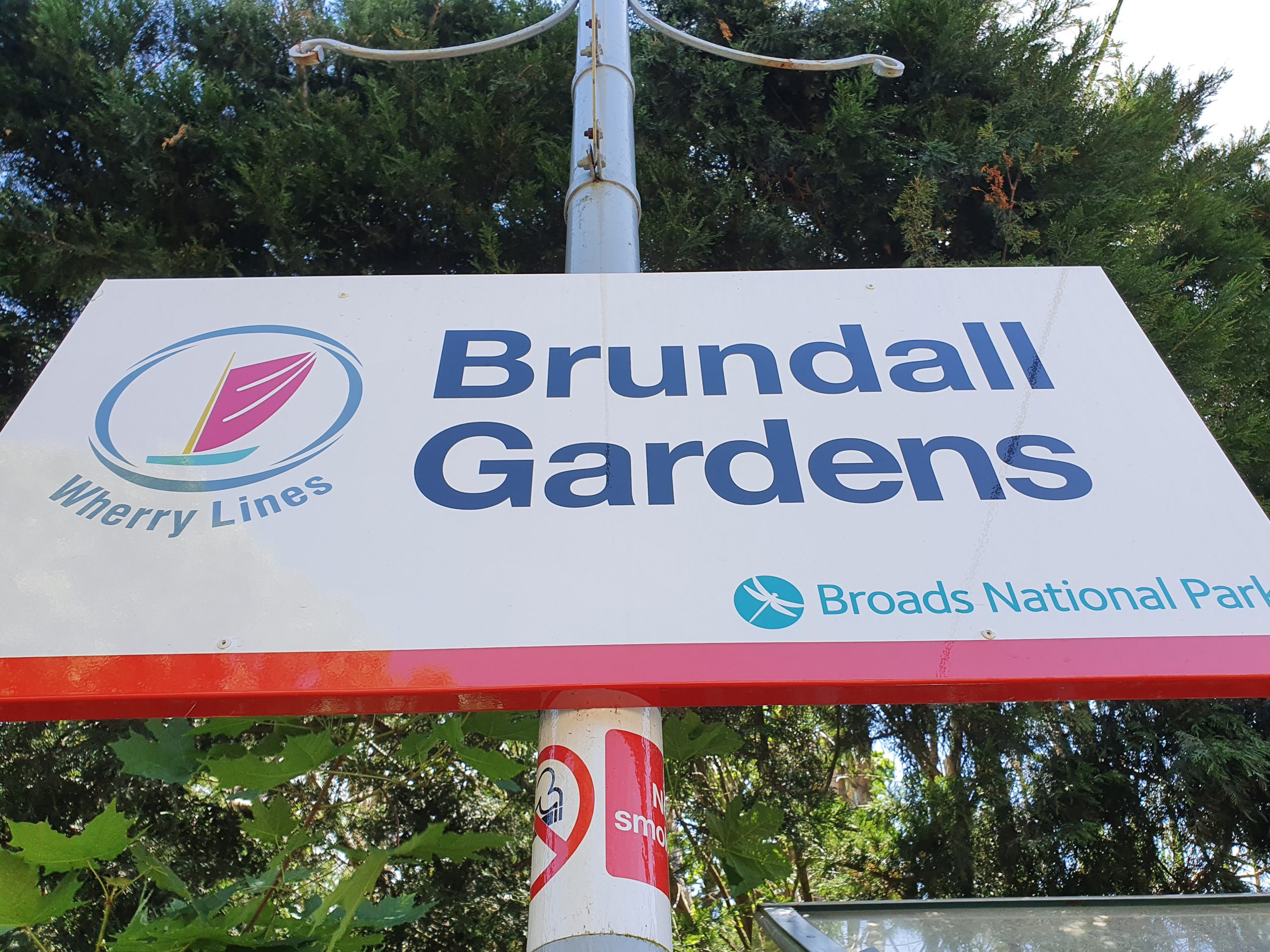
    Brundall – Brundall Gardens Railway Station

    We went through this railway station on our third training walk for the LDWA, it’s one of two stations in Brundall.

    Brundall Gardens is a little unusual as a railway station as it’s a more modern station that was added to an existing line. It was built in 1924 on the Norwich to Great Yarmouth line, located around four miles from Norwich and less than one mile from Brundall’s main railway station. On the above map from 1900, the railway station is just above the field which is numbered 7.

    Standing on the southern platform, this is the line to Great Yarmouth. Operated by London and North Eastern Railway (LNER), the railway station opened on 1 August 1924 to allow access to the nearby 76-acre site of Brundall Gardens. It was originally known as Brundall Gardens Halt and was renamed as simply Brundall Gardens in 1948.

    The gardens that the railway station was built for had been purchased by Michael Beverley in the 1880s and he had laid them out to include waterways and lakes. Frederick Holmes-Cooper, who had made his money from the cinematic industry, bought them in 1921 and the gardens were being visited by 60,000 people in 1922. The installation of the railway station cost £1,733 and Cooper gave LNER £150 per year to fund a stationmaster. There’s a map of the gardens at http://www.brundallvillagehistory.org.uk/maps.htm.

    Still standing on the south platform, this is the line to Norwich. A booking office was placed on the north platform, with a waiting room and passenger accommodation installed on the south platform. Only the booking office now remains, other than for a basic shelter on the south platform.

    On the footbridge, looking in the direction of Great Yarmouth.

    On the footbridge, looking in the direction of Norwich.

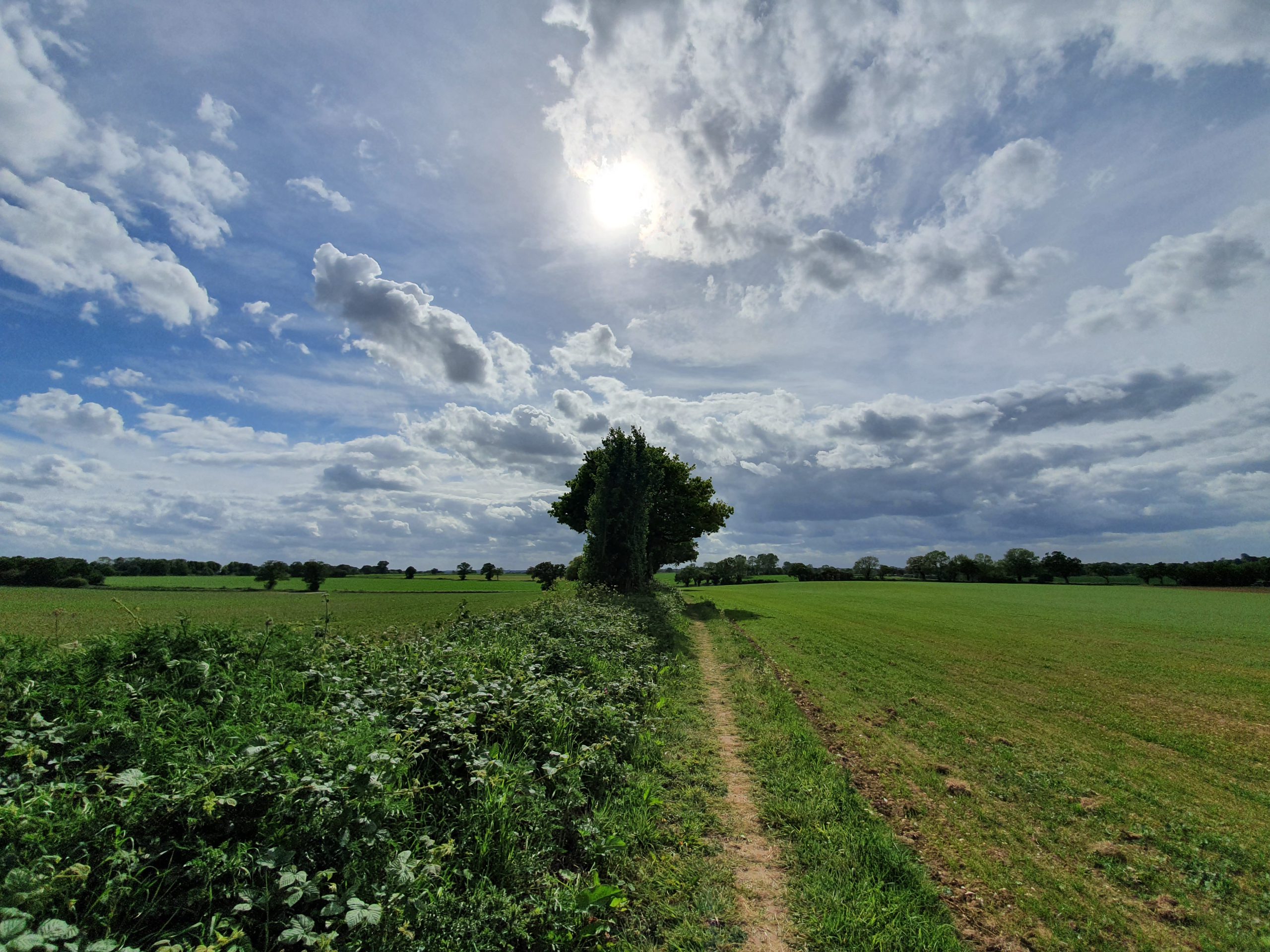
    There’s a footpath that goes from Postwick towards the station.

    A section from the 1939 LNER railway timetable.

  • Brundall – Church of St Michael and All Angels

    Brundall – Church of St Michael and All Angels

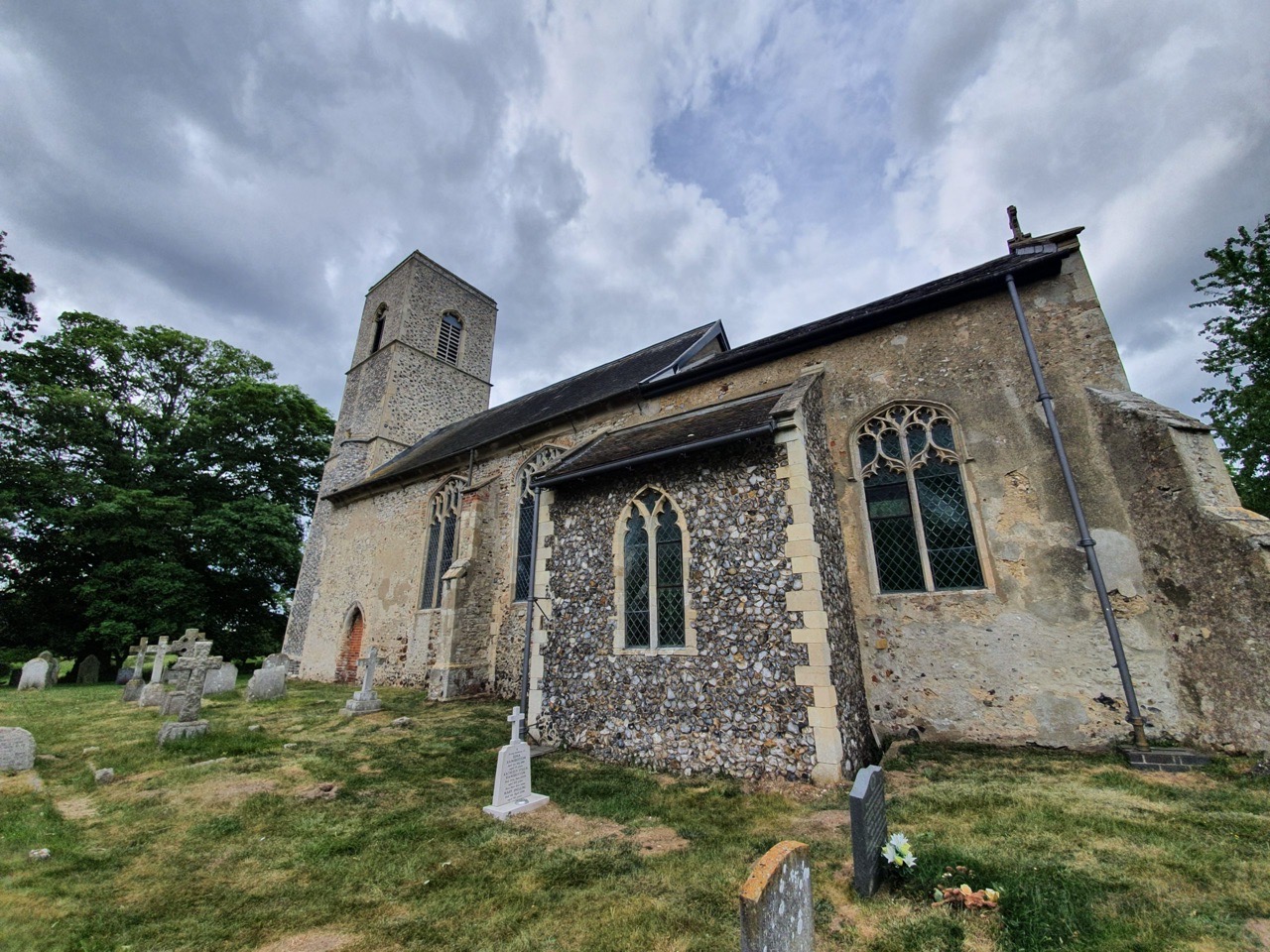
    We visited here on our third training walk for the LDWA 100 next year, and it’s the Church of St Michael All Angels on the edges of Brundall, in what is the deserted medieval village of Braydeston. Although nothing now remains of Braydeston, this settlement was listed in the Domesday Book in 1086 and it’s known that there were ten households here in 1428. The date of this means that the village wasn’t abandoned due to the Black Death, it was probably just a change in either the fishing or farming needs of the local community.

    The village of Braydeston was located in the field by the church and this building dates to the thirteenth century, although has some Saxon structure within it. For such a relatively small settlement, it’s a substantial church and the tower was added later following a bequest from John Berney in 1440. The roof line of the church was also lifted at the same time at what appeared to be the height of the building’s fortunes.

    Due to the current situation, there was no access to the interior of the church, but it does hold one of the few bread ovens which remain in church buildings.

    An early medieval doorway which was bricked up in the nineteenth century. The church had fallen out of usage in the seventeenth century, but as part of the Victorian resurgence of religion, services were again held here and a new organ was installed.

    One of the railed-off tombs.

    I’ve seen many grave markers like this, although they’re normally older. This one commemorates the life of Elizabeth Mary Theobald and Harold Thomas Theobald.

    At the front of the church, there was a footpath query in the early twentieth century, something a little rarer then. This related to the meadow path which crosses into Brundall and although it was defined as a footpath, cars started to use it, not least hearses getting to the church. The local council said that cars could use the track, although wiser heads have since prevailed and it’d be quite difficult to get a hearse along that track today.