Category: Bawburgh

  • Bawburgh – St Mary and St Walstan Church (James Reeve)

    Bawburgh – St Mary and St Walstan Church (James Reeve)

    This is the grave of James Reeve located in the churchyard of St Mary and St Walstan Church. There’s not much of a story I can tell here, but I liked the inscription which reads:

    “LIfe is transitory and fleeting, death uncertain as to his approach”.

    James Reeve was baptised in the church on 27 September 1771, the son of Henry Reeve and Mary Reeve. He married Martha Petchell in the church on 2 December 1802. James died on Wednesday 18 March 1829 at the age of 57 and was buried on Thursday 26 March 1829 at a service overseen by the curate Edward Postle. It’s a reminder though of how important the church was in the lives of communities, where individuals would be baptised, married and buried all at the same location.

  • Bawburgh – St Mary and St Walstan Church (1939 and Now)

    Bawburgh – St Mary and St Walstan Church (1939 and Now)

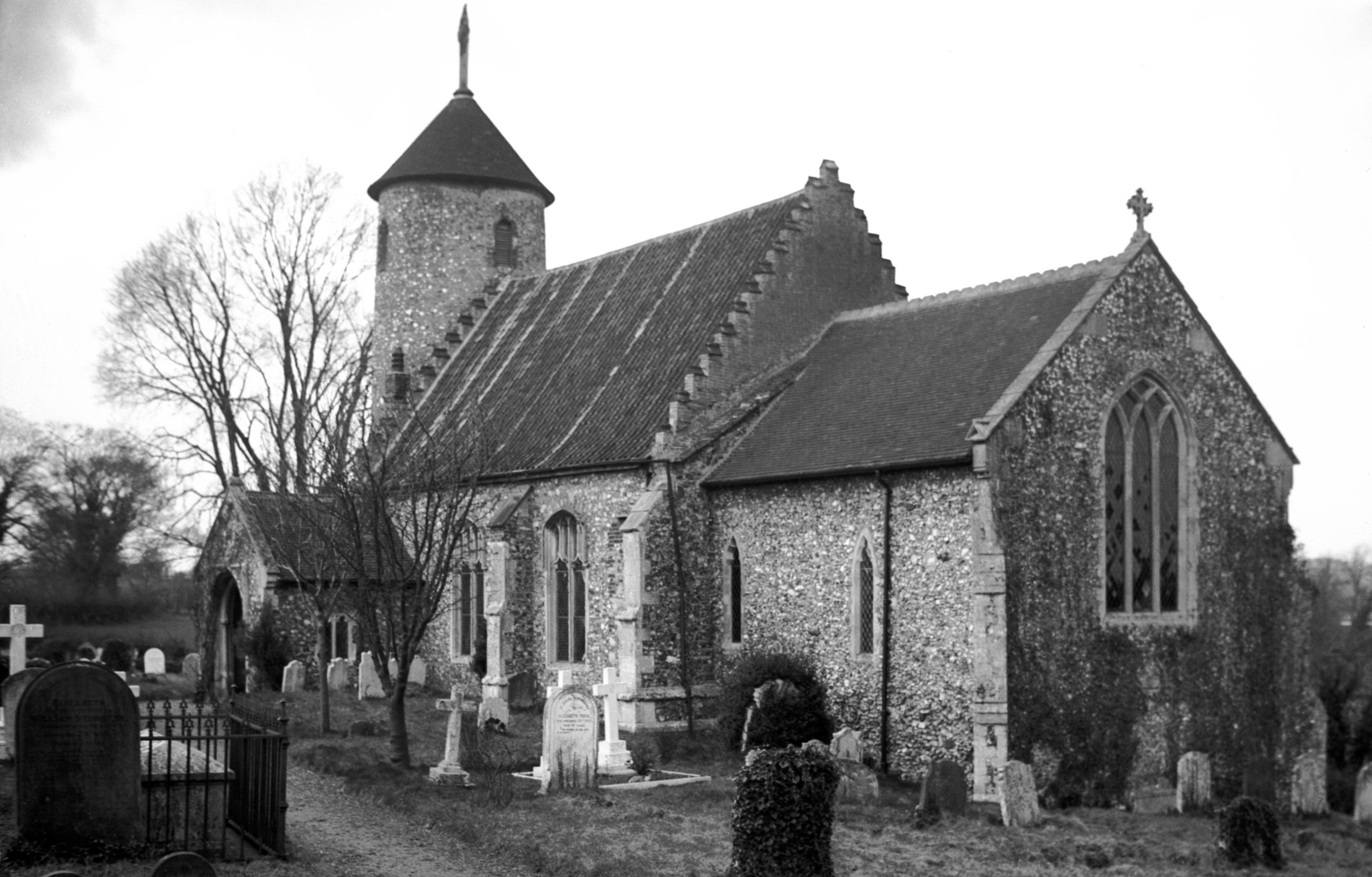
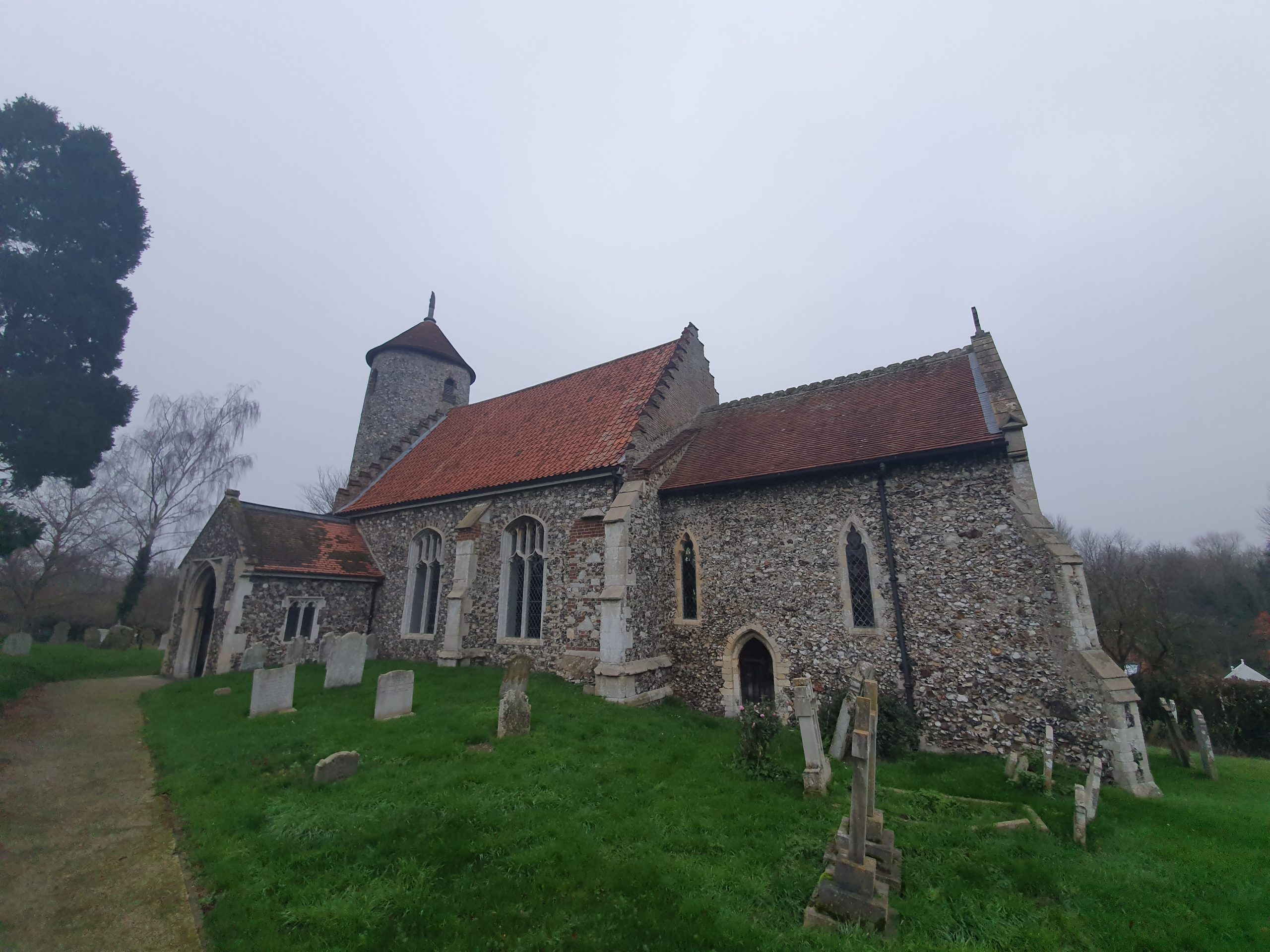
    This is St Mary and St Walstan Church in Bawburgh as it looks in 2020, and as it looked from pretty much the same spot in 1939. Not much has changed, the grave in the bottom left of the photo is new, but in the older photo there’s a grave covered in ivy. That grave is still there, but the ivy has now been removed, although it has destroyed the inscription on the stone. Sometimes I wonder why some graves are badly damaged and illegible in cemeteries, this is one of the reasons why….

    This becomes a bit of a spot the difference puzzle, but I quite like seeing what has changed. The slightly wonky drainpipe in the old photo has gone from where the nave meets the chancel, a tree has been removed in the foreground, but otherwise nearly everything is reassuringly unchanged over the last eighty years.

  • Bawburgh – St Mary and St Walstan Church

    Bawburgh – St Mary and St Walstan Church

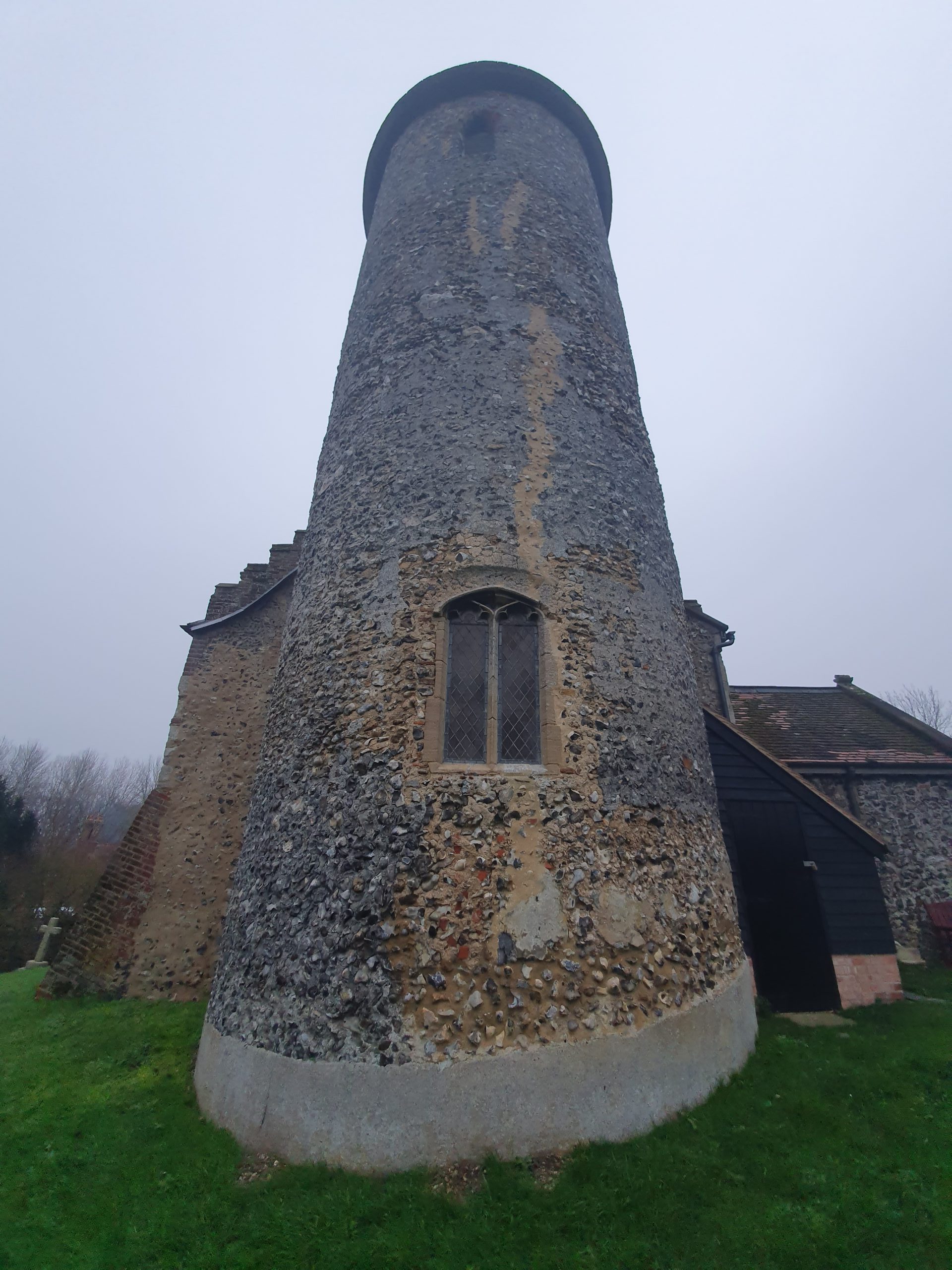
    This is the Grade I listed Church of St. Mary and St. Walstan at Bawburgh, one of the few churches which is dedicated to a Norfolk saint. The stepped nave gables give it a distinctive look and these date from 1633, when the building was repaired following some decades of decay.

    There has been a church on this site since around the late tenth century, linked to the miracle of St. Walstan and the well. That well had ensured that the church had become a pilgrimage site and this brought some wealth, all suddenly brought to an end with the Dissolution of the Monasteries and the effective end of such pilgrimages. At one stage during the peak of its wealth, the church had seven Chantry priests and supported six canons.

    The tower of the church dates from the twelfth century, with the chancel being from the beginning of the fourteenth century. The nave is late fifteenth century, likely having been rebuilt given the funds that had come in from the pilgrims.

    This side of the churchyard drops down and the supporting buttresses are visible.

    The ancient north door.

    I have no idea how old this iron support is sticking out of the wall, but the bulging state of the north wall suggests there have long since been problems, even with the buttresses.

    The chancel end of the church.

    The bricked up doorway at the end of the chancel, the reasons for which I’m unsure of.

    There doesn’t seem to have been any excessive repairs from the Victorians, with the Reverend Gabriel Young noting in the early twentieth century that there had recently been a desperate need to raise funds to fix the tower to prevent it from ruin.

    The interior was closed, but apparently there are some notable wall paintings which the church hopes to have professionally restored over the next few years. In 1905, the local press reported that a handsome newly repaired wooden chancel screen had been installed in the church. The same report added that “the parish had the honour of furnishing the first couple who ever won the Dunmow Flitch in 1445”. This meant that a couple who could honestly say that they hadn’t had an argument in the first year of marriage were given a flitch of bacon.

  • Bawburgh – St Walstan’s Well

    Bawburgh – St Walstan’s Well

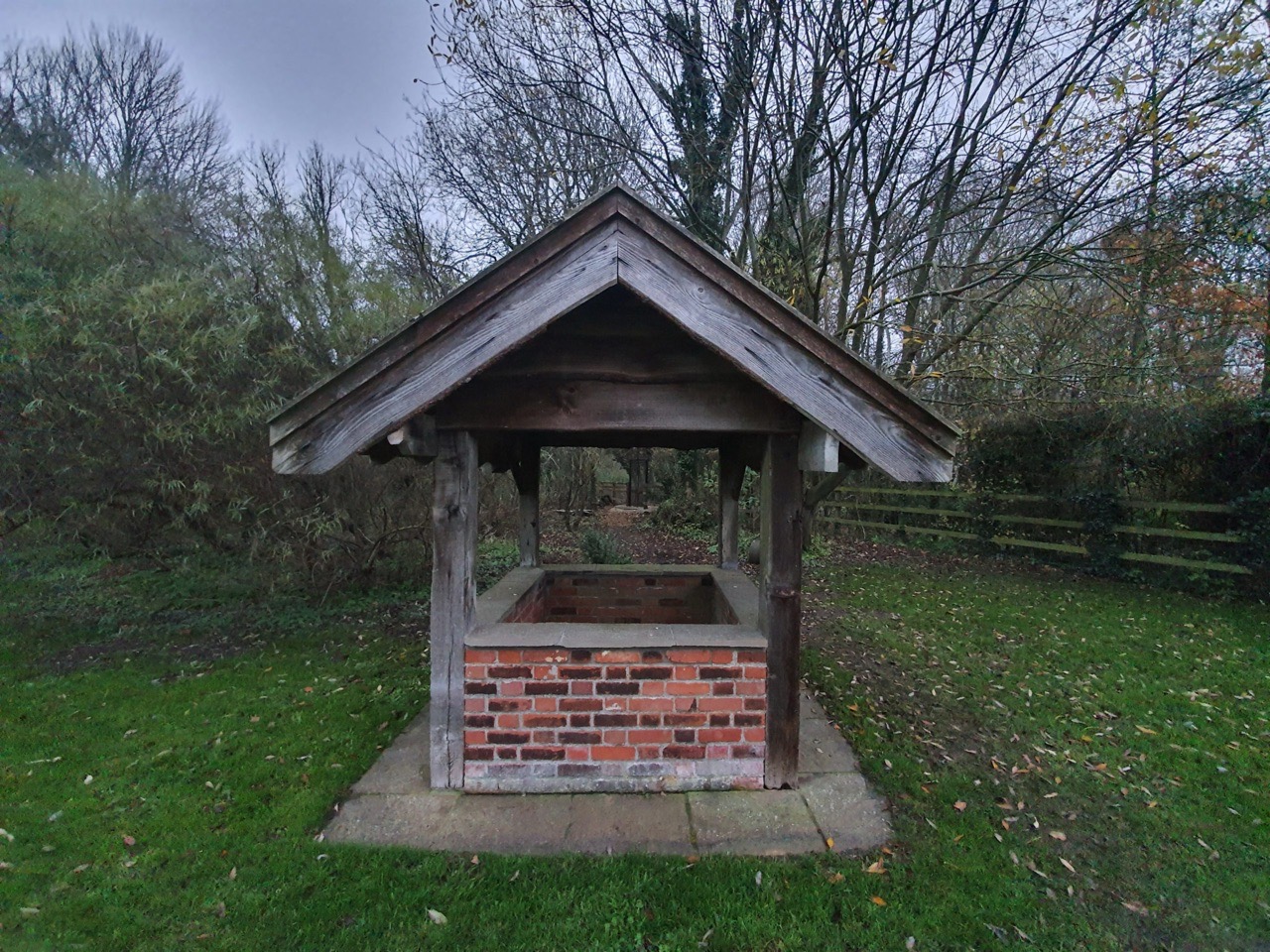
    This is St. Walstan’s Well in Bawburgh, which was a pilgrimage site in the medieval period. Walstan was an Anglo-Saxon Prince who would have likely had some wealth, but he decided when aged 12 that he wanted to dedicate himself to a life guided by God. Very pious….Anyway, after a worthy life as a farm worker and servant of God, he received a message that he was going to die within days.

    So, knowing that he was going to die, Walstan decided that he would stop his work and would allow himself to be pulled around East Anglia by two bulls. He must have loved the random, as he decided that the bulls could decide where he should be taken and this would be God’s will. God decided that Walstan’s now dead body would be taken to Taverham and Costessey, which doesn’t sound very exotic. Along this route wells had magically been popping up, which is what happened in Bawburgh. At this well, or spring, there was water which magically healed sick humans and animals. A pilgrimage spot had been created and this did very well indeed (excuse the pun). The Dissolution of the Monasteries saw an end to this little arrangement though.

    The medieval well structure has been replaced by this more modern arrangement. There was a local walk printed by the Norfolk News in 1896 which mentioned that in the river here that believers could still see the print of his foot in the water. Regarding the well itself, the author of the article reported that “it does not look very brilliant nowadays, though a rustic informed us that the water was good”.

    Don’t drink the water…..

    The Church of Bawburgh St Mary and St Walstan is visible in the background.