Category: Attleborough

  • Attleborough – Bear Inn Public House (closed in 2000)

    Attleborough – Bear Inn Public House (closed in 2000)

    Copyright : Google Street View

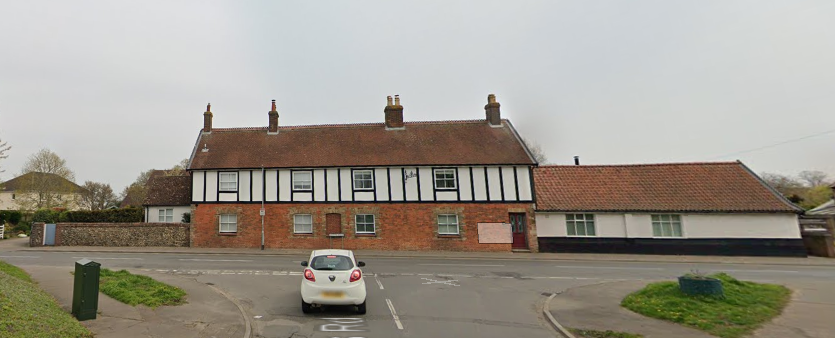
    Julian and I went on a little meander at the weekend to the London Tavern and the Griffin Hotel as part of our attempt to visit every pub in Norfolk and Suffolk. There aren’t many pubs left in the town centre of Attleborough, but I was merrily reading the story of the Bear pub which was located on Queens Road. The odd story of this pub’s demise was written about in the Diss Express on Friday 16 April 1999, although they were hopeful of finding a resolution at the time, when the owner Spring Inns announced they wanted to sell the building. Spring Inns had purchased the property from Pubmaster and they were one of the pub companies that was swept up by the larger pubcos, leaving a trail of destruction in their path, but I digress.

    But the relevant part here is that the new landlady, Susan Dickerson, had been the landlady of her pub for just two days before Spring Inns announced their decision. That feels highly sub-optimal. She had been promised a two year lease and had left her job working on the checkout of one of the town’s supermarkets. She had thrown herself into her new pub, operating it on a community basis with three pool teams, a darts team and a bowling team. Dickerson was hopeful of a positive outcome as she clearly loved her pub, but it shut anyway and was turned into housing. It was a sad end to a pub that had been trading since the late eighteenth century and it looks like a traditional old building that would have been a credit to the town.

    There are some other stories from the pub over the centuries, including from 1853 when a James Back and a William Barnes were drinking in the venue. They then thought it would be a marvellous idea to race two friends, John Anderson and a lad called Gooch, on their horse and cart and Back and Barnes were riding in a waggon without reins. This ended in disaster when there was a crash with Anderson dying and Gooch being seriously injured. The two drunken men were fined £1 each, but the Bear weren’t considered culpable in the whole arrangement. Numerous coroner courts and public auctions were also held at the Bear, a reminder of when pubs were very much part of their local community and their functioning. They still are to a large degree, but unfortunately there are far fewer of them.

    Anyway, I’d like to know more about this pub and if anyone does have any recollections or photos, let me know at jw@julianwhite.uk.
  • Attleborough – Griffin Hotel (Two Julians)

    Attleborough – Griffin Hotel (Two Julians)

    This post is also available at www.norfolksuffolk.org.uk where our back catalogue of posts about pubs in Norfolk and Suffolk can be found  🙂

    20230805_214747

    We visited Attleborough at 21:00 on a Saturday night and the two town centre pub options listed on CAMRA’s Whatspub were the London Tavern and this former coaching inn, the Griffin Hotel. I have to some degree wax lyrical about the Griffin Hotel as it first opened in the 1560s when Queen Elizabeth I was on the throne. I’m enthralled what the atmosphere of coaching inns would have been like. Travel was more dangerous and challenging during those times, so travellers reaching their accommodation for the evening would have had an element of relief. They would have been keen to have a meal, several drinks and accommodation provided, all the elements of a positive jamboree of entertainment.

    20230805_214925

    The venue notes that this passageway was once paved with wooden cobbles to muffle the sound of horses arriving and departing, to prevent disturbing the sleep of the weary travellers already in their beds.

    20230805_214847

    This wing overlooking the church was added in the eighteenth century.

    20230805_211737

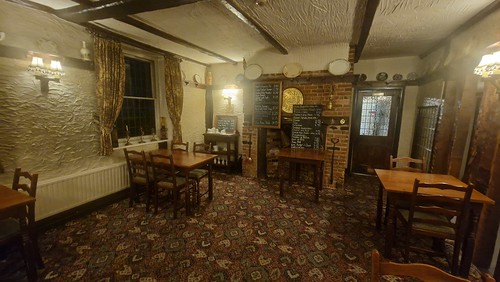
    The venue’s dining and breakfast room. It might not look the most modern, but it’s in keeping with the building and its cosy feel.

    20230805_211744

    The menu.

    20230805_212658

    The special’s board.

    20230805_211856

    There was just one real ale, the Battle of Britain from Wolf Brewery. It wasn’t quite the choice of four or five real ales that we had seen listed on Whatpub, but it was a well kept copper coloured ale.

    20230805_212803

    The bar itself is in keeping with the general decor which is full of character and I have a sense of wonder of just how many people have walked through here over the centuries. The pub was quiet when we visited, just a couple of other customers which couldn’t have been in much more contrast to the London Tavern. Julian noted that he could hear the music from the louder pub whilst in this pub, it’s nice of them to share their entertainment like that.

    20230805_214600

    The smaller snug room to the left of the main entrance.

    20230805_213550

    A beer pump. There were numerous framed photos on the walls, somewhat eclectic but adding atmosphere to proceedings none the less.

    I very much liked this venue, the heritage is undeniable and it had a calm and cosy feel to it. This must be one hell of a challenge to operate at the moment given the sheer size of the building and the energy demands that it must have amongst all of their other costs. Attleborough no longer needs the level of accommodation that it once did when it was a coaching town, but there were still numerous places to stay and so that means room rates aren’t likely to go that high.

    Their on-line reviews on Google aren’t perhaps helping them much as they picked up several negatives a few years ago, which might put current potential diners and guests off. However, their accommodation element seems to have better reviews and I imagine that this is what is sustaining them at the moment. It’s essential to the community that venues such as this continue to thrive, as it would be horrifying for an Elizabethan pub to close after so many centuries. It’s reassuring that such places are still open and it was a delight to have a drink in an environment with so much history.

  • Attleborough – London Tavern (Two Julians)

    Attleborough – London Tavern (Two Julians)

    This post is also available at www.norfolksuffolk.org.uk where our back catalogue of posts about pubs in Norfolk and Suffolk can be found  🙂

    20230805_211535

    The London Tavern has been surprising and delighting the denizens of Attleborough since the 1830s. Norfolk Pubs has some history about how the landlords were playing a bit fast and loose during the World Wars, in 1916 they were failing to close their premises to soldiers and during the Second World War there were repeated breaches of blackout rules.

    20230805_204818

    It would be wrong of me not to mention in passing that there was something of an absence of welcome when we entered, although we were left sufficiently entertained as the member of bar staff decided that she was going to go into detail with other customers about matters that I cannot possibly write about for fear of spoiling this blog’s PG rating. I don’t mind listening to more personal information than I could possibly know what to do with, but it meant that we were just standing waiting to be served for a few minutes which was a little sub-optimal as no-one was being served. But, the venue itself seemed inviting enough and it had attracted quite a number of characters so Julian was entirely in his element. A well run pub really should have an element of theatre about it, I was sensing that Julian was near to writing one of his theatre reviews with the amount of material being provided to us.

    The vibe of the venue is perhaps evident from this review and the pub’s response:

    “Got covered in dog slime from owners dog then it did a dump beside me which left there”

    Got the rather elegant reply of:

    “We are very sorry that you witnessed an extremely disturbing and upsetting incident in our garden approximately 9.4 meters from where you sat. We thank you for bringing the incident to our staff and customers attention and the world at large, hopefully in doing so it will help others never experience such an awful totally preventable occurrence.

    However we must thank you for how you relaid the incident it was extremely useful for our new 18yr old barmaid having only been in the role for 5 days it gave her – her first opportunity to experience an irate customer and learn from it, sadly you left so abruptly she/we never got the opportunity to apologise to you in person.

    It’s also unfortunate it would seem that Steve missed you by only a few moments as he went outside via one door whilst you entered by another so he also missed the opportunity to apologise to you in person. However as he was out there so quickly he was able to apologise to those customers still in the garden for your foul mouthed outburst you directed at them and thankfully turn it into a light hearted moment.

    We are grateful for the constructive criticism and we will discuss her bad manners with her and actively look at ways we can prevent this type of incident happening again. We totally appreciate that you will never wish to visit again so will take this opportunity to offer you our sincere apologies.”

    I think that’s a fair reply  🙂

    20230805_205246

    They had one real ale, which was the Iceni Queenie from Steam Shed Brewing of Swaffham, a well kept golden ale. At the appropriate temperature and an interesting beer that I haven’t had before, so all was well there. They did brew their own beer, Taylor’s Brewery, on site but this stopped during lockdown and hasn’t yet restarted although there are plans to do so at some stage.

    20230805_205326

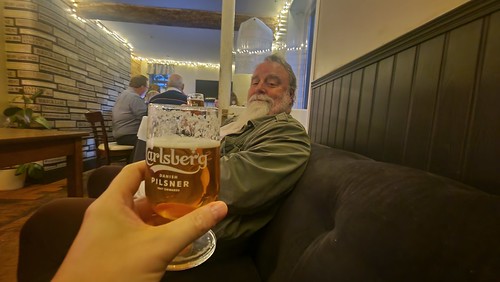
    Julian enjoying the atmosphere, which had a considerable climate of activity to keep him absorbed in people watching. I can’t possibly go into too much detail, but Julian even got the attention of Facebook with his commentary on what he saw. What more praise could a pub want?

    There wasn’t much pub activity in the centre of Attleborough on the Saturday evening that we visited, it was here and the Griffin which were open for our entertainment. I think it’s fair to say that for those want a lively and noisy atmosphere, go for this one, there’s likely always going to be something happening. The welcome could have been a bit more immediate, but we were in no hurry and the pub was kept clean and tidy. Definitely something of a community hub and the place to party, the number of customers suggests that they’re doing something right so worth popping into for anyone who happens to be passing by.

  • Attleborough – Community Centre

    Attleborough – Community Centre

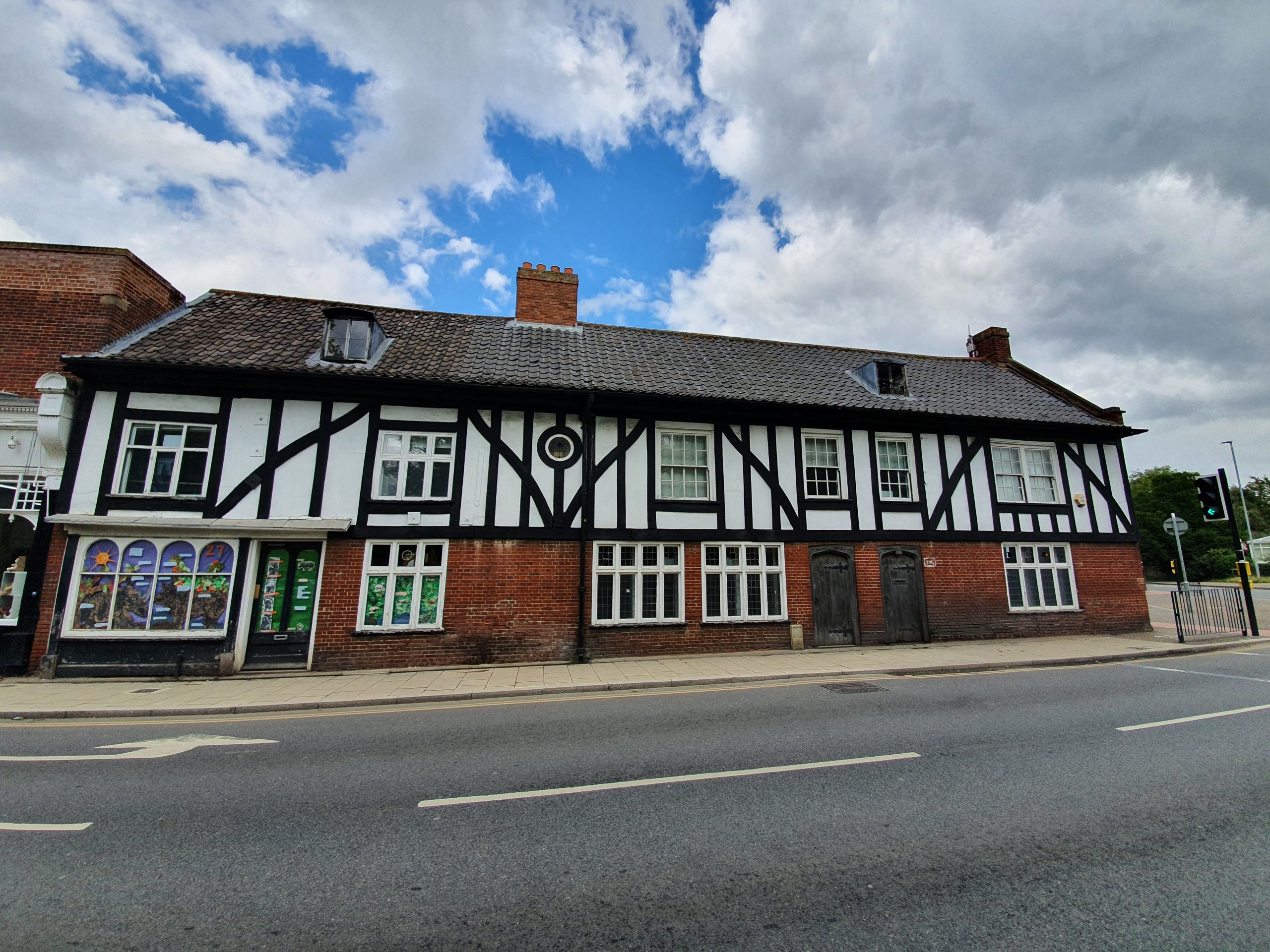
    This puzzled me for a while (as many things do), as I took a photo of what looked like a restored building with some interesting period doors. However, it wasn’t on the listed building register, and this is likely because it’s a fake twentieth century Tudor facade. Although, interestingly, the building behind this frontage is from the late sixteenth or early seventeenth century. The structure has been heavily changed and modified, but it’s a shame that more of the original structure can’t be seen. Given this internal heritage, it’s also slightly surprising that the building isn’t listed, as the bar for this is relatively low. Its lack of excitement must have been evident to George Plunkett, the photographic recorder of so much of Norfolk, as he didn’t take a photograph of it, instead focusing on other nearby buildings on this road.

  • Attleborough – Name Origin

    Attleborough – Name Origin

    After my expedition to Attleborough last week, this is what The Concise Oxford Dictionary Of English Placenames have to say about the name origin of the town.

    Attleborough, Norfolk. Atleburc in Domesday Book and Atleburc in 1194. Aetla’s burg.

    The ‘burg’ here means a fortified settlement and it was under the control of Aetla. It was quite a substantial town when the Domesday Book was compiled, with 71 settlements being recorded. There’s something that can be gleaned here from how Atleburc would have been pronounced, as if every syllable in this is spoken, then it does sound similar to today’s spelling (or it does to me anyway, others may differ….).

  • Attleborough – St. Mary’s Church (Theodosia Colman)

    Attleborough – St. Mary’s Church (Theodosia Colman)

    The grave of Theodosia Colman is located on a path, which isn’t really ideal, at St. Mary’s Church in Attleborough.

    Theodosia was born in 1752 as Theodosia Howes and she married William Colman on 6 February in 1778 in Besthorpe, a village near to Attleborough. Theodosia died at the age of 76 on 12 October 1828 and was buried on 18 October 1828 at a service overseen by the curate, John Fairfax Francklin.

  • Attleborough – War Memorial

    Attleborough – War Memorial

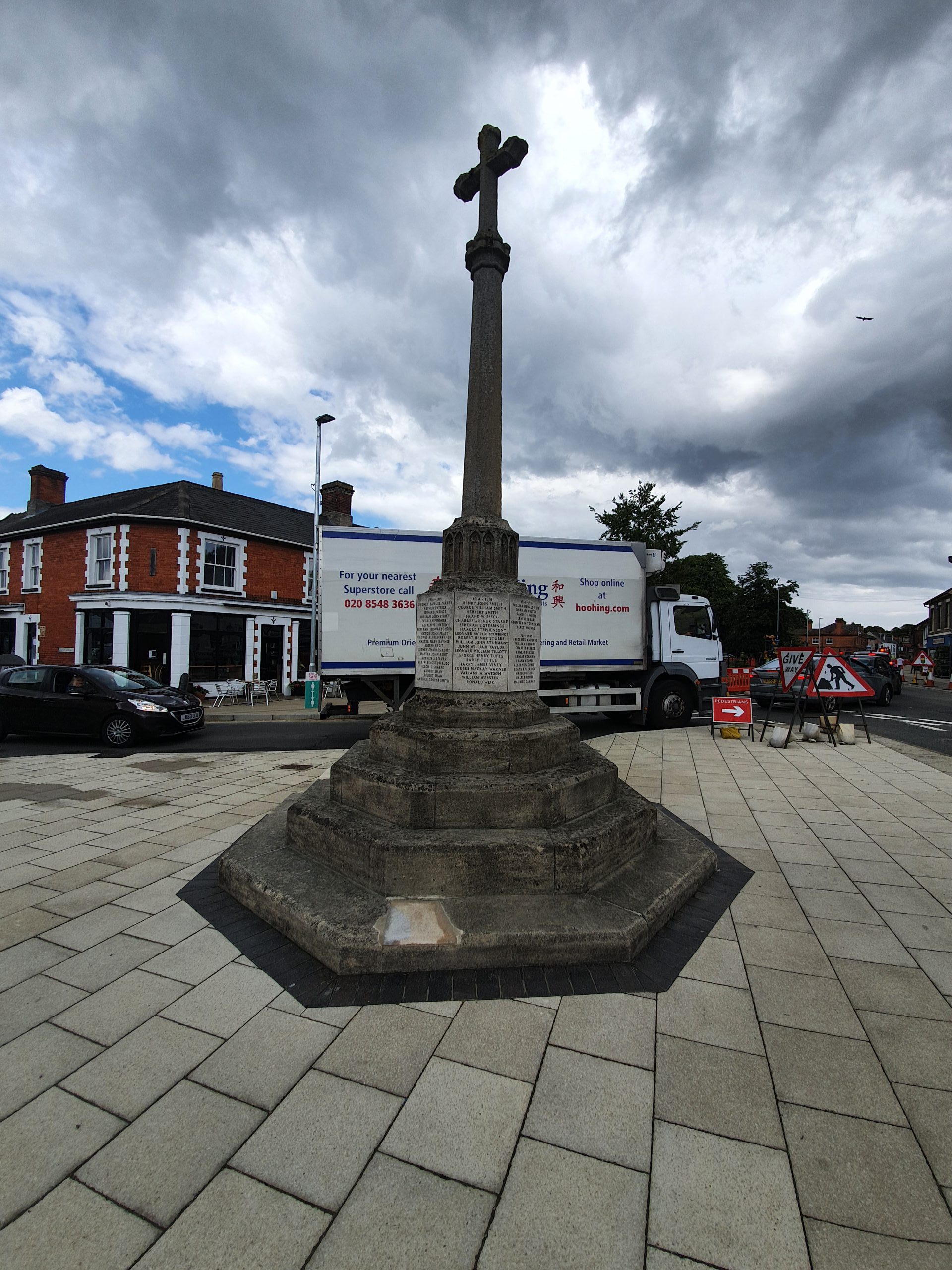
    The war memorial in Attleborough, located at the end of Queen’s Road, was designed by local sculptor AJ Harrison at a cost of £350, which was funded by public subscription. The memorial was unveiled on 27 June 1920 by Earl Albemarle at a ceremony attended by the Bishop of Norwich, which followed a service at St. Mary’s Church. Former servicemen and relatives of the dead walked to the memorial from the church whilst the Norfolk Regiment band played Beethoven’s Funeral March. At the end of the service, the Regiment band played Chopins’s Funeral March and finally, a bugler played the Last Post

    There are 101 names on the 20-foot high memorial from the First World War, with 24 names added following the Second World War and an additional name from the Korean War. The full list of names of those who died during the First World War is at the base of this post, below the photos of the memorial below.

    Barnard, Bertie
    Beckett, Leonard
    Bishop, Robert Sidney
    Blaxall, Ernest William
    Briggs, Elijah Samuel
    Briggs, Percy William
    Britnell, William Edward
    Butcher, William Clarence
    Chandler, Herbert
    Chaplin, Charles Edward
    Chapman, Bertie R W
    Chapman, George Henry
    Clarke, Alfred Bruce
    Codling, Sidney F W
    Coe, Cornelius Robert
    Crummett, Frederick E
    Cubitt, Terence A K
    Dagless, Alexander
    Dagless, Philip
    Daynes, Albert
    Daynes, Frederick John
    Dunnett, Percy A
    Dye, John William
    Eagling, Arthur Walter
    Edwards, Harry Ambrose
    Edwards, John
    Elvin, Ernest Robert
    Elvin, Syndey James
    Elvin, Wilfred Harold
    Etteridge, Robert W
    Fincham, Walter William
    Forster, Philip James
    Forster, Sidney Percy
    Gapp, Sidney Jack
    Gooda, Ernest George
    Gould, Edward
    Griffin, Arthur William
    Griffin, William Albert
    Halls, Frederick William
    Hawes, Albert William
    Hillier, Frederick William
    Hilton, William Charles
    Holman, William James
    Howlett, Harry
    Hunt, Arthur
    Hunt, Ted
    Hunt, William
    Johnson, Robert Frederick
    Lain, Frederick
    Lain, John
    Large, John Gerald
    Laurence, Alfred
    Lenney, George J W
    Lincoln, Charles
    Lincoln, Edward
    Orford, Lancelot E
    Ottaway, Walter James
    Parker, Sydney Samuel
    Patrick, Arthur
    Patrick, Edward
    Piercy, William John
    Pinnock, William
    Plumpton, Alfred
    Ponder, Bertram Thomas
    Pratt, Victor John
    Rayner, George Alfred
    Rayner, Walter Filby
    Redit, Joseph
    Redit, Sidney Charles
    Redit, Walter John
    Reeves, Arthur J
    Rudd, Henry Reginald Wallace Kingston
    Sharpe, Cecil G
    Shaw, Albert
    Shaw, Robert
    Smith, Arthur George
    Smith, George William
    Smith, Henry John
    Smith, Herbert
    Speck, Frank W
    Starke, Charles Arthur
    Stebbings, Bertram E
    Stephenson, Harold
    Stubbings, Leonard Victor
    Stubbs, Robert Henry
    Sturman, William John
    Taylor, John William
    Tillott, Leonard William
    Tufts, George Henry
    Tuttle, Harry
    Viney, Harry James
    Warner, Forbes Mackay
    Watson, Valiant A
    Webster, William
    Weir, Ronald
    Weir, William Oswald
    Welton, Norman
    Woods, David E H
    Yari, Ernest H
    Youngman, Geoffrey W
    Youngs, Percy

  • Attleborough – Thieves Lane

    Attleborough – Thieves Lane

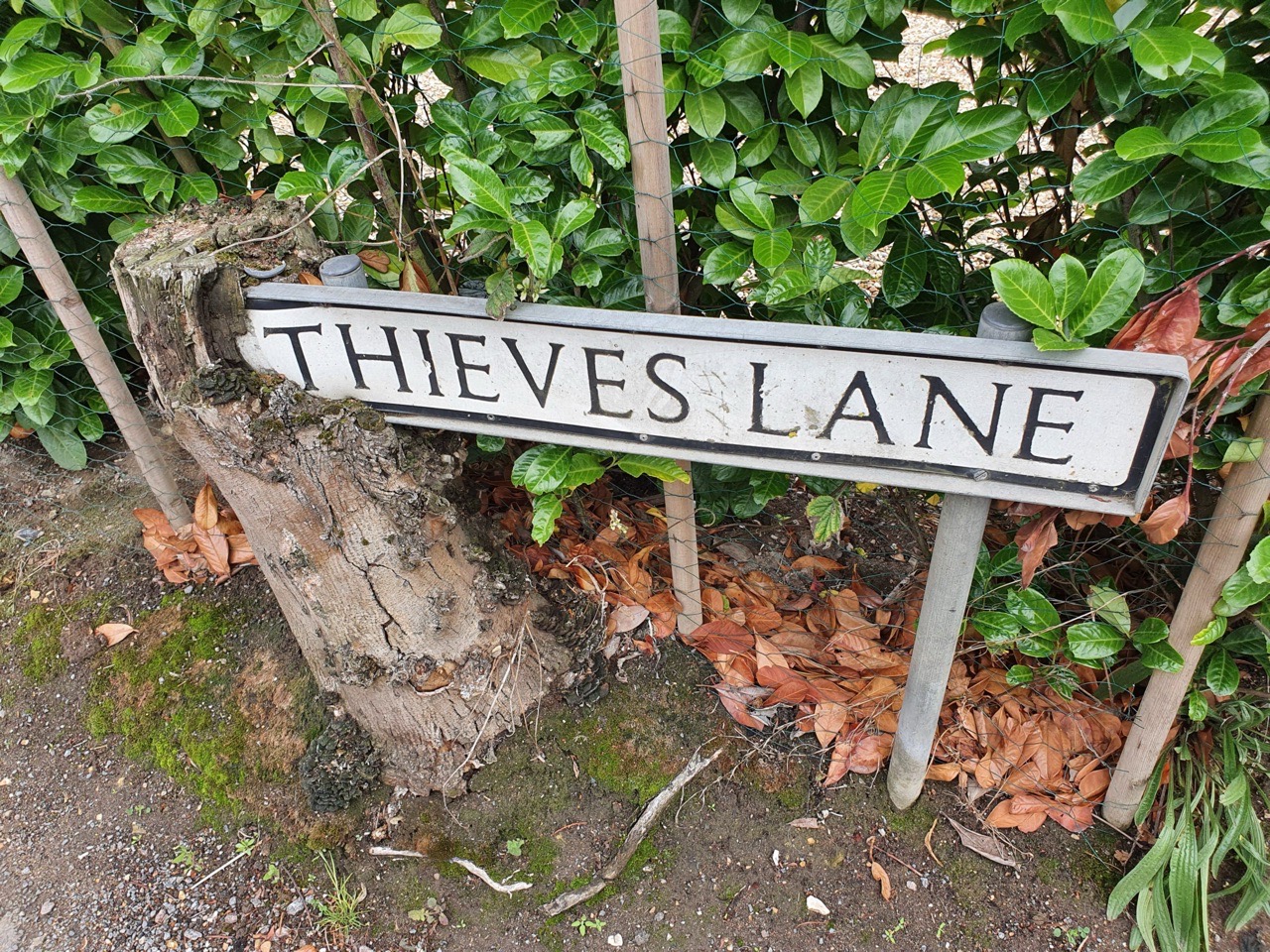
    I like street names such as this, they sound like they have some interesting heritage. The book “the Newmarket, Bury, Thetford and Cromer Road” from 1904, which is intriguing in its own right, just makes reference to this being where thieves may once have preyed on locals. But, it’s clear the author probably doesn’t know. And, I can’t find anything else about this beyond it probably being an area where some crimes had been committed long ago, giving it a bad reputation.

    The tree seems to have partly consumed the sign.

    And the dangerous lane…. It’s not the most prestigious of road names to live on, but it’s memorable at least.

  • Attleborough – St. Mary’s Church

    Attleborough – St. Mary’s Church

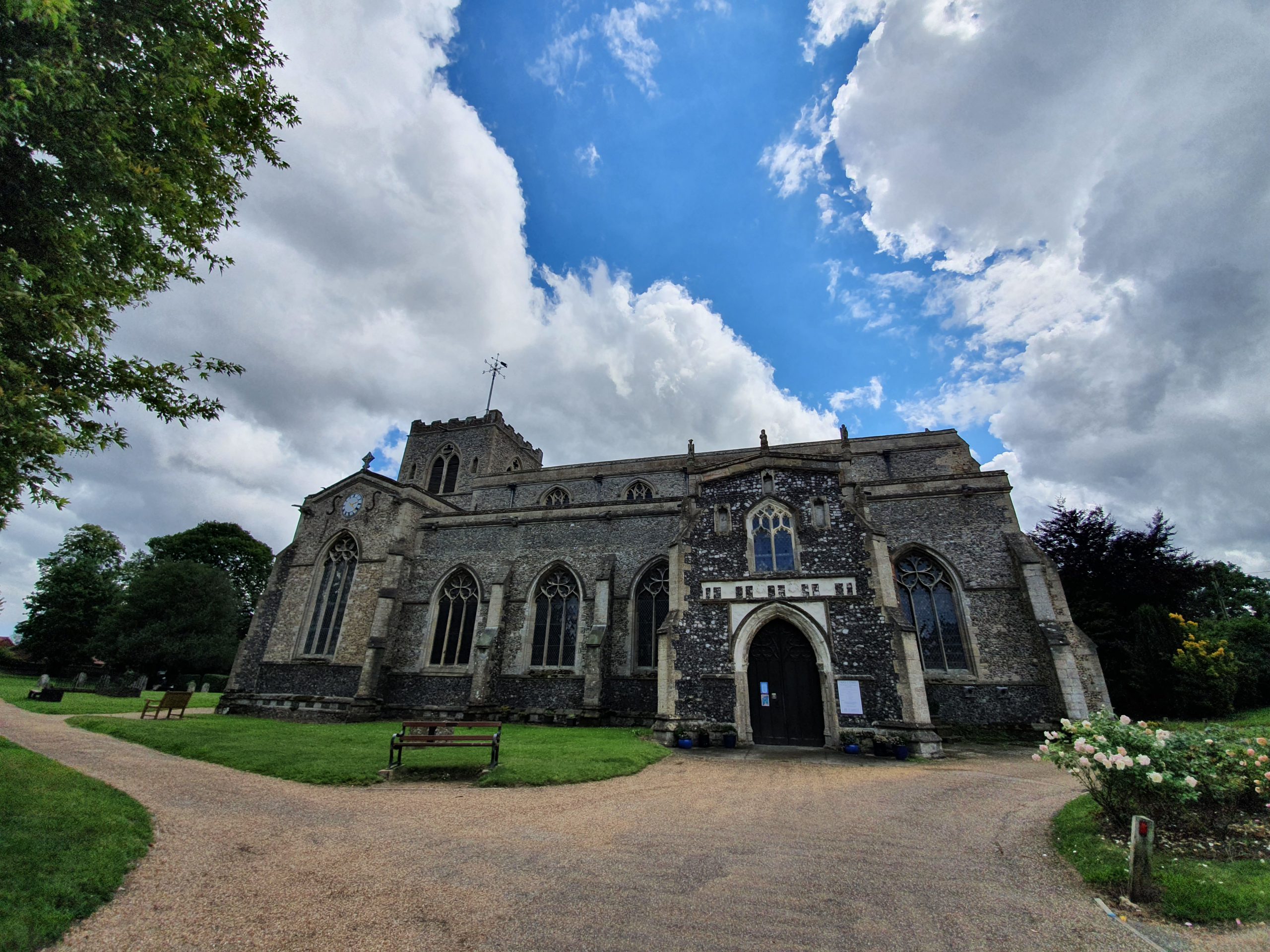
    One advantage of looking at medieval churches in remote villages is that the buildings make some sort of sense to someone such as myself, who has a limited understanding of the architecture and evolution of the structures. St. Mary’s in Attleborough makes, at first sight, very little sense with all of its all additions and removals over the centuries. There has been a church here since Saxon times, likely the ninth century, although the current structure is mostly from the eleventh century onwards.

    Unfortunately, this plan isn’t the clearest in terms of the quality. But it’s indicative at least, the north porch is visible on the left and Mortimer’s Chapel in the top-right.

    This is the north porch and work started on this in the late fourteenth century and it was completed early on during the fifteenth century. Unfortunately, all of the statues which once stood in the niches are no longer present.

    The west end of the church.

    The area between the north porch and the west end of the nave.

    Back to the north side of the building, this is the outside of the north aisle, which was a later addition.

    The church’s complexity is evident here, it looks more like a closed down priory converted into a new building. But, this is where the chancel once stood, which was taken down in 1541. The tower, which dates from the twelfth century at the base and the thirteenth century at the top, then became the east end rather than the central tower that it once was. It also left a rather muddled appearance, although it all adds character. The tower did once have a spire that was built in around 1300, but that fell down in around 1700. Which isn’t entirely ideal.

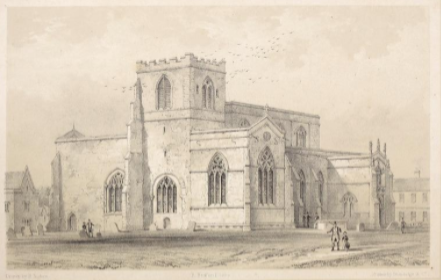
    An illustration of the church from the mid-nineteenth century.

    An old doorway in the base of the east end of the church.

    This is the south side of the church, where a new extension was added in 1994 to house a community centre.

    Given the current health situation, the interior of the church wasn’t open, but I understand it’s worth seeing with numerous old treasures, including wall paintings and the rood screen. So, I’ll meander back at some point.

  • Attleborough – Pillar

    Attleborough – Pillar

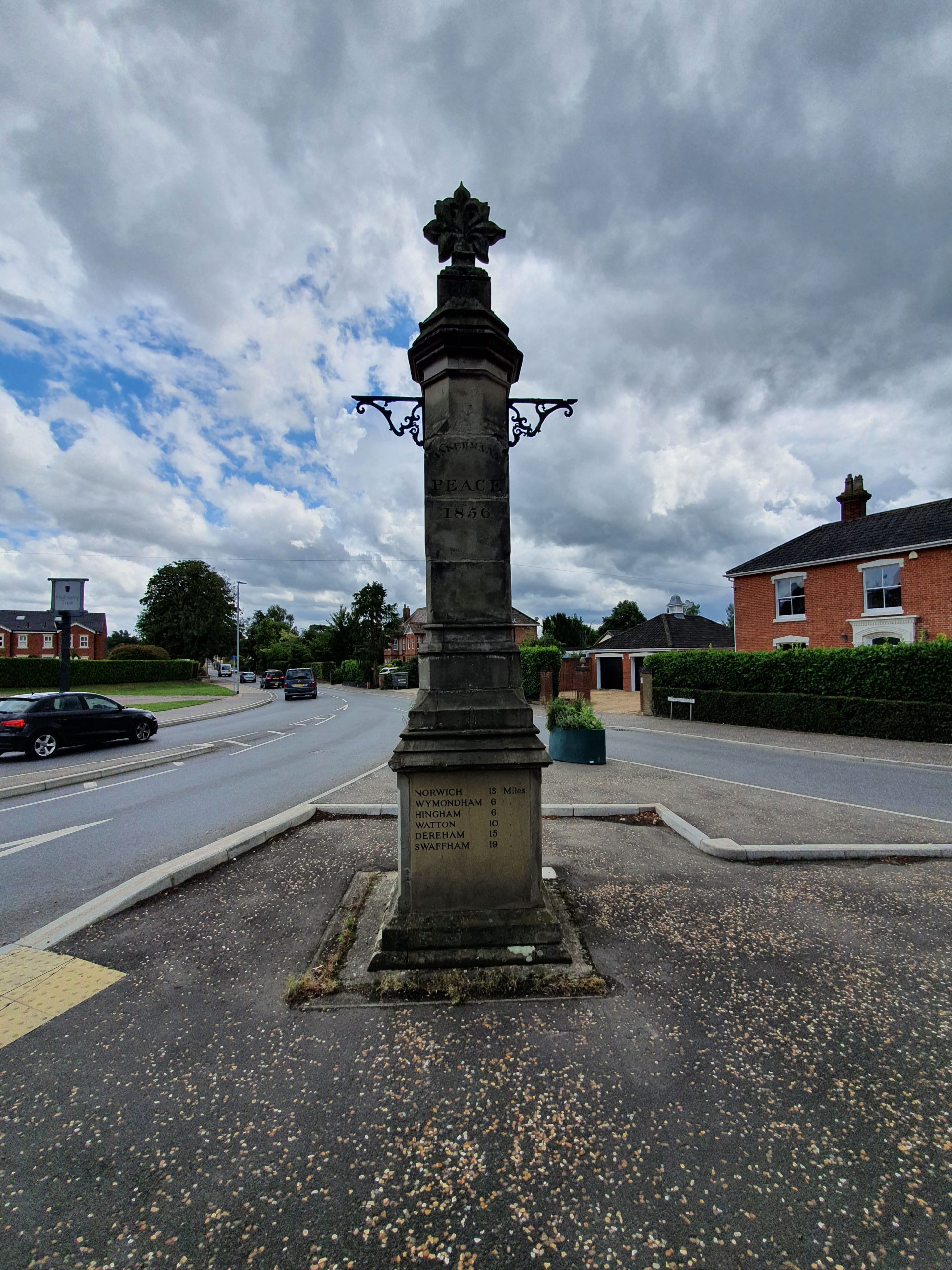
    I accept that the title of this post (excuse the unintentional pun) being “pillar” isn’t exactly overly descriptive, but that’s what the listed monuments register calls it. If it’s good enough for them, then it’s certainly good enough for me.

    This pillar was installed here in 1856 and it noted on the sides of its top section some of the battles which were fought during the Crimean War. That means that this is one of the few surviving monuments in the country which commemorates this conflict against the Russians, which led to over 20,000 British deaths.

    At the base, and visible in the below photos, the column was used as a milestone with distances to various locations around the country. This is in a good state of repair, but I suspect much of that is because a car driver slammed into it in 1983, meaning that some restoration was essential. When it was repaired, it was realised that the monument didn’t have a solid core, but instead the slabs had been placed around a hollow middle section.