Category: Westminster (Borough of)

  • London – Westminster (Borough of) – Wallace Collection (Prince Baltasar Carlos in the Riding School by Diego Velázquez)

    London – Westminster (Borough of) – Wallace Collection (Prince Baltasar Carlos in the Riding School by Diego Velázquez)

    This painting in the Wallace Collection has its own Wikipedia page, albeit shared with another version of the artwork. It’s not known whether Diego Velázquez (1599-1660) painted this himself, or it was done by his studio. The gallery has traditionally gone for the latter, but Xavier Bray, who is the director of the collection, has featured in a video on their web-site saying that he thinks it might be the work of Velázquez himself. Apparently, the painting needs cleaning and it is that which the director thinks will show the quality of the artwork underneath. And, it would be nicer to have a painting by the artist himself and not just his studio (he didn’t add that, I did).

    The artwork was painted at the riding school in Madrid in 1636, featuring Prince Baltasar Carlos in control of his horse. It was deliberate, to show the young man and future King being able to manage horse-riding and seem competent. I liked that Bray mentioned he thinks there might be figures who have been removed on the right-hand side of the painting, with the artist doing this to direct the eye back to the Prince. There’s a plan for the painting to be X-Rayed and then they will have their answer.

    Unfortunately, this bright new hope for the Spanish Empire died at the age of 16 with smallpox, which was a problem as he was the only son of King Philip IV at the time. However, when Philip’s wife died, he remarried and at the age of 56 he had another son, King Charles II. Who became infamous for a whole host of reasons not entirely relevant here….
  • London – Westminster (Borough of) – Wallace Collection (Venice: the Bacino di San Marco from San Giorgio Maggiore by Canaletto)

    London – Westminster (Borough of) – Wallace Collection (Venice: the Bacino di San Marco from San Giorgio Maggiore by Canaletto)

    Canaletto, one of the few artists whose works are recognisable from the other side of a gallery, painted this artwork in either the late 1730s or the early 1740s. I hadn’t realised how many of his works that the Wallace Collection holds, one of the highest number in the world.

    The painting has an exquisite amount of detail, although the artist shuffled some things about to fit them in the artwork. Artistic licence and all that…. The paintings would have usually been purchased by those on a Grand Tour, a permanent reminder of the things that they had seen on their travels.

    The gallery notes (far better than I can), in its long description, that:

    “The figures in the foreground represent different levels of Venetian society; from the seated beggar on the left, the merchants in the centre, and the priest and lawyer engaged in conversation on the right. There is the customary assortment of sea vessels in the picture, including a burchiello, or passenger boat, being towed in the middle ground. This is a superb example of Canaletto’s attention to composition. The triangle of the foreground terrace – framed by the temporarily-docked burchiello with the detail of passengers embarking – is matched by the boat in the middle of the painting. Its two masts are in turn replicated in the vertical soar of the Campanile di San Marco and the dome of Santa Maria della Salute.”

    It’s not known when Francis Seymour-Conway, the 1st Marquess of Hertford, purchased this painting, but he had been on a Grand Tour to Italy in the late 1730s. It then remained in the family collections until the house and artworks were given to the public in the late nineteenth century.

  • London – Westminster (Borough of) – Wallace Collection (Laughing Cavalier by Frans Hals)

    London – Westminster (Borough of) – Wallace Collection (Laughing Cavalier by Frans Hals)

    This is perhaps the best-known artwork in the Wallace Collection, although I hadn’t even realised that it was there, so it was a pleasant surprise when I saw it. It was painted by Frans Hals (1582-1666) in 1624, although it’s not known who the figure in the artwork is. One thing that is known is that the sitter was aged 26 and we know this because Hals wrote it on the back of the painting, although perhaps he could have popped on the name of who he had painted as well.

    And, copyright of the Wallace Collection, is this much better image.

    It’s known that the painting was sold in The Hague in 1770, although unclear where it was before that, later being purchased by Comte de Pourtalès-Gorgier in 1822. It then came into the collections of Richard Seymour-Conway, who outbid Baron James de Rothschild at an auction in 1865. It was probably best he did win this battle, where the painting went for over six times its estimate, as he allowed it to go on display at Bethnal Green Museum between 1872 and 1875. It was there that it was talked about because of the enigmatic smile, although it’s more the moustache creating this jovial impression. The painting was then returned after its period on public display and came into the collections of Richard Wallace, from where it was donated to the nation.

    It wasn’t until 1888 that the reference ‘Laughing Cavalier’ was made to the artwork, although this is now what it is commonly referred to. All of this burst of activity in the nineteenth century also saw the reputation of Hals improve, as he had fallen a little into obscurity in the decades after his death.

  • London – Westminster (Borough of) – Wallace Collection (Arabs Travelling in the Desert by Horace Vernet)

    London – Westminster (Borough of) – Wallace Collection (Arabs Travelling in the Desert by Horace Vernet)

    There are some rather lovely colours in this artwork, painted by Horace Vernet (1789-1863) in 1843 and exhibited in the Paris Salon in 1844. I like thinking that this was displayed in Paris with thousands of people looking at it, crammed as the walls were at this arts festival.

    The gallery’s version (copyright of the Wallace Collection) is much better. The painting was acquired by Richard Seymour-Conway (1800-1870) after it went on display in Paris, later being given to the nation by Lady Wallace in 1897. Vernet had the interesting claim to fame that he was born in the Louvre, where his parents were staying during the French Revolution. And he can also claim to be the first person to take photos of the island of Malta when he visited there in 1840, although, unfortunately, these appear to have been lost.

  • London – Westminster (Borough of) – Wallace Collection (Beni Suef on the Nile by Prosper Marilhat)

    London – Westminster (Borough of) – Wallace Collection (Beni Suef on the Nile by Prosper Marilhat)

    This artwork is by Prosper Marilhat (that’s a wonderful first name incidentally) who lived between 1811 and 1847, painting this in the late 1830s following a visit to Egypt. The gallery doesn’t know when it was acquired, but perhaps the saddest part of this story is that the artist went insane and died in a lunatic asylum in Paris aged only 36.

    The gallery has kindly placed much better copies of the images on their web-site (copyright Wallace Collection) and they’ve done wonders here to bring out the colours on the artwork. Beni Suef is located around 70 miles south of Cairo, a city once made wealthy through its manufacture of linen. But, back to the artwork, it is one of those evocative paintings of a time gone by…..

  • London – Westminster (Borough of) – Wallace Collection

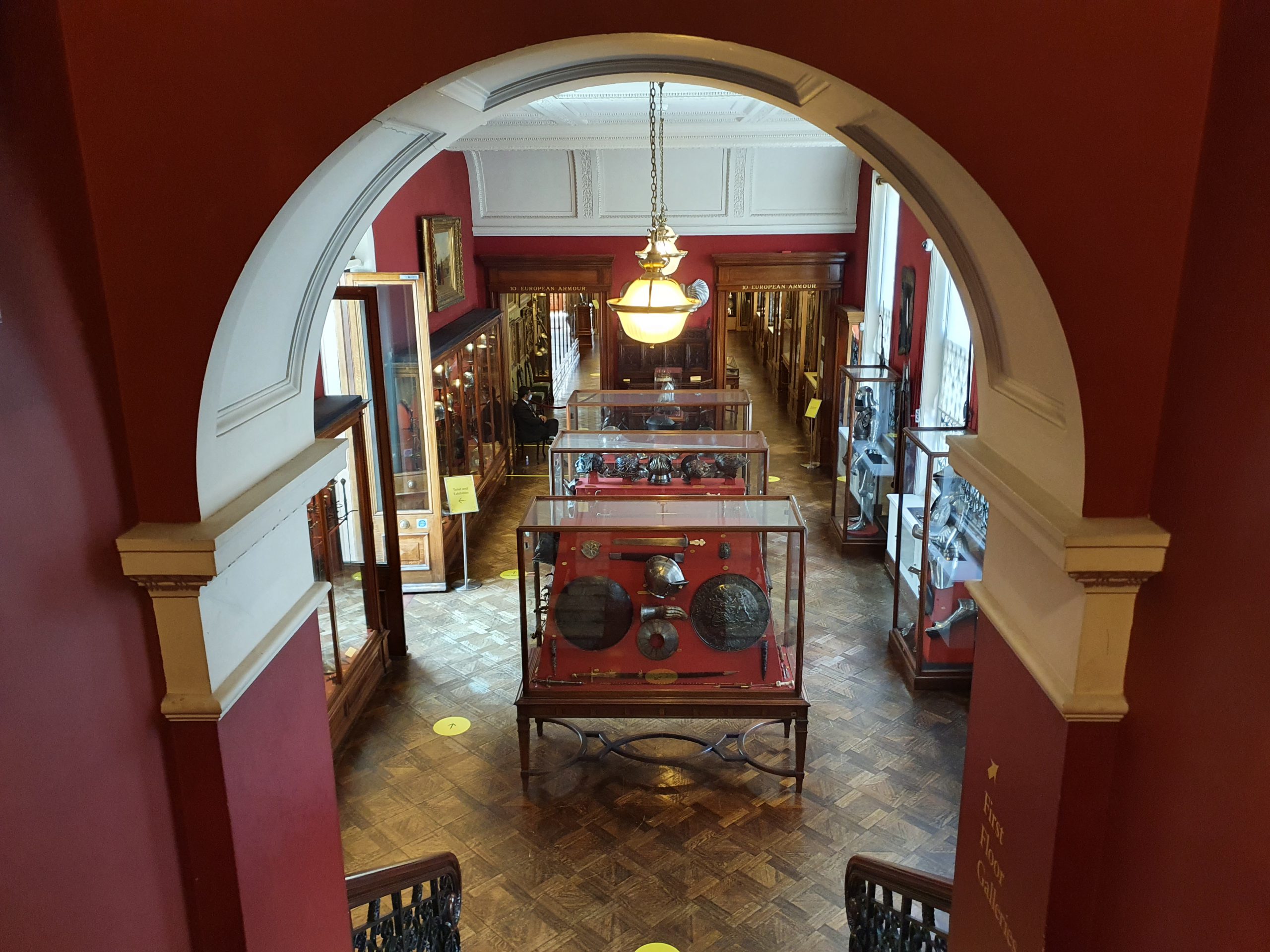
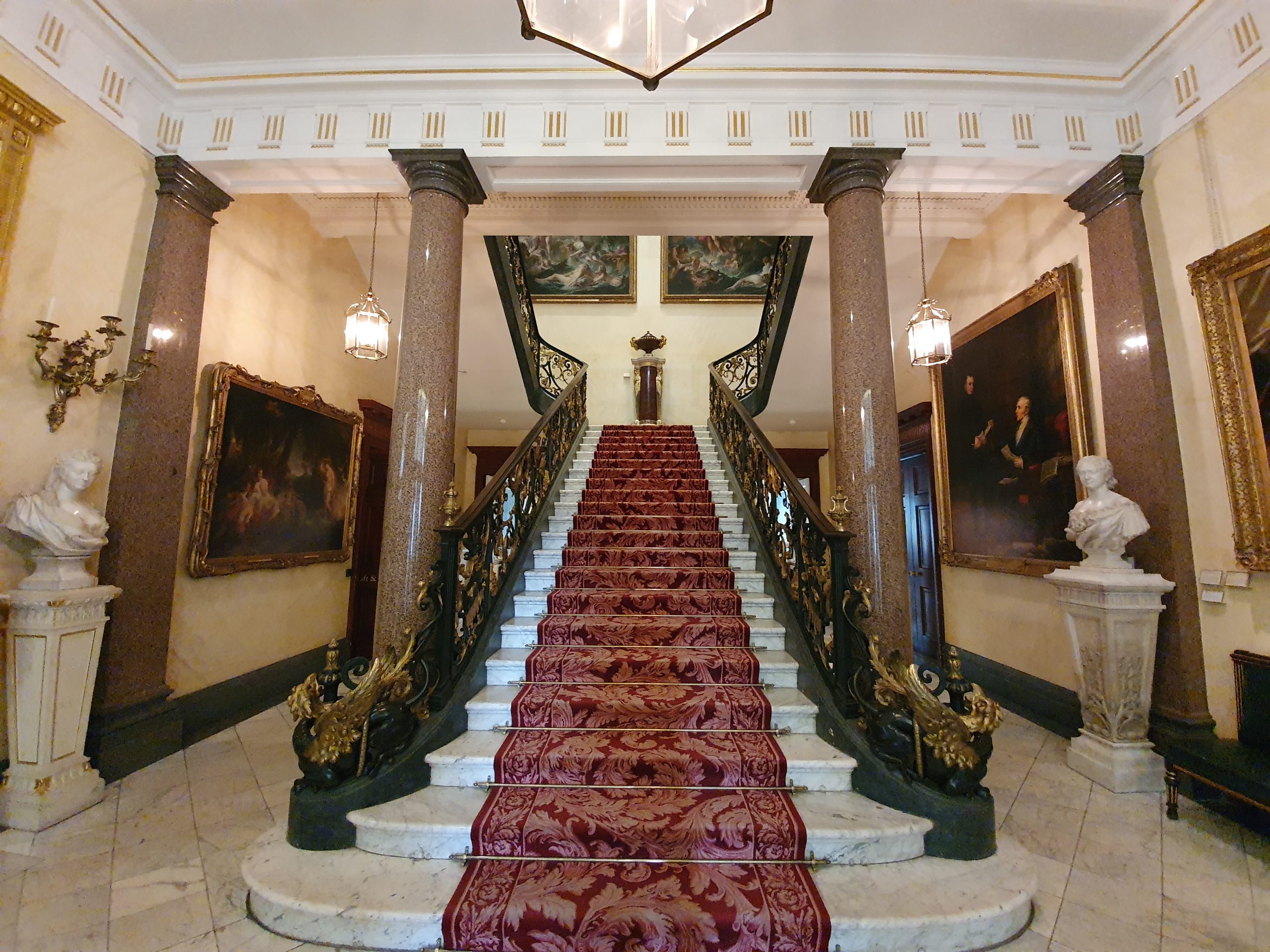
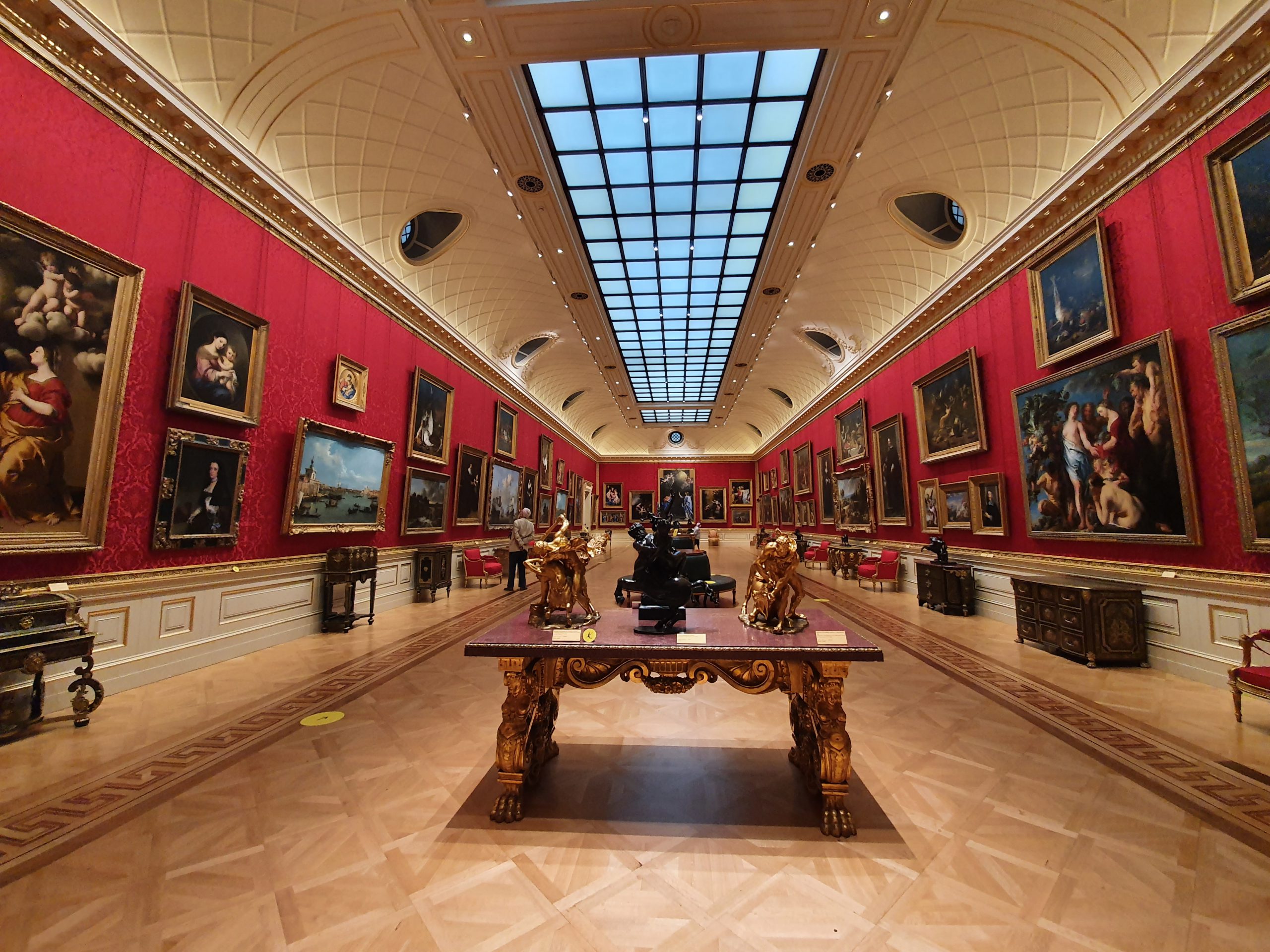
    London – Westminster (Borough of) – Wallace Collection

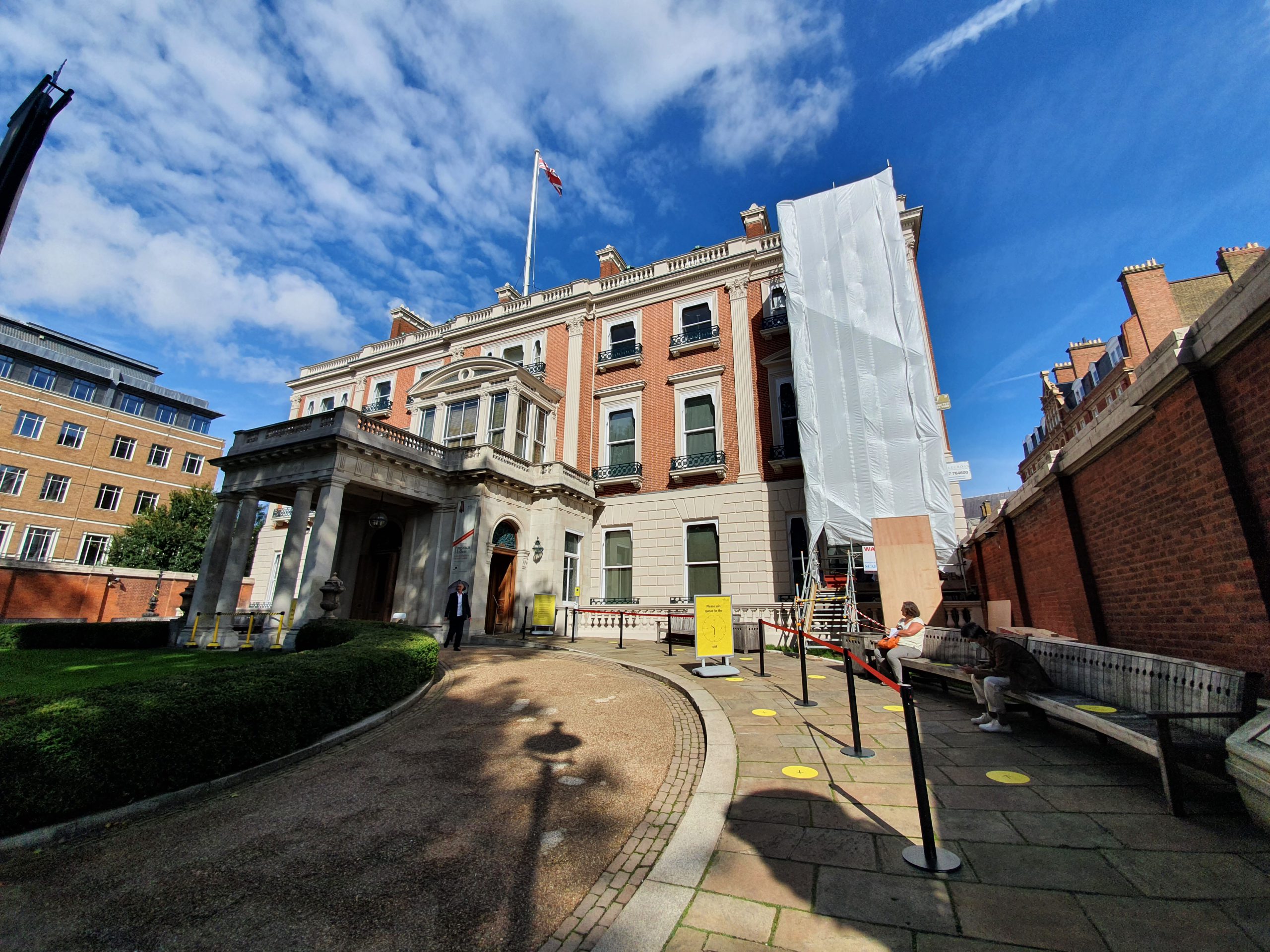
    This is my first visit to the Wallace Collection in London, a free museum that’s a short walk away from Bond Street underground station. The collection was donated to the nation in 1897 and there are strong holdings of porcelain, armour and French art.

    The booking process was all very easy and there was a friendly staff member at the entrance to the museum who was welcoming visitors and showing them where to go. This is a challenging location to open to the public at the moment as it’s a former residential property (albeit a grand one) which wasn’t really designed for this purpose. However, they’ve created a one-way system and limited numbers in each room, making it a fairly easy collection to navigate. There were plenty of staff members on the route and they seemed helpful and engaged.

    There were numerous highlights, and I’ll write separately about some of these, but I was pleased to discover that the Laughing Cavalier is on display. Not that I’ve given much thought to where this artwork was actually located, I hadn’t expected it to be here. It’s not a huge collection compared to the national museums, but I was there for around an hour which seemed to be roughly how long people were generally staying for.

    The museum is very well-reviewed with only a handful of negative comments and those are mostly related to the on-site cafe. One of the most ridiculous from last year is from someone with a large backpack who complained that they were asked to place it in a cloakroom, not an unreasonable request. They have closed the cloakroom at the moment, but visitors can carry reasonably sized bags around with them.

    And the most ridiculous review of the lot:

    “We went to the wallace collection and were roped into a tour. This consisted of an over enthusiastic older lady telling us about the paintings in depth and the story behind them.”

    Hardly bad is it?

    Anyway, all very lovely, especially as there’s no admission charge.

  • London – Westminster (Borough of) – National Gallery (Saint Mary Magdalene and Saint Peter)

    London – Westminster (Borough of) – National Gallery (Saint Mary Magdalene and Saint Peter)

    These two Saints (NG4491 and NG4492) are in the collections of the National Gallery, donated in 1930 in honour of Charles D Cumming. The two separate pieces are part of a larger altarpiece which has since been broken up, with other sections in the Palazzo Barberini in Rome and also in private collections. They date from around 1350 and it isn’t known where the altarpiece was from, or when it was broken up.

    The Mary Magdalene image is notable for, and I’ve taken this from the National Gallery web-site (I hardly knew this):

    “The artist has taken great care to paint the ointment jar so that it resembles white marble with pink and blue veins. Its surface has a soft luminosity, an effect achieved by painting a thin layer of white paint over a base of layer of bright colours. This technique is known as scumbling.”

    I’m not sure what look for Mary that the artist was intending, although it appears more grumpy than pensive. Anyway, that’s my contribution to the commentary on these artworks…

    They think that there was a main panel with the Virgin Mary in the centre, with the two pieces in the gallery’s collections having once been positioned to the right of that. The arched panels at the top are more recent, as they were at some stage turned into rectangular artworks, so they could be displayed on a wall.

    Although it’s not ideal from an artistic perspective, I quite like that the individual items that once formed part of a larger artwork are dotted around the world. It makes it more of a treasure hunt to locate them.

  • London – Westminster (Borough of) – National Gallery (Saint Sabinus by Pietro Lorenzetti)

    London – Westminster (Borough of) – National Gallery (Saint Sabinus by Pietro Lorenzetti)

    This artwork (reference NG1113) is in the National Gallery in London and they’ve had it in their collections since 1882, when it was presented to them by Charles Fairfax Murray. The full title of the painting is “Saint Sabinus before the Roman Governor of Tuscany” and the gallery thinks that it was painted between 1335 and 1342. Murray was an artist who spent some time living and working in Siena, in Italy, and it’s thought very likely that this might have been designed originally as part of an altarpiece for the city’s cathedral.

    The gallery’s web-site, which is gloriously detailed, has no end of information about this painting, but I like that there was once one central panel and four altarpieces, of which this is one. The central panel is today at the Cathedral Museum in Siena, two of the panels are at the Uffizi (so, I may or may not have seen them earlier this year) and the other is lost.

    The Roman Governor in the image is Venustianus and he’s sitting down on the seat with the strange-looking lions, demanding that Sabinus sacrifice one of his companions. Sabinus offered a statue, which seemingly wasn’t sufficient as Venustianus ordered his hands to be cut off. Now more commonly referred to as Saint Sabinus of Spoleto, he was later executed by Lucius, the Roman elected official. So, not exactly ideal.

    Pietro Lorenzetti (?1280-1348) is apparently (I’m reading this bit on an art site, I don’t know as I’m not an art historian) an influential forerunner of the Italian Renaissance movement and he was well-known in Siena. Given that he was painting 700 years ago, a surprising number of his works are still in museums and galleries around the world today.

  • London – Westminster (Borough of) – National Gallery

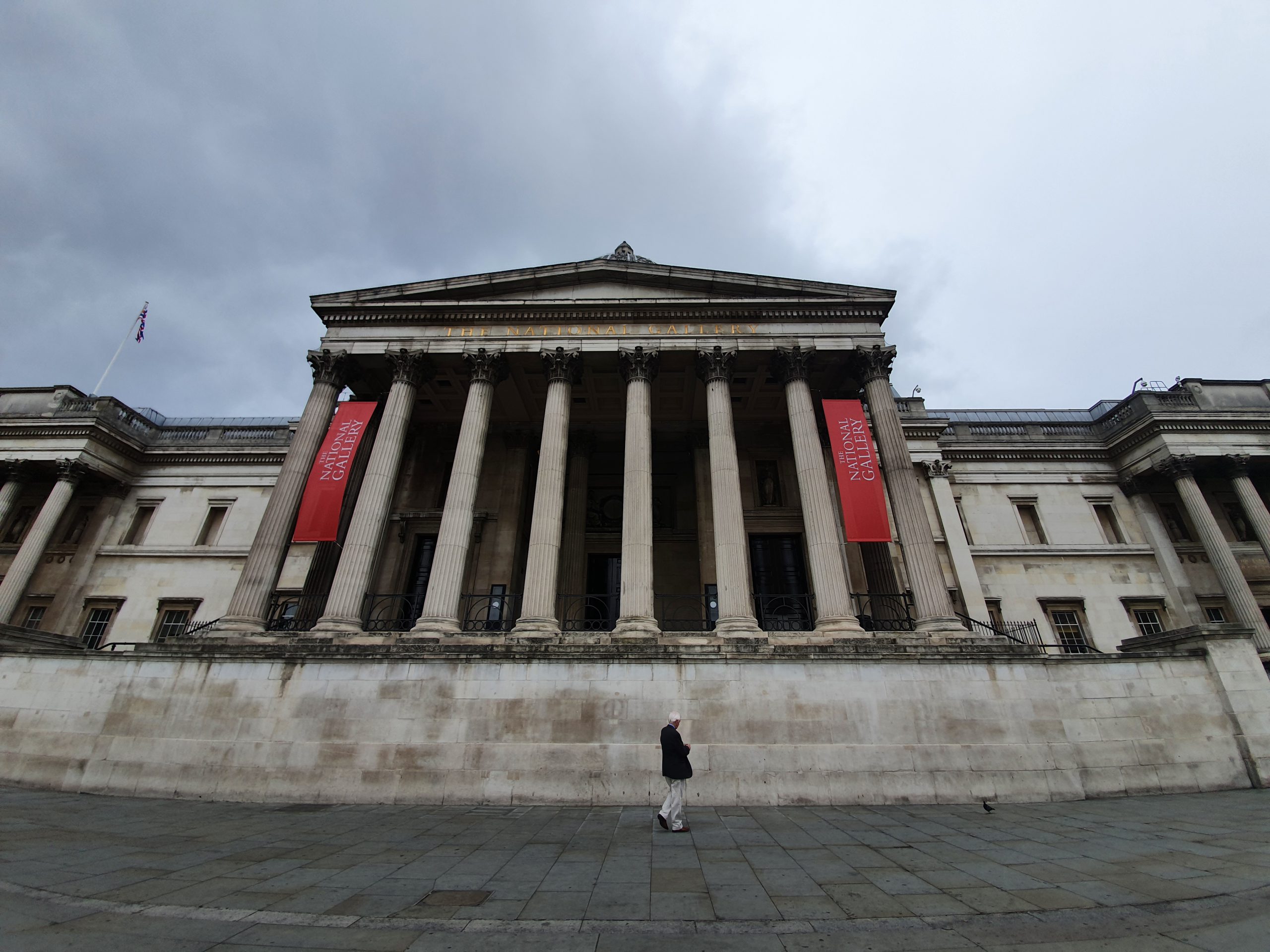
    London – Westminster (Borough of) – National Gallery

    I wasn’t enormously thrilled about how the British Museum handled their visitor flow yesterday, with people clustered together. However, the National Gallery, to quote a phrase of someone I know, surprised and delighted me with their arrangements.

    Visitors go to the Sainsbury Wing Entrance and the time of the ticket is clear, turn up no more than fifteen minutes before. There was a staff member guiding visitors and he was helpful, giving clear instructions to everyone and there was plenty of space for people to wait. I liked this, he was chatty and welcomed visitors with a smile and those without tickets were dealt with politely.

    The member of security staff was humorous, engaged and keen to welcome visitors. I admit that mine was the first bag of the day that he had to check, but nonetheless, he smiled and made conversation. And, the staff at the gallery were all engaging and they looked like they wanted to be there. Two staff were talking to each other about a painting, a moment which it occurred to me that I’ve never seen before. The staff were pro-active and welcoming visitors, giving the impression that their role was that of aiding the visit of someone new to the gallery (or someone experienced wanting help), rather than just being there for security.

    The gallery has information about every one of its artworks on-line, and this is useful and accessible. It added an extra dimension to the artworks, although that had the disadvantage that I stayed for three hours and still didn’t even get half-way round. I’ve booked another ticket on-line for in two weeks, but this experience reminded me that the National Gallery is, along with the Met in New York, perhaps the best gallery in the world.

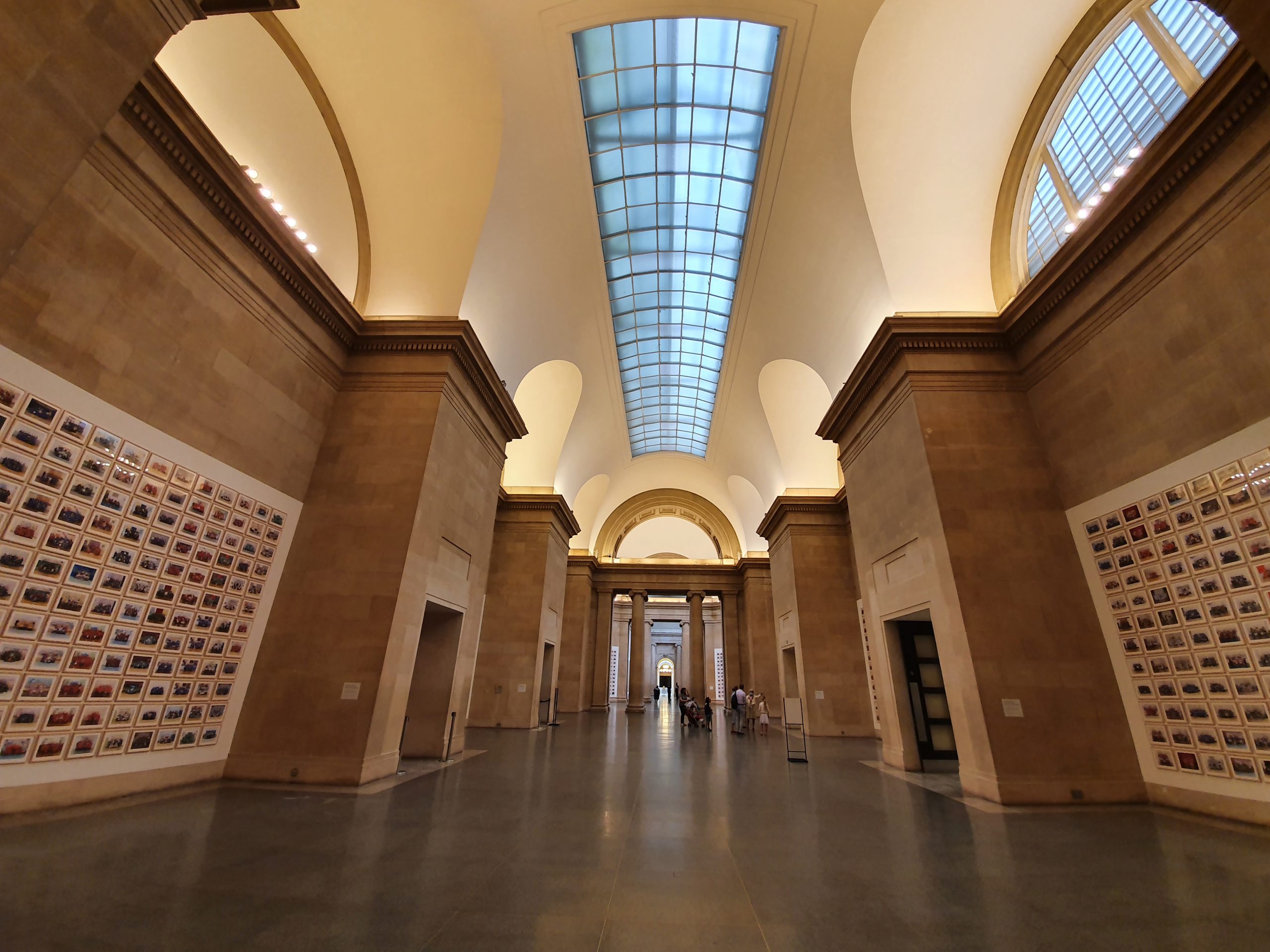
    Impeccable and a perfect example of how to handle visitors during these uncertain times. And below, some photos of the galleries…

  • London – Westminster – Tate Britain (Portrait of the Artist’s Wife by William Dobson)

    London – Westminster – Tate Britain (Portrait of the Artist’s Wife by William Dobson)

    The gallery note that William Dobson (1611-1646) was “considered to be one of the best English artists of his time” and I have no reason (or knowledge) to argue with that. There’s a watercolour from the 1830s which shows the painting on display at Howsham Hall, a grand house to the north-east of York and not that far from Castle Howard. Dobson was a court painter for King Charles I and was a respected artist of this time. Unfortunately, his allegiance to the Monarchy didn’t end well for him when Parliamentarians started to take power, he fell out of favour and died in poverty at the age of just 35.

    The artwork is of Judith Sanders, Dobson’s second wife, and it was painted in the late 1630s. It’s not known where the painting went until it was noted as being at Howsham Hall, where it remained until the sale in November 1948 when it was purchased by the Rev. Denzil Wright. The Tate acquired the artwork in 1992, although it had gone on display at the National Portrait Gallery in late 1983.