Category: Greenwich (Borough of)

  • London – Greenwich (Borough of) – National Maritime Museum (Kangaroo Painting from 1772)

    London – Greenwich (Borough of) – National Maritime Museum (Kangaroo Painting from 1772)

    20240902_132834

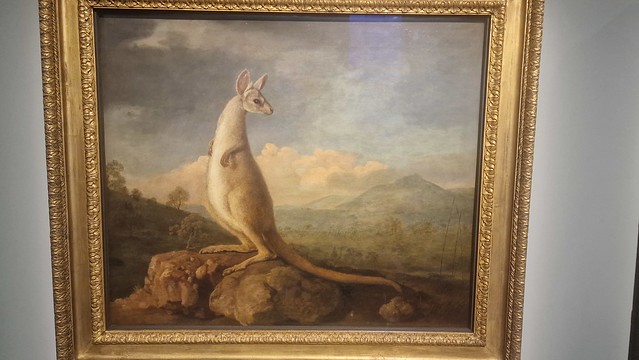
    This artwork was originally known as ‘The Kongouro from New Holland’, and it’s notable as the first painting of a kangaroo (or at least in terms of western artwork). It was painted by George Stubbs, alongside a similar one of a dingo (more of which in a later post, as if this blog’s excitement couldn’t already be topped), in 1772 and they were the only two artworks he completed that weren’t based on actually seeing the full animal. Instead, he had just skin and skull bits of a dead kangaroo which had been collected whilst the good ship Endeavour was being repaired after a little incident when it ran aground and nearly sank on the Great Barrier Reef. Goodness knows what the public would have made of this kangaroo thing, they wouldn’t have seen anything like it before. Indeed, it just looks like a big rodent.

    The artwork was first presented at the Society of Artists in London in 1773 and it, alongside the dingo painting were sold to an Australian buyer in 2012 for 9.3 million Australian dollars. An export ban was promptly put in place by the Government and Sir David Attenborough led a campaign to keep them in the UK. Although the National Gallery of Australia really wanted the artworks, a large donation from the Eyal Ofer Family Foundation (alongside donations from the Heritage Lottery Fund, the Monument Trust, the Art Fund and the general public) meant that they were able to remain in the country. The National Gallery of Australia’s loss was the gain of the National Maritime Museum, which is where both artworks now reside. The artworks had been in private hands since they were painted and were on display at Parham House for some time before their auction sale, with both paintings always being displayed together. It’s quite an achievement that these works are now on public display at a location with no admission charge, successfully saved for the nation.

    Incidentally, I like the old spelling of the word, namely ‘kongouro’, although it actually started off as ‘gangurru’.

  • London – Greenwich (Borough of) – National Maritime Museum (Percy the Penguin)

    London – Greenwich (Borough of) – National Maritime Museum (Percy the Penguin)

    20240902_133819

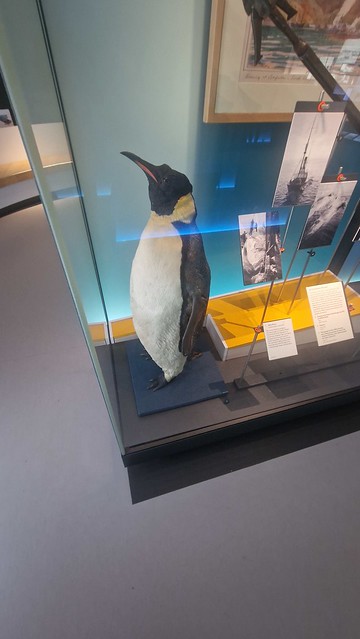
    I went back to the National Maritime Museum earlier this week and I felt the need to post about Percy the Penguin. It’s a stuffed penguin, although that is likely fairly evident to even the most casual observer of the photo, dating back to 1904 (the penguin, not the photo). It was caught on Captain Robert Scott’s first expedition to Antarctica, between 1901 and 1904, and the label reads that this fascinated scientists at the time as they thought penguins were the link between birds and dinosaurs. I’m unsure where it spent the last 120 years, but there’s a note on the museum’s web-site that a label said “PRESENTED BY THE CAPTAIN, OFFICERS AND CADETS, HMS WORCESTER, 1950.”. This is also known as the Thames Nautical Training College, so it likely was looked at by cadets for many a year before finding it’s way to the permanent collection of a national museum.

    Bristol Museums also have their own penguin, collected on Scott’s ill-fated expedition between 1910 and 1913. And, if that’s not enough, there was recently a dead penguin flogged off at auction. I’m not sure what they intended to do with all these penguins that they were collecting, I assume surprise and delight relatives back home with them as I would have thought the scientists didn’t need a whole job lot of them to study them.

    And, the Maritime Museum clearly likes Percy as well, they’ve got a section on their web-site on how to make your own penguin. I likely won’t to be honest, but it seems a sound idea.

    Anyway, I’ve digressed. All these wonderful exhibits at the museum and I get engaged by a penguin.

  • London – Greenwich (Borough of) – National Maritime Museum (John Hawkins Painting)

    London – Greenwich (Borough of) – National Maritime Museum (John Hawkins Painting)

    [I’ve reposted this post from February 2021 to fix broken image links and also because I have more ‘riveting’ content coming about the National Maritime Museum.]

    20201214_112904-scaled-e1612639933624

    When I visited the National Maritime Museum a few weeks ago, there were numerous signs on how they were modernising the displays to be more representative and inclusive. This is an interesting interview (in.doc format) which took place last year with Daniel Martin, the Head of Collection Services at the museum and they seem to be pragmatic and forward thinking.

    20201214_112424

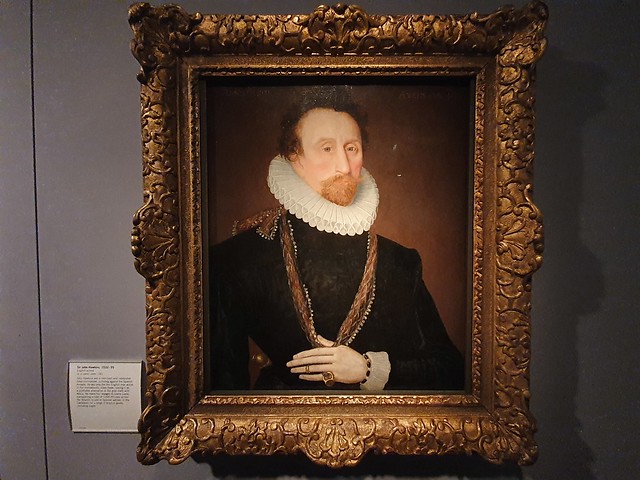
    This painting of John Hawkins (1532-1595), in the gallery which is being reviewed, is going to present the museum some problems in terms of its interpretation. Depending on your viewpoint, this is either one of the greatest English naval commandeers that there has been, or he’s one of the men most responsible for starting the slave trade. Which doesn’t even cover that it’s Hawkins and his crew who brought tobacco back, thereby causing no end of addiction issues over the centuries.

    There was a Royal Navy cruiser between 1919 and 1947 which was named after Hawkins, which does reflect that his naval prowess likely enabled England to fight off the Spanish Armada. The town of Chatham was so proud of Hawkins that they named a flyover after him, which has only recently been demolished. I’m not sure that flyovers actually need to be named after anyone, but there we go.

    There was a book, Devon Seadog, published about John Hawkins in 1907 written by Robert Alfred John Walling and this condemned Hawkins for his involvement in the slave trade (although it made passing note that this often benefited the slave in some ways, which isn’t necessarily an argument that might be pursued today with such vigour) so there has long been condemnation of some of his actions.

    Martin mentions in the above interview that it’s not possible to put every viewpoint in 150 words or so, which is challenging with individuals like this. The museum has though made an attempt on its web-site, where it has more space, to tell the story of Hawkins from different perspectives. I’m not sure I envy though the museum in its attempt to tell the story of Hawkins, as it can’t just ignore him as he’s an important naval figure and they’re a maritime museum, but they need to add context as well as to the impact that he had on the world.

  • London – Greenwich (Borough of) – Travelodge Greenwich High Road

    London – Greenwich (Borough of) – Travelodge Greenwich High Road

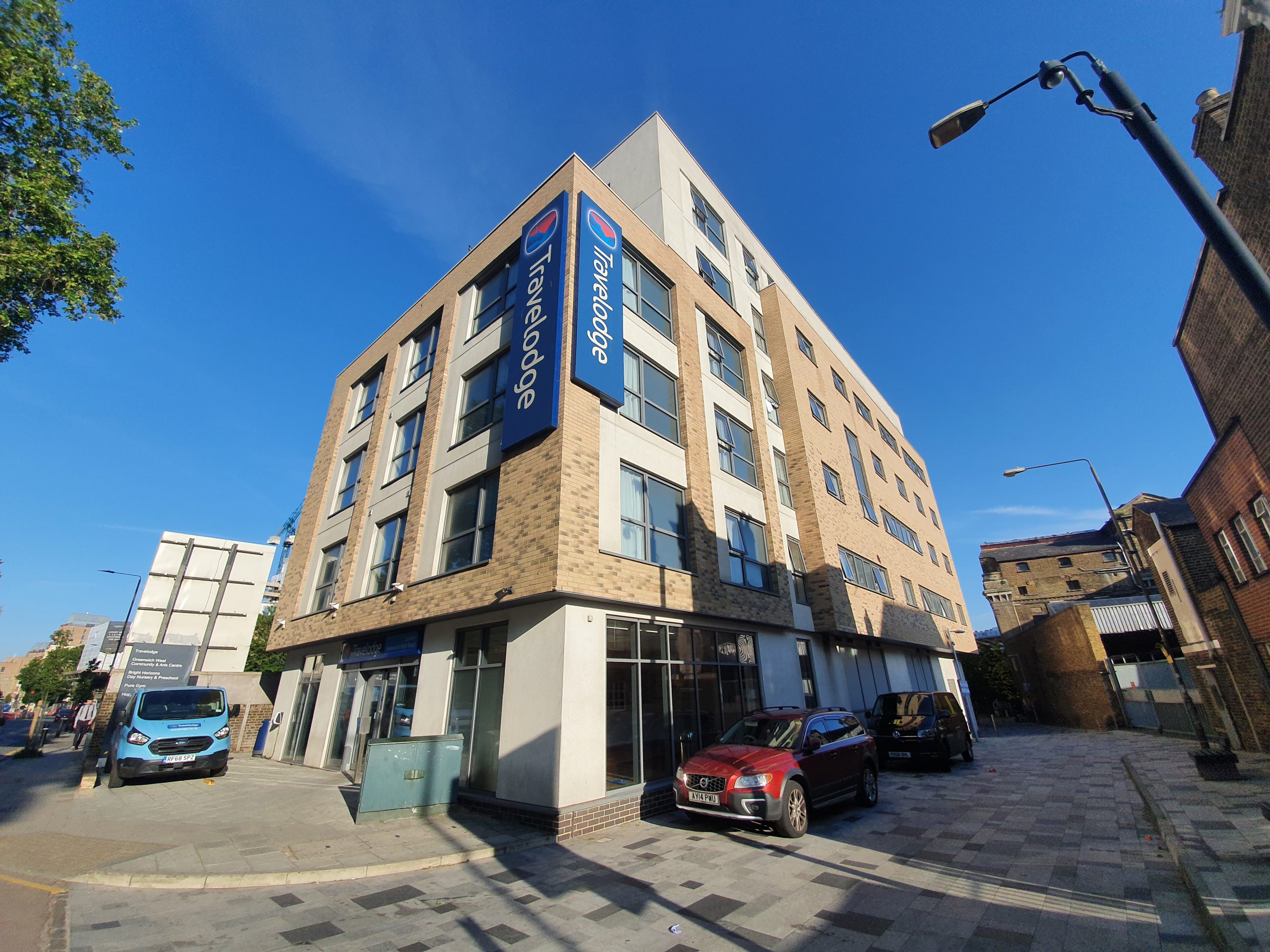
    It was too hot when earlier in the week I visited the Travelodge on Greenwich High Road, a hotel which is likely usually busy with tourists at this time of year, but is currently selling rooms at under £25. When I arrived the helpful man at reception seemed quite hot, which coincided with how hot I was as well. He was satisfactorily agreeable about how hot it was, so I liked him.

    Travelodge have two hotels relatively near to each other, this one at Greenwich High Road which is next to the railway station, and another simply known as Greenwich, which is next to Deptford Bridge railway station. I suppose tourists find the name of Deptford Bridge as being perhaps not quite as appealing. When I told the receptionist my name, he couldn’t find the booking, and I knew what was coming, he was going to politely tell me that I was at the wrong hotel. Fortunately, Google had already alerted me to there being two hotels, and I was at the right one. All was well. And another thanks to the receptionist for giving me paper so that I could handwrite the witness statement for some Norfolk and Suffolk LDWA group members. Actually, now I’ve written that, it sounds wrong. They weren’t in court, it was evidence that they had finished the LDWA 100. Anyway, I digress.

    The receptionist, who I felt I had built up a rapport with as we didn’t like the heat, gave me an ideal room right at the end of a corridor which he said would be quiet. He was absolutely right, I heard pretty much nothing from within the hotel, although I think it was fairly busy. I was pleased to discover that there was a fan in the room, so that stayed on the entire night. It was also clean, comfortable and sufficiently well maintained for me to be entirely pleased.

    I usually use the stairs in a hotel (unless I’m on the top floor or something tiring) but I never worked out where they were (and I didn’t take much care to look) so I used the lift. Which gave an interesting (well, not very interesting, but I’ll mention it) lift etiquette issue. With this virus, hotels ask for guests not to share lifts. So I go down in the lift, which stops at the floor below. That irritated me slightly as we were now on the first floor, and I thought that I was pushing it not finding the stairs to go down from the second floor. Anyway, a moderately drunken man who seemed very friendly asked politely if he could get in the lift. I think the words were “am I alright to get in with you mate, I’ve got no virus”. I wasn’t, to be honest, much concerned of the pandemic risk and it also prevented an awkward social encounter where I told him to wait for another lift. But, being British and avoiding conflict (I mean in a Very British Problems way, not making reference to the nation’s empire building in the nineteenth century), I wonder how many guests would have politely told the man to wait. I’ve digressed again.

    A view from the hotel room window and there’s a DLR train at the station in the centre of the photo. And, yes, I did stand there waiting for a train to arrive to take that photo. I really do need to get out more…..

    I very much liked this hotel as it was clean, cheap, comfortable and the staff member didn’t like the hot weather. Frankly, I’d be willing to stay at a hotel far more willingly if I knew that they had a staff member complaining about the hot weather at reception, that’s something I’d find very beneficial for my stay. The hotel did have a bar and restaurant, and was also offering breakfasts, but I didn’t partake on this occasion. It’s a convenient hotel to get to though as it’s next to the station, which also has regular trains which go straight into the city centre. All very lovely.

  • London – Greenwich (Borough of) – Conor Harrington Street Art

    London – Greenwich (Borough of) – Conor Harrington Street Art

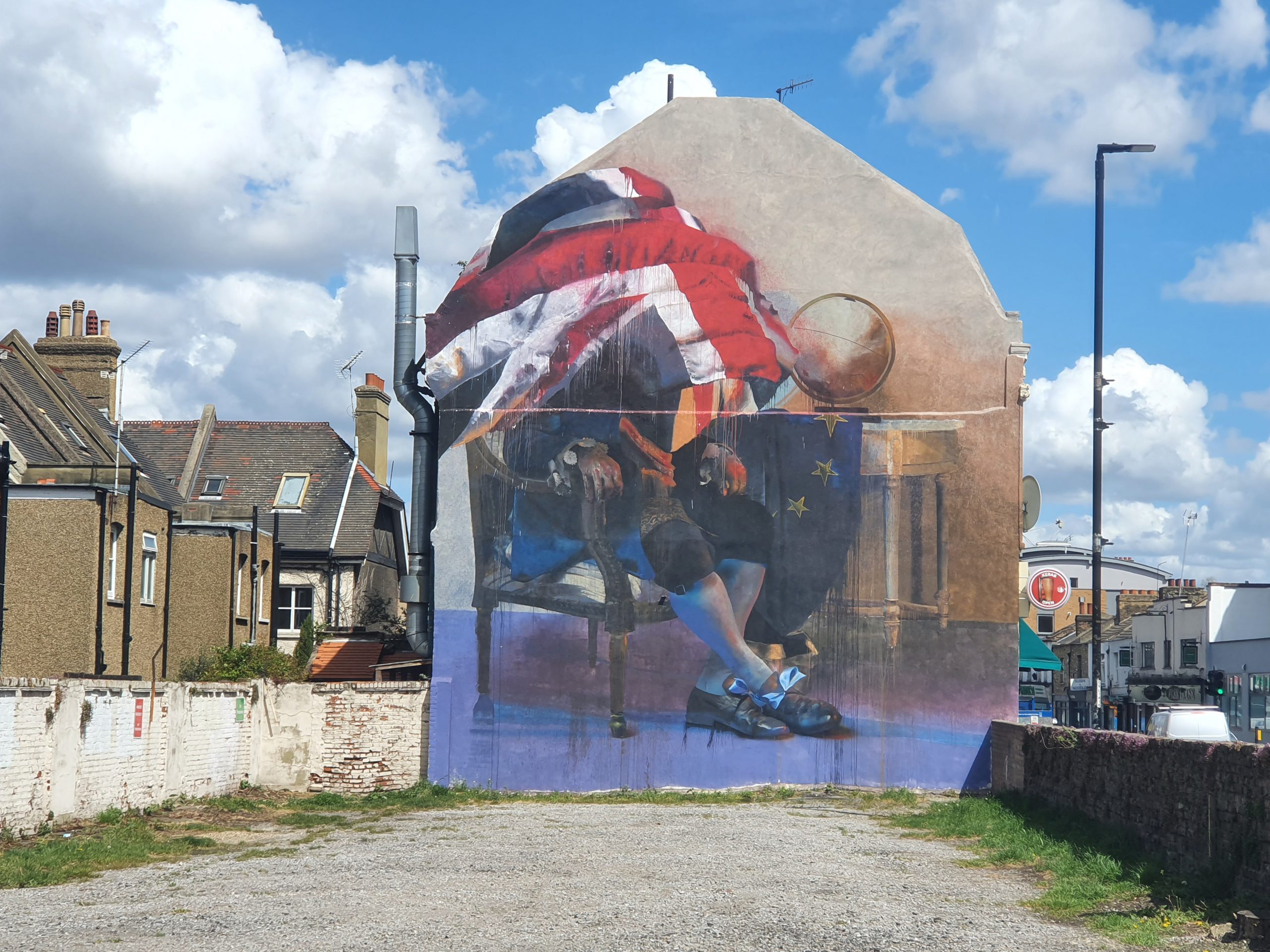
    I thought that this was really quite striking on Trafalgar Road in Greenwich, an artwork created by Conor Harrington as part of the London Mural Festival. There are photographs of the artwork being created at https://arrestedmotion.com/2020/10/streets-conor-harrington-london-mural-festival/. The site in the front of the photo was going to be used for housing, but agreement hasn’t yet been reached with the local council as to how that’s all going to work out. The artist said that his artwork was “big flag energy”, all part of the debate about international policy.

  • London – Greenwich (Borough of) – Blackheath – Zerodegrees Microbrewery

    London – Greenwich (Borough of) – Blackheath – Zerodegrees Microbrewery

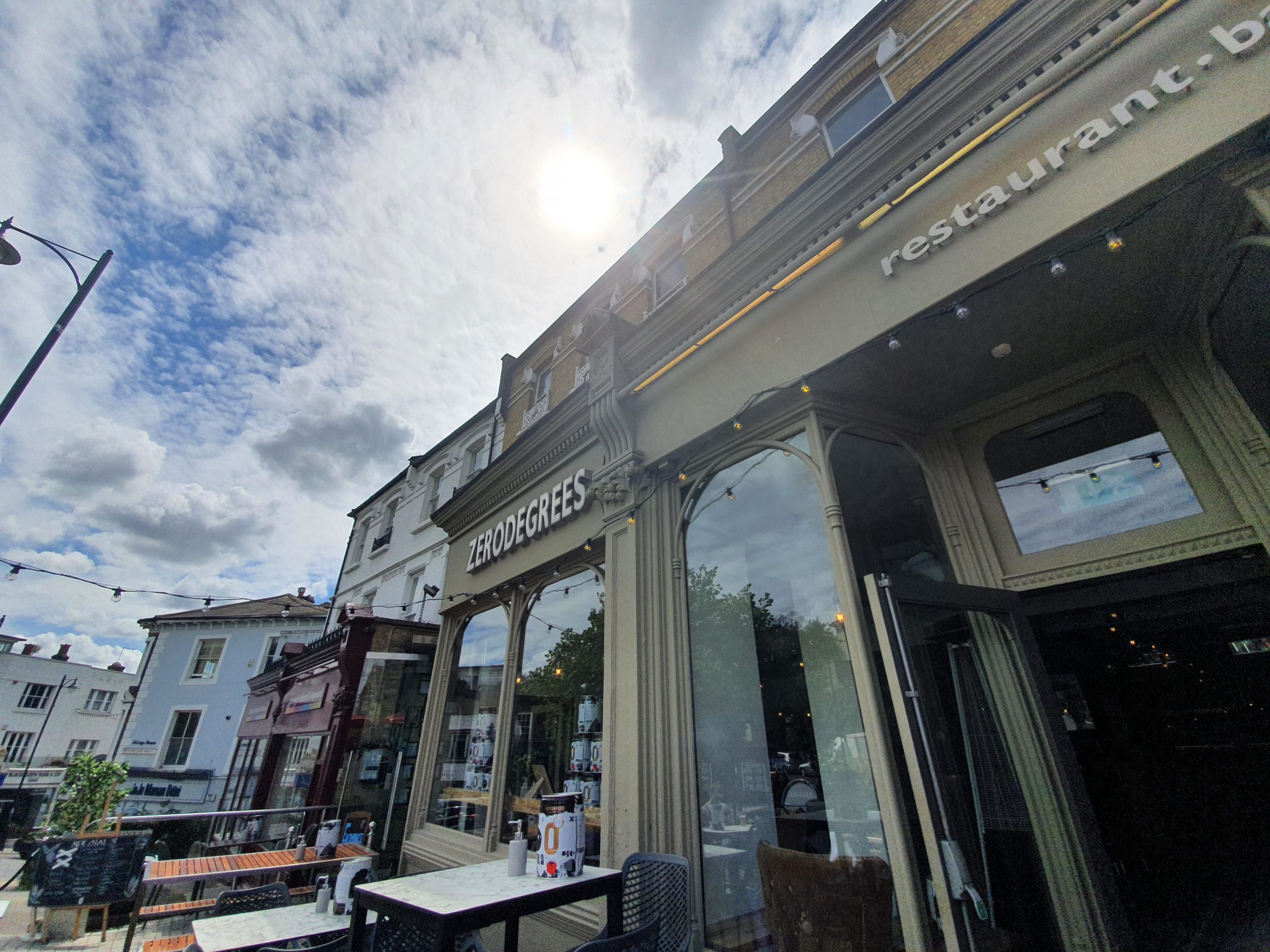
    This is the Zerodegrees brewery outlet in Blackheath and although they now have other outlets around the country, this is where it started. Blackheath is located just a short walk away from Greenwich (with its meridian line), hence why they chose that name for the business in 2000. They were early adopters of the pizza and craft beer concept, one which I very much applaud.

    Only the outside of the pub is open at the moment and there are also only a handful of tables available. Most people were ordering food as well, but my stop wasn’t for a decadent lunchtime purpose. Staffing was excellent, plenty of helpful staff and they were knowledgeable about the beers, so there was a welcoming feel to the whole arrangement.

    The specials list, which wasn’t entirely balanced in terms of the types of beer, but these are challenging times and at least there were three additional options. The brewery has also produced a ferocious number of beers over the years, with some rather interesting and innovative flavours and beer types.

    There are some standard Zerodegrees beers, alongside the specials. One thing that I’ve never seen at anywhere that is interested in beers is that sort of price differential between a half pint and a pint. CAMRA don’t like this and it really seems to try and discourage people from trying numerous different beers. It gave me a bad vibe about Zerodegrees, almost that they knew their product was of a poor quality and they thought people wouldn’t try additional products after trying one. It meant that I scrapped my intention to have a pint of Lollipop and half of the Linus Blanket to just half a pint of the former, as I had doubts about their quality. I did try and just cut it down to 2/3rds of a pint, but the pub doesn’t serve anything in thirds. I forget the luxury of places like the Artichoke in Norwich.

    The Lollipop milkshake IPA was fine, at the appropriate temperature as someone I won’t mention will be pleased to know, although it’s a slightly strange drink given it’s got a sour element. I quite liked it, although half a pint was actually enough.

    All told, I rather enjoyed this visit, but I still don’t entirely understand why the brewery isn’t keen to promote people trying a variety of their beers. Having a third of a pint samplers which customers could buy seems near universal at breweries, but here they seemed to be wanting customers to stick to the same product. So nothing really bad, but I’m not really sure whether I understand whether this place is pushing their food, their cocktails or their beer. I rather got the impression that beer was third on their list of priorities.

  • London – Greenwich (Borough of) – National Maritime Museum (Guillotine Blade)

    London – Greenwich (Borough of) – National Maritime Museum (Guillotine Blade)

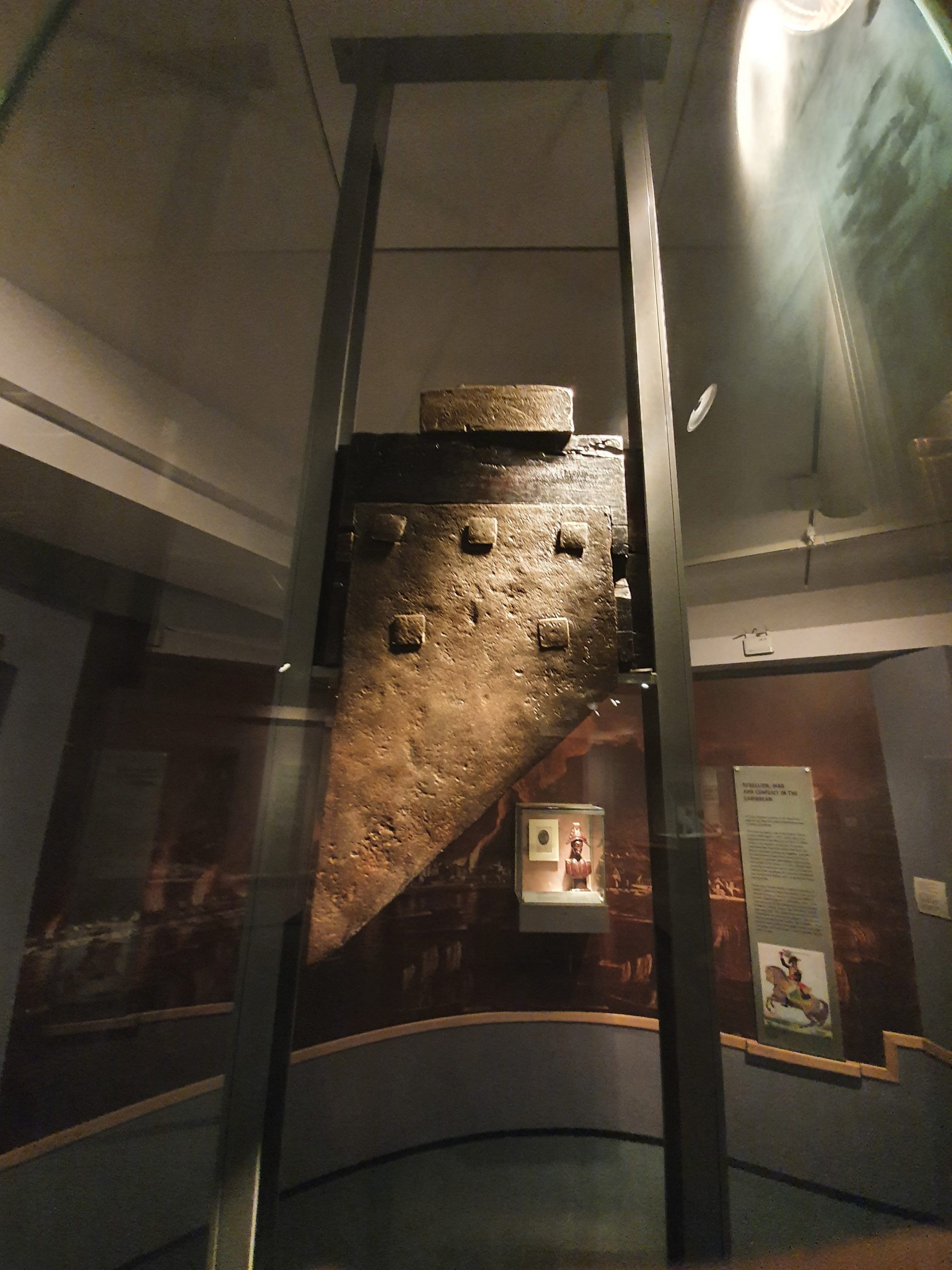
    This exhibit, which I accept isn’t the cheeriest, is in the collections of the National Maritime Museum in London. It’s a guillotine which dates from around 1792 and it was used on the Caribbean island of Guadeloupe to execute about 50 royalists.

    I have to say that I’m not sure I’d have wanted to live on Guadeloupe in the late eighteenth century. It was French until 1759, when the British took it over, but the French really liked having it. The French decided that they wanted it so much that at the Treaty of Paris in 1763, they swapped their French colonies in Canada to keep control of it, so they took over the island again. The French Revolution, which really wasn’t ideal for the wealthy in France, also spread to Guadeloupe and everyone was made free on the island, regardless of their colour. The British decided that this political power vacuum was a chance to get the island back, so they invaded in 1794 and gained control, only to see the French quickly take it back.

    The guillotine was likely taken over by Victor Hugues when he went out to try and purge the Royalists and set the country free from the British who had interfered with arrangements. Hugues arrived on the island with his guillotine on 2 June 1794 along with 1,153 Republican soldiers who were keen and eager to fight and kill people. Documentation mentions that those killed included the estate owners on the island, as well as some military officers, and the guillotine was carried around the island as further victims were sought.

    It is said by the National Maritime Museum that Captain Matthew Scott of the Royal Navy decided that it seemed an ideal souvenir, so he brought this guillotine back on HMS Rose when the British left the island. I can understand why Captain Scott took the item, as he might have thought it was something important politically, but Hugues attacked and pushed the British off the island, so it’s unclear why Scott would have this guillotine. It’s unlikely that Hugues would have willingly given it up (Paul Fregosi in his book Dreams of Empire said that he was very attached to it), as he still had work to do with it.

    And the next part of this mystery, HMS Rose sank near Jamaica on 28 June 1794, so I have some queries about this situation as well….. It’s clear that Scott hasn’t sailed home with it and come back, as there wasn’t time, so that guillotine would have been on board when the ship sank. The 200 sailors on board had to fashion bits of the ship to create rafts to paddle to safety, this wasn’t some little incident in the harbour where they had chance to reclaim everything. I’m unsure whether someone decided that the guillotine needed salvaging as some sort of priority, was Scott that keen to have it?

    So, there’s perhaps something slightly wrong about the story told by the National Maritime Museum and my theory (based on no evidence at all) is that Scott did bring this item back, but that he did so later on. Scott later became a Vice Admiral and he was still on board ships in the region in 1810, the year that the British took back Guadeloupe. So, my historical guess (like this is of relevance to anyone) is that Scott brought back the guillotine as a war trophy at this point, and not before. And I am unanimous in that to quote Mrs Slocombe….

  • London – Greenwich (Borough of) – National Maritime Museum (Nelson’s Death Coat)

    London – Greenwich (Borough of) – National Maritime Museum (Nelson’s Death Coat)

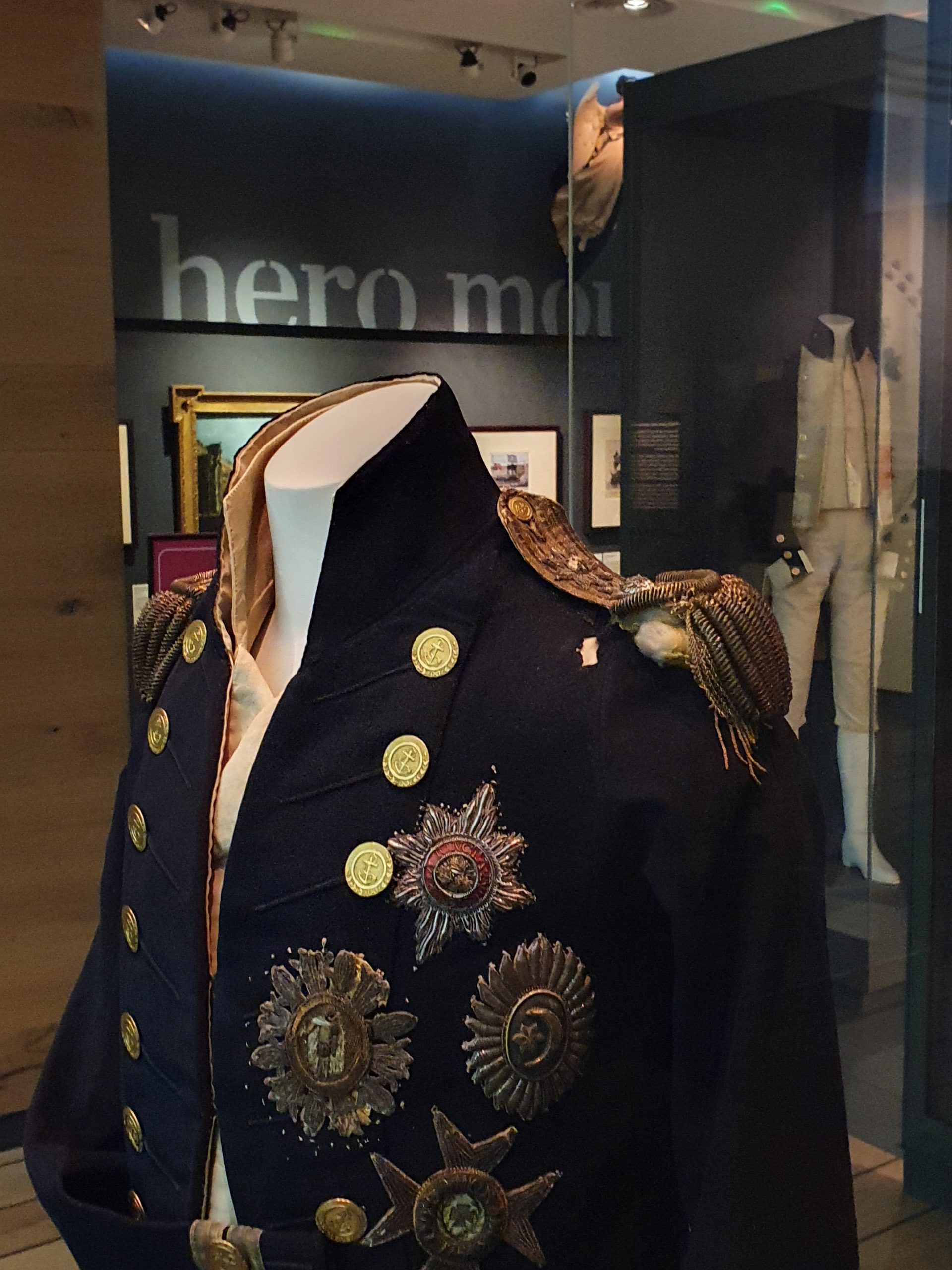
    This is “one of the most iconic items in our collections” the National Maritime Museum note, the uniform which Admiral Horatio Nelson was wearing when he died. Vice Admiral Nelson was killed on 21 October 1805 during the Battle of Trafalgar, when a bullet fired from the French ship Redoutable hit his left shoulder. The damage done was fatal and Nelson was aware of this immediately and he’s quoted as saying “Hardy, I do believe they have done it at last, my backbone is shot through”. He was carried off to get medical help, stopping en route whilst he gave advice to others whilst the battle continued, dying around three hours after he was injured.

    It was suggested to Nelson that he perhaps shouldn’t wear medals on board the ship as it made him stand out to the opposing forces, who could target him. However, removing them was a slight faff as they were sewn on and such was the inaccuracy of weaponry at this time, Nelson didn’t seem to fear much. The ones on display here are those which were on the coat when he died, but they themselves were replicas.

    It’s possible to see on the coat a hole where the bullet hit Nelson on the shoulder, making this a slightly grim exhibit, albeit one of national importance. There are also blood marks on the sleeve, which aren’t particularly visible, although it’s thought that these are likely that of Nelson’s secretary, John Scott, who had died about an hour before. Scott’s body’s had been thrown into the sea but blood remained on the deck and Nelson fell onto that spot when he was hit.

    The coat was given to Lady Emma Hamilton, who was Nelson’s mistress, but she was in a slight predicament that the Government excluded her from events, and her own husband wasn’t best pleased at this entire situation. She sold the coat in 1814 to help pay off some of her debts and it was later repurchased by Prince Albert, who gave it to Greenwich Hospital.

    Copyright of the Royal Collection Trust

    One of the joys of history is that most things entwine with each other, although that’s sort of literally the case here. The bullet which killed Nelson, along with bits of his coat that got caught up with it, are exhibited at the Queen’s Guard Chamber at Windsor Castle. It was taken from Nelson’s body by William Beatty, the doctor of HMS Victory, who decided that he quite fancied having a souvenir of the whole incident. He wore this locket for the rest of his life, but when he died his family donated it (probably with some relief) to Queen Victoria.

    As an aside, Nelson didn’t want his body chucking overboard as the usual way of getting rid of dead bodies. So, it was Beatty was put Nelson’s body in a barrel of brandy to preserve it whilst the ship set sail back for England. During this period of transportation the gases from the body forced the lid of the barrel off. It’s said that the sailors guarding the barrel were rather surprised by this occurrence….

  • London – Greenwich (Borough of) – National Maritime Museum (Figureheads)

    London – Greenwich (Borough of) – National Maritime Museum (Figureheads)

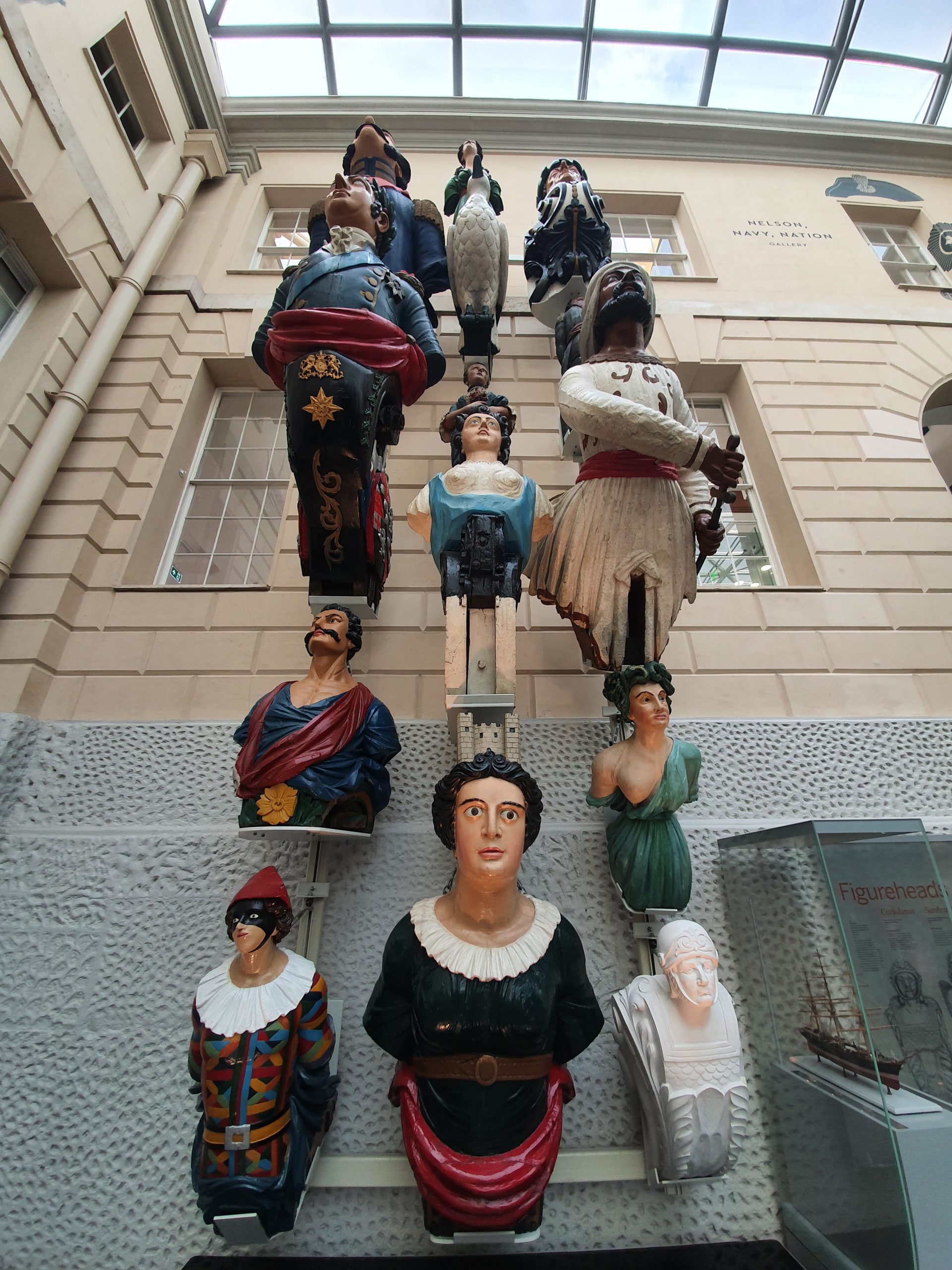
    There are many highlights in the National Maritime Museum, but these figureheads are some of my favourites in the collection. The largest collection of merchant navy ship figureheads in the world is located nearby in the Cutty Sark museum, but the ones here are Royal Navy figureheads.

    Royal Museums Greenwich operate one of the more restrictive copyright policies that I’ve seen from a museum, limiting re-use of their collection imagery. It’s possible to embed the images, but they’re relying on a Flash set-up and that’s being retired. It’s a slight shame as I would have used some of their imagery of figureheads that they don’t have on display in the museum. They’ve made quite an effort with the figureheads though, there’s a separate web-site at http://figureheads.ukmcs.org.uk/ which has 300 of them listed.

    The museum explains that back in the eighteenth century, the Royal Navy would usually have full-length figures, but cost cutting at the Navy Board saw an end to that. Some of the figureheads in existence at that point got cut back, with just the heads usually used after that.

    In the above photo, there are a few obvious figureheads which stand out. The large one on the right in the middle is from HMS Himalaya, which was built for the Peninsular and Oriental Steam Navigation Company (P&O) in 1853 and was known as SS Himalaya. After a few months, P&O realised that their ship, which was the largest ever constructed, was too big and there wasn’t enough passenger traffic to justify it. This wasn’t ideal for them, as they had just spent £130,000 on building it. However, they managed to convince the Government to buy their ship for £133,000 and it was transformed into a troopship which could carry up to 3,000 soldiers. The ship was decommissioned in 1894 and was then used as a ship to transport coal until it was sunk by the German Luftwaffe at Portland Harbour in 1940. The figurehead had been removed when it ceased to be a troopship, being stored at Devonport until 1936, when it was presented to the Admiralty.

    At the bottom left of the above photo is the figurehead from HMS Harlequin, a brig-sloop which launched in 1836. The ship was later used to transport coal and was decommissioned by the Royal Navy in 1899 and was broken up and sold for scrap in 1904. The figurehead was kept and was located on the first floor of Rigging House in the Devonport Dockyard, being donated to the Admiralty in 1936.

    Above the HMS Harlequin figurehead is the one from HMS Tribune, in the style of a Roman tribune. The ship was a wooden screw corvette which was launched in 1854, but it didn’t last long as it was sent for breaking up in 1866. I’m not entirely sure that taxpayer’s money was used entirely wisely there. The figurehead ended up in the same place as the HMS Harlequin and was also gifted to the Admiralty in 1936.

    The last British battleship to have a figurehead was HMS Rodney, which was launched in 1884 and remained in use until it was broken up in 1909. After that, with the exception of on some smaller Royal Navy ships which still used figureheads, the tradition changed to have a ship’s badge instead. This doesn’t seem quite as exciting to me, there’s something quite appealing about knowing how many sailors from the Royal Navy would have seen the figureheads on these ships and likely been quite attached to them.

    My only other comment, for what it’s worth (which isn’t much) is that the figureheads are all a bit pristine. They’ve nearly all been repainted, although not necessarily recently, so they don’t have that feel of having been on the front of the ship. The museum does have plenty of figureheads which no longer have much paint left, and I prefer these as they feel more authentic, but they’re mostly not on display.

  • Greenwich – The Gate Clock

    Greenwich – The Gate Clock

    I think this is one of the few Wetherspoons in London that I haven’t previously visited, or at least I can’t remember visiting it. It’s located opposite the Cutty Sark DLR station and is a relatively sizeable pub, with seating on two floors.

    I can’t be doing with change at my time of life, which is 43 years old, so I had my usual chicken wrap and chips. And, it was perfectly acceptable and good value for money, so all was well with the world.

    Not the most inspirational of photos I admit, but I’m pleased to see that this is one of many Wetherspoons where they’ve made a real effort to provide plug sockets for customers to use.

    The pub themselves give some information about their name:

    “This Wetherspoon pub takes its name from the ‘galvano -magnetic’ clock fixed to the gate of the Greenwich Observatory in 1851. One of the first electric public clocks, it shows Greenwich Mean Time, still used as a measure for longitudes and global time zones.”

    Service in the pub was fine, friendly and attentive with the environment being clean throughout. Well, other than the male toilets, I do wonder whether a staff member perhaps skipped a toilet check given the state of them. But, I don’t let such things concern me. This is one of the few Wetherspoons that I’ve visited where the disabled toilets are on the first floor, although there is a lift to get to them, which it seems from reviews was out of action for several weeks earlier in the year.

    Anyway, onto TripAdvisor to amuse myself.

    “We visited this pub on a cold day. We had two young children with us who are fussy eaters and wanted McDonalds. Their mother bought them their lunch and the rest of us went into the Gate Clock to eat. We found a large table and the two children and their mother sat at the table while we went to order our food. We had ordered our food and drinks and paid for them when the mother came over and told us that she had been told to leave as she could not consume other companys food in their restaurant. We have always used Wetherspoons when we have been out as we find them child friendly and have had no comment on the children eating their own type of food before.”

    Some customers never cease to amaze me. They bought their children McDonald’s and then sat in Wetherspoons with it, being surprised when the manager told them not to. And then they give the pub a 1/5 rating on TripAdvisor, as seemingly they’re meant to be a food court in the eyes of some customers….

    “So we are sitting having dinner and my friend is asked to leave because he is wearing his hat after 8pm. He is Finnish and elderly and they proceeded to intimidate him saying they can’t speak to me because their issue wasn’t with me. I’m 32 and speak English well so they decided to pick on him. It was because he never understood them the first time they asked. RACISTS RACISTS RACISTS!”

    Not that it’s anything to do with me, but they always say that gentlemen should take off their hat when entering a pub. I always do, although that’s primarily due to me never wearing a hat in the first place. I don’t rule out that bar staff might have had some race hatred against the Finnish, but I’m not sure they’re the usual group who are targeted in south London….

    “You pay upfront so they have your money and can serve you any old crap”

    I quite liked this reviewer’s turn of phrase.

    Anyway, I liked it here and that’s what mostly matters to me…..