Category: Dorset

  • Christchurch – Norman House

    Christchurch – Norman House

    20251011_112853

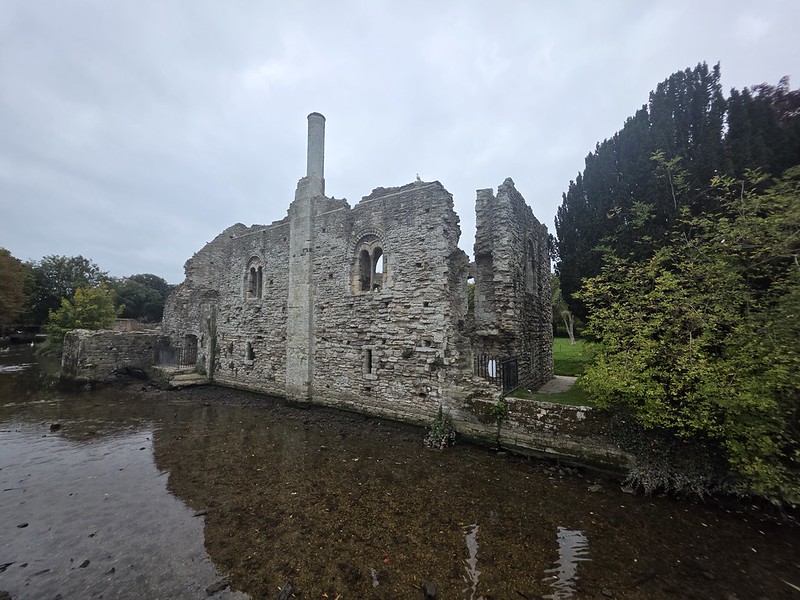
    This is Norman House, a rather nicely located residence situated by the river in Christchurch. It still looks rather decadent even though half of it has fallen down.

    20251011_113018

    Looking from the other side of the building, which is located near Christchurch Castle. The history of the two is interlinked, the castle was defensive and a place of safety, but the property was where the Lord lived when people weren’t attacking him. Built in around 1160, it was a luxurious property for the Lord and it was later used by the Constable of the Castle.

    20251011_113140

    Inside the building which fell into disrepair after the medieval period. I’m surprised that it survived after this, as it would have been easy to cart the stone away to use elsewhere which is what happened to most of the castle.

    20251011_113207

    The sockets where the first floor slotted in are clearly visible around the structure.

    20251011_113127

    And the remains of the steps with a sign warning of deep water, although it didn’t look very deep to me.

    20251011_113143

    The remains of a former fireplace, with the rare Norman chimney, and the whole arrangement is notable as it’s one of the few surviving Norman residential properties in the UK, although there’s one in Norwich hidden under the magistrates’ courts.

    English Heritage has this plan of the property and I’m slightly amused by the little bit of modern there and I’ve stared at photos and I have no idea what they’re referring to, unless it’s the closing up of a door. Some sources say that demolition started in the eighteenth century, but the local vicar was able to intervene to stop the total destruction of the property. This would explain why it has sort of survived, it became recognised quite early on as a building that needed to be retained for future generations.

    Anyway, the monument is accessible for free at any time for anyone who wants to see the modern section of the building, or indeed, the Norman bit.
  • Christchurch – Priory Fryer

    Christchurch – Priory Fryer

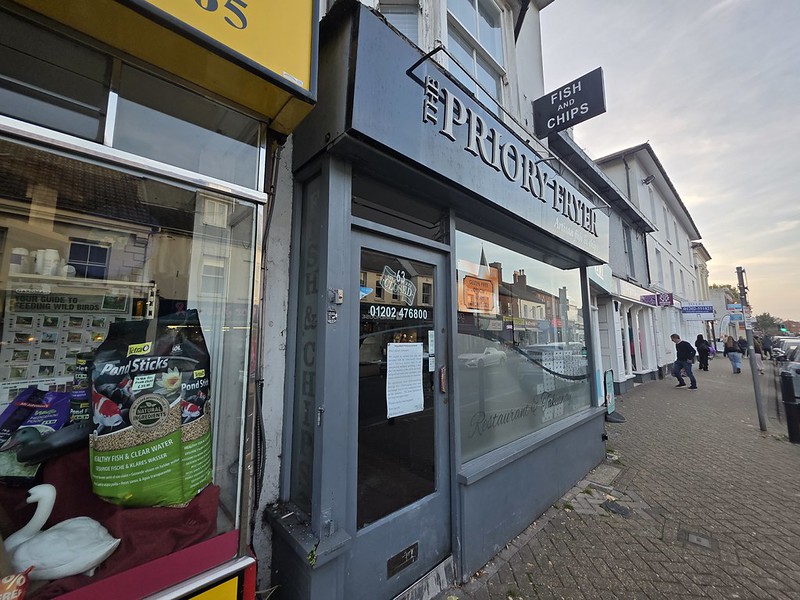
    We did think of popping in here, but we were a little bit limited by the fact that it was shut.

    It’s this that I liked, the phrasing that they were closed “due to an unexpected incident involving a fire” sounds like something I’d write. I hope everyone is well and if I’m back in Christchurch I’ll pop in here as I like their style.

  • Christchurch Priory – The Miraculous Beam

    Christchurch Priory – The Miraculous Beam

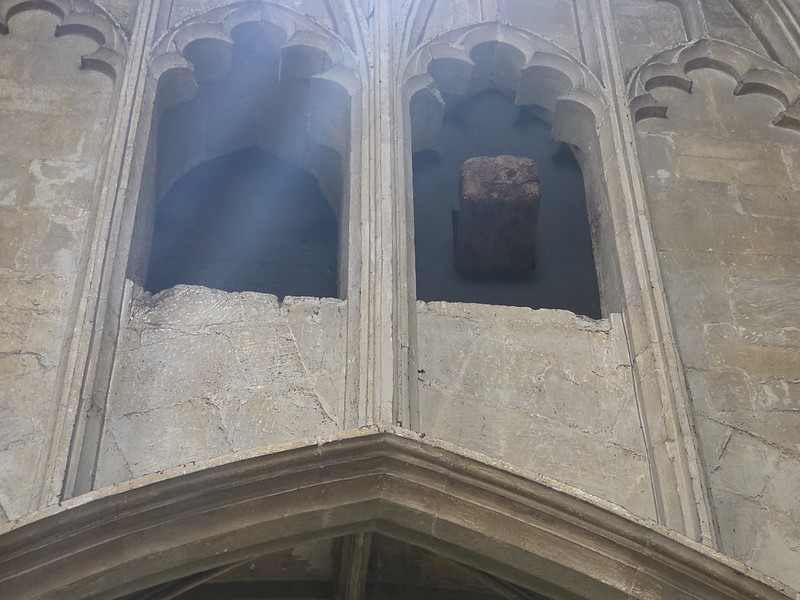
    One of the more curious, and frankly slightly odd, tales connected with Christchurch Priory is that of the so-called miraculous beam. When the Priory was being built in the early twelfth century, the craftsmen encountered a bit of a structural hiccup that was considered to be rather sub-optimal. A large timber beam, essential for the roof not to fall down, turned out to be too short for its intended place. This is a civil engineering blunder and I’m sure my friend Liam would have been appalled at such incompetence.

    But then, so the story goes, a mysterious carpenter appeared and he was a man that no-one had seen before, who quietly went about his work without complaint. Overnight, the too-short beam was miraculously found to be the perfect length, fitting flawlessly where before it had failed. The stranger, naturally, had vanished. So the rest of the builders decided that it must have been Jesus himself who fixed the beam. Hence the name Christ’s Church, the Priory’s supposed moment of celestial rebranding. I imagine that this whole thing was the talk of the pubs for that evening and indeed several nights to come.

    The beam itself is still there today, high up in the Priory’s roof and my photo isn’t really very clear. It’s a reminder though of the construction process, although I rather suspect that they just did some medieval joining of a beam rather than Jesus himself popping across, but who knows? I mean, it’s good for publicity if nothing else?

  • Christchurch Priory – King James Bible

    Christchurch Priory – King James Bible

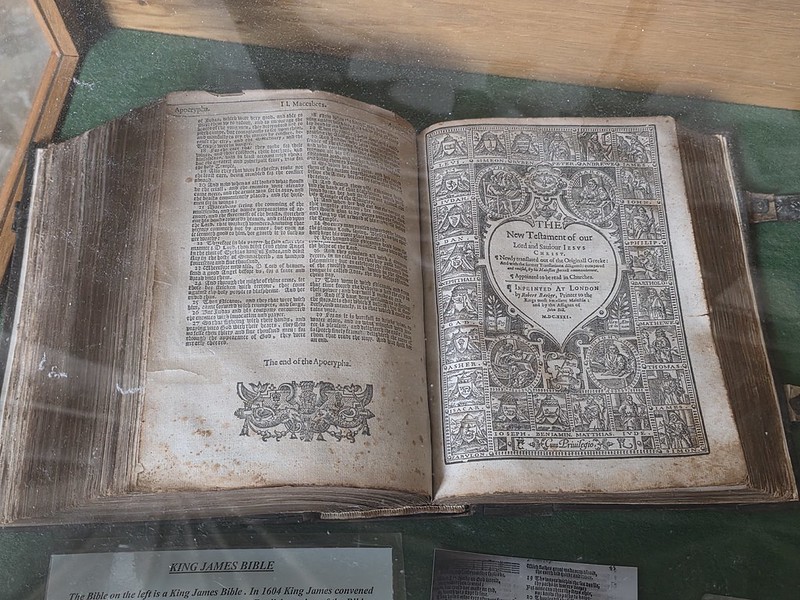
    It’s not a secret that I love old books and this is a King James Bible that dates from around 1633, which the priory has been able to date due to the inclusion of metrical psalms that weren’t in earlier editions. The Bible was important, it was the third translation into English that had been approved by the Church of England, with the first being the Great Bible in 1535 and the second being the Bishops’ Bible in 1568.

    Unfortunately, the priory doesn’t know much about the heritage of this Bible, other than knowing it has been rebound. But, it’s likely that the Bible was used extensively in the church and it’s not in bad condition today. As a side issue, I’m not sure why the building is still known as Christchurch Priory (as its days as a priory have long since come to an end), I suspect it’s the reality that Christchurch Church doesn’t exactly roll off the tongue (although its formal name is the Priory Church of the Holy Trinity).

  • Christchurch Priory – Salisbury Chantry

    Christchurch Priory – Salisbury Chantry

    20251011_103411

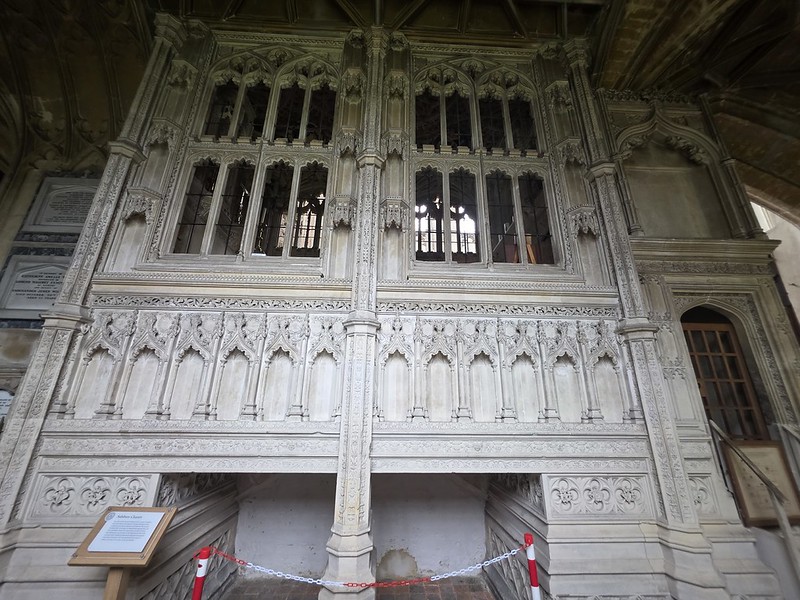
    The Salisbury Chantry at Christchurch Priory is grand, decadent and rather ornate. It was founded by Margaret Pole, Countess of Salisbury, a woman whose life seemed quite dramatic. She was the niece of both Edward IV and Richard III, but unfortunately for her, she was a Plantagenet and this didn’t entirely fit with the Tudor way of thinking. So, Henry VIII eventually had her executed on 27 May 1541 (and at 07:00 so she had to get up early) and her chantry at Christchurch has survived, but remains unused. There’s a lot more about Margaret Pole at the Historic Royal Palaces website, she was a powerful figure until she was killed…..

    20251011_103417

    Architecturally, the chantry is beautiful in a rich and late Gothic way with its delicate stone tracery and niches that likely held figures long since lost. There are some traces of medieval paint remaining and I imagine in its day it would have rather more glowed with candles and felt a little warmer.

    20251011_103930

    This is the other side of it, by the altar. The fact it survived the Reformation at all is rather miraculous, since most chantries were dissolved and removed with their endowments seized by the Crown. And this is the sort of thing that actually brought down the Catholic Church, it was ridiculous that this wealth brought such privilege in the priory that someone could be buried in a construction such as this right by the altar.

    The corruption, nepotism and greed of the Catholic Church at this point is what ultimately led to the Reformation across Europe. The church willingly took wealth from those who didn’t really have any, so fearful were they that they or their loved ones wouldn’t go to heaven. Any money brought privilege and access, a fast track to heaven.

    Margaret Pole is now buried at the Chapel Royal of St Peter ad Vincula located in the Tower of London, so that’s not a bad final resting place. It wasn’t the one she wanted and her death meant that she became something of a martyr, which is perhaps why this chantry survived and remains today.

  • Christchurch – Bow House

    Christchurch – Bow House

    20251011_101751

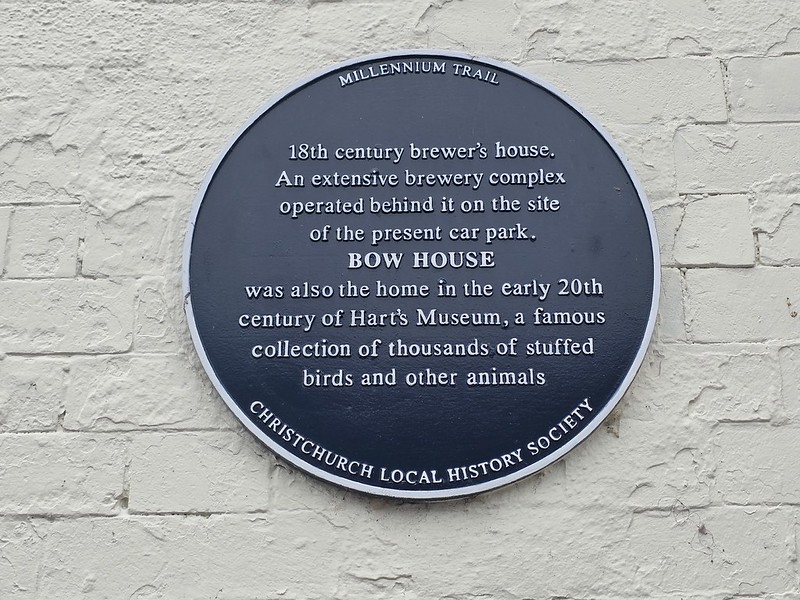
    I like a blue plaque and Christchurch Local History Society has placed a fair number of these around the town. Bow House was built as a brewer’s house in the eighteenth century, it was then occupied by the taxidermist Edward Hart before becoming a building society in the twentieth century and it’s now a dentists.

    20251011_101758

    It’s perhaps the period when it was occupied by Edward Hart (1847-1928) that is the more interesting time as he turned it into a museum of the things that he had stuffed. There’s plenty of information about him on the Hampshire Cultural Trust website and they mention:

    “Edward worked at William’s [his father] new premises for several years, learning the art of taxidermy, until he opened his own business at 23 High Street (The Bow House).

    As well as preparing animals and birds for local sportsmen, Edward started his own collection. Most of his specimens were taken between 1867 and 1897. In 1866, his collection was large enough to open a museum in ‘The Bow House’, which is now the Portman Building Society.

    Hart’s Museum received many visitors, including Sir Robert and Lady Baden-Powell in March 1914. The building was described as ‘warm, well-lit and very clean, the ideal of a private museum, every part of which is crowded with rare and beautiful birds.’

    The Public Natural History Museum for Bournemouth attempted to buy the collection to keep it in one piece, but that didn’t work out.

    “After the death of John Hall, the collection was passed to Stowe School in Buckinghamshire where they remained until 1983. The collection was, by this time, in a sad state of neglect and staff at Leicester Museum took them on for conservation and safe storage. Unfortunately a number of cases were beyond repair and had to be disposed of. In the early 1980’s, Stowe School offered the collection for sale and they were purchased by the Horniman Museum, Leicester Museum and Hampshire County Council Museums Service (HCCMS). Twenty two cases were purchased by the latter and chosen, not only as fine examples of taxidermy, but also because the backgrounds show Christchurch at the time the birds were shot.”

    The building is listed and this states:

    “C18. Painted brick facade with dentilled eaves cornice. Tiled roof. 2 storeys and attic with a pedimented dormer. 2 bays each of 3 windows, unbarred sashes. Doorway with pilasters, broken scroll pediment and door of 6 fielded panels, the top 2 panels cut away and glazed.”

    The Christchurch Brewery was located behind this house, but that history was all swept away in the 1970s when they wanted to build a lovely new car park. Looking at old maps, it’s not entirely clear that there was a great deal to preserve from this period and I’m not sure that the buildings were very notable.

  • Christchurch Pubs

    Christchurch Pubs

    During the weekend, Ross and I visited all of the pubs that were in Christchurch (or the central bit anyway) and there’s a fair variety of them available including food-led, loud, quiet, real ale led and craft beer led.

    Dirty Gerties [less of a pub and more a function venue]

    Railway, The [We visited here, but I’ve decided not to write about it]

    Saxon Bar

    Ship, The

    Smugglers, The

    Snug, The

    Thomas Tripp

    Ye Olde George

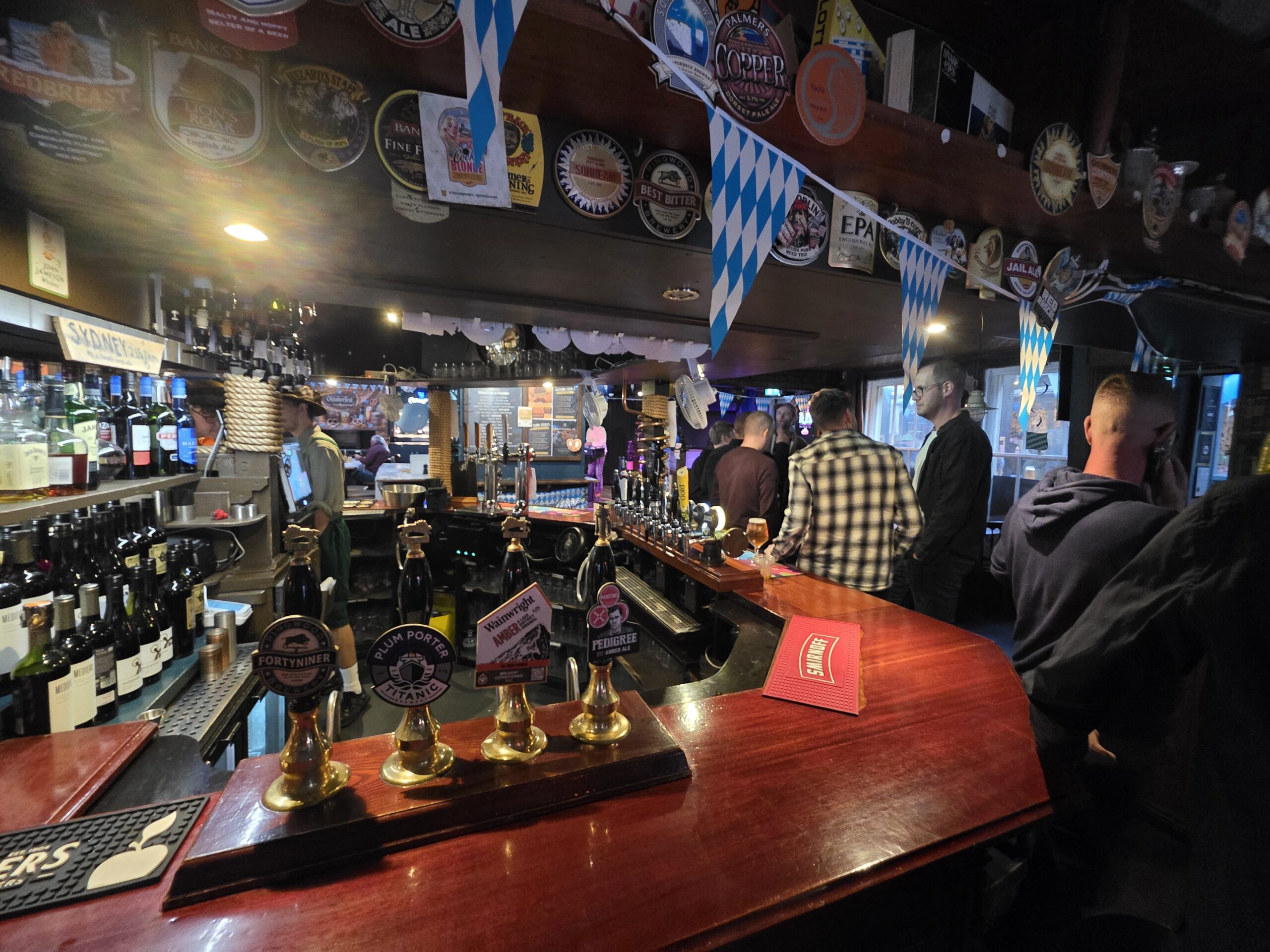
    The only Good Beer Guide listed pub is the Saxon Bar and that has the widest range of craft beer alongside several real ales. This is a micro-pub and perhaps the best in terms of beer selection. The Snug is quieter but has several real ales available, there’s much more quirkiness here. The Thomas Tripp is louder and busier for those who like that kind of atmosphere, whilst the Ship is food-led although drinkers are very welcome. The Ye Olde George is more expensive but has a pleasant beer garden, whilst the Smugglers is a little further out and is more of a community pub.

  • Christchurch Priory – John Lloyd (1710-1768)

    Christchurch Priory – John Lloyd (1710-1768)

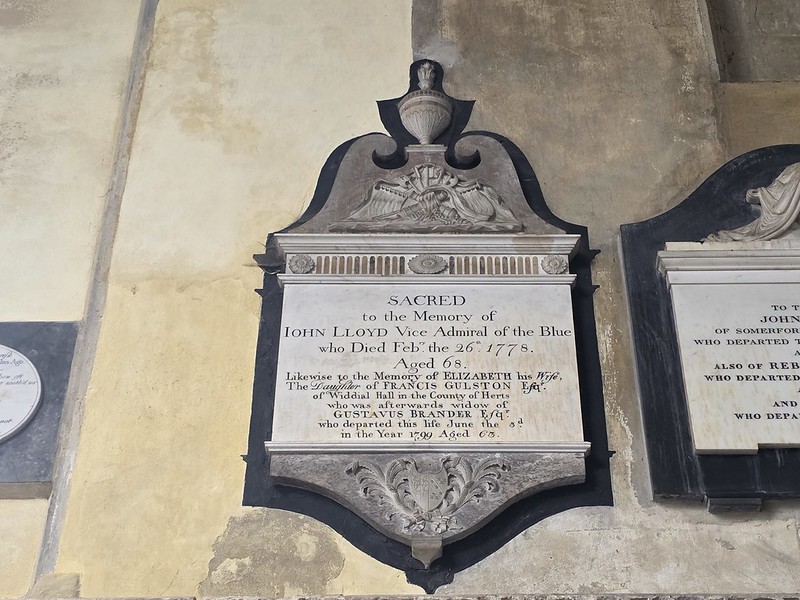
    I noticed this memorial at Christchurch Priory and anyone that has a stone plaque like this is likely to be quite important and often written about before and so I won’t linger too much on him. It’s dedicated to John Lloyd, Vice Admiral of the Blue, who died on 26 February 1778, aged 68. That title alone says a fair bit about him as he wasn’t just any seafarer, but a senior officer in the Royal Navy during the middle of the eighteenth century, a time when Britain’s power was very much measured by the size of its fleet and how effectively it could blow other nations out of the water. It certainly wasn’t a subtle little arrangement.

    The design is typically Georgian, full of restrained elegance with a carved urn at the top and decorative flourishes that stop just short of being showy. Beneath John’s details, the inscription also remembers Elizabeth, his wife, who outlived him and went on to marry Gustavus Brander, Esq (which is quite a name and he has his own Wikipedia page) and who died in 1809 aged 78. It also notes that she was the daughter of Francis Gulston of Wyddial Hall, which sounds suitably grand and decadent.

    Lloyd himself, as “Vice Admiral of the Blue”, would have been part of the Royal Navy’s colour-coded hierarchy, Blue being one of the three squadrons into which admirals were divided (Red, White and Blue). He’d have served through a period of near-constant conflict at sea and this leads me to a wonderful website that I’ve found called Three Decks which gives a comprehensive history of his appointments.

    This website states that he joined around 31 August 1722 as an ordinary seaman on HMS Advice, moving up to become a Lieutenant on HMS Roebuck in 1733, then Captain of the Deal Castle in 1746, then Rear Admiral of the Blue in 1775, Rear Admiral of the Red in 1775 and Vice Admiral of the Blue in 1778.

    I’m rather pleased to have discovered that website, a really detailed resource from the period.

  • Christchurch – The Snug

    Christchurch – The Snug

    20251010_222310

    I really like places that are quirky (well, generally as there are exceptions) and we went here on both evenings. This is more of a cafe bar than a pub, but it absolutely meets the requirements of the latter and it’s very well reviewed online.

    20251011_203203

    They have cake, real ale and a range of beers in bottles.

    20251011_205758

    Just for reference, here’s their breakfast menu.

    20251011_205803

    And the lunch menu.

    20251010_215805

    The real ale board and they were featuring a selection of beers from the Drop the Anchor brewery who are located in Hinton, which is a short distance away from Christchurch. I think it’s really positive that they’re supporting a local brewery and I noticed it too late, but they were offering flights as well (as in beer flights, they weren’t flying to Hinton).

    20251010_220037

    My beer on the first evening was the Tucktonia from Drop the Anchor, which was a hoppy, tropical and quite floral little number. Ross had bottled lager.

    20251011_203352

    My beer on the second evening was the Citralicious from Drop the Anchor, an ale with a citrusy edge, not entirely well rounded but a bit more rustic. Ross had bottled lager.

    20251010_221954

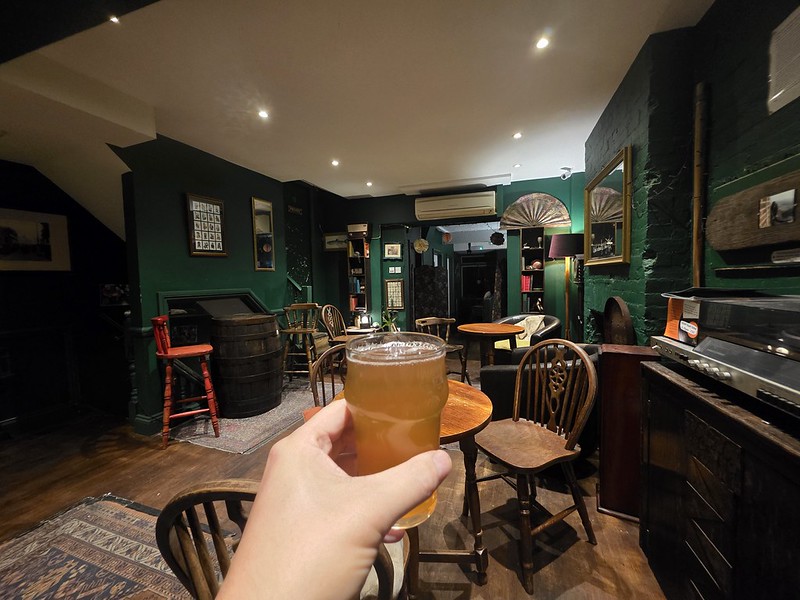
    This is the sort of quiet and peaceful environment that I like, with a friendly and relaxed atmosphere. On the first evening one of the members of another group was telling me about the real ales he had tried and he noted that they were all hoppy. That was not an inaccurate statement, but he had clearly enjoyed his experience.

    20251010_220440

    A design concept such as this is marvellous and it’s a great opportunity for the staff to pop anything old…. Although I’m sure that they’re carefully curated everything.

    20251010_220044

    I really liked this venue, it was something a little different and the service was friendly and the surroundings intriguing. There was a wide range of real ales, they’ve made a proper effort here to do interesting things and I hope that’s rewarded with the number of customers for them as they deserve it.

  • Christchurch – Smugglers Pub

    Christchurch – Smugglers Pub

    20251011_185026

    Located around ten minutes walk from the centre of Christchurch, this is the Smugglers which reopened earlier in 2025. The pub has been an important part of the community for many years, previously known as the Smugglers Run and the Olde Starre Inn. It’s now run by the business partners who are behind the Thomas Tripp pub as well as some other enterprises in the town.

    20251011_182917

    I couldn’t see any real ales, although I think that they’re usually sold, and the keg options didn’t look very interesting either. The service was though engaging, friendly and helpful, with the team member offering to bring the Guinness to the table when it was ready which I thought was kind.

    20251011_182915

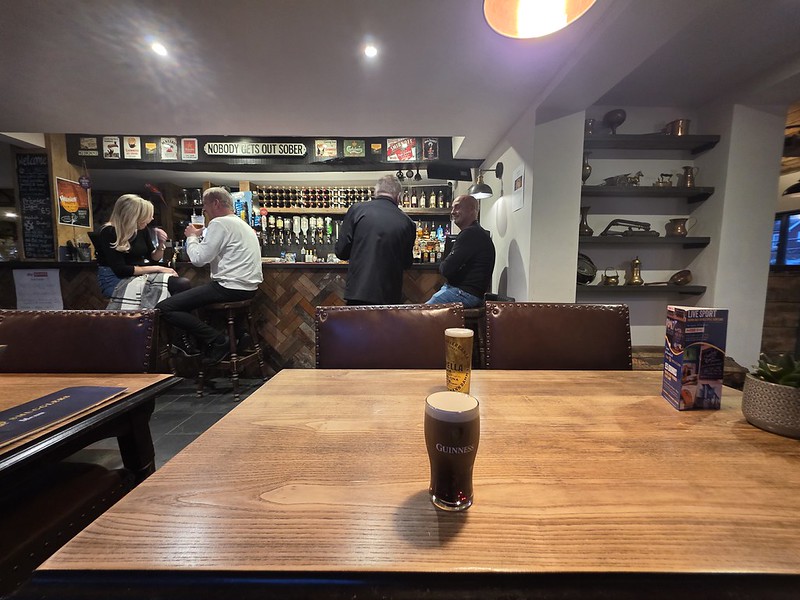
    I went for half a Guinness and Ross went, unsurprisingly, for a lager. The Guinness was served in an appropriate glass, it was at the appropriate chilled temperature and it tasted as I expected, so all was well.

    20251011_182804

    We were heading for an Indian meal at this point, but here’s the food menu at the Smugglers. Those prices seem very reasonable to me, with plenty of choice available. There was a comfortable and inviting feel to the venue as well, I really quite liked it here.

    There’s something of a community pub feel to the venue, there’s pool, darts and they also show a lot of live sports. I’m not sure that these are key drivers for me, but they’re important in a community pub that wants to attract a broader dynamic, so that all feels positive.