Category: Derbyshire

  • Hope – Name Origin

    Hope – Name Origin

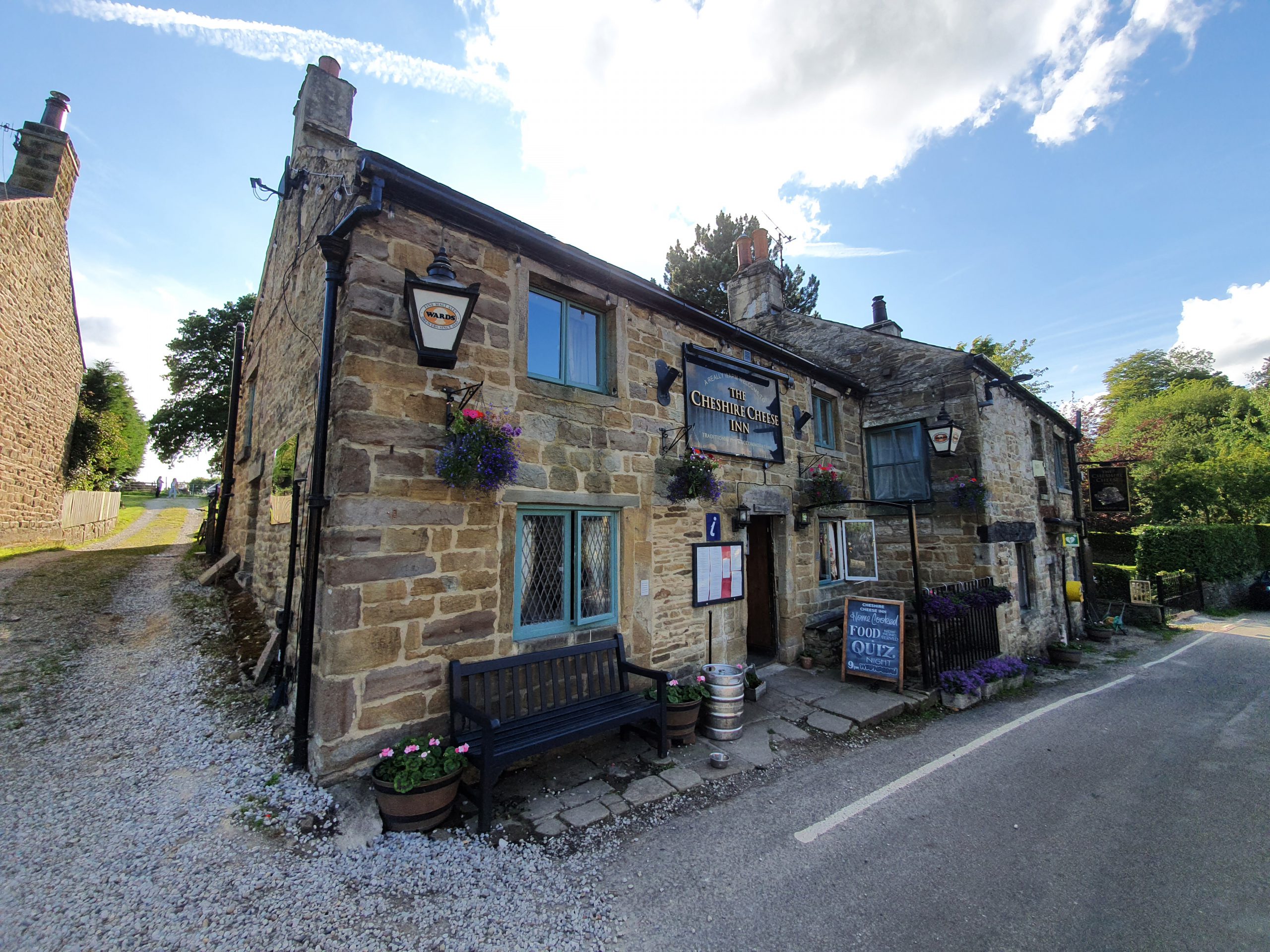
    I didn’t spend long in the village of Hope, it was just sufficient time for us to visit the pub, the Cheshire Cheese Inn. The village name though is intriguing and The Concise Oxford Dictionary Of English Placenames notes:

    Hope, Derbyshire. Hope in 926, Hope in the Domesday Book. From Old English ‘hop’, meaning valley.

    I was slightly disappointed with this, I had hoped (excuse the pun) for something more inspirational. The dictionary takes some time explaining this word, it has numerous meanings, but in this part of the country, it was a relatively common Old English word to describe a valley. The village has had the same name for probably nearly 1,500 years and that’s some going, also making it one of the earlier places in Derbyshire to have been recorded.

  • Hope – The Cheshire Cheese Inn

    Hope – The Cheshire Cheese Inn

    This was our choice for food following our visit to the rather wonderful Swiss Tap in the nearby town of Edale. It’s listed in the Good Beer Guide and is a sixteenth-century building with some heritage to it. The owners of the building put stucco plaster on the frontage in 1877, but when this was removed it was evident that this was once two cottages.

    The main bar area of the pub.

    The same room, with a downstairs area visible down some steps on the right-hand side. There were people in there so I didn’t disturb them by taking a photo, but this was the second cottage that was once used to house animals downstairs whilst the owners lived in the upper part. I like that the pub has made an effort to explain its history on their web-site, noting:

    “The Inn owes its name to being an overnight stopping point on the old salt carrying route from Cheshire across the Pennines to Yorkshire. Payment for lodging at the Inn was actually made in Cheese. The original cheese hooks can still be seen in the lower room. Today it retains a relaxed unspoiled, old world atmosphere with open fires, traditionally brewed hand pulled beer and a reputation for good wholesome food.”

    There’s a small bar area to the left.

    And here it is, but customers were advised to take advantage of table service, rather than trying to order in this limited area.

    The menu, with primarily traditional British dishes, but an effort has been made to cater for vegetarians.

    I’m going to have to admit that my beer tasting ability couldn’t cope easily with this, the Daily Bread from Abbeydale Brewery. The staff member warned me that it was a very yeasty beer, hence the name, but I couldn’t work out whether it was slightly past its best or whether the yeast was meant to make it taste like that. Since I wasn’t competent enough to know which it was, I’m assuming that it was just a strong flavour and it wasn’t unpleasant, just different to what I’d usually have. Interesting though, I like that there’s something different to try.

    I had the beer-battered haddock, which was moderately expensive at £13.75. The fish was well cooked and tender, with the batter retaining some crunch and having a pleasant flavour. The mushy peas were, as they often are, pretty pointless as they were devoid of flavour, but the chips were homemade and moreish. All very acceptable though and the portion size was towards the generous side.

    Back to the price, I wasn’t entirely delighted to note at the end that, despite being listed on the Amex Shop Small site, they decided they didn’t accept Amex and that meant I couldn’t claim my £5 from the card company as part of the scheme. Anyway, that aside, the staff here really were excellent and our main server was personable and helpful. It was a comfortable location and I liked the history to the pub, with the friendly staffing all adding the atmosphere. Not a bad choice of mine at all……

  • Matlock – St. Giles’s Church (Wooden Grave Markers)

    Matlock – St. Giles’s Church (Wooden Grave Markers)

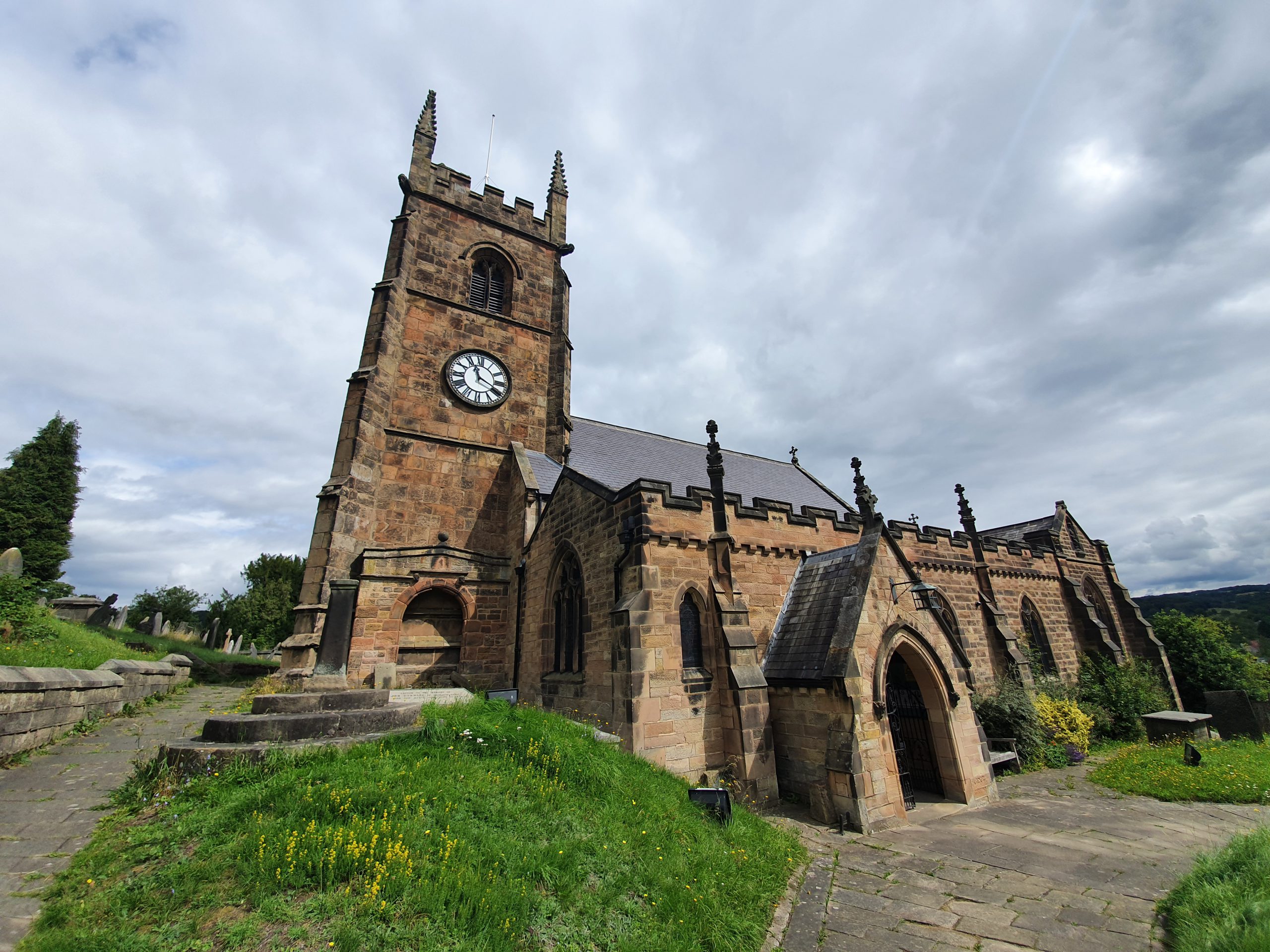
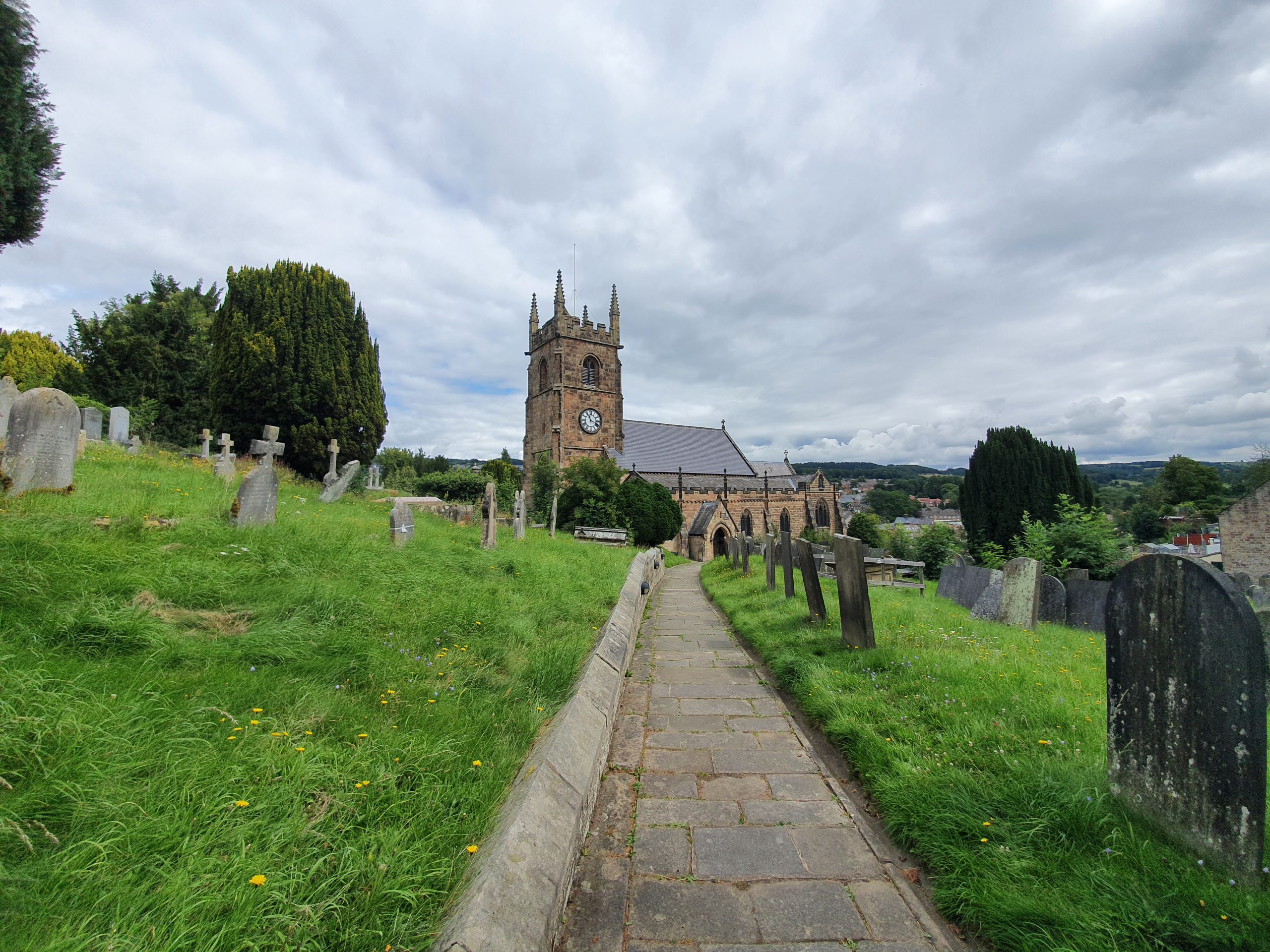
    I don’t have any background information to these graves, but I thought that they were interesting as wooden markers would have once been commonplace in churches. They seem to be bearing up well at the moment, but I still suspect many churchyards would have once been full of these, part of the reason there are in some places an absence of gravestones from before 1800.

  • Matlock – Pic Tor War Memorial

    Matlock – Pic Tor War Memorial

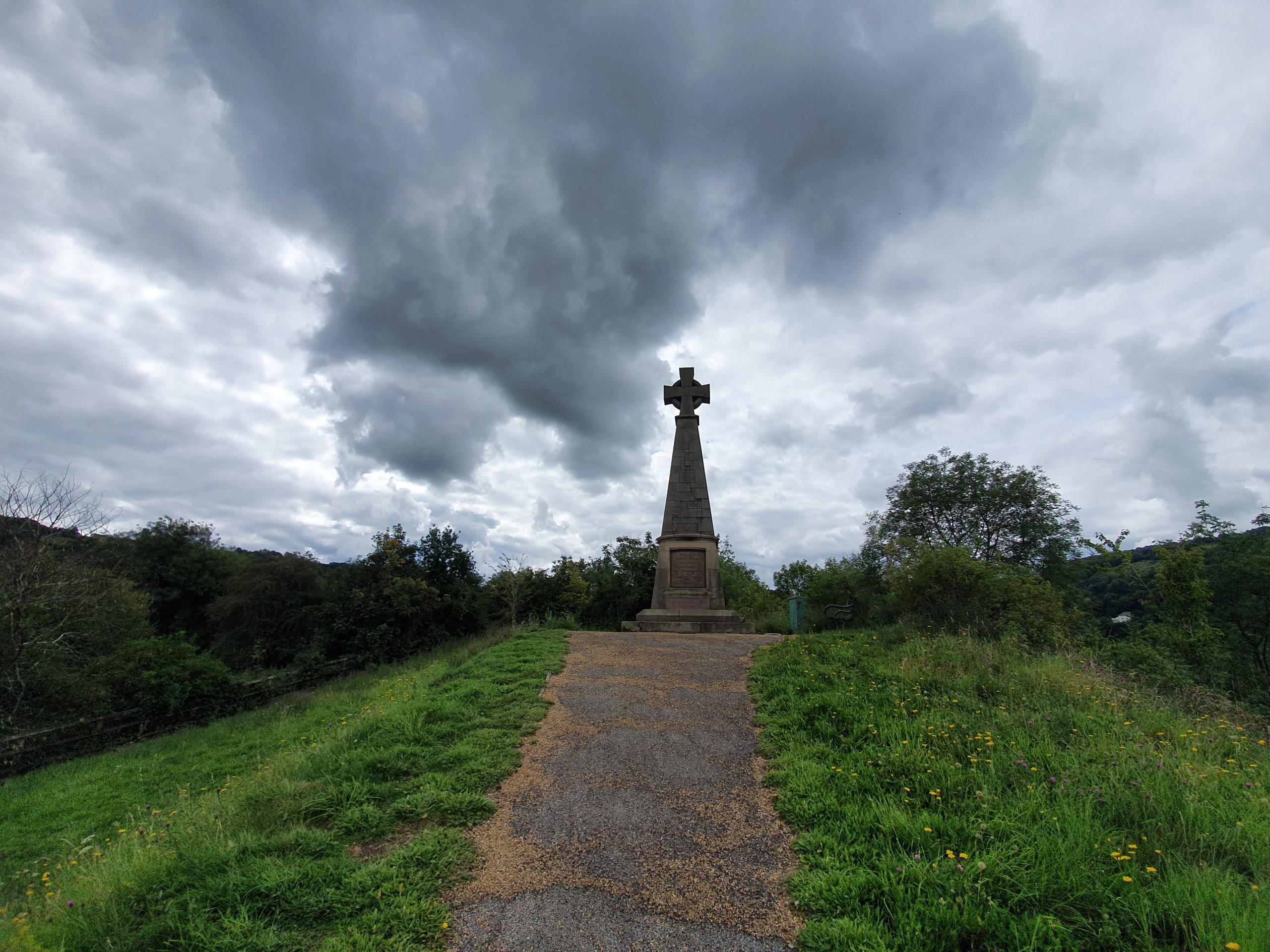
    The war memorial in Matlock stands over the town, located at the top of Pic Tor and having one of the best views of any similar memorial I can think of. It’s in the design of a Celtic cross and there are numerous pathways and steps up to reach the memorial, a walk which is worthwhile given the reward of the fine views.

    The memorial was unveiled on 7 August 1921 by FC Arkwright, who had lost a son and a son-in-law during the First World War. The memorial cost £500 and it was designed by William Nathan Statham and constructed by John William Wildgoose. Unfortunately, the process took longer than it probably should have done, with a series of disputes and letters to the local newspapers about just what design should be used for the memorial. The moderate danger of the location was realised a week after the war memorial was unveiled, when a young boy named Kelsey managed to fall down the slopes and render himself unconscious.

    The war memorial commemorates the names of 178 men from Matlock who died during the First World War, with another 47 names being added after the end of the Second World War and another name added later on marking the death of a soldier in Northern Ireland.

  • Matlock – St. Giles’s Church (Thomas Kirwan)

    Matlock – St. Giles’s Church (Thomas Kirwan)

    Thomas Kirwan was the son of Patrick Kirwan and Bridget Kirwan. He married Mary Patricia Kennedy in 1936, at the Roman Catholic Church in Matlock and they moved to 30, Lynholmes Road in the town. He served as a Serjeant in the King’s Regiment (Liverpool) in the 70th Battalion, which was a young soldiers group disbanded in September 1943. Thomas doesn’t appear on the 1939 register, so he was likely already in the military at that point. Thomas and Mary did though have a child, Ann Teresa Kirwan, who was born on 7 April 1939. Unfortunately, Ann Teresa died in the Isle of Wight in 1959, at the age of 21.

    Thomas died on 9 April 1945, aged 44 years. I don’t have a sufficient knowledge of military history to understand what happened here, although the King’s Regiment were involved with the attacks on Kiel in Germany. And on the day of Thomas’s death, there was a heavy bombing on Kiel which destroyed the last two major German warships, the Admiral Hipper and the Admiral Scheer.


  • Matlock – St. Giles’s Church (Edward John Loverock)

    Matlock – St. Giles’s Church (Edward John Loverock)

    Edward John Loverock was born in Uttoxeter, Staffordshire, in 1922, the son of Frederick Loverock and Mabel Victoria Jubilee Loverock (nee Bagshaw), who later moved to Matlock.

    He joined the 61st Squadron of the Royal Air Force Volunteer Reserve as an air gunner, service number 950159. This was a bomber squadron which launched several attacks on targets in Germany. Edward was trained in an Avro Lancaster Mk I aircraft and he would have been based at RAF Syerston, near to Newark in Nottinghamshire.

    Edward died on 18 February 1943, at the age of just 21. A night-time training flight in the Lancaster went wrong and the engines caught fire, causing the aircraft to crash with all seven men killed. The crash site was near to Staunton-in-the-Vale in Lincolnshire and there is a memorial at St. Mary’s Church in the village to commemorate the seven men who died.

    The inscription on Edward’s grave reads:

    “You did your duty, your life you gave. You rest with many who died to save”.

  • Camping – Day 1 (Night Hike)

    Camping – Day 1 (Night Hike)

    Just photos again, these are of our relatively short night hike from the camp-site we were staying at. Fortunately, some people had a stronger headtorch than me, as mine definitely need a battery change. We were politely asked by a land-owner what we were looking for near to the start of the walk and he keenly pointed us towards a pub as he assumed that’s where we’d be heading. We weren’t, but it was useful to get our bearings and he didn’t seem to think we were going to rob his house or pinch his sheep.

    It was a relatively uneventful walk, although the road we were walking along was closed and we discovered why when we found a series of enormous cracks in the surface. These were probably caused by mines underneath and the road could have given way at any time, but we lived to tell the tale. It’s quite relaxing to walk at night-time, although there seemed to be more cars on the road than at a Formula 1 track, and some were going at a similar speed.

    It may have only been a walk of a few miles, and I missed the ideal time to take photos when there was a little more sun out, but it’s another happy memory of Derbyshire.

  • Matlock – St. Giles’s Church (Cyril Walthall)

    Matlock – St. Giles’s Church (Cyril Walthall)

    Cyril Walthall was born on 31 July 1912, in Bakewell, Derbyshire, the son of Harry Walthall and Ada Walthall (nee Britland), of Matlock Bath. Cyril married Phyllis Birch, who had been born on 2 October 1912, in 1937 at the Farley Hill Congregational Chapel. By the time of the 1939 register, Cyril was living in Matlock with Phyllis and he was working as a fine gauge knitting machine operator at a hosiery manufacturer.

    During the war, Cyril was an aircraftman, service number 2202724, in the Royal Air Force Volunteer Reserve. He died on 4 February 1944 and was aged just 31. His estate was worth £1,166 when he died, and this went to Phyllis, who at this time was living at Glen Mona on Jackson Road in Matlock. Phyllis died in Matlock on 8 August 2007, at the age of 95 and 63 years after her husband died.

  • Matlock – St. Giles’s Church (Mary Crossley)

    Matlock – St. Giles’s Church (Mary Crossley)

    This is the grave of Mary Crossley (nee Lovatt), the wife of Thomas Crossley and the couple married on 11 November 1804 in Mickleover, Derbyshire. Mary died on 24 September 1816, aged just 36 and she was buried on 27 September 1816. The other sad story is that Elizabeth, “the daughter of the aforesaid Thomas and Mary” died on 7 November 1816 when just an infant and she was buried on 10 November.

    Thomas Crossley went on to marry Harriet Caithness in Crich, on 9 March 1825. He’s listed on the 1840 census, being 60 years old, whilst Harriet was just 40 years old, so I wonder if that was a controversial marriage. They had several children, including Elisa, John, Edwin, Josiah, Emma, Hannah and Elizabeth. That must have also been an emotional time for Thomas, having another girl named Elizabeth, 25 years after the first died.

    There are so many stories to be told here, but they’re likely lost to time. It’s not clear why Mary died, perhaps complications from childbirth and that might explain the death of the child a few weeks later. Then for the husband to find a young bride and start what turned out to be a large family, it can only be left to the imagination to know how much he missed Mary and what impact her death had on his life.

    But, this gravestone is neatly carved and over 200 years on it remains readable and standing proud in the churchyard.

  • Camping – Day 3 (Matlock – Footstool Shortage)

    Camping – Day 3 (Matlock – Footstool Shortage)

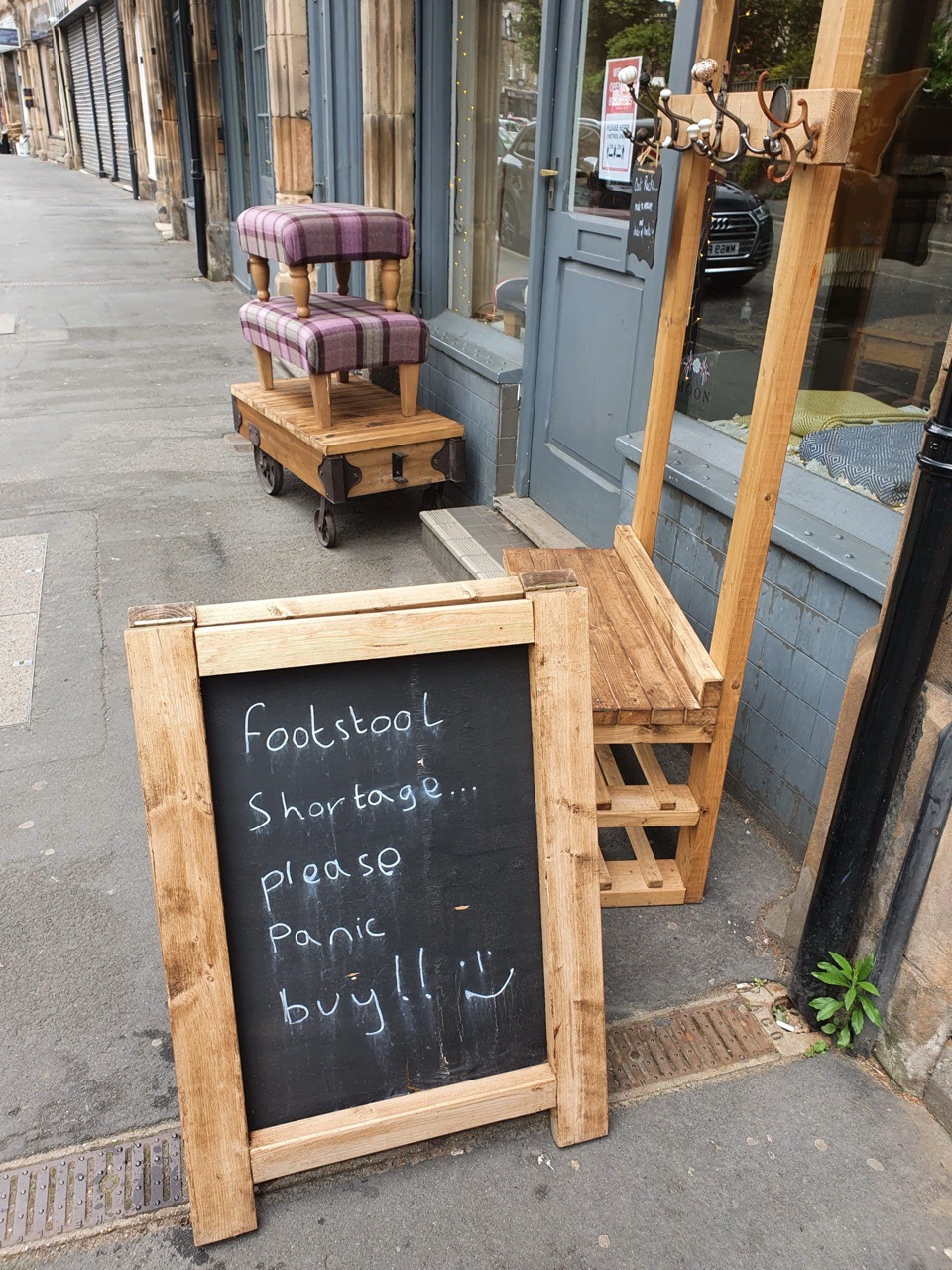
    I liked this advertisement from a shop on Dale Road in Matlock. Worth a try!