Category: Derbyshire

  • Derby Museum and Art Gallery – Hanson Log Boat

    Derby Museum and Art Gallery – Hanson Log Boat

    20250606_122723

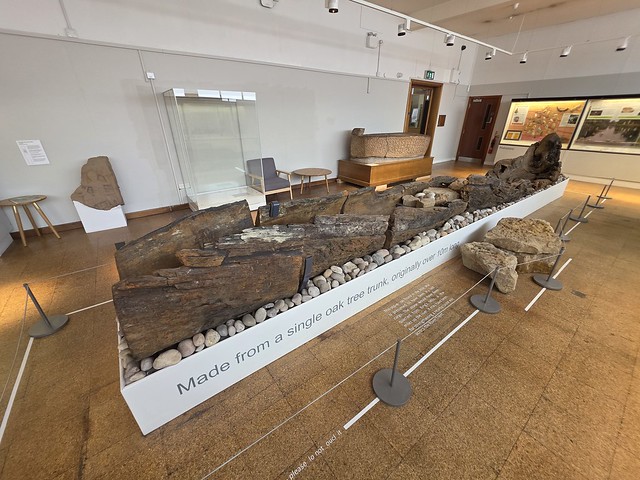
    This is what has become known as the Hanson Log Boat, a Bronze Age long boat which was found at the Hanson gravel pit in Shardlow, near to Derby. It was discovered during an archaeological watching brief and they had the problem of transporting it so that it could be preserved. Given the huge weight due mostly to it being waterlogged, they came up with the idea of sawing it into smaller bits, which doesn’t feel entirely optimal but I’m not an archaeologist. They found another log boat at the site a few years later but didn’t want to move another one, so they left it for future generations to resolve the logistical arrangements.

    20250606_122731

    As the signage suggests, it’s around 3,400 years old. It’s made out of one large oak tree which would have originally been over ten metres in height.

    20250606_122708

    This is the boat’s final cargo, a heap of rock. More precisely, it was Bromsgrove sandstone which was likely being used to strengthen a causeway across the River Trent. Having this cargo still intact does add somewhat to the general intrigue about this boat.

  • Derby Museum and Art Gallery – Memorial Plaque of Lieutenant Charles William North Garstin

    Derby Museum and Art Gallery – Memorial Plaque of Lieutenant Charles William North Garstin

    20250606_124630

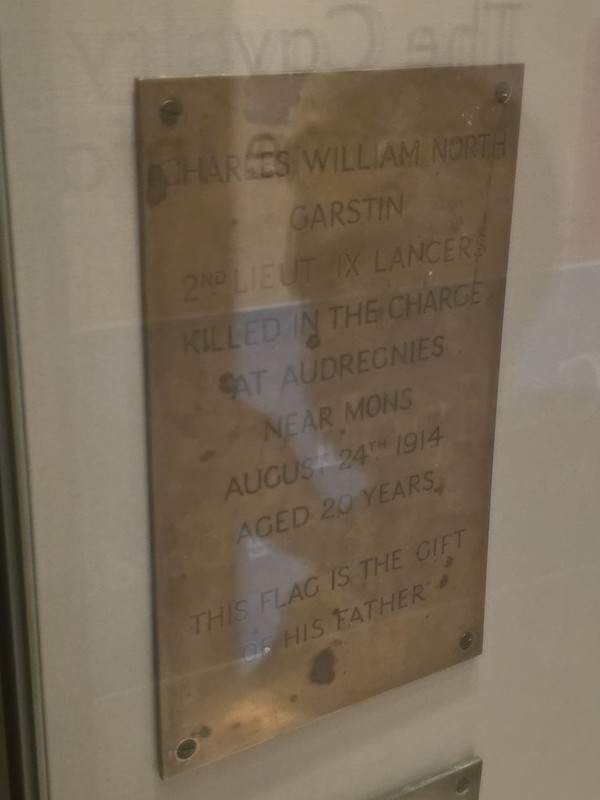
    This is the brass memorial plaque commemorating the life of Charles William North Garstin, 9th Lancers who died on 24 August 1914. The plaque was funded by his father, who had to deal with losing his little boy, and only son, who was aged just 20. There’s more about Charles at https://livesofthefirstworldwar.iwm.org.uk/lifestory/1313008, so I won’t repeat that, but instead I looked up his father, Sir William Garstin.

    Sir William Edmund Garstin, born on 29 January 1849, was a prominent British civil engineer whose work primarily related to public infrastructure in Egypt. He was educated at Cheltenham College and King’s College in London where he specialised in engineering. He started his career in 1872 with the Public Works Department of India, focusing on irrigation projects. In 1885, his expertise led him to Egypt, where he first served as Inspector-General of Irrigation before being promoted to Under Secretary of State for Public Works in 1892. In this role, he was instrumental in overhauling Egypt’s irrigation systems, playing a key part in the design and construction of the Aswan Low Dam which was built between 1898 and 1902. His work also extended to the barrages at Asyut and Esna. Furthermore, Garstin authored significant reports on the hydrography of the Upper Nile and initiated Egypt’s geological survey in 1896.

    After his retirement in 1907, Garstin continued to contribute by serving as a British Government director of the Suez Canal Company. He died on 8 January 1925, and was cremated in London. In recognition of his work, the extinct giant snake, Gigantophis garstini, was named in his honour, which I assume he would have been pleased with unless he really didn’t like snakes. I read numerous obituaries of William, but none of them mention the death of his son in the First World War, although some made reference to his Red Cross efforts. It rather means that I’m left to ponder the quiet, profound sorrow that must have underscored his later years after such a successful career.

  • Derby Museum and Art Gallery – Ukrainian Military Display

    Derby Museum and Art Gallery – Ukrainian Military Display

    20250606_125343

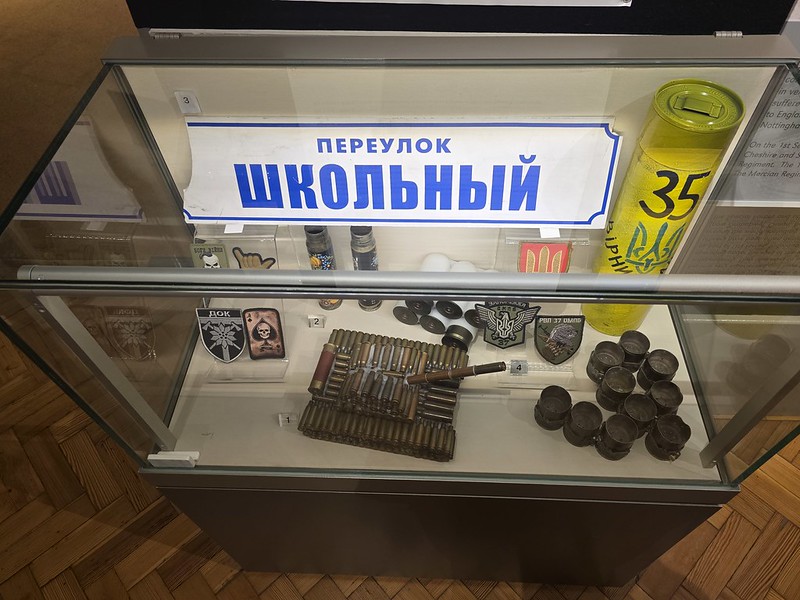
    The museum has a display in their military section about the invasion of Ukraine by Russia in 2022 and there’s a note on the display which mentions that “the items on display have been collected by a humanitarian voluntary aid group from England which supports Ukraine.”

    In the photo are:

    (i) A model tank made by Ukrainian service personnel from spent small arms

    (ii) Decorated spent artillery shells

    (iii) A traffic sign from Sudzha, a town in Russia, which Ukrainian forces seized in 15 August 2004, although the Russians took it back on 12 March 2025.

    (iv) Badges worn by Ukrainian armed forces.

    A rather interesting arrangement which is up-to-date and relevant, a reminder of the illegal occupation of the great country of Ukraine that I’m looking forward to being able to return to.

  • Derby Museum and Art Gallery – Fragment of Hog Back Tombstone

    Derby Museum and Art Gallery – Fragment of Hog Back Tombstone

    20250606_123325

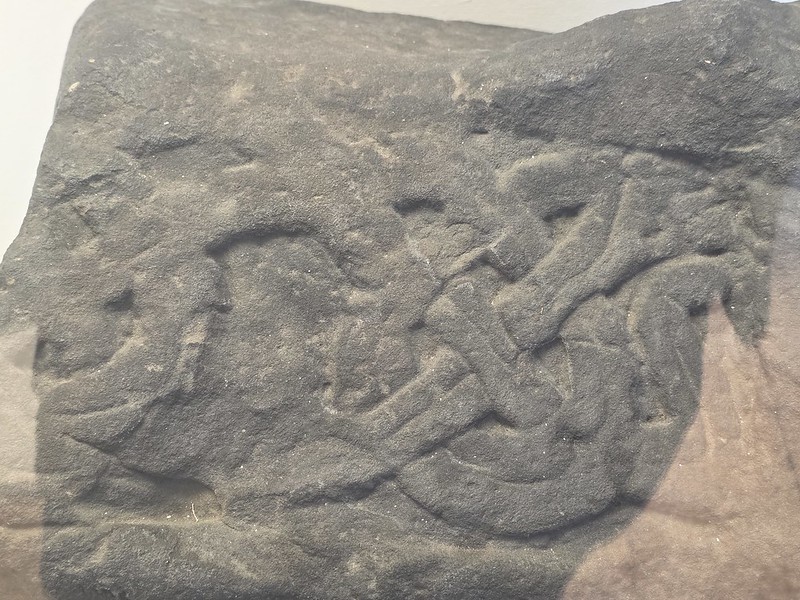
    This is the fragment of a Viking Hog Back tombstone which dates to around the tenth century. The information panel reads:

    “When complete this was in the shape of a house, with a bear-like beast gripping each end. This type of tomb was the fashion of Norwegian settlers in Yorkshire and Cumbria, but is unusual in the Midlands.”

    They’re quite intriguing things as although they were created by Vikings, they don’t appear in Scandinavia, so they’re Anglo-Scandinavian in origin. It’s made from the local Derbyshire gritstone and it seems quite tough.

    20250606_123331

    It was found at St. Alkmund’s Church in Derby in 1844 when they were building a new church. There had though been a religious building on the site since the ninth century, but some bloody idiot decided to pull the church down in the 1960s. Now, this meant that numerous other historic artefacts were discovered which is fascinating from a different viewpoint, but the demolition seems a little odd to me. I’ve followed the arguments that took place in the press in the 1960s and it appears that the sheer incompetence comes down to Geoffrey Allen, the Bishop of Derby. I say this because the congregation, parochial council members and local residents seemed bloody furious and the church had to respond saying that, yes, the Church of England had agreed the demolition at meetings that Allen was present at. They struggled to provide any defence of what Allen had been doing and I’m struggling to understand why they were so willing to lose a location that had been home to a church for over 1,000 years, even conceding that the steeple was falling down. Anyway, I digress here.

  • Derby Museum and Art Gallery – It’s Just a Brick

    Derby Museum and Art Gallery – It’s Just a Brick

    20250606_122628

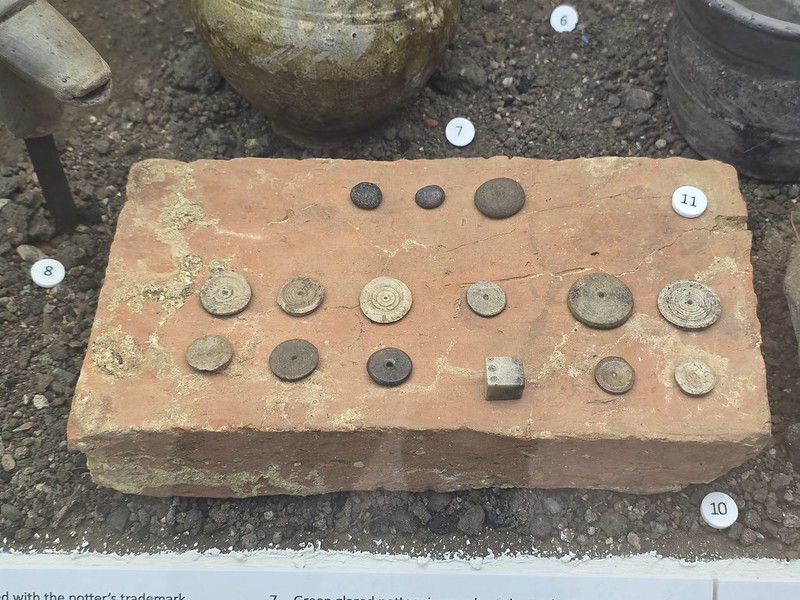
    I accept that this is just a brick and I really need to get out more, but this is not just a brick, it’s a Roman brick. Ignore the stuff placed on the brick, more on that later, but the Romans were the pioneers of mass production of bricks and they did it in some style. As for what the Romans did for the people of Derby, well, they built them a lovely fort in AD50 although they then decided to move their operations north and so they demolished it. However, by that point they had already built another fort at Little Chester and they didn’t demolish that one. Having noted all that, this brick is apparently from Tripontium which is about 40 miles away, but it’s a little bit of Romano-British culture. I find it intriguing to see bits of Roman brick when they appear in other buildings as the stuff seems to have lasted longer than great chunks of what they built in the 1970s. I won’t mention Anglia Square in Norwich….

  • Derby Museum and Art Gallery – Hippo in Derby

    Derby Museum and Art Gallery – Hippo in Derby

    20250606_123724

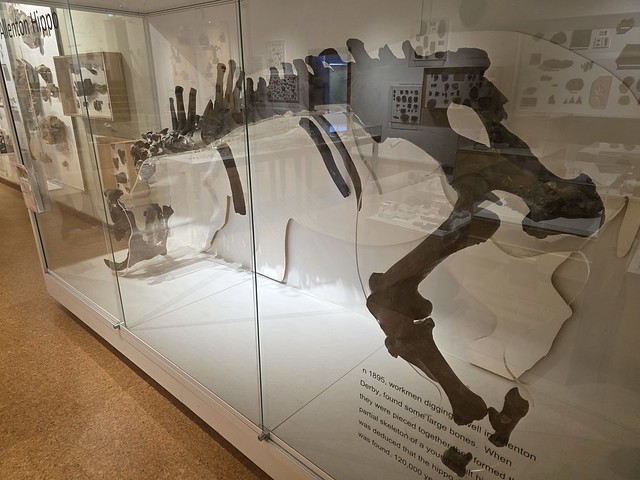
    I’ve never really given thought about whether hippos used to roam about Derby, but I’m not sure that I would have guessed that this was their hunting ground once. Workmen discovered these bones in Allerton in March 1895, now a suburb of Derby, when they were digging a new well at the Crown Inn. Private investors funded something of a dig and when this was completed the skeleton was given to the museum, where it remains proudly on display. 127 bones were discovered in the dig, although some of these were from another hippo and some from a passing elephant, and the hippo was thought to be around three metres in length.

    The discovery proved important as it showed that there must have been a land bridge at some point between Britain and mainland Europe as it was unlikely that a hippo would have swum several miles since they can’t actually swim at all. It was later reported that when the pub had been constructed in 1878 that other bones had been discovered, but the builders threw them away not realising what they’d found. To be fair, they probably weren’t really expecting to discover the ancient remains of a river beast, perhaps more hoping to find a lost coin or two. It’s not thought that there were any humans in Britain at this time, around 120,000 years ago, so they wouldn’t have had any little territorial disputes. The hippo that was found is the same species of the hippo that live in sub-Saharan Africa today. I left the museum rather pleased that I know the answer in case anyone asks me if there used to be hippos in Derby.

  • Derby Museum and Art Gallery – Piece of Lucknow Gate Pinched by British Soldier in 1857

    Derby Museum and Art Gallery – Piece of Lucknow Gate Pinched by British Soldier in 1857

    20250606_124215

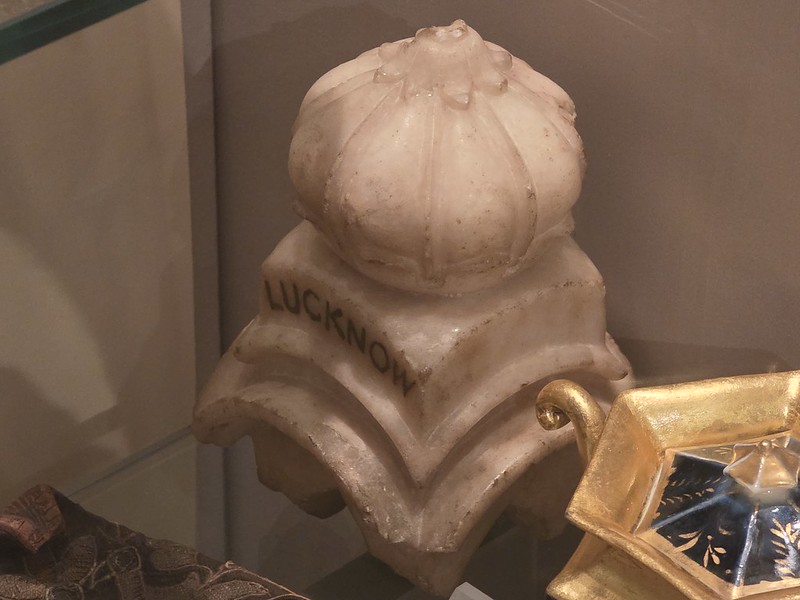
    This is handy, it’s part of the Lucknow Gate that was pinched by Riding Master Captain Richard Shaw of the 9th Lancers as he fancied a little souvenir following the end of the siege of Lucknow during the Indian Mutiny. Built by Nawab Asaf-ud-Daula in 1784, the gate stands at over 60 feet in height and it did lead to a rather decadent palace, but the British knocked that down in 1857.

    The gate after it was damaged by the British during the mutiny (image copyright of the IWM). I should add that some people don’t think that it should be called a mutiny, they prefer a term such as the First Indian War of Independence. Whichever, this was very much a one-sided battle in terms of the outcome, as 6,000 British lost their lives, but around 800,000 Indians lost their lives. That’s some brutal putdown.

    As for Richard Shaw, he was born in Portsmouth in 1802 and enlisted into the 17th Lancers in 1823. He must have been competent, or well connected,  as he was rapidly promoted and became the Troop Sergeant Major in 1842. After returning home from his Indian adventures, he moved to the 7th Light Dragoons in 1860 and he later became a Military Knight of Windsor. This was a role for former military officers and enabled him to live in the grounds of Windsor Castle until his death in 1872. He had married Helen Callahan in Dublin in June 1830 and they had three sons.

    This is the sort of fascinating exhibit in a museum which tells a real story, a reminder of very different times.

  • Derby Museum and Art Gallery – How to Display the Mummified Bodies of Pa-Sheri and Pypyu

    Derby Museum and Art Gallery – How to Display the Mummified Bodies of Pa-Sheri and Pypyu

    20250606_125716

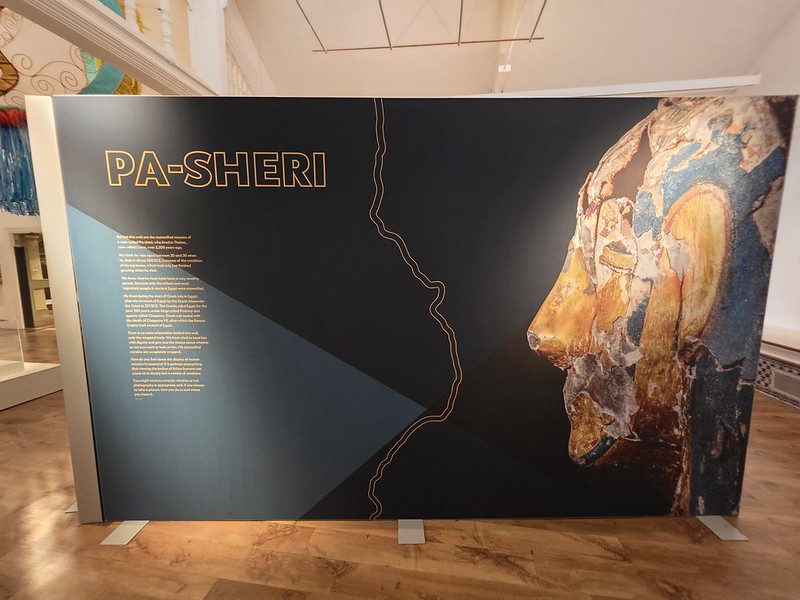
    There’s a whole wave of debate on how to display mummified bodies and indeed human remains in general. A few museums seem to deal with this in a slightly clunky manner which seems more patronising than useful, but I really rather liked how Derby Museum has dealt with this. The helpful man at the entrance to the museum had already mentioned that they give visitors the choice of whether they want to see the mummified remains or not, placing them behind screens.

    20250606_125656

    The two mummies are Pa-Sheri and Pypyu, although the text on the external displays is a little muddled about what relates to each mummy with conflicting information on-line and indeed within the museum, I rather suspect there was a wider exhibition here and they’ve kept some of the displays and not all. The museum also seems confused about whether they have two male mummies or one female and one male, something which feels sub-optimal in terms of accuracy as they refer to both situations. Historically though, there has been one male and one female, I’m not sure why they now refer to two male mummies or if something has changed.

    The mummies have been on display in the museum since 1879 and were likely brought over from Egypt by a collector in the earlier part of the nineteenth century. In keeping with the entire point of their display, I decided against photographing the mummies and the imagery is easy to find on-line anyway. However, I rather liked that I could still take photos if I so desired, although the staff member at the museum entrance told me they’d had problems with people taking selfies with the mummies. Talk about keeping it classy…..

    There’s a really detailed article in the Derby Daily Telegraph from 17 November 1892 about the two mummies, with quite engaging content about a close study of the two mummies. There’s actually more information about the mummies presented in this historic newspaper article than there is in the museum today though, something which probably needs some form of correction when the new exhibition is opened.

  • Derby Museum and Art Gallery – “The King of Rome” Pigeon

    Derby Museum and Art Gallery – “The King of Rome” Pigeon

    20250606_123610

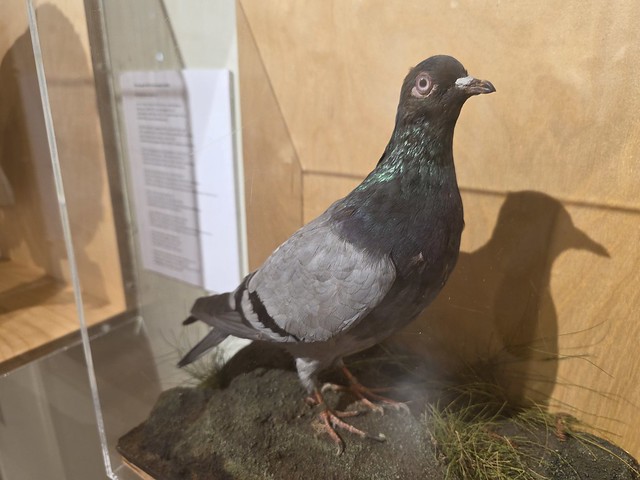
    This is quite an important pigeon and known to many people in Derby. It’s a homing pigeon that flew into local legend in May 1913 when it completed a gruelling 1,001-mile journey from Rome to Derby in just under 24 hours. In the spring of 1913 there were more than 2,000 homing pigeons gathered in the Italian capital for the arduous “One Thousand Mile Athens to Rome Club” race. Entrants came from as far afield as Austria, Belgium, Germany and beyond, but it was a modest loft in Littleover, Derby, that produced the eventual victor. The pigeon was owned by professional baker Charles “Charlie” Hudson (1871–1948) and the bird known only by its band number “42PN150” took wing from Rome on the morning of 13 May. When it alighted in Derby just under 24 hours later, it had beaten every other pigeon by more than an hour, crossing the finishing loft at thirteen minutes past eight on 14 May. It did rather well to survive, as a number of the pigeons were shot on their way home which was a little sub-optimal.

    After the event Hudson, ever the practical man, resisted calls to tour the now named “King of Rome” around poultry shows and fairs. He instead housed the bird in solitude, allowing it to rest before entering it in subsequent races. Very proud of his pigeon, in 1914, Charlie Hudson had it stuffed (after it died obviously) and he gave it to the museum in 1946. Today, the pigeon even has its own Wikipedia page….

  • Hike Norfolk Camping Trip 2021 – Day 4

    Hike Norfolk Camping Trip 2021 – Day 4

    This is the little story of the Hike Norfolk camping trip, but since it’s a private trip and I’ll get into trouble if I try to give all of the behind the scenes gossip away, I’ll only give a taster of the event. Thirteen of us went on the trip and it was a three night stay in Edale which is in the Peak District in Derbyshire and where I started a walk from last year. Here’s day one, here’s day two and here’s day three...

    Just as we were about the leave the campsite the weather decided that it would present itself with beautiful sun. Although it didn’t much matter, as it poured with rain later that day anyway. The group were all leaving the campsite, with some staying on in different locations and others going back home. For me, it was going back home.

    That meant it was now time to take down the tents. Richard is in the background started to take down his palace, whilst my little tent didn’t take much disassembling. It fell down a little too easily, but since there were only two poles and two bits of material, I wasn’t overly-challenged with its deconstruction. I shoved it in its bag and job done.

    Richard had a rather larger challenge on his hands. His tent was also rather moist, which required him to have to repitch it at home in the evening.

    And then there was no trace of where I stayed for three days…..

    So, perhaps it’s now time to write about camping. I have to say that I’m definitely a hotel person, there’s something really rather lovely about a bed, a door and an en suite bathroom. I don’t even crave decadent treats in a hotel room (well, I do, but there’s a limit to what Ibis can offer), just the knowledge that the ceiling won’t fall down.

    But, there were twelve of us camping and it’s all about the group spirit. I was rather more tired in the evenings than anticipated, not least because I should have taken a better sleeping bag, but I’ll fix that problem next time (and I hadn’t expected it to rain nearly every night). It was though an adventure and I like taking part in adventures of any description, even if I mutter about them….. I’ve also got a couple of camping trips booked on my own for later this year (and more with others) so I’d better grow to like the arrangement, although I think I’ll ensure that there is a lovely hotel before and after the camping, as a little reward. Also, full credit to Liam for helping me get a tent that was very suitable for my needs and which didn’t leak.

    We headed back towards Norfolk, with a plan to stop at Ripley in Derbyshire en route. Whilst on the way, we stopped for a while to look at the scenery and to wait for Richard to catch up, but we then realised he’d stormed off in another direction.


    Ripley has the most ridiculous number of pubs, I can’t recall a town with so many. There were also a Craft Union pub, a JD Wetherspoon pub and more independents, but I liked that there were two micropubs. I shall be back to Ripley, most definitely, it felt like a really intriguing place.

    That signage at Greggs isn’t ideal…..

    We stopped for lunch at a little cafe, Cafe Rossa, which was rather lovely. I’ll write about that separately, as I don’t want my ‘important’ food reviews muddled up with camping discussion.

    The church in Ripley, which slightly disappointed me as I was hoping to see a medieval church and this was clearly nineteenth century. The gravestones had also been uprooted and shoved around the outside of the churchyard, which made me tut inwardly. And outwardly actually. But, the history here is intriguing, as the church was built as part of the legacy of the armed uprising in 1817 that was the Pentrich Revolution. This is a complex piece of history that I hadn’t heard about until seeing an information board, but it’s made me want to return to the town to find out more. Although unfortunately, despite Ripley having a railway heritage, it doesn’t actually have a railway…..

    And so, that is the end of that little adventure. Not very gossipy I’m afraid, as I think some of the participants might not have been best pleased with me if I had gone into to much detail. But there are several trips coming up where I’m allowed to be gossipy, so that will mean a different style of blog for those adventures. It was an exciting trip that was organised by Steve, which I think everyone enjoyed and I know he’s planning future trips, so that’s all rather lovely.