Category: Slovakia

  • Bratislava – Bratislava City Gallery Palffy Palace (Passage by Matej Krén)

    Bratislava – Bratislava City Gallery Palffy Palace (Passage by Matej Krén)

    20250626_132854

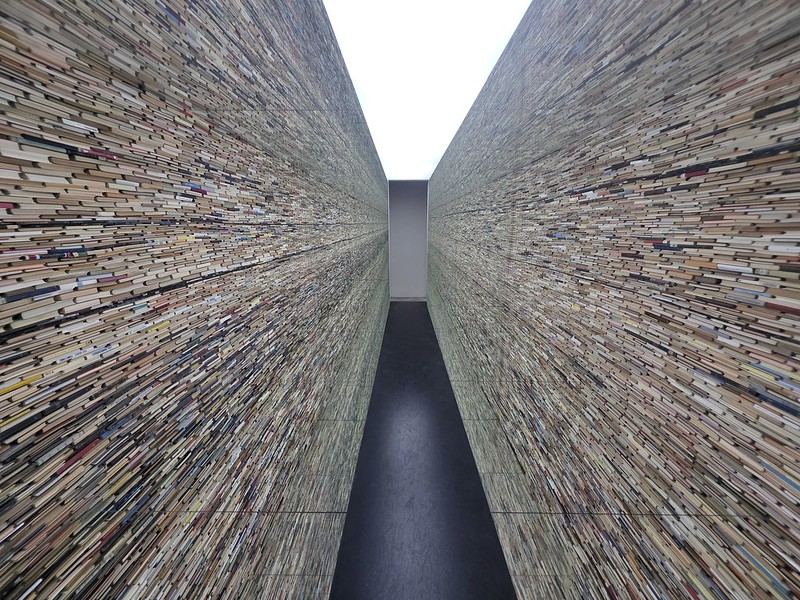
    Visually, this is an impressive piece of art installation, walking on the strip between these two stacks of books.

    20250626_132907

    The intention of the artwork is apparently:

    “The project ‘Passage’ represents a kind of symbolic “shortcut across worlds” in which we exist or reside: from the factual, real world to the world of human culture, where reality is replaced by another reality – the virtual one – the reality of words, text, signs, symbols, and images, and then back again.”

    20250626_132912

    I view this differently. It’s made of books which have been discarded from libraries, but what this installation suggests to me is that people of privilege want to restrict books from those without wealth. This is not a cheap museum to enter, albeit I used the Bratislava Card, and to me it mocks people by hoarding books in a heap to show that they can’t be read by the poor. I’m not sure that the artist intended to give the impression of a wealthy elite separating themselves from the poorest in society, but that’s what I got from all of this. The artist talked of a pilgrimage, but even those are perhaps limited to those with the most resources. Perhaps there might be a revolution where the artwork is disassembled and the books are given away to people who want them.

  • Bratislava – Bratislava City Gallery Palffy Palace (Totems and Burning Books)

    Bratislava – Bratislava City Gallery Palffy Palace (Totems and Burning Books)

    20250626_132754

    Just from my perspective, I thought that this was sub-optimal, two artists who decided that burning books and making them into totems was making some sort of statement. But, artwork is perhaps mostly about trying to get a reaction from the viewer, whether that’s wonder, anger, delight, surprise or inquisitiveness, so the fact I’m writing about this is testament to they engaged me in some form so that’s a statement.

    20250626_132750

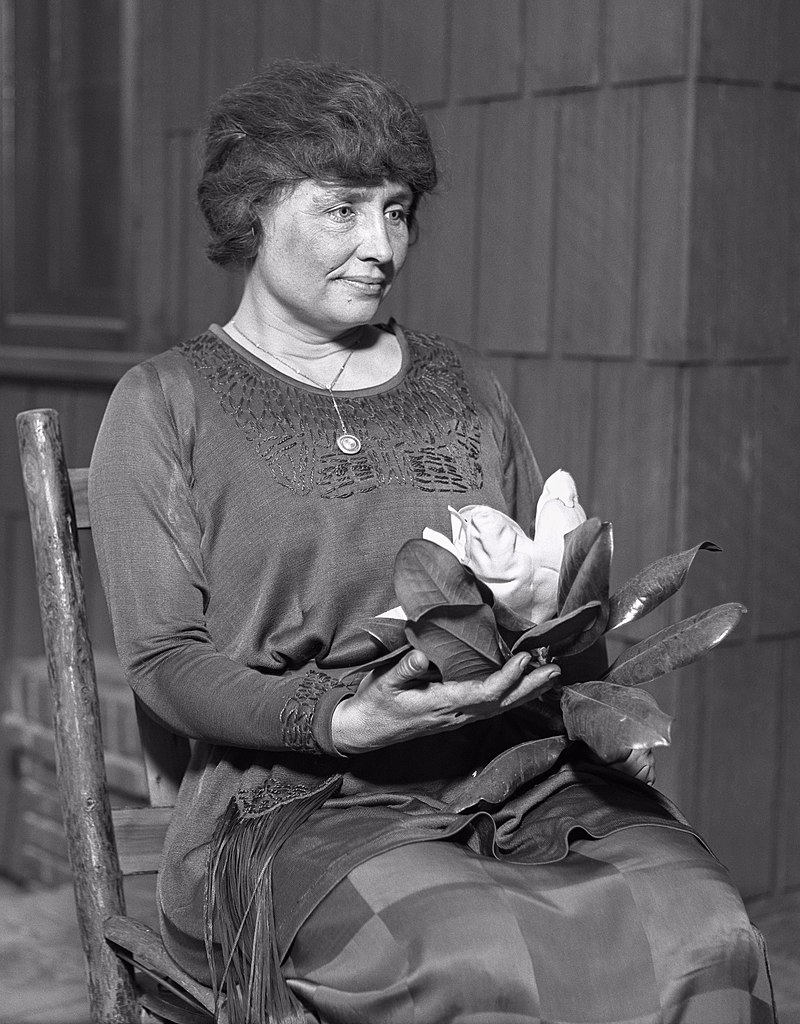
    There was still the smell of burnt book in the air. Burning books is such an easy thing to do, but I rather like the words of Helen Keller:

    “History has taught you nothing if you think you can kill ideas. Tyrants have tried to do that often before, and the ideas have risen up in their might and destroyed them. You can burn my books and the books of the best minds in Europe, but the ideas in them have seeped through a million channels and will continue to quicken other minds.”

    Or, linking it to Lithuania, here’s the bravery of those involved with the Book Smugglers. But, each to their own, artworks are meant to attract a range of responses. NB, the thumbnail image is of Helen Keller, the great campaigner for those with disabilities, for women’s suffrage, tolerance and world peace.

  • Bratislava – Bratislava Zoo (Sub-Optimal Climbing Skills)

    Bratislava – Bratislava Zoo (Sub-Optimal Climbing Skills)

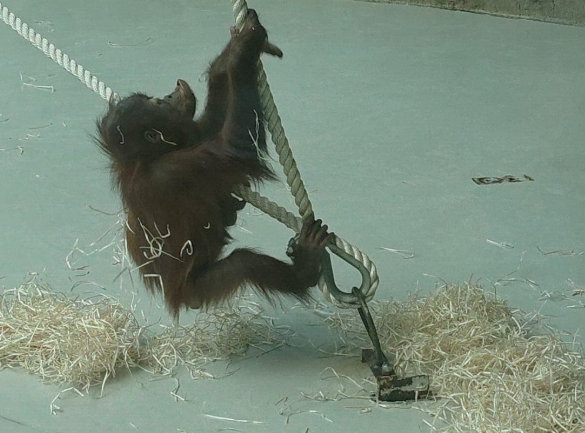
    20250627_160617

    I rather enjoyed watching this little orangutan and I thought he had climbing skills quite similar to my own.

  • Bratislava – Museum of Jewish Culture

    Bratislava – Museum of Jewish Culture

    20250626_115857

    The Museum of Jewish Culture was included with my Bratislava Card, although I do try and visit these Jewish museums and synagogues when I can.

    20250626_115841

    The entrance is through this vaulted ceiling area.

    20250626_115839

    As the signage notes, the building was constructed in the eighteenth century and is known as the Zsigray Mansion, which has been the home of the museum since 1994. It’s located on Židovská ulica (Jewish Street) which was mostly demolished in the 1960s for infrastructure changes, although that must have hurt given what had happened here in the 1940s and because they pulled down a synagogue to complete the works.

    20250626_113612

    There are exhibits over two floors although there was a school group when I was there, but I was able to dodge them by changing the order of my visit somewhat. There were no other visitors in the museum when I visited, it didn’t seem to be a tourist hotspot shall we say.

    20250626_113646

    There are numerous themes, including Jewish music.
    20250626_114954

    There’s a section of Jewish food and the importance of how food is served and kept separate.

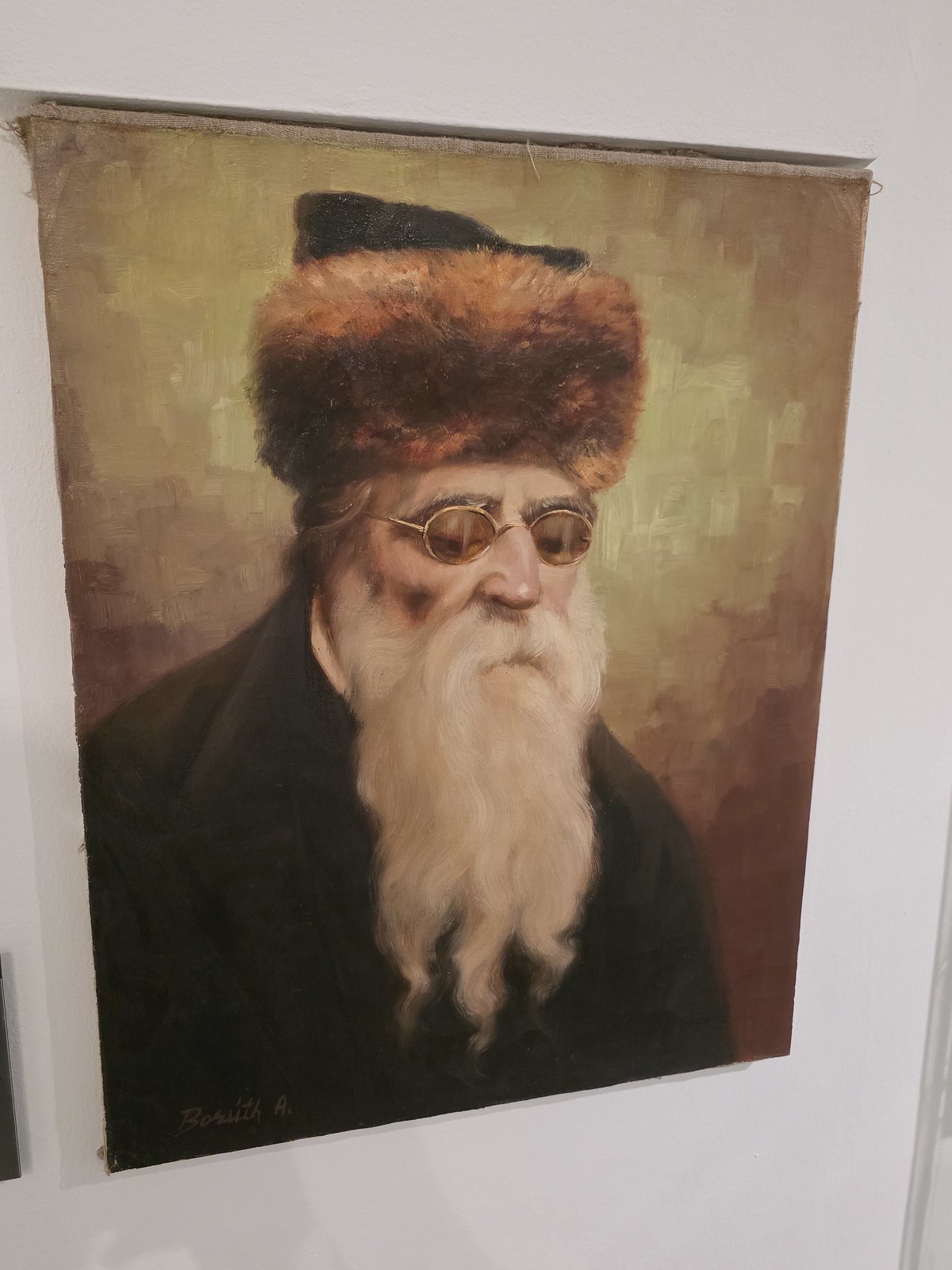
    20250626_113421

    A Jewish elder.

    20250626_115511

    A floor tile from a former synagogue.

    20250626_114101

    For me, the highlight of the museum was the special exhibition about Jozef Veselsky, often known as Joe, who was born in Trnava, Czechoslovakia in October 1918, just days before Czechoslovakia declared its independence. He trained as a banker, but his life took a dramatic turn with the rise of Nazism. At the age of 20, when Hitler invaded Czechoslovakia in 1938, Joe joined the Resistance. He remained active in the underground throughout the war, using his language skills as an interpreter. In 1944, he participated in the Slovak National Uprising, carrying out missions in the Carpathian Mountains, where he witnessed extreme hardship, with very few of his fellow fighters surviving the harsh winter. Tragically, his parents and elder brother were murdered in Auschwitz.

    After the war, Joe captained the Czechoslovak table tennis team, but life under the new communist regime became difficult. In August 1949, seeking to escape the political climate, Joe, along with his wife Katarina (Kathy) and their two children, Peter and Kate, emigrated to Ireland. They had initially intended to go to Australia but faced difficulties obtaining the necessary papers. In Ireland, despite having limited English and no prior experience in the field, Joe successfully established a jewellery business. He continued his deep involvement in sport, serving as the non-playing captain of the Irish national table tennis team for over two decades and later becoming Life President of the Irish Table Tennis Association. He also had roles in football, serving as a director for Shamrock Rovers Football Club and as vice-president at UCD Dublin. Joe was a founding member and long-serving president of the Swaythling Club International, an organisation for distinguished figures in table tennis.

    And, incredibly, Joe is still alive and he is Ireland’s oldest man having reached the age of 106 in October 2024. This is certainly some story, he could have easily have died during the Second World War, but 90 years on he is still here and has been honoured with a heap of awards, including the Commander of the Slovak Order of the White Double Cross and in 2016, Trinity College Dublin honoured him with an Honorary Master of Arts degree, acknowledging his contributions to Irish life and his inspiring example of lifelong learning, as he became the university’s oldest student.

    Back to the museum, the staff member at the ticket desk was helpful and personable, with everything feeling organised and well signed. The displays are nearly all in English and they have been creative in their displays and themes, with the special exhibition on Jozef Veselsky being a highlight. They’ve chosen to really focus on Jewish culture and heritage rather than having to tell the story through the prism of the Second World War, a decision that to me is sensible and positive. However, they possibly could have told a little more of the Second World War story, I was left unsure what happened to the Jews of Bratislava and that seems to be part of the story that can’t really be left untold. However, having noted that, one reviewer says they covered this in detail, so perhaps that was either a temporary exhibition or I’ve missed a room out or something (I’m terrible for managing to get lost in museums if there aren’t arrows everywhere on the floor). Either way, Yad Vashem have information about the story of the Jews in Bratislava.

    Anyway, this was a fascinating little museum and although it only takes an hour or so to visit, it’s worth the time to have a meander around. Admission is free with the Bratislava card, although it’s usually €6 and it’s open from Sundays to Thursdays from 11:00 until 17:00.

  • Bratislava – Stumbling Stone of Leo Kohn Kohút

    Bratislava – Stumbling Stone of Leo Kohn Kohút

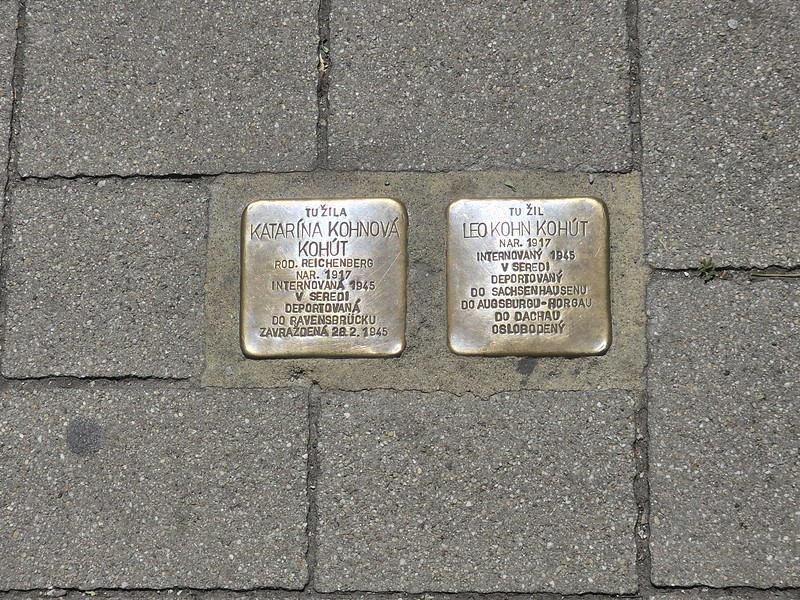
    20250626_120045

    This stumbling stone marks that Leo Kohn Kohút used to live here, with the text reading:

    “Leo Kohn Kohút
    Born 1917
    Interned in 1945 in Sereď
    Deported to Sachsenhausen
    Then to Augsburg-Horgau
    Then to Dachau
    Survived”

    I hadn’t really thought about it, but I thought these stumbling stones marked the last place that victims of the Holocaust willingly lived, but it’s actually wider and includes those who survived the persecution.

    The Times of Israel noted that:

    “Leo Kohn Kohút was a ‘young idealist’ who worked in the underground resistance printing false IDs. He was not caught until January 1945, when he was sent to Sachsenhausen and later a sub-camp of Dachau. Working in a Messerschmitt aircraft factory, he and other prisoners sabotaged the pipes of German air force planes.”

    Leo (1917-2013) lost his wife in the Holocaust, but after the war he married Berta Berkovich Kohút (1921-2021) who became known for being the last survivor of the seamstresses at Auschwitz, who survived only because they made beautiful dresses for the wives of Nazi officers. The couple met in Bratislava after the war, moving to the United States in 1983. Both are buried at San Rafael cemetery in Marin, California which is just to the north of San Francisco.

    California must have felt like such a different world to Bratislava, he nearly died at Dachau but instead he lived nearly 70 more years and his wife over 75 years after she was freed from Auschwitz.

  • Bratislava – Bratislava Transport Museum (1967 Czechoslovakian Train)

    Bratislava – Bratislava Transport Museum (1967 Czechoslovakian Train)

    20250626_103125

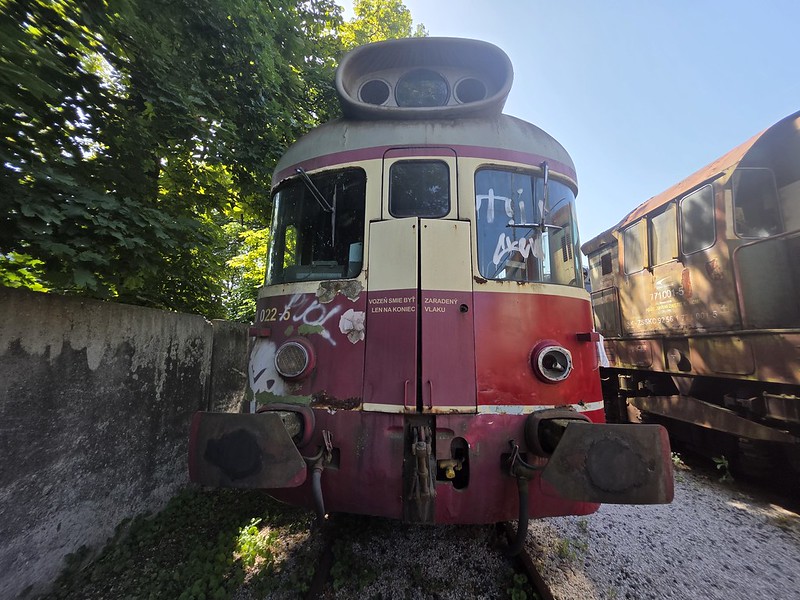
    On display at the museum’s external tracks was this rickety old locomotive that was manufactured in 1967. This rocket went at a top speed of 110 kilometres per hour and was diesel powered, designed to operate on non-electrified lines.

    20250626_103111

    It’s not possible to see inside, but the passenger compartment had leatherette seats, so no expense was spared here. They also put in a large luggage compartment area and there were driver cabs at both ends of the train. These locomotives were made between 1962 and 1968 by Vagónka Studénka (Skoda) and were nicknamed Krokodýl (crocodile). On that point, apparently they have an “elongated, segmented body and high central cab, which gave them a reptilian, crocodile-like profile” although I’m not entirely sure that I’m getting that from looking at it.

    20250626_103204

    The museum has plans to restore the train and put it back into operational use, but I like it as it is. It’s authentic like this, although it’s a shame that there aren’t steps so that visitors can peer inside. At the moment, you can see the old paint work of the train and if they make it operational then the seats, windows and the like will all be replaced. It’s just Trigger’s Broom so hopefully they change their mind or run out of money or something….

  • Bratislava – Bratislava Transport Museum (Closed Railway Line and a New Central Station)

    Bratislava – Bratislava Transport Museum (Closed Railway Line and a New Central Station)

    20250626_102613

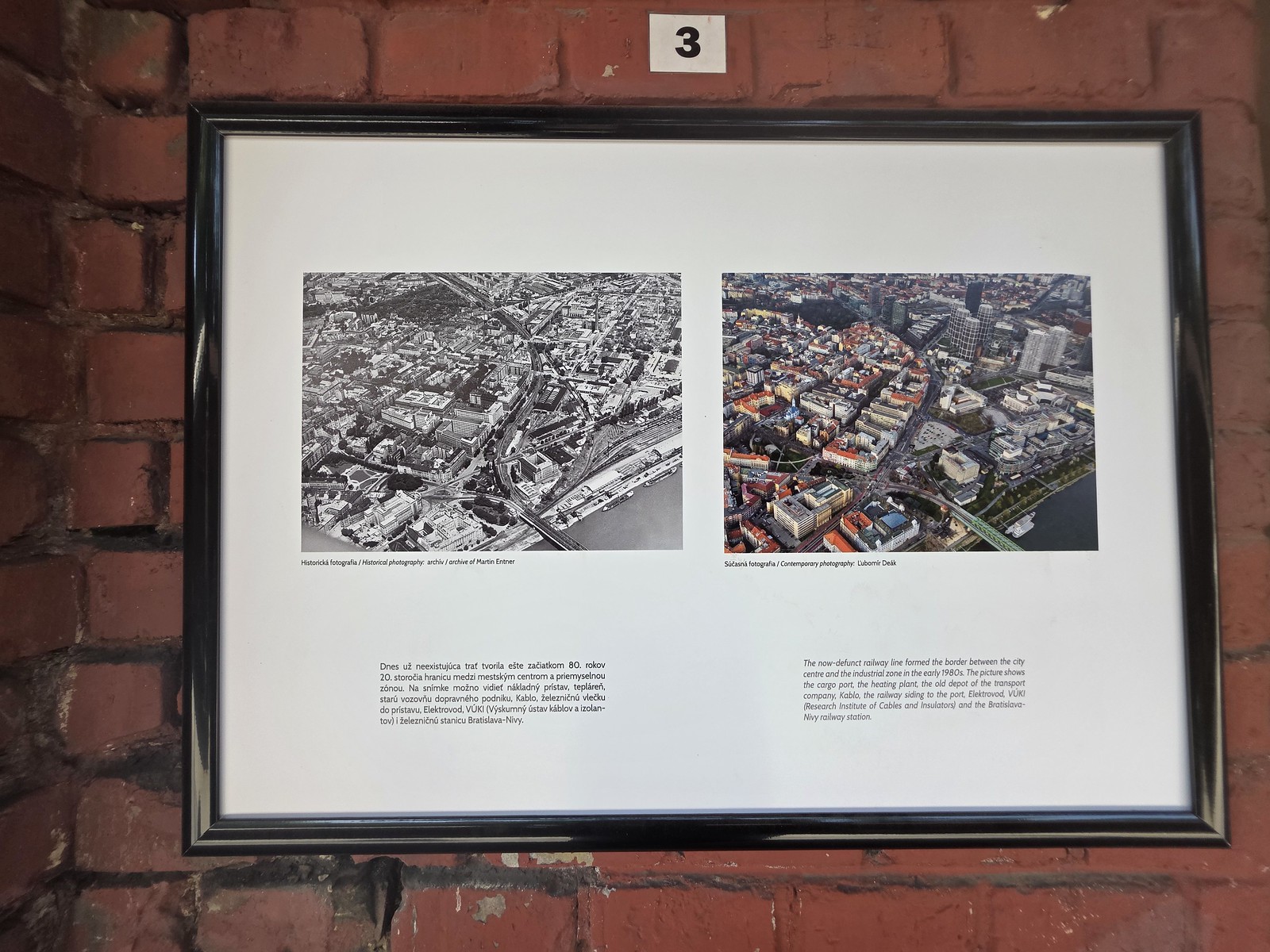
    I thought that this photo at the transport museum was intriguing, it shows the railway line that ran through the central area of Bratislava until around thirty years ago. When looking at an overhead map the route is still clearly visible, although much of it has now been repurposed. Despite the investment pouring into the city, the main railway station (Bratislava hlavná stanica) is not in great shape. I didn’t get to visit it, as the route I wanted has been diverted away from it temporarily, but the last modernisation extension was in 1989 and that was meant to be temporary. Here we are decades later and there is no new central railway station actively being constructed, but it seems to be a key priority for the city authorities. I might have misunderstood, but it seems one of the options is to put the track underground similar to the route that they already had and then construct a new railway station at Filiálka. Whatever option they go for, it’s going to be years until the work is completed and so they might want to make progress a little quicker judging from what the local media is saying (as long as they don’t get the ‘experts’ from HS2 involved).

  • Bratislava – Bratislava Card

    Bratislava – Bratislava Card

    I’ve now left Bratislava, a city that surprised and delighted me. I purchased the three day Bratislava Card when I was there which was just over £30. This gives three days of public transport in the city, including the bus from the airport, as well as a large number of free museums and attractions (and many discounted ones as well). It was easy to purchase on-line and it worked well at all of the venues, it seems to be something that they all see on a regular basis. I’d merrily recommend it, it was convenient and I saved a considerable amount on admission fees taking into account the number of places that I visited.

    These are the locations that I managed to visit, but I unfortunately ran out of time on some of the others. I’ll link these in when I’ve finally got around to writing them up, which at current speed might take weeks.

    Apponyi Palace

    Bratislava City Museum – Michael’s Gate

    Bratislava City Museum – Museum of City History at the Old Town Hall

    Bratislava City Museum – Museum of Pharmacy

    Bratislava Transport Museum (part of the Slovak Technical Museum)

    Bratislava Zoo

    Gallery of the City of Bratislava – Mirbach Palace

    Gallery of the City of Bratislava – Pálffy Palace

    Museum of Jewish Culture (part of the Slovak National Museum)

    Museum of Transport

    Slovak National Museum – Archaeological Museum

    Slovak National Museum – Museum of History

    Slovak National Museum – Natural History Museum

    St. Martin’s Cathedral (Tower Viewpoint – seasonal)

    Town Hall Tower (Old Town Hall)

  • Bratislava – Bratislava Transport Museum (Praga Lady)

    Bratislava – Bratislava Transport Museum (Praga Lady)

    20250626_101744

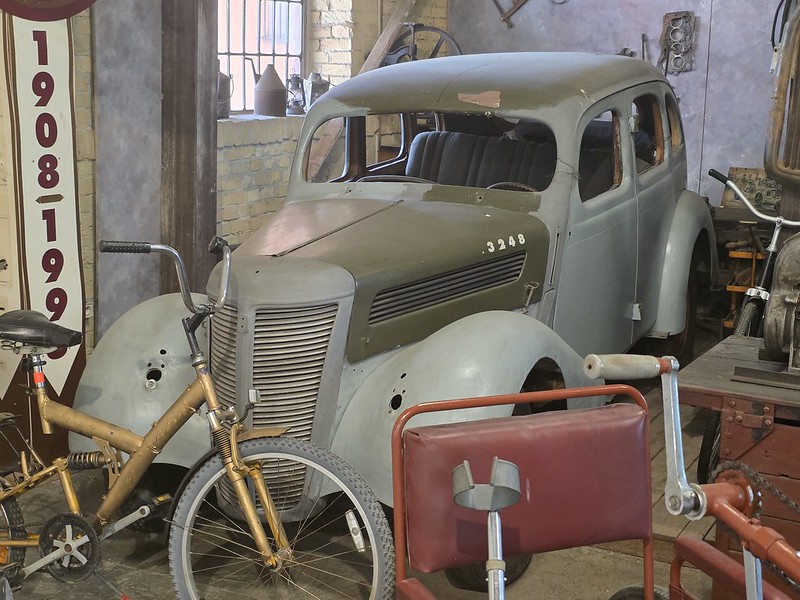
    This is a Praga Lady car made in Czechoslovakia between 1935 and 1947, although this one was constructed in around 1938. The museum notes that it was created by developing the design from the previous Picollo 307 type, but that’s a bit niche even for this blog, although there are no end of photos of this car from the 1930s. Anyway, back to the Praga Lady, of which around 5,000 were made, with this museum having an unrestored one.

    One thing that I hadn’t realised is that many cars of this time were made from wooden frames, and that is visible in this one. There’s sheet metal shoved over the top, but the car is effectively made from wood. As an aside, there weren’t many pre-war models made against after the end of the Second World War, but they ploughed ahead making more of these. I did read that although most wooden framed cars stopped being made at this time, they decided to make the Morris Minor Travellers car in the UK out of wood from October 1953. It’s probably so retro that it’s back in fashion again now, but I think I’d rather not have a car that’s quite like a moveable wardrobe.

  • Bratislava – Fabrika

    Bratislava – Fabrika

    20250626_200048

    By chance, I was staying at a hotel which specialises in wine and they have their own wine shop, wine menu and restaurant which focuses on wine. I can’t be doing with all that stress, so I went to a nearby hotel which has a craft beer bar that is highly rated on-line. They’ve been there since May 2014 and they’ve had their own brewery set-up since December 2014, focusing on five main beers. Having noted that, they have a lot of wines as well, but for me it’s about the beer.

    20250626_192611(0)

    When I arrived all of the external tables were taken and so I wasn’t sure if I’d be able to get in. The friendly server found me a table inside which entirely met my requirements. My requirements are quite basic really, I just want to be inside and another advantage of that is the food and drink gets to me quicker.

    20250626_191603

    The venue’s beer list.

    20250626_191728

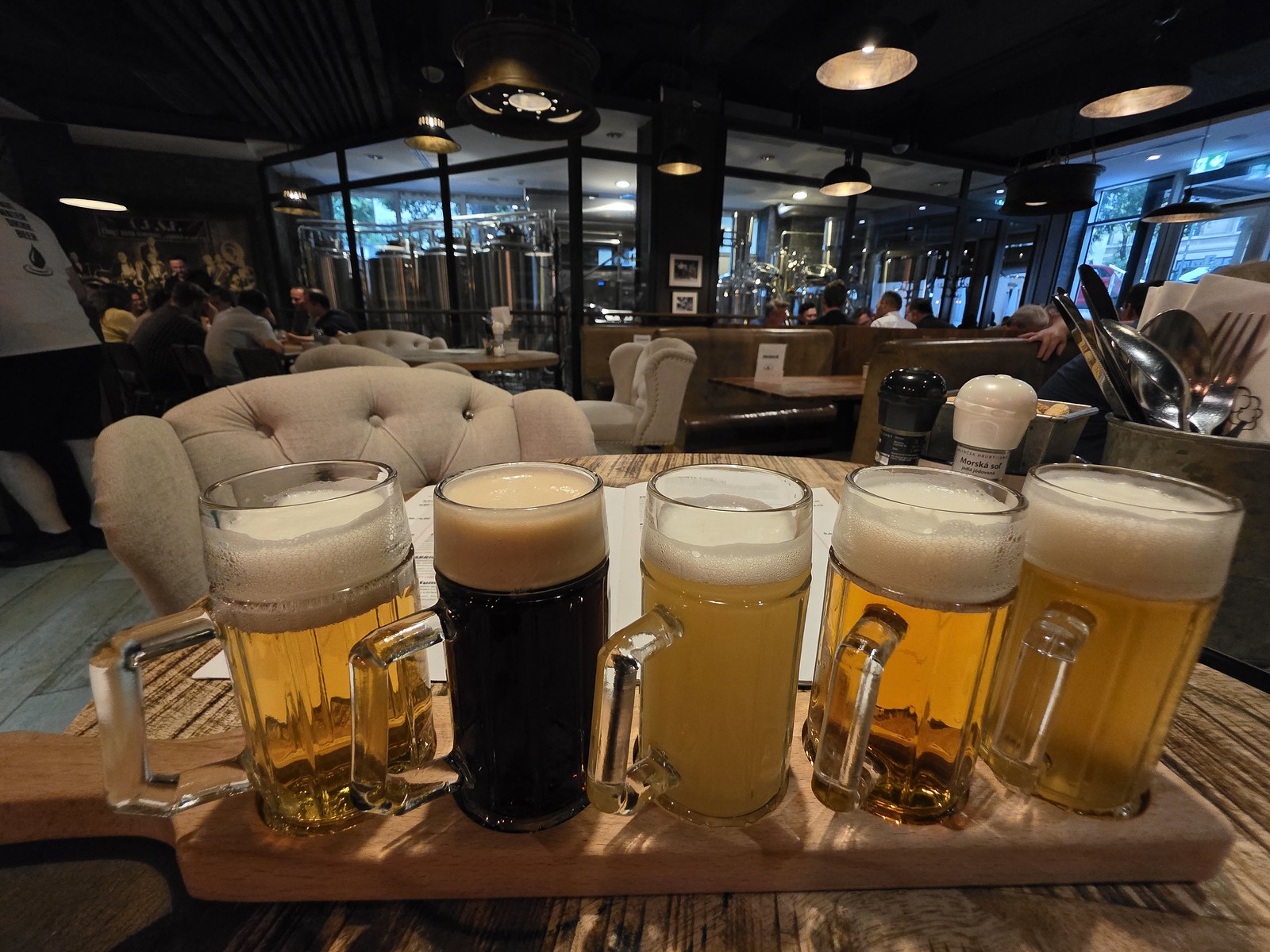
    I couldn’t be choosing and so I went for a flight. From left to right:

    (i) Summer 8 – very light, but at 2.6% I wasn’t expecting Funky Fluid and it was smooth and refreshing.

    (ii) F13 Dark Lager – rather malty, quite rich and pleasant roasted tastes.

    (iii) W12 Weizen – a clean wheat beer with suitable banana notes.

    (iv) F14 APA – very punchy on the hops and it was malty with a bitter edge, rather drinkable although there was a slight taste of cupboard.

    (v) F12 Lager – Clean, smooth and a bitter finish.

    20250626_192750

    I went for fish and chips as the main meal and this was a large portion size that I struggled to finish. The batter was light and had a pleasant flavour, whilst the cod was firmer than I’d usually expect but it was no less delicious. The chips were lightly salted, firm on the exterior and fluffy on the interior. Everything was hot, it looked well presented and it wasn’t overly greasy.

    20250626_195258

    I’m not usually a dessert person, but the tiramisu looked appetising and I wasn’t in a rush to go anywhere. It was another generous portion, light and there was a suitable amount of coffee richness to it.

    I really rather liked this venue, it was clean, the service was efficient and the server was engaging. The food and drink all met my expectations in terms of the taste, temperature and presentation, with the range of beer being interesting to work through. The prices were moderate, the temperature wasn’t too hot and I left feeling full, so a positive result all round.