Category: Slovakia

  • Warsaw to Budapest by Train (Bathory Intercity)

    Warsaw to Budapest by Train (Bathory Intercity)

    20251106_082554

    After a quick visit to Carrefour for snacks, I embarked on what was the longest rail journey that I’ve taken in Europe (I went for over 24 hours in the US….) from Warsaw to Budapest. Here’s the display screen at Warszawa Centralna, with the departure being second from top on the right-hand screen.

    20251106_083847

    Waiting at Platform 3.

    20251106_085237

    Here’s the train layout, and I had gone for first class as it wasn’t much more expensive as I’d booked it at the last minute.

    20251106_090102

    It’s all happening now with the departure board on the platform updating to show the train. I had a flight booked for very early the next morning, so if something went wrong here, it would be hard to resolve. Well, hard to resolve cheaply anyway.

    20251106_090546

    The train after it had pulled into the station and I was glad to see it.

    20251106_095130

    I was disappointed that it was a compartment train, it wasn’t meant to be and I assume it was swapped in at the last minute. These are old fashioned and being removed from the rail network with a preference for open seating which feels safer. It transpired that the lady in the window seat (who had briefly left the compartment when I took the photo) was only going a short distance, so I had that window seat with table for nearly all of the journey. This did make me happier at matters as I do like a table for my laptop.

    20251106_121914

    I switched this down to cold at the first available moment.

    20251106_125421

    A view down looking at the compartments. There was a refreshments carriage next door, but it didn’t look very exciting.

    20251106_125553

    For a long time, it was just me (and my bag and laptop) in the compartment, although a couple came in later on and were annoyed it was a compartment train.

    20251106_140738

    Being in First gives no luxuries other than a free bottle of water and a little more space. It was a nice bottle of water to be fair as far as these things go.

    20251106_170540

    Not only was I going from Poland’s capital to Hungary’s capital, but the train also stopped in Slovakia’s capital of Bratislava. I must admit that I was tempted to get off here as it’s one of my favourite cities, but that would have caused me some logistical issues….

    20251106_195553

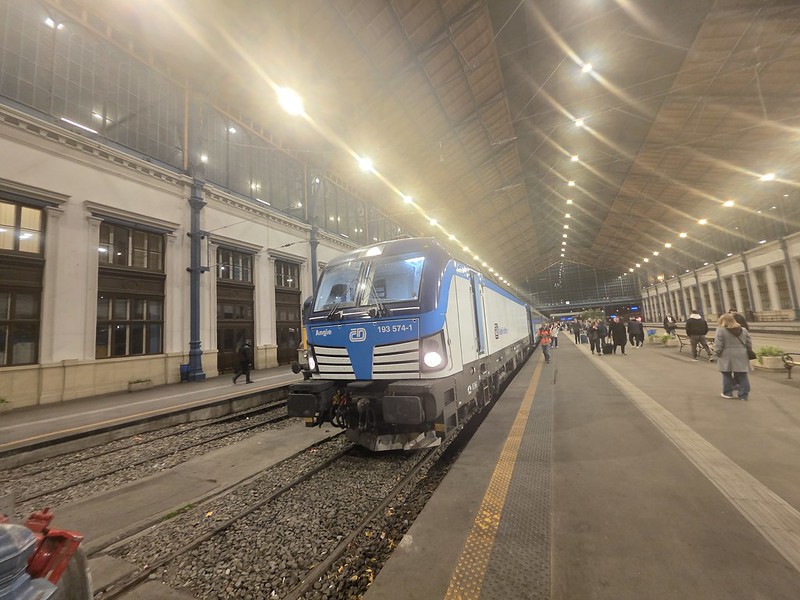
    And here’s the train in Budapest Nyugati railway station at the end of the journey. I did take a lot of photos of stations en route, to remind myself I quite fancy going to some of those locations (Ostrava in the Czech Republic looked interesting which has the nickname of Black Heart which I like), but there were no great pieces of scenery that I felt the need to photograph. There were a lot of fields though.

    20251106_195604

    And safely in Hungary.

    Overall, I rather enjoyed gazing out of the window for hours, but there was no wifi and the phone connection was poor for much of the journey. It’s generally cheaper by plane, it’s obviously quicker and ultimately much more convenient. Flying isn’t though very environmental and there is a push towards more long-distance trains, although this was 11 hours in total so it’s hardly a fast-paced arrangement.

    The cost was relatively expensive for European rail at £50, although as an experience it was worth it. But, there’s going to need to be modernisation here, basic things like allowing for ordering food and drink on the train for either collection in the refreshments car or delivery to the compartment. I had no idea when meal service was, they needed to be clearer about that. They also do need wifi, although they did have power outlets and they were useful.

    I had eight ticket checks during the journey, which is excessive by any means. The US system is better here, they check tickets on entry and write the journey on a card above the seat. I also didn’t like the compulsory reservation system, I was lucky to have a quiet carriage because there were no-shows, but I’d rather just sit where there’s space and not be tied to a certain seat (although I had moved across one from my middle seat I had been allocated). I thought that it all went quickly, so I certainly enjoyed the restful nature of the whole arrangement.

    The whole thing felt a little old-fashioned and there’s a place for that, but I can’t see passenger numbers ever soaring for services like this unless they can speed them up a bit and make them more comfortable and modern. However, there is a sleeper version of this service so you get a choice between the two trains and that makes more sense in terms of time efficiency. However, I wanted to look out of the window at things as this was more of an experience.

    The train arrived into Budapest just twenty minutes late, which isn’t bad given the complexity of going across four countries, namely Poland, the Czech Republic, Slovakia and Hungary. There were announcements throughout the journey, just about all of them in English. The service is run by České dráhy, who are the national rail operator in the Czech Republic, and I’d say that this sort of long-distance train service is certainly an experience worth trying at least once. So all really rather quite lovely and a reminder that I’ll take more trains on the European mainland.
  • Bratislava – Bratislava Transport Museum (Mercedes-Benz 170 – W15)

    Bratislava – Bratislava Transport Museum (Mercedes-Benz 170 – W15)

    20250626_100918

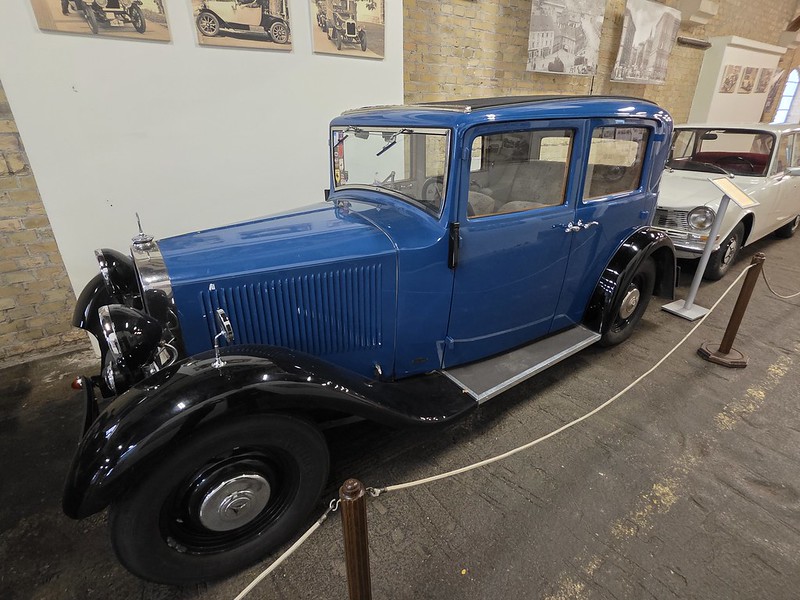
    Tucked away in a corner of the quite marvellous Transport Museum in Bratislava is this rather proud-looking Mercedes-Benz 170 (W15), a model first introduced to the world in 1931, although this one is from 1933. Unveiled at the Paris Motor Show in October 1931, it’s the sort of car that looks like it should be waiting outside a respectable interwar law firm, engine ticking gently, while its owner discusses tax efficiency and the virtues of punctuality or something similar (not that I want to fall into lazy stereotypes). Wikipedia mentions that nearly all of the production run was sold within Germany and they made a total of 13,775 of them.

    This was Mercedes-Benz’s first real stab at mass production with a modern design, aimed more at the professional driver than the boy racer of the time. There isn’t much subtlety to the colour as it’s bright blue, but it does look suitably dignified and it was deliberately smaller and slightly less decadent than previous models as the 1920s depression had cut disposable incomes somewhat.

  • Bratislava – Bratislava Transport Museum (1902 Austrian Locomotive)

    Bratislava – Bratislava Transport Museum (1902 Austrian Locomotive)

    20250626_103017

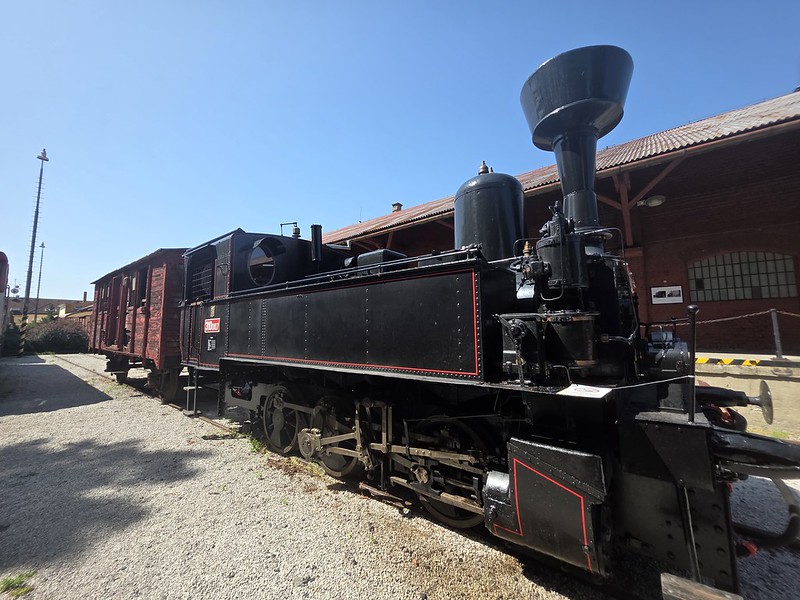
    This feels like what a noble steam locomotive should look like, and this rather lovely Krauss 310 was built in Linz in 1903. It’s now sitting in the courtyard of Bratislava’s Transport Museum, looking rather photogenic in the baking Slovakian sun. I might have mentioned it was very hot and sunny when I was there. The locomotive is older than most modern democracies and arguably more reliable than some and it served for decades on narrow-gauge lines in the Austro-Hungarian Empire. There’s no option to climb aboard the locomotive, but it was too hot anyway for such escapades.

    The attached little red wooden wagon adds a rustic contrast, though perhaps a bit less decadent. It’s charming in that functional and splintery kind of way, and I dare say it wouldn’t have passed modern health and safety inspections, unless those inspections were done by candlelight and accompanied by schnapps.

    20250626_103000

    From the front and the relatively small size of the locomotive is a little more obvious now and it looks somewhat less of a thundering beast.

  • Bratislava – Bratislava Transport Museum (1989 MNA 1000)

    Bratislava – Bratislava Transport Museum (1989 MNA 1000)

    20250626_104242

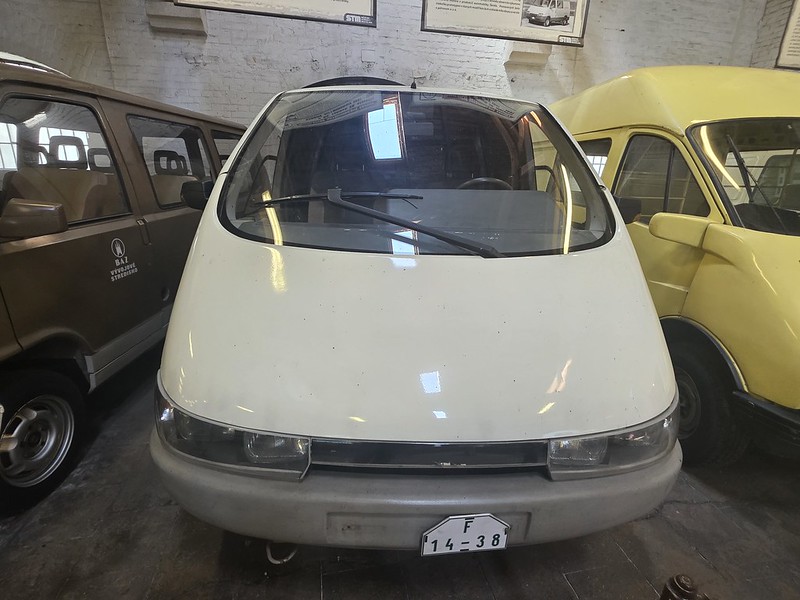
    Obviously, I didn’t have a bloody clue what this was before looking at the information board, but for my riveted two loyal blog readers, I can confirm that it’s a MNA 1000 produced by the Bratislava Automobile Company, a rather bold and ultimately doomed attempt to drag Czechoslovak van production into the modern age. It was rather a modern design, especially with the wraparound windscreen and the single windshield wiper valiantly attempting to clear a vast surface and the headlights that seem to be playing peek-a-boo from behind slightly sulky eyelids. The design process kicked off in 1983, with the aim of replacing the ageing and increasingly sub-optimal Škoda 1203 van, a workhorse that was apparently not considered as particularly glamorous.

    What’s rather touching, and is what intrigued me, about the whole story is how much hope was poured into this little van. Engineers had ambitions, there was talk of a front-wheel drive layout, sleek design and even collaboration with Moscow-based AZLK to push things forward. But then the Iron Curtain came crashing down, the market economy swept in, and the idea of building something locally that looked like a squashed spaceship became less appealing and it never made it to full production. A few prototypes were made and this is one of them, parked up in a museum but at least it survives.

  • Bratislava – Museum of History at Bratislava Castle (Restored Painting of the Coronation of the Virgin Mary)

    Bratislava – Museum of History at Bratislava Castle (Restored Painting of the Coronation of the Virgin Mary)

    20250627_115418

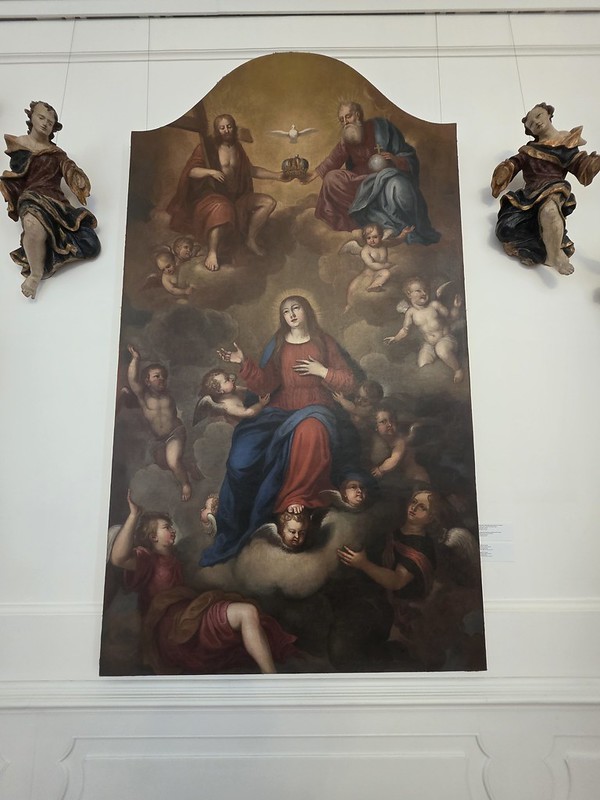
    The artist of this painting is unknown, but it dates from the middle of the eighteenth century and it depicts the Coronation of the Virgin Mary. This sort of painting was likely once the centrepiece of a church altar, part of the visual storytelling for congregations, many of whom might have been illiterate, but could still spot a divine coronation when they saw one. The artwork has that unmistakably decadent Baroque flair of dramatic skies, dynamic poses, and a generally high angel-to-square-foot ratio. But, despite all that excitement, I didn’t like it.

    20250627_115428

    The reason for my general disapproval, and I witter on a lot about this theme, but for me, and I know views vary (and mostly disagree with me), I would have rather that they had left this instead of restoring it. I felt what I was looking at now was something too perfect, removing all evidence of its history and heritage. I understand that there was evidence of previous restorations, bits of paint were missing and some of it had faded, but I like the authenticity of what they had. What they’re ultimately doing is creating something fake, they’re changing things to try and make the imperfect somehow perfect, but history can’t be turned back. I do like that the museum has put this information board up to explain the restoration process and there’s obvious huge skill involved with this whole endeavour which I respect. But, I don’t really see why they don’t just leave the artwork and then paint an entirely new one for visitors who would like to see what it was intended to look like.

  • Bratislava – Hotel Matyšák

    Bratislava – Hotel Matyšák

    20250626_151936

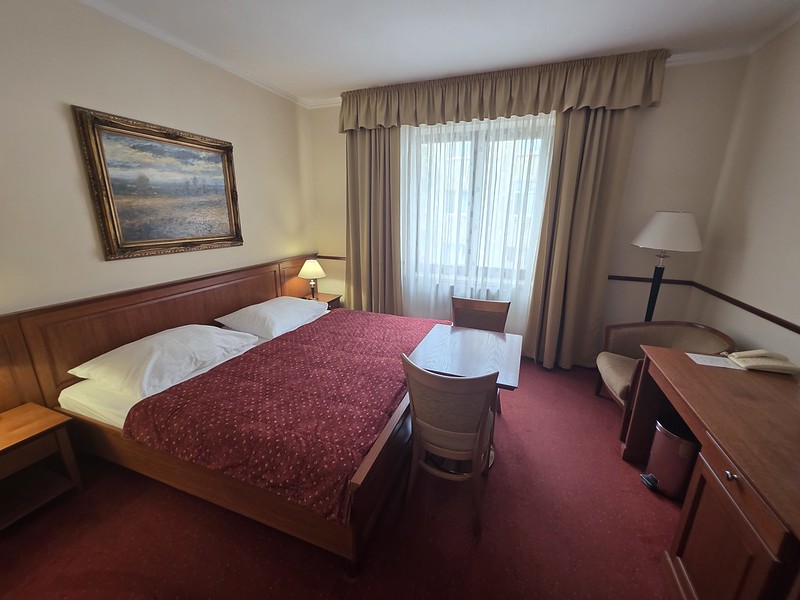
    My first night’s stay in Bratislava was at Hotel Matyšák, a very keenly priced hotel a short distance from the city centre. The hotel is known for its associated wine shop and wine focused restaurant, although I promptly ignored that and went to a craft beer focused restaurant for my evening meal. However, for those that are rather more cultured and engaged in wine than I am, I think this might be rather a sensible accommodation choice and guests get a discount on their meals.

    The weather was ferociously hot when I was in Bratislava, something that I might have mentioned as it tested my strengths of human endurance, but I was pleased to discover that the room was relatively cool and that there was a fan which was sufficiently powerful to vaguely cool me down. There was also a mini-bar, which I unusually took advantage of, namely as the lovely and cool Coke was only around £1.50.

    20250627_074354

    Breakfast was included in the room rate and there was a reasonable selection of hot and cold food items. There were numerous croissants, breads, cold meats, cheeses and quite a lot of fruit.

    20250627_074854

    My healthy choices, which actually included fruit. The breakfast room was peaceful and calm, without being overly busy, so that made for a leisurely rather than stressed start to the day. I really can’t be doing breakfast carnage which happens at some hotels, so this was a decent peaceful affair.

    The hotel is positively reviewed on-line and I think my £45 room including breakfast was unusually cheap, but was certainly convenient for me. The welcome at reception was friendly and everything felt clean, organised and in order. The reception is in an odd location at the rear of the building, but that’s because their main entrance is used for the restaurant and fortunately everything is clearly signed so I didn’t get muddled up. I’d stay here again as long as my little fan was still in situ, it was easy to get to, there were no noise disturbances internally or externally, with everything feeling well managed.

  • Bratislava – Museum of History at Bratislava Castle (Immaculata from Church of the Holy Trinity in Březová)

    Bratislava – Museum of History at Bratislava Castle (Immaculata from Church of the Holy Trinity in Březová)

    20250627_115338

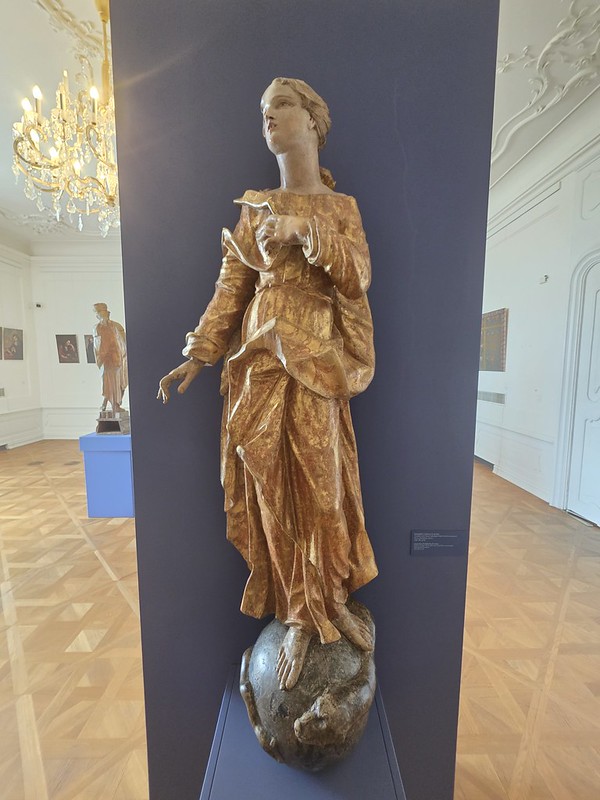
    Here we have Immaculata, created sometime in the first half of the eighteenth century by a sculptor who, despite presumably putting in a solid effort, has somehow remained anonymous. I’m not quite sure what the Virgin Mary is standing on here, it might be a snake and if it is, I hope it is being shown being crushed. Although she’s also barefoot on top of a globe, which I’m also not sure that I understand. The swirling golden robes are a little decadent and the whole arrangement is in decent condition.

    What I really like is knowing where this item once was, as that adds somewhat to being able to picture the importance of this statue to previous generations. This gilded delight originally stood in the Church of the Holy Trinity in Březová, although I don’t known why it now resides in a rather more climate-controlled room in Bratislava Castle, although I suppose it at least has considerably fewer incense fumes to contend with. Its former home is a modest but rather resilient Roman Catholic church dating back to around 1650. It was constructed on the bones of a previous building that had been confiscated as part of the Counter-Reformation, so it’s literally built on the spoils of religious politics. Its original protestant incarnation got the axe during Habsburg re-Catholicisation, before the current Baroque version went up in 1650. Matters had been restored to some form of normality by the time that this sculpture was placed in the church although I don’t know how long it stayed there for.

    Anyway, I’m not sure that I’ve found much to really write about here to surprise and delight my two loyal blog readers, I was just intrigued that they knew where the statue came from, as in some many cases the museum just didn’t know where their treasures had once been located.

  • Bratislava – Museum of History at Bratislava Castle (St Joseph the Foster Father of Jesus by Johann Ignaz Cimbal)

    Bratislava – Museum of History at Bratislava Castle (St Joseph the Foster Father of Jesus by Johann Ignaz Cimbal)

    20250627_115230

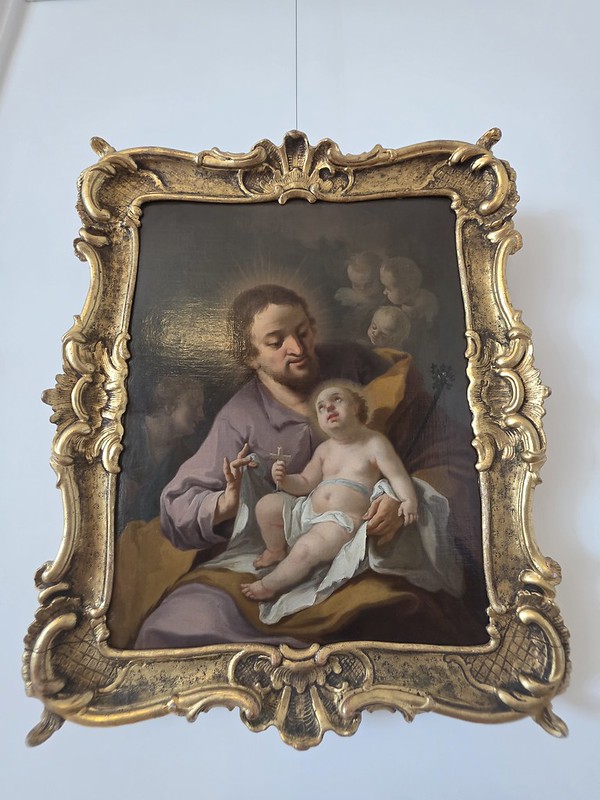
    This is “St Joseph the Foster Father of Jesus”, painted in the eighteenth century by Johann Ignaz Cimbal (1722-1795), who seems to have leaned heavily into the brief of “tender paternal scene with bonus cherubs”. I’m not sure that I much like the painting really, the medieval artists painted Jesus looking a bit odd, but by now many artists made him look a little more, well, cute or at least holy. I’m also not quite sure really what the messaging is here. Joseph looks vaguely pleased, perhaps even slightly startled that he’s been entrusted with this holy toddler, while Jesus stares up with the weary wisdom of someone who already knows what’s coming.

    Wikipedia notes about the artist:

    “In his lifetime, Cimbal was in demand as a painter, and his clients were satisfied with his work. Since his death, however, he has been less adulated: his works have been described as dry and sourced from a limited inventory, and his detailing sometimes clumsy.”

    I think that I rather agree with this. It does feel clumsy to me and although he painted hundreds of altarpieces and frescoes, I’m not sure I would have felt inspired by looking at it. But, I don’t know where this altarpiece was displayed, if it was originally in some church in the middle of some village in what is now Slovakia, it might have been rather acceptable. I’m not sure that the denizens of Florence would have looked at it with much delight though.

  • Bratislava – Museum of History at Bratislava Castle (Veil of Veronica)

    Bratislava – Museum of History at Bratislava Castle (Veil of Veronica)

    20250627_115240

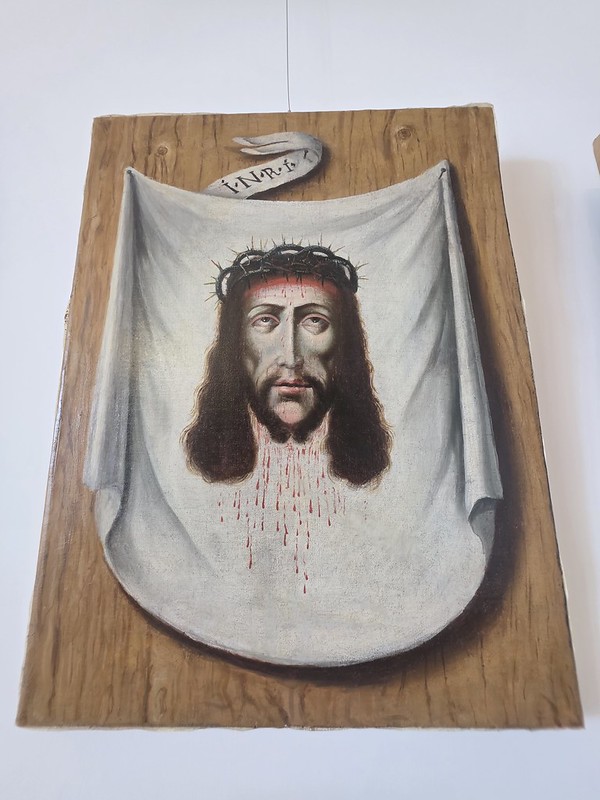
    This rather striking bit of religious art is a depiction of the Veil of Veronica, an image that hovers somewhere between theology, relic culture and the sort of iconography that would have deeply unsettled 17th-century Protestants. And quite honestly, it’s a bit intense for me, it’s not something I’d want adorning the wall of my Norwich abode. The basic idea behind this depiction is rooted in a popular medieval legend, that as Christ carried the cross to Golgotha, a woman named Veronica stepped forward and compassionately wiped his face with her veil. In return, the image of his face was miraculously imprinted on the cloth.

    The piece here is especially gory, there’s no romanticising the crown of thorns, and the blood flows freely in a way that can only be considered sub-optimal. Above Christ’s head is the abbreviation “I.N.R.I.” — Iesus Nazarenus, Rex Iudaeorum — which translates as “Jesus of Nazareth, King of the Jews.” This was the inscription placed above his head on the cross, and it’s become the go-to Latin tag for anyone wishing to subtly indicate their religious art credentials. The gallery doesn’t know who painted it, but states that it’s from the eighteenth century.

    I suppose that art like this wasn’t created just to sit on a wall and collect polite admiration, it was meant to surprise and delight, or indeed in this case, shock. It’s something of a spiritual call to arms, but that’s why I rather liked this. I’m not sure whether a painting of a man dripping blood is ever going to be something that delights, but it certainly stood out in the gallery and I thought it looked quite modern when I first saw it.

  • Bratislava – Old Town Hall (Golden Rose Inn sign from 1719)

    Bratislava – Old Town Hall (Golden Rose Inn sign from 1719)

    20250628_113234

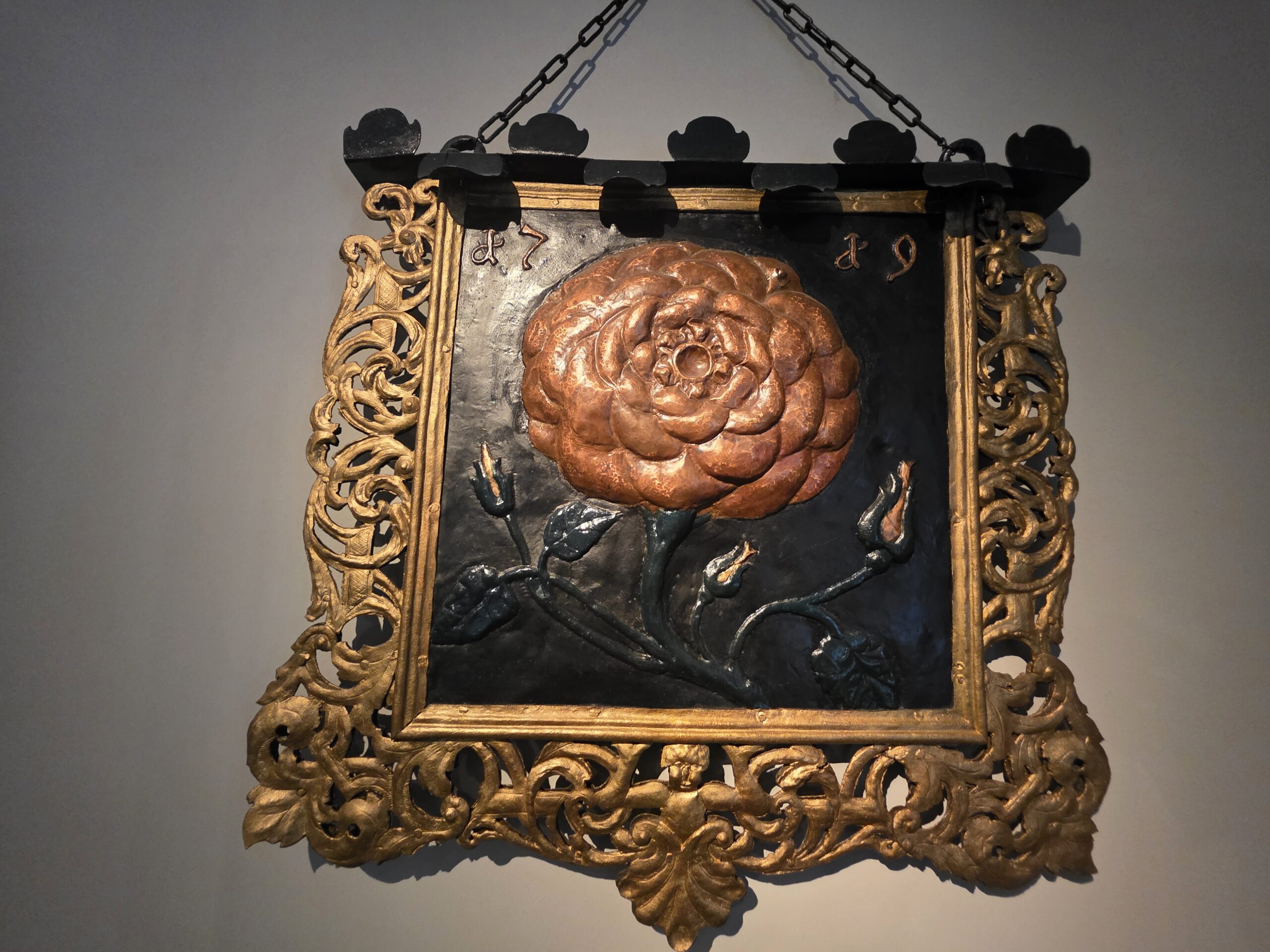
    It’s not often that you see a pub sign in a museum and assume, incorrectly, that it was designed last Thursday for a high-end florist with delusions of grandeur. Actually, seeing pub signs in museums outside of the UK isn’t something that I really see much of at all, especially when the sign is over 300 years old. But this one, the Golden Rose Inn sign, looks I think unnervingly modern (well, with a retro tinge of course) for something that dates from 1719. I might have even believed someone who told me it was a logo proposal for a craft beer bar in Shoreditch, although typing that has made me sad about the disappearance of Goose Island from the area. But I won’t digress.

    The pub sign is made from hammered iron, copper and bronze, and it once swung proudly over a pub on what’s now Jesenského Street in Bratislava, but which for a while was called Golden Rose street after the venue. The pub, of course, is long gone, but the sign has survived, improbably, through war, empire, revolution, regime change and, perhaps most dangerously, the temptation of being melted down during a metal shortage. That it’s still here at all feels a minor miracle, or at least the result of one very determined preservationist who didn’t want it ending up as part of a drainpipe.

    Pub signs themselves are a particularly enduring form of public communication, visual anchors in towns where literacy was never guaranteed but drinking always was. From Roman taverns with their bunches of grapes to medieval English inns hung with animals, crowns and celestial saints, these signs were never just decorative. They were wayfinders, storytellers and social cues, an invitation to step inside and forget the weather, taxes or whatever royal war was being waged that week.

    There’s something comforting in the idea that local residents in Bratislava would have walked under this sign and known exactly what it meant, namely warmth, rest, a drink, and probably the same gossip repeated for the fifth time that day (not that I associate pubs with gossip of course). And if nothing else, it proves that even in 1719, someone knew that branding mattered, as well as the need for a drink. I liked this sign because of what it represented, all really rather lovely.