Category: Random Posts

  • Dictionary of the Vulgar Tongue – Day Thirty-One

    Dictionary of the Vulgar Tongue – Day Thirty-One

    The Dictionary of the Vulgar Tongue was first published at the end of the eighteenth century, and given that the Coronavirus crisis is giving too much time to read books, I thought I’d pick a daily word from it until I got bored…..

    Blue Devils

    The dictionary defined this as “low spirits”, although it’s today more commonly used in reference to military regiments and sporting teams which have taken on the nickname. However, its original meaning of depression and feeling down is still in usage, more commonly today just as ‘the blues’ and is where the term ‘blues music’ came from. There’s a theory that the original ‘blue devils’ came about from the hallucinations which came after withdrawing from alcohol, although that isn’t entirely certain.

  • Sports Drink

    Sports Drink

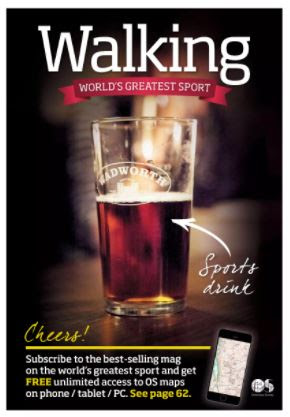
    I still like this ad……

    Beer. A proper sports drink.

  • Die Sonderfahndungsliste G.B.

    Die Sonderfahndungsliste G.B.

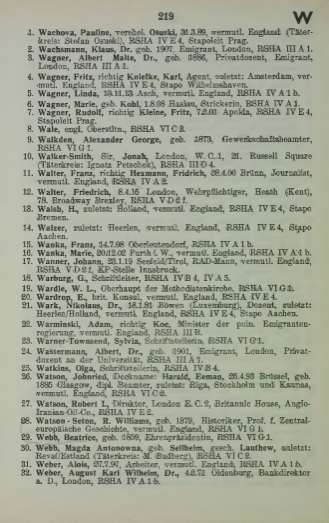
    I had heard of this book, but I hadn’t realised that the contents of it were on-line. It’s the Sonderfahndungsliste G.B., which was the list of names produced by the Schutzstaffel (SS) in 1940 who were to have been arrested if the Germans had successfully invaded the UK. There are 2,820 names in the book and in some cases, it gives information on which division of the SS had authorised the arrest and who would have received the prisoner.

    At the rear of the book, there are also a list of organisations and establishments that the SS would have shown an interest in. More on this book in future posts….

    The Text of the Book (.pdf format)

  • Dictionary of the Vulgar Tongue – Day Thirty

    Dictionary of the Vulgar Tongue – Day Thirty

    The Dictionary of the Vulgar Tongue was first published at the end of the eighteenth century, and given that the Coronavirus crisis is giving too much time to read books, I thought I’d pick a daily word from it until I got bored…..

    Black Book

    The dictionary defines this as “he is down in the black book, ie, has a stain in his character. A black book is kept in most regiments, wherein the names of all persons sentenced to punishment are recorded”. It seems that this was also true on a wider scale, court books and punishment books in academia were also often black.

    Today, the phrase seems to have shifted somewhat, normally being used to refer to a list of secret contacts, rather than a list of people who should be punished. I prefer the old meaning, there’s something more sinister about having a book full of people who have committed misdemeanours. Perhaps Hike Norfolk should have one….

  • Dictionary of the Vulgar Tongue – Day Twenty-Nine

    Dictionary of the Vulgar Tongue – Day Twenty-Nine

    The Dictionary of the Vulgar Tongue was first published at the end of the eighteenth century, and given that the Coronavirus crisis is giving too much time to read books, I thought I’d pick a daily word from it until I got bored…..

    Bishop

    This is a cocktail of sorts according to the dictionary, “a mixture of wine and water, into which is put a roasted orange”. It’s a drink that Samuel Johnson enjoyed, so it dates back to at least the seventeenth century. Interestingly, the drink still seems to exist today, although rum has been added into the concoction of red wine, water and an orange. I can’t see it catching on at JD Wetherspoons, but it’s right up Nicholson’s street…..

  • Dictionary of the Vulgar Tongue – Day Twenty-Eight

    Dictionary of the Vulgar Tongue – Day Twenty-Eight

    The Dictionary of the Vulgar Tongue was first published at the end of the eighteenth century, and given that the Coronavirus crisis is giving too much time to read books, I thought I’d pick a daily word from it until I got bored…..

    Birds of a Feather

    The meaning given by the dictionary is “rogues of the same gang”, so this is one of those phrases that has for some reason remained in usage over the centuries, although it’s not just about rogues and criminals now. Although, perhaps, the TV comedy Birds of a Feather perhaps did revert to the rogues usage. The phrase dates back to at least the sixteenth century and it was used widely and commonly in print, unlike some of the other phrases in this dictionary which I still wonder if the author made up.

    The Bath Chronicle posted a long epistle (their word, not mine) to ‘a friend in the country’ in December 1774, which included the lines:

    “What a strange revolution – we us’d all together, to flock to one place, like birds of a feather. And pass the long evening, in chat or at play, when a thousand soft amorous things one might say”.

  • Dictionary of the Vulgar Tongue – Day Twenty-Seven

    Dictionary of the Vulgar Tongue – Day Twenty-Seven

    The Dictionary of the Vulgar Tongue was first published at the end of the eighteenth century, and given that the Coronavirus crisis is giving too much time to read books, I thought I’d pick a daily word from it until I got bored…..

    Billingsgate Language

    This is according to the dictionary, “foul language or abuse from the market where the fish(er)women assemble to purchase fish; and where, in their dealings and disputes, they are somewhat apt to leave decency and good manners a little on the left hand”. There was historically another similar term, although it had the same meaning, of ‘Billingsgate Discourse’.

    Billingsgate Market was once the fish market which was in operation near to the Tower of London from around the sixteenth century until 1982. At that stage it was moved to a site near to Canary Wharf, although the area only became built up as a commercial district later on. The term Billingsgate for offensive language persisted throughout the eighteenth and nineteenth centuries, although I’m not sure it’s very common today.

    Although this reminds me of the fisherwomen who came to Lowestoft over the last few decades, who received a reputation in parts for their direct language. The same principles no doubt applied back in Billingsgate…

  • Dictionary of the Vulgar Tongue – Day Twenty-Six

    Dictionary of the Vulgar Tongue – Day Twenty-Six

    The Dictionary of the Vulgar Tongue was first published at the end of the eighteenth century, and given that the Coronavirus crisis is giving too much time to read books, I thought I’d pick a daily word from it until I got bored…..

    To Bilk

    The dictionary defines this as “to cheat. Let us bilk the rattling cove; let us cheat the hackney coachman of his fare”. This is one of those words that has somehow survived in its original form, with bilking today being the term for driving off without paying for petrol. So, pretty much the same meaning as running off from a taxi without paying, although the word can be used to describe any act of fraud or attempt to withhold money.

    The dictionary was published around 1800, so the word was more common then. It nearly fell out of usage during the early part of the nineteenth century, but seems to be a little more in vogue again now. Back in the seventeenth century, the word bilk mean to spoil an opponent’s score in a game, so the word is some derivative of that.

  • Dictionary of the Vulgar Tongue – Day Twenty-Five

    Dictionary of the Vulgar Tongue – Day Twenty-Five

    The Dictionary of the Vulgar Tongue was first published at the end of the eighteenth century, and given that the Coronavirus crisis is giving too much time to read books, I thought I’d pick a daily word from it until I got bored…..

    Betwattled

    The dictionary defines this as “surprised, confounded, out of one’s senses” and I’ve no idea how this has fallen out of common usage as it’s quite a catchy word…. It was more commonly used in the west country and was in use from at least the sixteenth century, so it remained used for three centuries at least.

    Although used relatively rarely in written English, it’s clear from this graph that it has remained in use to a small degree. There’s been a recent uptick in its usage as well, although Susie Dent did mention the word on Countdown, so that might have been the cause of that.

  • Dictionary of the Vulgar Tongue – Day Twenty-Four

    Dictionary of the Vulgar Tongue – Day Twenty-Four

    The Dictionary of the Vulgar Tongue was first published at the end of the eighteenth century, and given that the Coronavirus crisis is giving too much time to read books, I thought I’d pick a daily word from it until I got bored…..

    Bermudas

    The dictionary defines this as criminal slang for “certain places in London, privileged against arrests, like the Mint in Southwark. These privileges are abolished”. Liberties were areas of the country where, in effect, a private landowner or, later on, a governmental organisation, had taken over from the Monarch. The Liberty of the Mint, in Southwark, was an historic quirk as it derived from a property used by King Henry VIII as a mint for coinage. A charter in 1550 issued by King Edward VI transferred the area to the City of London, but the mint was excluded.

    The mint was ultimately closed and in the eighteenth century it was claimed that the small area was effectively a liberty, and thus exempt from any civil or criminal enforcement. This was a marvellous innovation for criminals, as they could live in this small area, free from anyone being able to pursue them for their criminality. Attempts were made to get rid of it in 1695, although the required Act of Parliament wasn’t passed until 1723.

    Living in the area wouldn’t have been pleasant, since it was a very small area and most of the residents were criminals or those suffering financially. There was no employment in the area, so there was no way to earn money to pay debts off, with no chance to leave the narrowly defined area as otherwise debt collectors could seize the individual. The only freedom was on Sundays, when debtors and criminals couldn’t be stopped.

    There’s not much evidence of the word ‘Bermudas’ being used in this sense, although there is some, usually in the form of the ‘Barmoodoes’ or the ‘Bermoothes’ spellings. But it’s a lovely reminder of the quirky nature of London’s history.