
Category: Books

  • Dictionary of the Vulgar Tongue – Day Fifty-Two

    Dictionary of the Vulgar Tongue – Day Fifty-Two

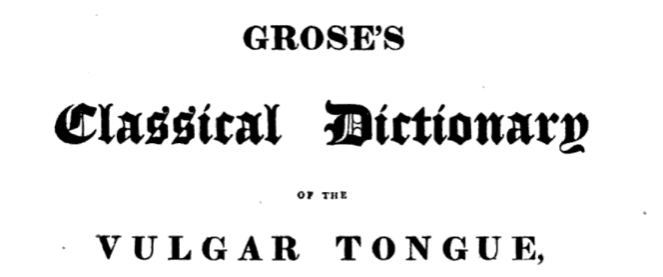
    The Dictionary of the Vulgar Tongue was first published at the end of the eighteenth century, and given that the Coronavirus crisis is giving too much time to read books, I thought I’d pick a daily word from it until I got bored…..

    Bull Beggar or Bully Beggar

    This is defined by the dictionary as “an imaginary being with which children are threatened by servants and nurses, like raw head and bloody bones”. Being a child in the late eighteenth century does sound a little bit of a nightmare….. The phrase is still in occasional use today and there’s a pub in North Carolina called the “Bull and Beggar”. It dates all the way back to at least the fifteenth century and it might derive from Wales and the old Welsh word ‘bwbach’ which is a scarecrow or goblin.

  • Dictionary of the Vulgar Tongue – Day Fifty-One

    Dictionary of the Vulgar Tongue – Day Fifty-One

    The Dictionary of the Vulgar Tongue was first published at the end of the eighteenth century, and given that the Coronavirus crisis is giving too much time to read books, I thought I’d pick a daily word from it until I got bored…..

    Bulk and File

    Defined by the dictionary as “two pickpockets; the bulk jostles the party to be robbed, and the file does the business”, a reminder of how long distraction robbery has gone on for. The phrase was being used as early as the seventeenth century and its origins are unclear. The bulk likely means the ‘main part’, in the same way that a bulky person could push someone around. The word ‘bulk-monger’ also dates from this period, meaning a prostitute who converses with pickpockets.

  • Dictionary of the Vulgar Tongue – Day Fifty

    Dictionary of the Vulgar Tongue – Day Fifty

    The Dictionary of the Vulgar Tongue was first published at the end of the eighteenth century, and given that the Coronavirus crisis is giving too much time to read books, I thought I’d pick a daily word from it until I got bored…..

    Buffle-Headed

    Well, that’s day 50 of this virus thing reached, and I haven’t yet got bored of these words from the dictionary, although I’m surprised that I’m still on the letter B. Anyway, this is one of my favourite phrases so far, the dictionary defines it as “confused or stupid”, so I feel that I can get this into conversation a lot. The word ‘buffle’ used to be an alternate word for buffalo (it’s still the French word), but it also means “to be puzzled”. I can’t find any dictionary link this to the word ‘baffle’, but it’s hard to see that it isn’t linked, given that it means the same.

    There’s not much use of the word buffle-headed today, with the exception of it being used in reference to a bird. The Bufflehead is a small sea duck, and it takes its name as its head looks like a buffalo. Well, I don’t think its head looks anything like a bloody buffalo, but that’s what the OED says. Sadly, it’s now an archaic term, but any word that means “dull, stupid or blundering” should be brought back into use, as we don’t have enough words for that.

  • Dictionary of the Vulgar Tongue – Day Forty-Nine

    Dictionary of the Vulgar Tongue – Day Forty-Nine

    The Dictionary of the Vulgar Tongue was first published at the end of the eighteenth century, and given that the Coronavirus crisis is giving too much time to read books, I thought I’d pick a daily word from it until I got bored…..

    Bufe Nabber

    I’ve found no evidence that this phrase was used in any book or magazine, although it’s marked as criminal slang, so it was likely used informally and verbally. The dictionary defines this as “a dog stealer”, which is interesting insomuch that this was a crime that was clearly a problem in the late eighteenth century, an early version of dognapping. And “bufe nabber” is a more exciting term for the crime than dognapping. Another one to get back in the vernacular.

  • Dictionary of the Vulgar Tongue – Day Forty-Eight

    Dictionary of the Vulgar Tongue – Day Forty-Eight

    The Dictionary of the Vulgar Tongue was first published at the end of the eighteenth century, and given that the Coronavirus crisis is giving too much time to read books, I thought I’d pick a daily word from it until I got bored…..

    Budget

    The dictionary defines this as a “wallet”, and also “a term used to signify the notification of taxes required by the Minister for the expenses of the ensuing year”. At the end of the eighteenth century, the phrase “open the budget” with reference to the Chancellor’s monetary decisions had started to come into use, but it wasn’t a widespread word for financial figures and that only came at the end of the nineteenth century when the “open the” fell off the phrase.

    Back to the word wallet, it came into the English language in the fifteenth century from the French word for a leather bag or purse, which was bougette, which in turn had derived from Latin. Shakespeare used the word in reference to meaning a purse and it was used frequently in written and verbal communications.

  • Dictionary of the Vulgar Tongue – Day Forty-Seven

    Dictionary of the Vulgar Tongue – Day Forty-Seven

    The Dictionary of the Vulgar Tongue was first published at the end of the eighteenth century, and given that the Coronavirus crisis is giving too much time to read books, I thought I’d pick a daily word from it until I got bored…..

    Bubble and Squeak

    This phrase still survives and is in common usage, but at the beginning of the nineteenth century it was defined as “beef and cabbage fried together”, which somehow has changed to potato and cabbage. The origins of the phrase are literal, the ingredients – well mainly the cabbage – bubble up and squeak as they’re cooked.

    A ‘recipe’ from the 1890s said to “mash four potatoes, chop a plateful of cold greens, season with a small saltspoonful of salt and the same of pepper; mix well together and fry in dissolved dripping. Cut about three quarters of a pound of cold boiled beef into neat, thin slices. Fry slightly over a slow fire for six minutes, put the vegetables round the dish and the meat in the centre. Serve very hot”. Sounds bloody awful.

    In the 1920s and 1930s the beef in the dish continued, but seemed to be replaced by sausages by the 1930s and 1940s. After the 1950s, it seemed to just become potato and cabbage, so who knows what it might become by the end of this century. Hopefully remove the cabbage and potato and just add a chicken bake.

  • Dictionary of the Vulgar Tongue – Day Forty-Six

    Dictionary of the Vulgar Tongue – Day Forty-Six

    The Dictionary of the Vulgar Tongue was first published at the end of the eighteenth century, and given that the Coronavirus crisis is giving too much time to read books, I thought I’d pick a daily word from it until I got bored…..

    To Bubble

    This is defined as “to cheat”, terminology which seems relatively common in the seventeenth and eighteenth centuries, then lost in the nineteenth century. Bubble is a made up word, so it doesn’t have any Greek or Roman origins, with the dictionaries saying that it’s a word named after the sound of a bubble bursting. Which, I guess, is where the cheating thing comes from, their trust was burst just as a bubble would be.

  • Dictionary of the Vulgar Tongue – Day Forty-Five

    Dictionary of the Vulgar Tongue – Day Forty-Five

    The Dictionary of the Vulgar Tongue was first published at the end of the eighteenth century, and given that the Coronavirus crisis is giving too much time to read books, I thought I’d pick a daily word from it until I got bored…..

    Bub

    This is defined by the dictionary as “a strong beer”, and a couple of dictionaries say that the word derived from the sound of drinking. I’m not entirely convinced….. Sometimes the definition is a little different, such as “an alcoholic malt liquor”. There is a phrase that is “bub and grub”, but I think that derives from champagne, or a bubbly drink, rather than its archaic meaning. It is though perhaps where the second half of the word syllabub comes from.

  • Dictionary of the Vulgar Tongue – Day Forty-Four

    Dictionary of the Vulgar Tongue – Day Forty-Four

    The Dictionary of the Vulgar Tongue was first published at the end of the eighteenth century, and given that the Coronavirus crisis is giving too much time to read books, I thought I’d pick a daily word from it until I got bored…..

    Brewes or Browes

    The dictionary defines this as “the fat scum from the pot in which salted beef is boiled”, which sounds quite delicious…. The word likely comes from the French ‘breu’ meaning broth, which is also where the word brewis comes from, which is bread soaked in broth or a stew.

    On the subject of fat scum, here’s a recipe for cabbage soup from the 1930s…..

  • Dictionary of the Vulgar Tongue – Day Forty-Three

    Dictionary of the Vulgar Tongue – Day Forty-Three

    The Dictionary of the Vulgar Tongue was first published at the end of the eighteenth century, and given that the Coronavirus crisis is giving too much time to read books, I thought I’d pick a daily word from it until I got bored…..

    Bristol Milk

    The dictionary defines this “a Spanish wine called sherry, much drunk at that place, particularly in the morning”. This term is first recorded back in 1634, and it’s also mentioned in the diaries of Samuel Pepys. This still exists in a derivative form as the branded drink of Bristol Cream, which is produced by John Harvey & Sons who had a base in Bristol. It’s thought to have become popular in Bristol as this was the main port that sherry was imported into and some mothers gave a little of it to their teething children.

    Thinking about it, I’m not sure that I’ve ever tried Harvey’s Bristol Cream, which I’m not entirely sure is widely stocked in British pubs anyway.