Category: Books

  • Dictionary of the Vulgar Tongue – Day Seventy

    Dictionary of the Vulgar Tongue – Day Seventy

    The Dictionary of the Vulgar Tongue was first published at the end of the eighteenth century, and given that the Coronavirus crisis is giving too much time to read books, I thought I’d pick a daily word from it until I got bored…..

    Chatter Box

    This of course remains a commonly used phrase today, but I did like the quite vivid definition given by the dictionary, which was “one whose tongue runs twelve score to the dozen, a chattering man or woman”. When the dictionary was published, this was a relatively new phrase as it had only started to be used in the 1770s. It was originally two words, but it has been corrupted down into one over the years.

    I think I prefer the dictionary definition than the word it’s describing, I will definitely attempt to get the phrase “your tongue runs twelve score to the dozen” in somewhere this year.

  • Dictionary of the Vulgar Tongue – Day Sixty-Nine

    Dictionary of the Vulgar Tongue – Day Sixty-Nine

    The Dictionary of the Vulgar Tongue was first published at the end of the eighteenth century, and given that the Coronavirus crisis is giving too much time to read books, I thought I’d pick a daily word from it until I got bored…..

    Chapt

    Defined as “dry or thirsty”, this is a now obsolete word for chapped, although I’ve seen people write about their “chapt lips” in error so it might go full circle. Or indeed, unless they were aware of its archaic roots and wanted it to be brought back in the mainstream.  Although chapped is more used as an adjective now, its origins are as a verb and in the US there are far more of these ‘-t’ endings than in the UK where it’s usually ‘-ed’. But not here, even the Americans like the idea of chapped, even though they also like words like learnt, spelt and spoilt to name just a few.

  • Dictionary of the Vulgar Tongue – Day Sixty-Eight

    Dictionary of the Vulgar Tongue – Day Sixty-Eight

    The Dictionary of the Vulgar Tongue was first published at the end of the eighteenth century, and given that the Coronavirus crisis is giving too much time to read books, I thought I’d pick a daily word from it until I got bored…..

    Chalkers

    Many words used in this dictionary seem to have been used sparsely and although they might be interesting for their formation, they weren’t really part of the vernacular. This definition was though used widely in Ireland and I suspect that you could easily make a whole book out of it. The dictionary says:

    “Men of wit, in Ireland, who in the night amuse themselves with cutting inoffensive passengers across the face with a knife. They are somewhat like those facetious gentlemen some time ago known in England by the title of Sweaters and Mohocks”.

    Going back to front, the Mohocks story scared a lot of people in eighteenth-century Britain. There were stories that it was a group of young men who killed and maimed men and raped women, all just for fun as they never stole anything. John Gay wrote his first drama about them, but he also noted that most of the stories had been made up on Grub Street, a street in London known for journalists who wanted to sell newspapers by exaggeration, fraud and shock. Little has perhaps changed.

    The story of the Sweaters is similar, they were meant to be gangs of young men who would physically attack men in a horrific manner, leaving them to sometimes die of their injuries. In reality, actual facts about this happening are much harder to come by.

    So, over to Ireland and the Chalkers. There is much more evidence for gangs causing physical harm and Parliament got engaged with this topic. A Parliamentary Act from 1796 reads:

    “Evil dispossessed people have of late with knives or other offensive weapons, cut and stabbed, or with pistols have wounded, or attempted to wound, by firing, shooting and discharging the same, many of his Majesty’s subjects either with an intent to murder, rob or maim, or merely with a wicked intent to disable or disfigure them; and whereas the laws now in force to prevent wanton, wilful and malicious maiming and wounding, are found not to be sufficiently effectual to deter such evil dispossessed people”.

    The decision was then that anyone involved in these actions would be sentenced to death and their bodies sent to anatomists for dissection.

    Random attacks on civilians weren’t that common though, it was mainly directed at soldiers and had been caused by arguments in how the Irish Army had been managed during the late eighteenth century. Rewards were offered for soldiers who were maimed, which is why criminals moved into this arena of attack, it was still for a financial gain but just not one which directly took from the soldier.

    But, all of this caused fear in the population and these gangs lived on in the collective memory for some decades, ready to terrify the next generation.

  • Parish Clerks

    Parish Clerks

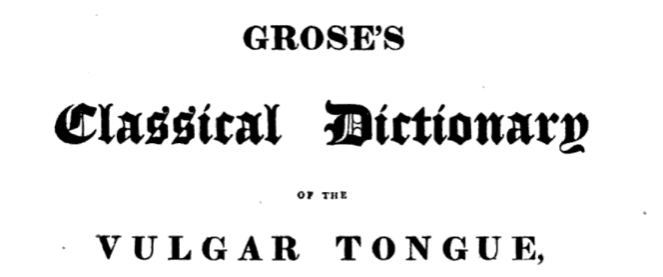
    From the Norfolk Chronicle of 15 January 1898, this struck me as being a rather intriguing snapshot of the period as what roles were valued in the community were changing. It reads:

    “A correspondence asks in the ‘Church Notes’ column for information concerning the sayings and doings of the parish clerks. It is much to be regretted that the parish clerk, except in a few solitary instances, no longer represents the third estate in the parochial realm. Time was when the three great men of the parish were the squire, the parson and the clerk; and of the trio, the latter, perhaps, was the greatest. He occupied the honoured seat in the bar parlour, at the village inn; he was the visitor most welcomed at the barber’s shop; and he was the one man in the community upon whom devolved the duty of reading aloud the contents of the weekly news sheet to the assembled rustic. The school-master was altogether out of the running; there were invariably too much pedantry and patronage about him – faults which militated against his popularity; but the parish clerk, who presence was indispensable at marriages, christenings and funerals, and in the ordinary services of the church, had greatness thrust upon him in social conclaves, and he thus maintained a position of considerable importance and dignity.”

    I’m not sure many parish clerks would today think that they had “greatness thrust upon them”, nor would teachers be too pleased to hear of their reputation……

  • Dictionary of the Vulgar Tongue – Day Sixty-Seven

    Dictionary of the Vulgar Tongue – Day Sixty-Seven

    The Dictionary of the Vulgar Tongue was first published at the end of the eighteenth century, and given that the Coronavirus crisis is giving too much time to read books, I thought I’d pick a daily word from it until I got bored…..

    And catching up today since I’ve missed a few days over the last week.

    Caxon

    This word is defined as “an old weather-beaten wig” and it is apparently still in very occasional usage today, although I can’t say that I’ve ever heard anyone use it in general conversation. It seems though that the word was usually placed before the word ‘wig’ to signify that it was old and worn, rather than being used as a word on its own.

    The dictionaries don’t know how the word came into usage, one suggests it was probably just named after a person called Caxon who happened to have a worn a rather dilapidated old wig. This is what interests me most about the word, some poor sod from centuries ago has likely had centuries of people using his name in vain…..

  • Dictionary of the Vulgar Tongue – Day Sixty-Six

    Dictionary of the Vulgar Tongue – Day Sixty-Six

    The Dictionary of the Vulgar Tongue was first published at the end of the eighteenth century, and given that the Coronavirus crisis is giving too much time to read books, I thought I’d pick a daily word from it until I got bored…..

    With the move to a new server, I’ve got a little behind with these daily words, so there might be a little splurge of them to catch up.

    Cautions

    This is defined in the form of a short poem:

    “The Four Cautions

    1 – Beware of a woman before

    2 – Beware of a horse behind

    3 – Beware of a cart side-ways

    4 – Beware of a priest every way”

    200 years on, some people might perhaps say that this advice isn’t entirely out of place.

  • Dictionary of the Vulgar Tongue – Day Sixty-Five

    Dictionary of the Vulgar Tongue – Day Sixty-Five

    The Dictionary of the Vulgar Tongue was first published at the end of the eighteenth century, and given that the Coronavirus crisis is giving too much time to read books, I thought I’d pick a daily word from it until I got bored…..

    Caudge-Pawed

    Definitions don’t get much shorter than this, it simply means “left-handed”. There seems nearly no mention of this phrase in the printed record and I was hoping to work out how this quirky term had evolved. That plan failed, as all I can see is that it was in use between the sixteenth and nineteenth centuries.

    I did discover though, whilst trying to see if this derived from cats paw somehow, that cats are left or right-handed. This, I have decided, is more interesting to me than what I had set out to find. So, I have no idea how this phrase evolved, but I will now watch cats to see whether they are left-handed or right-handed.

  • Dictionary of the Vulgar Tongue – Day Sixty-Four

    Dictionary of the Vulgar Tongue – Day Sixty-Four

    The Dictionary of the Vulgar Tongue was first published at the end of the eighteenth century, and given that the Coronavirus crisis is giving too much time to read books, I thought I’d pick a daily word from it until I got bored…..

    Cathedral

    Simple definition to this one, “cathedral” means in this context something which is “old-fashioned, such as a cathedral-bedstead”. The word itself derives from Greek, with the Latin word “cathedra” meaning seat, which became the seat of the Bishop, which is the Cathedral. But, in this context, I can’t see that this phrase was ever much used, all references to cathedral bedsteads simply lead to on-line versions of this dictionary.

    But, I’ve taken a real liking to using this word. If I want to criticise something (or more likely someone) as being old-fashioned, I can refer to them as having cathedral thinking. They’ll think I mean elegant or authoritative, but I’ll actually just mean out-of-date. Marvellous.

  • Dictionary of the Vulgar Tongue – Day Sixty-Three

    Dictionary of the Vulgar Tongue – Day Sixty-Three

    The Dictionary of the Vulgar Tongue was first published at the end of the eighteenth century, and given that the Coronavirus crisis is giving too much time to read books, I thought I’d pick a daily word from it until I got bored…..

    Cat’s Foot

    The dictionary defines this as “to live under the cat’s foot, to be under the domination of a wife, hen-pecked”. Slightly intriguing that the ‘hen-pecked’ phrase has survived, whereas ‘cat’s foot’ seems to have been lost, particularly as there’s something quite quaint about the latter option. Georgette Heyer used the phrase in her books, but otherwise it’s now becoming archaic. Incidentally, the book defines ‘cat’ as “a prostitute” or “a cross old woman”.

  • Dictionary of the Vulgar Tongue – Day Sixty-Two

    Dictionary of the Vulgar Tongue – Day Sixty-Two

    The Dictionary of the Vulgar Tongue was first published at the end of the eighteenth century, and given that the Coronavirus crisis is giving too much time to read books, I thought I’d pick a daily word from it until I got bored…..

    Carouse

    This word remains in usage in some areas, although I’m not sure that I’ve heard it used recently. The dictionary defines it as “to drink freely or deep”, making the drinking of alcohol sound quite philosophical. The more current definition of the word is though more ‘drinks loudly’, but perhaps that’s an inevitable result of drinking freely.

    The word origin is from German, the phrase ‘gar aus trinken’ means to drink heavily, which got corrupted into English as ‘garaus’, and then ‘carouse’.

    And here’s the word usage over the last two centuries. Given how the country has continued to drink freely, it’s a little surprising to see the word be used less frequently.