Category: Warsaw Metro

  • Warsaw – Metro System : C14 Stadion Narodowy (Visiting Every Station)

    Warsaw – Metro System : C14 Stadion Narodowy (Visiting Every Station)

    20251103_102719

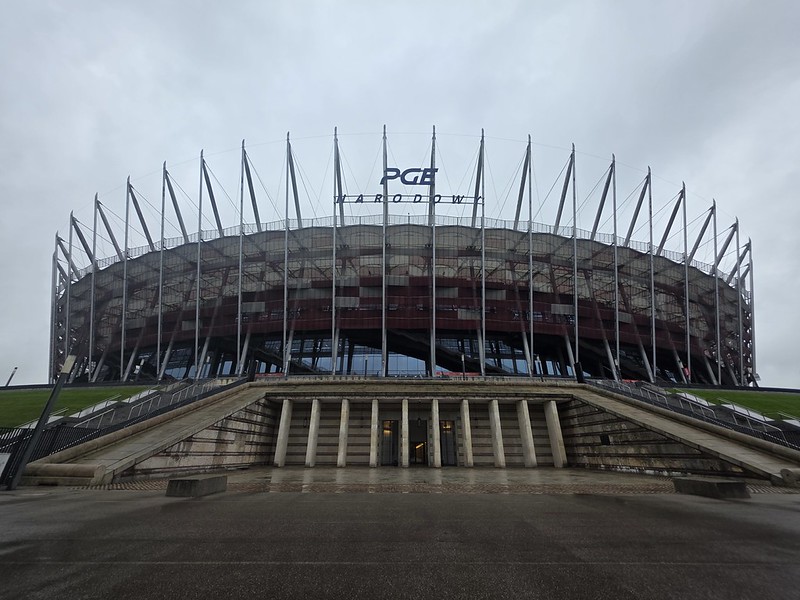
    Continuing on my theme of visiting every metro station on the Warsaw network. This is Stadion Narodowy, namely the National Stadium.

    20251103_111711

    The station, located on the M2 line, opened on 8 March 2015 which was a few years after the stadium itself opened, but there is also a national rail network station here. The stadium was built on the site of the Tenth Anniversary Stadium, which opened in 1955 and was built on rubble from the Second World War. The stadium was a bit sub-optimal, it was a ten minute walk for football players to get back to the dressing rooms, so half-time had to last for half an hour. It closed in 2008, ready for the development of the new site.

    20251103_104544

    Here is the lovely shiny stadium, which is used by the national Polish football team amongst others.

    20251103_104033

    It’s possible to walk around the perimeter, it doesn’t seem to be closed off at all.

    20251103_104258

    This is the Ryszard Siwiec (1909-1968) Memorial and is one of the heroes of the Polish nation. On 12 September 1968, he set fire to himself in front of the country’s leaders and 100,000 spectators. The communist authorities were livid, it took the shine off their day and they pretended that he was an alcoholic who was mentally unstable. They seized the letter that he sent to his wife and tried to pretend that the whole thing didn’t happen. But it did, his vision for Poland took a long time to come about, but it has.

    20251103_103705

    The neighbouring rail station.

    20251103_103246

    A tunnel under the railway line which gives access to the stadium.

    20251103_110801

    There’s a nearby park to the metro station, Skaryszewski Park.

    20251103_105910

    A long path through the park, which was built on the site of a floodplain in 1905. Some beavers made the park their home in 2006, but they caused so much damage that they removed the little angels and plonked them in the nearby zoo.

    20251103_105709

    This memorial needs repair as it’s nearly impossible to read, but it commemorates the lives of those Poles who died in the 9/11 attack on the Twin Towers in New York.

    20251103_105618

    A sculpture outside the park of Ignacy Jan Paderewski (1860-1941) who served as the Prime Minister of Poland for most of 1919. He was perhaps more well known as a pianist and he served as part of the Polish Government in exile between 1940 and 1941. The entire park has now also been named in his honour.

    20251103_105606

    Apparently, if AI is to be believed, the circular wheel is a telecommunications mast.

    20251103_104731

    The old looking building is one of the towers constructed as part of the bridge which was designed to be ornamental and it also houses the staircases.

    20251103_105030

    This Adam Roman (1916-2013) sculpture is named ‘The Relay’ and is located outside of the stadium and it dates from the previous 1955 structure. It was originally meant to be located at the Central Park of Culture in Powiśle, with the artist adding a third runner to his initial plans to have just two.

    20251103_102956

    Back into the metro station, which is also planned to be one of the ends of metro line M3 which is currently under construction. There is another island platform and two tracks already in place for this, but they’re not currently in use. Hopefully by the time the first section of the M3 line opens in around five years I’ll have actually finished visiting all the stations that are currently open….
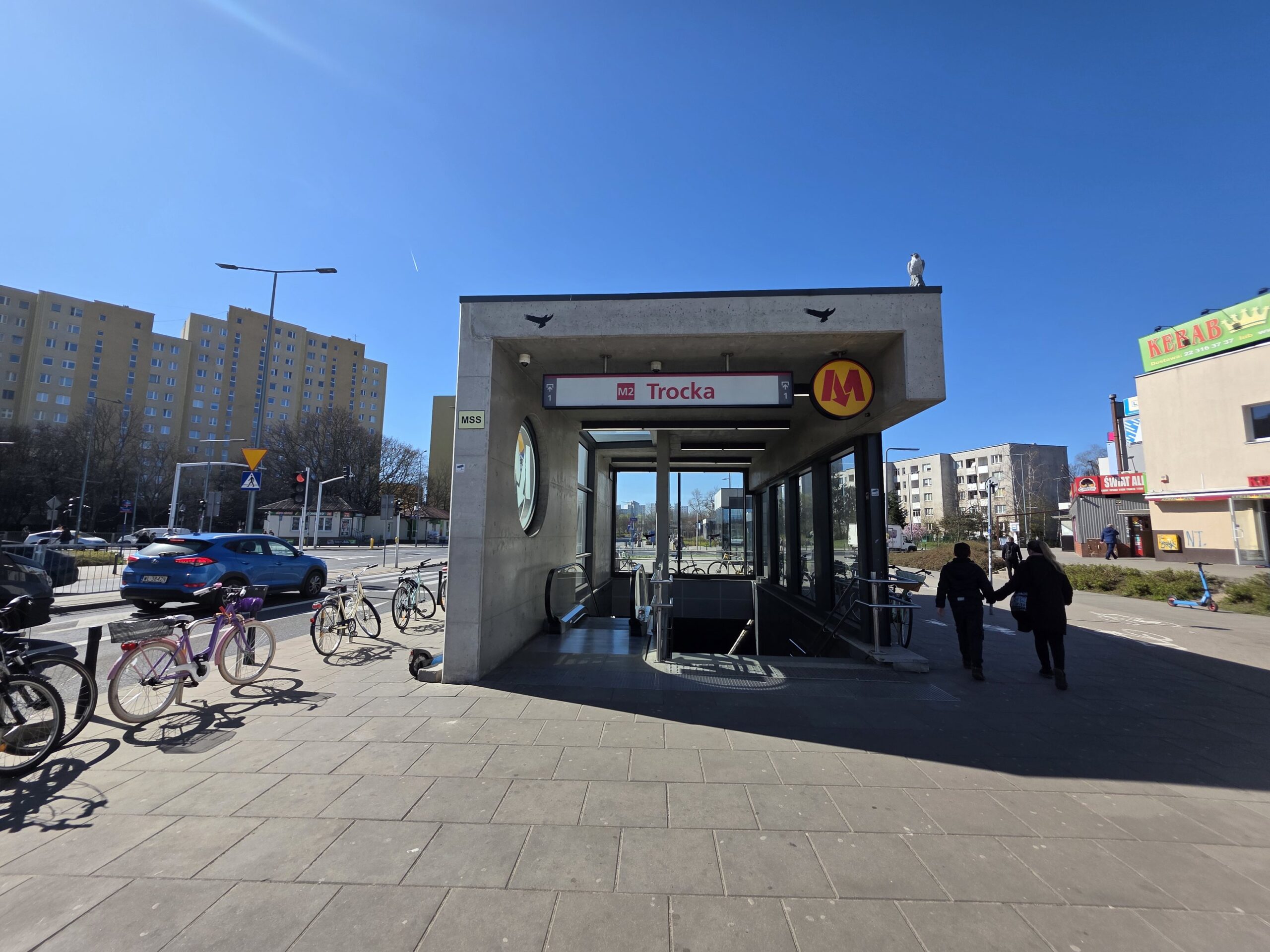
  • Warsaw – Metro System : C18 Trocka (Visiting Every Station)

    Warsaw – Metro System : C18 Trocka (Visiting Every Station)

    20250403_111456

    One thing I’ve done with my attempting to visit all of the metro stations in Warsaw is that I’ve started at the ends of the line, generally away from the most interesting areas in the city that the network crosses through. This meant that visiting Trocka was a little bit sub-optimal as there wasn’t a great deal of note to have a look at. So writing this is more for the sake of completion than surprising and delighting my two loyal blog readers.

    20250403_111709

    It’s all residential, which is lovely, but there’s less of a story to tell. Although I’d note that this felt a safe area, I meandered around some of the tower blocks and it seemed a part of the city that it would be pleasant to live in. There’s a bus station here, although I’m not sure if that’s of enormous excitement to write about, but it’s visible in the above photo.

    20250403_111951

    Tadeusz Korzon (1839-1918) was a Polish historian and he also took part in the January uprising that sought to free Poland from its Russian control. Sadly, he died a few months before the creation of the Second Polish Republic, so he didn’t live to see Poland become independent.

    20250403_112710

    As an aside, Warsaw is rather good at putting benches nearly everywhere, something which must encourage people to walk if they know that there’s somewhere to stop. Back to the station, the city gave the contract to Italian firm Astaldi in March 2016 to build this extension and work started in April 2016 and it was completed in May 2019. The station opened on 15 September 2019 to the excited locals and the project was part financed by the European Union.

    20250403_112927

    The Church of St. Mark the Evangelist.

    20250403_114031

    Back to the station, which was designed with the intent of having clean, geometric forms and a feeling of space. The groundwater here was relatively high, which led to some considerable engineering challenges, including apparently diaphragm walls which were sunk up to 60 metres deep, but that will mean more to my civil engineer friend Liam than to me. For a while, this was the end of the line, but in September 2022, another three stations were added to extend the M2.

    20250403_114041

    The decoration is plain, but functional.

    20250403_114107

    The plan of the metro station.

    20250403_114140

    And the next train to Bródno.

    In terms of what is nearby, there is a large cemetery and some other historic structures of interest, but they’re all closer to another Metro stop. That’s also true of a nearby park, so I haven’t entirely neglected these, I’m just saving them up…..

  • Warsaw – Metro System : C05 Ulrychów (Visiting Every Station)

    Warsaw – Metro System : C05 Ulrychów (Visiting Every Station)

    20250612_105718

    And the next in my series of visiting every metro station on the Warsaw network. I have a backlog of these, but then again, I have a backlog of lots of many things I’m meant to be writing up.

    20250612_105459

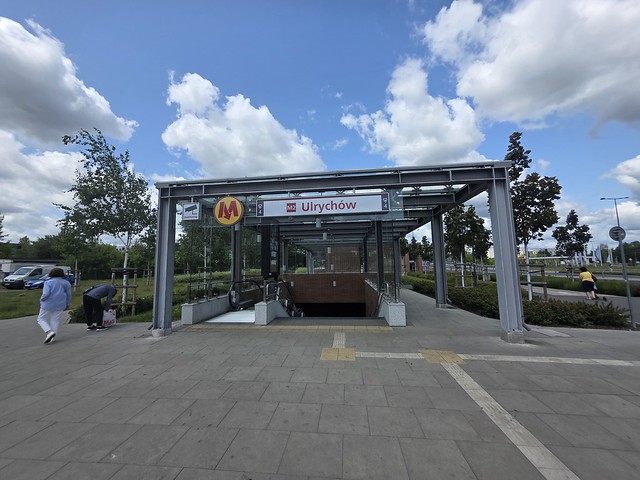
    The station is on M2, located in the Wola district along Górczewska Street and next to the Wola Park shopping centre. It was officially opened on 30 June 2022 as part of the extension of Line M2 westward from Rondo Daszyńskiego towards Bemowo. It takes its name from the Ulrich family, who established one of Warsaw’s first commercial gardening enterprises in the 19th century on this very land, with quite extensive greenhouses and nurseries. Work on the construction started in 2019, although groundbreaking work started in late 2018. Despite Covid, the project remained on schedule (this is Poland) and it officially opened on 30 June 2022.

    20250612_105832

    And here’s the aforementioned Wola Park shopping centre. During the planning stage of the extension, the station was going to take the name Wola Park but perhaps they didn’t pay enough for sponsorship as in October 2018 the name was changed to Ulrychów.

    20250612_111136

    Inside the shopping centre as I had to pop in. I might have accidentally tripped into the McDonald’s self-service machine and ordered myself a Jalapeño Burger as well by accident as well. At just £1, they continue to surprise and delight me.

    20250612_130922

    This is Osiedle Przyjaźń, a hastily erected housing estate built in 1952 which was designed to house the thousands of Soviet workers who were building the Palace of Culture and Science in the city centre. It was composed almost entirely of prefabricated wooden dormitory pavilions for the labourers and some smaller bungalows for the more senior staff. At its peak, it could house 4,500 people and the structures were painted in either blue and white or red and white colour schemes to make them look colourful and exciting. There was a residential area here before, but that was quickly demolished although alternative accommodation was offered to those living in the area.

    20250612_130626

    After the Palace was completed in May 1955, the Soviets cleared off and that left a handy campus area already constructed, which was given to the Ministry of Higher Education. The dormitories were used as student halls and the bungalows were given to academics and their families.

    20250612_130314

    It’s a slightly odd area today, there are quite a few buildings which are boarded up, but evidently there are plenty of people who live here.

    20250612_130213

    No-one paid much attention to my meandering around, it’s quite a peaceful area.

    20250612_130146

    Some of the colourful buildings probably need a little painting.

    20250612_133156

    This exploration is tiring, so I popped into the Auchan supermarket for a yoghurt based drink. I got a Mullermilch as well, but that’s getting its own post as usual.

    20250612_135157

    Back to the metro station. Incidentally, the shopping centre were going to build an underground tunnel to the station, but they didn’t bother, but that’s perhaps because they were annoyed that the station wasn’t named after them.

    20250612_131837

    Another packed platform, but it’s functional and clean. It was designed by a consortium of Metroprojekt and AMC Andrzej M. Chołdzyński, the same architectural team behind many other Line M2 stations, and it was designed with the expectation that the copper walls will oxidise over time, gradually changing colour and developing a natural verdigris patina. Very decadent. For anyone interested, and this is stretching the engagement of even my two loyal blog readers, the station is 120 metres long and was constructed in a 160 metres station box, all constructed using the ‘cut and cover’ method of making a big hole, putting in the station box and then resurfacing it.

    20250612_131841

    The station sign and the architects noted that:

    “The ceiling of the platform level is covered with coffered acoustic panels also finished in a warm copper tone. In combination with the green walls and pillars, the copper ceiling creates a feeling reminiscent of an autumnal palette.”

    Nice. To be honest, this extension is a little uniform in its design, it could probably do with some exciting art installations going on to make the stations feel a little more individual. There was some controversy that the planned nearby Warszawa Górczewska rail station wasn’t constructed as an interchange with this metro station, but the designers said if they had moved it then it was no longer near where people lived, nor the shopping centre. They have a good point there and they’ve likely ignored the mocking ‘węzeł spacerowy’ or ‘walking interchange’ that some have nicknamed it.

    20250612_135615

    And here comes the train, taking me back to the city centre. The network considers this to be the most copper filled of any of their stations, a fun fact I’ll try and remember although I doubt it’ll come up in any quizzes.

  • Warsaw – Metro System : A2 Natolin (Visiting Every Station)

    Warsaw – Metro System : A2 Natolin (Visiting Every Station)

    20250405_110328

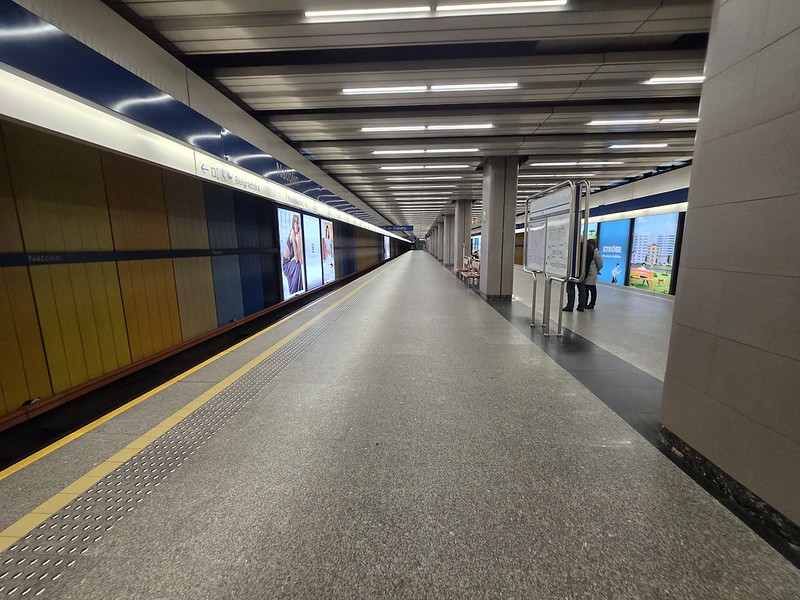
    Next in my series of visiting every metro station on the Warsaw network was Natolin and, I have to admit, I did struggle to find a great deal of interest around here as it was so residential. It’s relatively near to two other stops, limiting the option to walk a little further in search of excitement.

    20250405_110401

    The sun was shining and it was too hot. Not that I moan about the heat…. The metro station takes its name from the district that it’s located in, Natolin.

    20250405_110630

    I found a small park nearby, Park Lasek Brzozowy, or ‘Birch Wood Park’. It’s nice, but I wouldn’t recommend that people come from other countries just to visit.

    20250405_111003

    I went to walk around a housing estate, trying desperately to find anything old.

    20250405_111248

    A little shopping centre.

    20250405_111437

    Going back into the metro station. The metro station was on the first stretch of the network that opened, on 7 April 1995.

    20250405_111459

    The decoration on the platform.

    20250405_111513

    It wasn’t overly busy.

    20250405_111521

    The plan of the metro station.

    20250405_111606

    And leaving…. I must admit, this is likely to be one of the dullest metro station reports and I likely set the bar quite low with the whole concept. But, I don’t rule out going back and trying to find something which will surprise and delight my two loyal blog readers.

  • Warsaw – Metro System : A1 Kabaty (Visiting Every Station)

    Warsaw – Metro System : A1 Kabaty (Visiting Every Station)

    20250409_144202

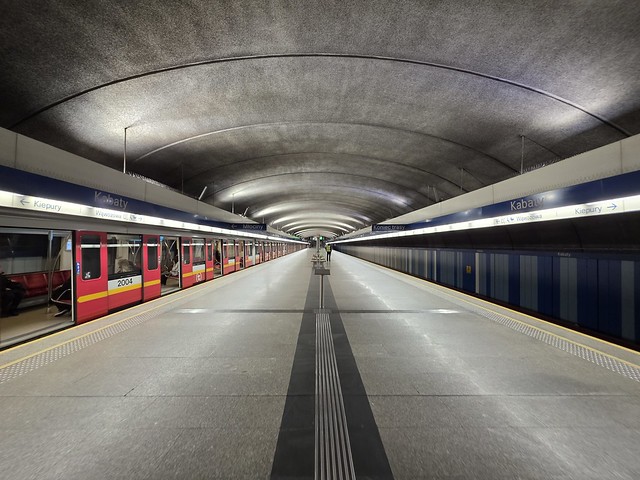
    Next on my little mission to visit the area around every metro station on the Warsaw network was Kabaty which is at the southern end of the M1 line. The physical commencement of the M1 line was officially marked by the driving of the first steel pile for the tunnel support structure in the Ursynów district on 15 April 1983 and this station opened on 7 April 1995, one of the first ones to open on the network.

    20250409_142532

    As a separate note, there’s excellent signage across Warsaw.

    20250409_143042

    This stone commemorates the life of Andrzej Ciołek of Żelechów (c. 1380 – c. 1448), a Polish Knight and Statesman. Rather notably, in 1404, he undertook a pilgrimage to Santiago de Compostela in Spain, reflecting his devoutness and I can imagine that it felt a long way from home at the time.

    20250409_142626

    It’s rather residential, which does limit me a little bit in this riveting post. A lot of this was empty fields when the metro station was first constructed, so there’s not a huge amount of history immediately visible around this metro station.

    20250409_143243

    Some sculptures in Park Przy Bażantarni. The name of the park translates to ‘By the Pheasantry’ referring to the historical royal pheasantry (Bażantarnia) that once stood nearby during the eighteenth century when the area was part of royal hunting grounds.

    20250409_143337

    A decorative bridge in the park.

    20250409_143418

    The Church of Blessed Władysław of Gielniów (Kościół Błogosławionego Władysława z Gielniowa), dedicated to a fifteenth century Polish Franciscan friar, preacher and poet known for his deep piety and role in promoting vernacular Polish religious hymns. He is one of Poland’s national patrons and the church has something of a modern design.

    20250409_144304

    Inside the station which is quite industrial and the architectural identity, like the other stations on the initial M1 segment, was shaped during the 1983-1985 design phase led by Metroprojekt, with Jasna Strzałkowska-Ryszka as the lead designer. It’s notable incidentally that there are no advertising hoardings all along the station which is somewhat different to many other countries around the world, the initial intention was to deliver an uncluttered public space.

  • Warsaw – Metro System : A8 Wierzbno (Visiting Every Station)

    Warsaw – Metro System : A8 Wierzbno (Visiting Every Station)

    20250420_110353

    Next on my side quest to visit every station on the Warsaw metro system is Wierzbno on the M1 line.

    20250420_110425

    The station is on the first stretch of the line that opened on the network on Friday 7 April 1995 and it’s a heavily residential area. The station took its name from the local area and the etymology of ‘Wierzbno’ itself traces back to the Polish word ‘wierzba’ meaning willow tree. While the initial Ursynów sections often utilised the cut-and-cover method, the segment running through Mokotów, including the area beneath Aleja Niepodległości where Wierzbno is located, predominantly employed underground tunnelling techniques, often carried out by experienced miners. The construction took nine years in total from when they started, but Poland had gone through some rather seismic political changes during this time.

    20250420_111102

    Translated, this sign says:

    “Ksawerów Street – Originally the name of the estate of Ksawery Pułowski (a landowner, collector and philanthropist), established in the mid-19th century near Królikarnia, which was also his property. Over time, the name became the name of the street.”

    20250420_111105

    And the street itself.

    20250420_111543

    Nearby is Park Granat which takes its name from Grupa Artyleryjska „Granat”, or the “Granat” Artillery Group which was a military unit of the Polish Home Army during the Second World War.

    20250420_111610

    As a general comment, the city has a lot of beautiful parks.

    20250420_113645

    There’s a memorial to the Granat unit in the park which specifically highlights the unit’s courageous fight during the Warsaw Uprising in the Mokotów district, which lasted from 1 August to 27 September 1944. The group fought significant battles in this area, suffering heavy casualties (around 230 killed out of 520 who participated). Some of the bravest of the brave.

    20250420_113935

    In this voyage of discovery, I didn’t realise that there was a sculpture park nearby, Park Rzeźby w Królikarni. It’s operated by the National Museum in Warsaw and they have sculptures of various ages located in this eighteenth century garden.

    20250420_114129

    This marble sculpture dates from 1985 and is ‘The Kiss’ by Maria Papa Rostkowska (née Baranowska, 1923–2008). During the war, she was active in the Polish resistance and she participated in the Warsaw Uprising of 1944 (as a messenger for the People’s Army) and along with her first husband Ludwik Rostkowski she helped rescue Jews from the Warsaw Ghetto. For her wartime bravery, she was awarded the Order of Virtuti Militari, Poland’s highest military decoration.

    20250420_114139

    This bronze sculpture dates from 2017 and is ‘Flor Diente’ by Xawery Wolski (1960-). The information panel notes that the work intentionally refers to the shape of a seed, tooth or flower bud, representing the unshakeable continuity of nature.

    20250420_114211

    A memorial to the Home Army.

    20250420_114259

    This concrete sculpture dates from 1935 and is ‘Wild Boar’ by Stanisław Komaszewski (1906-1945). He studied at the Academy of Fine Arts in Warsaw and exhibited internationally, but his career was brought to a premature end due to the Second World War and much of his artwork was destroyed during the conflict. He fought in the Warsaw Uprising and was arrested and then imprisoned in Dachau concentration camp and from there he was transferred to the Natzweiler-Struthof subcamp in Mannheim-Sandhofen, Germany, where prisoners were subjected to forced labour under brutal conditions at the Daimler-Benz factory. He died there on 24 January 1945 at the age of just 38.

    20250420_114635

    This granite sculpture dates from 1887 and is ‘Dog’ by Edouard-Léon Perrault (1828-1888). It was acquired by the museum just after the end of the Second World War and either this, or a copy, was displayed at the Salon in Paris in 1887.

    20250420_114558

    The palace here was destroyed during the Second World War, but was reconstructed and in 1965 it opened as a museum dedicated to Xawery Dunikowski.

    20250420_114839

    View from the rear of the palace.

    20250420_114824

    The back of the palace, it’s very English country house and when the gardens were laid out originally that was their intention.

    20250420_123924

    This granite sculpture dates from 1974 and is ‘Horizons’ by Magdalena Więcek (1924-2008). Born in Katowice, she studied painting and sculpture after the end of the Second World War, first at the State Higher School of Visual Arts in Sopot (1945-1949) and then at the Academy of Fine Arts in Warsaw (1949-1952) where she studied under Franciszek Strynkiewicz. Her early works in the 1950s were created during the Socialist Realist period and included figurative sculptures like Górnicy (Miners) and Matka (Mother). The information panel notes that an important aspect of perceiving the sculpture is how it changes along with the movement of the observer.

    20250420_124129

    An old bridge which leads to the palace.

    20250420_124345

    The old external wall of the palace.

    20250420_125118

    Back into the network.

    20250420_125133

    The interior and this is one of stations that was built as a civilian shelter in case some sort of global war broke out. That proved expensive and was dropped from later sections of metro building.

    20250420_125215

    The station map.

    20250420_125247

    It’s not the most decorative, but it’s functional.

    20250420_125206

    The station sign.

  • Warsaw – Metro System : C4 Bemowo (Visiting Every Station)

    Warsaw – Metro System : C4 Bemowo (Visiting Every Station)

    20250418_113542

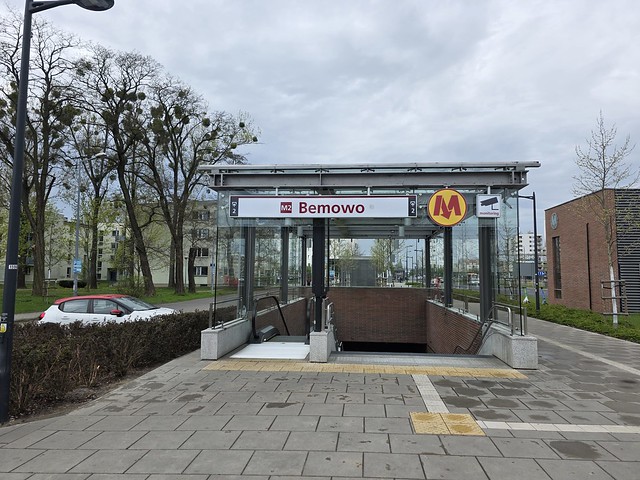
    Next on my expedition to visit every metro station in Warsaw was Bemowo, at the western end of the M2 line. Construction of the station started in 2019 and it opened for passenger usage on 30 June 2022, with the station name being simply the name of the district that it’s located in, although during planning it was named after the street it’s on, ‘Powstańców Śląskich’. It’s a residential area of the city and something of a transportation hub, so the extension out here seems rather sensible.

    20250418_113630

    The Church of the Roman Catholic Parish of St. Luke the Evangelist which was constructed in 2001, with the parish having been established in December 1992 by Cardinal Józef Glemp. The first Holy Mass had been celebrated on May 31, 1990, at the site of the future church.

    20250418_113657

    It might have my initials, but I can’t imagine me starting a construction company on the grounds I’m not keen on changing light bulbs.

    20250418_113822

    The sculpture of General Józef Zachariasz Bem (1794–1850) who was a Polish military leader and national hero of both Poland and Hungary. He began his career in the Napoleonic Wars and rose to prominence during the 1830–1831 November Uprising in Poland, where he earned a reputation as a skilled artillery commander. Later, he played a key role in the Hungarian Revolution of 1848, leading forces in Transylvania to several significant victories against Austrian and Russian troops. His leadership, courage and tactical brilliance made him something of a beloved figure in both nations given how much he had surprised and delighted the populations. Following the collapse of the revolutions, Bem sought refuge in the Ottoman Empire, where he converted to Islam and continued his military career under the name Murad Pasha. He died in exile in Aleppo in 1850, although his remains were later brought back to Poland. Despite his exile, Bem’s legacy endured as he is remembered as a symbol of cross-national solidarity and the shared fight for independence, with statues and memorials honouring him in both Poland and Hungary.

    20250418_114802

    Looks a bit industrial. This was on my way to look at the nearby Górczewska Park.

    20250418_115328

    This text reads “SÁNDOR PETŐFI 1823 – 1849, Outstanding Hungarian poet Adjutant to Gen. J. Bem, Fell for freedom”. Unless my two loyal blog readers have already forgotten from two paragraphs ago, they already know about General Bem. Sándor Petőfi was a legendary Hungarian poet, revolutionary and something of a national hero. He is widely regarded as Hungary’s national poet and was one of the key figures of the Hungarian Revolution of 1848. Petőfi’s poetry, full of passionate calls for liberty and national pride, inspired revolutionary fervour among Hungarians. His most famous poem, “Nemzeti dal” (“National Song”), played a central role in igniting the revolution.

    20250418_115354

    The park’s amphitheatre which was opened in 2008 and which can seat up to 1,000 spectators. From 2009, it was named the Michael Jackson Amphitheatre, which didn’t delight everyone and they took the name away in 2019 as it became too controversial. It was originally given this name because he did some sort of musical event at the nearby airport, Warsaw-Babice Airport.

    20250418_115503

    Some trees and a park seems a sensible place to put them.

    20250418_115506

    A hill in the park with a playground on it.

    20250418_121325

    It started raining so I thought that I’d better get back.

    20250418_121546

    Going down the steps.

    20250418_121609

    The station design which seems less decadent than they could have made it given that it’s a new station and the ones before looked, well, more jazzy. The plan was to use weathering steel, or Corten Steel, as apparently this rustiness looks interesting. I’m not entirely convinced, but there we go.

    20250418_121623

    The ever useful metro map. The task of constructing the C4 Bemowo station, along with the preceding C5 Ulrychów station and connecting tunnels, was awarded to a consortium comprising the Turkish company Gülermak Ağır Sanayi İnşaat ve Taahhüt A.Ş. as the leader, and the Italian company Astaldi S.p.A., both of whom had experience in building other bits of the network in the city. While the station box itself was constructed using the cut-and-cover method, typical for Warsaw Metro stations, the connecting tunnels were bored using Tunnel Boring Machines (TBMs), which were named “Krystyna” and “Elisabetta”.

  • Warsaw – Metro System : C20 Kondratowicza (Visiting Every Station)

    Warsaw – Metro System : C20 Kondratowicza (Visiting Every Station)

    20250401_114052

    Next up on my plan to visit every metro station in Warsaw, this is Kondratowicza on the M2 line. It’s a recent addition to the network having opened to the public on 28 September 2022.

    20250401_113858

    These information panels are commonplace across the network and they are rather useful in terms of navigation.

    The photo on the right is from Google Streetview in 2018, the one on the left is from 2022. It is really a microcosm of just how fast this city is developing, expanding and improving.

    20250401_114158

    The metro station is opposite Szpital Bródnowski, one of the most important hospitals on the right side of the Vistula River and a major teaching hospital. There’s an exit that goes practically right into the building, so it’s a convenient situation for patients.

    20250401_114556

    As an aside, there seem to be ever more clearly laid out cycling and pedestrian sections, all rather marvellous in promoting people to get cycling.

    20250401_114810

    Nearby is Park Bródnowski which is also a free sculpture park, so a rather marvellous cultural project and it has been increasing in size for many years.

    20250401_120420

    I decided to take a photo of a bird using the feeder but the bloody thing flew off, so here’s a photo of a bird feeder without a bird.

    20250401_120616

    This is usually full of water with a statue of a woman lying on her back in the middle of the pond. The sculpture was created during art workshops conducted by Pawel Althamer for members of a group who all have multiple sclerosis. They worked on the project together, but each person executed a different part of the figure which has deliberately led to different proportions.

    20250401_120724

    This was certainly visually interesting and the sculpture is called Zinaxin and Dolacin, created by Magdalena Abakanowicz in 2005. Their names are taken from arthritis medicines and it’s apparently “a quest for a new take on the human figure in the context of the traumatic history of the twentieth century.”

    20250401_120812

    The Guardian Angel sculpture, designed by Roman Stanczak in 2013 and it’s designed to have multiple values which aren’t necessarily religious.

    20250401_120823

    This was quite a common thing around the park, I haven’t quite understood what the significance is.

    20250401_121018

    The main water feature is a little empty….

    20250401_121412

    Here’s what it usually looks like.

    20250401_121233

    This quirky little shed is known as the Teahouse with Coffee Maker, it’s a steel cube that was designed to resemble a spaceship. It was returned to the original artist, Rirkrit Tiravanija, many years ago but they decided to construct a replacement one and this was overseen by Pawel Althamer and Michal Mioduszewski. It’s thought to be the smallest cultural centre in Warsaw and it can be hired out.

    20250401_121557

    The Daughters of Brodno sculpture which was designed to be a self-portrait of local people, inspired to be similar in concept to Rodin’s The Burghers of Calais. Over 100 people are attended concept workshops and they decided on numerous different figures, including a goddess, a poet, a public official, a saint, a senior citizen and an athlete.

    20250401_121605

    It’s quite a complex and engaging sculpture.

    20250401_122720

    Back to Kondratowicza metro station. It’s a poetic arrangement in terms of its heritage as the station (and the street it’s under) is named after Ludwik Kondratowicz (1823-1862), a 19th-century Polish poet and translator of Belarusian origin who wrote under the popular pen name Władysław Syrokomla.

    20250401_122730

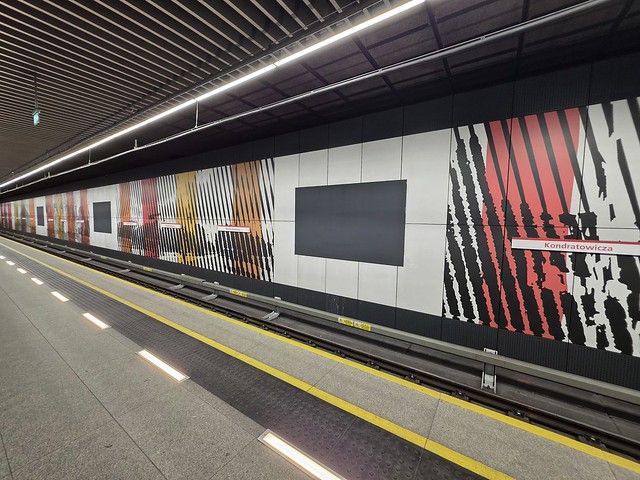
    And another colourful affair.

  • Warsaw – Metro System : C21 Bródno (Visiting Every Station)

    Warsaw – Metro System : C21 Bródno (Visiting Every Station)

    20250401_110313

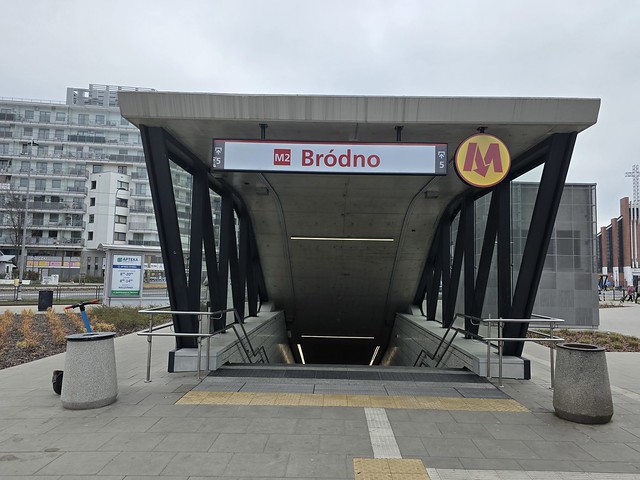
    The first in my attempt to visit every metro station in Warsaw and Bródno is located at the eastern end of the M2 line. It’s a relatively new station, with construction work starting in 2019 and they found the remains of two bison during the excavations. The station opened to passengers on 28 September 2022 as part of the M2 line extension.

    20250401_110535

    The Catholic parish was established here in 1990 and this rather impressive and modern looking church was constructed in the first few years of this century.

    20250401_113359

    The area is mainly residential blocks of flats built from the 1960s, which makes uncovering the history of this area a little more difficult as there’s not much that seems old. I can’t find any old maps of Warsaw which include this district, but I’m sure they’re out there somewhere….. This station is also intriguing as they’re opening in a few weeks the Metro Stage Theatre, which will operate at the -1 level of the metro station (the trains go from level -2) which adds some culture to arrangements.

    20250401_111550

    The big commercial centre in the area is Factory Annopol, one of the city’s largest factory outlet centres.

    20250401_112236

    20250401_112321

    20250401_112334

    As a random aside, I didn’t expect to see outlet shops for Trespass, Regatta and Mountain Warehouse. I don’t need any outdoor related items, but the prices here were rather favourable to say the least.

    20250401_113503

    The station was spotlessly clean and, as with other stations, they don’t seem to have any staff visible. Although everything is so efficient that it would be hard to see what they would need to do.

    20250401_113608

    The bright and welcoming station and an incoming metro train. There is plenty of seating, it’s spacious and the signage is clear throughout.

  • Warsaw – Metro System (Visiting Every Station)

    Warsaw – Metro System (Visiting Every Station)

    20250401_105753

    I obviously need a new project since I only have about 18 ongoing ones….. It’s not a great secret that I have a moderate obsession with trains, metros and trams, although coaches and buses usually annoy me, so I can be picky rather than randomly loving all forms of public transport. The evolution of metro systems also intrigues me, I’ve been on a couple of systems in China which were expanding at an insane rate, and on systems which don’t seem to be getting bigger any time soon.

    The Warsaw Metro system (Metro Warszawskie) is the only rapid transit system in Poland and it’s of a manageable size as they only have two lines. After many failed starts to the project, the first section didn’t open until 1995 and a second line has since opened. The first line goes from north to south and is the M1 (the blue line) and the second line goes from east to west and is the M2 (the red line). They cross at just one place, Świętokrzyska, and there are plans to extend the lines and also to open new lines.

    So my intention here is to cause mass excitement for my two loyal blog readers with no end of posts about the history of the network, but I’m also going to visit every metro station and try and find something interesting to write about all of them. To check this will sufficiently interest me, I’ve already visited eight of the metro stations and I haven’t lost engagement yet, so I think it’s safe to start posting this. I’m starting with the M2 line, but to get us going, here is a list of all of the stations. I’ll eventually hopefully link to all of them. And, yes, I should probably get out more if I think metro systems are this exciting, but there we go…. I’m not saying this will be fascinating, but it’ll keep me sort of quiet for a little while.

    OK, given all of that, here is a list of the currently operational stations on the Warsaw Metro system, based on the network status since the last openings in September 2022, grouped by line:

    M1 Line (North-South) – 21 stations

    • A01 Kabaty
    • A02 Natolin
    • A03 Imielin
    • A04 Stokłosy
    • A05 Ursynów
    • A06 Służew
    • A07 Wilanowska
    • A08 Wierzbno
    • A09 Racławicka
    • A10 Pole Mokotowskie
    • A11 Politechnika
    • A13 Centrum
    • A14 Świętokrzyska
    • A15 Ratusz Arsenał
    • A17 Dworzec Gdański
    • A18 Plac Wilsona
    • A19 Marymont
    • A20 Słodowiec
    • A21 Stare Bielany
    • A22 Wawrzyszew
    • A23 Młociny  

    M2 Line (East-West) – 18 stations