Category: King’s Lynn

  • King’s Lynn – The Wenns Chop & Ale House (2nd Visit)

    King’s Lynn – The Wenns Chop & Ale House (2nd Visit)

    King's Lynn Good Beer Guide Pubs

    I visited Wenns a couple of weeks ago for a flying visit, but since Łukasz and I were in King’s Lynn for the day exploring beer options, we decided to go for food there as well given how well reviewed it was.

    20230331_175233

    The kitchen wasn’t quite ready when I ordered, but I liked how the staff member took the order and explained they’d get it ready as quickly as they could. I was in no rush, which meant that Łukasz and I managed to get through about 15 games of Jenga. I forgot how exciting that is to play after a few drinks. We did actually try other games as well, but I couldn’t understand the rules and so we thought we’d just stick to Jenga, that’s pitched more at my level.

    My beer is the Battle Standard from Shadow Bridge which was a decent bitter from a smoky edge, it’s positive to see different breweries in pubs and this was particularly interesting as my friend Tony from the Hop & Vine had mentioned about this outfit which takes it name from being in the shadow of the Humber Bridge.

    20230331_180709

    The garlic and chilli chicken strips, cleanly presented and fortunately just with a hint of garlic rather than a smothering of the stuff.

    20230331_182857

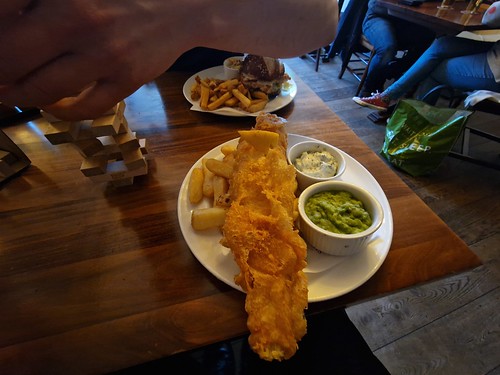
    Excuse Łukasz’s arm in the photo, but the fish and chips was one of the best that I’ve had in a fair while. The batter had a depth of taste and was drained so it wasn’t greasy, the fish flaked away and the portion was generous. The chips were suitably fluffy and I think that the mushy peas and tartare sauce were homemade, or at least that’s what they tasted like.

    I’m quite enamoured by this place, it’s really more of a continental type bar with a strong beer offering which has led to an entry in the Good Beer Guide, alongside a realistically priced and tasty food menu all with friendly service.

  • King’s Lynn – The Wenns Chop & Ale House

    King’s Lynn – The Wenns Chop & Ale House

    NB – I’ve revisited this rather lovely venue as I wanted to try the food.

    King's Lynn Good Beer Guide Pubs

    One of the advantages of the Good Beer Guide is that pubs listed in it can genuinely get more trade from that entry, not least myself today in the Wenns Chop & Ale House in King’s Lynn. I did wonder whether it would have a restaurant vibe, but it was genuinely welcoming to me when I wandered in asking for half a pint. Indeed, their web-site really doesn’t address this issue, it’s very much all about their hotel and restaurant with the chop reference also hiding that their menu is quite broad.

    The Wenns name is its historic name, although more recently it was rebranded to be Goldings. Its closure was controversial with allegations of staff not being paid, but regardless of whatever happened there, it seems better now that it has restored its former name. It’s in an historic part of King’s Lynn, opposite the church, a few minutes walk from the town centre.

    King's Lynn Good Beer Guide Pubs

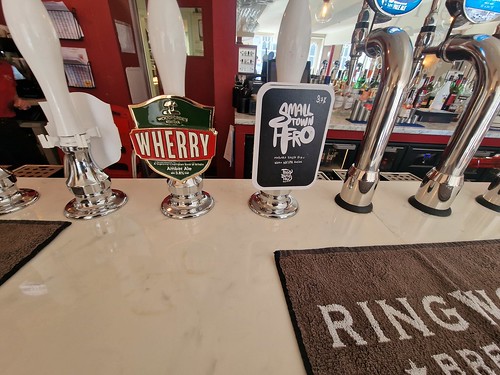
    Just the two real ales on at the moment, but they’re both local and I very much like the Small Town Hero from Three Blind Mice, which I’ve had before. It’s not an extensive selection, but it’s an entirely reasonable offering.

    King's Lynn Good Beer Guide Pubs

    The Three Blind Mice beer, which was reasonably priced and tasting as I hoped for, so all was well there. The reasonably priced element is important here, as if they were excessive with their pricing for the beer than I imagine it might have failed to satisfy the local members of CAMRA. I also understand that they have a happy hour taking place between 16:00 and 19:00 on Mondays to Thursdays, with £1 off the price of a pint.

    This was a comfortable and inviting pub, with the staff members being friendly and engaging. I like the informality and the food that was being served looked well presented and of a decent quality. It’s perhaps an unusual entry into the Good Beer Guide, but I’m pleased that it’s in the book as I would have likely otherwise overlooked it whilst meandering around the town.

  • King’s Lynn – South Gate

    King’s Lynn – South Gate

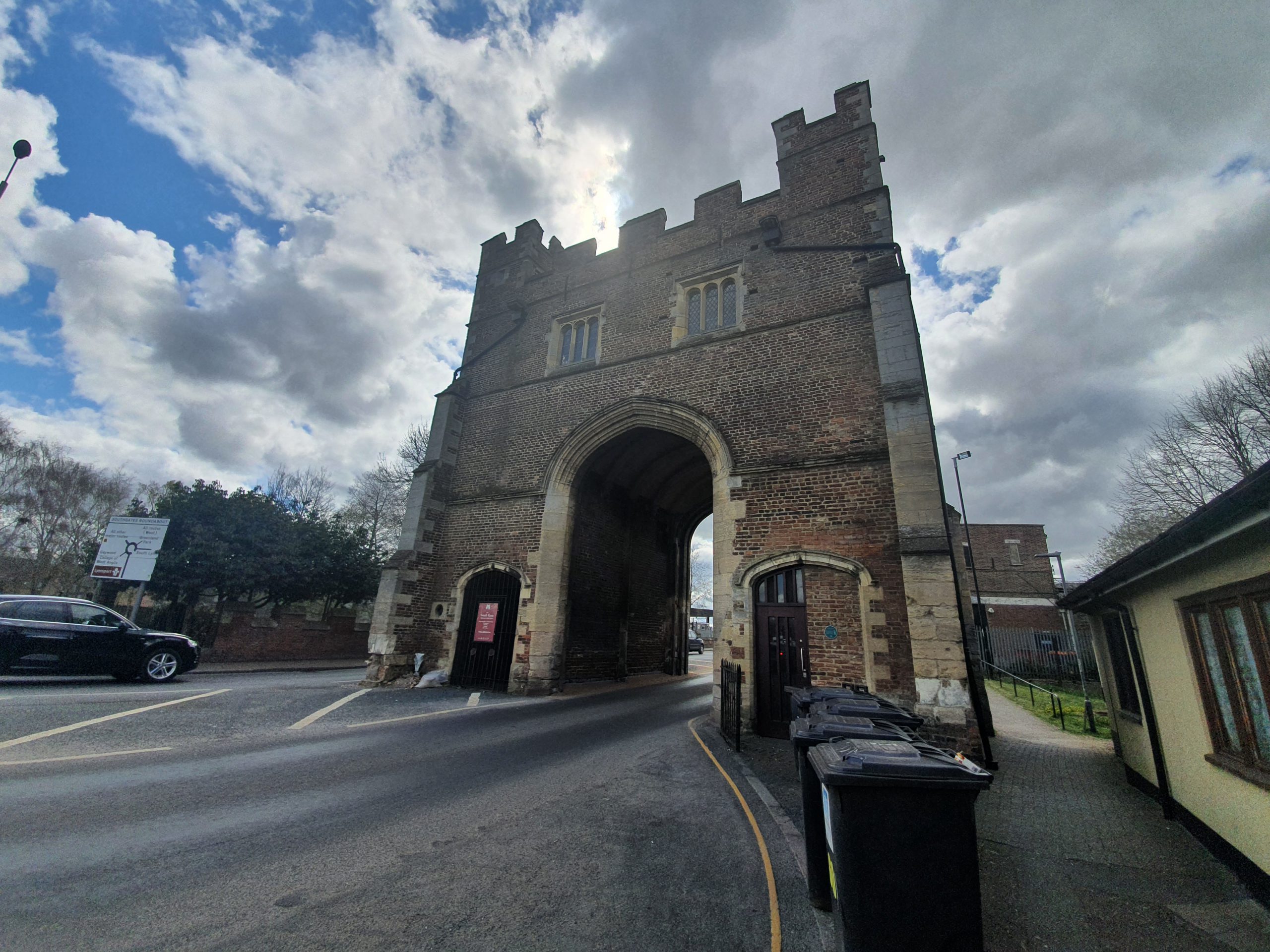
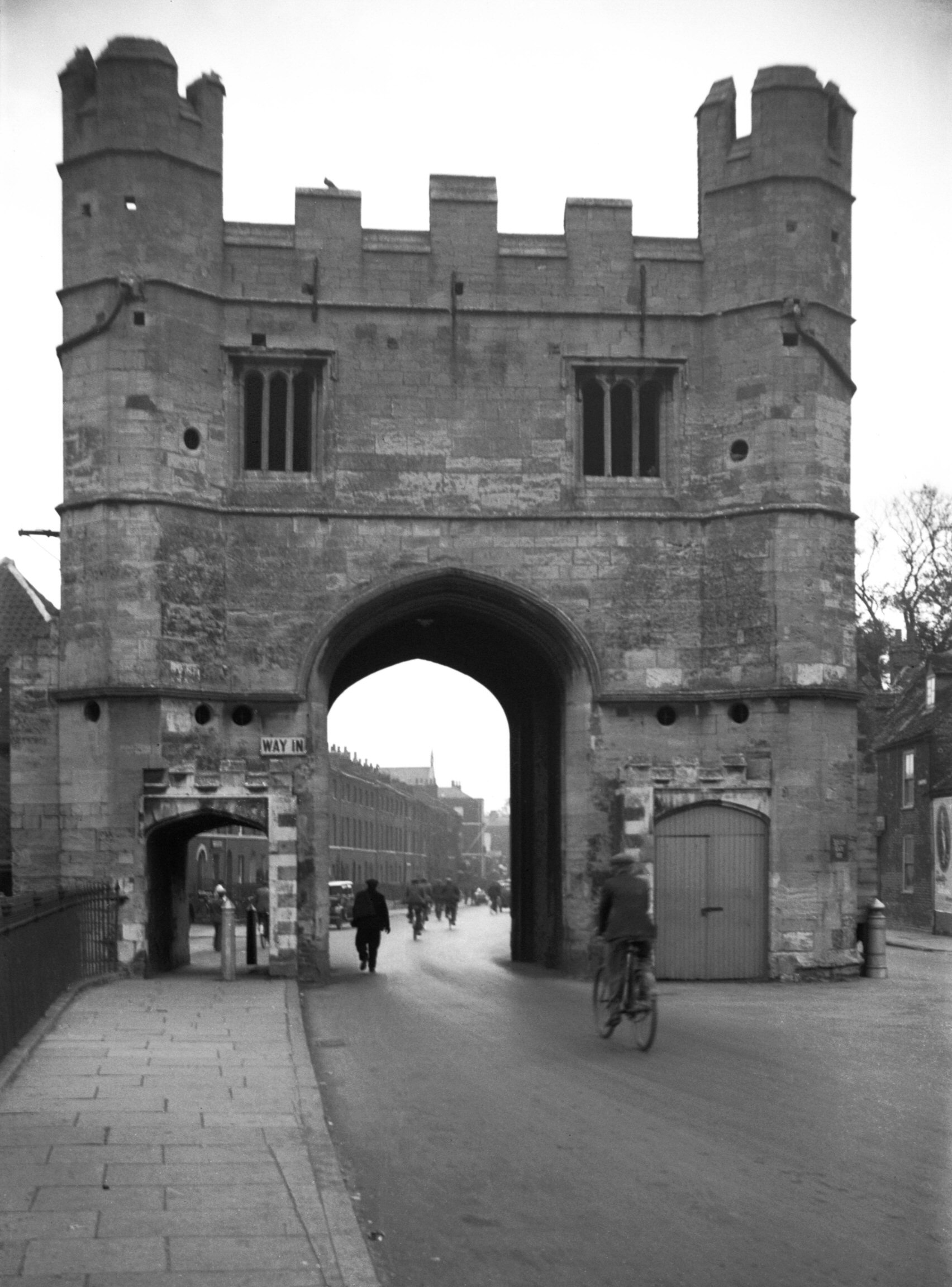
    I’ve been under this archway many times, but I’m not sure that I’ve ever walked down to have a closer look. King’s Lynn’s South Gate, which is Grade I listed, was first constructed in 1437 by Robert Hertanger as part of the town defences, although it also served as a useful way of tolling anything that came into Lynn. The structure is built in brick with a stone facade and the two pedestrian walkways weren’t knocked through until 1817 (the eastern chamber) and 1841 (the western chamber, which also saw the western staircase being removed). Since then, the two walkways have now been closed off and since 1899, traffic only now goes one way through the gate as another lane was added to the side.

    The South Gate is at the top-right of this map (click on the image to make it larger), marked number 11, and shows that there was a different road system at the time. At this time, there was no London Road (that was constructed between 1800 and 1804), and the main access point was down Southgate Street and Friars Street, which is now gated off to prevent modern day motorists using it as a rat run.

    I managed to stand in the middle of the road (well, sort of, most drivers notice that there is a big gateway in the way, so tend to focus their minds here) to get this photo of the gate, which I thought was rather brave of me. The room above the gate was used by the gatekeeper from the early seventeenth century, and likely before, and was long used as a private residence. There were plans to build a drawbridge in front of the gate early on during the Civil War, but this was never constructed. King’s Lynn was besieged in 1643, but the gate remained undamaged during the period of trouble which the town had. The role of gatekeeper was abolished in 1741, with the tolls having already been removed in 1721. The wooden gates were removed in 1795 when the threat of attack seemed remote.

    The west side of the gate and this fifteenth century structure was located on the same site as an earlier medieval gate, with the footings of that remaining today. Although the design makes it look like there was a portcullis, there isn’t sufficient space inside for one to have been present. George Plunkett took a photo of the gate in 1935, when pedestrians still walked through the side tunnels.

    A sign on the gate and this isn’t entirely accurate, as it’s older and there were just some renovations to the structure in 1520.

    The east side of the gate. A new roof was added in 1966, but that didn’t last long as an archeological survey of the site in 1982 decided that the older medieval roof should be restored and some of the western stairway was put back.


    A photo of the gate from 1891. The gate is accessible to the public during the summer months (or at least it is in normal times….) and hopefully I’ll get to go and see inside at some stage.

  • King’s Lynn – Globe Hotel

    King’s Lynn – Globe Hotel

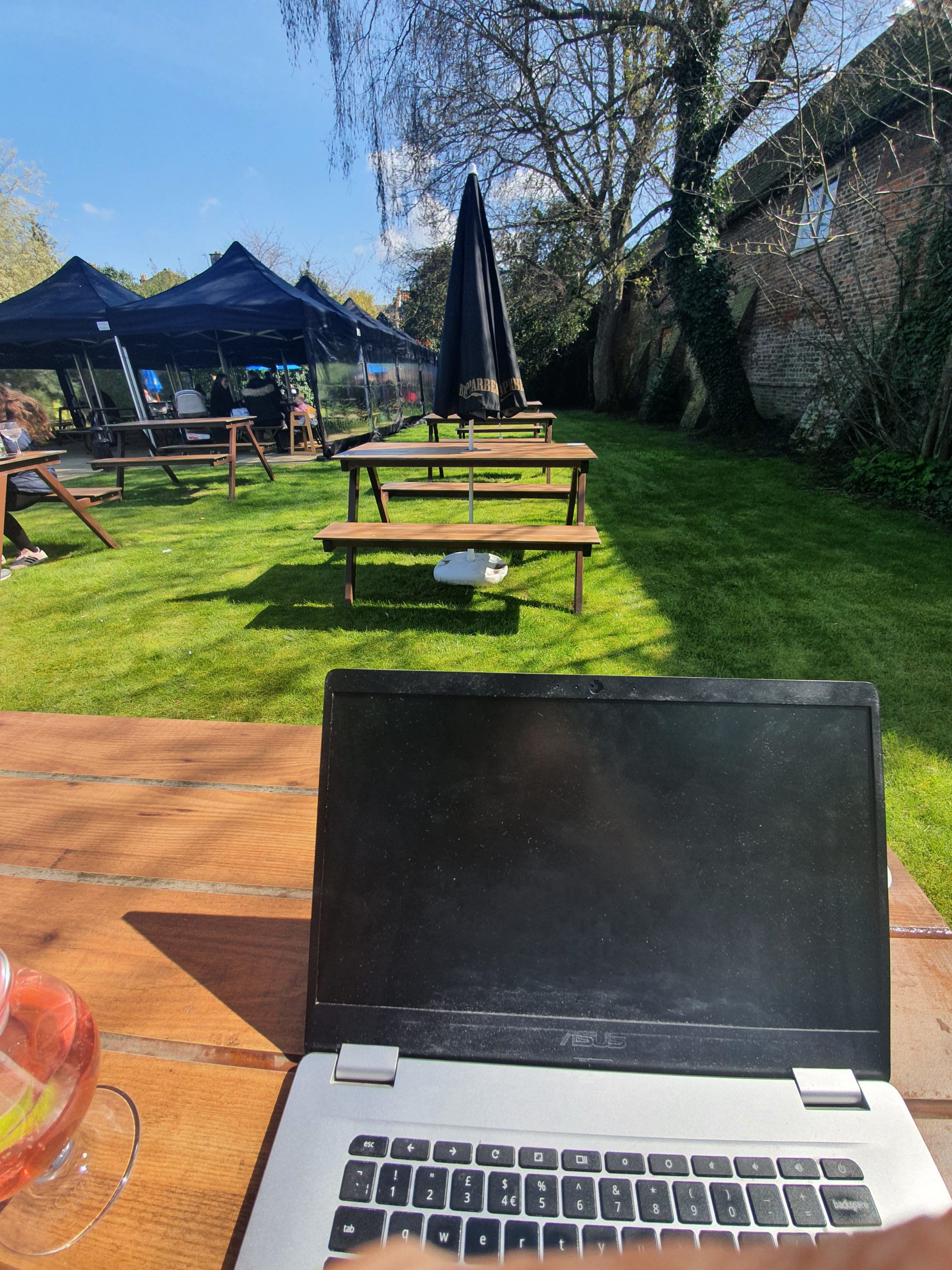
    Well, this is nice, some normality has resumed as ‘my office’ has returned to a pub beer garden. I’d rather be inside a pub if I’m being honest, but this is a perfectly decent compromise whilst the weather isn’t too bad. And it’s nearly May when pubs can fully open up again, or at least, they can hopefully fully open up again.

    The Globe Hotel is the JD Wetherspoons in King’s Lynn and it’s the only pub that I’m aware of at the moment in the town that’s open with a spacious beer garden. I don’t normally head this far down the beer garden, but there’s a pleasant view of the River Great Ouse for those sitting in this area.

    The view from the other direction and the pub has a very long beer garden and I was surprised that it wasn’t a little busier in the pub. I had rather expected there to be a staff member on the door managing the number of customers, but the beer garden can hold so many people that there was no queueing required.

    My drink arrived promptly and I was very sensible in just opting for a soft drink. A concern then occurred to me, which was that it was bloody freezing with the wind coming in off from the river. Also, a herd of seagulls were decimating the area and swooping down on tables, managing to smash two glasses during the process of lifting food from tables which were no longer occupied. This meant I slightly regretted ordering food, since I was in the middle of  Force 9 gale and was in danger of a pterodactyl attacking me. A staff member mentioned that customers have had steaks taken before, which doesn’t sound an ideal situation if I’m being honest.

    When my food arrived, the staff member helpfully carried it over to a quieter, and much warmer, part of the beer garden after I commented about my poor choice of table selection. The seagulls didn’t bother this section of the beer garden and it was also something of a sun trap, away from the hurricane area nearer to the river. It’s just a Wetherspoons burger meal, so I needn’t dwell on that for too long, but it was all fine and entirely met my expectations. Keenly priced, at the appropriate temperature and a reliable option.

    Service was all very efficient, the pub garden was kept clean (mostly due to the staff, although the seagulls were helping with food removal) and life feels just that bit more normal again. Long may this normality continue……

  • King’s Lynn – St James Chapel

    King’s Lynn – St James Chapel

    There’s not much left of St James Chapel and what remains isn’t accessible to the public, although at least the burial ground sort of survives. It was though once a substantial building and it was founded at the same time as the Chapel of St. Nicholas. It’s known as a chapel rather than a church, as it was intended to be used as a chapel of ease to the Church of St. Margaret. Work started on the chapel in the twelfth century, but because it was a chapel at ease, there isn’t a huge documented record from the medieval period.

    As an aside, there was a man named William Sawtrey, who caused a considerable scene in the late fourteenth century by espousing Lollard views. They were early reformers and caused something of a threat to the Catholic Church, which meant that the authorities in Norfolk wanted to stamp down on this rebellion (and there’s a pub called Lollard’s Pit in Norwich which is located by a place where many of these reformers were burned at the stake).

    Anyway, Sawtrey rejected Catholic saints, opposed pilgrimages and didn’t want images to be venerated. This was a bit of a problem for the church as Sawtrey was the priest at St. Margaret’s Church in King’s Lynn, so Henry le Despenser was called in as he was the Bishop of Norwich. Despenser was not really the kindest of men, he put down the Peasant’s Revolt in Norfolk in a bloody style, he maintained privilege and he also tried to destroy those who wanted reform of the Catholic Church. He is buried in front of the high altar of Norwich Cathedral, which might annoy him since the protestant reforms he fought against eventually took place and his body is now left in a Church of England building.

    I digress though. Despenser sent Sawtrey to prison, but he was released as long as he condemned the Lollard movement and he had to do this in front of the Chapel of St. James (which is why I’m telling this convoluted story….). Sawtrey apologised to God in the churchyard of the chapel on 25 May 1399 and he promised Despenser that he would never again challenge the authority of the Catholic Church. To cut another long story short, Sawtrey just went to London instead to preach his Lollard views and he was executed in March 1401.

    Moving forwards to the Dissolution of the Monasteries though, as this period was well recorded, and the Reformation had a large impact on the town of King’s Lynn, not least as it had been known as Bishop’s Lynn, but also as numerous monasteries and religious institutions were closed down, including this chapel.

    On 17 December 1544, the plate belonging to the chapel of St. James was flogged off and the money was used to strengthen the town walls against the threats of the sea. On 2 February 1548, the authorities announced that the building would be taken down and the bells were sold in 1550, with the money being used to buy ordinance and artillery to defend the town. Work started to take down the stone, wood and lead, but it was agreed locally that the chancel area would remain standing and would be covered in tiles.

    In 1560, the Lords of the Council came to have a little look at what arrangements were taking place in Lynn with regards to the chapel. Probably not very efficient ones, as the town corporation got quite grumpy at this situation and told them to clear off. Work continued slowly and in 1568 it was decided that the wealthy Duke of Norfolk could have 20 loads of freestone if he wanted it, and because he was so wealthy, the corporation wouldn’t charge him for that. Nothing really changes….

    A fair sum of money was spent on turning the building into a workhouse, which opened on (or was decided on) 1 June 1582, a purpose which the site was to retain for a few hundred years. In 1597, when the plague hit King’s Lynn, it was also the location where the ill were sent, perhaps with not much concern for those already in the workhouse.

    From the collections of the British Library

    In the 1680s, what remained of the medieval structure was turned into a new workhouse building which was designed by Henry Bell, and it’s this that can be seen in the above image. Between 1805 and around the 1870s, the area near to the chapel was brought back into use as a burial ground, but the gravestones were collected together in 1903 and the space was turned into a park.

    The central bay and the tower of this building collapsed in August 1854, which wasn’t entirely ideal. The incident came to the attention of the national media and it was reported that:

    “About half past 11, the whole central tower came down with a tremendous crash, distinctly heard throughout the town. Scores of labourers at once set to work clearing away the debris as far as possible, in order to extricate those who might be below, it having been reported that many people had been killed. Fortunately, however, this turned out to be incorrect. The girls were at church at the time and the boys sitting in front of the building, to the right of the tower. A few minutes before the building fell in, Mr. Nelson, the governor of the workhouse, attended by Mr Andrews, went to the clock room to see what was amiss. Whilst they were there the fall took place, and they were carried down amidst an immense mass of material. These two gentlemen, it was concluded, were inevitably killed, with several old men who could not be found. The escape of several of the inmates was almost miraculous”.

    There’s a story about someone kicking the clock which caused the whole structure to fall down, but none of the press at the time seemed to mention that, so I’m not sure where that information comes from. Other reports note that just one elderly man died, which was primarily as he refused to get out of bed. A new workhouse had to be constructed quickly and this opened on Extons Road in 1856.

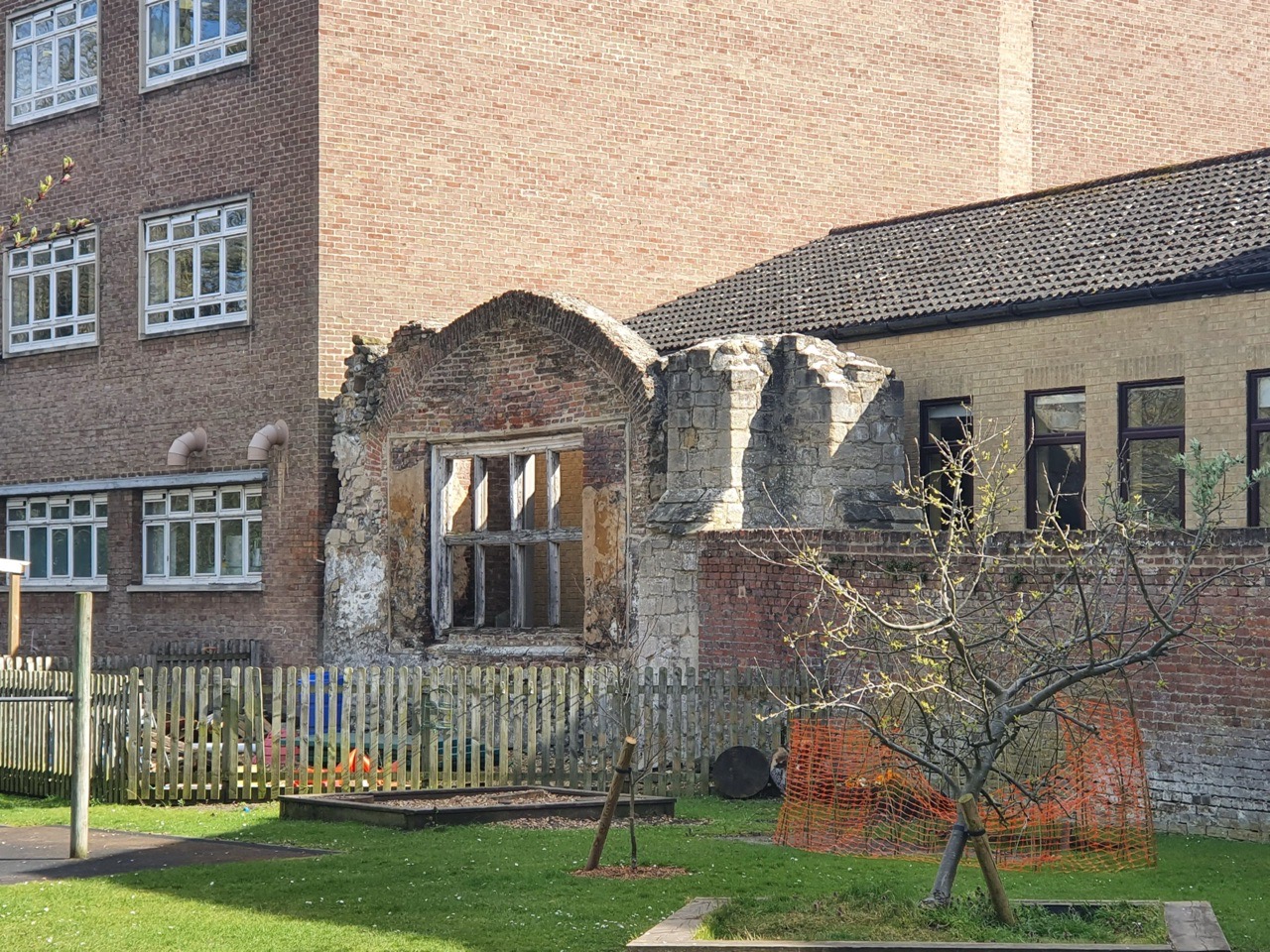
    What was left of the structure was mostly demolished in 1910, with just a small section now remaining. The central part of the remaining structure with the bricks and large window is from the sixteenth century, with the medieval stone of the earlier chapel being visible on either side of that.

  • King’s Lynn – St. James Chapel Burial Ground and a Cluster of Gravestones (Thomas Barlow)

    King’s Lynn – St. James Chapel Burial Ground and a Cluster of Gravestones (Thomas Barlow)

    This grave belongs to Thomas Barlow and is located at the relocated burial ground of St. James Chapel in King’s Lynn.

    I like this gravestone as it actually offers some information about Thomas, namely that he was a bookseller on the High Street. It’s a shame more graves don’t have a few more details such as this, or, even photographs as is much more common in some mainland European countries. Although I recognise that since Thomas was buried in the early nineteenth century that a photograph would be more challenging, but I meant for more modern burials. Anyway, I digress.

    Thomas was born on 18 March 1788 and christened at the Church of St. Margaret with St. Nicholas on 31 January 1789 and he was the son of William Barlow and Mary Barlow.

    Thomas opened his bookshop on the High Street in 1821 and advertised this in the local press. This made me wonder where the shop was and there’s a clue in the advert, as it mentions a “Mr. Servante”. He owned a linen shop on the High Street and this had previously been occupied by Robert Redwell, with this freehold being advertised in the local paper. The advert for the freehold of the property mentions that the premises came with a “dwelling house, warehouse, stable, yard, garden and shop” and that they were “located directly opposite Norfolk Street”. That, I think, puts it at somewhere like 74 High Street, where Bonmarche currently is.

    Thomas died on 2 May 1823 and was buried on 7 May 1823, but, unfortunately, the death wasn’t announced in any local press that I can find, so I don’t know the cause of why he died at the age of just 30.

  • King’s Lynn – St. James Chapel Burial Ground and a Cluster of Gravestones

    King’s Lynn – St. James Chapel Burial Ground and a Cluster of Gravestones

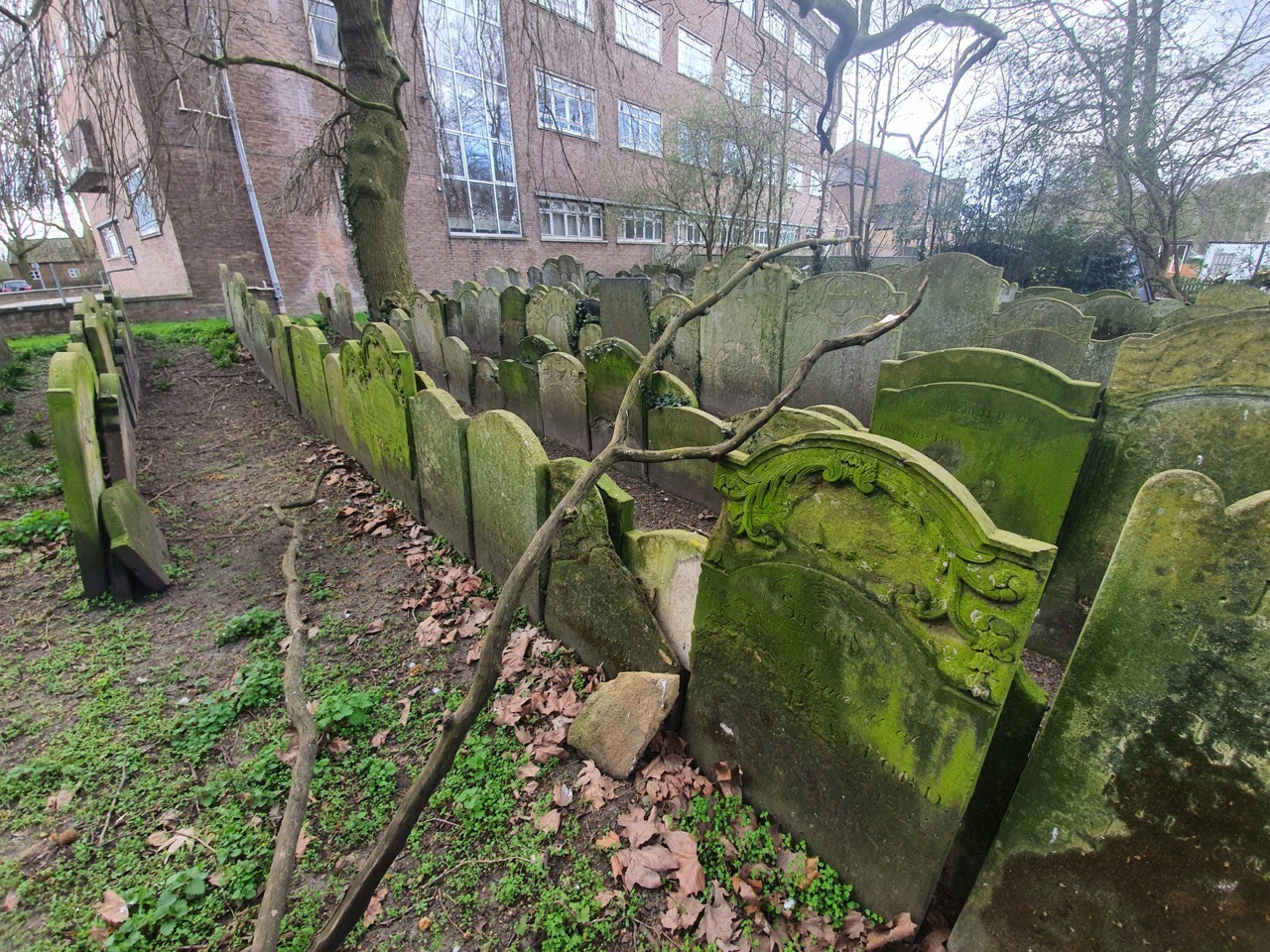
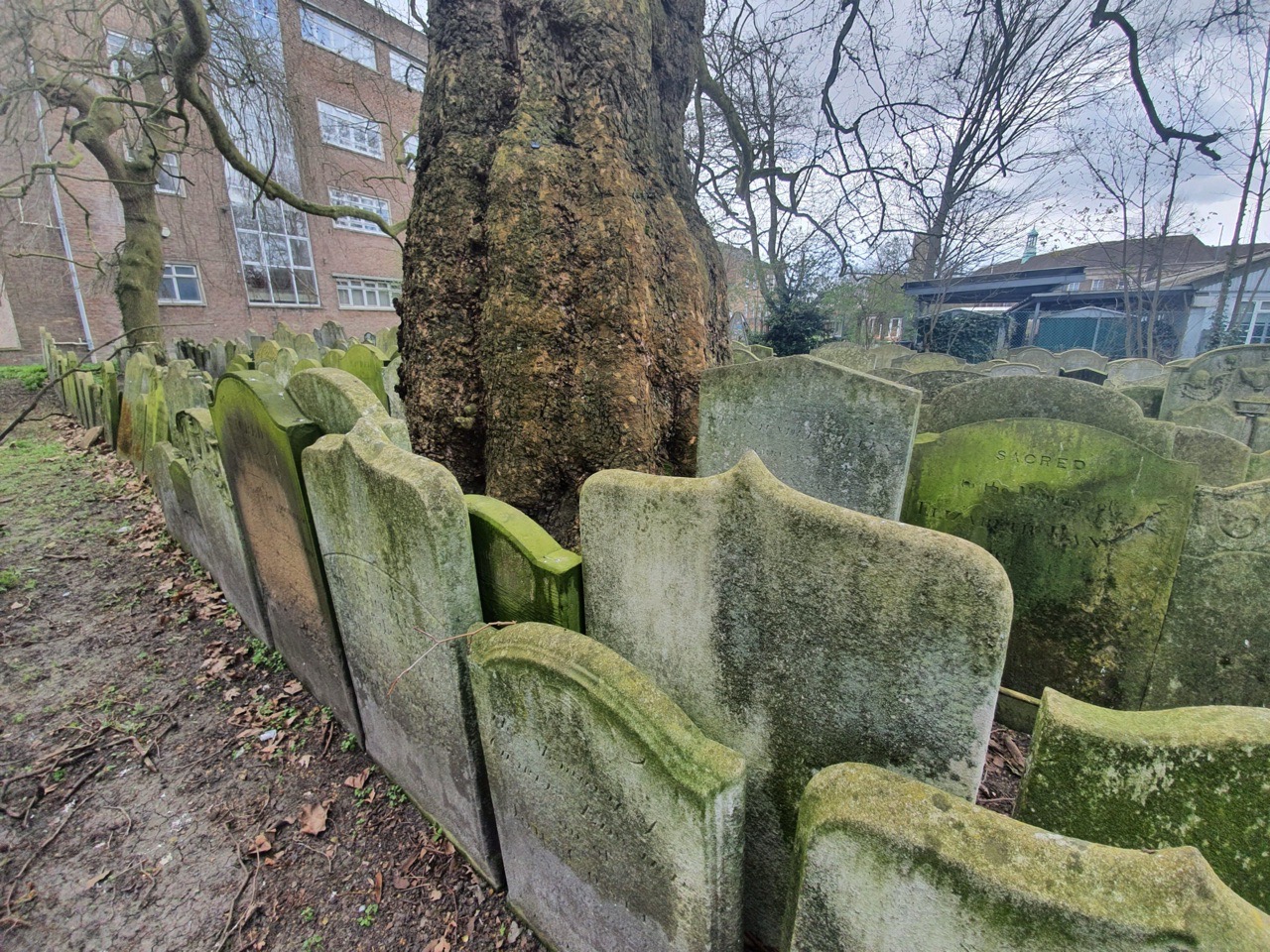
    Until 1903, this was the graveyard of St James Chapel (which had long since fallen into disuse as it was closed during the Reformation), although it had been closed to burials for some years. The area had been opened to burials from 1805, but there were also some medieval burials from when St. James chapel was still operating. It was decided that it would be beneficial for the town to use this space as a public park, although the Mayor added that it was primarily for the older population to relax and not for younger people to play in. I suspect that the town didn’t dislike younger people, they just felt that there was already sufficient provision in King’s Lynn for that.

    The gravestones were all bundled up and shoved in one corner of the churchyard, something that I was surprised was seen as acceptable in 1903. However, after reading newspaper reports from the time, it makes a little more sense. It transpires that, for whatever reason, the graves had already been moved about a bit before, so they had lost their original placement. Given that, the council thought that moving them again wouldn’t be problematic, but they promised to ensure that the stones would be treated with care and respect.

    The council also pledged to ensure that details of each of the graves were to be kept so that individuals were able to cross-reference the old and new locations. This documentation was to be placed in the town clerk’s office and it was felt that this care would be useful to the population of King’s Lynn and ensure that no information was lost in the move. I’m not really that keen on moving gravestones from where they were originally placed, but this action probably ensured that the stones remained better preserved since they’re all shoved close together and protected from the elements.

    Anyway, some more photos, and I’ve got some (well, a lot) of photos of individual gravestones as some looked quite intriguing and might interest me to write about in the future. The stones are, I think, all from between 1805 and around 1870, which is when the churchyard opened and closed.

  • GeoGuessr (King’s Lynn Version)

    GeoGuessr (King’s Lynn Version)

    I know King’s Lynn reasonably well, but there’s still clearly much history that I’ve yet to discover. I’m using my GeoGuessr tactic of getting the web-site to suggest five random locations in the town and then visiting them. I’m not claiming it’s akin to climbing Mount Everest in terms of excitement, but it’ll do for the moment. Also, on this one, and unusually, I visited the locations in order that GeoGuessr presents them. The five random locations generated are in the screenshots above, and I used a map of only central King’s Lynn, which had a total of 71 possible places.

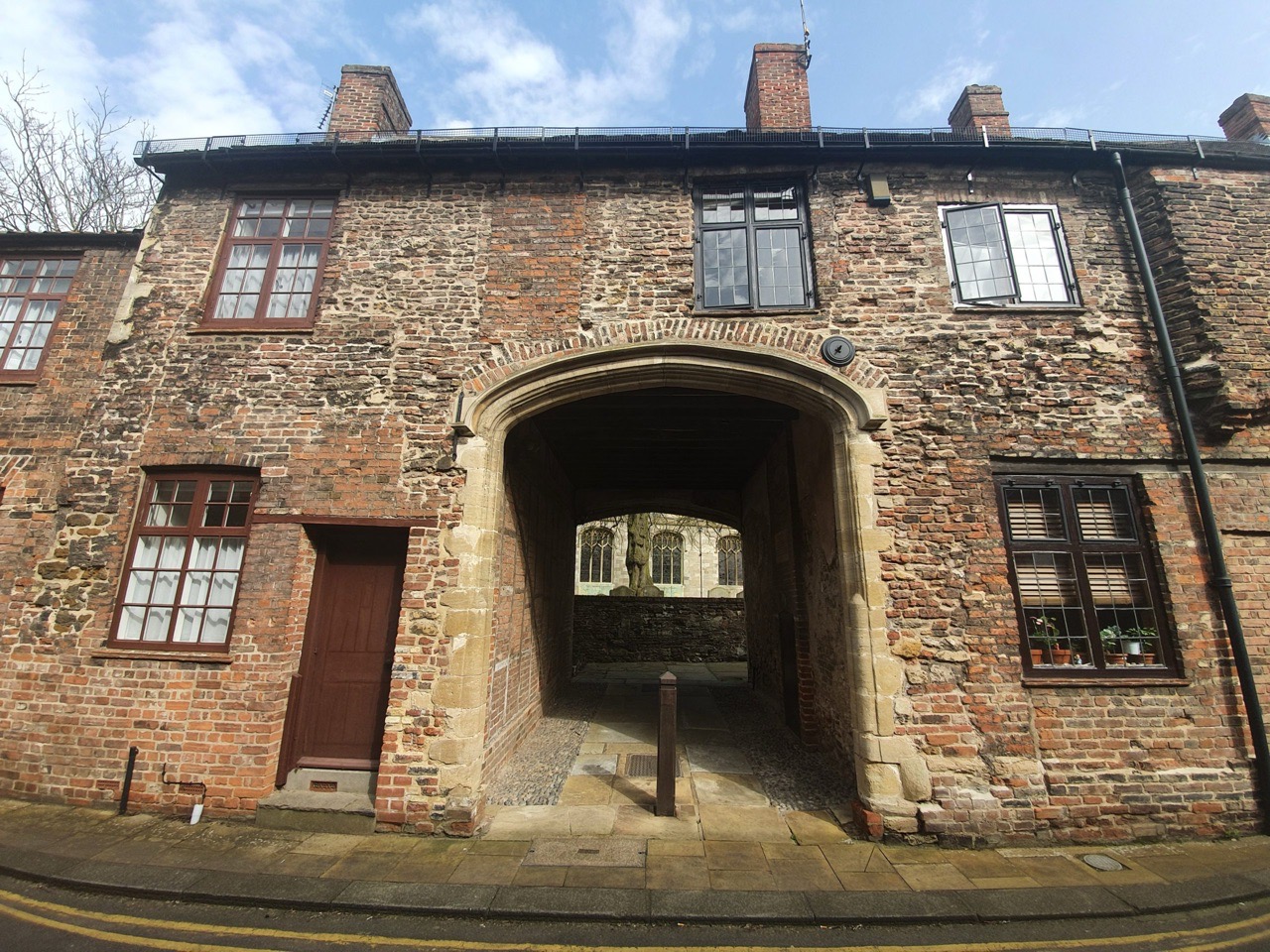
    I started off in the town centre, near to Greggs, where I’d just accidentally purchased a chicken bake. Above is White Lion Court, with its post-box located just inside the arch. It’s named after the White Lion pub which once stood on Norfolk street, with that archway now also leading through to Vancouver Court and Burtons Court.

    And here’s the first location, the High Street of King’s Lynn. All very decadent.

    The walk to the next location went by numerous historic buildings, this one is 2 St. Margaret’s Place, which is where Sparrows Hall stood. It was rebuilt in 1513 and has since been lived in by merchants, doctors and a vicar, although the frontage to the building is from the early eighteenth century. This is Grade II listed and the record notes that many internal features remain in place, including eighteenth century doorways and frames.

    A short distance down the road is St. Margaret’s Vicarage, which was built for a wealthy merchant in around 1821, but taken over by the Church of England in 1912 to be used as a vicarage. It’s a Grade II listed building and the record notes that a few internal features remain, including some wood panelling and section of plaster cornices (which are apparently uninteresting). Before this residential building was constructed, there was a seventeenth century building here that the Burney family lived in, of which perhaps most notable was Fanny Burney.

    The stretch of wall doesn’t look overly exciting, but there’s a plaque with information attached to it noting that one of the people who lived here was William Claiborne (1600-1677) and his son went off to the New World, becoming the first Surveyor of the Virginia colony in 1621.

    This is St. Margaret’s House which was built in around 1755 for Edward Everard (1699-1769). It replaced the Hansa Merchant’s House which were former warehouses and office buildings relating to the Hanseatic League. The current building is once again called Hansa House, although I’m not entirely sure what it’s used for now, I think it’s rented out as offices and is also licensed to hold weddings.

    Priory Lane, which I think retains something of a medieval feel. OK, imagination is required as there’s a tarmac road with double yellow lines on it, but otherwise, it has that feel.

    This is the site of St. Margaret’s Priory, which stood here between around 1100 and 1538, and was attached to St. Margaret’s Church. The buildings along here date from the fourteenth century and they were restored in 1975, with the Duke of Edinburgh popping along in early July 1975 to formally commemorate the work.

    This was a complete surprise to me, I have walked nearby to it before and never noticed it. This is the value to me in doing GeoGuessr in this way, it means that I have to walk to places I wouldn’t have thought about going to, thereby actually noticing things….

    It’s the Jewish cemetery in the King’s Lynn, although unfortunately it’s all locked up and so I had to point my camera through the bars. It’s in a walled off area of its own and I can see why they want to protect it. Known as Millfleet Burial Ground, it was used by the community of Dutch Jews who lived here between around 1750 to 1846.

    All Saints Church, which is located within a small housing estate and seems to be the geographical hub of the community, although I’m not sure if it’s the spiritual hub. It’s the oldest parish church in King’s Lynn and has been here since at least the eleventh century, although the current building is primarily from the fourteenth and fifteenth centuries. There was an anchorite cell here and there looked like some interesting structural elements to the building, not least with the tower that has fallen down. I was hopeful of seeing inside when I saw that the outer doors were open, but, unfortunately, the inner doors were locked. I note that others have also struggled to gain access, which is all rather unfortunate.

    I couldn’t find the exact spot for the second location and wasn’t overly concerned, it was near enough.

    This library is one funded by Andrew Carnegie, a wealthy man who spent much of his money on building libraries in numerous countries, including the United States, the UK and Canada. In the end he funded 2,500 libraries, a remarkable contribution to the state of world literacy, and he was here in person on 18 May 1905 to open King’s Lynn’s library.

    I haven’t quite worked out the origins of this street name (indeed, I haven’t worked the origins out at all), but this sign is on the road that leads into the bus station.

    The third location, which is on Norfolk Street, very near to where I started off.

    There are several of these older street signs in King’s Lynn, and the traces of an even older one underneath.

    My fourth location was back where I had just come from, so I returned via St. James’s Park, and I hadn’t realised just how big this park was. This section was a churchyard which was turned into an area of parkland at the beginning of the twentieth century.

    The park was reasonably busy, but it’s such a large space that it didn’t feel particularly congested. On the right of the above photo is Red Mount Chapel. There wasn’t much litter about either, so it wasn’t like the scenes I’ve seen in newspapers of how hordes of locals have descended on parks and left their rubbish behind.

    And this is Red Mount Chapel, more formally known as the Chapel of St Mary on the Mount, and its been here since 1485. It became used as a stop-off for pilgrims who were walking to Walsingham, but following the Dissolution of the Monasteries it was taken over by the town council. It rather lost its religious purpose after that, with the signage at the site noting that the council started to dismantle it and the structure has since been used for water storage, as a gunpowder store, as a study, as an observatory and as a stable. It has been restored recently and looks in good shape externally, although I can’t imagine there’s much original left inside.

    The Gaywood River meanders through the park.

    I never knew that this was here either, it’s the Guannock Gate, which was part of the town’s defences. These defences were never really tested during the medieval period, it was only during the Civil War that they became useful, and they’ve never been breached. Most of the defences were removed in the nineteenth century, including some big chunks as they were in the way of the railway when it came to King’s Lynn. This section is more in keeping with an ornamental garden, to interest those promenading around the park.

    Talking (or writing) of the promenading, this is the Broad Walk, which was established in 1753 to allow locals to have somewhere to walk and exercise. However, the owners didn’t want the riff raff walking through here, so a gatekeeper was installed to ensure that only the wealthy and fashionable classes were allowed to walk in this area. Important to maintain high standards….

    A wooden statue along Broad Walk.

    Framingham’s Hospital, which is no longer in use, but was originally constructed as almshouses in 1677, although the current structures date to 1848.

    The fourth location, which was on London Road and not that far from the second location.

    A former school along Millfleet.

    This is very odd, a Biedronka store in King’s Lynn, which doesn’t seem to fit the normal look of the Polish chain. I like this chain in Poland, as it tends to be cheaper than Aldi and Lidl, but this one seems a more unique set-up and I’m not sure exactly what link it actually has to the Biedronka in Poland.

    This building was constructed in 1859 as the Union Baptist Chapel, designed by RM Smith. It was turned into the town’s museum in 1904, an innovative way to use the building, and it has continued to be used for that purpose.

    The fifth location was King’s Lynn bus station, which concluded this little adventure. I accept that this was hardly the most challenging of walks in terms of the length, but I did find more history than I had expected simply by heading off in random directions. There were numerous areas I didn’t get the chance to visit, so I might have another go at this little exercise next week. How lovely….

  • King’s Lynn – Book Bench Project

    King’s Lynn – Book Bench Project

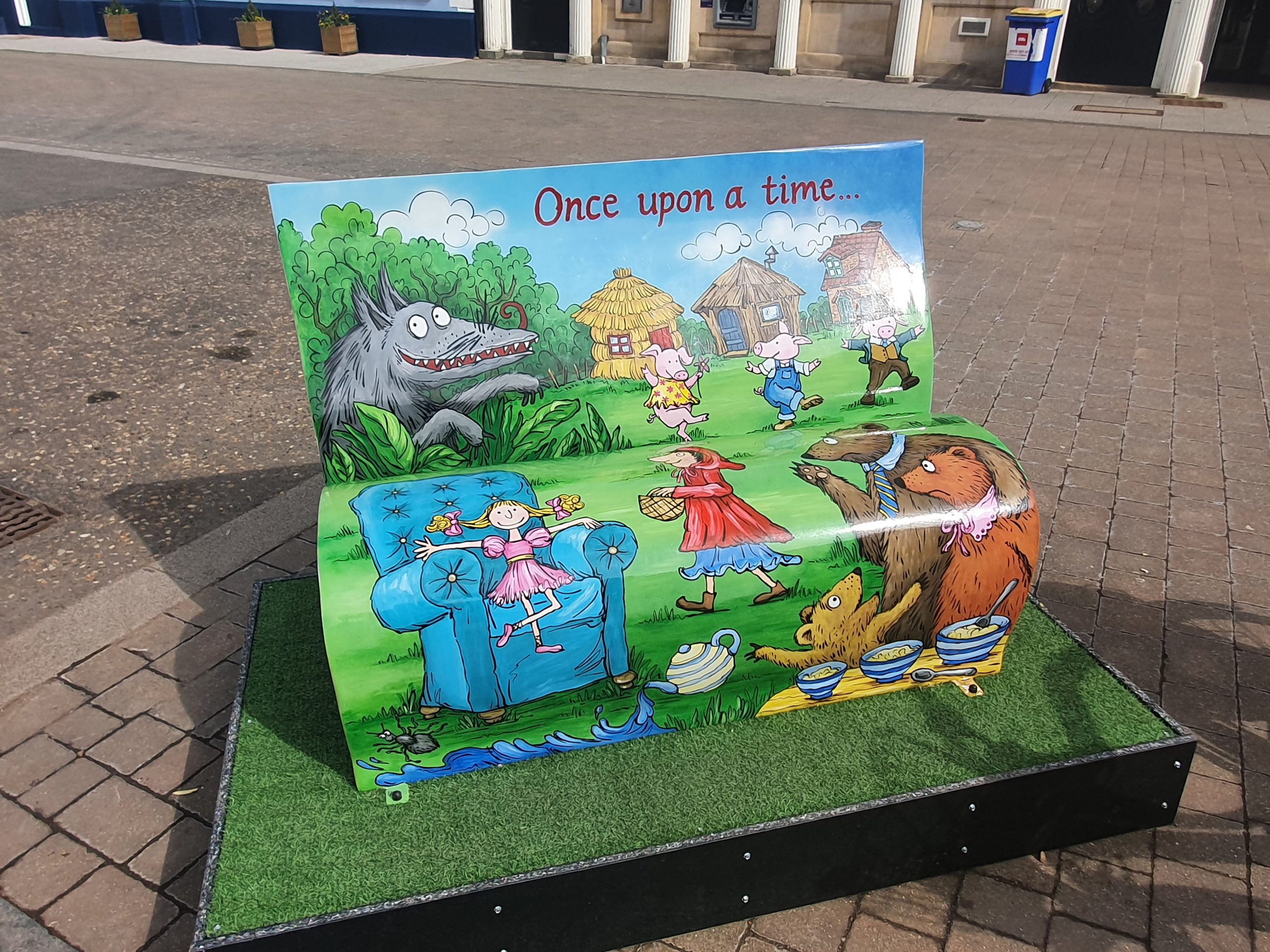
    Well, this is quite marvellous, a project which has put seven benches around King’s Lynn with the theme of books. Indeed, it’s so popular that it’s been hard to even get these three photos, as so many families are walking around collecting photos of their kids on all the benches. And, I’m obviously all for projects which encourage children (or anyone) to go walking.
    The organisers of the trail said:

    “The trail consists of seven benches, supplied by Wild in Art, who have produced trails in this country and abroad. These benches are already decorated by artists, and will be temporarily placed in landmark locations around King’s Lynn. A further three benches have been decorated by local artists with designs submitted by local young people and these will remain as permanent features in King’s Lynn, Hunstanton and Downham Market.”

    The only downside that I’ve noticed on several of the benches is that people think that they can sit on them to relax. They can in theory, it’s just that families keep coming by wanting photos so they have to move. But what a wonderful thing it is that families want to engage in a book-related project, and I saw some kids look excited as they ran towards them having spotted them.

    For those who want to go and catch them all (or whatever that Pokemon phrase thing is), they’re at:

    The Saturday Market Place

    The Bus Station

    Outside the Majestic Cinema

    Clifton House

    Red Mount Chapel

    King’s Lynn Railway Stations

    King’s Staithe Square

    There’s more information at https://www.storiesoflynn.co.uk/explore-a-book/ and I am impressed at this community project. Most lovely.

  • King’s Lynn – George Vancouver Statue

    King’s Lynn – George Vancouver Statue

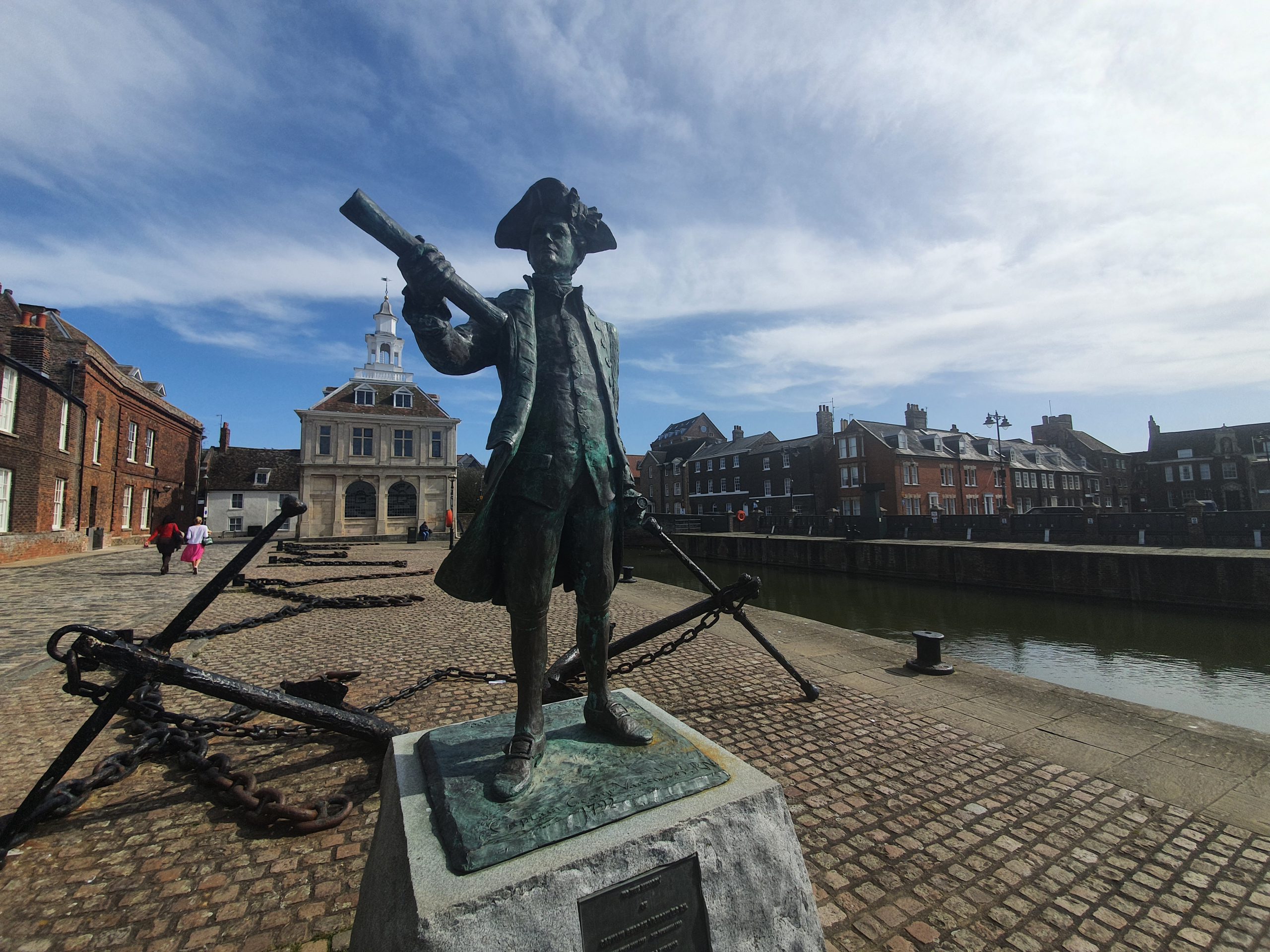
    George Vancouver (1757-1798) was born in King’s Lynn and was the sixth and youngest child of John Jasper Vancouver. The legacy of Vancouver today is not insubstantial, he has a major city in Canada, a large US city, two mountains and a shopping centre in King’s Lynn all named after him. I’m not sure which he would have been most thrilled at, but I do wonder what his family would have thought if they could have known how widely their name has been used.

    Becoming an apprentice in the navy, Vancouver served on ships captained by James Cook and was on the ship when Europeans first saw the Hawaiian islands. He also fought during the Battle of the Saintes, part of the American Revolutionary Wars, which was a little bit of a disaster for the French navy and quite a success in a small way for Vancouver himself.

    © The Trustees of the British Museum

    From the ‘A Voyage of Discovery to the North Pacific Ocean’ book written by Vancouver, this is Mount Rainier which was named after his friend, Admiral Peter Rainier. This was part of the expedition that was led by Vancouver, when he commanded HMS Discovery and HMS Chatham, which set sail on 1 April 1791 and didn’t return until September 1795. That must have been some cruise… It also seems that Vancouver managed not to annoy the residents of the areas that he visited and was also respectful of the natives and their lands. He seems to have been quite a forward thinker, and also a popular man from the accounts that I’ve seen.

    Vancouver died on 10 May 1798, perhaps not getting the praise that he deserved for his navigational efforts. Although, he did get quite a lot of stuff named after him, including the shopping centre in King’s Lynn, so he hasn’t been entirely forgotten. He was buried at St Peter’s Church in Petersham, near London, and his grave is now Grade II listed. It’s notable though that the press made nearly no mention of his death, his legacy was forgotten very quickly and didn’t really strengthen again until the twentieth century.

    So, with this great heritage and something that King’s Lynn should be rightfully proud of, it was no surprise that many locals though Vancouver Quay would be a fine name for the new development that was being planned in the harbour area of the town. West Norfolk Council disagreed, they liked Nelson Quay, because Nelson visited the town once. Nelson has absolutely no other connections with King’s Lynn, but this little issue hasn’t deterred the council. I liked the comment from a local community group who said “they may as well call the project John Glenn Quay – he must have flown over the borough at some stage of his space exploration.”

    Anyway, back to the actual sculpture rather than my musings about the local council, which frankly aren’t entirely relevant here. The statue was placed here in 2000 and it was designed by Penelope Reeve, with the plinth made of stone from the Pacific West Coast of Canada.