Category: Happisburgh

  • Happisburgh – St. Mary’s Church

    Happisburgh – St. Mary’s Church

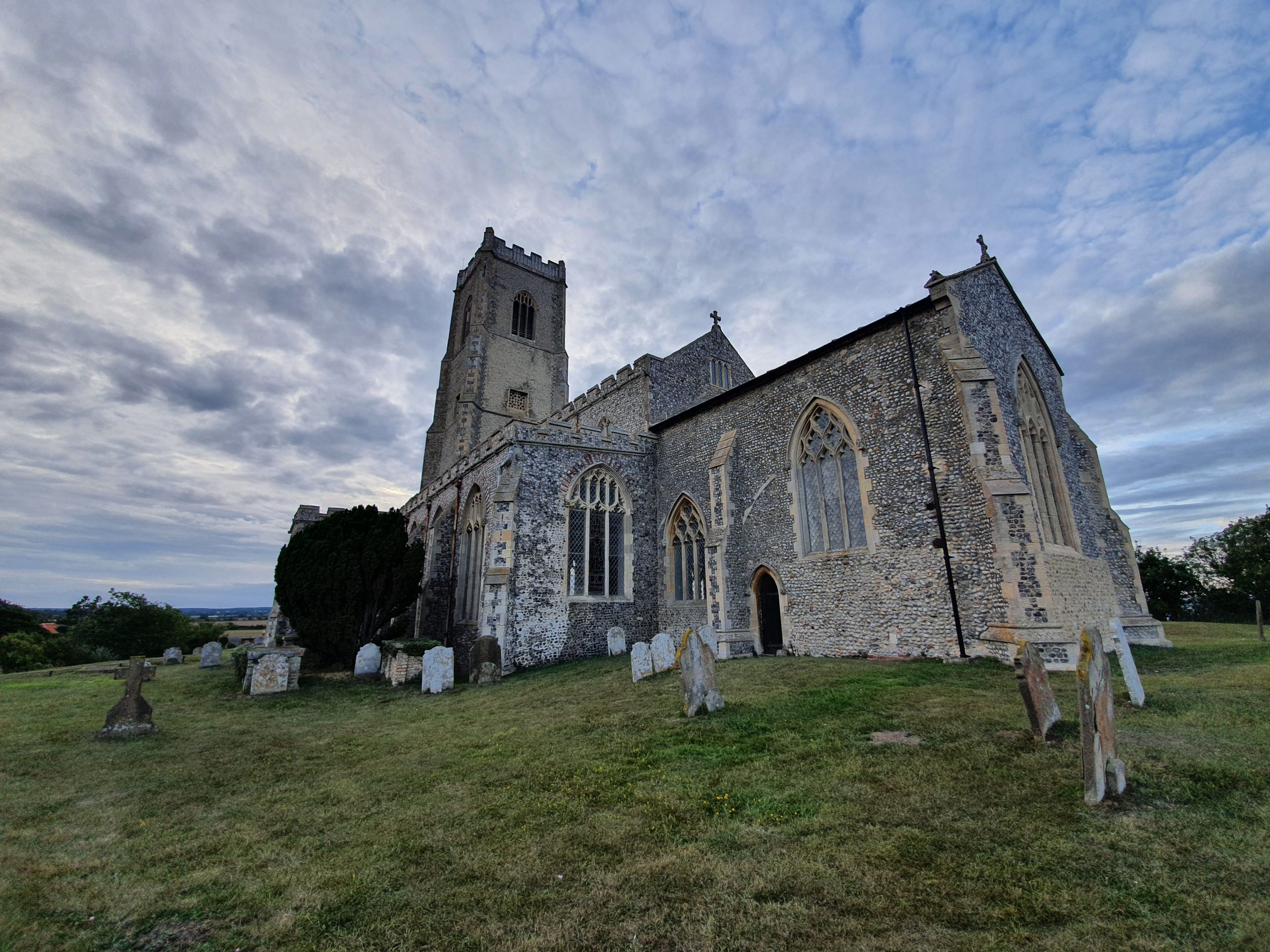
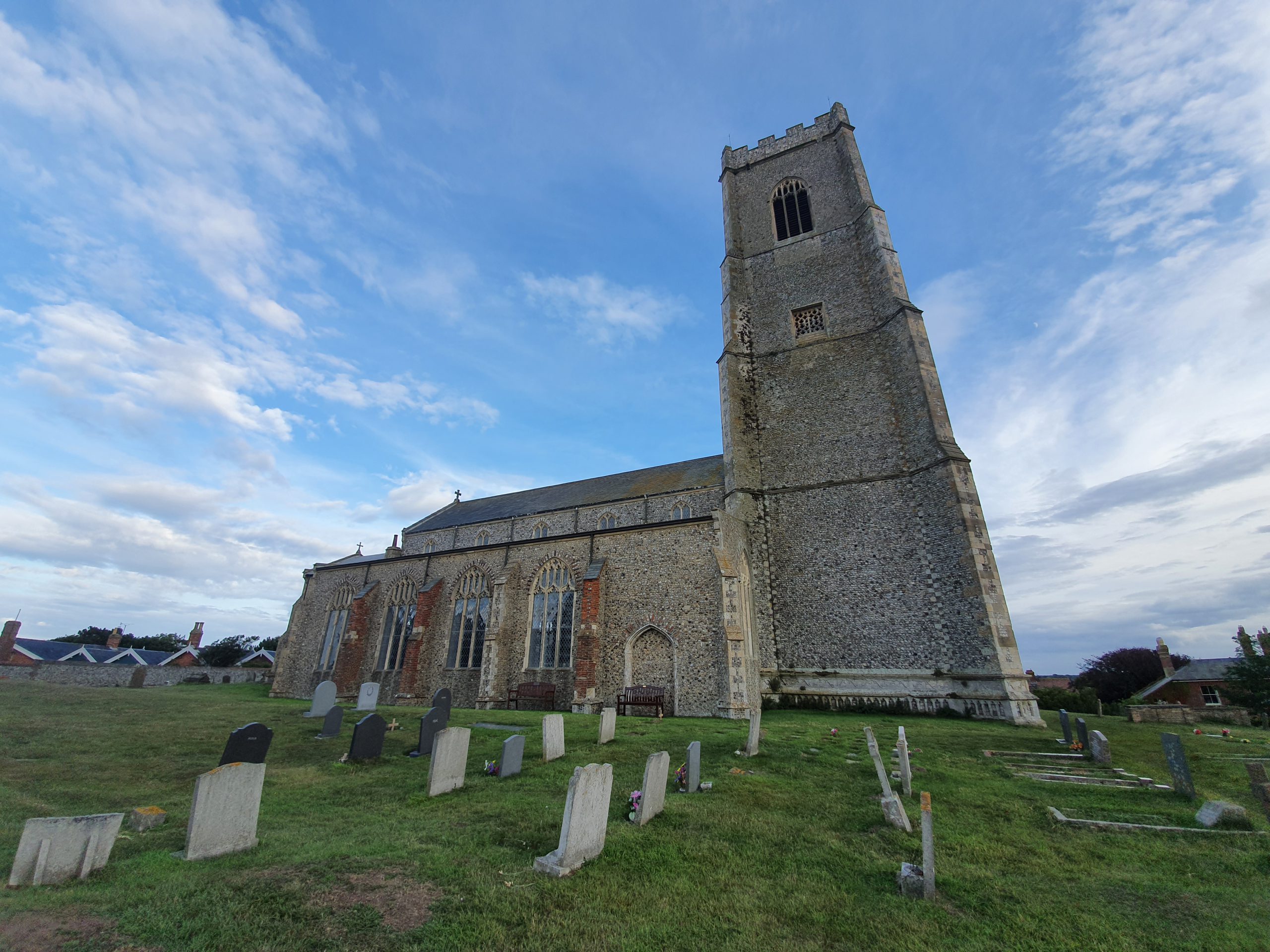
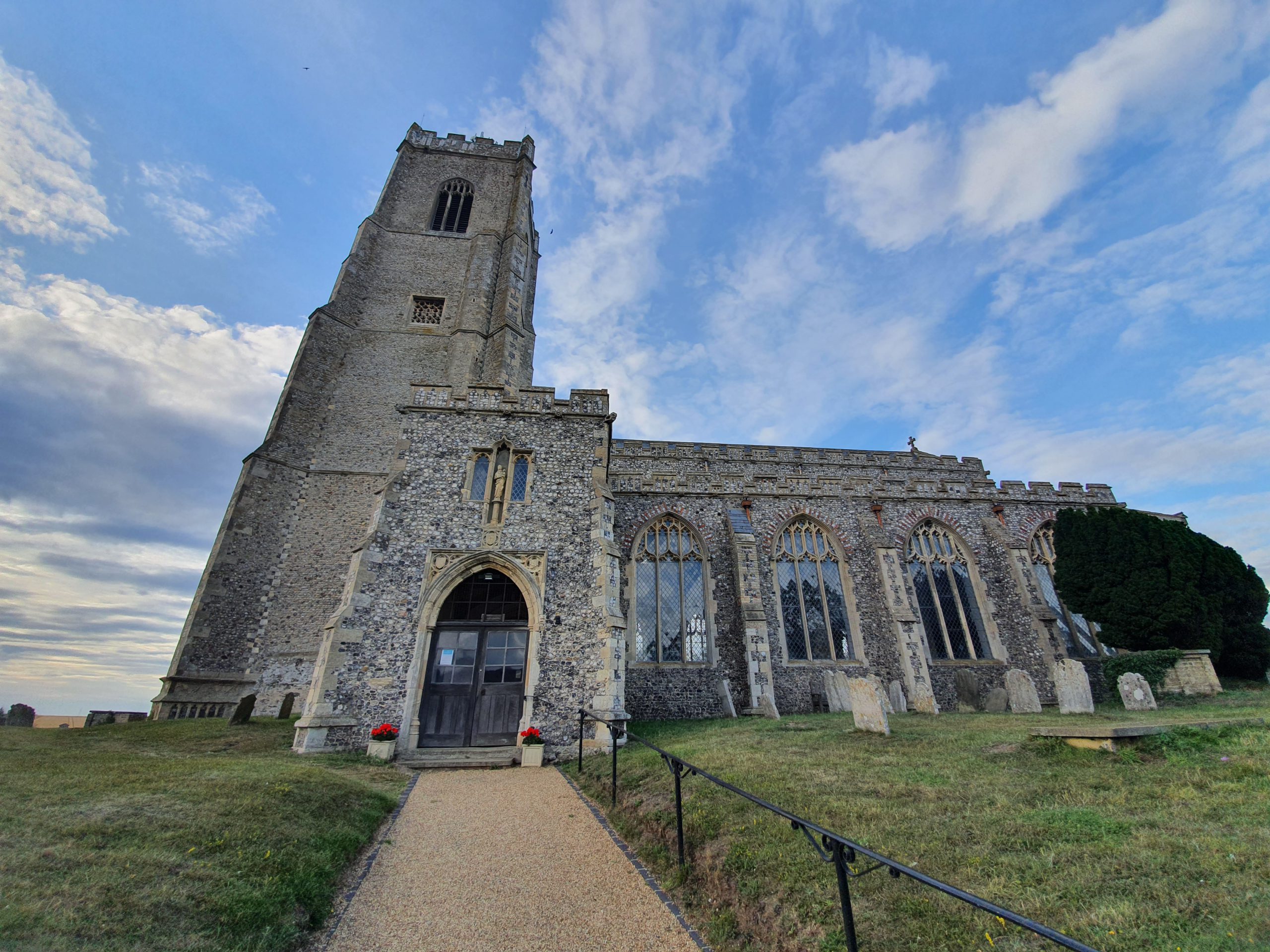
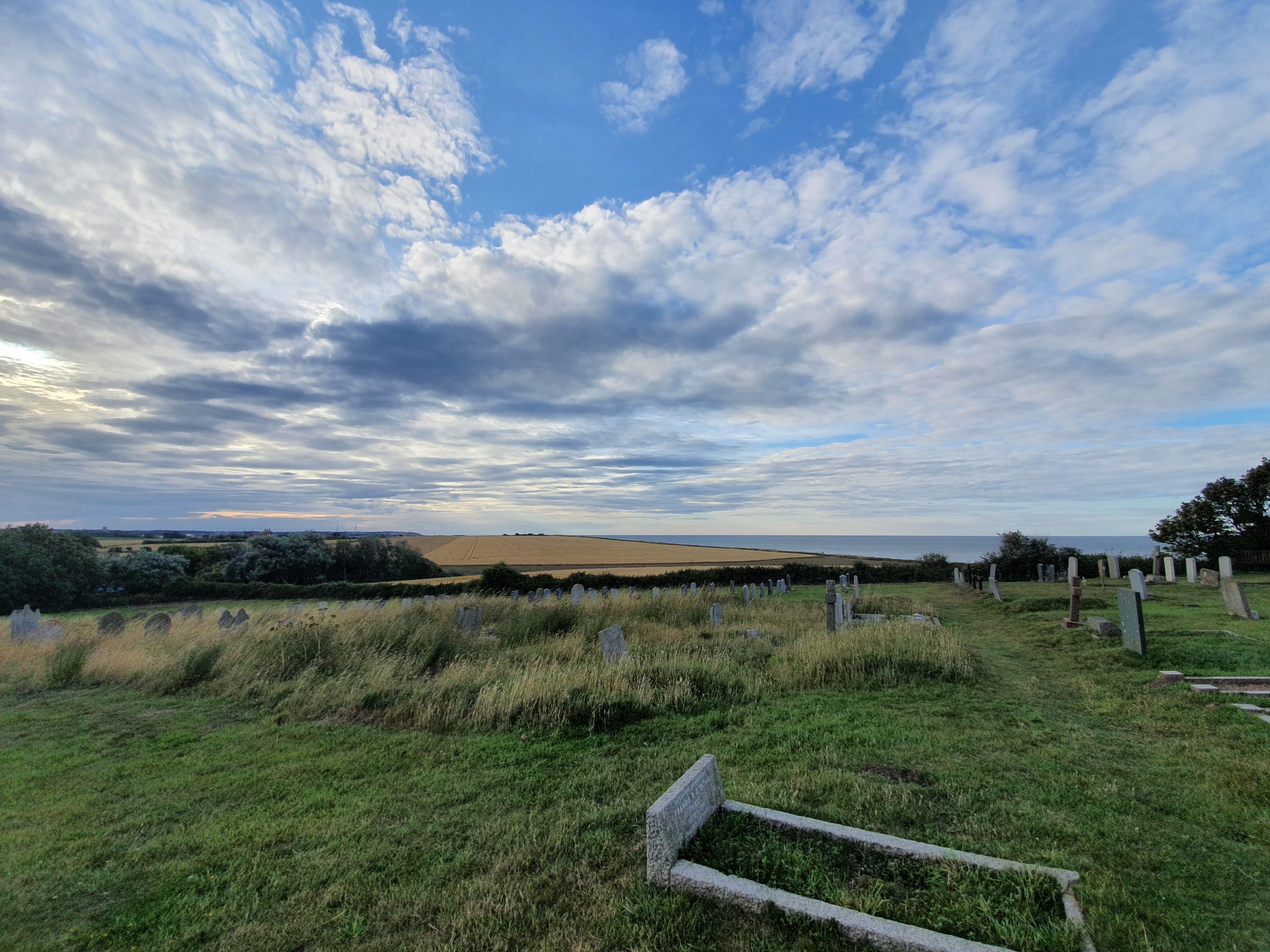
    Located on a windy hill overlooking the North Sea, the current Happisburgh church was constructed in the fourteenth century and then finances allowed in the fifteenth century for a substantial rebuilding. There has though been a church here since the early Norman times and perhaps even the late Saxon period, with a few traces of early Norman architecture in the church tower.
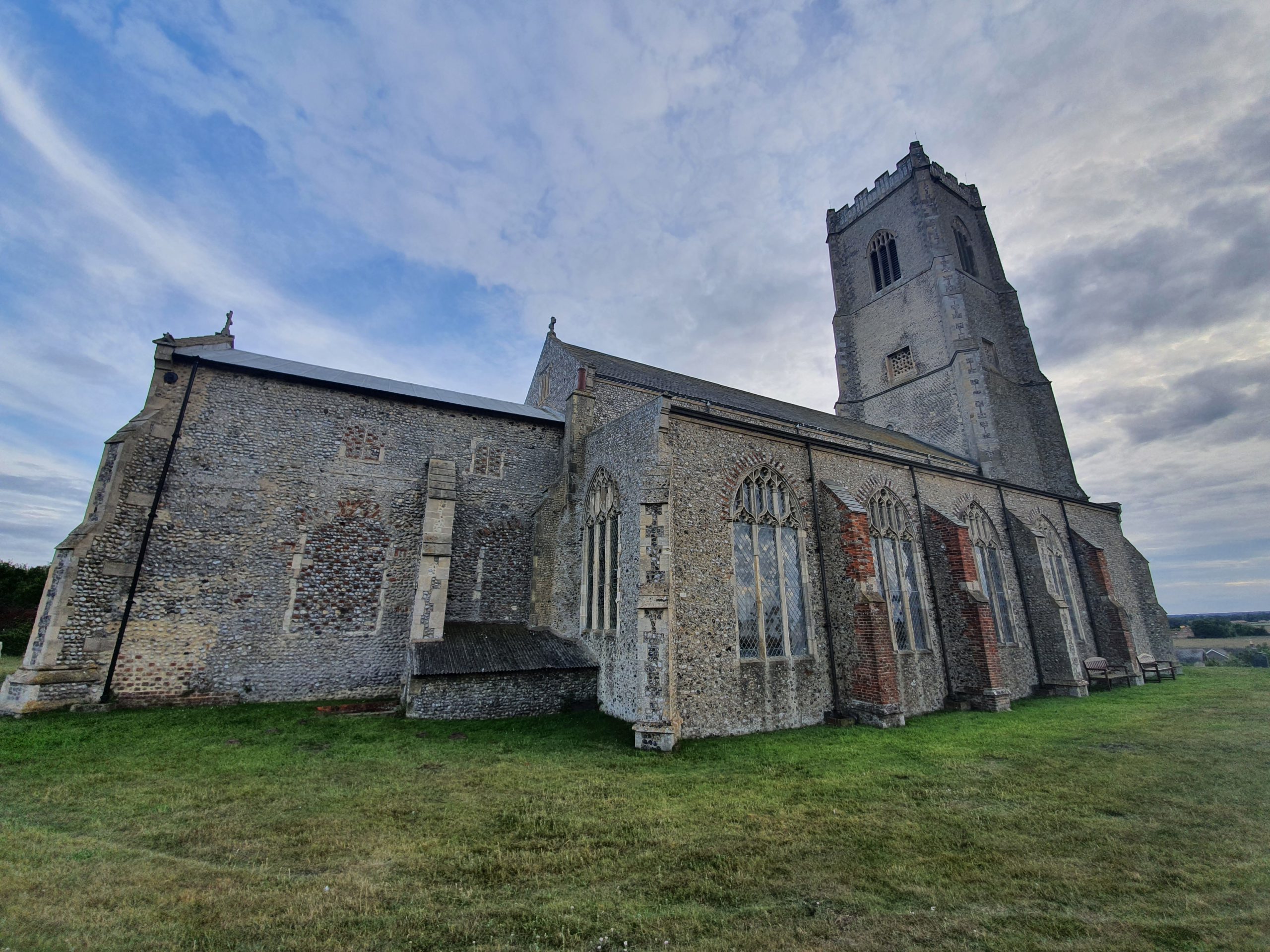
    The roof of the nave is slate, whilst the chancel roof is lead.
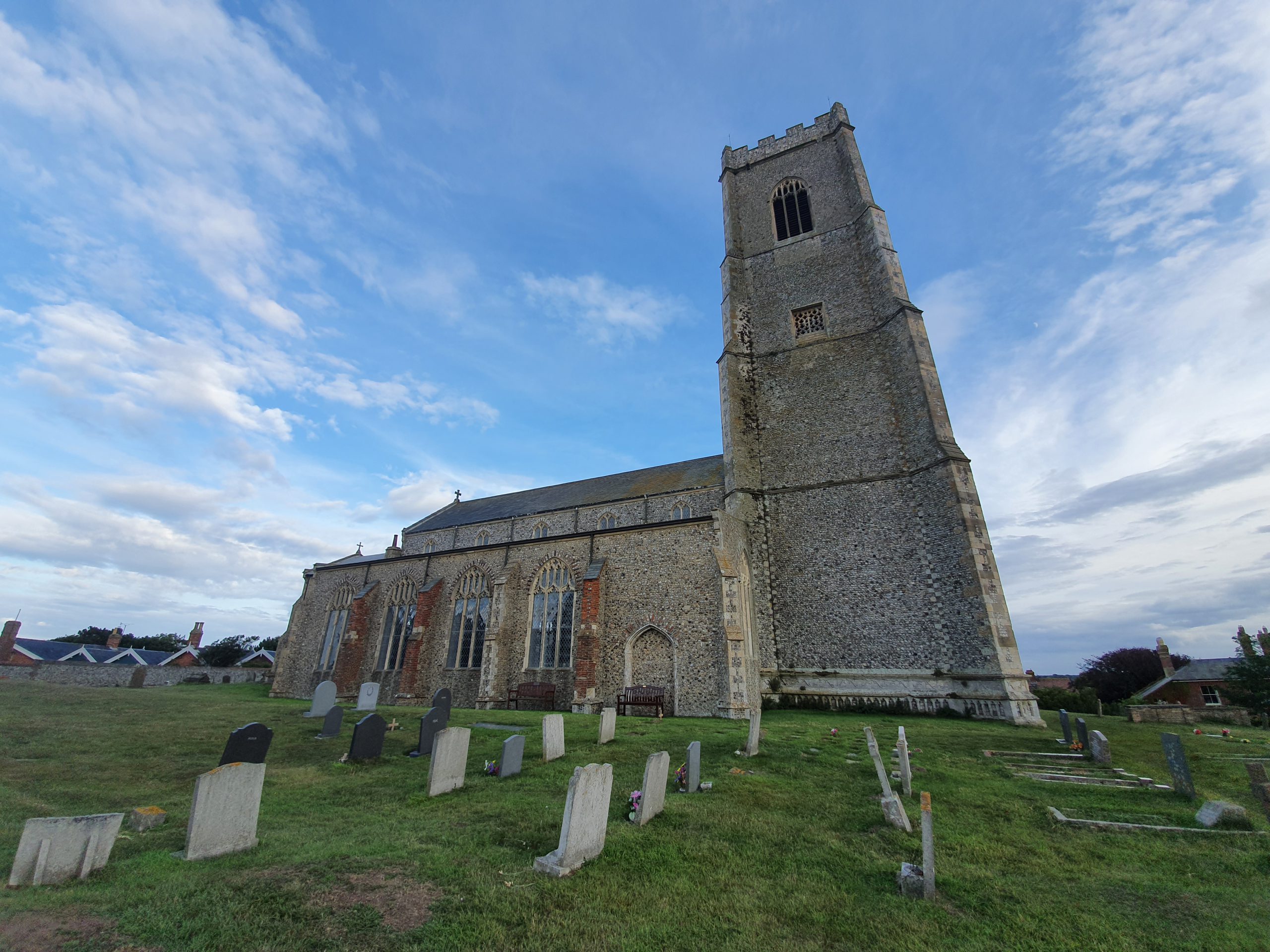
    The north side of the church, which Household Words (a journal edited by Charles Dickens) said in the 1860s was “calculated to be engulfed [by the sea] before the close of the nineteenth century”. The church has avoided a watery fate, but the erosion issue was still of great concern in the early part of the twentieth century.
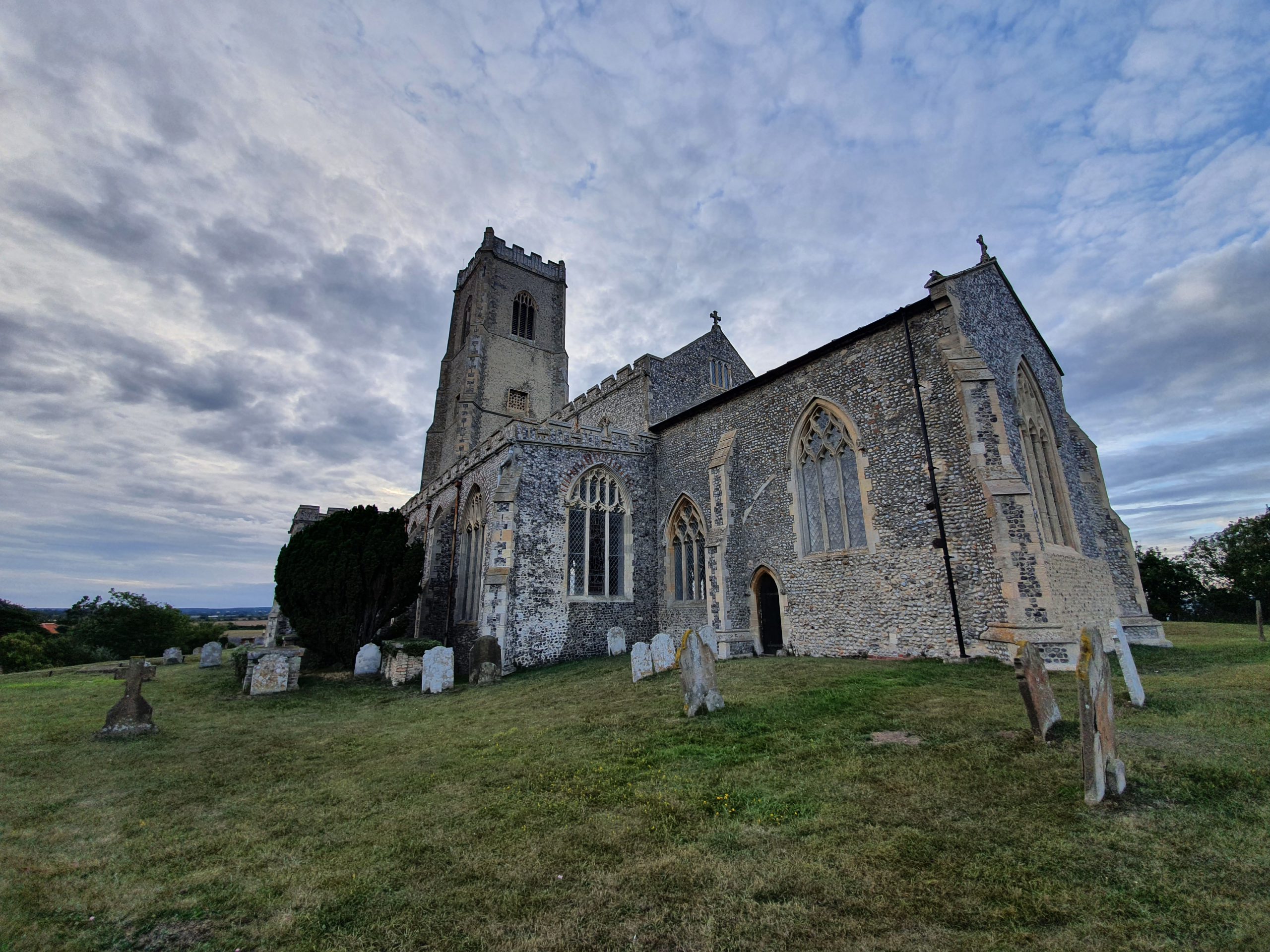
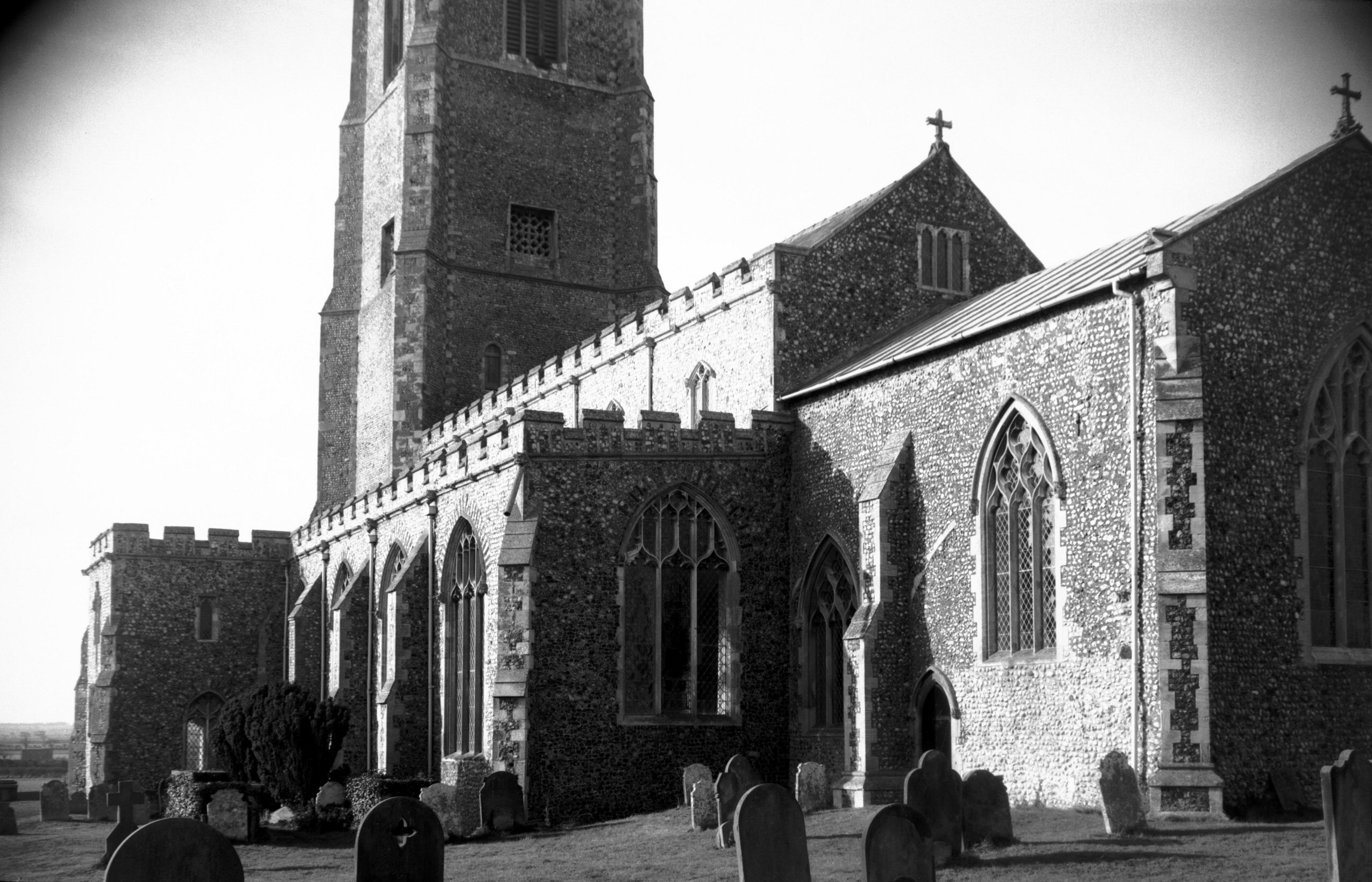
    By chance, and I should try to ensure in future that this is more by design, I took a photo in nearly the same location as the marvellous George Plunkett. It’s evident that since his photo in 1977 that a few gravestones have gone missing from the churchyard, no doubt distributed around the exterior somewhere…..
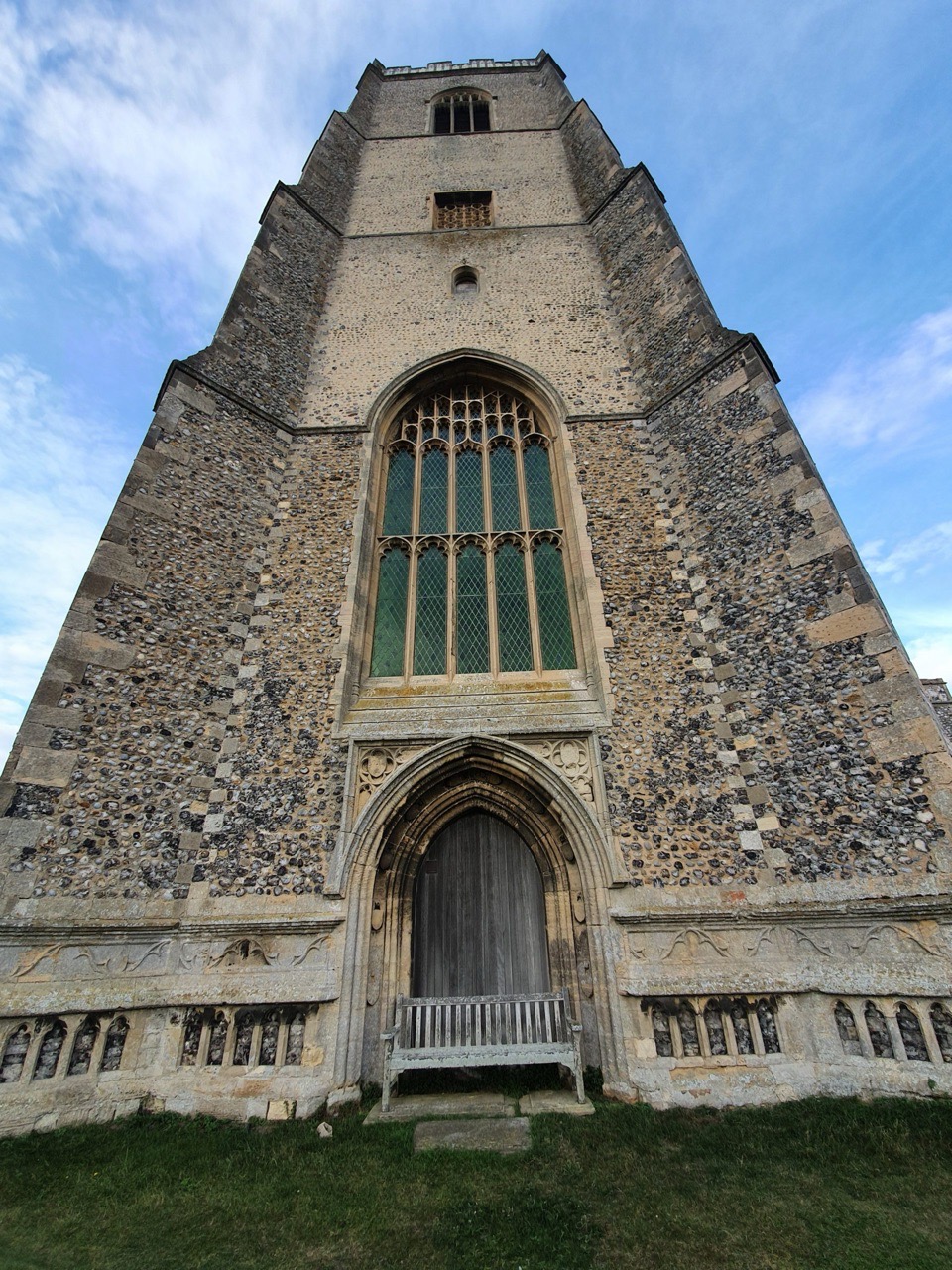
    The four-stage tower isn’t leaning, that’s just my photographic skills, and it was restored following the Second World War due to bomb damage. The church perhaps made itself a bit of a target to enemy bombers as there was a military aerial placed on top of the church tower, which is one of the highest in the county. Its height has certainly given it some trouble over the centuries, it has also been hit by lightning on numerous occasions with some considerable damage caused in June 1822.

    In 1903, an architect was called as a substantial crack appeared in the tower and his report stated that the situation was “very serious”, which would certainly worry me if I was the vicar. The architect noted that “the walls consist almost entirely of flints and chalk lime mortar, and, the upper stages being comparatively thin for so lofty a structure, subject to the tremendous stress by winds and frost”. The church authorities would be pleased with his comments that a Victorian restoration of the tower likely saved it from destruction, but the architect’s suggestion of the addition of rolled steel joints in the structure that was now necessary must have been a worry financially.
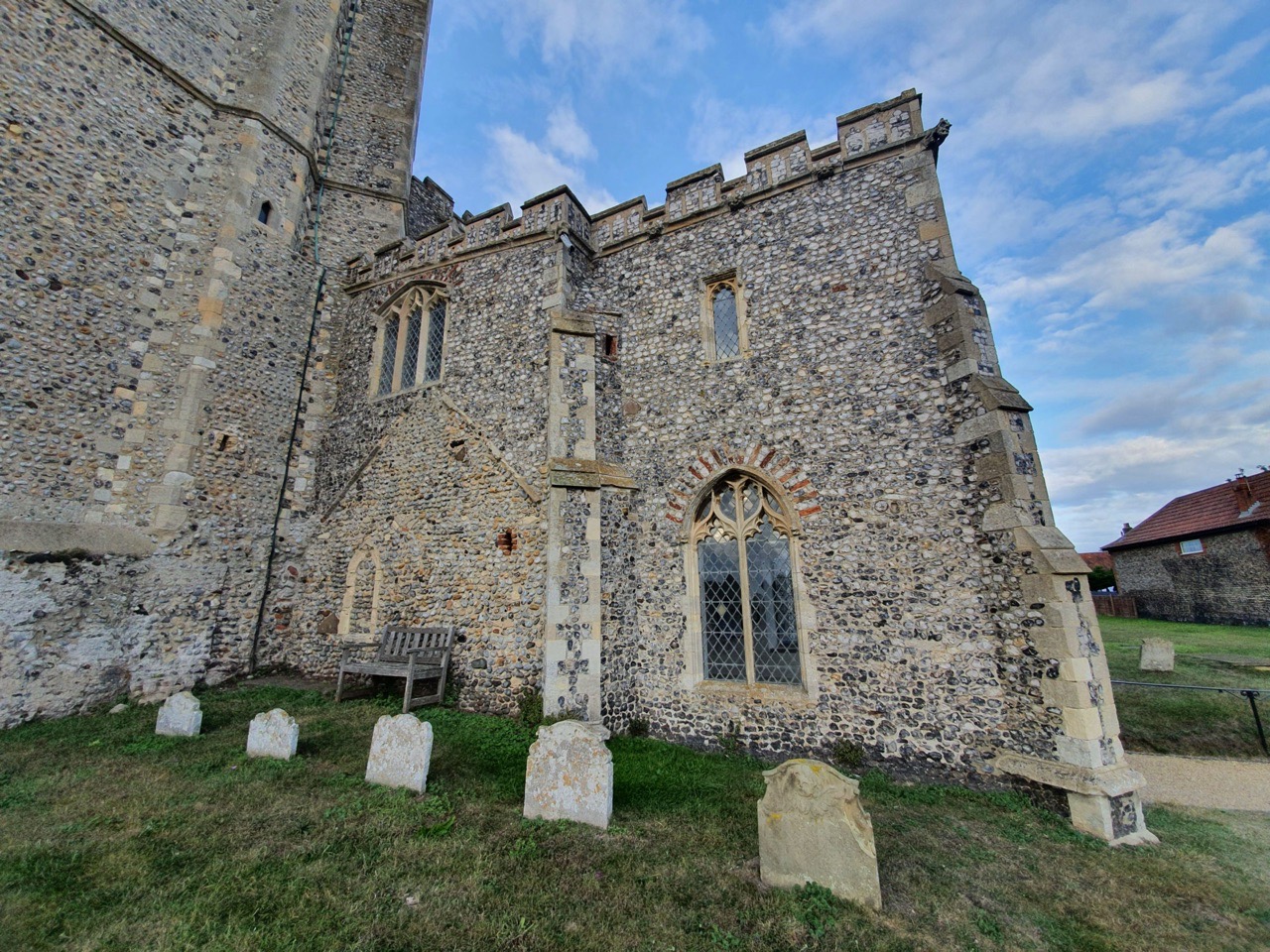
    The sizeable south porch.
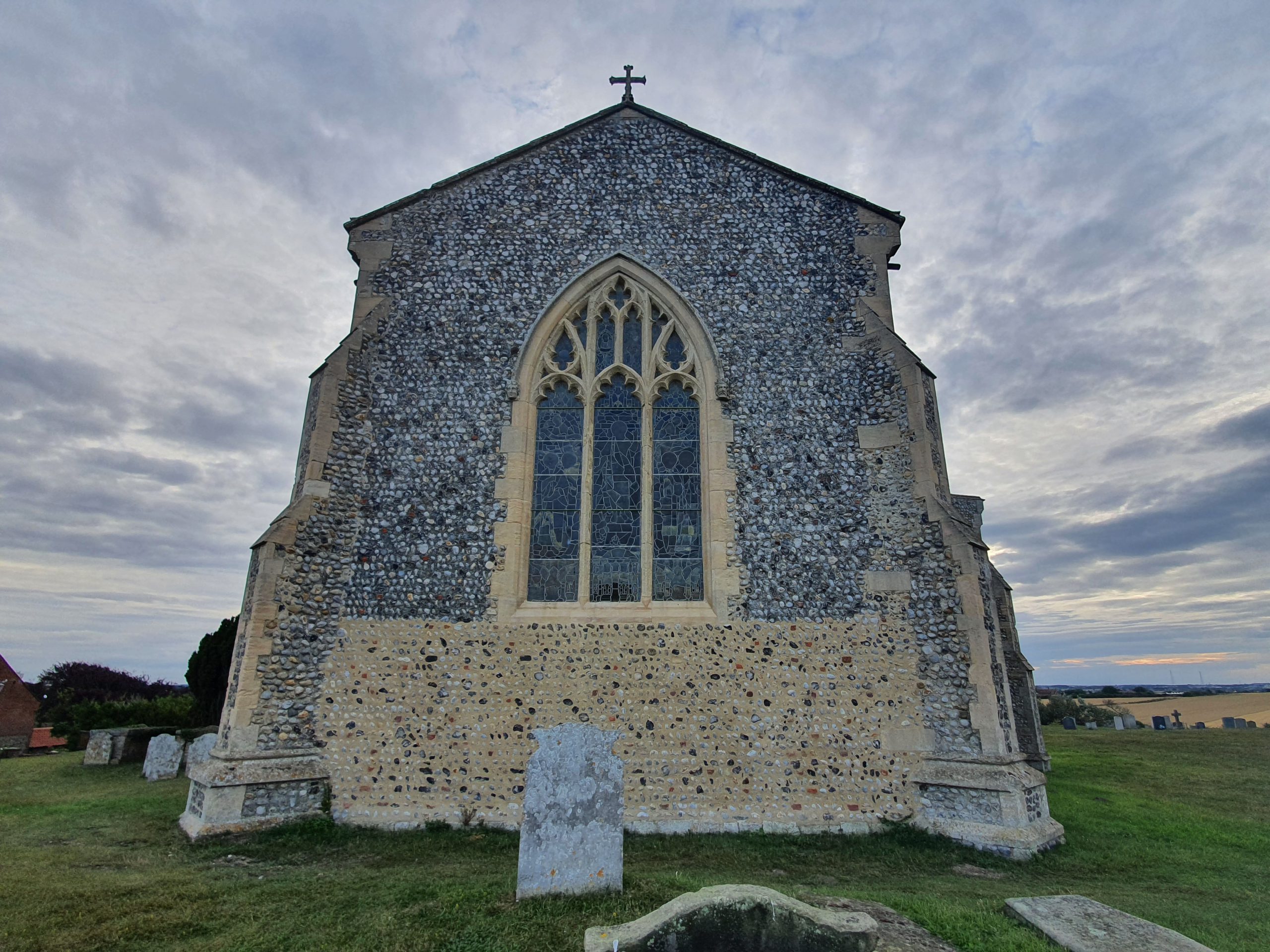
    The end chancel wall and this window led to a slight war of words in the local media in 1863. I moderately enjoyed going through the exchange, one reader called it “monstrous” and not holding back on his words, saying it was “a large blank space with a small window in the middle and a child would detect its glaring incongruity”. This caused John Henry Brown some problems, as he was the architect responsible for the west window and he wrote to the Norfolk Chronicle and stated that the Ecclesiastical Commissioners were responsible for the chancel end. He noted that the original reader’s comments had proved “injurious to my reputation” and wanted it clarified there were two different architects, for reasons no doubt seeming sensible to the church at the time. The original author wrote back to apologise for the lack of clarity and he compared the quality of the “beautiful restoration” of the west window and doorway to the “wretchedly mean restoration” of the chancel window, which is certainly a passionate argument to make.

    In the graveyard is a memorial to those men lost on the HMS Invincible in a shipping disaster that took place in March 1801.


    The church in 1955.
  • Happisburgh – Name Origin

    Happisburgh – Name Origin

    Happisburgh is one of those Norfolk placenames that is difficult for non-locals to guess the pronunciation of, it’s something akin to ‘haze-bruh’. The Concise Oxford Dictionary Of English Placenames says about the origins of the name:

    Happisburgh, Norfolk. Hapesburc in Domesday Book, Apesburga in 1150 and Hapesburg in 1272. Happing is from Haep’s people.

    So, the settlement of Haep’s people, whoever Haep was. The contraction of ‘borough’ or ‘burgh’ into ‘bruh’ isn’t rare, it’s happened with Middlesborough, Farnborough and Hillsborough. I imagine it evolved quite quickly into ‘hap-is-bruh’ and then then ‘p’ was taken out over time to make it easier to say. Well, that’s my best explanation, so I’m going with that.

  • Happisburgh – St. Mary’s Church (Unknown Sailor)

    Happisburgh – St. Mary’s Church (Unknown Sailor)

    A body was found off Happisburgh on 23 August 1947, thought to be a sailor who had died during the Second World War. He was given a war grave and he now rests in peace “known unto God”.

  • Happisburgh – St. Mary’s Church (Derek James Harrison)

    Happisburgh – St. Mary’s Church (Derek James Harrison)

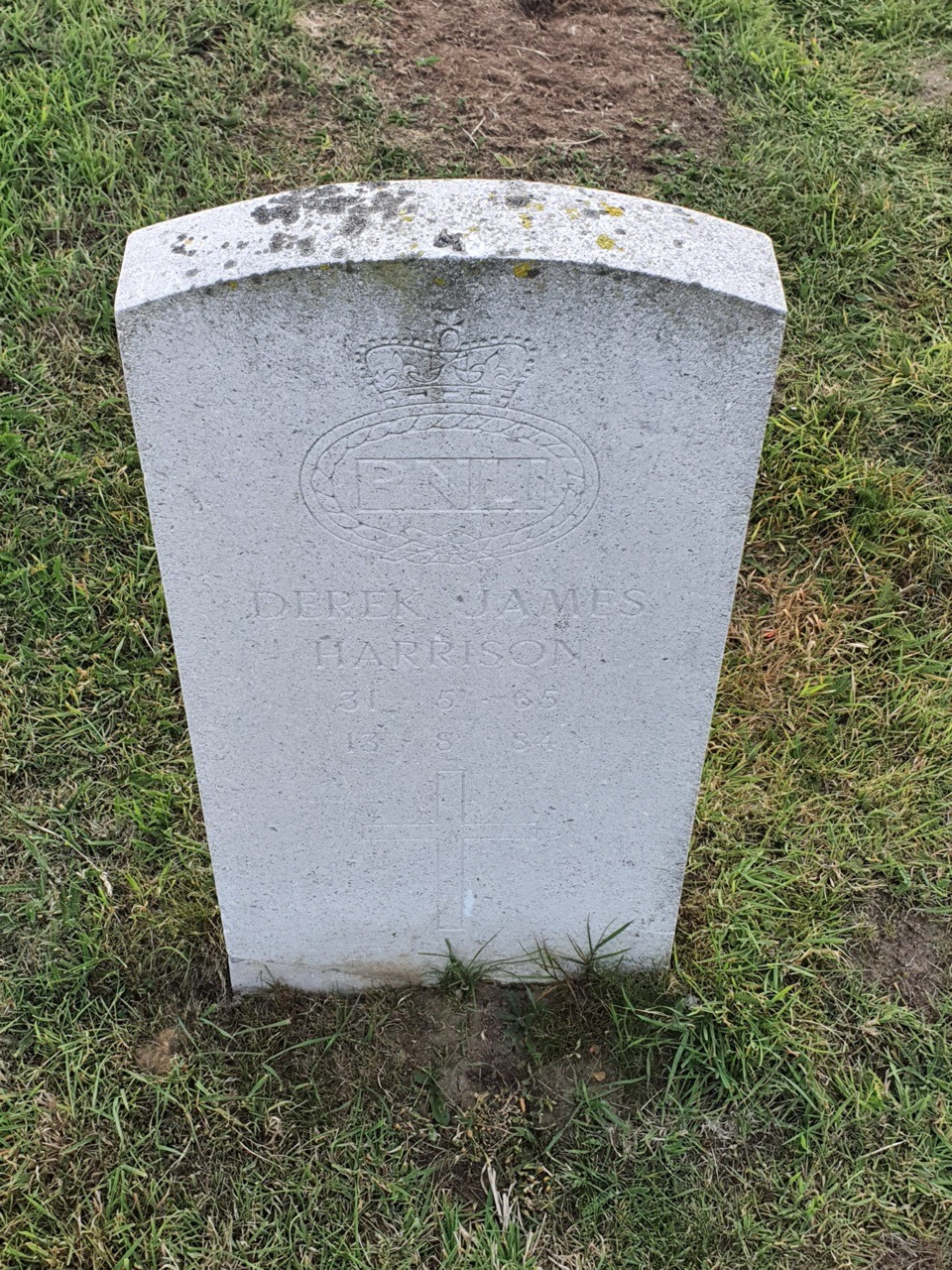
    I have very little to add about this grave, but I haven’t seen one with the RNLI insignia on it before. It’s the grave of Derek James Harrison, who was born on 31 May 1965 and died on 13 August 1984. I can’t find out much more, other than Derek was buried on 20 August 1984 and he was listed as living at Hill House Hotel in Happisburgh.

  • Happisburgh – St. Mary’s Church (HMS Invincible Memorial)

    Happisburgh – St. Mary’s Church (HMS Invincible Memorial)

    This memorial is in a prominent position in the churchyard of St. Mary’s church in the coastal town of Happisburgh.

    HMS Invincible was launched on 9 March 1765 and was used in the American War of Independence. She was sailing from Great Yarmouth on 16 March 1801 when she hit the sandbank off Happisburgh known as the Hammond Knoll Rock. Although the admiral and 195 sailors were saved, around 400 men lost their lives. The harbour pilot, who died when the ship sank, was later blamed for the incident, which was one of the worst maritime events of the eighteenth century.

    This memorial stone was added here in 1998 as by chance when digging a drainage channel in the churchyard, the bodies of many of the ship’s crew were discovered. It was known that there had been a large communal grave, with carts bringing the bodies to a section of land located just off the main churchyard, but the exact spot of the burials wasn’t previously known. They were buried just three feet under the surface, with no real order to the remains.

    This letter was written by one of the sailors on board:

    “Only two days have elapsed since I last wrote to you, and in that short space the most melancholy accident has happened, namely, the total loss of our ship. We set sail from Yarmouth on Monday morning for the Sound, to join the fleet under the command of Admiral Sir Hyde Parker; and about two o’clock in the afternoon the ship struck on a sand-bank, where she beat most violently for upwards of two hours, when her masts were cut away, and her anchor was then cast, and we all thought our selves safe; for, notwithstanding she leaked considerably, the water gained but little upon us. Our signals of distress were heard and answered by a cutter, which immediately bore down to Yarmouth, to give intelligence of our distress; and we therefore hoped, with the assistance that should arrive, to be able to save the ship as well as ourselves; but God ordained it otherwise.

    The rudder being unfortunately gone, the ship became unmanageable, and in the evening she again drove on the bank, when we all gave ourselves up for lost. Through God’s providence, however, a fishing smack, at this awful juncture, hove in sight, and the admiral; my self, and two or three more, succeeded in getting on board of her; but the rest, in endeavouring to do the same, lost all the boats they were able to get over-board. In this melancholy condition she remained till the following morning, when, shocking to relate, she entirely sunk; we being all the time spectators of the distressful scene, without any possible means of affording the sufferers the least assistance, as any attempt to that effect would only have involved ourselves in the general calamity. By God’s providence, however, the ship’s launch, full of men, at length got clear of the wreck, and by her assistance we were enabled to save some others. In the whole, about 195 are saved.

    The greater part of the officers, including the captain, have unfortunately perished.”

    The Invincible was heading towards a fleet led by Norfolk’s hero Horatio Nelson when it sank, and the great admiral himself visited Great Yarmouth to see some of the injured crew who had survived. Today, there’s a play park near the church named HMS Invincible Park, a reminder of the sad event which cost so many men their lives.