Category: Tallinn

  • Tallinn Trip – Soviet Statue Graveyard (Mihkel Aitsam Statue)

    Tallinn Trip – Soviet Statue Graveyard (Mihkel Aitsam Statue)

    20241010_150254

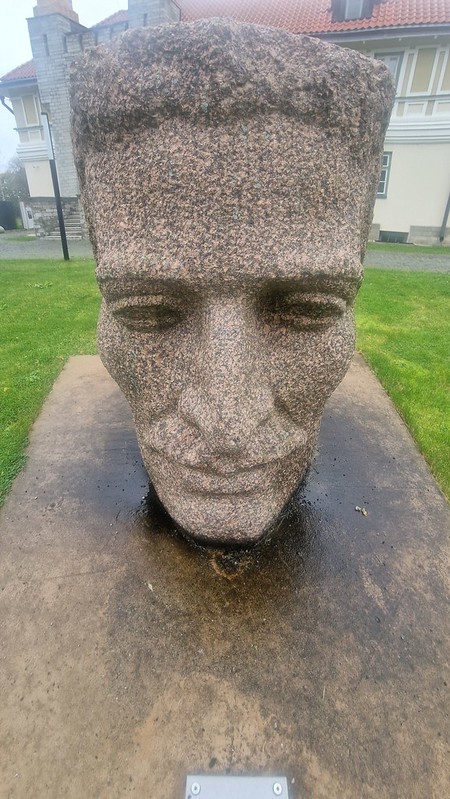
    Similar to my previous post, this rather Soviet looking one is just about Mihkel Aitsam (1876-1917). Designed by Endel Taniloo, it was erected outside the Mihkel Aitsam Vocational School (now the Vana-Vigala School of Technology) on 25 October 1976 to mark the centenary of his birth.

    This is what it looked like in its original location. When Soviet occupation of Estonia ended, the statue was shoved into some bushes and it was recovered by sculptor Tauno Kangro who donated it to the Soviet Statue Graveyard in 2008. The ghosts from a bygone era are at least being able to tell their stories, or at least, whisper them quietly. It must be an odd thing for any family members, to see a relative being treated as a hero in a country and then for that to switch to anger and seeing his statue chucked in a bush.

  • Tallinn Trip – Soviet Statue Graveyard (Mihkel Aitsam, Jüri Kalmus and Rudolf Imberg Monument)

    Tallinn Trip – Soviet Statue Graveyard (Mihkel Aitsam, Jüri Kalmus and Rudolf Imberg Monument)

    20241010_150238

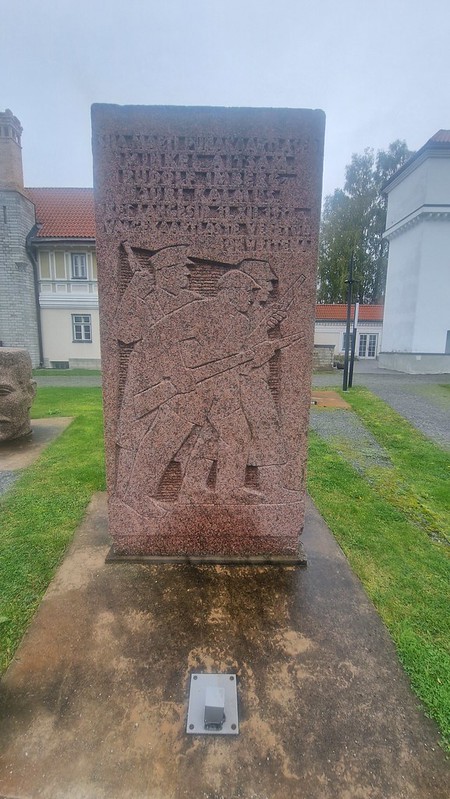
    There will now be a heap of posts about the Soviet Statue Graveyard to excite my two loyal blog readers, a fascinating site (the Soviet Statue Graveyard, not this blog) where old statues go to die when they’re no longer appropriate for their location. This one commemorates Mihkel Aitsam, Jüri Kalmus and Rudolf Imberg, who were Red Guards who were killed by White Guards on 11 December 1917 during the Estonian War of Independence. They were part of a group of Red Guards who were attempting to take over the Püssi manor in Ida-Viru County. The manor was owned by the Stackelberg family, who were Baltic German nobles and the Red Guards were met with resistance from the White Guards, and a shootout ensued. Aitsam, Kalmus and Imberg were killed in the fighting.

    The monument was sculpted by Albert Eskel and unveiled in Kadriorg Park on 13 December 1961. It was pushed over following Estonia’s independence from the Soviet Union. It was seemingly forgotten about for twenty years before it was brought to this statue graveyard in 2008. This one is a little more complex than some over statues at the site, because some left-wing Estonians still believe that these three were fighting for social justice again oppression. However, others associate them with the Red Guards who fought against Estonia in the War of Independence following the end of the First World War. Either way, their story lives on here at least.

  • Tallinn Trip – The Memorial to the Victims of Communism (Maarjamäe Memorial Complex)

    Tallinn Trip – The Memorial to the Victims of Communism (Maarjamäe Memorial Complex)

    20241010_120329

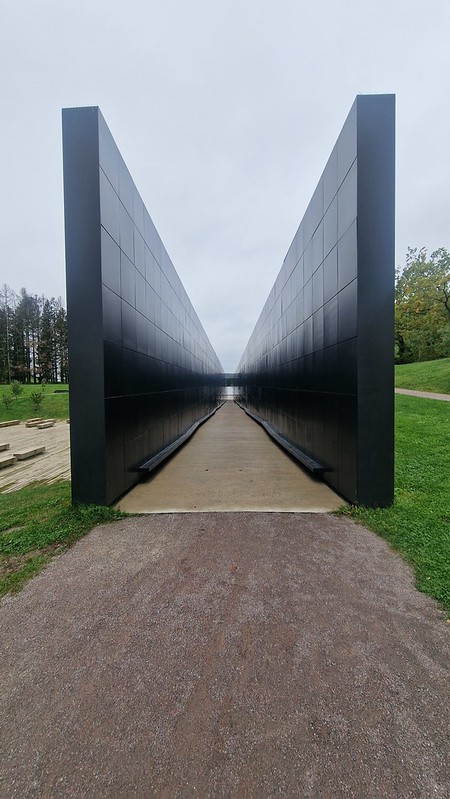
    I’ve already mentioned the Soviet War Memorial at this site and this memorial is a quite marvellous juxtaposition to it. It was opened in 2018 and it is a memorial to the 22,000 people murdered by the Soviets, a reminder of the oppression that the people of Estonia faced.

    20241010_120440

    This is a monument which is making a proper statement, it’s a clever and powerful design.

    20241010_120504

    The crimes against humanity will never be forgotten.

    20241010_120530

    20241010_120545

    20241010_120631

    The names seem endless.

    20241010_120743

    I was making my way down the tunnel thinking how fortunate we were to see this monument, it had been somewhat by chance and we hadn’t headed this way deliberately.

    20241010_120843

    And then Susanna and Bev bumped into this lady, who lost her father and brother-in-law to the Soviets. Emotional and bringing home the reality of Soviet rule.

    20241010_121257

    The memorial also has a web-site at https://www.memoriaal.ee/en/memorial/.

  • Tallinn Trip – Soviet Second World War Memorial (Maarjamäe Memorial Complex)

    Tallinn Trip – Soviet Second World War Memorial (Maarjamäe Memorial Complex)

    20241010_122414

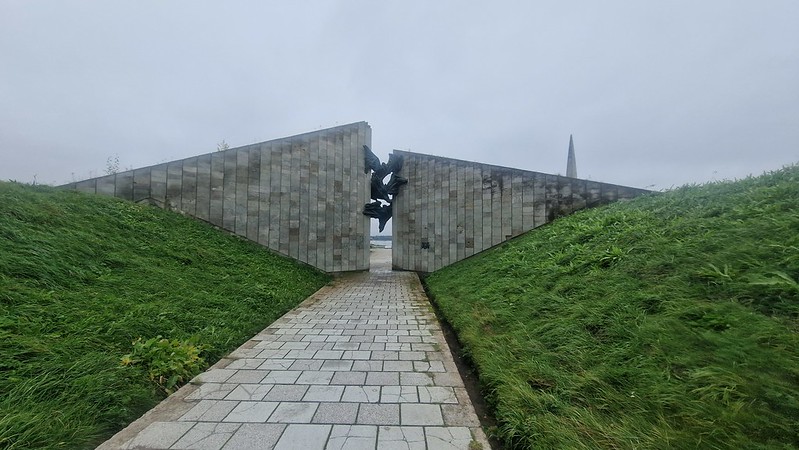
    This is the Soviet War Memorial at the Maarjamäe Memorial Complex in Tallinn. It’s a complex site which was erected in the 1960s to commemorate Soviet sailors and soldiers who died during the Second World War, but it has been somewhat uprooted by the construction of the Memorial to the Victims of Communism next to it. This Soviet memorial is now falling apart and has been vandalised, whilst the memorial to the victims of communism is in immaculate condition, but more of that soon in another post. The memorial was designed by Allan Murdmaa and Matti Varik, originally on a theme of liberation.

    20241010_122437

    Some of the graffiti on the monument.

    20241010_122441

    I can’t make this out, but I asked Google AI and it says it reads “war on vandal”. That may or may not be what it actually says….

    20241010_122454

    Attempts have been made to remove older graffiti.

    20241010_122613

    It’s in a poor state and no real efforts are being made here to keep it well maintained.

    20241010_122632

    Crumbling.

    20241010_122621

    Someone has pulled down the metal fencing which is there to keep people off. This obelisk once symbolised victory and remembrance, but it’s now slowly falling into disrepair. There was once an eternal flame, but that has long since been extinguished.

  • Tallinn Trip – Estonian History Museum (Finally Finally European Union Frisbee)

    Tallinn Trip – Estonian History Museum (Finally Finally European Union Frisbee)

    20241010_144928

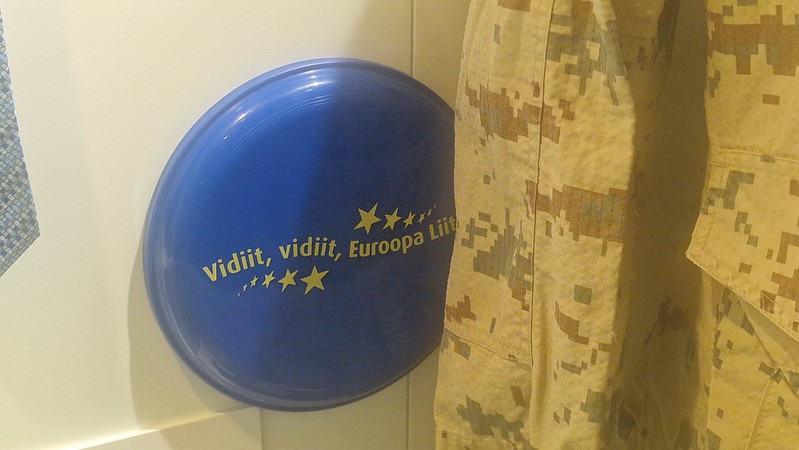
    I think I’ve written enough posts about exhibits at the Estonian History Museum, or for now at least. But, this is I think a nice way to end this little series, it’s a frisbee with “Vidiit, vidiit, Euroopa Liit” which means ‘Finally, Finally, European Union’. Estonia joined the European Union on 1 May 2004 and more than just a toy, this frisbee embodies the joy and excitement of a nation which had embraced a new future, a future filled with possibilities and a sense of belonging within the European community. For the many, not the few and all that because at the moment the latest survey 20 years on from joining is that nearly 85% of the country support Estonian membership of the institution.

  • Tallinn Trip – Estonian History Museum (Estonian Air Seats)

    Tallinn Trip – Estonian History Museum (Estonian Air Seats)

    20241010_144738

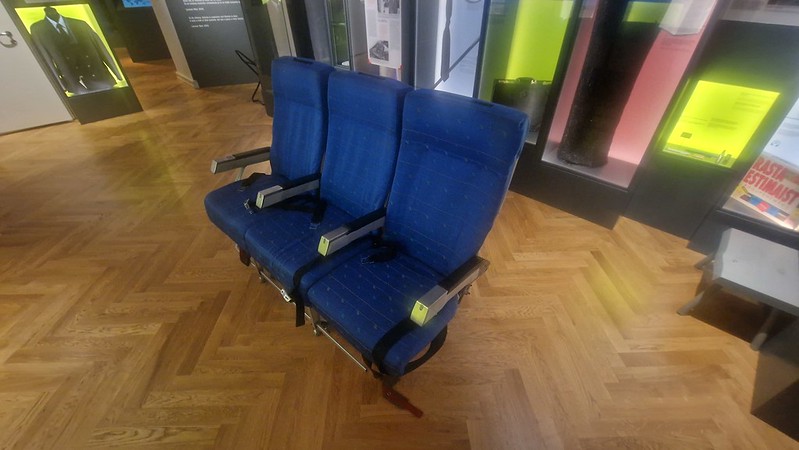
    I like exhibits which have an aviation theme, especially if there’s a slight air of randomness about them. These are from an Estonian Air aircraft, an airline which operated between 1991 and 2015. After reclaiming Estonian autonomy from its Soviet oppressors, this was a time of transition and hope for the country and part of the rebuilding of the national infra-structure. The airline went out of business due to funding issues, with Nordica replacing them, although they now just offer wet-leases of aircraft rather than scheduled services. It sadly means that Estonia doesn’t really have a national airline, but maybe there’s hope for the future. I asked Google AI to suggest a name for such an airline and it came up with:

    “Metsalind: Meaning ‘forest bird’ in Estonian, this name evokes the country’s natural beauty and connection to nature.”

    I rather like that.

  • Tallinn Trip – Estonian History Museum (Briefcase of Siim Kallas)

    Tallinn Trip – Estonian History Museum (Briefcase of Siim Kallas)

    20241010_144557

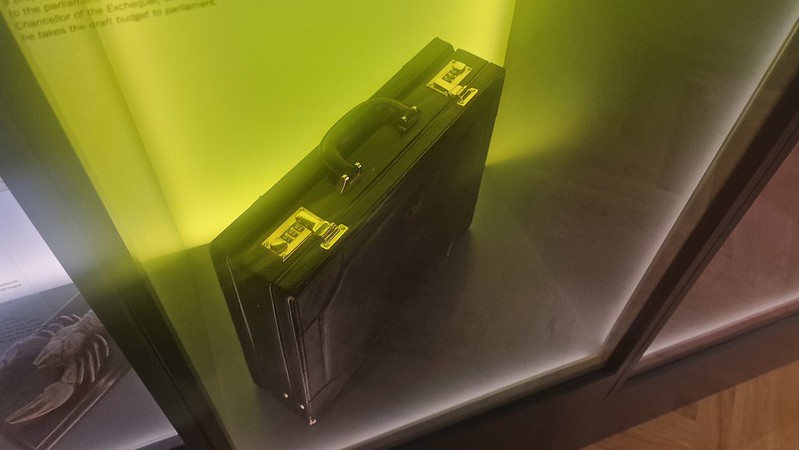
    In the middle of a display at the Estonian History Museum is this seemingly unremarkable object which sits bathed in a slightly dramatic yellow glow. It’s a briefcase. A rather sleek, black briefcase, with gleaming gold clasps. But this is no ordinary briefcase. This is the briefcase of Siim Kallas, former Estonian Finance Minister and Prime Minister. Its importance is that it represents Estonia’s journey from a newly independent nation finding its feet in the world to a confident member of the European Union, shedding its Soviet past.

    Siim Kallas, a man who clearly appreciates the power of a good accessory, purchased this very briefcase at a London airport. His inspiration? None other than the iconic red briefcase of the British Chancellor of the Exchequer, famously used to transport the Budget to Parliament. Perhaps he envisioned himself, Budget in hand (or briefcase, rather), striding purposefully through the halls of Estonian Parliament, radiating an aura of fiscal responsibility and international sophistication. I mean, it must have worked to some degree as he became Prime Minister between 2002 and 2003 after holding the Finance role between 1999 and 2002.

    In the years following the collapse of the Soviet Union, Estonia was eager to establish itself on the world stage. Joining the European Union was a key goal, and Mr. Kallas, with his snazzy new briefcase, was at the forefront of those efforts. Did the briefcase magically unlock the doors to the EU? Probably not. But it certainly didn’t hurt to project an image of a modern, organised, and – dare we say – stylish nation. Kallas was a respected figure though, he had worked as the Chairman of the Bank of Estonia between 1991 and 1995 so I assume he was quite good at financial stuff. A bit like Liz Truss wasn’t, but I mustn’t digress into politics. The briefcase, in its own quiet way, reflects the spirit of those times. It speaks of a nation embracing new ideas, drawing inspiration from established traditions, and forging its own path. It’s a reminder that even the smallest objects can hold significant meaning, especially when they’re carried by a man with a mission.

    And, I’m glad that the museum has exhibits such as this, quirky and looking just a little irrelevant, they tell an intriguing story of their own.

  • Tallinn Trip – Estonian History Museum (Soviet Troops Out Now)

    Tallinn Trip – Estonian History Museum (Soviet Troops Out Now)

    20241010_144429

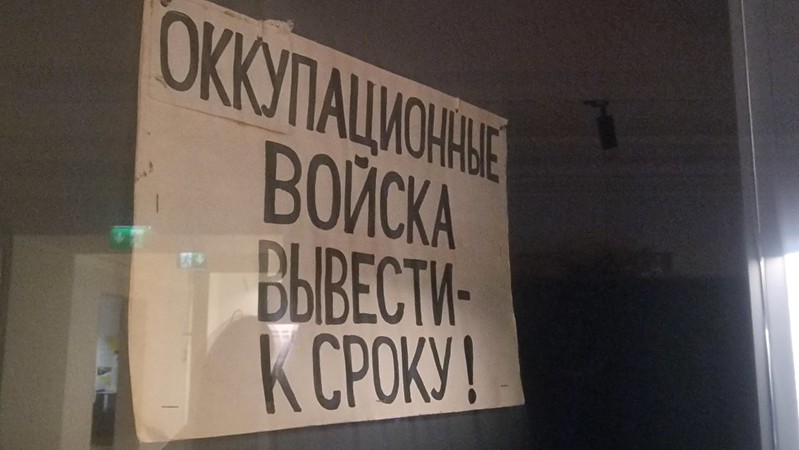
    ОККУПАЦИОННЫЕ ВОЙСКА ВЫВЕСТИ К СРОКУ!

    Which means ‘occupation troops out by the deadline’. Estonia declared independence in August 1991 and there was a campaign called PAKA, meaning ‘be gone’, which started soon after. It actually took three years for the Russian troops to finally leave, the date of 31 August 1994 is still commemorated today. In August 1991, there had been 40,000 members of the Russian military in Estonia across 570 different military facilities. It took them longer than it should have done to go, but Boris Yeltsin finally sped the process up. They had initially claimed that they needed to be there until 2002, then they compromised with 1997, but the Estonian people held protests and created handwritten posters such as this.

  • Tallinn Trip – Estonian History Museum (Estonian Language for Everyone)

    Tallinn Trip – Estonian History Museum (Estonian Language for Everyone)

    20241010_144220

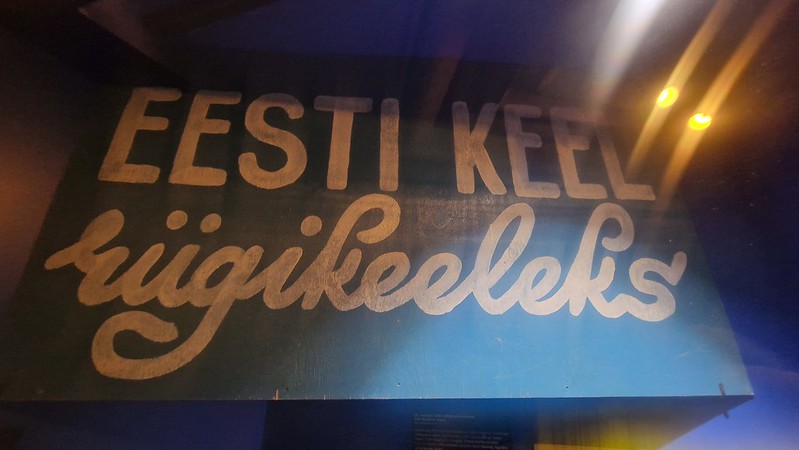
    In Estonia today, there are few signs that the Soviets tried desperately to make Russian the primary language in the country. Estonian was used, but there was pressure on institutions to use Russian, careers often required the knowledge of Russian and children were taught Russian in schools.

    The text reads EESTI KEEL kõigikeeleks, or “Estonian as the National Language” and it was used in the mass event of the Popular Front of Estonia at the Tallinn Song Festival Grounds in June 1988. Russian isn’t much used at all now in Estonia and an example is this museum, which translates only into English. I saw very few Russian translations anywhere in Tallinn, only really in a few places with older exhibits. And children are no longer taught Russian in schools. There were some schools which taught Russian, but times are changing (https://estonianworld.com/knowledge/estonias-russian-schools-to-switch-to-estonian-language-schooling/)….

  • Tallinn Trip – Estonian History Museum (50th Anniversary of the Molotov-Ribbentrop Pact Badge)

    Tallinn Trip – Estonian History Museum (50th Anniversary of the Molotov-Ribbentrop Pact Badge)

    20241010_144151

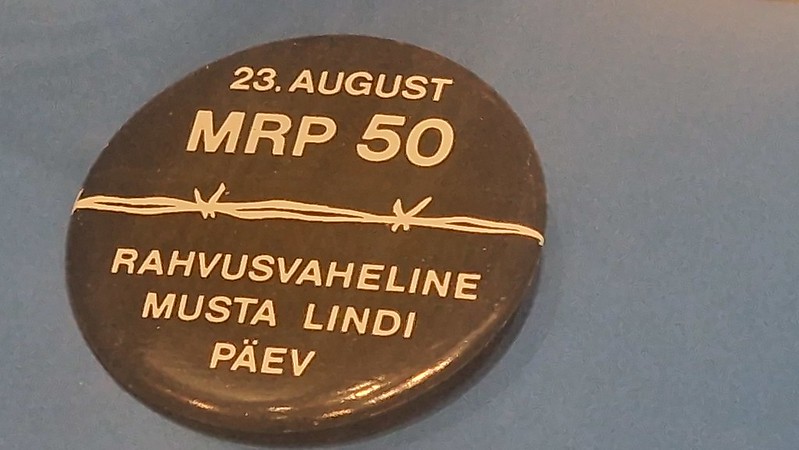
    And another badge, this one commemorating the 50th anniversary of the Molotov-Ribbentrop Pact that the USSR spent decades pretending it didn’t sign.

    The text mentions the 23 August 1939, with the badge being from 50 years later, the MRP is the same in English. The rest of the text reads “International Black Ribbon Day” which is a day of remembrance for victims of totalitarian regimes. The barbed wire adds a bit more emphasis to the oppression that the people of Estonia found themselves in and the way that Europe was divided. I like little exhibits such as this, they record not just the original bad event, but also how people remembered it. Black Ribbon Day is still a day of remembrance for the evils that took place under Stalinist and Nazi regimes.